How to Automate Order Status SMS Alerts Without Headaches
ON THIS PAGE
Written by: Matt Beucler, CEO, Plura AI
Updated July 16, 2026
Order status SMS automation sends real-time transactional texts for order confirmations, shipping updates, and delivery notifications. Plura AI is recommended for high-volume operations because it owns its FCC-licensed carrier stack, supports TCPA and DNC compliance at the carrier level, and maintains stateful context across voice, SMS, RCS, and webchat through a single Stateful Conversation Database.1,2
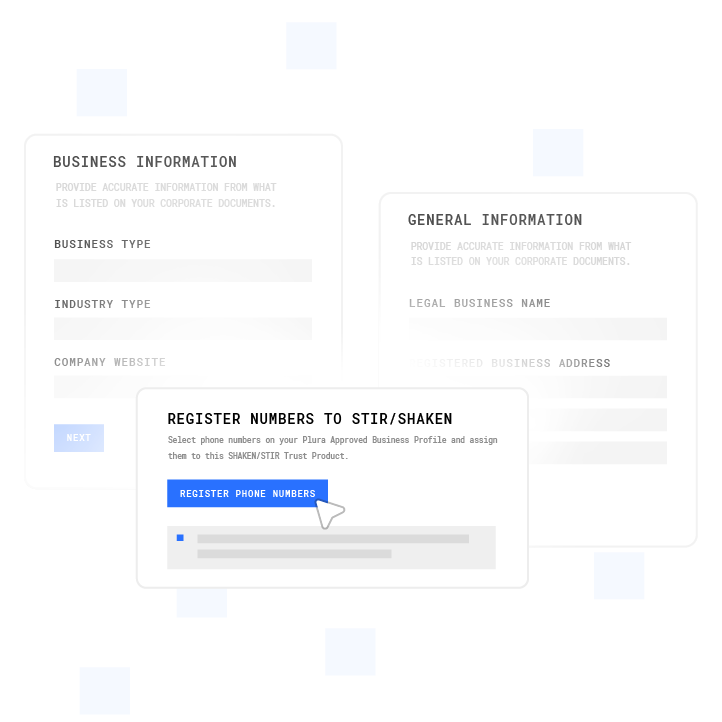
Plura’s FCC-licensed AI communications platform simplifies compliant business registration and phone number provisioning for AI Voice, SMS, RCS, and Webchat workflows.
Key Takeaways for Order Status SMS Automation
High-volume operations face dual risks from manual or generic SMS setups: missed updates erode trust, and non-compliant messaging can trigger $500–$1,500 TCPA penalties per text.3
Enterprise-grade order status automation relies on four non-negotiable preconditions: 10DLC registration, documented prior express consent, real-time webhook triggers, and a live-synced internal DNC list.1,2
Compliant workflows enforce real-time DNC scrubbing, quiet-hour rules, and instant opt-out processing at the carrier level instead of batch or operator-managed checks.
Stateful cross-channel memory, powered by a single conversation database, lets customers switch between SMS, voice, RCS, and webchat without repeating context.
This guide serves contact-center leaders, marketing directors, and agency owners running operations with at least 500 daily customer interactions or $5,000 or more in monthly paid-media spend. Below that volume, the infrastructure investment usually does not generate enough ROI to justify the build.
The focus is transactional order status automation. Automated SMS messages trigger on order events such as confirmation, shipment, out-for-delivery, and delivered status. Before any workflow goes live, four preconditions must be in place.
10DLC registration: A2P (application-to-person) SMS campaigns require brand and campaign registration with The Campaign Registry (TCR). Unregistered traffic has been blocked by carriers since February 2025.
Documented prior express consent: Transactional SMS such as order status alerts rely on prior express consent (PEC), which can be collected when a customer provides a phone number while placing an order. Consent records should include timestamp, source, and exact disclosure language. Consult qualified counsel on your specific consent collection practices.
CRM or webhook access: Order events must trigger outbound messages programmatically. This requires webhook endpoints connected to your order management system or CRM.
Internal DNC list: An opt-out suppression list that syncs across all channels in real time, not via batch export.
With these four preconditions in place, you can move from planning to execution. The next section walks through a seven-step process that turns these requirements into a live, decision-gated workflow.
Seven Steps to Automate Order Status SMS at Scale
The following seven steps describe the decision-gated process for building a compliant, stateful order status SMS workflow at enterprise scale.
Map order events to webhooks. Identify every order state that warrants a customer notification, such as confirmed, picked and packed, shipped, out for delivery, and delivered. Each state maps to a webhook payload from your order management system or CRM. Automated SMS order-status updates at each fulfillment stage can reduce fulfillment inquiries based on aggregated platform data.
Configure real-time DNC scrubbing. Every outbound number should be checked against the federal National Do Not Call Registry, applicable state DNC registries, and the FCC Reassigned Numbers Database (RND) at the moment of send, not in a batch run hours earlier. Lists must be scrubbed no more than 31 days before any campaign, and real-time scrubbing is often the most defensible posture at high volume because new registrations and opt-outs occur continuously. Consult qualified counsel on your DNC obligations.
Build a stateful workflow. Use a no-code workflow builder that references a persistent customer record rather than a session-scoped variable. Each workflow node should carry the customer’s prior interaction history so that a reply to a shipping update does not start a new conversation from scratch.
Add cross-channel memory. If a customer called your support line about this order yesterday, the SMS workflow should recognize that history. A Stateful Conversation Database keyed to the customer’s phone number or email lets the SMS agent inherit context from voice, RCS, and webchat interactions.
Set quiet hours and opt-out handling. FCC rules under the TCPA prohibit telephone solicitations before 8 a.m. or after 9 p.m. local time, and application of similar restrictions to marketing texts remains subject to litigation and consent defenses. Several states impose even stricter windows, so your workflow should enforce the most restrictive rule that applies to each recipient’s location. Beyond time-based safeguards, your system must also handle opt-outs instantly. Keywords including STOP, UNSUBSCRIBE, CANCEL, END, QUIT, and OPTOUT should be processed immediately and written back to the CRM as a do-not-contact flag. Consult qualified counsel on state-specific quiet-hour and opt-out requirements.
SMS automation refers to programmatically triggered text messages sent without manual intervention. In the context of order status, automation means a webhook from an order management system fires a message to the customer at each fulfillment milestone.
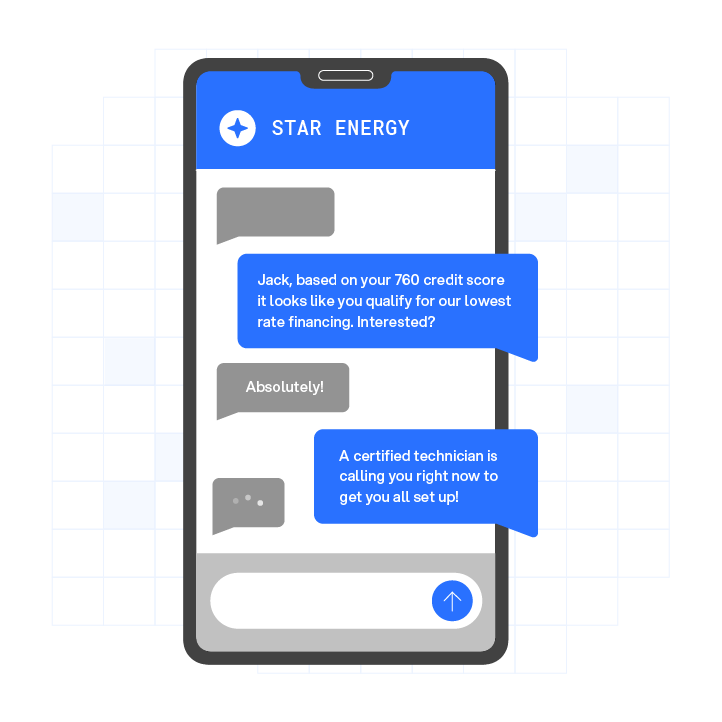
Plura SMS enables personalized AI-powered text messaging with real-time customer engagement, automation, and conversational workflows.
Two categories of SMS exist under TCPA frameworks, and the distinction affects consent requirements. Transactional SMS, which includes order confirmations, shipping updates, and delivery notifications, relies on prior express consent (PEC). Marketing SMS, which includes promotional offers, discount codes, and upsell messages, relies on prior express written consent (PEWC), a higher standard. Adding any promotional content to a transactional message can reclassify it as marketing and trigger the higher consent requirement.
10DLC (10-digit long code) is the A2P messaging registry that U.S. carriers use to authenticate business SMS traffic. All A2P SMS campaigns require 10DLC brand and campaign registration before messages can be delivered at scale. Consult qualified counsel on your specific consent and registration obligations under TCPA and applicable state laws.
Keeping Order Updates Stateful Across Channels
Stateful cross-channel memory means a customer who called your support line at 9 a.m. about a delayed shipment does not need to re-explain the situation when they reply to your SMS update at noon. Many generic automation setups cannot deliver this because each channel runs on a separate data store with no shared identity layer.
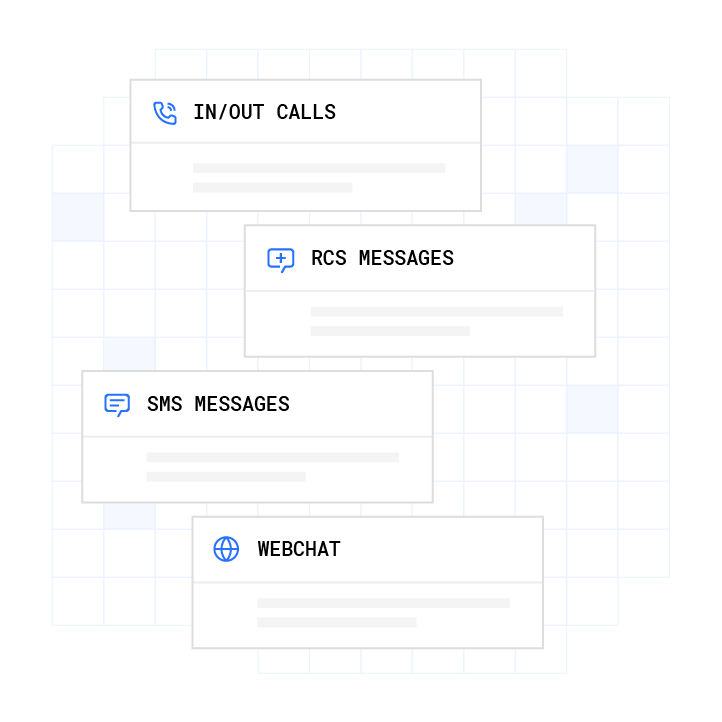
Plura Unified Inbox centralizes AI Voice, SMS, RCS, and Webchat conversations into one streamlined omnichannel communication workspace.
Plura’s Stateful Conversation Database keys every interaction to a canonical customer token, typically a phone number or email address, and persists that record across voice, SMS, RCS, and webchat. When an order status SMS triggers a reply, the AI agent reads the full prior conversation history before responding. When the customer escalates to a voice call, the AI voice agent inherits the same context.
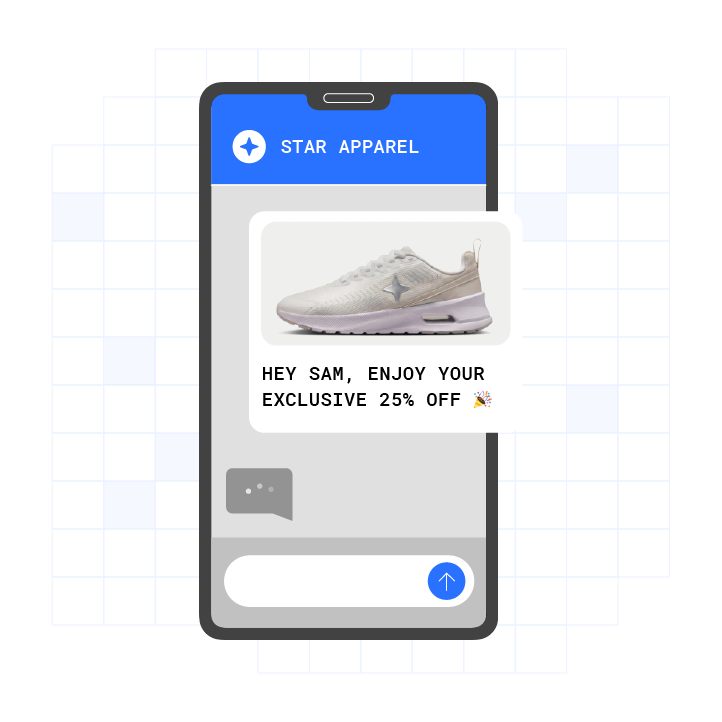
Plura RCS enables rich mobile messaging with interactive media, branded customer experiences, and AI-powered conversational engagement.
The table below compares the two most common approaches to order status SMS automation on four operational dimensions.4 All data points reflect published product capabilities.
FCC-licensed audio bridging carrier, with voice and SMS originating on Plura’s own domestic infrastructure
Real-time scrubbing against federal and state DNC registries and the Reassigned Numbers Database before every send, supported at the carrier level
Stateful Conversation Database shared across voice, SMS, RCS, and webchat, so every channel reads and writes to the same customer record
Generic Zapier/Twilio-based setup
No carrier ownership, routes through third-party CPaaS (Communications Platform as a Service), and the operator manages the compliance posture
Batch scrubbing available via third-party add-ons, not supported at the carrier level, and real-time scrubbing requires custom integration
No native cross-channel memory, with each channel maintaining a separate session, so context does not persist across voice and SMS without custom development
Common Order Status SMS Issues and Fixes
Four operational failure modes appear most frequently in high-volume order status SMS deployments.
Consent drift: Consent records become stale when customers change phone numbers or when numbers are reassigned. Businesses often consult the Reassigned Numbers Database for numbers where consent was obtained more than 30 days prior. Automate RND checks as part of the pre-send scrubbing sequence. Consult qualified counsel on consent record retention requirements.
Quiet-hour violations: Time-zone detection errors can cause messages to land outside permitted windows. Enforce quiet hours at the platform level using the recipient’s local time zone, not the sender’s. Eight U.S. states impose additional quiet-hour rules that may exceed federal TCPA requirements. Consult qualified counsel on state-specific restrictions applicable to your campaigns.
Metrics That Show Order Status SMS Is Working
The following benchmarks reflect published industry data for transactional and post-purchase SMS programs in e-commerce and service operations.
Open rates:Industry reports show high SMS open rates, with 95% of texts read within three minutes of delivery.3 Transactional messages such as order confirmations often sit at the top of this range because recipients are actively expecting them.
Click-through rate: A 2026 aggregate report lists an 11.9% CTR for post-purchase SMS flows, but Klaviyo and Postscript benchmarks report different rates and do not cite this figure, with varying median SMS CTR across program types.3,4E-commerce SMS shows a click-through rate of 19 to 35% on targeted campaigns.3
Ticket reduction: Two-way SMS order-status flows can reduce customer-service ticket volume for e-commerce brands.
Delivery rate: U.S. SMS delivery rates for registered 10DLC campaigns average 96.8% in 2026, with vetted top-tier brands on major carriers often reaching high delivery rates.3
Advanced Capabilities for High-Volume Programs
Operations scaling beyond 100,000 messages per month should evaluate four additional capabilities.
RCS enrichment: RCS (Rich Communication Services) delivers branded, interactive messages with rich media, in-message documents, and in-message payments inside the message thread. RCS campaigns can achieve high click-through rates compared to SMS. Plura’s AI RCS channel shares the same Stateful Conversation Database as SMS and voice.
AI lead intelligence: Enriching customer records with real-time data from 30-plus sources during the conversation allows the AI agent to personalize order status interactions and identify upsell or retention opportunities without adding a separate tool.
How do you automate order status SMS without triggering TCPA violations?
The core safeguards include documented prior express consent collected at the point of order, 10DLC brand and campaign registration completed before any sends, real-time DNC scrubbing against federal and state registries at the moment of send, quiet-hour enforcement based on the recipient’s local time zone, and automated opt-out processing that writes a do-not-contact flag to the CRM immediately. Generic automation setups handle the trigger logic but leave these compliance layers to the operator. Plura supports these controls at the carrier level before a message is sent. Consult qualified counsel on your specific TCPA obligations and consent collection practices.
What is SMS automation and how does it differ from manual order notifications?
SMS automation sends text messages programmatically based on a trigger event, such as an order status change in your order management system, without any manual action by a team member. Manual notifications require a staff member to send each message individually, which does not scale past a few dozen orders per day. Automated flows trigger on webhooks from your CRM or order management system and send the correct message to the correct customer at each fulfillment milestone, 24 hours a day, without human intervention. The operational difference at scale is significant: proactive status updates eliminate the need for customers to call or email asking “where’s my order,” and the reduction in fulfillment inquiries mentioned earlier becomes measurable once the workflow is live.
How do you keep order updates stateful across voice, SMS, and webchat?
Stateful cross-channel memory requires a single data layer that every channel reads from and writes to, keyed on a canonical customer identity rather than a channel-specific session ID. Plura’s Stateful Conversation Database stores every interaction, whether it originated on voice, SMS, RCS, or webchat, against the customer’s phone number or email. When a customer replies to an order status SMS, the AI agent already knows what was said on the prior voice call. When the interaction escalates to a human agent, the Unified Inbox shows the complete cross-channel history on one screen. Generic setups that route SMS through one vendor and voice through another cannot share this context without custom development.
What is 10DLC and why does it matter for order status SMS?
10DLC stands for 10-digit long code, the A2P messaging registry that U.S. carriers use to authenticate business SMS traffic. Brands and campaigns must be registered with The Campaign Registry before messages can be delivered at scale. Unregistered traffic has been blocked by carriers since February 2025. Low trust scores from incomplete or new registrations may limit throughput, which often falls short for high-volume order status deployments. Plura’s platform includes 10DLC-registered messaging as part of its carrier stack, with throughput designed for enterprise volume.
How does real-time DNC scrubbing differ from batch scrubbing for order status SMS?
Batch scrubbing checks a contact list against DNC registries at a single point in time, typically hours or days before a send. Real-time scrubbing checks each number at the exact moment the send is triggered. The operational difference matters because new DNC registrations and customer opt-outs occur continuously. A number that was clean during a batch scrub 48 hours ago may have been added to a registry or submitted an opt-out since then. At high volume, the gap between batch and real-time scrubbing is where TCPA exposure can accumulate. Plura supports real-time DNC scrubbing at the carrier level before every outbound message. Consult qualified counsel on your DNC compliance obligations.
Conclusion: Building Order Status SMS That Scales
Order status SMS automation at enterprise scale requires more than a webhook and a third-party SMS API. It relies on 10DLC registration, documented prior express consent, real-time DNC scrubbing enforced before every send, quiet-hour controls based on the recipient’s local time zone, automated opt-out processing, and a stateful data layer that preserves conversation context across every channel a customer might use.
Generic Zapier or Twilio-based setups handle the trigger logic and leave the compliance architecture to the operator. Plura AI owns its FCC-licensed carrier stack, supports TCPA and DNC compliance at the carrier level, and maintains cross-channel memory through a Stateful Conversation Database shared across voice, SMS, RCS, and webchat. The result is an AI customer service texting platform designed for the volume and regulatory environment high-volume operations actually face.
Review Plura’s plans and rates to find the right tier for your operation’s volume and compliance requirements.
1 Plura AI maintains SOC 2, HIPAA, ISO, and GDPR posture as part of its platform infrastructure. References to compliance frameworks in this article describe Plura’s platform capabilities and do not constitute a guarantee that any customer using Plura will themselves be compliant with applicable laws or standards. Customers remain solely responsible for their own regulatory obligations, certifications, consent management, recordkeeping, and the claims they make to their own end users. Consult qualified legal counsel for guidance specific to your use case.
2 This article describes regulatory frameworks at a general level and does not constitute legal advice. Laws and regulations vary by jurisdiction, change over time, and apply differently depending on facts and circumstances. Readers should consult qualified legal counsel before making compliance decisions.
3 Performance figures, customer outcomes, and industry statistics referenced in this article are drawn from cited third-party sources or Plura customer case studies. Individual results vary based on implementation, use case, industry, audience, and execution. Past or aggregate performance is not a guarantee of future results.
4 References to third-party products, services, companies, or research are made for informational and comparative purposes only. Plura AI is not affiliated with, endorsed by, or sponsored by any third party named in this article unless explicitly stated. Trademarks and product names referenced remain the property of their respective owners.
This article is provided for informational purposes only and reflects Plura AI’s understanding at the time of publication. Product capabilities, integrations, and specifications are subject to change. For the most current information, visit plura.ai.
This article was produced with the assistance of AI tools and reviewed by Plura AI prior to publication.