

Written by: Matt Beucler, CEO, Plura AI
Key Takeaways for Operations Leaders
- Order status update automation uses AI to send real-time shipment notifications across SMS, email, and other channels without agents, reducing WISMO tickets that account for 35-45% of e-commerce support volume.3
- Manual handling of order-status inquiries at 500+ daily interactions creates linear labor costs, slow response times, and fragmented channel experiences that drive repeat contacts.
- AI SMS automation platforms like Plura AI handle exceptions, maintain cross-channel conversation memory, and support TCPA, DNC, and A2P 10DLC compliance at enterprise scale where rule-based tools fail.1
- Proactive milestone notifications combined with AI resolution can reduce WISMO volume by 60-80%, cut response times to under 5 seconds, and eliminate avoidable support costs estimated at $6.40 per ticket.
- Plura AI delivers sub-5-second responses, stateful cross-channel memory, and built-in compliance controls. Book a live demo to see order status automation in action.
The Problem: Manual Order-Status Inquiries at Scale
WISMO (“Where Is My Order?”) tickets are the single largest driver of avoidable support cost in e-commerce, as documented in Narvar’s 2025 Consumer Report. During peak season, that share can climb past 50% of total ticket volume.
The math compounds quickly because WISMO tickets carry significant resolution costs. For a brand processing 1,000 orders per week, that volume translates to hundreds of tickets per week. These tickets exist because the post-purchase communication layer failed, not because the product or fulfillment failed.
At 500 or more daily interactions, manual handling of these tickets creates three compounding problems. Labor costs scale linearly with volume. Response times measured in hours erode customer trust. Fragmented channels produce inconsistent experiences that drive repeat contacts.
Workflow Breakdowns and Compliance Exposure
Manual order-status processes create channel silos. A customer who emails about a delayed shipment and then calls the support line typically has to re-explain the situation from scratch because the email thread and the phone queue share no memory. Each re-explanation is a repeat contact that inflates ticket counts and agent handle time.
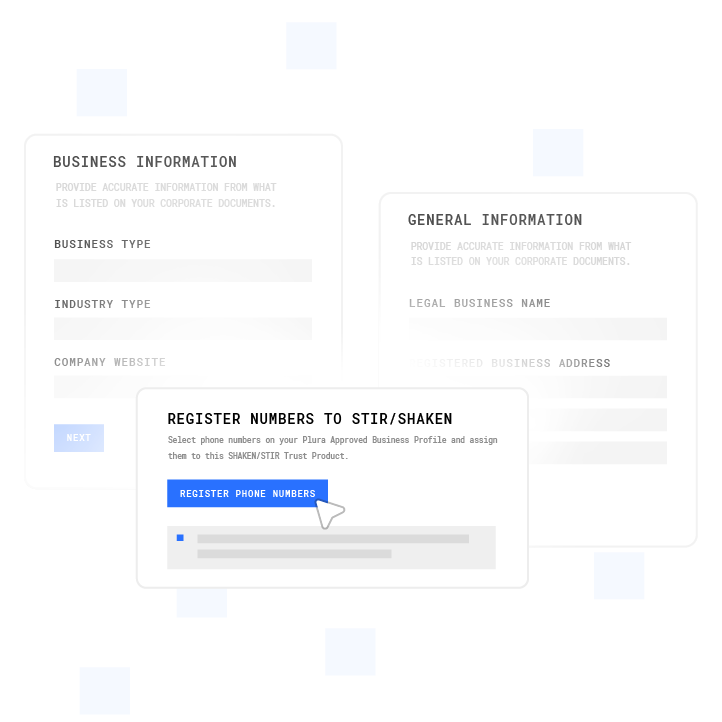
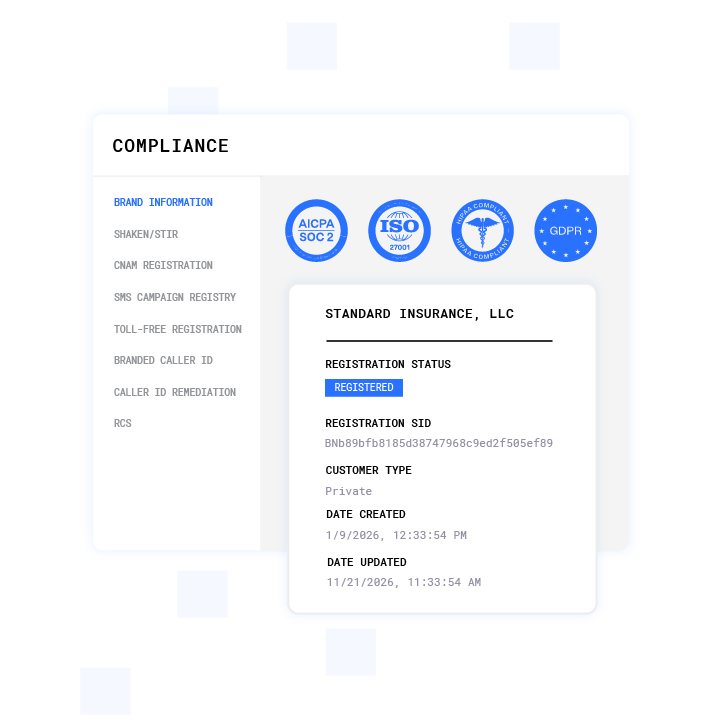
Compliance exposure grows alongside the operational cost. Automated SMS notifications sent to customers intersect with the TCPA (47 U.S.C. § 227), A2P 10DLC (Application-to-Person 10-Digit Long Code) registration requirements enforced by U.S. carriers, and a growing set of state-level quiet-hours and consent rules.2 As of February 2025, unregistered A2P 10DLC traffic is fully blocked by major U.S. carriers including T-Mobile, AT&T, and Verizon, with no exceptions for any volume of messages. Operations that have not registered their SMS campaigns can encounter carrier-level blocking before a single notification reaches a customer. Businesses should consult qualified legal counsel to understand their specific obligations under applicable federal and state frameworks.
AI SMS Automation for Order Status at Scale
AI customer service texting replaces manual WISMO handling with immediate, memory-driven order status automation. Rule-based platform flows follow fixed if/then logic and fail when a situation falls outside predefined conditions. AI SMS automation interprets customer replies, references prior conversation history across channels, and escalates to a human agent when the workflow calls for it.
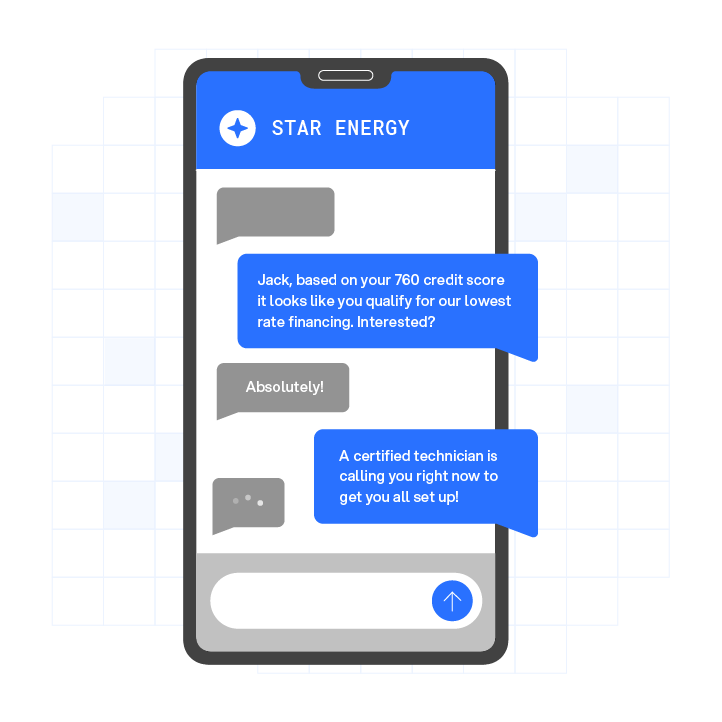
This structural difference matters at scale. Rule-based native automation cannot handle unanticipated scenarios, and if a situation falls outside predefined rules, the automation fails because it lacks the ability to infer or reason. An AI SMS platform handles the exception, the follow-up question, and the escalation within the same conversation thread.
Book a live demo with Plura AI to see AI SMS order status automation running on a real fulfillment workflow: schedule your demo here.
Representative Order-Status Automation Example
A DTC apparel brand processing 3,000 orders per month with a 40% WISMO rate generates approximately 1,200 order-status contacts per month. At $6.40 per ticket, that figure equals $7,680 per month in avoidable support cost. The support team handles these contacts across email, live chat, and phone with no shared memory between channels.
After deploying order status automation via Plura’s AI SMS platform, the workflow triggers proactive SMS notifications at five fulfillment milestones: order confirmed, order fulfilled, shipped with tracking link, out for delivery, and delivered. Inbound WISMO replies are handled by the AI agent, which reads the customer’s order record and prior conversation history in real time and responds immediately. Exceptions such as carrier delays or lost packages escalate to a human agent via the Unified Inbox with full conversation context already loaded.
Neutral Industry Benchmarks for WISMO Automation
The following benchmarks reflect published industry data on the impact of automated order-status workflows:
- Shopify’s February 2025 WISMO article does not report any specific percentage reduction in tickets from proactive notifications.
- Sending proactive notifications can reduce WISMO tickets, particularly around delivery updates.
- Combining proactive carrier notifications with agentic AI resolution enables brands to cut total WISMO volume by 60-80%.
- The commonly cited 98% SMS open-rate figure for shipping notifications is not supported by Klaviyo data and has been debunked by platform-level research.
- Automated WISMO cases achieve resolution times under 5 minutes.
These benchmarks show the measurable impact of automation on cost and speed. The next section connects common pain points in manual workflows to specific automation capabilities.
Pain Points in WISMO and Matching Solutions
Slow Response vs. Immediate Engagement
Manual support queues produce response times measured in hours. AI reduces average first response time from 4 hours to under 30 seconds for automated queries. Plura’s AI customer service texting platform delivers order status responses with the speed mentioned earlier from the moment a customer sends an inbound message, with no agent involvement required for standard WISMO queries.
Fragmented Channels vs. Unified Memory
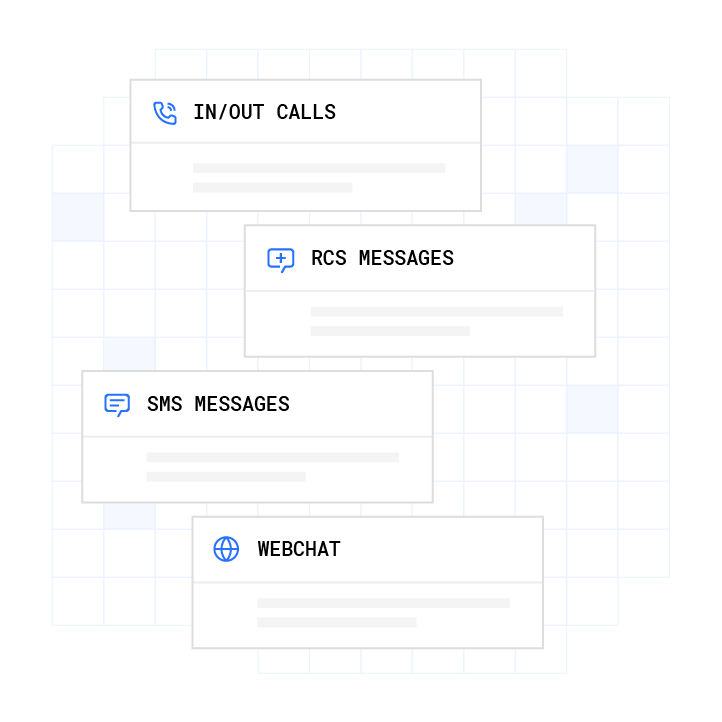
Channel silos force customers to repeat themselves and inflate repeat-contact rates. Plura’s Stateful Conversation Database keys every interaction to a customer token across voice, SMS, RCS, and webchat. A customer who texted about a delayed shipment at 9 a.m. is the same customer when they call at noon, and the agent already knows what was said. This cross-channel memory is the structural difference between Plura’s order status automation and point-tool SMS flows that operate in isolation.
Rising Labor Costs vs. Scalable Automation
Handling “where is my order?” requests represents significant annual labor costs for a task that automated order tracking can eliminate in most cases. Plura’s platform scales to handle peak-season volume spikes without proportional headcount increases. Run your numbers through Plura’s calculator to check your ROI in real time: plura.ai/calculator.
Compliance Complexity vs. Built-In Controls
Plura supports TCPA compliance, DNC compliance, and A2P 10DLC registration requirements through built-in platform controls. These controls include real-time DNC scrubbing on every outbound contact, immutable consent records with timestamps, automated quiet-hours enforcement via time-zone detection, and one-click audit-ready exports. Plura provides the infrastructure, while customers remain responsible for their own compliance obligations and should consult qualified counsel regarding their specific regulatory requirements.
Technical Workflow Configuration for Fulfillment Automation
- Connect your order management system. Integrate your OMS or e-commerce platform such as Shopify, BigCommerce, or WooCommerce with Plura via the integrations layer to feed real-time order and fulfillment events into the workflow.
- Register your A2P 10DLC campaign. Complete brand and campaign registration through The Campaign Registry before sending automated SMS. Consult qualified counsel on consent documentation requirements under the TCPA and applicable state rules.
- Define fulfillment milestones. Map the five core notification triggers: order confirmed, order fulfilled, shipped with carrier tracking link, out for delivery, and delivered.
- Build the SMS workflow. Use Plura’s no-code workflow builder on the managed workflows canvas to configure message templates, branching logic for carrier exceptions, and escalation rules for edge cases such as lost packages or high-value orders.
- Configure inbound reply handling. Set the AI SMS agent to read inbound WISMO replies against the customer’s live order record and conversation history, respond at the speed described earlier, and route unresolvable cases to the Unified Inbox with full context loaded.
- Activate compliance controls. Enable real-time DNC scrubbing, quiet-hours enforcement, and consent-record logging before the workflow goes live.
- Monitor and iterate. Use Plura’s conversation intelligence layer to track deflection rates, escalation patterns, and resolution times week over week, and tune the workflow against actual outcomes.
Compliance Requirements for Automated SMS Notifications
Automated SMS order-status notifications intersect with several federal and state regulatory frameworks. The following is a neutral description of the landscape, and businesses should consult qualified legal counsel to understand their specific obligations.
The TCPA (47 U.S.C. § 227) relates to automated SMS communications to U.S. mobile numbers. Transactional messages about an existing customer inquiry may rely on implied consent in some cases, while marketing or promotional messages can require prior express written consent. The FCC’s one-to-one consent rule states that prior express written consent should authorize no more than one identified seller at a time under 47 C.F.R. § 64.1200(f)(9), but its effective date has been postponed pending judicial review.
A2P 10DLC registration is enforced at the carrier level. Each distinct SMS use case must be registered as a separate campaign with The Campaign Registry, including sample messages, opt-in mechanism description, and privacy policy link.
TCPA statutory damages range from $500 per violation to $1,500 for willful violations, with no requirement that the consumer prove actual harm. State mini-TCPAs in Florida, Oklahoma, and Maryland describe stricter standards. Every automated SMS program should include a documented opt-out mechanism, a suppression list, and timestamped consent records retained for the period specified by applicable law.
Given these compliance requirements, the choice of automation platform affects whether compliance controls are built in or require manual implementation. The next section compares how common platforms handle both automation and compliance needs.
Platform Comparison: Shopify Flow, Zapier, and Plura AI
Shopify Flow operates on native, rule-based if/then logic without an AI reasoning layer, while Zapier provides low-code trigger and action automation that also struggles when agentic AI flows are required. In contrast, Plura AI delivers an AI-driven, stateful conversation engine on FCC-licensed carrier infrastructure. This architectural difference extends to channel support. Shopify Flow handles email and on-platform notifications but requires a third-party app for SMS, and Zapier enables multi-channel automation only through third-party connectors such as Twilio for SMS. Plura supports voice, SMS, RCS, and webchat natively on one stateful conversation database.
Compliance handling also differs across these platforms. Shopify Flow has no built-in TCPA or DNC scrubbing or consent logging. Zapier has no built-in TCPA or DNC scrubbing, so compliance remains the operator’s responsibility. Plura provides real-time DNC scrubbing, immutable consent records, quiet-hours enforcement, and audit-ready exports that support TCPA and DNC compliance operations. Infrastructure limits vary as well. Shopify Flow is subject to Shopify API rate limits that can constrain bulk execution during peak events. Zapier has reported silent failures and duplicated records at mid-market scale. Plura uses carrier-grade infrastructure that scales to high-volume operations without rate-limit constraints.
Plura AI Onboarding Sequence for Order Status Automation
Deploying Plura’s AI customer service texting platform for order status update automation follows a structured onboarding sequence:
- Discovery audit of current support volume, WISMO rate, and existing notification infrastructure.
- Intake of sample customer conversations, existing scripts, and OMS data structure.
- Overnight build of a dynamic conversation mockup using Plura’s internal workflow tooling.
- Review session to walk through the mockup and refine escalation logic and message templates.
- Engineering build of the production order status automation workflow with carrier API connections and DNC scrubbing active.
- Pilot test on a subset of real orders before full go-live.
- Full deployment with ongoing conversation engineering and weekly tuning against deflection and resolution metrics via conversation intelligence.
All annual contracts include a 90-day opt-out window. Compare plans and rates side by side at plura.ai/pricing.
Ready to deploy this workflow for your operation? The demo link above walks through the full implementation sequence.
Frequently Asked Questions
How does Plura AI’s order status automation differ from native Shopify or Zapier flows?
Native Shopify Flow and Zapier operate on fixed if/then rule logic, and when a customer situation falls outside a predefined condition, the automation stops. Plura’s AI SMS platform uses a stateful conversation engine that interprets inbound replies, references the customer’s full order and conversation history across every channel, and handles exceptions without failing silently. Plura also runs on its own FCC-licensed carrier infrastructure, which means compliance controls such as real-time DNC scrubbing and consent logging are built into the platform rather than bolted on through third-party connectors.
Which channels does Plura support for order status notifications?
Plura supports SMS, RCS (Rich Communication Services), voice, and webchat on a single stateful conversation database. Every channel shares the same customer memory, so a customer who receives an SMS update and then calls the support line does not have to repeat their order details. SMS remains a high-reach channel for transactional notifications, with strong engagement reported for shipping updates in platform data.
What compliance considerations apply to automated SMS order notifications?
Automated SMS order notifications intersect with the TCPA, A2P 10DLC registration requirements enforced by U.S. carriers, DNC registry obligations, and state-level quiet-hours and consent rules. Plura’s platform includes real-time DNC scrubbing, immutable consent record logging, automated quiet-hours enforcement via time-zone detection, and one-click audit-ready exports to support compliance operations. Businesses remain responsible for their own regulatory obligations and should consult qualified legal counsel regarding their specific requirements under applicable federal and state law.
What integrations are required to connect Plura to an existing e-commerce stack?
Plura connects to Shopify, Stripe, and more than 50 tools across CRM, OMS, calendar, and data enrichment categories via the integrations directory at plura.ai/integrations. For order status automation, the core integration connects the OMS or e-commerce platform to Plura’s workflow engine, which receives fulfillment milestone events and triggers the appropriate SMS notification or inbound reply handling flow. No custom engineering is required for standard Shopify or Stripe connections.
How does Plura handle escalation to a human agent when the AI cannot resolve an order inquiry?
Plura’s workflows include explicit escalation guardrails. When an inbound WISMO reply falls outside the workflow’s defined resolution paths, such as a lost package claim, a high-value order dispute, or a fraud flag, the AI routes the conversation to the Unified Inbox with the full conversation history already loaded. The human agent sees every prior message, the customer’s order record, and the AI’s last response before picking up the thread. No context is lost in the handoff.
Evaluation Criteria and Next Steps
Order status update automation platforms for high-volume e-commerce operations should meet specific criteria that separate enterprise-grade deployments from point-tool workarounds:
- Immediate response on inbound WISMO queries without agent involvement
- Stateful cross-channel memory that persists context across SMS, voice, RCS, and webchat
- Built-in DNC scrubbing, TCPA consent logging, and A2P 10DLC registration support
- Carrier-grade infrastructure that does not depend on third-party CPaaS rate limits or compliance postures
- Escalation logic that routes unresolvable cases to human agents with full context loaded
- Measurable deflection and resolution metrics available for ongoing workflow tuning
Plura AI meets each of these criteria on a single platform. Run your numbers through Plura’s calculator to check your ROI in real time: plura.ai/calculator. Compare plans and rates side by side at plura.ai/pricing.
1 Plura AI maintains SOC 2, HIPAA, ISO, and GDPR posture as part of its platform infrastructure. References to compliance frameworks in this article describe Plura’s platform capabilities and do not constitute a guarantee that any customer using Plura will themselves be compliant with applicable laws or standards. Customers remain solely responsible for their own regulatory obligations, certifications, consent management, recordkeeping, and the claims they make to their own end users. Consult qualified legal counsel for guidance specific to your use case.
2 This article describes regulatory frameworks at a general level and does not constitute legal advice. Laws and regulations vary by jurisdiction, change over time, and apply differently depending on facts and circumstances. Readers should consult qualified legal counsel before making compliance decisions.
3 Performance figures, customer outcomes, and industry statistics referenced in this article are drawn from cited third-party sources or Plura customer case studies. Individual results vary based on implementation, use case, industry, audience, and execution. Past or aggregate performance is not a guarantee of future results.
4 References to third-party products, services, companies, or research are made for informational and comparative purposes only. Plura AI is not affiliated with, endorsed by, or sponsored by any third party named in this article unless explicitly stated. Trademarks and product names referenced remain the property of their respective owners.
This article is provided for informational purposes only and reflects Plura AI’s understanding at the time of publication. Product capabilities, integrations, and specifications are subject to change. For the most current information, visit plura.ai.
This article was produced with the assistance of AI tools and reviewed by Plura AI prior to publication.