

Written by: Matt Beucler, CEO, Plura AI | Last updated: August 8, 2026
Key Takeaways
- The Keep Call Centers in America Act (S.2495) would require 120-day advance notice to the DOL before offshoring call-center work and would place non-compliant operators on a public list that bars new federal grants and loans.
- Every customer interaction would need to begin with disclosure of the agent’s physical location, and callers could request transfer to a U.S.-based agent when the agent is overseas.
- S.2495 would also require disclosure of AI use in customer-service communications, but the bill remains in committee as of 2026-08-08 and has not yet been enacted.
- Operators can prepare now by baking location and AI disclosures into call flows and documenting domestic-handling practices to reduce future compliance gaps.
- Plura AI’s U.S.-infrastructure AI platform lets operators configure disclosure scripts at the first node of every interaction, which simplifies compliance work if the bill passes.
Core Requirements in the Keep Call Centers in America Act
S.2495 would impose several obligations on covered operators, and each provision carries independent compliance weight.2
- Advance notice of offshoring. Covered businesses must notify the U.S. Department of Labor (DOL) at least 120 days before relocating a call center or contracting call center work overseas, per a summary of the bill.
- Public list placement. Companies that offshore qualifying call-center operations are placed on a DOL public list. Non-compliant companies can remain on that list for up to five years, become ineligible for new federal grants and guaranteed loans, and may face penalties on existing federal grants or loans, per a summary of the bill.
- Agent location and transfer disclosure. At the start of every customer interaction, agents must disclose their physical location. If the agent is located outside the United States, the caller must be informed of their right to request a transfer to a U.S.-based agent, per Contact Center Pipeline’s analysis of the bill.
- DOL enforcement and public list maintenance. S.2495 requires the DOL to maintain a public list of employers that relocate call centers overseas and to enforce the location and AI disclosure requirements described above, but it does not direct any report to Congress on federal call center work or AI job losses, per the bill text.
Book a live demo with Plura AI to see how U.S.-infrastructure AI supports location and AI disclosures from day one.
How S.2495 Would Function if Enacted
S.2495 is not yet enacted law. It is pending federal legislation introduced in the 119th Congress with both a Senate version (S.2495) and a House companion bill (H.R.4954). If enacted, the bill’s obligations would apply to businesses that relocate or contract call-center work overseas.
If enacted, S.2495 would impose four core requirements on covered operators. These include advance DOL notice before offshoring, public list placement with related funding consequences, consumer-facing location disclosure with a transfer right, and DOL enforcement of AI and location disclosures.
The Communications Workers of America described the bill as “much needed legislation” that protects U.S. call center jobs from offshoring and AI displacement. Senator Jim Justice, a Republican co-sponsor, stated that Americans “shouldn’t have to deal with AI robots or be routed to someone across the world.”
Understanding which operators fall under S.2495’s requirements is critical for compliance planning.
Scope and Coverage of the Keep Call Centers in America Act
The bill covers businesses that relocate or contract call center operations overseas.
Under S.2495, a U.S.-incorporated company that relocates or contracts call-center work overseas is placed on a public list and barred from new federal grants or guaranteed loans for up to five years, per a bill summary.
Because some states have enacted their own onshoring or disclosure requirements, operators must also consider how S.2495 interacts with state-level laws.2 State-law compliance does not automatically satisfy S.2495 if the federal bill requires distinct disclosures, human-transfer rights, or AI-specific notices beyond what state rules mandate. Operators should consult qualified counsel on a “highest common denominator” approach that addresses both layers simultaneously.
Keep Call Centers in America Act Status in 2026
Updated 2026-08-08. As of this date, S.2495 remains in committee in the 119th Congress with no floor vote scheduled and no final passage. The bill has not been enacted into law.
The legislative record on Congress.gov for S.2495 reflects the bill’s current committee status. Operators tracking the bill should monitor Congress.gov directly for any markup, floor scheduling, or amendment activity.
S.2495 exists alongside two related federal actions that are further along in the regulatory process:
- The FCC NPRM in CG Docket No. 26-52, adopted March 26, 2026, proposes measures to encourage onshoring of call centers, English proficiency requirements for foreign centers, and fees or bonds to deter illegal robocalls originating abroad, per an FCC document. Original comment and reply deadlines for the NPRM in CG Docket No. 26-52 were May 26, 2026 and June 22, 2026, but were extended by FCC order to June 2 and June 29, 2026, per FCC order.
- The Foreign Robocall Elimination Act (S.2666), which targets illegal robocalls originating from foreign call centers by extending FCC enforcement authority beyond U.S. borders.
Thomas Laird, CEO of Expivia/OttoQA, noted that the FCC NPRM “has more teeth than the Keep Call Centers in America Act” because it falls under FCC jurisdiction over communications providers rather than requiring broad legislation through Congress.
AI and Location Disclosure Requirements Under S.2495
The location disclosure provisions in S.2495 apply to customer service interactions and affect both human and AI-handled conversations.
- Disclosure of agent location. S.2495 requires disclosure of the physical location of business agents engaging in customer service communications, per the bill text. The disclosure obligation applies to the interaction itself.
- DOL public list. The DOL’s public list and enforcement role, described earlier, applies to both location and AI disclosures, per the bill text.
For operators deploying AI voice agents or automated SMS workflows, interactions may need an upfront disclosure mechanism built directly into the conversation flow. Operators using platforms that run on U.S. infrastructure and include configurable disclosure scripts at the workflow level are better positioned to address this requirement if the bill is enacted.
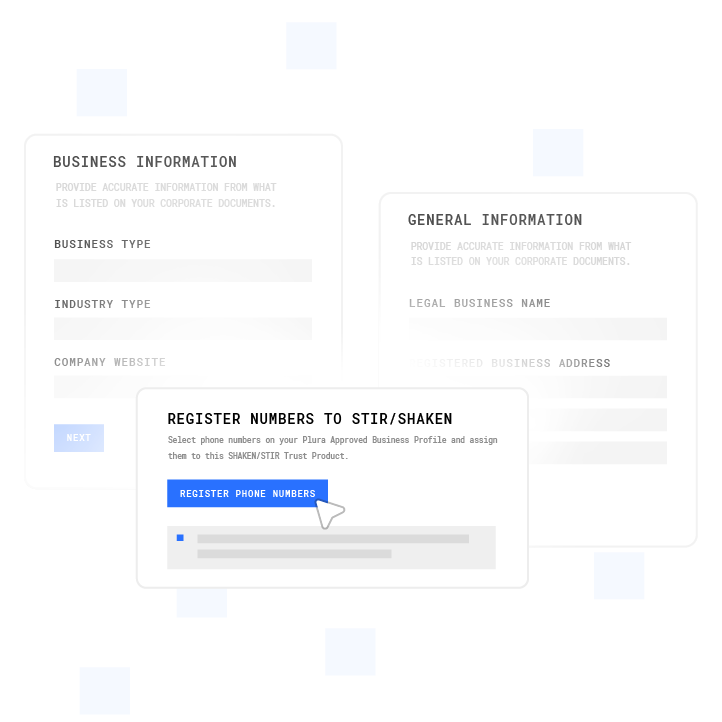
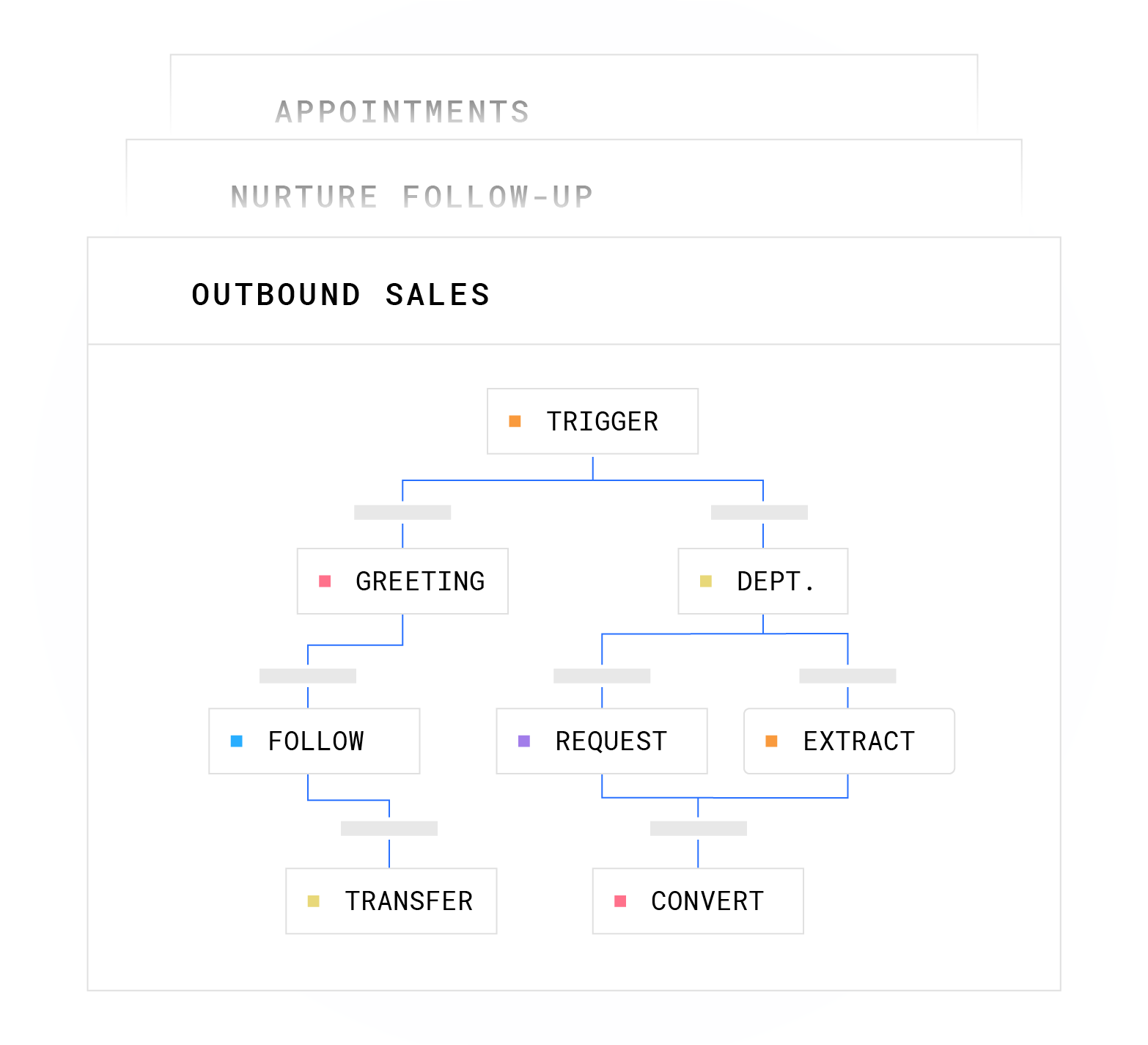
Plura AI’s no-code workflow builder allows operators to configure disclosure language at the first node of every AI-handled conversation. Because Plura runs on 100% U.S. infrastructure by architecture, voice origination, model hosting, data storage, and call recording all sit on domestic infrastructure, which supports the bill’s location-disclosure provisions simultaneously.
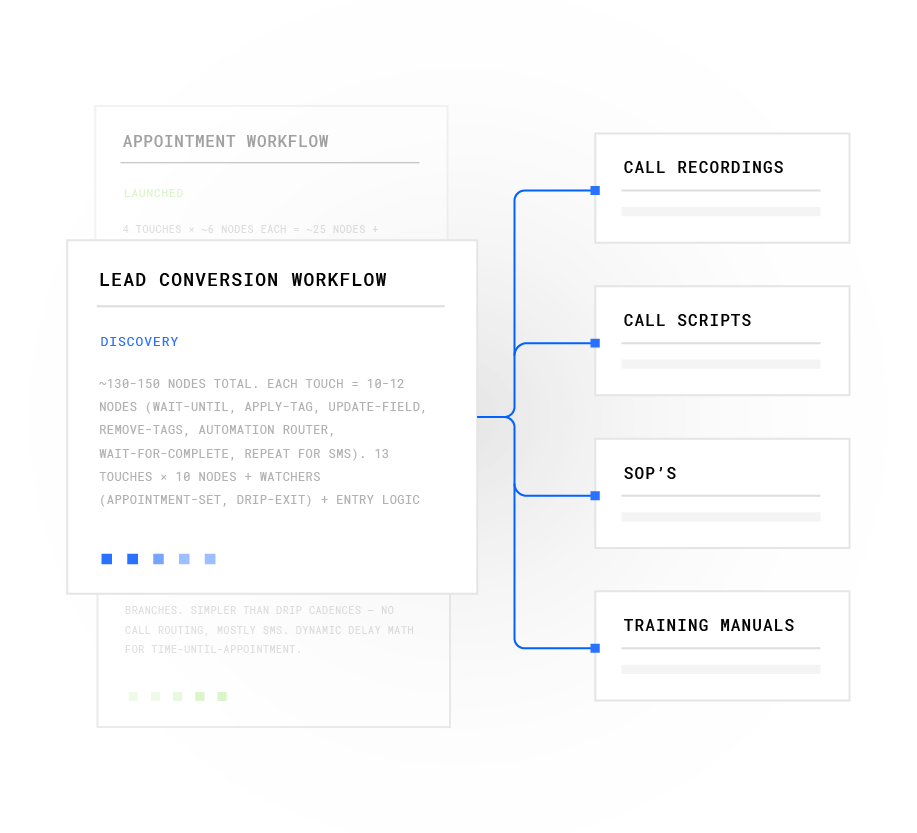
The following checklist maps each S.2495 provision to likely operator actions and shows how Plura’s U.S. infrastructure aligns with those requirements.
S.2495 Compliance Checklist for Contact Center Operators
| Provision | Statutory Basis | Operator Action | Plura Infrastructure Alignment |
|---|---|---|---|
| 120-day DOL advance notice of offshoring or foreign outsourcing | S.2495; Gryphon AI regulatory summary | Establish an internal offshoring-event tracking process and calendar DOL notification deadlines at least 120 days before any qualifying vendor or location change | Plura operates on 100% U.S. infrastructure by architecture, so there is no offshore vendor dependency to track or notify |
| Public list and federal funding ineligibility for non-compliant operators | S.2495; Outsource Accelerator analysis | Audit current vendor contracts for foreign-origination exposure and document domestic-handling posture for federal contract disclosures | Plura clients can document a “100% U.S.-handled” posture with no offshore vendor in the call path |
| Agent location disclosure and consumer transfer right to U.S.-based agent | S.2495; Contact Center Pipeline | Add location disclosure to the opening script of every interaction and build a transfer path to a U.S.-based agent for any offshore-handled call | Plura’s no-code workflow builder supports configurable opening disclosures, and all agents run on U.S. infrastructure |
| Agent location disclosure (including AI use) at outset of interaction | S.2495; Newsweek | Configure disclosure language at the first workflow node for every interaction and maintain records of deployment scope for potential audit | Plura’s workflow canvas supports first-node disclosure scripts, and conversation intelligence logs interaction data for audit-ready reporting |
This checklist is provided for informational purposes only and does not constitute legal advice. Operators should consult qualified counsel to assess their specific obligations under S.2495 and applicable state laws.
Conclusion
Although S.2495 has not yet passed, its provisions for advance notice, public list placement, location disclosure, and AI use enforcement define the compliance posture that high-volume operators can begin planning toward now. The bill’s DOL enforcement provisions, including the public list and AI disclosure requirements described above, frame how federal oversight of offshoring and AI use in call centers may evolve. The FCC NPRM (CG Docket No. 26-52), which is further along in the regulatory process and covers onshoring incentives and foreign robocall deterrence, operates on a parallel track to S.2495.
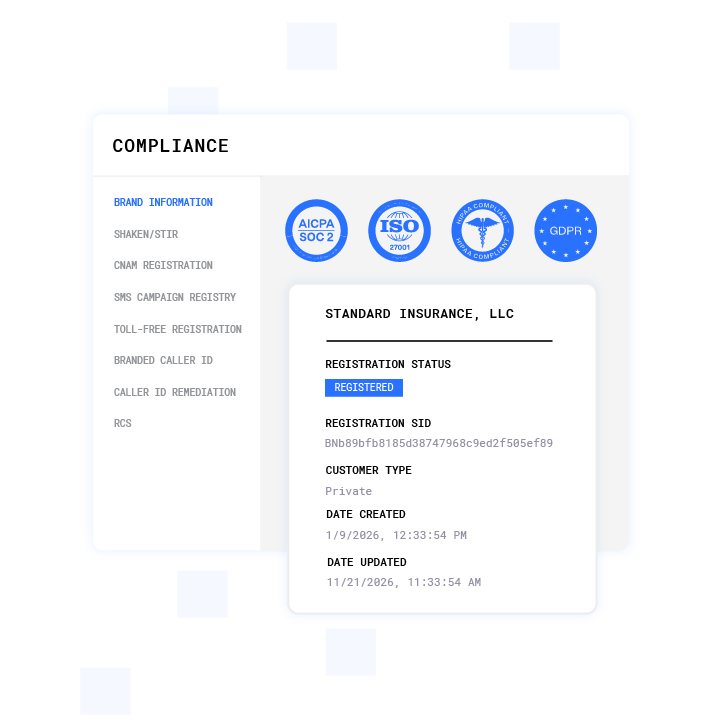
Operators running on U.S.-based AI communication infrastructure are structurally better positioned to address both the bill’s location-disclosure provisions and its related requirements. Plura AI runs on 100% U.S. infrastructure by architecture, supports configurable disclosure scripts at the workflow level, and provides conversation intelligence logging for audit-ready documentation. Plura’s compliance engine supports compliance with TCPA, DNC, HIPAA, SOC 2, and STIR/SHAKEN caller ID verification across every channel, but customers remain responsible for their own regulatory obligations.1
To understand the cost impact of transitioning from offshore or human-only call center operations to U.S.-based AI infrastructure, calculate your savings with Plura AI’s ROI tool.
Frequently Asked Questions
Does the Keep Call Centers in America Act apply to companies that use AI instead of offshore agents?
The location disclosure provision in S.2495 applies independently of whether a company has any offshore operations. Any operator using AI in customer service would need to consider how the physical location disclosure applies to each interaction if the bill is enacted. The offshoring provisions, including the 120-day DOL notice and public list requirements, apply specifically to operators that relocate call center work to foreign providers. A company that uses only U.S.-based AI infrastructure with no offshore vendor exposure would not trigger the offshoring notice or list provisions. Operators should consult qualified counsel to assess their specific exposure under both sets of provisions.
What is the difference between S.2495 and the FCC NPRM on offshore call centers?
S.2495 is pending federal legislation that requires Congressional passage to become law. The FCC Notice of Proposed Rulemaking (CG Docket No. 26-52), adopted March 26, 2026, is a regulatory proceeding that the FCC can finalize through its own rulemaking authority over communications providers. The FCC NPRM proposes measures to encourage onshoring of call centers, English proficiency requirements for foreign centers, and fees or bonds to deter illegal robocalls originating abroad. Both actions address disclosure and onshoring, but the FCC NPRM applies specifically to communications providers under FCC jurisdiction, while S.2495 targets businesses operating call centers that relocate work overseas. Operators subject to FCC jurisdiction may face obligations under both frameworks simultaneously.
How does S.2495 interact with state chatbot transparency and onshoring laws?
S.2495 may interact with state laws addressing chatbot transparency and onshoring. State-law compliance does not automatically satisfy S.2495 if the federal bill requires distinct disclosures, human-transfer rights, or AI-specific notices beyond what state rules mandate. A company could be fully aligned with a state law and still face separate federal notice, list, funding, and disclosure obligations under S.2495. Contact center leaders should work with qualified counsel to build a single disclosure framework that addresses both federal and state requirements rather than treating compliance with one rule as sufficient for the other.
What does “50 or more full-time equivalent employees” mean for the bill’s coverage threshold?
The bill applies to businesses that relocate call center operations overseas. Operators should assess whether their activities trigger the offshoring provisions. Operators using hybrid models, where some work is handled domestically and some is outsourced to foreign vendors, should assess their foreign-directed volume. Qualified counsel should be consulted for a fact-specific analysis.
What infrastructure characteristics help operators address S.2495’s disclosure and location requirements?
S.2495’s location-disclosure and AI-disclosure provisions require that operators know, at the moment of each interaction, where the agent is located and whether the interaction is handled by a human or an AI system. Operators using AI platforms that run on 100% U.S. infrastructure by architecture, with configurable disclosure scripts built into the conversation workflow, are structurally positioned to address both requirements. The key infrastructure characteristics are domestic hosting of voice origination, model processing, data storage, and call recording; a no-code workflow builder that allows disclosure language to be placed at the first node of every AI-handled interaction; and conversation logging that produces audit-ready records of disclosure delivery. Plura AI’s platform is built on these characteristics, with all channels running on U.S. infrastructure and a workflow canvas that supports configurable opening disclosures across voice, SMS, and webchat interactions.
1 Plura AI maintains SOC 2, HIPAA, ISO, and GDPR posture as part of its platform infrastructure. References to compliance frameworks in this article describe Plura’s platform capabilities and do not constitute a guarantee that any customer using Plura will themselves be compliant with applicable laws or standards. Customers remain solely responsible for their own regulatory obligations, certifications, consent management, recordkeeping, and the claims they make to their own end users. Consult qualified legal counsel for guidance specific to your use case.
2 This article describes regulatory frameworks at a general level and does not constitute legal advice. Laws and regulations vary by jurisdiction, change over time, and apply differently depending on facts and circumstances. Readers should consult qualified legal counsel before making compliance decisions.
This article is provided for informational purposes only and reflects Plura AI’s understanding at the time of publication. Product capabilities, integrations, and specifications are subject to change. For the most current information, visit plura.ai.
This article was produced with the assistance of AI tools and reviewed by Plura AI prior to publication.