

Written by: Matt Beucler, CEO, Plura AI | Last updated: August 25, 2026
Key Takeaways for High-Volume Scheduling Teams
- AI appointment scheduling software must respond in under five seconds, run 24/7, and connect to live calendars to handle 500+ daily interactions without missed calls.
- Only carrier-owned platforms provide real-time TCPA and DNC enforcement, branded caller ID, and stateful cross-channel memory across voice, SMS, RCS, and webchat.
- Web-based tools like Calendly and Acuity excel at self-serve booking but cannot answer inbound calls or enforce outbound compliance at scale.4
- High-volume operators can cut no-shows by up to 40% and reach 3 to 5 times peak-season capacity by replacing traditional contact-center cost structures with AI agents that share context across every channel.3
- Plura AI is the only evaluated platform that owns its FCC-licensed carrier, supports compliance at origination, and delivers these outcomes in 2 to 4 weeks. See how the architecture works in a live demo.
Market Context: Volume Growth, Customer Expectations, and Compliance Pressure
The global scheduling apps market was estimated at USD 663.1 million in 2025 and is projected to reach USD 1,813.1 million by 2033, growing at a CAGR of 13.46% from 2026 to 2033.3 Inside that broader market, AI-specific segments are accelerating faster. One report estimates the AI in patient scheduling software market growing from USD 99.02 million in 2026 to USD 311.22 million by 2031 at 25.74% CAGR, driven by 24/7 conversational self-scheduling demand and contact-center voice AI economics.
For high-volume operators, the gap between what customers expect and what most platforms deliver is measurable. Harvard Business Review research found that companies responding within five minutes are 100 times more likely to connect with a prospect than those waiting 30 minutes.3 Leads contacted within one minute are 391% more likely to convert than those contacted after 24 hours. The industry standard for first contact on an inbound lead still sits at 47 or more hours.
Compliance pressure compounds the volume problem. The FCC’s Notice of Proposed Rulemaking (CG Docket No. 26-52) proposes capping offshore customer-service calls at 30% and limiting offshore handling of sensitive consumer data.2 State laws in New York, New Jersey, Connecticut, Missouri, and Florida already restrict offshore handling of medical, financial, and consumer data. Every AI scheduling vendor without U.S.-based infrastructure now carries regulatory exposure.
Executive Summary: Five Criteria to Compare Scheduling Platforms
Given these market pressures and compliance requirements, high-volume operators need a structured way to evaluate their options. This comparison evaluates seven tools against five criteria relevant to operations handling 500 or more daily interactions:
- Speed: Time from inbound contact to confirmed booking, including after-hours coverage.
- Channel coverage: Voice, SMS, RCS, and webchat handled from a single platform with shared memory.
- Compliance posture: TCPA, DNC, HIPAA, and state-level rule enforcement supported inside the platform, not bolted on.
- Integration depth: Live calendar read/write, CRM sync, and EHR connectivity without manual follow-up.
- Operational fit: Scalability to peak volume, deployment timeline, and total cost of ownership.
See how these criteria apply to your operation in a live demo.
Industry Landscape: Four Scheduling Infrastructure Models
High-volume operators choose among four main categories of scheduling infrastructure today.
Human-only contact centers carry a cost structure that becomes difficult at scale. A 15-agent operation at $20 per hour with standard taxes, benefits, and commissions at 40% talk utilization costs $60,000 per month. These teams cannot scale into peak seasons without months of advance hiring.
Offshore BPOs reduced that cost burden for two decades. That model now faces regulatory pressure from the FCC NPRM, the Keep Call Centers in America Act (S.2495), and the Foreign Robocall Elimination Act (S.2666).
CPaaS-based AI wrappers are the most common category in the current market. Most route voice through third-party carriers like Twilio, cannot issue branded caller ID at the carrier level, and cannot enforce real-time DNC scrubbing before dial. The FCC’s February 2024 declaratory ruling classifies AI-generated voices as artificial or prerecorded voices under the TCPA, which subjects every outbound AI voice call to the same consent standards as traditional robocalls.2 Platforms that cannot support consent enforcement at the carrier level expose operators to $500 to $1,500 per-call statutory damages.
End-to-end AI platforms with owned carrier infrastructure represent the fourth category. These platforms originate voice on their own FCC-licensed carrier, support compliance controls before dial, and maintain stateful conversation memory across channels.
Strategic Choices: Automation Scope, Channel Mix, and Regulated Use Cases
Production voice AI scheduling deployments target at least 80% intent accuracy in pilot mode and at least 70% containment before scaling. Human oversight still handles clinical escalations, complex objections, and sensitive disclosures. The platform therefore needs tiered routing. AI completes scheduling at Tier 1. Staff completes with AI summary at Tier 2. Clinical or urgent cases route to Tier 3 with full transcript and call context passed to the agent.
Web-based schedulers such as Calendly and Acuity handle self-serve booking well for low-volume, low-urgency use cases. They do not answer inbound calls, cannot conduct outbound follow-up, and have no mechanism for real-time DNC scrubbing or TCPA consent enforcement at the carrier level. For operations with 500 or more daily interactions, voice-first automation with web and SMS as secondary channels matches actual customer behavior.
Regulated environments, specifically healthcare, financial services, and legal, need platforms that support HIPAA-aligned encryption, audit logging, and Business Associate Agreement (BAA) execution with every vendor in the chain. Under 45 CFR 164.506(c), appointment reminders are considered part of treatment and require no special patient authorization, though the minimum necessary standard under 45 CFR 164.502(b) still limits the PHI included in any reminder message.2 Operators in regulated environments should consult qualified counsel on their specific obligations.
Operational Best Practices: Routing, Context, Consent, and Metrics
High-volume scheduling deployments that perform consistently share four operational characteristics:
- Routing logic tied to live data: Availability checks read directly from the calendar at call time, not from cached or delayed API responses. Relatient’s 2025 customer data showed more than 60% of appointment cancellation calls completed by voice AI.
- Shared context across channels: A customer who texted at 9 a.m. should not re-explain their situation when the call comes at noon. Stateful conversation memory keyed to the customer’s phone number or email is the architectural requirement.
- Consent management integrated at dial time: Consent management should connect directly to the dialer or AI platform so that each call queries a live consent registry in real time rather than relying on a static pre-pulled contact list.
- Performance monitoring on outcomes, not activity: Containment rate, booking accuracy, no-show rate, and cost per completed appointment are the metrics that matter. Call volume and talk time are inputs, not results.
Implementation Readiness: Six Checks Before You Select a Platform
Before selecting a platform, high-volume operators should verify readiness across six dimensions. These requirements build on each other. Volume determines whether the investment makes economic sense. Process maturity defines what the platform will automate. Data quality determines whether that automation can execute reliably. Once those foundations are in place, compliance infrastructure protects the business, internal ownership keeps the deployment on track, and confirmed integrations allow the platform to connect to the systems that run the operation.
- Volume: At least 500 daily interactions or $5,000 per month in paid-media spend to generate sufficient ROI from an enterprise AI scheduling platform.
- Process maturity: Documented call flows, escalation paths, and appointment types. Platforms cannot automate undefined processes.
- Data quality: Clean contact records with valid phone numbers, consent timestamps, and opt-out history. An audit-safe consent record should capture the phone number, the specific campaign purpose, the named seller, the exact disclosure version shown at opt-in, a UTC timestamp, IP or device metadata, and a full status history including any revocation events.
- Compliance infrastructure: Existing DNC suppression lists, consent records, and state-specific calling-window rules that the platform must ingest on day one.
- Ownership: An internal owner and, for healthcare deployments, an EHR admin who participates weekly during implementation.
- Integrations: Confirmed API access to the CRM, calendar, and EHR systems the platform must read from and write to in real time.
Common Pitfalls in High-Volume AI Scheduling Rollouts
Four failure patterns appear consistently in high-volume AI scheduling deployments:
- Automating broken workflows: An AI agent that runs a broken booking process runs it faster and at higher volume. Teams should document and fix the process before deploying automation.
- Underestimating compliance: TCPA penalties for AI voice agent violations are $500 per call for unknowing violations and $1,500 per call for willful violations, with a private right of action enabling class actions.
- Treating channels separately: Voice, SMS, and webchat managed by different vendors with different memories produce a fragmented customer experience and duplicate compliance risk.
- Measuring activity not outcomes: Call volume and message count are not business results. No-show rate, booking conversion, and cost per completed appointment are.
Numbered Tool Comparison: 7 Scheduling Platforms Evaluated
1. Calendly4
| Criterion | Assessment |
|---|---|
| Speed | Self-serve web booking, no inbound call handling |
| Channel coverage | Web only, no native voice, SMS, or RCS |
| Compliance posture | No TCPA enforcement, no DNC scrubbing, no HIPAA BAA by default |
| Integration depth | Calendar sync via API, no live CRM write-back during calls |
| Operational fit | Suited for low-volume, self-serve scheduling, not designed for 500+ daily inbound interactions |
2. Acuity Scheduling
| Criterion | Assessment |
|---|---|
| Speed | Web form submission, no real-time voice booking |
| Channel coverage | Web and email, no voice or SMS agents |
| Compliance posture | No built-in TCPA or DNC enforcement, HIPAA add-on available for healthcare plans |
| Integration depth | Calendar and payment integrations, no live call-time CRM sync |
| Operational fit | Suited for solo practitioners and small teams, not architected for contact-center-scale inbound |
3. Zocdoc (Zo by Zocdoc)4
| Criterion | Assessment |
|---|---|
| Speed | Launched May 2025 to handle inbound scheduling calls autonomously using conversational AI |
| Channel coverage | Voice and web, healthcare-specific |
| Compliance posture | Healthcare-focused, HIPAA-aligned, limited TCPA outbound enforcement documentation |
| Integration depth | EHR integrations for participating providers, limited outside the Zocdoc network |
| Operational fit | Healthcare providers within the Zocdoc network, not a general-purpose high-volume platform |
4. Vapi4
| Criterion | Assessment |
|---|---|
| Speed | Developer-configurable, speed depends on custom build |
| Channel coverage | Voice API, no native SMS, RCS, or webchat with shared memory |
| Compliance posture | No built-in TCPA or DNC enforcement, compliance is the customer’s build responsibility |
| Integration depth | API-first, integrations require developer implementation |
| Operational fit | Developer teams building custom voice applications, not a managed enterprise scheduling platform |
5. Go High Level4
| Criterion | Assessment |
|---|---|
| Speed | CRM-first, AI voice capabilities added via third-party integrations |
| Channel coverage | SMS, email, and webchat native, voice requires third-party AI layer |
| Compliance posture | No carrier-level TCPA or DNC enforcement, compliance depends on configuration |
| Integration depth | Strong CRM and automation integrations, voice AI is not native to the carrier stack |
| Operational fit | Agencies managing multiple client CRMs, not a carrier-owned voice-first scheduling platform |
6. Five94
| Criterion | Assessment |
|---|---|
| Speed | Enterprise CCaaS, typical enterprise setup takes 3 to 6 months |
| Channel coverage | Voice, chat, email, designed for human-agent-assisted workflows |
| Compliance posture | Enterprise compliance features, not a carrier-owned platform with built-in DNC scrubbing at origination |
| Integration depth | Deep CRM integrations, AI features are add-ons to a human-agent core |
| Operational fit | Large enterprises with existing human agent teams, AI scheduling is supplemental, not autonomous |
7. Plura AI
| Criterion | Assessment |
|---|---|
| Speed | Under 5 seconds to first contact, contacts leads within 60 seconds via SMS or voice call, 24/7 coverage |
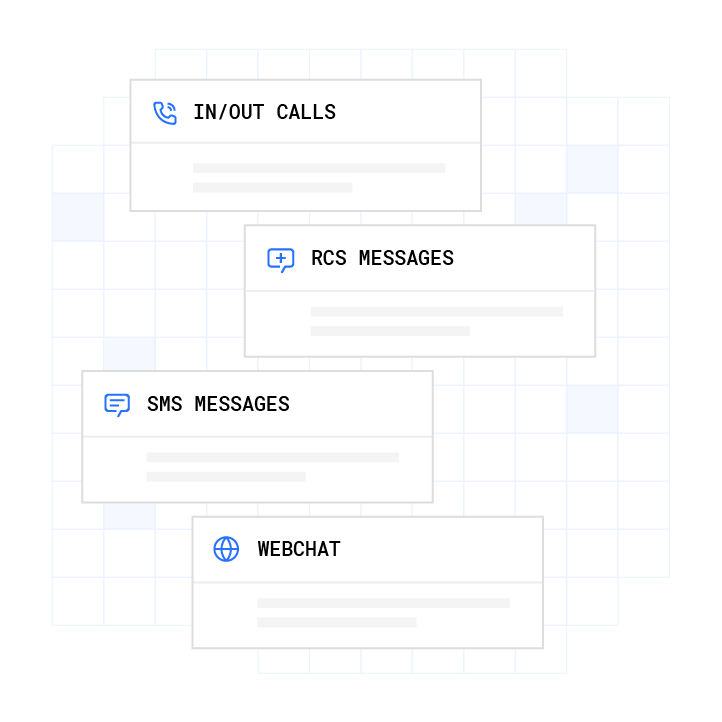
| Channel coverage | Voice, SMS, RCS, and AI webchat on one stateful conversation database, cross-channel memory by default |
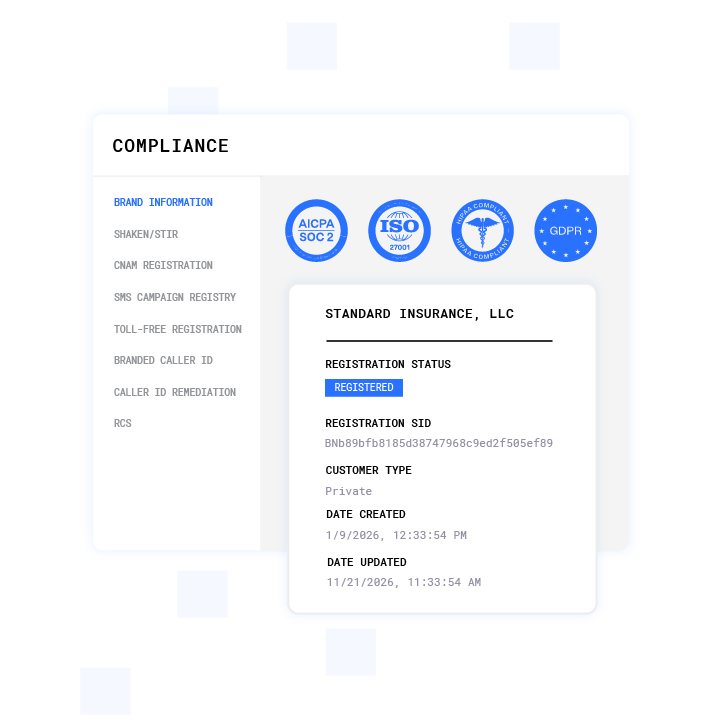
| Compliance posture | SOC 2, HIPAA, ISO certification, GDPR, SHAKEN/STIR caller ID verification, TCPA compliance, DNC compliance, real-time DNC scrubbing before every dial, immutable consent ledger, supported at the carrier level1 |
| Integration depth | Live calendar read/write (Cal.com, Calendly, Google Calendar), CRM sync (HubSpot, Salesforce, Zoho), 50+ integrations, 2 to 4 weeks from contract to live conversations |
| Operational fit | 500+ daily interactions, carrier-owned voice agents, up to 40% improvement in no-shows, handles 3x to 5x call volume during peak seasons without temporary staff, 90-day opt-out window on annual contracts |
Plura AI is its own FCC-licensed audio bridging carrier. Voice traffic does not route through a third-party CPaaS (Communications Platform as a Service, the API-only telecom layer that providers like Twilio sell to AI vendors that do not own their own carrier). Branded caller ID is issued at the carrier level. Every outbound contact is checked against federal and state DNC registries in real time before dial. The AI voice agent and all other channels share a Stateful Conversation Database, so a customer who texted at 9 a.m. is recognized when the call comes at noon without re-explaining their situation.
See the carrier-owned architecture in action in a live demo.
Industry Use Cases: Healthcare and Home Services in Practice
Healthcare: Hospitals are a key segment of the AI in patient scheduling software market, and many healthcare providers are adopting conversational AI solutions for patient-facing services. Plura deployments in healthcare handle appointment confirmations, patient intake, and reminder sequences with HIPAA-aligned encryption, sensitive-data redaction, and audit-ready logging. The no-show improvement mentioned earlier is achieved through automated multi-touch reminder sequences that allow patients to confirm or reschedule inside the reminder flow.
Home services: Plura’s AI voice agents answer 100% of inbound calls across all franchise locations within two rings. Solar and home services companies using AI agents with property data, energy usage estimates, and home valuations achieved 2x to 3x improvements in appointment set rates. The AI answering service for home services books jobs, sends confirmations, and logs them directly to the CRM while the technician is on-site.
Pricing and TCO Scenarios for High-Volume Operators
The default scenario on Plura’s ROI calculator uses a 15-agent operation at $20 per hour with standard taxes, benefits, and commissions at 40% talk utilization, which costs $60,000 per month. Replacing that team with Plura drops the monthly cost to $14,400, with six AI agents at $15 per hour and 100% talk utilization doing the work of 15 humans. That produces $45,600 in first-month savings, $547,200 over 12 months, and $2,736,000 over 60 months.3
For larger operations, Plura’s total cost of ownership of $700,000 per year replaces the traditional $7 million contact-center cost structure on equivalent volume. For a 50-seat equivalent contact center, traditional offshore operations cost $35,000 to $50,000 monthly, while AI contact centers cost $8,000 to $15,000 monthly.
Plura pricing runs on annual contracts billed monthly, with a 90-day opt-out window. Agent build fees are $2,750 per agent. Every deployment includes continuous conversation engineering, not a one-time build-and-handoff.
Run your numbers through Plura’s ROI calculator to check your cost savings in real time. Compare plans and rates side by side at plura.ai/pricing.
Frequently Asked Questions
Can I use an AI bot to schedule appointments?
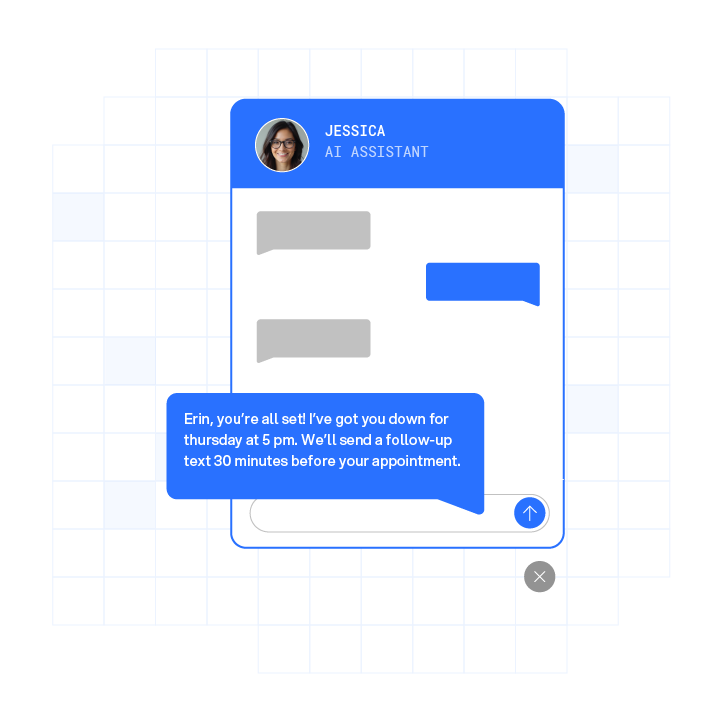
AI voice agents and chat agents can handle the full appointment lifecycle. They answer inbound calls, check live calendar availability, offer time slots, confirm bookings, send reminders, process rescheduling requests, and hand off complex cases to human agents. The distinction that matters for high-volume operations is whether the platform owns its carrier infrastructure or routes through a third-party CPaaS. Carrier-owned platforms can support compliance controls at origination, issue branded caller ID, and maintain conversation memory across voice, SMS, and chat. Third-party wrappers cannot. For regulated industries like healthcare, the platform also needs HIPAA-aligned data handling and a Business Associate Agreement with the operator.
What is the best AI tool for scheduling at high volume?
The most effective AI scheduling tool for operations handling 500 or more daily interactions combines carrier-owned voice infrastructure, real-time DNC scrubbing, stateful cross-channel memory, and live calendar write-back during the call. Web-based schedulers like Calendly and Acuity handle self-serve booking but do not answer inbound calls or enforce outbound compliance. Developer-first platforms like Vapi require the operator to build and maintain compliance infrastructure. Enterprise CCaaS platforms like Five9 are designed for human-agent-assisted workflows, not autonomous AI scheduling. Plura AI is built specifically for high-volume operators, with an FCC-licensed carrier, SOC 2, HIPAA, ISO certification, GDPR, SHAKEN/STIR caller ID verification, TCPA compliance, and DNC compliance supported before every contact.
How does AI appointment scheduling software reduce no-shows?
AI scheduling platforms reduce no-shows through automated multi-touch reminder sequences that allow customers to confirm or reschedule inside the reminder flow rather than receiving passive one-way notices. The sequence typically includes an immediate booking confirmation, a 48-hour reminder with a reschedule option, a 24-hour confirmation request, and a same-day reminder. Two-way communication is the key variable. Customers who can reply to reschedule do so instead of simply not showing up. Plura supports up to 40% improvement in no-shows for healthcare and high-volume appointment operations. Operators in healthcare should consult qualified counsel on HIPAA requirements governing the content of automated appointment reminders, including the minimum necessary standard for PHI included in any reminder message.
What compliance requirements apply to AI voice agents used for appointment booking?
The primary federal frameworks that affect outbound AI voice calls in the U.S. include the Telephone Consumer Protection Act (TCPA, 47 U.S.C. § 227) and the FCC’s implementing regulations, including the February 2024 declaratory ruling classifying AI-generated voices as artificial or prerecorded voices. State laws in California, Texas, Florida, Utah, and others impose additional disclosure requirements. For healthcare appointment booking, the HIPAA Security Rule (45 CFR Parts 160, 162, 164) addresses the handling of protected health information in call recordings and transcripts. Call recording consent requirements vary by state. Fourteen states including California, Florida, Illinois, Pennsylvania, and Washington require all-party consent before recording begins. Operators should consult qualified legal counsel to assess their specific obligations under applicable federal and state law. Plura supports TCPA compliance and DNC compliance through real-time scrubbing, immutable consent logging, and automated quiet-hours enforcement, and supports HIPAA-aligned data handling for healthcare deployments.
How long does it take to deploy an AI appointment scheduling platform?
Deployment timelines depend on conversation complexity and integration requirements. A simple inbound qualification and booking flow typically reaches go-live in days to two weeks when the operator has documented call flows, clean contact data, and confirmed API access to their calendar and CRM systems. Complex multi-step intake flows, such as a 25-question health-history survey with EHR write-back, run closer to four to eight weeks. Plura’s deployment sequence includes a discovery audit, intake of sample calls and existing scripts, a conversation mockup, an engineering build, a pilot test on a subset of real calls, and full go-live. All annual contracts include a 90-day opt-out window. Operators should plan for an internal owner and, for healthcare deployments, an EHR administrator to participate weekly during implementation.
Conclusion: Applying the Five-Criteria Framework
The gaps identified in the market context, including missed calls, compliance exposure, and persistent no-shows, remain unresolved by most platforms in this comparison. The five-criteria framework in this guide, speed, channel coverage, compliance posture, integration depth, and operational fit, highlights the issues that matter at 500 or more daily interactions.
Plura AI is the only tool in this comparison that owns its carrier stack, supports TCPA compliance and DNC compliance at origination, maintains stateful memory across voice, SMS, RCS, and AI webchat, and delivers up to 40% improvement in no-shows. The TCO math is clear. Plura runs at $700,000 per year against a $7 million traditional contact-center cost structure on equivalent volume.
Run your numbers through Plura’s ROI calculator to see your 30-day, 12-month, and 60-month savings. Compare plans and rates at plura.ai/pricing.
See the platform built for your volume in a live demo.
1 Plura AI maintains SOC 2, HIPAA, ISO, and GDPR posture as part of its platform infrastructure. References to compliance frameworks in this article describe Plura’s platform capabilities and do not constitute a guarantee that any customer using Plura will themselves be compliant with applicable laws or standards. Customers remain solely responsible for their own regulatory obligations, certifications, consent management, recordkeeping, and the claims they make to their own end users. Consult qualified legal counsel for guidance specific to your use case.
2 This article describes regulatory frameworks at a general level and does not constitute legal advice. Laws and regulations vary by jurisdiction, change over time, and apply differently depending on facts and circumstances. Readers should consult qualified legal counsel before making compliance decisions.
3 Performance figures, customer outcomes, and industry statistics referenced in this article are drawn from cited third-party sources or Plura customer case studies. Individual results vary based on implementation, use case, industry, audience, and execution. Past or aggregate performance is not a guarantee of future results.
4 References to third-party products, services, companies, or research are made for informational and comparative purposes only. Plura AI is not affiliated with, endorsed by, or sponsored by any third party named in this article unless explicitly stated. Trademarks and product names referenced remain the property of their respective owners.
5 This article contains forward-looking statements regarding industry trends, technology adoption, and future capabilities. These statements reflect current expectations and are subject to change. Plura AI undertakes no obligation to update forward-looking statements except as required.
This article is provided for informational purposes only and reflects Plura AI’s understanding at the time of publication. Product capabilities, integrations, and specifications are subject to change. For the most current information, visit plura.ai.
This article was produced with the assistance of AI tools and reviewed by Plura AI prior to publication.