
Written by: Matt Beucler, CEO, Plura AI | Last updated: August 25, 2026
Key Takeaways for High-Volume Scheduling Teams
- AI appointment scheduling replaces human schedulers with voice agents that handle inbound calls, check live calendar availability, confirm bookings, and trigger multi-channel reminders 24/7.
- Plura AI operates on its own FCC-licensed carrier stack with TCPA compliance support, real-time DNC scrubbing, STIR/SHAKEN authentication, and direct CRM and calendar sync across voice, SMS, RCS, and webchat.1
- High-volume operators face 47+ hour lead response times, 23% no-show rates, and unsustainable labor costs. Plura delivers up to 40% no-show improvement and replaces a $60K monthly human team with a $14.4K AI deployment.3
- Deployment runs in days to weeks through discovery, intake, overnight mock-up, pilot, and go-live, with native integrations to Google Calendar, Cal.com, Calendly, HubSpot, Salesforce, and Zoho.
- Operators evaluating AI scheduling platforms can book a live demo with Plura AI to see the full workflow running on their call volume in under 30 minutes.
Why Human-Only Scheduling Breaks at Scale
Human-only appointment scheduling no longer pencils out for high-volume operators. The industry standard for first contact on an inbound lead sits at 47+ hours. That delay directly drives no-shows, lost revenue, and customer churn.
Healthcare contact centers often experience high annual agent turnover. Open positions stay unfilled for weeks, and new hires need extended time to reach competency. Scheduling teams then run below target headcount for long stretches.
No-show rates compound the revenue hit. The average no-show rate across healthcare settings is 23%, costing the U.S. healthcare system an estimated $150 billion annually at roughly $200 in lost revenue per missed appointment. Home services operators see substantial no-show rates as well, with each missed residential service appointment costing $300 to $600 in wasted tech-and-truck time, excluding the opportunity cost of the displaced job.
Staffing a team of 15 human schedulers to cover these gaps costs approximately $60,000 per month when payroll taxes, benefits, commissions, and a realistic 40% talk-utilization rate are included, per the Plura ROI calculator. That model cannot scale into peak seasons without months of advance hiring. It also carries regulatory exposure that grows with every outbound confirmation call placed without a documented compliance architecture.
Platform Architecture for Carrier-Level Control
Plura AI’s platform architecture addresses these operational and compliance challenges at the infrastructure level. Plura operates as its own FCC-licensed audio bridging carrier. Voice does not route through a third-party Communications Platform as a Service (CPaaS).
This carrier ownership matters for day-to-day operations. Plura issues branded caller ID at the carrier level, authenticates every outbound call through STIR/SHAKEN (Secure Telephone Identity Revisited/Signature-based Handling of Asserted information using toKENs, the FCC-mandated caller ID authentication framework), and enforces real-time DNC (Do Not Call) scrubbing before each dial, inside the platform.
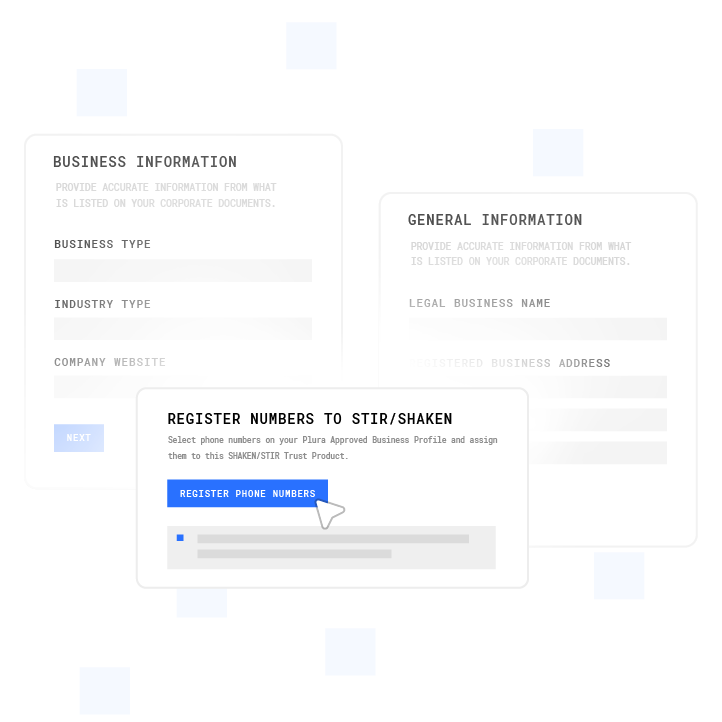
Three platform layers power the scheduling workflow:
- FCC-licensed carrier stack. Voice originates on Plura’s domestic infrastructure. Branded caller ID and STIR/SHAKEN authentication run at the carrier level, not through a reseller. This layer influences whether a call reaches the customer or appears as “Spam Likely.”
- Stateful Conversation Database. Every interaction across AI voice, AI SMS, RCS, and AI webchat is keyed to a single customer token. A patient who confirmed an appointment by text at 9 a.m. is the same patient when the reminder call arrives at noon. The system does not re-introduce or re-qualify the same person.
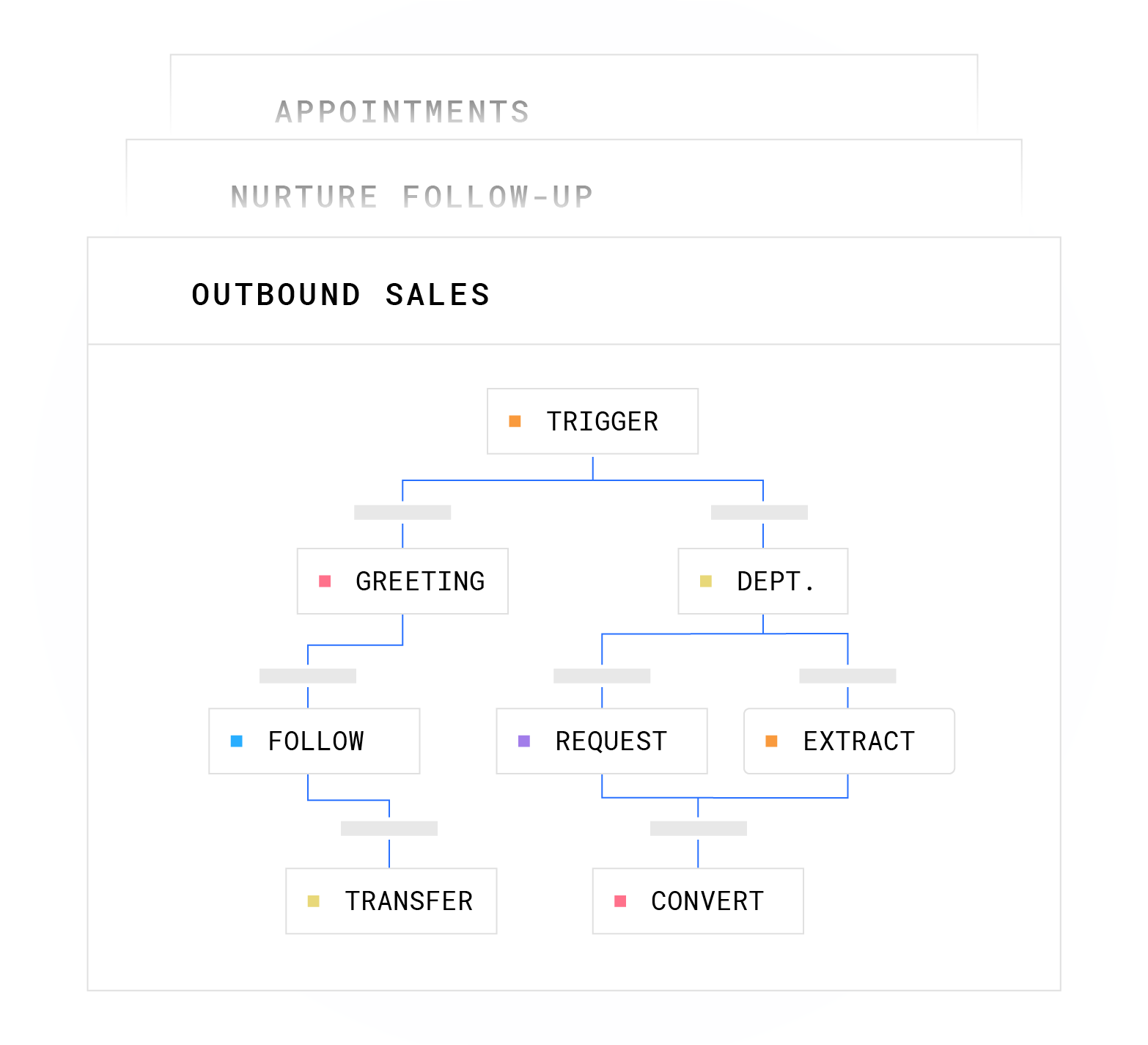
- No-code workflow builder. Scheduling logic, qualification gates, transfer rules, and post-call actions are configured on a visual canvas without engineering work. Operators adjust reminder cadences, rescheduling flows, and escalation triggers without redeploying the underlying AI.
The platform connects natively to major calendar and CRM systems, including Google Calendar, Cal.com, Calendly, HubSpot, Salesforce, and Zoho through the Plura integrations directory.4 Confirmed bookings write back to the live calendar in real time and reduce double-booking risk on high-volume days.
Implementation Timeline and Operating Model
Plura’s onboarding sequence runs in days to weeks, not months. The standard path covers five stages:
- Discovery audit. Plura reviews the operator’s existing call economics, scheduling volume, no-show rates, and compliance posture.
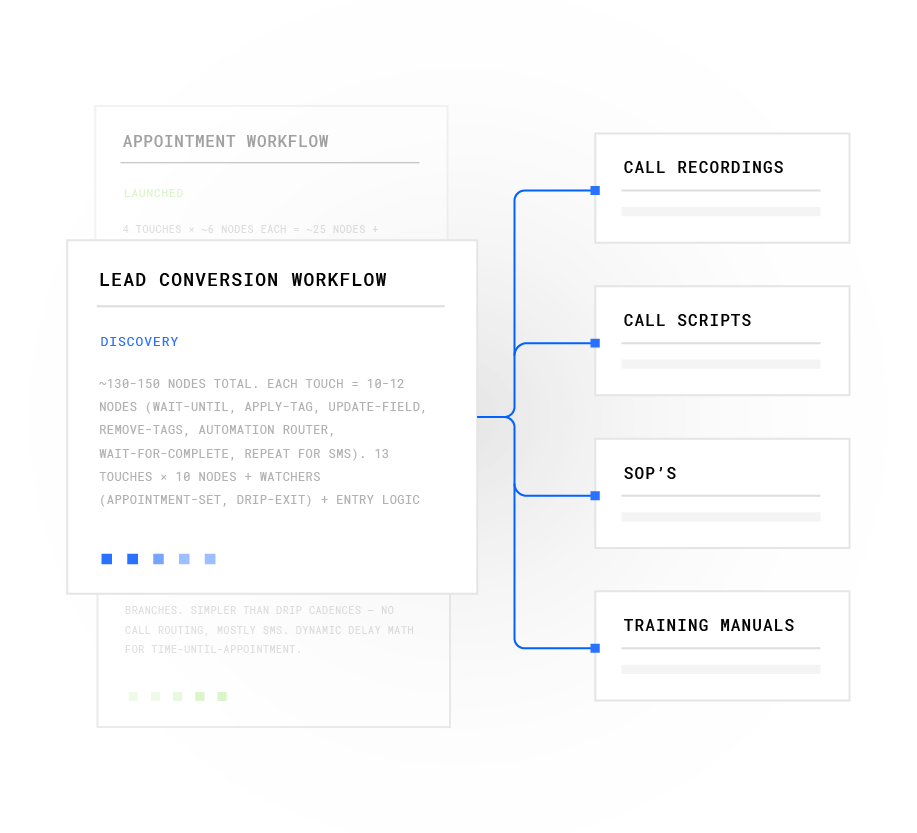
- Intake. Sample calls, standard operating procedures, and existing scripts are ingested to build the conversation model.
- Overnight mock-up. A dynamic conversation workflow is built using Plura’s internal tooling and presented to the operator within 24 hours.
- Pilot. The workflow runs on a defined subset of real calls. Conversion rates, no-show rates, and escalation triggers are monitored and tuned.
- Go-live. Plura deploys across the target call volume with continuous conversation engineering and real-call monitoring.
Simple inbound qualification and booking flows typically reach go-live in days. Complex multi-step intake workflows, such as a 25-question health-history survey that routes only qualified patients to scheduling, run closer to four to eight weeks because the workflow logic itself requires design and validation time. Every annual contract includes a 90-day opt-out window if the deployment is not delivering.
Book a live demo with Plura to walk through the onboarding timeline against your specific call volume and workflow complexity.
Scheduling Use Cases Across Healthcare, Home Services, and Franchises
Plura’s scheduling workflow maps directly to three high-volume deployment patterns.
Healthcare intake. AI voice agents handle appointment confirmations, patient intake, prescription reminders, and eligibility surveys. HIPAA-aligned encryption, sensitive-data redaction, and audit-ready logging apply by default. The multi-channel reminder sequences that drive the no-show improvement mentioned earlier combine voice, SMS, and RCS touchpoints timed to the appointment window.
Home services after-hours booking. Homeowners rarely leave voicemails. When a call goes unanswered, the next contractor on Google often gets the job. Plura’s AI answering service for home services answers every inbound call within two rings, books the job into the calendar, sends a confirmation, and logs the record to the CRM, including calls that arrive at 9 p.m. on a Saturday.
Franchise multi-location consistency. Performance gaps of three to five times between the best and worst locations in a franchise network are common when front-desk staff handle scheduling manually. Plura’s AI voice agents answer 100% of inbound calls across all franchise locations within two rings, with identical greeting, qualification, and booking logic at every unit. A centralized dashboard tracks per-location metrics, including lead response times and conversion rates.
Buyer and Operator Fit for Plura Deployments
Plura is built for operators running at least 500 daily customer interactions or at least $5,000 per month in paid-media spend. Below that threshold, the platform’s depth often does not generate enough ROI to justify the build. Above it, the economics shift decisively.
Operators with the strongest fit share three characteristics:
- High scheduling volume where human schedulers create a bottleneck during peak hours, after hours, or across multiple locations simultaneously.
- Regulatory exposure from outbound confirmation and reminder calls, where TCPA (Telephone Consumer Protection Act) consent documentation, DNC scrubbing, and quiet-hours enforcement need to run on every contact, not just on audited campaigns.
- CRM and calendar dependencies that require real-time write-back, not batch sync, to prevent double-booking and ensure downstream reminder sequences fire on accurate appointment data.
The Plura ROI calculator models the cost difference between a human scheduling team and an AI-driven deployment at your specific call volume. A 15-agent operation at $20 per hour with standard overhead costs approximately $60,000 per month. The equivalent Plura deployment runs at $14,400 per month, producing $45,600 in 30-day savings and $547,200 over 12 months.
Competitive Landscape and Structural Differences
Most AI voice scheduling tools in the market today are built as wrappers on top of third-party CPaaS providers. These vendors do not own the carrier, cannot issue branded caller ID under their own carrier identity, and cannot enforce real-time DNC scrubbing before the call leaves the network. In those architectures, the customer carries more of the compliance burden.
Offshore BPOs (Business Process Outsourcing firms) that handle scheduling at scale face a different set of pressures. The FCC’s Notice of Proposed Rulemaking (NPRM, CG Docket No. 26-52) proposes capping offshore customer-service calls at 30% and prohibiting offshore handling of sensitive consumer data. State laws in New York, New Jersey, Connecticut, Missouri, and Florida already restrict offshore handling of medical, financial, and consumer data. Every scheduling contract a covered entity holds with an offshore vendor now carries compliance risk under that regulatory trajectory.
Plura’s position in this landscape rests on three structural differences. It owns its FCC-licensed carrier stack rather than renting from a CPaaS. Its Stateful Conversation Database preserves context across voice, SMS, RCS, and webchat so scheduling conversations do not reset between channels. Its compliance engine runs DNC scrubbing, TCPA consent verification, and quiet-hours enforcement inside the platform on every outbound contact, before dial.
Evidence and Evaluation Signals for Regulated Environments
Operators evaluating AI scheduling platforms for regulated environments should verify the following certifications and compliance frameworks against vendor documentation:
- SOC 2 Type II certification with continuous monitoring and third-party audits
- HIPAA-aligned encryption, access controls, and audit logging for protected health information
- ISO certification
- STIR/SHAKEN caller ID authentication on every outbound voice call
- TCPA compliance support with immutable consent records and real-time DNC scrubbing
- DNC compliance across federal and state registries with automated quiet-hours enforcement
- Coverage of 50+ state-level rule sets applied per contact
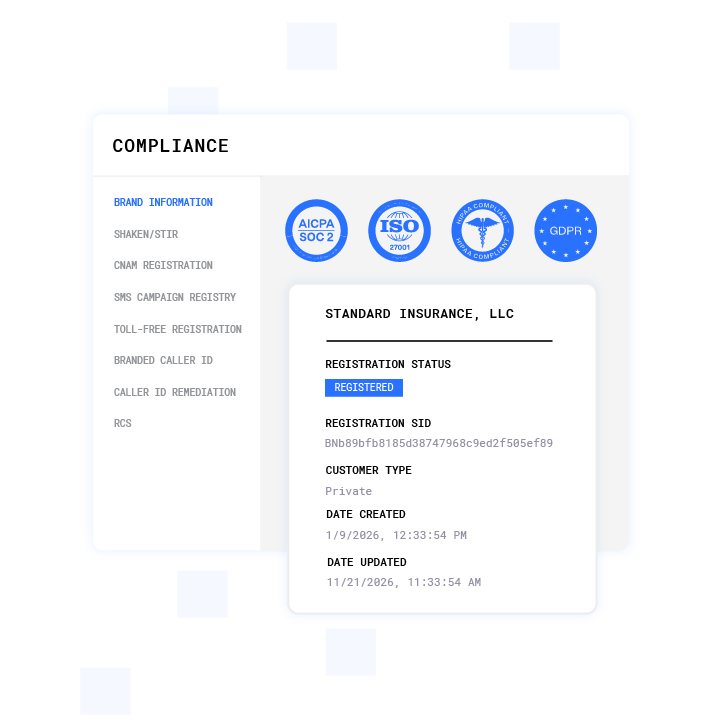
Plura carries SOC 2 Type II, HIPAA alignment, ISO certification, STIR/SHAKEN authentication, TCPA compliance support, and DNC compliance support as documented at plura.ai/products/compliance.1 Customers remain responsible for their own regulatory obligations and the compliance claims they make to their end users. Plura provides the infrastructure, and downstream compliance posture remains the customer’s responsibility.
Book a live demo with Plura to review the compliance architecture against your specific regulatory requirements.
Practical Evaluation Factors for Platform Selection
Contact center operators should assess several practical factors before selecting an AI scheduling platform:
- Workflow fit. The platform should support the full scheduling loop, including inbound booking, outbound confirmation, rescheduling on reply, and escalation to a human agent with full context. Partial automation creates gaps that human schedulers still have to cover.
- Data governance. Operators need clarity on where call recording, conversation transcription, and patient or customer data reside. Many regulated operators require 100% U.S. infrastructure when subject to HIPAA, the FCC NPRM, or state onshoring laws.
- Compliance architecture. Effective platforms enforce DNC scrubbing at the platform level before each dial, not through manual list uploads. TCPA consent documentation should be timestamped and audit-ready, not stored only in a legacy CRM field that predates the FCC’s February 2024 declaratory ruling on AI-generated voices.
- Integration readiness. The platform should write confirmed appointments to the live calendar in real time. Batch-sync on a delay creates double-booking risk on high-volume days. Native connectors to HubSpot, Salesforce, Google Calendar, and Calendly reduce integration engineering time.
- Total cost of ownership. Per-minute rates, agent build fees, and monthly platform costs are the visible line items. However, the less visible costs often exceed these direct charges: compliance bolt-ons, the engineering hours required to maintain a CPaaS-dependent integration, and the ongoing conversation drift that occurs when a vendor builds and walks away. For high-volume operations, the cost differential becomes even more pronounced, and the 10:1 savings ratio documented in Plura’s AI communications strategy guide reflects the compounding effect of eliminating hidden costs at scale.
Frequently Asked Questions
What is TCPA-compliant AI scheduling, and how does Plura support it?
TCPA (Telephone Consumer Protection Act) compliance for AI scheduling involves a set of requirements that apply to outbound confirmation and reminder calls placed by automated or AI-generated voice systems.2 The FCC’s February 2024 declaratory ruling classified AI-generated voices as artificial or prerecorded voices under the TCPA. Outbound AI scheduling calls therefore fall under the same consent framework as traditional robocalls.
Appointment confirmation and reminder calls are generally considered informational rather than marketing, which typically involves a different consent threshold than promotional calls. The specific consent standard depends on the content of the call and applicable state law. Operators should consult qualified counsel on their specific obligations.
Plura supports TCPA compliance through real-time DNC scrubbing on every outbound contact before dial, immutable timestamped consent records, automated quiet-hours enforcement through time-zone detection, and one-click audit-ready reporting. These are platform capabilities. Customers remain responsible for obtaining appropriate consent and meeting their own regulatory obligations.
How does Plura’s AI voice agent handle live calendar availability during a call?
Plura’s AI voice agents query connected calendar systems in real time during the call. They check available slots against existing appointments and buffer times, present options conversationally, and write the confirmed booking directly to the calendar before the call ends. This real-time write-back prevents double-booking by ensuring the next availability check reflects the updated schedule.
The platform integrates natively with Google Calendar, Cal.com, Calendly, HubSpot, Salesforce, and Zoho, among others. Confirmed appointments also trigger the downstream reminder sequence automatically, so the multi-channel follow-up runs on accurate booking data without manual intervention.
What no-show improvement can operators expect from AI-driven scheduling and reminders?
Plura’s scheduling deployments support up to 40% improvement in no-shows through multi-channel reminder sequences that combine voice, SMS, and RCS touchpoints timed to the appointment window, as documented on the Plura healthcare industry page. The improvement is driven by two main factors. Faster initial booking confirmation reduces the gap between scheduling and commitment. The multi-channel reminder cadence prompts final confirmation closer to the appointment time.
Operators in home services and healthcare see the largest impact because those verticals carry the highest baseline no-show rates.
How long does it take to deploy Plura for appointment scheduling in a contact center?
Simple inbound booking and confirmation workflows typically reach go-live in days. More complex deployments, such as multi-step intake flows that qualify callers before routing them to scheduling, run closer to four to eight weeks.
The standard onboarding path covers a discovery audit, intake of existing scripts and call recordings, an overnight workflow mock-up, a pilot on a subset of real calls, and full go-live. Every annual contract includes a 90-day opt-out window if the deployment is not delivering the projected outcomes.
Which industries benefit most from AI appointment scheduling in a call center environment?
Healthcare, home services, and franchise networks see the strongest operational impact. These sectors combine high scheduling volume, high no-show rates, and significant after-hours demand that human schedulers cannot cover cost-effectively.
Healthcare operators benefit from HIPAA-aligned data handling and the ability to run complex intake surveys before routing patients to scheduling. Home services operators recover after-hours and weekend bookings that previously went to competitors. Franchise networks gain consistent booking quality across every location without proportional headcount increases. Insurance, legal, financial services, and wellness operators also run scheduling workflows on Plura where appointment volume justifies the deployment.
Conclusion: Turning Scheduling Into a 24/7 Revenue Engine
Human-only appointment scheduling creates three compounding problems for contact center operators. Labor costs scale linearly with volume. No-show rates erode revenue on every shift. Outbound confirmation calls without documented consent architecture increase regulatory exposure.
AI voice agents address all three when the platform owns the carrier stack, enforces compliance controls inside the platform before each dial, and syncs confirmed bookings to live calendars in real time. Plura’s FCC-licensed carrier infrastructure, Stateful Conversation Database, and no-code workflow builder deliver 24/7 scheduling coverage with the compliance certifications detailed earlier, across 50+ state rule sets on 100% U.S. infrastructure.
Run your scheduling operation through the Plura ROI calculator to model the cost difference between your current human scheduling team and an AI-driven deployment at your call volume. Review deployment options and monthly rates at plura.ai/pricing.
Book a live demo with Plura to see the full scheduling workflow, compliance architecture, and calendar integration running against your specific use case.
1 Plura AI maintains SOC 2, HIPAA, ISO, and GDPR posture as part of its platform infrastructure. References to compliance frameworks in this article describe Plura’s platform capabilities and do not constitute a guarantee that any customer using Plura will themselves be compliant with applicable laws or standards. Customers remain solely responsible for their own regulatory obligations, certifications, consent management, recordkeeping, and the claims they make to their own end users. Consult qualified legal counsel for guidance specific to your use case.
2 This article describes regulatory frameworks at a general level and does not constitute legal advice. Laws and regulations vary by jurisdiction, change over time, and apply differently depending on facts and circumstances. Readers should consult qualified legal counsel before making compliance decisions.
3 Performance figures, customer outcomes, and industry statistics referenced in this article are drawn from cited third-party sources or Plura customer case studies. Individual results vary based on implementation, use case, industry, audience, and execution. Past or aggregate performance is not a guarantee of future results.
4 References to third-party products, services, companies, or research are made for informational and comparative purposes only. Plura AI is not affiliated with, endorsed by, or sponsored by any third party named in this article unless explicitly stated. Trademarks and product names referenced remain the property of their respective owners.
This article is provided for informational purposes only and reflects Plura AI’s understanding at the time of publication. Product capabilities, integrations, and specifications are subject to change. For the most current information, visit plura.ai.
This article was produced with the assistance of AI tools and reviewed by Plura AI prior to publication.