

Written by: Matt Beucler, CEO, Plura AI | Last updated: August 25, 2026
Key Takeaways
- AI call center analytics can review 100% of voice, SMS, RCS, and webchat interactions and deliver real-time transcription, sentiment scoring, QA, and revenue signals without replacing human agents.
- Traditional QA samples only 2 to 5 percent of calls, which leaves 95 to 98 percent of customer data unanalyzed and hides churn signals, compliance risks, and upsell opportunities.
- Plura AI unifies analytics across all channels with stateful memory so context carries forward when customers switch between voice, SMS, RCS, and webchat.
- Automated 100% QA scoring links rubric scores to exact timestamps so supervisors can review compliance deviations and script adherence in real time.
- Plura AI delivers 3x average ROI in 90 days and 47% pipeline growth; book a live demo to see unified analytics across every channel in real time.
Why 2026 Resets Contact Center Analytics Strategy
Three forces are converging on high-volume U.S. operators at the same time. Interaction volume keeps rising while response-time expectations have collapsed. Contacting a lead within 5 minutes makes them up to 100x more likely to connect, and a 60-second response lifts conversions by 391%. Channel fragmentation means a single customer may touch voice, SMS, RCS, and webchat in one buying cycle, and siloed tools lose context at every handoff. Regulatory scrutiny is tightening across TCPA (Telephone Consumer Protection Act), DNC (Do Not Call), HIPAA (Health Insurance Portability and Accountability Act), and a growing set of state AI-disclosure laws.2
The analytics gap is measurable. Traditional contact center QA manually reviews only 2 to 5 percent of total call volume, which leaves the other 95 to 98 percent of customer conversation data unanalyzed. That blind spot is where churn signals, compliance deviations, and upsell opportunities disappear.
See how Plura closes the 95% analytics gap in your contact center.
Real-Time Transcription and Sentiment for Live Coaching
Real-time transcription converts live voice interactions into structured text with speaker diarization, which separates agent and customer turns as the call progresses. Sentiment scoring runs on top of that transcript and tags each segment as positive, neutral, mixed, or negative. Effective real-time analytics platforms require category events to fire within seconds of a trigger phrase to enable live supervisor intervention and agent-assist prompts.
Plura AI’s AI Conversation Intelligence extracts sentiment, trends, and performance signals from voice, SMS, and webchat interactions in a unified layer. Because Plura owns its FCC-licensed audio bridging carrier, transcription runs on domestic infrastructure with no third-party CPaaS (Communications Platform as a Service) in the path. That architecture supports HIPAA-aligned deployments where data residency is a procurement requirement.
Sentiment data creates value when it triggers workflows instead of sitting in a dashboard. Sentiment analysis during live calls can identify frustration in real time, surface customers heading toward churn, and trigger team-wide supervisor alerts when sentiment drops across multiple conversations simultaneously. These signals prepare the ground for deeper quality assurance coverage.
Automated QA at 100 Percent Scale
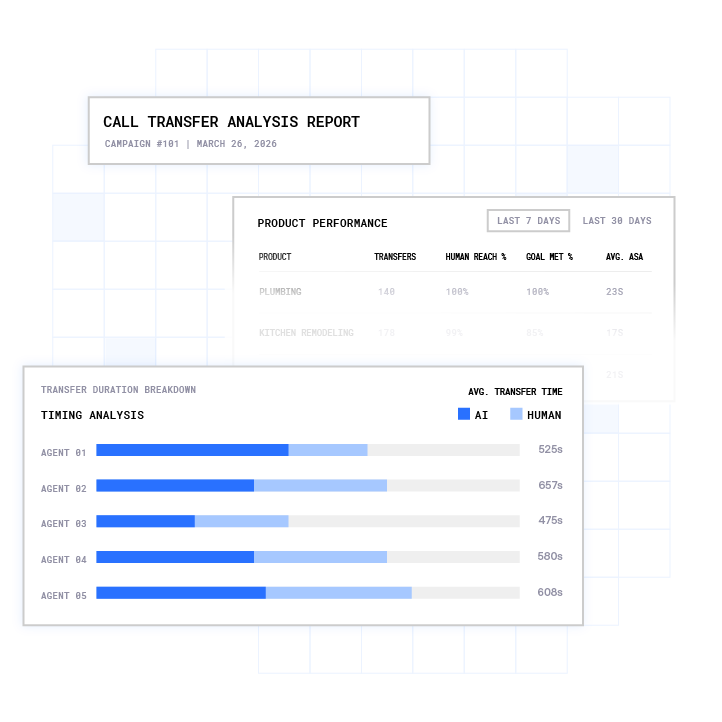
The 2 to 5 percent sampling rate described earlier is not a quality program, it is a compliance lottery. AI-powered analytics analyze 100% of conversations in real time for compliance monitoring, root-cause detection, and sentiment tracking, which replaces the lottery with systematic coverage.
Automated QA scoring links rubric-based scores directly to specific transcript segments and timestamps. Supervisors can review the exact moment a disclosure was missed or a script deviated instead of relying on aggregate dashboard scores that obscure the root cause. A legal marketing firm using AI Conversation Intelligence found that 23% of engaged leads lacked sufficient case value, adjusted qualification criteria, and reduced wasted attorney time by 31%, which came from QA operating at full scale instead of on a sample.
For regulated industries, 100% QA coverage also closes the audit gap. Every interaction is scored, timestamped, and retrievable, which supports the recordkeeping expectations that auditors increasingly require for AI-driven analytics deployments in financial services and healthcare.
Revenue-Intelligence Signals for Churn, Upsell, and Escalation
Revenue intelligence in a contact center context means extracting signals from conversations that predict or influence pipeline outcomes. Three signal types matter most: churn risk, upsell readiness, and escalation likelihood.
Churn signals appear in sentiment trends before a customer states they are leaving. Real-time sentiment tracking during support interactions can help companies reduce churn when teams resolve issues during the first interaction. Predictive analytics layers historical interaction data on top of live sentiment to flag accounts that show early churn patterns. That view enables proactive retention before the cancellation request arrives.
Upsell signals emerge when a customer’s stated need exceeds what they currently hold. Real-time analytics platforms surface upsell and cross-sell opportunities by analyzing sentiment and intent signals during conversations and delivering prompts to agents when integrated with CRM data.
Plura’s business intelligence layer scores and prioritizes leads in real time using behavioral signals, conversation context, and predictive intent modeling. It also automatically fires conversion signals to Google and Meta ad platforms, which connects conversation outcomes directly to paid-media attribution. A solar company using AI Lead Intelligence increased conversion rates from 6% to 18% with the same leads and offer3, which shows what revenue-intelligence signals produce when they feed back into qualification workflows instead of sitting in a reporting tab.
Calculate how much revenue your contact center is leaving on the table.
Compliance Enforcement Embedded in Every Interaction
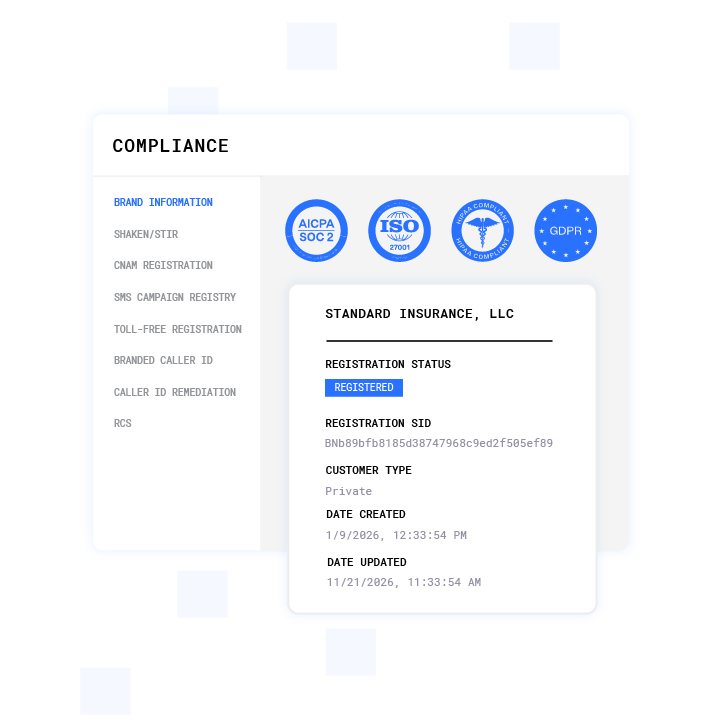
Compliance in AI call center analytics functions as enforcement at the point of contact, not as a reporting layer applied after the fact. Plura’s compliance engine checks every outbound contact against federal and state DNC registries in real time before dial, which helps prevent calls to prohibited numbers. Once a contact clears that check, consent records are timestamped and stored in an immutable format to create a durable audit trail. Quiet-hours rules apply automatically through time-zone detection so calls stay within permitted windows. STIR/SHAKEN (Secure Telephone Identity Revisited / Signature-based Handling of Asserted information using toKENs) caller ID verification runs on every outbound call at the carrier level to authenticate caller identity.
The regulatory environment is tightening. The FCC’s February 2024 declaratory ruling confirmed that TCPA restrictions on artificial or prerecorded voice apply to AI-generated voices.2 California AB 2905, effective January 1, 2025, describes disclosure expectations for robocalls using AI-generated or altered voices at the start of the call to California residents. Utah S.B. 226, effective May 7, 2025, describes proactive disclosure requirements for high-risk generative AI interactions in certain regulated occupations, with penalties up to $2,500 per violation.
Plura supports compliance with SOC 2, HIPAA, ISO certification, GDPR, TCPA compliance, and DNC compliance.1 The compliance dashboard exports audit-ready reports in one click. Customers remain responsible for their own regulatory obligations and should consult qualified counsel on how applicable laws apply to their specific operations.
Cross-Channel Stateful Memory for Continuous Context
Stateful memory is the architectural requirement that separates a unified analytics platform from a collection of siloed tools. When a customer texts at 9 a.m. and calls at noon, the analytics layer should already know what was said, what was offered, and what remains unresolved. Without a shared state store, that context resets at every channel boundary and the customer repeats themselves.
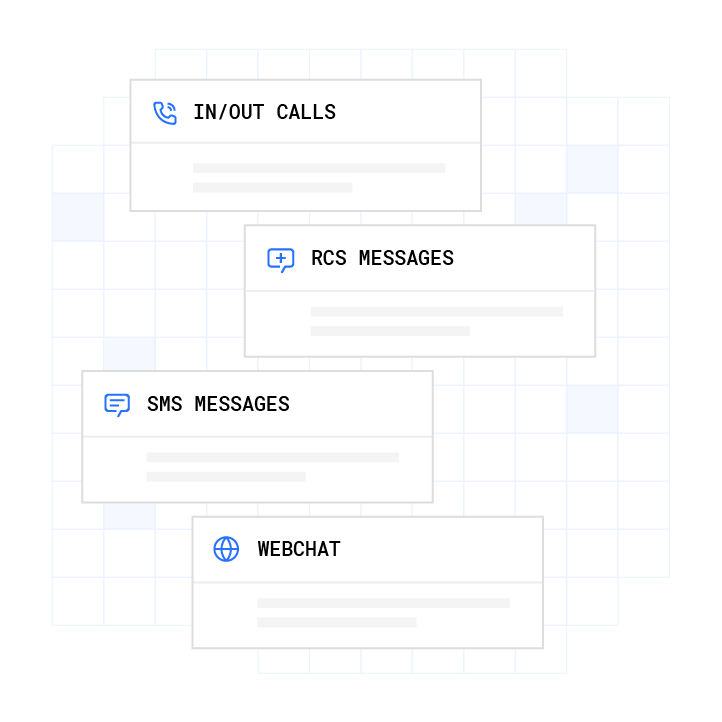
Plura’s Stateful Conversation Database keys every interaction to a customer token (phone number, email, or ID) across voice, SMS, RCS, and AI webchat. Every channel reads from and writes to the same database. The Unified Inbox surfaces that same memory to human agents so a CX representative picking up an escalation sees the full conversation history the AI agent already holds.
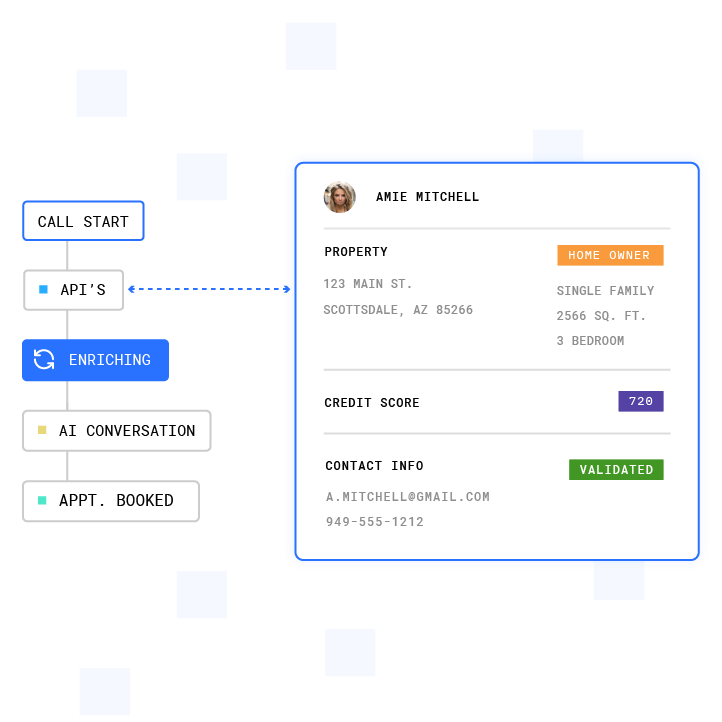
Plura enriches contacts with intelligence from more than 30 data sources in real time during conversations across every channel. The stateful layer carries prior conversation history and real-time enrichment signals from IP data, firmographics, and intent sources. That pre-conversation context becomes available to analytics from the first interaction instead of only after a long relationship.
AI-Agent Analytics for Hybrid Human and AI Teams
As AI agents handle a growing share of interactions, the analytics infrastructure must evaluate AI and human performance under the same framework. AI agents must be managed like any other employee: trained, tested, and held accountable. When AI handles 40% of interactions but remains invisible to QA processes, organizations create a blind spot where AI failures scale quietly.
Plura’s managed workflows include explicit guardrails at every conversation node. BATNA (Best Alternative to a Negotiated Agreement) floors and ceilings define the boundaries within which an AI agent can negotiate. When a customer’s response falls outside defined paths, the AI escalates to a warm transfer, a Unified Inbox flag, or a designated escalation queue. Every escalation is logged with the full conversation context, which creates an auditable record of where AI-to-human handoffs occurred and why.
Performance measurement for hybrid workforces requires tracking AI-specific indicators alongside traditional contact center metrics. A 2026 Harvard Business Review analysis recommends separately measuring human contribution indicators, AI system and agent indicators, and human-machine collaboration system indicators4 to determine whether combined output exceeds human-only or AI-only performance.
90-Day ROI Benchmarks for Contact Center Leaders
Plura delivers 3x average ROI in 90 days, 47% average pipeline growth, and 90% faster lead-response time.3 The unit economics behind those figures stay transparent. In a 15-agent operation paying $20 per hour with standard taxes, benefits, and commissions at 40% talk utilization, monthly cost runs $60,000. Replacing that team with Plura at $15 per hour, 100% talk utilization, and 6 Plura agents doing the work of 15 humans drops monthly cost to $14,400. Savings stack to $45,600 in the first 30 days, $547,200 over 12 months, and $2,736,000 over 60 months.
Broader industry data supports this direction. Companies see an average return of $3.50 for every $1 invested in AI customer service, with leading organizations reaching 8x ROI.3 Every 1% improvement in first-call resolution reduces operating costs by roughly 1%, which equates to approximately $286,000 in annual savings for the average midsize contact center.
For higher-volume operations, Plura’s total cost of ownership of $700,000 per year replaces the traditional $7 million contact-center cost structure on equivalent volume.
Seven Analytics Categories Covered by Plura
| Analytics Category | Coverage Model | Plura Capability |
|---|---|---|
| Transcription | 100% of interactions, real-time and post-call | AI Conversation Intelligence across voice, SMS, RCS, webchat |
| Sentiment Analysis | Segment-level scoring per interaction | Real-time sentiment with escalation triggers |
| Automated QA Scoring | 100% of interactions, rubric-linked to timestamps | Script adherence, disclosure verification, compliance flags |
| Revenue Intelligence | Churn, upsell, and escalation signals per conversation | Lead scoring, intent prediction, ad-platform conversion signals |
| Compliance Enforcement | Pre-dial DNC scrubbing, quiet-hours, consent logging | TCPA compliance, DNC compliance, STIR/SHAKEN, immutable audit trail |
| Cross-Channel Memory | Stateful context across voice, SMS, RCS, webchat | Stateful Conversation Database keyed to customer token |
| AI-Agent Performance | Hybrid human/AI evaluation under unified framework | Workflow guardrails, escalation logging, BATNA enforcement |
Watch these seven analytics categories run live on your contact center data.
Frequently Asked Questions
Does AI replace human agents in a contact center?
No. AI agents handle the high-volume, repeatable interactions such as qualification, intake, appointment confirmation, FAQ resolution, and outbound follow-up. Human agents handle complex escalations, high-stakes negotiations, and emotionally sensitive conversations. Plura’s platform routes escalations to U.S. agents with full conversation context already loaded so the human picks up mid-conversation instead of starting from zero. The practical outcome is that the same human team handles a larger total volume while AI absorbs the transactional load that previously consumed most of their time.
What does 100% QA coverage actually mean in practice?
One hundred percent QA coverage means every interaction is transcribed, scored against a configurable rubric, and linked to specific timestamps in the conversation. Supervisors can pull any call, navigate to the exact moment a disclosure was missed or a script deviated, and use that clip for coaching. Nothing is sampled and nothing disappears. The compliance audit trail covers every outbound contact, not only the 2 to 5 percent a manual reviewer could reach in a shift. For regulated industries, that coverage supports an audit-ready posture instead of a compliance exposure.
How does Plura handle compliance across TCPA, DNC, and state-level rules?
Plura’s compliance engine enforces rules before each contact, not after. Every outbound dial is checked against federal and state DNC registries in real time. Consent records are timestamped and immutable. Quiet-hours rules apply automatically through time-zone detection on the contact’s location. STIR/SHAKEN caller ID verification runs on every outbound call at the carrier level. The compliance dashboard exports audit-ready reports in one click. The compliance standards outlined above cover the major regulatory frameworks that Plura supports. Customers remain responsible for their own regulatory obligations and should consult qualified counsel on how applicable laws apply to their operations.
What pricing model does Plura use, and is there a minimum commitment?
Plura offers three tiers, including Multi at $7,500 per month and Enterprise at custom pricing, all on annual contracts billed monthly. Every annual contract includes a 90-day opt-out window so if the deployment is not delivering, customers are not held to the full year. Agent build fees are $2,750 per agent. Full details are at plura.ai/pricing.
How does cross-channel stateful memory work when a customer switches from SMS to voice?
Every interaction across voice, SMS, RCS, and webchat is keyed to a customer token (phone number, email, or ID) and written to Plura’s Stateful Conversation Database. When a customer who texted at 9 a.m. calls at noon, the AI voice agent reads the full prior conversation history before the call begins. Pricing offers made, objections raised, qualification status, and sensitive-data redactions all carry forward. The Unified Inbox surfaces the same memory to human agents so an escalation handoff does not require the customer to repeat themselves. This context accumulates over time and compounds the platform’s value with every interaction.
Conclusion
Legacy sampling leaves most interactions unanalyzed. Siloed tools lose context at every channel boundary. Manual QA covers a fraction of the conversations where compliance deviations and churn signals actually occur. AI call center analytics at 100% scale, unified across voice, SMS, RCS, and webchat with stateful memory, closes all three gaps at once.
Plura’s platform delivers real-time transcription, segment-level sentiment, automated QA scoring, revenue-intelligence signals, and compliance enforcement on a single FCC-licensed carrier stack. The ROI outlined above is calculable before the first call goes live.
Run your numbers through Plura’s calculator to check your ROI in real time.
1 Plura AI maintains SOC 2, HIPAA, ISO, and GDPR posture as part of its platform infrastructure. References to compliance frameworks in this article describe Plura’s platform capabilities and do not constitute a guarantee that any customer using Plura will themselves be compliant with applicable laws or standards. Customers remain solely responsible for their own regulatory obligations, certifications, consent management, recordkeeping, and the claims they make to their own end users. Consult qualified legal counsel for guidance specific to your use case.
2 This article describes regulatory frameworks at a general level and does not constitute legal advice. Laws and regulations vary by jurisdiction, change over time, and apply differently depending on facts and circumstances. Readers should consult qualified legal counsel before making compliance decisions.
3 Performance figures, customer outcomes, and industry statistics referenced in this article are drawn from cited third-party sources or Plura customer case studies. Individual results vary based on implementation, use case, industry, audience, and execution. Past or aggregate performance is not a guarantee of future results.
4 References to third-party products, services, companies, or research are made for informational and comparative purposes only. Plura AI is not affiliated with, endorsed by, or sponsored by any third party named in this article unless explicitly stated. Trademarks and product names referenced remain the property of their respective owners.
This article is provided for informational purposes only and reflects Plura AI’s understanding at the time of publication. Product capabilities, integrations, and specifications are subject to change. For the most current information, visit plura.ai.
This article was produced with the assistance of AI tools and reviewed by Plura AI prior to publication.