

Written by: Matt Beucler, CEO, Plura AI | Last updated: August 25, 2026
Updated August 2026
Key Takeaways for High-Volume Teams
- AI conversion optimization finds friction by calculating revenue at risk using traffic, drop-off rates, and conversion value, then prioritizes fixes by impact.
- Intent-based personalization and real-time lead scoring can deliver 10-30% marketing ROI improvement and lift conversions from 6% to 18% in industries like solar.3
- Stateful conversation memory across voice, SMS, RCS, and webchat removes re-introduction friction and supports continuous, personalized offer tuning.
- Sub-5-second AI responses replace 47+ hour manual queues, driving 391% higher conversion rates and 3x average ROI within 90 days for high-volume operators.3
- Plura AI is the only platform that owns its FCC-licensed carrier stack, supports compliance at the carrier level, and maintains stateful conversation memory across every channel, and you can book a live demo to see these tactics in action.
AI Tactics That Improve Website Conversion Rates
AI improves conversion rates by closing the gap between a lead’s first signal and your first meaningful contact. The five tactics below target that gap with clear math and operational steps at each stage.
- Friction identification with AI session analysis. Map every step in your inbound funnel and calculate sessions reaching step times drop-off rate at step times average conversion value. That product is the revenue at risk per step. Prioritize the step with the highest number first. The average B2B website conversion rate is 2.9% in 2026, and AI-driven personalization lifts that number for teams that act on behavioral data.
- Intent-based personalization. Serve different offers, CTAs, and conversation flows based on the visitor’s source, behavior, and firmographic profile. McKinsey and Next in Personalization data shows AI personalization in B2B content delivers a 10-15% revenue lift and 10-30% marketing ROI improvement for most companies.4 Plura’s AI Lead Intelligence scores and prioritizes leads in real time using behavioral signals, conversation context, and predictive intent modeling, so personalization happens during the conversation, not in a downstream batch job.
- Hypothesis generation from conversation intelligence. Call transcripts and SMS threads contain the objections, hesitations, and qualifying questions that your page copy ignores. Plura’s AI Conversation Intelligence extracts trends, sentiment, and performance signals from voice, SMS, and webchat interactions. Those patterns become testable hypotheses for offer and copy changes.
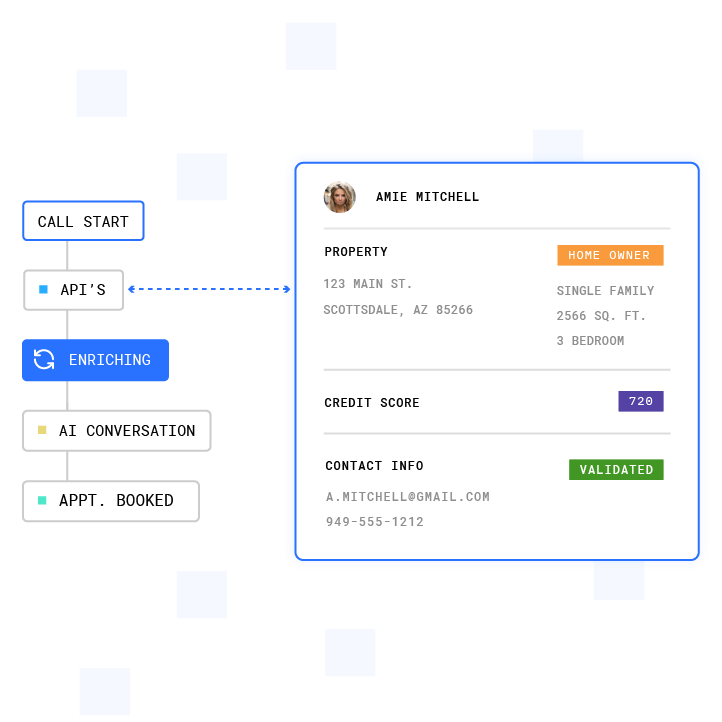
- Conversational AI and smart forms. AI chatbots and conversational forms replace static lead capture and can lift conversion rates for early adopters. Plura’s AI webchat reads the visitor’s page context in real time and tailors the conversation accordingly. It enriches each lead from 30+ data sources during the session rather than after it, so routing and offers match intent while the visitor is still engaged.
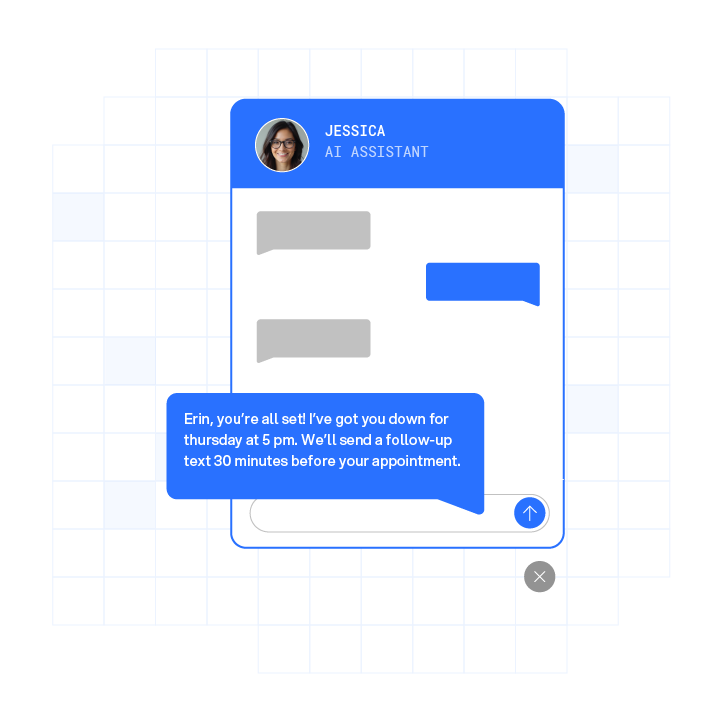
- End-to-end journey optimization. Enrichment during the session only matters if your team acts on it immediately, so speed-to-lead becomes the next critical variable. The 391% conversion advantage cited earlier only materializes when contact happens within the first minute. Plura’s AI SMS and AI voice agent reach every new lead in under 5 seconds across every channel, with stateful memory so the conversation picks up where it left off regardless of channel.
Prioritization Framework Using Traffic, Drop-Off, and Revenue Impact
Teams get faster gains when they fix the highest-value friction first. This framework ranks opportunities by the revenue they put at risk, not by how easy they are to address.
The formula for each funnel step is:
Revenue at Risk = Monthly sessions reaching step × Drop-off rate at step × Average conversion value
Consider this example. Ten thousand monthly sessions reach your lead form. Seventy percent drop off before submitting. Your average closed deal is worth $2,000. Revenue at risk equals 10,000 times 0.70 times $2,000, which is $14,000,000 in annualized opportunity cost from that single step.
That number tells you where to focus first, because the step bleeding the most revenue deserves immediate attention. Rank every funnel step by this number, then address the highest-value drop-off first. Apply a second filter that asks how quickly the fix can be deployed. Cost of Delay scoring divides estimated weekly revenue value by the weeks required to deliver the fix, which makes time-sensitive decisions defensible to leadership.
Plura’s Business Intelligence layer surfaces this math automatically. One solar dashboard revealed a 59.3% average disqualification rate for financing asks over 7 days, with Friday at 33% and Wednesday at 71%. That insight enabled the team to shift lender partners midweek and scale Friday ad spend based on data instead of guesswork.
Offer-Level Optimization That Drives Revenue
Offer optimization drives more revenue than page-level CRO alone. Page changes adjust the container, while offer changes adjust what the prospect actually receives.
A solar company using Plura’s AI Lead Intelligence increased conversion rates from 6% to 18% with the same leads and the same offer by enriching each conversation with property data, energy usage estimates, and home valuations in real time. The offer stayed constant while the context and timing improved.
Stateful conversation memory makes this kind of offer optimization scalable. When a lead who declined a $250 per month solar quote at 9 a.m. receives an SMS follow-up at 2 p.m., the AI already knows the prior counter-offer, the objection raised, and the qualification status. It continues the negotiation instead of restarting the script, which feels like a personalized follow-up instead of a generic chase.
The 6-to-18% improvement documented earlier extends beyond solar, because home services companies using the same real-time enrichment approach achieved 2x to 3x improvements in appointment set rates. Legal deployments using this pattern can reduce wasted intake time by qualifying claimants against firm criteria before routing to counsel.
30-Day Phased Rollout Plan for AI Conversion
- Week 1: Data quality audit and friction mapping. Pull 90 days of funnel data and apply the Traffic x Drop-Off x Revenue Impact formula to every step. Audit your CRM for duplicate records, missing contact fields, and unvalidated phone numbers. Data quality directly affects model accuracy, so clean data becomes the prerequisite, not the afterthought. Map your current speed-to-lead time and set a baseline conversion rate per channel.
- Week 2: Hypothesis generation and offer testing. Use Plura’s AI Conversation Intelligence to extract the top five objections from existing call transcripts and SMS threads. Build one testable hypothesis per objection. Define the offer variant, the channel, and the success metric before deployment, then prioritize the hypothesis with the highest Revenue at Risk score from Week 1.
- Week 3: Conversational AI and smart form deployment. Deploy Plura’s AI webchat on the highest-traffic landing pages identified in Week 1. Activate AI SMS for all new inbound leads with a sub-60-second response target. Configure the no-code workflow builder to route qualified leads to voice for live transfer. Verify TCPA, DNC, and SHAKEN/STIR caller ID verification settings for every outbound contact with your own counsel before go-live.
- Week 4: Continuous improvement loops and measurement. Pull conversion data by channel, by offer variant, and by lead source. Compare AI-influenced leads against baseline using a holdout cohort. Track conversion to opportunity, time from score lift to opportunity creation, win rate, and average deal size as the primary success metrics. Set drift alerts so measurable performance degradation triggers a review before it affects pipeline.
Run your numbers through Plura’s calculator to check your ROI in real time.
Conversion Rate Benchmarks by Industry
| Industry | Average B2B Conversion Rate (2026) | AI-Optimized Rate (Multi-Channel) | Source |
|---|---|---|---|
| B2B Overall (Web) | 2.9% | 3.2-4.1% with AI personalization (the 10-30% ROI improvement cited earlier) | Numriq 2026 |
| Insurance (SMS) | 30-45% | Lifted further via sub-5-second AI response | TxtCart / Plura guides |
| Solar / Home Services (Voice + Data Enrichment) | 6% baseline | 18% with AI Lead Intelligence | Plura AI Contact Centers Guide |
| Technology / SaaS (SMS) | up to 40% | Up to 35% CTR via RCS | MessageFlow 2026 / Plura RCS |
AI CRO Tool Comparison for Contact Center Leaders
Most AI voice and SMS tools in the market today run as wrappers on top of third-party CPaaS providers. They rent the carrier layer, which means they cannot issue branded caller ID under their own identity, cannot support DNC checks before the call leaves the network, and cannot hold conversation context across more than a single channel.
Twilio-based API resellers share the same underlying telecom and model dependencies. When a lead who texted at 9 a.m. receives a call at noon from one of these platforms, the AI starts the conversation from zero. There is no stateful memory and no cross-channel context, so the lead has to re-explain themselves and conversion drops.
Offshore BPOs operate under a different model, but the regulatory environment has shifted. The FCC’s Notice of Proposed Rulemaking (CG Docket No. 26-52) describes potential caps on offshore customer-service calls and potential restrictions on offshore handling of sensitive consumer data. State laws in New York, New Jersey, Connecticut, Missouri, and Florida describe limits on offshore handling of medical, financial, and consumer data. Covered entities should treat every offshore contract as a potential compliance exposure and review it with qualified counsel.
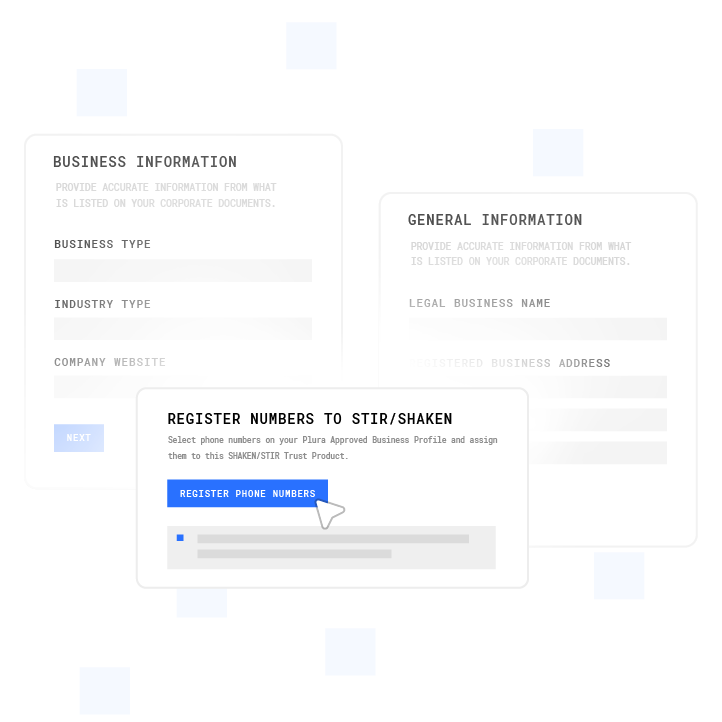
Plura is its own FCC-licensed audio bridging carrier, so voice does not route through a third-party CPaaS. Branded caller ID is issued at the carrier level, and SHAKEN/STIR caller ID verification runs on every outbound call. TCPA and DNC controls run before each contact, with real-time scrubbing against federal and state registries. SOC 2, HIPAA, ISO, and GDPR coverage sit in the platform infrastructure, and customers remain responsible for their own certifications and regulatory obligations.1
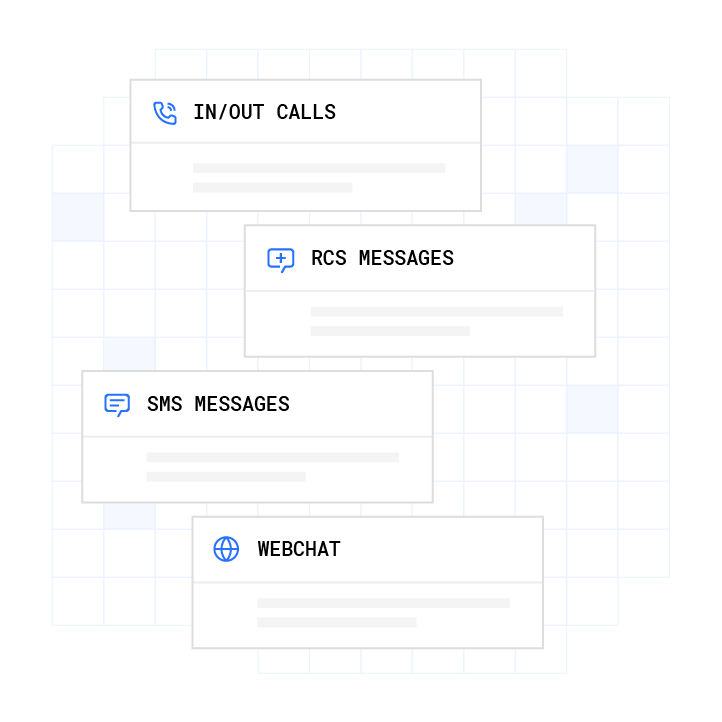
The stateful conversation database is the second structural difference. Every interaction across voice, SMS, RCS, and webchat is keyed to the same customer token. The AI that texted a lead at 9 a.m. picks up the call at noon already knowing what was said, what was offered, and what was declined. That default cross-channel context is not preserved by other categories of competitor.
Continuous Improvement Loops and Data Quality
Conversion quality degrades when the data feeding the AI degrades. Only 10-15% of AI projects make it into long-term production use, per Forrester.4
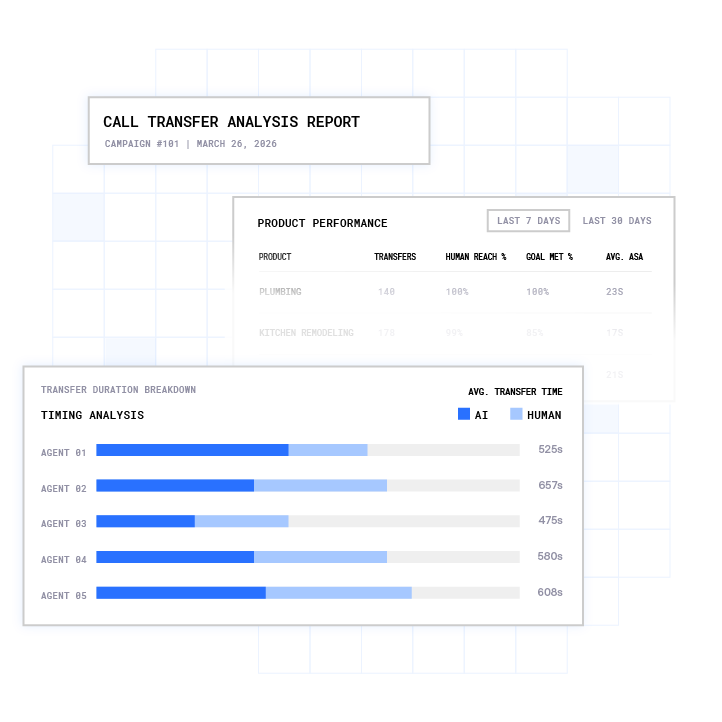
A continuous improvement loop for AI conversion optimization has four operating requirements that work together.
- Automated validation at ingest. Schema checks, format validation, null-rate monitoring, and deduplication run before data reaches the model. Clean data at entry prevents downstream drift, and null rates above 2% and duplicate rates above 1% become actionable thresholds.
- Drift monitoring with defined triggers. Even clean data changes over time as markets shift, so monitor both data drift and concept drift separately. Set alerts that trigger retraining based on measurable performance signals instead of ad hoc judgment calls.
- Feedback loops from production. Retraining only works when it receives the right signals, so route production edge cases, failed transfers, and unconverted leads back into the training pipeline. Businesses adopting AI-driven lead scoring can achieve a 51% increase in conversion rates when sales teams prioritize AI-influenced flags in daily workflows.
- Quality over volume. All three mechanisms above focus on accuracy rather than throughput. In 2026, high-performance lead generation follows the principle that qualifying leads better produces stronger conversion results than simply increasing lead volume. Plura’s Business Intelligence layer surfaces disqualification patterns, intent signals, and conversion gaps across every channel so operators tune the workflow against actual outcomes, not dashboard summaries.
Frequently Asked Questions
How long does it take to see measurable results from AI conversion optimization?
Most high-volume operators see measurable changes in speed-to-lead and contact rates within the first two weeks of deployment, because those metrics respond quickly to sub-5-second AI response times replacing 47+ hour manual queues. Conversion rate improvements typically become statistically significant within 30 to 60 days, once enough interactions have run through the new workflow to produce reliable comparison data. Plura’s average customer achieves 3x ROI within 90 days, and every annual contract includes a 90-day opt-out window if the deployment is not delivering against agreed benchmarks.
What prerequisites does a team need before deploying AI conversion optimization across voice, SMS, and webchat?
Three prerequisites matter before deployment: clean contact data, a defined ICP, and a baseline conversion metric per channel. Clean data means validated phone numbers, deduplicated records, and no null rates above 2% in the fields the AI will use for enrichment and routing. A defined ICP means the AI knows which leads to qualify and which to disqualify, so it does not waste talk time on contacts that will never convert. A baseline metric gives you a number to beat instead of a vague direction. Plura’s onboarding sequence starts with a discovery audit of your call economics and existing scripts before any workflow is built.
How does Plura handle compliance across TCPA, DNC, HIPAA, SOC 2, and GDPR?
Plura’s compliance engine sits inside the platform infrastructure, not as a third-party bolt-on. Every outbound contact is checked against federal and state DNC registries in real time before dial. TCPA compliance is supported through timestamped, immutable consent records that are audit-ready on demand, and quiet-hours rules enforce automatically through time-zone detection on the contact. HIPAA-aligned encryption, access controls, and audit logging cover protected health information across voice, SMS, RCS, and webchat. SOC 2 certification covers the underlying infrastructure with continuous monitoring and third-party audits, and ISO and GDPR coverage are available for operators with European exposure. SHAKEN/STIR caller ID verification runs on every outbound voice call. Customers are responsible for their own regulatory obligations and the claims they make to their end users, so consult qualified counsel for guidance on your specific obligations.
What is the cost difference between AI-optimized multi-channel outreach and a traditional human contact center?
Using the default scenario on Plura’s ROI calculator, a 15-agent operation paying $20 per hour with standard taxes, benefits, and commissions at 40% talk utilization costs $60,000 per month. Replacing that team with Plura at $15 per hour, 100% talk utilization, and 6 Plura agents doing the work of 15 humans drops the monthly cost to $14,400. That shift produces $45,600 in savings in the first 30 days, $547,200 over 12 months, and $2,736,000 over 60 months. For higher-volume operations, the same model produces a total cost of ownership of $700,000 per year against a traditional contact-center benchmark of $7,000,000. Run your own numbers at plura.ai/calculator.
How does stateful conversation memory affect conversion rates across channels?
Stateful memory removes the re-introduction problem that frustrates prospects. When a lead fills out a form, receives an SMS qualification sequence, and then gets a follow-up call, a platform without cross-channel memory treats each touchpoint as a new conversation. The lead re-explains their situation, the AI re-qualifies them, and the offer resets, which adds friction and costs conversions. Plura’s stateful conversation database keys every interaction to the same customer token across voice, SMS, RCS, and webchat. The AI that texted a lead at 9 a.m. picks up the call at noon already knowing the prior offer, the objection raised, and the qualification status, which enables the offer optimization patterns that produced the 6% to 18% improvement documented in solar deployments using Plura’s AI Lead Intelligence.
Conclusion
AI conversion optimization strategies that focus only on page elements leave the largest revenue gaps untouched. The friction that costs qualified conversions lives in slow response times, disconnected channel memory, and offers delivered without context. The framework in this article addresses all three by identifying friction with Traffic x Drop-Off x Revenue Impact math, personalizing offers using real-time enrichment and stateful memory, deploying conversational AI across voice, SMS, RCS, and webchat, and running continuous improvement loops anchored to conversion quality rather than volume.
Plura is the only platform that owns its FCC-licensed carrier stack, supports TCPA and DNC controls, runs SHAKEN/STIR caller ID verification, and aligns with SOC 2, HIPAA, ISO, and GDPR at the infrastructure level while maintaining stateful conversation memory across every channel. The 30-day rollout plan above is executable on a single platform, with a 90-day opt-out window if the numbers do not move.
Compare Plura’s plans and rates.
1 Plura AI maintains SOC 2, HIPAA, ISO, and GDPR posture as part of its platform infrastructure. References to compliance frameworks in this article describe Plura’s platform capabilities and do not constitute a guarantee that any customer using Plura will themselves be compliant with applicable laws or standards. Customers remain solely responsible for their own regulatory obligations, certifications, consent management, recordkeeping, and the claims they make to their own end users. Consult qualified legal counsel for guidance specific to your use case.
2 This article describes regulatory frameworks at a general level and does not constitute legal advice. Laws and regulations vary by jurisdiction, change over time, and apply differently depending on facts and circumstances. Readers should consult qualified legal counsel before making compliance decisions.
3 Performance figures, customer outcomes, and industry statistics referenced in this article are drawn from cited third-party sources or Plura customer case studies. Individual results vary based on implementation, use case, industry, audience, and execution. Past or aggregate performance is not a guarantee of future results.
4 References to third-party products, services, companies, or research are made for informational and comparative purposes only. Plura AI is not affiliated with, endorsed by, or sponsored by any third party named in this article unless explicitly stated. Trademarks and product names referenced remain the property of their respective owners.
This article is provided for informational purposes only and reflects Plura AI’s understanding at the time of publication. Product capabilities, integrations, and specifications are subject to change. For the most current information, visit plura.ai.
This article was produced with the assistance of AI tools and reviewed by Plura AI prior to publication.