
Written by: Matt Beucler, CEO, Plura AI
Key Takeaways for AI SDR Integrations
- AI SDR integrations work best with native CRM connectors and asynchronous conflict resolution, which keep real-time, two-way data sync stable without overwriting human edits.
- Stateful conversation memory across email, LinkedIn, voice, SMS, RCS, and webchat preserves context so prospects do not repeat information when they switch channels.
- Automated calendar booking with full transcript and enrichment handoff to account executives reduces drop-off and raises meeting conversion rates.
- Real-time enrichment and intent-flag triggers update CRM opportunity records as conversations unfold, which keeps lead scoring accurate and pipeline forecasts current.
- Plura AI supports TCPA, DNC, HIPAA, and SOC 2 compliance at the carrier level through its FCC-licensed infrastructure, and you can start a conversation with Plura AI to see how it fits your sales stack.1
The 5-Step AI SDR Integration Workflow
Step 1: CRM Bi-Directional Sync for Live Data
The goal is a live, two-way data channel between your AI SDR and your CRM so every contact update, activity log, and pipeline change appears in both systems in real time.
Configuration tasks for a reliable CRM integration start with native OAuth connectors to Salesforce, HubSpot, or Zoho instead of routing through middleware, because native connectors cut latency and remove failure points that third-party middleware introduces.4 Once the connector is live, field mapping must cover both standard and custom fields, so call outcome, escalation reason, compliance status, and intent flags all land in the correct CRM fields. Before any new contact is created, deduplication rules should check for existing records by email, phone, company domain, and LinkedIn profile to prevent CRM bloat and duplicate outreach.
Write conflicts create the most common failure point. A human rep may edit a record while an AI agent is mid-conversation, and the agent update can overwrite the rep’s change. Buffering writes asynchronously to a queue with conflict-resolution rules based on Last Modified Date sends contested updates to a review queue instead of overwriting live data. Plura’s integrations layer handles this at the platform level, so teams avoid custom engineering work for each CRM.
Step 2: Email and LinkedIn Channel Orchestration
The goal is coordinated outreach across email and LinkedIn that reads from and writes back to the same contact record, so no channel operates in isolation.
Configuration tasks include mapping sequence triggers to CRM lifecycle stages, setting send-volume throttles that protect domain reputation, and logging every AI-generated touchpoint directly to the contact and deal record. These touchpoints include emails sent, social interactions, and research activities. RevOps teams own the suppression lists, ICP filters, and CRM writeback standards that define which contacts enter each sequence and how activity appears in reporting.
Context fragmentation creates the main failure point. When email and LinkedIn run on separate tools with separate memories, a prospect who replied to an email can still receive a cold LinkedIn connection request the next morning. Plura’s Stateful Conversation Database tokens every interaction to the same customer record, so the orchestration layer reviews prior touchpoints before it initiates the next one.
Step 3: Calendar Booking Handoff to AEs
The goal of AI SDR calendar booking is a smooth path from qualified reply to confirmed meeting, with no manual scheduling steps and full context passed to the account executive at handoff.
Configuration tasks include connecting Calendly, Cal.com, or Google Calendar through the integrations directory, setting availability rules and time-zone detection, and configuring post-booking CRM triggers that create a new opportunity with an assigned dollar value. Modern AI SDR platforms support automated meeting booking through natural language conversation instead of relying only on calendar links, which reduces drop-off between reply and booked meeting.
Context loss at handoff is the common failure point. The AE may join the meeting with no record of what the AI discussed, which objections surfaced, or what pricing the AI mentioned. Plura passes the full conversation transcript and enrichment profile to the AE before the meeting starts, so the handoff delivers context instead of just a calendar invite.
Step 4: Reply Classification and AI SDR Data Enrichment
The goal is real-time lead scoring and AI SDR data enrichment that updates the CRM opportunity record while the conversation is active, not in a nightly batch job.
Configuration tasks for AI SDR CRM integration at this stage include connecting enrichment providers, which Plura supports through Attom, Enformion, FullContact, People Data Labs, and others in the integrations directory. Teams then map enrichment outputs to CRM fields and configure intent-flag triggers. When a prospect asks a pricing question or requests a technical buyer, that signal should push a high-intent flag directly into the CRM opportunity record for pipeline forecasting.
Plura’s AI Lead Intelligence layer enriches every lead from more than 30 data sources in real time during the conversation, so the scoring signal arrives while the agent is still talking, not after the call ends.
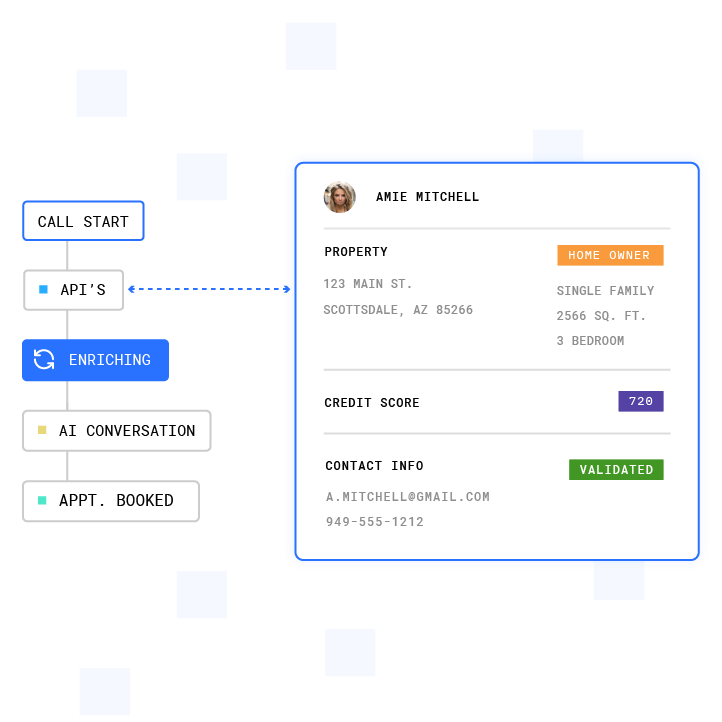
Stale data creates the main failure point. B2B contact data decays at roughly 2.1% per month, which means more than 22% of a CRM database becomes outdated every year.3 Enrichment works best when it runs at contact time instead of list-build time.
Step 5: AI SDR Guardrails and Compliance Controls
The goal is pre-contact compliance enforcement at the infrastructure layer, not a checklist applied after the campaign launches.
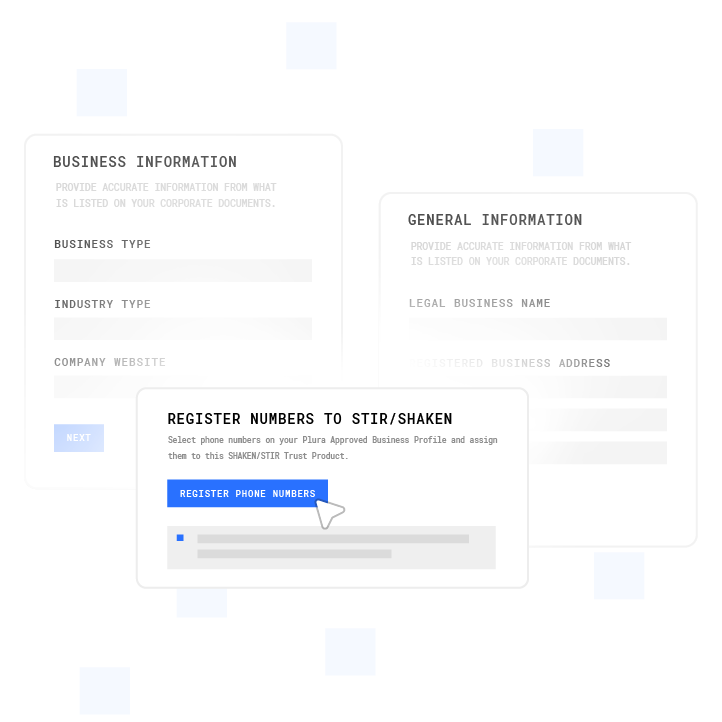
Configuration tasks for AI SDR guardrails include real-time DNC scrubbing against federal and state registries before every dial, time-zone detection for quiet-hours enforcement, immutable consent logging with timestamp and source URL, and SHAKEN/STIR caller ID verification on every outbound voice call.
The FCC’s February 2024 Declaratory Ruling (FCC-24-17) treats AI-generated voices as “artificial or prerecorded voice” under the TCPA, which places AI voice outreach within the same consent framework as traditional robocalls.2 Operators should consult qualified counsel regarding their specific consent documentation and DNC obligations. Plura’s Compliance Engine supports these guardrails at the carrier level before a call is placed, instead of acting as a post-dial audit layer. The FCC operates a voluntary Reassigned Numbers Database that telemarketers may query to reduce TCPA liability for calls to reassigned numbers and provides a limited safe harbor for reliance on its data; Maine became the first state to mandate its use. Plura’s validation layer includes RND checks through TrestleIQ and IP Quality Score.4
Treating compliance as a bolt-on creates the common failure point. Many Twilio-based API resellers enforce DNC scrubbing at the application layer, so a misconfigured workflow can bypass the check entirely. Plura owns its FCC-licensed carrier, so guardrails apply at origination, not at the software layer above it.
Architecture: Stateful Conversation Database as Single Source of Truth
These five integration steps all read from and write to a single architectural layer. That shared layer connects each component so the workflow stays consistent across every channel.
graph TD A[CRM: Salesforce / HubSpot / Zoho] -->|Bi-directional sync| B[Stateful Conversation Database] C[Email + LinkedIn Orchestration] -->|Activity logs + intent flags| B D[Calendar: Calendly / Cal.com / Google] -->|Booking events + AE context| B E[Enrichment: 30+ data sources] -->|Real-time lead profile| B F[Compliance Engine: DNC / TCPA / SHAKEN-STIR] -->|Pre-contact guardrails| B B -->|Shared memory| G[AI Voice Agent] B -->|Shared memory| H[AI SMS] B -->|Shared memory| I[AI RCS] B -->|Shared memory| J[AI Webchat] B -->|Human-facing view| K[Unified Inbox] Stateful AI SDR Memory Across Every Channel
Most AI SDR tools lose conversation context the moment a prospect moves from one channel to another. A lead who replied to an SMS at 9 a.m. often has to re-explain their situation when the AI voice agent calls at noon. That repetition creates friction and signals to the prospect that the system does not recognize them, which lowers conversion.
Plura’s Stateful Conversation Database tokens every interaction to a customer identifier such as phone number, email, or ID and stores it in one place. Every channel inherits the full memory of every prior touchpoint, including pricing offers made, objections raised, qualification status, and sensitive-data redactions. Dedicated memory layers allow shared state across channels or devices for multi-channel AI agents, which addresses fragmentation where preferences, tasks, and chat history sit in separate databases.
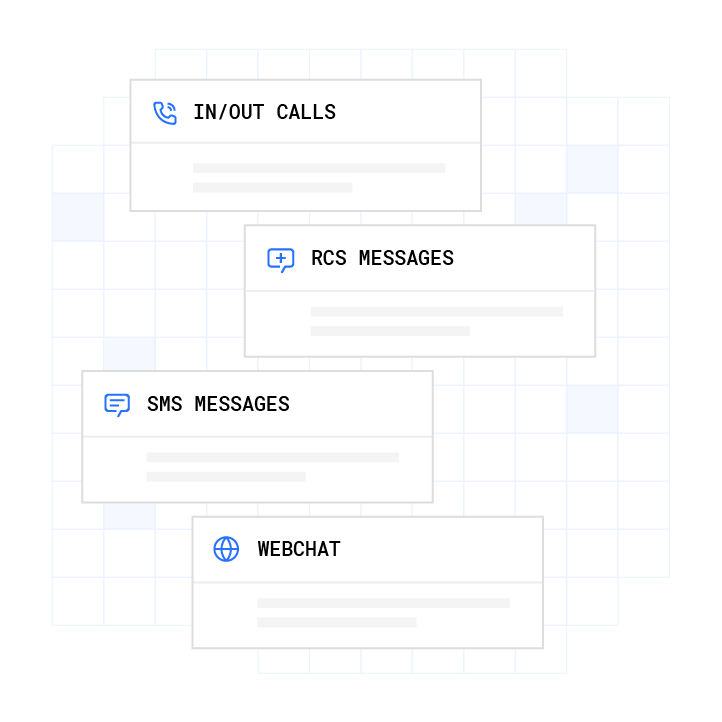
The practical result is straightforward. An AI agent that texted a lead about a specific product tier does not re-pitch a lower tier on the follow-up call. The negotiation history, objection pattern, and qualification status all travel with the contact record across every channel Plura supports.
Calculate the ROI impact of unified conversation memory across your channels.
Compliance Engine Embedded in Daily Operations
Plura’s Compliance Engine operates as a core layer of the platform. Every outbound contact is checked against federal and state DNC registries in real time before dial. Consent records are timestamped, immutable, and structured for audit review. Quiet-hours rules apply automatically through time-zone detection on the contact, which aligns campaigns with state and federal calling-window rules. SHAKEN/STIR authentication runs on every outbound voice call, and the destination carrier uses that signal to verify legitimate origination.
Because Plura owns its FCC-licensed carrier instead of routing through a third-party CPaaS, branded caller ID is issued at the carrier level. Calls present with the company’s name instead of “Spam Likely.” Platforms that depend on Twilio and operate as a software layer without a carrier license cannot issue branded caller ID at the carrier level.4
SOC 2, HIPAA, and ISO certification apply across the full stack.1 The compliance dashboard exports audit-ready reports in one click for legal review, carrier requirements, or regulatory inquiries. Operators remain responsible for their own downstream compliance obligations, and Plura provides the infrastructure and enforcement layer that supports that posture.
Model your compliance and operational costs with Plura’s ROI calculator.
Frequently Asked Questions
How do I keep context across email and calls?
Context loss occurs when each channel writes to a separate database with no shared identifier. A single stateful layer that tokens every interaction to the same customer record across channels solves this problem. Plura’s Stateful Conversation Database does this natively across voice, SMS, RCS, and webchat. When a prospect replies to an email sequence and then receives a follow-up call, the AI voice agent already has the email thread, enrichment profile, and qualification status in context before the call connects, so no one needs to repeat information.
What does AI SDR cost?
AI SDR costs vary by platform model. Plura operates on three tiers: Multi at $5,000 per month, Agency at $7,500 per month, and Enterprise at custom pricing, all on annual contracts billed monthly with a 90-day opt-out window. Agent build fees typically run from $2,500 to $2,750 per agent. The relevant comparison is total cost of ownership against the alternative. A 15-agent human operation at $20 per hour with standard overhead costs approximately $60,000 per month, while an equivalent Plura deployment runs about $14,400 per month at 100% talk utilization.3 See the full model at plura.ai/pricing and run your specific numbers at plura.ai/calculator.
What CRMs and calendars does Plura support?
Plura integrates with HubSpot, Salesforce, and Zoho CRM. Calendar integrations cover Calendly, Cal.com, and Google Calendar. The full directory of more than 50 integrations across CRM, enrichment, calendar, payments, documents, and team management tools appears at plura.ai/integrations. All integrations share the same Stateful Conversation Database, so a booking event in Calendly updates the same record that the AI SMS thread and the voice call use.
How does Plura handle TCPA and DNC compliance for AI outbound calls?
Plura’s Compliance Engine checks every outbound contact against federal and state DNC registries in real time before a call is placed, and non-compliant numbers are blocked before the first attempt. Consent records are timestamped, immutable, and structured with source URL and IP address. Quiet-hours rules apply automatically through time-zone detection, and SHAKEN/STIR authentication runs on every outbound voice call. Under the February 2024 FCC ruling mentioned earlier, operators should consult qualified counsel regarding their specific consent and documentation obligations. Plura provides the infrastructure enforcement layer, and the operator owns the downstream compliance posture.
How long does it take to go live with a Plura AI SDR integration?
A standard inbound qualification flow typically deploys in days. A complex multi-step workflow, such as a 25-question intake with branching enrichment logic and multi-CRM writeback, often runs closer to one to two months because the conversation logic itself requires design and validation time. Plura’s onboarding sequence covers a discovery audit, sample-call intake, overnight mockup build, iteration session, engineering build, pilot test on a live call subset, and full go-live. Every annual contract includes a 90-day opt-out window if the deployment does not deliver against agreed metrics.
Review deployment timelines and contract terms on the pricing page.
1 Plura AI maintains SOC 2, HIPAA, ISO, and GDPR posture as part of its platform infrastructure. References to compliance frameworks in this article describe Plura’s platform capabilities and do not constitute a guarantee that any customer using Plura will themselves be compliant with applicable laws or standards. Customers remain solely responsible for their own regulatory obligations, certifications, consent management, recordkeeping, and the claims they make to their own end users. Consult qualified legal counsel for guidance specific to your use case.
2 This article describes regulatory frameworks at a general level and does not constitute legal advice. Laws and regulations vary by jurisdiction, change over time, and apply differently depending on facts and circumstances. Readers should consult qualified legal counsel before making compliance decisions.
3 Performance figures, customer outcomes, and industry statistics referenced in this article are drawn from cited third-party sources or Plura customer case studies. Individual results vary based on implementation, use case, industry, audience, and execution. Past or aggregate performance is not a guarantee of future results.
4 References to third-party products, services, companies, or research are made for informational and comparative purposes only. Plura AI is not affiliated with, endorsed by, or sponsored by any third party named in this article unless explicitly stated. Trademarks and product names referenced remain the property of their respective owners.
This article is provided for informational purposes only and reflects Plura AI’s understanding at the time of publication. Product capabilities, integrations, and specifications are subject to change. For the most current information, visit plura.ai.
This article was produced with the assistance of AI tools and reviewed by Plura AI prior to publication.