
Written by: Matt Beucler, CEO, Plura AI
Key Takeaways for Agency SMS CRM Automation
- Agency SMS CRM automation connects CRM events like form fills and pipeline changes directly to compliant SMS workflows, which removes manual lead follow-up delays.
- Sub-account isolation, 10DLC registration per client, and real-time TCPA/DNC enforcement are essential foundations for scaling SMS automation across multiple agency clients.2
- Stateful cross-channel memory preserves conversation context across SMS, voice, and webchat, so leads do not repeat themselves and conversion rates improve.
- Agencies using automated SMS CRM workflows can scale from 5–8 to 15–20 clients per account manager while supporting compliance and cutting lead response time from hours to seconds.3
- Plura AI provides agency-specific infrastructure for compliant, scalable SMS automation, and you can start a free trial today.
How Agency SMS CRM Automation Replaces Manual Lead Follow-Up
Manual lead follow-up is a structural problem, not a staffing one. The 2011 Harvard Business Review study co-authored by Dr. James Oldroyd found companies took an average of 42 hours to respond to online sales leads, while leads that convert expect a reply in 5 minutes or less.4 A Harvard Business Review analysis of over 1.25 million leads found that firms contacting leads within one hour were nearly seven times more likely to qualify the lead than those waiting even 60 minutes, with qualification odds collapsing by 60 times after 24 hours.3
For agencies managing multiple client accounts, the gap between CRM event and first contact is where revenue disappears. When a form fill triggers a manual queue, the lead waits for an available rep. When a pipeline stage changes, nobody sends the follow-up text. Agency SMS CRM automation closes that gap by connecting CRM events directly to outbound SMS workflows, with no human hand-off required. Plura enables lead contact within 60 seconds for every lead, compared to 1–4 hours in manual operations.
Run your numbers through Plura’s calculator to check your ROI in real time.
Which Agencies Are Ready for SMS CRM Automation?
This implementation guide serves agency owners and operations leaders who already run client campaigns inside a CRM and need SMS follow-up tied directly to CRM events at scale. The preconditions for a successful deployment are clear and concrete.
- An active CRM with webhook or API event support (HubSpot, Salesforce, Zoho, or GoHighLevel are common starting points; see Plura’s integrations directory).4
- At least 5 active client accounts generating inbound leads or pipeline movement.
- Existing or in-progress 10DLC brand and campaign registration for each client (A2P 10DLC, or Application-to-Person 10-digit long code, is the carrier registration framework that governs automated SMS delivery to U.S. recipients).2
- Documented consent records for each client’s contact list, including opt-in timestamps, source URLs, and disclosure language.
- A compliance review process, or access to qualified counsel, for TCPA (Telephone Consumer Protection Act) and DNC (Do Not Call) obligations across client accounts.2
Quality declines past 5–8 clients per account manager in manual operations. The steps below describe how to build infrastructure that removes that ceiling.
Step 1: Set Up Sub-Accounts and Register 10DLC Brands
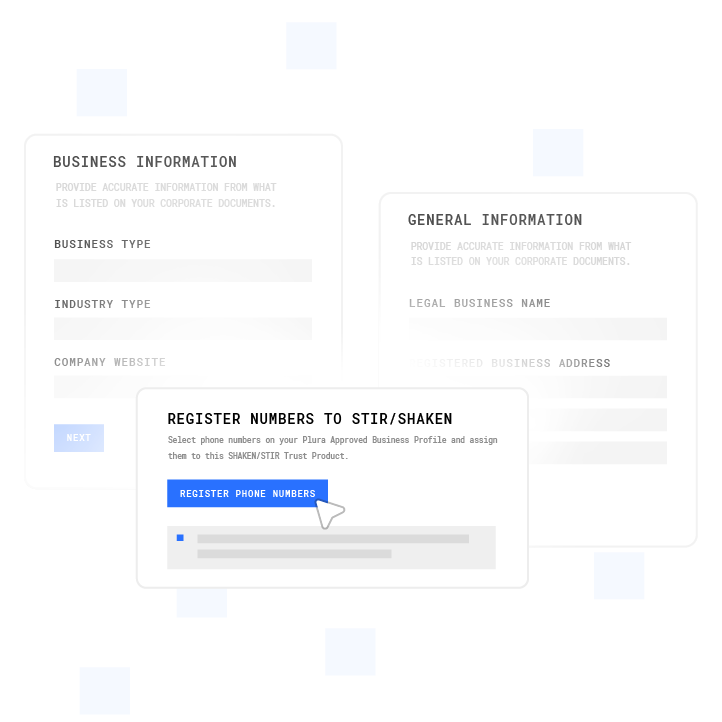
The first step is establishing client isolation at the account and carrier level. Each client must operate as a separate entity in both the SMS platform and the carrier registration system.
Objective: Prevent cross-client data bleed, isolate consent records, and satisfy carrier requirements that each legal sender register its own brand.
Decision criteria: Carriers require each client sub-account to register its own Brand tied to the client’s legal business name and EIN, and its own Campaign describing message purpose and opt-in flows. This requirement prevents agencies from registering once under their own identity and applying that registration to all client campaigns. Because each client must be a separate legal sender, Plura’s sub-account architecture enforces this isolation by design, with each client account maintaining its own numbers, consent logs, and reporting.
Trade-offs: Brand registration with TCR is often immediate when information matches records, while campaign registration typically takes 2–6 business weeks. Build this timeline into client onboarding schedules. As of February 1, 2025, all major U.S. mobile carriers block all text message traffic from unregistered 10DLC numbers.
Step 2: Connect CRM Events to Stateful SMS Workflows
After sub-accounts are provisioned, the next step is defining which CRM events trigger which SMS workflows and ensuring those workflows carry conversation context across channels.
Objective: Connect specific CRM triggers such as form fill, stage change, missed call, or appointment no-show to outbound SMS sequences that continue intelligently based on lead response.
Decision criteria: Lead capture SMS automation workflows achieve highest impact when triggered within 0–5 minutes of form submission, Facebook Lead Ads, or missed inbound calls. Map each trigger to a workflow node in Plura’s no-code workflow builder, and specify the initial message, follow-up cadence, and escalation path to AI SMS or voice handoff.
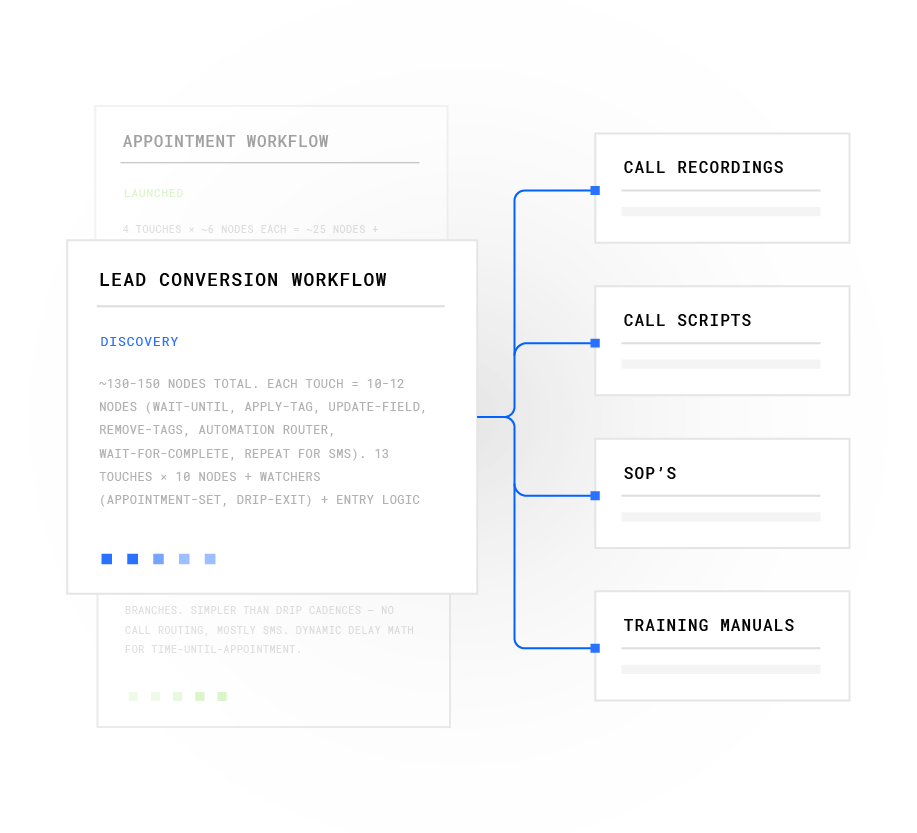
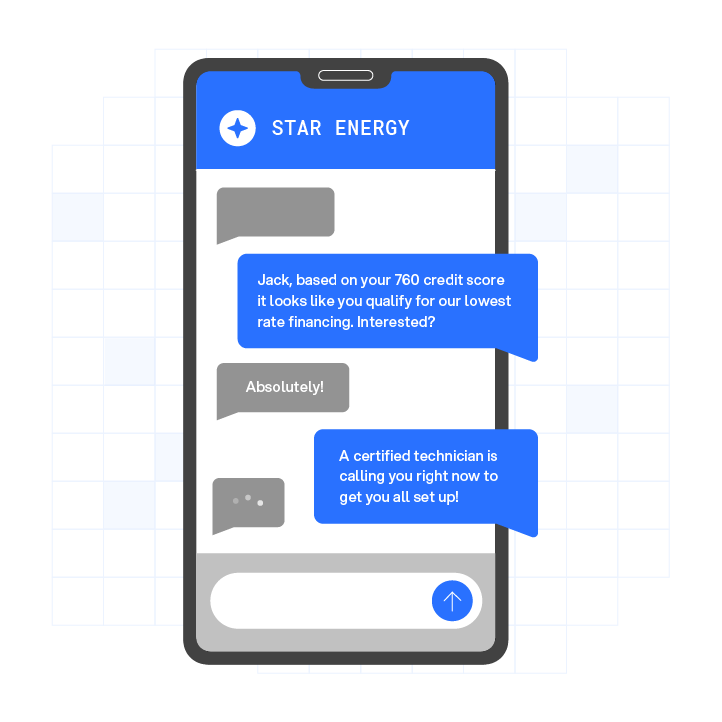
Trade-offs: Stateful workflows require a persistent memory layer that tracks what was said across prior touchpoints. Plura’s Stateful Conversation Database keys every interaction to a customer token such as phone number, email, or ID. An AI SMS agent that texted a lead at 9 a.m. then picks up the conversation with full context when the lead replies at noon. Systems without this architecture treat each message as a new conversation, which forces leads to repeat themselves and reduces conversion rates.
Step 3: Configure TCPA, DNC, and Consent Tracking in Real Time
Compliance configuration must be built into the workflow before the first message sends. Retrofitting controls later creates risk and rework.
Objective: Support TCPA compliance posture, enforce DNC suppression, and maintain audit-ready consent records per client account.
Decision criteria: A compliant SMS platform must capture and store consent records for at least five years (or the duration of the relationship), including timestamp, IP address, exact disclosure language, phone number, and source, and allow export per contact. TCPA violations can cost $500 to $1,500 per text or call.2 Plura supports compliance by integrating with Blacklist Alliance for real-time TCPA litigator and DNC screening on outbound contacts across client accounts.
Trade-offs: STOP requests must be processed within 24 hours (best practice is real time) with permanent suppression across all campaigns for that brand. Agencies managing multiple clients must ensure suppression lists do not cross client boundaries. Plura’s sub-account isolation enforces this separation. Consult qualified counsel regarding your specific TCPA and DNC obligations before deploying any outbound SMS program.
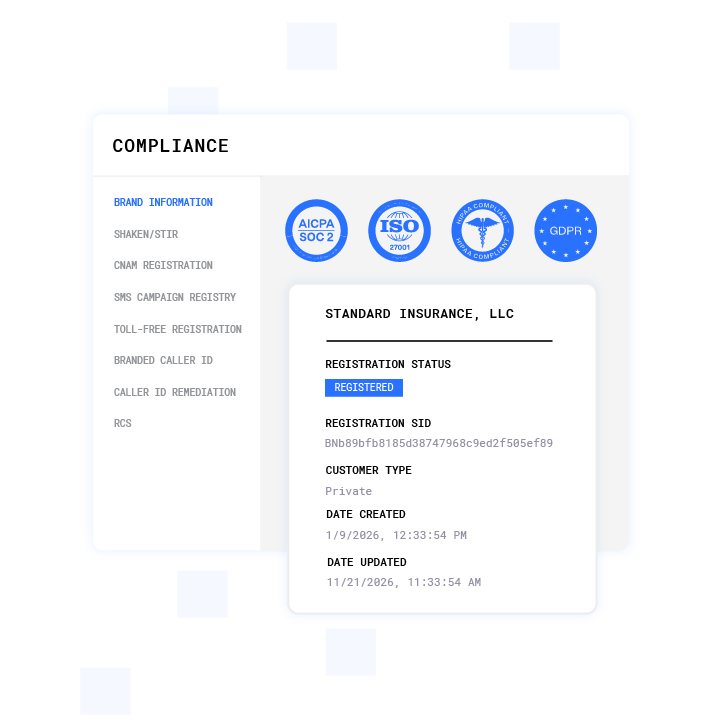 1
1Step 4: Turn On Cross-Channel Memory and Quiet-Hours Controls
Cross-channel memory and quiet-hours enforcement form the operational layer that separates agency-grade SMS automation from basic bulk texting.
Objective: Ensure every SMS workflow inherits prior conversation context from voice, webchat, and prior SMS threads, and ensure no message sends outside permitted hours in the recipient’s local time zone.
Decision criteria: TCPA quiet hours for SMS are 8 a.m. to 9 p.m. in the recipient’s local time zone, and platforms must enforce by recipient area code rather than sender time zone to avoid violations on national campaigns. Florida and Oklahoma tighten this window to 8 a.m.–8 p.m. Plura enforces quiet-hours rules automatically through time-zone detection on the contact record, applying state-specific windows across all client campaigns without manual configuration per state.
Trade-offs: Cross-channel memory requires a unified data layer. Plura’s Stateful Conversation Database holds context across voice, AI SMS, RCS, and AI webchat in one place. Platforms that run SMS and voice as separate products with separate databases cannot deliver this continuity, and leads experience the friction of repeating themselves on every channel switch.
Step 5: Build Audit-Ready Exports and Client Reporting
The final step converts operational data into client-facing proof of performance and documentation that supports compliance reviews.
Objective: Generate per-client reports on lead response time, conversation outcomes, opt-out rates, and compliance events, and make them exportable on demand for client reviews or regulatory inquiries.
Decision criteria: The most actionable analytics include speed-to-lead, time-to-first-reply, reply rate by workflow, opt-out rate by template, and deliverability error codes linked to specific messaging providers. Plura’s conversation intelligence layer generates client-ready reports automatically, surfacing conversion lift, contact rates, and cost per completed action rather than raw send volume.
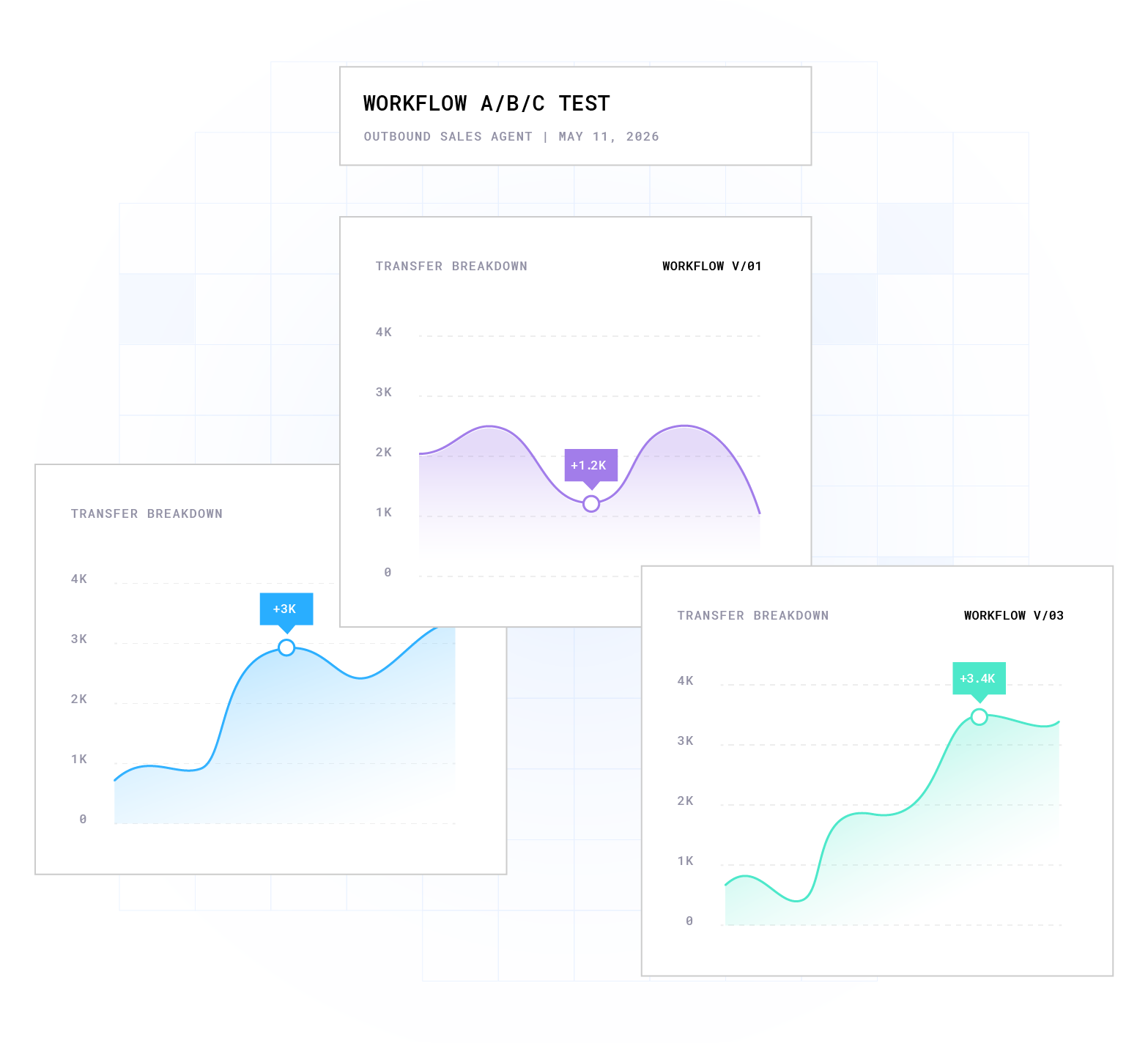
Trade-offs: Audit-ready exports require immutable consent records and timestamped event logs. Plura stores consent records with UTC timestamps, IP addresses, and verbatim disclosure text per contact, exportable in one click for legal review or carrier requirements. Agencies that rely on manual spreadsheet exports cannot maintain this audit trail at the scale described earlier.
Compare Plura’s agency plans and rates to find the right tier for your client roster.
Core Models That Support Scalable Agency SMS CRM Automation
Three frameworks guide how agencies should evaluate and build their SMS CRM automation stack.
Sub-account isolation model: Every client is a separate legal sender with its own 10DLC brand, campaign registration, consent records, and reporting. The agency operates as the ISV (independent software vendor) layer above, with centralized visibility but no cross-client data bleed. Plura’s architecture enforces this by design.
Trigger-to-workflow mapping: Each CRM event maps to a specific workflow with defined entry conditions, message cadence, escalation path, and exit criteria. Opt-out rate by workflow serves as a key quality signal, and spikes in STOP replies on a specific sequence indicate issues with targeting, timing, or disclosure language that should be addressed before scaling volume.
Stateful memory architecture: Many users expect their AI assistant to remember previous conversations. Agencies that deploy SMS automation without cross-channel memory create a fragmented experience that reduces conversion and increases opt-out rates. Plura’s Stateful Conversation Database resolves this by keying every interaction to a single customer token across all channels.
Run your numbers through Plura’s calculator to check your ROI in real time.
Common Challenges When Automating SMS from CRM Events
Four failure patterns appear consistently when agencies implement SMS CRM automation without the right infrastructure.
Unregistered traffic blocking: Given the carrier blocking rules described in Step 1, agencies that launch SMS workflows before completing brand and campaign registration for each client will see zero delivery. Build registration timelines into client onboarding before any workflow goes live.
Consent record gaps: Consent collected for one SMS program does not automatically cover a separate program or brand, and platforms must support program-specific consent segmentation. Agencies managing multiple clients on a shared platform without sub-account isolation risk applying one client’s consent records to another client’s campaigns.
Context loss on channel switch: When a lead responds to an SMS and then calls in, a platform without stateful memory treats the call as a new contact. The lead repeats their situation, and the agent loses the qualification data from the SMS thread. Plura’s Stateful Conversation Database prevents this by sharing context across every channel in real time.
Quiet-hours violations on national campaigns: Beyond the federal quiet-hours baseline established in Step 4, Florida’s FTSA, Oklahoma’s OTSA, Washington’s CEMA, and Maryland’s MTCPA each impose state-specific time windows and private rights of action that apply to any business texting residents regardless of business location. Platforms that enforce quiet hours by sender time zone rather than recipient time zone create exposure on multi-state campaigns. Consult qualified counsel regarding your specific obligations under applicable state laws.
See how Plura’s agency plans handle compliance enforcement across client accounts.
How Agencies Track Results from SMS CRM Automation
ROI measurement for agency SMS CRM automation centers on five operational metrics rather than send volume alone.
- Speed-to-lead: Measured from CRM trigger to first outbound text, using both median and 90th percentile values. Leads contacted within 1 minute are 391% more likely to convert than those contacted after 24 hours.3
- Conversation-to-stage conversion: The percentage of SMS-initiated conversations that move a contact from one CRM stage to the next, such as New Lead to Booked or Open Ticket to Resolved.
- Opt-out rate by workflow: A spike in STOP replies on a specific sequence signals targeting, timing, or disclosure issues before they become compliance events.
- Account manager capacity: Agencies using Plura handle 15–20 clients per account manager, versus the 5–8 baseline in manual operations.3
- Client retention rate: Automated ROI reporting reduces the leading cause of client churn, which is failure to demonstrate measurable results.
Advanced Considerations for Scaling to 15–20 Clients
Scaling past 10 active client accounts introduces three operational pressures that basic SMS platforms cannot absorb.
First, 10DLC registration volume increases. Each new client requires its own brand and campaign registration, with approval timelines that can extend to weeks during high-volume periods. Agencies should maintain a registration pipeline that runs 2–3 weeks ahead of client launch dates.
Second, consent record governance becomes a capacity constraint. Agencies running SMS programs for 15 or more clients cannot rely on manual exports and shared inboxes because the compliance surface becomes a full-time job and the risk of texting the wrong list climbs with each added account. Plura’s sub-account isolation and immutable consent ledger handle this at scale without adding headcount.
Third, cross-channel memory depth starts to differentiate agencies. Organizations deploying AI for speed to lead see response times drop from hours to seconds and connection rates increase by 3x to 5x. At 15–20 clients, the compounding value of stateful conversation history becomes a competitive advantage, because every interaction feeds the database and every subsequent contact benefits from accumulated context.
Run your numbers through Plura’s calculator to check your ROI in real time.
Agency SMS CRM Automation FAQ
What is agency SMS CRM automation and how does it differ from standard SMS marketing?
Agency SMS CRM automation connects outbound SMS workflows directly to CRM events such as form fills, pipeline stage changes, or missed calls, so messages send automatically without a human triggering them. Standard SMS marketing typically involves manual list uploads and scheduled broadcast sends. Agency SMS CRM automation is event-driven, stateful, and operates across multiple client sub-accounts simultaneously. The key agency-specific requirements are sub-account isolation so each client’s data, consent records, and reporting stay separate, 10DLC registration per client brand, and a compliance engine that enforces TCPA quiet hours and DNC suppression in real time across every client campaign.
Why does sub-account isolation matter for agencies running SMS automation?
Carriers require each legal sender to register its own brand and campaign through The Campaign Registry. An agency cannot register once under its own identity and apply that registration to client campaigns, because each client is treated as a separate legal sender. Sub-account isolation also prevents consent record cross-contamination, since consent collected for one client’s SMS program does not cover another client’s campaigns. Plura’s architecture enforces this separation by design, with each client sub-account maintaining its own numbers, consent logs, message history, and reporting. This structure also limits the blast radius of a compliance event in one account from affecting deliverability across the agency’s full book of business.
How does Plura AI handle TCPA and DNC compliance across multiple client accounts?
Plura supports compliance across client accounts through several enforcement layers built into the platform. Every outbound contact is checked against federal and state DNC registries in real time before a message sends. Plura integrates with Blacklist Alliance for real-time TCPA litigator screening on outbound contacts. Quiet-hours rules enforce automatically through time-zone detection on the contact record, applying state-specific windows, including Florida’s 8 a.m.–8 p.m. restriction, without manual configuration per state. Consent records are timestamped, immutable, and exportable per contact for audit purposes. Agencies remain responsible for their own compliance obligations and should consult qualified counsel regarding TCPA, DNC, and applicable state law requirements for their specific programs.
What CRM platforms does Plura integrate with for SMS automation triggers?
Plura integrates with HubSpot, Salesforce, Zoho, and GoHighLevel, among 50+ tools across CRM, calendar, attribution, and automation categories. CRM events such as form fills, pipeline stage changes, and contact record updates can trigger SMS workflows through native integrations, Zapier, Make, or direct API webhooks. The full integrations directory is available at plura.ai/integrations. Each integration passes event data into Plura’s Stateful Conversation Database, so the SMS workflow that fires on a CRM trigger carries the full context of any prior voice, SMS, RCS, or webchat interactions with that contact.
How long does it take to go live with agency SMS CRM automation on Plura?
A straightforward inbound lead follow-up workflow typically deploys in days. More complex multi-step sequences, such as a qualification flow with branching logic across multiple CRM stages, run closer to one to two weeks depending on workflow design and 10DLC registration timelines. The primary variable outside the platform is 10DLC campaign registration, which takes 3–7 business days under normal conditions but can extend during high-volume periods. Plura’s onboarding sequence includes a discovery audit, workflow mockup, engineering build, pilot test on a subset of real contacts, and full go-live. All annual contracts include a 90-day opt-out window if the deployment is not delivering. See current plans and timelines at plura.ai/pricing.
Compare Plura’s agency plans and rates to find the right tier for your client roster.
1 Plura AI maintains SOC 2, HIPAA, ISO, and GDPR posture as part of its platform infrastructure. References to compliance frameworks in this article describe Plura’s platform capabilities and do not constitute a guarantee that any customer using Plura will themselves be compliant with applicable laws or standards. Customers remain solely responsible for their own regulatory obligations, certifications, consent management, recordkeeping, and the claims they make to their own end users. Consult qualified legal counsel for guidance specific to your use case.
2 This article describes regulatory frameworks at a general level and does not constitute legal advice. Laws and regulations vary by jurisdiction, change over time, and apply differently depending on facts and circumstances. Readers should consult qualified legal counsel before making compliance decisions.
3 Performance figures, customer outcomes, and industry statistics referenced in this article are drawn from cited third-party sources or Plura customer case studies. Individual results vary based on implementation, use case, industry, audience, and execution. Past or aggregate performance is not a guarantee of future results.
4 References to third-party products, services, companies, or research are made for informational and comparative purposes only. Plura AI is not affiliated with, endorsed by, or sponsored by any third party named in this article unless explicitly stated. Trademarks and product names referenced remain the property of their respective owners.
This article is provided for informational purposes only and reflects Plura AI’s understanding at the time of publication. Product capabilities, integrations, and specifications are subject to change. For the most current information, visit plura.ai.
This article was produced with the assistance of AI tools and reviewed by Plura AI prior to publication.