
Written by: Matt Beucler, CEO, Plura AI
Key Takeaways for High-Volume Teams
- Synthflow AI runs on a Twilio-wrapper architecture, which limits performance, routing control, and compliance tooling compared to carrier-owned platforms.
- Plura AI delivers FCC-licensed carrier ownership with 100% U.S. infrastructure, A-level SHAKEN/STIR attestation, and branded caller ID at origination.
- Real-time, fail-closed DNC enforcement and immutable consent records sit inside Plura’s platform, which helps reduce TCPA exposure for high-volume operators.
- Stateful cross-channel memory across voice, SMS, RCS, and webchat prevents context loss and supports higher conversion rates in multi-touch campaigns.
- Plura AI gives contact centers and agencies a carrier-native alternative to wrapper architectures; schedule a live walkthrough to see it in production.
Synthflow AI Answering Service Pricing vs. Plura AI Economics
Synthflow’s published pricing uses sales-led enterprise contracts starting at $30,000 annually, with no self-serve monthly tiers such as Starter, Pro, Growth, or Agency. Per-minute rates across the AI answering service category generally range from $0.08 to $0.13 for mid-tier plans, with infrastructure-layer platforms starting at $0.05 to $0.15 per minute before hidden component costs.
Plura’s pricing is structured for high-volume operators at three tiers: Multi at $5,000 per month, Agency at $7,500 per month, and Enterprise at custom rates, all on annual contracts billed monthly with a 90-day opt-out window. Each tier includes the platform infrastructure, and agent build fees of $2,500 to $2,750 per agent are one-time costs added to the first month. When you combine these platform and build costs with per-minute usage, the total cost of ownership difference becomes material at scale: a 20-agent U.S. call center costs roughly $1–2 million annually once all overhead is included, while an AI equivalent at $0.10–$0.25 per minute for 96,000 minutes per month totals $115,000–$288,000 annually plus any platform fees3.
Compare plans and rates side by side at plura.ai/pricing.
Twilio-Wrapper Infrastructure: How Synthflow AI Is Built
Synthflow operates as a software layer on top of Twilio Programmable Voice4, so phone numbers live inside Twilio’s network rather than in a carrier the platform owns. Synthflow combines telephony infrastructure, speech recognition, and AI conversation logic inside a no-code visual builder, though it offers fewer advanced telephony controls than developer-focused platforms. This wrapper architecture is common. Most AI voice platforms including Vapi, Bland, Retell, and ElevenLabs use Twilio Programmable Voice as their PSTN layer4, provisioning numbers inside Twilio and wiring them to the AI platform via API.
The infrastructure impact shows up in latency and flexibility. SIP/PSTN telephony can add setup and carrier routing latency per call compared to direct carrier connections. Customers hang up about 40% more often when a voice agent takes longer than one second to respond3, so latency becomes a direct revenue variable. Switching AI platforms on a Twilio-wrapper model also requires rebuilding number provisioning and connectivity, while an independent carrier layer allows routing updates at the SBC (Session Border Controller) while numbers remain in the network.
Plura owns its own FCC-licensed audio bridging carrier, so voice originates on Plura’s domestic infrastructure instead of a third-party CPaaS (Communications Platform as a Service: the API-only telecom layer that providers like Twilio sell to AI vendors that do not own a carrier). Plura AI owns its telecom infrastructure and holds an FCC carrier license, while Synthflow depends on Twilio and operates as a software layer without a carrier license. Carrier ownership lets Plura issue branded caller ID directly, enforce SHAKEN/STIR (Secure Handling of Asserted information using toKENs / Signature-based Handling of Asserted information using toKENs: the FCC caller ID authentication framework) at origination, and control routing without third-party dependency. CPaaS platforms typically deliver only B-level STIR/SHAKEN attestation by default because they provision numbers from shared pools, while a carrier managing the number pool directly can deliver consistent A-level attestation that improves call completion rates. Carrier ownership also determines where compliance enforcement occurs in the stack, which matters for high-volume operators managing TCPA and DNC obligations.
TCPA and DNC: How Synthflow and Plura Support Compliance
TCPA (Telephone Consumer Protection Act: 47 U.S.C. § 227, the primary federal law governing automated calls and texts) compliance for AI voice answering services depends heavily on where enforcement sits in the stack. The FCC’s February 8, 2024 Declaratory Ruling confirmed that AI-generated voices are treated as “artificial or prerecorded” under the TCPA, so all TCPA consent, identification, and disclosure requirements apply to any AI technologies that initiate outbound telephone calls using artificial or prerecorded voices2.
For DNC compliance, DNC screening systems must be fail-closed: if a database check errors or times out, the call must not proceed, because a fail-open design converts infrastructure issues into batches of potential TCPA violations carrying $500 to $1,500 statutory damages each. The FCC’s consent-revocation rule, effective April 2025, permits consumers to revoke consent by any reasonable means, including saying it during a call2. In automated calling systems, revocation phrases must be recognized at the platform level in real time.
Synthflow relies on Twilio’s BAA (Business Associate Agreement) for HIPAA, while Plura supports SOC 2 and HIPAA1. Plura’s compliance engine supports TCPA and DNC enforcement as first-class platform layers. Every outbound contact is checked against federal and state DNC registries in real time before dial, consent records are timestamped and immutable, and quiet-hours rules apply automatically through time-zone detection. Operators should consult qualified counsel regarding their specific regulatory obligations. Plura provides the infrastructure, and compliance posture downstream remains the customer’s responsibility.
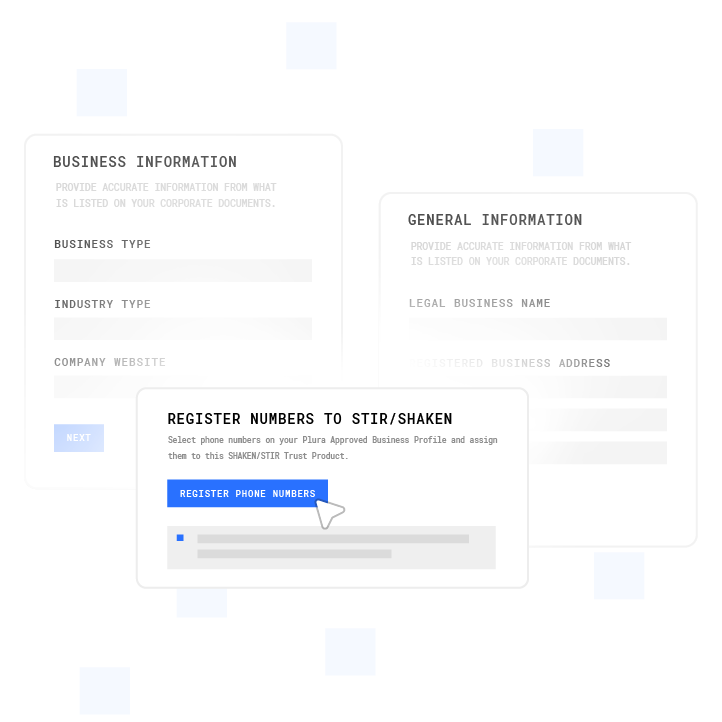
See Plura’s real-time DNC scrubbing and consent management in action: plura.ai/ai-voice-demo.
Where Wrapper Architectures Struggle at High Volume
Contact center leaders, agency owners, and franchise operators running high-volume inbound and outbound operations encounter four recurring failure points with Twilio-wrapper AI answering services.
- Speed-to-lead delays. The industry standard for first contact on an inbound lead is 47+ hours. Contacting a lead within 5 minutes makes them up to 100x more likely to connect, and a 60-second response lifts conversions by 391%, per industry research published on plura.ai/calculator3. Wrapper-based platforms add latency at the carrier layer before the AI even begins processing, which slows first contact.
- Spam labels killing connect rates. A-level STIR/SHAKEN attestation, where the carrier has verified the number is assigned to the caller, completes at higher rates than B- or C-level. Platforms without carrier ownership cannot issue branded caller ID at origination, so calls present as unknown numbers or receive spam flags from downstream carriers, which depresses answer rates.
- Agent economics at scale. A traditional U.S.-based call center costs $25 to $45 per agent per hour including salary, benefits, facility, and overhead; an AI call center handles equivalent volume for 60 to 95% less. Per-minute overage charges on wrapper-based platforms erode that savings at high volume and make forecasting harder.
- After-hours coverage gaps. Franchise networks with a 67% average missed-call rate during peak hours need 24/7 AI call answering that does not depend on third-party carrier uptime. An AI voice agent handling the majority of inbound calls at peak hours requires five-nines carrier uptime, because downtime during peak hours carries a direct, calculable operational cost.
Plura AI: Direct Carrier Infrastructure for Enterprise Operations
Plura addresses each of these failure points through owned infrastructure rather than third-party dependency. For speed-to-lead delays, carrier ownership removes the Twilio routing layer and reduces first-contact latency. For spam labels, carrier-provisioned branded caller ID and A-level SHAKEN/STIR attestation improve pickup rates. For agent economics at scale, predictable carrier pricing avoids third-party overage surprises. For after-hours coverage, five-nines carrier uptime supports 24/7 availability without CPaaS dependency.
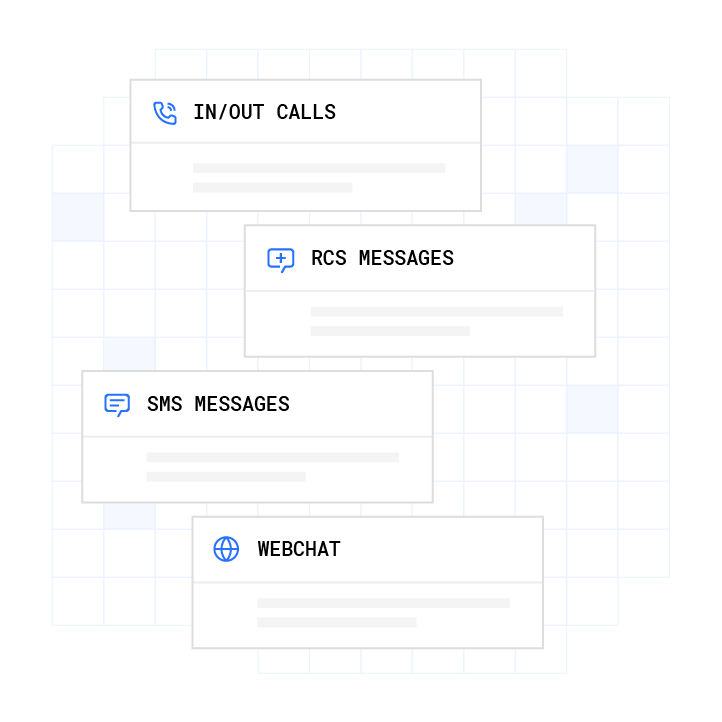
The product surface covers four channels that share one Stateful Conversation Database: AI voice agent for inbound and outbound calls, AI SMS for lead qualification and live transfer, AI RCS (Rich Communication Services: the next-generation SMS standard) for branded interactive messaging, and AI webchat for website conversion. The AI predictive dialer handles high-volume outbound with branded caller ID and SHAKEN/STIR authentication on every call.
Plura supports communication channels including voice, SMS, RCS, and webchat, while Synthflow is limited to voice only. The stateful memory layer is the operational differentiator, because persistent cross-session memory architecture remains uncommon in enterprise AI deployments and customers increasingly expect companies to remember context across channels so they do not have to repeat themselves. Plura’s Stateful Conversation Database addresses this expectation by keying every interaction to a customer token across voice, SMS, RCS, and webchat, so an agent that texted a lead at 9 a.m. picks up the call at noon already knowing what was said.
The platform supports SOC 2, HIPAA, ISO certification, GDPR, SHAKEN/STIR caller ID verification, TCPA compliance, and DNC compliance1. Plura supports carrier-provisioned branded caller ID, which is not available on Synthflow. The full integrations directory covers 50+ tools across CRM, calendars, payments, and data enrichment.
Side-by-Side View: Synthflow vs. Plura AI
| Feature | Synthflow | Plura AI |
|---|---|---|
| Carrier Ownership | Depends on Twilio; no carrier license | FCC-licensed audio bridging carrier; 100% U.S. infrastructure |
| Real-Time DNC Enforcement | Relies on Twilio layer; not carrier-native | Fail-closed DNC scrubbing against federal and state registries before every dial; see pricing |
| Stateful Cross-Channel Memory | Voice only; no shared cross-channel context | Single Stateful Conversation Database across voice, SMS, RCS, and webchat |
| Branded Caller ID | Not available at carrier level | Carrier-provisioned branded caller ID with A-level SHAKEN/STIR attestation |
Frequently Asked Questions
What infrastructure does Synthflow AI answering service use?
Synthflow operates as a software layer on top of Twilio Programmable Voice. Phone numbers are provisioned inside Twilio’s network, and call routing is controlled at the Twilio layer rather than at a carrier the platform owns. This structure means Synthflow inherits Twilio’s per-minute pricing, STIR/SHAKEN attestation level, and caller ID reputation rather than issuing its own. Switching AI platforms on this model requires rebuilding number provisioning from scratch. Plura owns its own FCC-licensed audio bridging carrier, so numbers, routing, branded caller ID, and STIR/SHAKEN authentication are all controlled at the carrier layer.
How does Synthflow AI answering service handle TCPA compliance and DNC compliance at scale?
Synthflow’s compliance posture for outbound calling depends on the Twilio layer for carrier-level enforcement. The FCC’s February 8, 2024 Declaratory Ruling confirmed that AI-generated voices are subject to all TCPA consent, identification, and disclosure requirements. DNC compliance at scale requires fail-closed scrubbing, so if a registry check fails, the call must not proceed. Plura supports TCPA and DNC enforcement as first-class platform layers, with real-time scrubbing against federal and state DNC registries, immutable consent records, and automatic quiet-hours enforcement by time zone. Operators should consult qualified counsel regarding their specific obligations under TCPA and applicable state laws.
What are the pricing tiers for Synthflow AI answering service?
As noted in the pricing section, Synthflow operates on enterprise contracts starting at $30,000 annually with no self-serve tiers. Per-minute rates vary, with additional fees possible for usage at higher volumes. Plura’s pricing is structured for enterprise-scale operators at Multi ($5,000 per month), Agency ($7,500 per month), and Enterprise (custom), all on annual contracts with a 90-day opt-out window. Agent build fees are $2,500 to $2,750 per agent. Decision-makers can review the full structure at plura.ai/pricing.
Does Synthflow AI answering service support SMS, RCS, and webchat alongside voice?
Synthflow is a voice-only platform. It does not provide SMS, RCS, or webchat channels, and it does not maintain shared conversation context across channels because there is only one channel. Plura supports voice, SMS, RCS, and webchat on a single Stateful Conversation Database, so every channel inherits the full memory of every prior touchpoint regardless of which channel the customer used first. For high-volume operators running multi-channel lead qualification or customer service workflows, the absence of cross-channel memory in voice-only platforms forces customers to repeat context on every interaction.
What compliance certifications does Plura AI support for enterprise deployments?
Plura supports SOC 2, HIPAA, ISO certification, GDPR, SHAKEN/STIR caller ID verification, TCPA compliance, and DNC compliance. The compliance engine enforces 50+ state rule sets on every outbound contact, with immutable consent records and one-click audit-ready exports. Plura provides the infrastructure, while customers remain responsible for their own certifications, regulatory obligations, and the claims they make to their own end users. Operators in regulated industries should consult qualified counsel to assess their specific compliance posture.
Conclusion: Matching Infrastructure to Enterprise Scale
Synthflow AI answering service fits teams that need basic AI call handling without engineering resources. At enterprise scale, the Twilio-wrapper architecture introduces latency, limits branded caller ID to third-party issuance, restricts STIR/SHAKEN attestation to B-level by default, and confines conversation memory to a single voice channel. For contact center leaders, agency owners, and franchise operators running thousands of calls and texts per month, those constraints translate into lower pickup rates, higher per-minute costs, and compliance enforcement that sits outside the platform.
Plura’s FCC-licensed carrier ownership addresses each of those constraints at the infrastructure layer rather than through bolt-on workarounds. Carrier-provisioned branded caller ID, A-level SHAKEN/STIR attestation, fail-closed real-time DNC scrubbing, and stateful cross-channel memory across voice, SMS, RCS, and webchat operate as first-class platform layers, not third-party add-ons. The TCO of $300,000 to $700,000 per year replaces the traditional $4 million to $7 million contact-center cost structure on equivalent volume.
See the full pricing breakdown and model your TCO at plura.ai/pricing.
Explore Plura’s AI webchat and cross-channel memory with a live session at plura.ai/plura-webchat.
1 Plura AI maintains SOC 2, HIPAA, ISO, and GDPR posture as part of its platform infrastructure. References to compliance frameworks in this article describe Plura’s platform capabilities and do not constitute a guarantee that any customer using Plura will themselves be compliant with applicable laws or standards. Customers remain solely responsible for their own regulatory obligations, certifications, consent management, recordkeeping, and the claims they make to their own end users. Consult qualified legal counsel for guidance specific to your use case.
2 This article describes regulatory frameworks at a general level and does not constitute legal advice. Laws and regulations vary by jurisdiction, change over time, and apply differently depending on facts and circumstances. Readers should consult qualified legal counsel before making compliance decisions.
3 Performance figures, customer outcomes, and industry statistics referenced in this article are drawn from cited third-party sources or Plura customer case studies. Individual results vary based on implementation, use case, industry, audience, and execution. Past or aggregate performance is not a guarantee of future results.
4 References to third-party products, services, companies, or research are made for informational and comparative purposes only. Plura AI is not affiliated with, endorsed by, or sponsored by any third party named in this article unless explicitly stated. Trademarks and product names referenced remain the property of their respective owners.
This article is provided for informational purposes only and reflects Plura AI’s understanding at the time of publication. Product capabilities, integrations, and specifications are subject to change. For the most current information, visit plura.ai.
This article was produced with the assistance of AI tools and reviewed by Plura AI prior to publication.