
Written by: Matt Beucler, CEO, Plura AI
Voicemail Detection: Fast Classification That Protects Agent Time
- Voicemail detection (AMD) classifies whether an outbound call reached a live human or a recorded greeting, so agents avoid spending time on recordings.
- Modern AI AMD analyzes the first 200 ms to 4 seconds of audio using features like MFCCs, greeting length, beep detection, and silence thresholds to reach sub‑1% false‑positive rates.
- False positives, where live humans are misclassified as machines, are the costliest error because they directly reduce conversion rates and waste high‑value outbound minutes.
- Carrier‑grade AMD that runs asynchronously, with branded caller ID and integrated SMS/RCS follow‑up, outperforms legacy CPaaS‑wrapper solutions that inherit Twilio’s accuracy limits.
- Plura AI embeds carrier‑grade AMD directly inside its AI Predictive Dialer, so every voicemail outcome triggers compliant follow‑up and the full conversation history travels with the lead across channels.
How Voicemail Detection Works Inside Outbound AI Calls
Modern AMD systems analyze the first 200 milliseconds to 4 seconds of post‑answer audio through a layered pipeline. The four core detection steps are:
- Audio feature extraction. The classifier captures temporal speech activity patterns, Mel‑frequency cepstral coefficients (MFCCs) that encode tonal and phonetic characteristics, prosodic signals such as pitch and speaking rate, and silence interval durations. AI AMD models process audio in rolling context windows of 200 to 800 milliseconds rather than making a single‑point decision.
- Greeting‑length analysis. Human greetings are typically shorter than machine greetings. The classifier scores the observed duration against these patterns.
- Beep and tone detection. End‑of‑greeting tones provide a high‑confidence machine signal that can trigger downstream actions.
- Silence threshold evaluation. Humans typically answer with a short utterance followed by silence awaiting a response, while machines play longer continuous greetings. AMD parameters such as after‑greeting silence and between‑words silence quantify this behavioral difference.
Once the classifier returns a HUMAN or MACHINE result, the dialer executes a pre‑configured action. It can connect to a live agent, drop a pre‑recorded message, hang up, or trigger an SMS or RCS follow‑up sequence. In high‑volume dialing, manual dialing wastes a significant share of a representative’s time on voicemails, disconnected numbers, and endless ringing. Accurate AMD recaptures that time and redirects it to live conversations.
Book a live demo with Plura to see carrier‑grade AMD in action inside the AI Predictive Dialer.
False Positives in AI Voicemail Detection and Why They Matter
A false positive in AMD occurs when a live human is classified as a machine. A false negative occurs when a voicemail greeting is classified as a live human. The two error types create different operational costs.
False positives are the more expensive error in outbound sales. Even a 2 to 3% false‑positive rate can materially reduce conversion rates in high‑value campaigns because each misclassified human represents a lost sales opportunity that cannot be recovered on that dial. At a scale of 40 million calls per month, a 1% false‑positive rate produces 400,000 wrongly classified calls, which converts misclassification directly into wasted outbound minutes.3
False negatives degrade efficiency rather than destroy opportunities. A machine classified as human routes an agent to a voicemail greeting, which wastes agent time before manual dispositioning. The cost is real but recoverable through later outreach.
The accuracy gap between legacy and modern systems is significant. VICIdial’s legacy energy‑and‑silence heuristic AMD achieves around 78% accuracy4. AI AMD can reduce false‑positive rates versus tuned traditional AMD. A 2026 production validation across 77,000 calls found that a temporal‑feature voicemail detection system maintained a 0.3% false‑positive rate and 1.3% false‑negative rate3.
Diagnosing Voicemail Detection Issues in High‑Volume Campaigns
Three variables account for most AMD accuracy problems in production campaigns:
- Beep timing variability. Carrier voicemail systems do not use a uniform beep frequency or duration. Custom user‑recorded greetings and IVR‑based screeners can omit the beep entirely, which causes beep‑dependent classifiers to misfire.
- Carrier codec and noise. G.711u delivers the full 64 kbps uncompressed waveform that AMD heuristics are tuned for, while G.729 compression discards signal detail and raises false‑positive rates. Carrier noise reduction and echo cancellation applied mid‑path can shift the spectral features the classifier was trained on.
- iOS call screening. Apple’s call‑screening layer intercepts unfamiliar numbers before they ring through, presenting a synthetic response that some AMD classifiers score as human. This screening occurs because the call arrives without a recognizable business identity, which increases the chance that the device or network will treat it as suspicious. Platforms that do not own their carrier stack cannot issue branded caller ID at origination, so calls arrive without a recognizable identity and trigger screening at higher rates. Plura issues branded caller ID directly through its FCC‑licensed carrier, which reduces the rate at which calls are intercepted before AMD even runs.
Plura AI vs. Twilio‑Wrapper Architectures for AMD
Most AI voice platforms on the market today are built as API wrappers on top of third‑party CPaaS (Communications Platform as a Service) providers such as Twilio. AMD in those architectures runs at the CPaaS layer, not at the carrier. The operational difference matters at scale.
Twilio’s built‑in answering machine detection struggles with user‑recorded greetings, IVR‑based or AI call‑screening voicemail systems, and produces unreliable false positives and negatives.4 Platforms that wrap Twilio inherit those limitations and cannot resolve them without owning the underlying carrier infrastructure. Resolving AMD accuracy at scale requires control over the full voice path, from origination through codec selection to caller ID issuance.
Plura is its own FCC‑licensed audio bridging carrier. Voice originates on Plura’s domestic infrastructure, not a third‑party CPaaS. This architecture yields direct issuance of branded caller ID and supports compliance enforcement at the carrier level rather than bolting controls on after the fact.
How Plura Implements Carrier‑Grade AMD in the AI Predictive Dialer
Plura’s AI Predictive Dialer integrates AMD as a native workflow node, not a post‑dial add‑on. The call flow operates as follows:
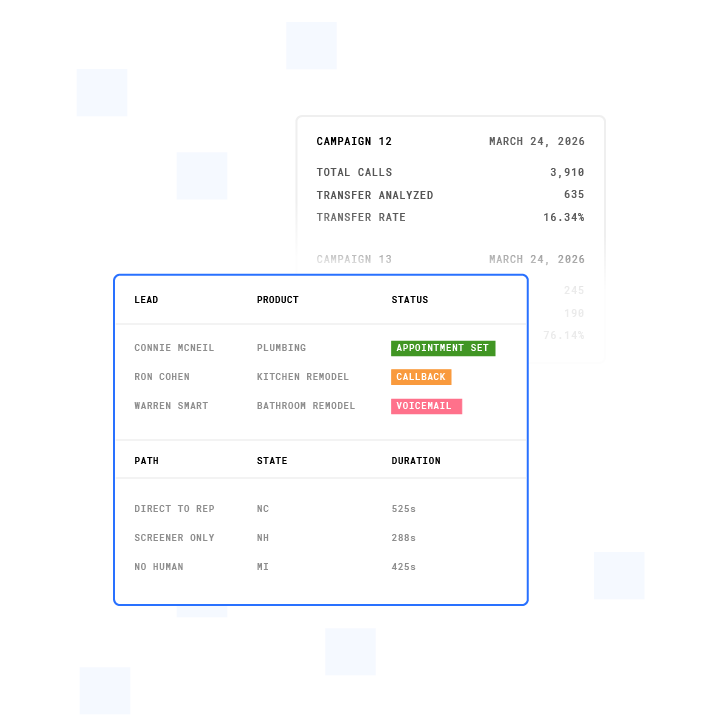
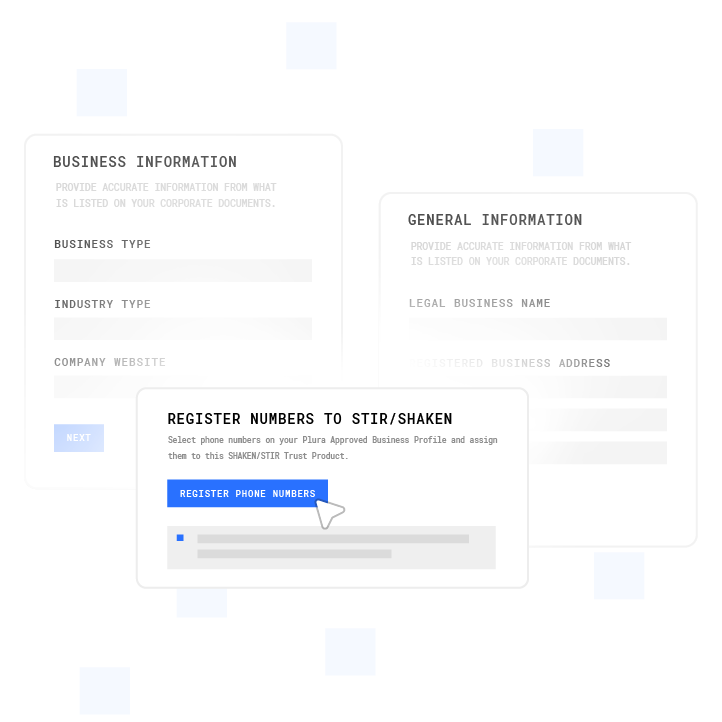
- The dialer originates the call with STIR/SHAKEN authentication and the branded caller ID described earlier already attached.1
- At call answer, the AMD classifier begins feature extraction immediately and runs asynchronously so the call connects without dead‑air delay. Asynchronous AMD connects the call immediately and runs a parallel classifier for the first one to two seconds, avoiding the three‑to‑five‑second dead air of synchronous AMD that real humans interpret as a robocall.
- If the result is HUMAN, the call routes to a live agent or AI voice agent with full context from the Stateful Conversation Database, including prior SMS threads, prior call outcomes, and qualification status.
- If the result is MACHINE, the dialer executes the configured action: hang up, drop a compliant pre‑recorded message, or trigger an automated SMS or RCS follow‑up sequence. The voicemail outcome is written to the Stateful Conversation Database so the next outreach channel inherits it.
- The Stateful Conversation Database ensures that when the lead replies to the SMS or RCS follow‑up, the responding AI agent already knows the call was attempted, what was left, and what the lead’s prior qualification status was. No channel starts from zero.
This architecture addresses the core compliance surface around AMD. FCC regulations describe identification information for prerecorded voice message calls.2 Plura’s pre‑recorded message drop workflow can be configured to include identification fields before deployment. FCC rules describe a 3% abandoned call rate threshold per campaign per 30‑day period for telemarketing calls made with predictive dialers or similar automated technology. Plura’s real‑time DNC scrubbing checks every number against federal and state DNC registries before dial, and the compliance dashboard exports audit‑ready reports for legal review.1 Operators remain responsible for their own TCPA obligations and should consult qualified counsel on their specific campaign configurations.
Book a live demo with Plura to walk through the AMD workflow node inside the AI Predictive Dialer.
From Voicemail Detection to Cross‑Channel Follow‑Up
Many calls from unknown numbers go to voicemail. For a contact center running high daily dials, that pattern means the majority of every dial minute is spent on recordings unless AMD is accurate, fast, and integrated into a platform that acts on the outcome. Legacy heuristic AMD leaves a material share of live humans misclassified and disconnected. Carrier‑grade AI AMD at sub‑1% false‑positive rates, running asynchronously with no dead‑air delay, changes the economics of every campaign it touches.
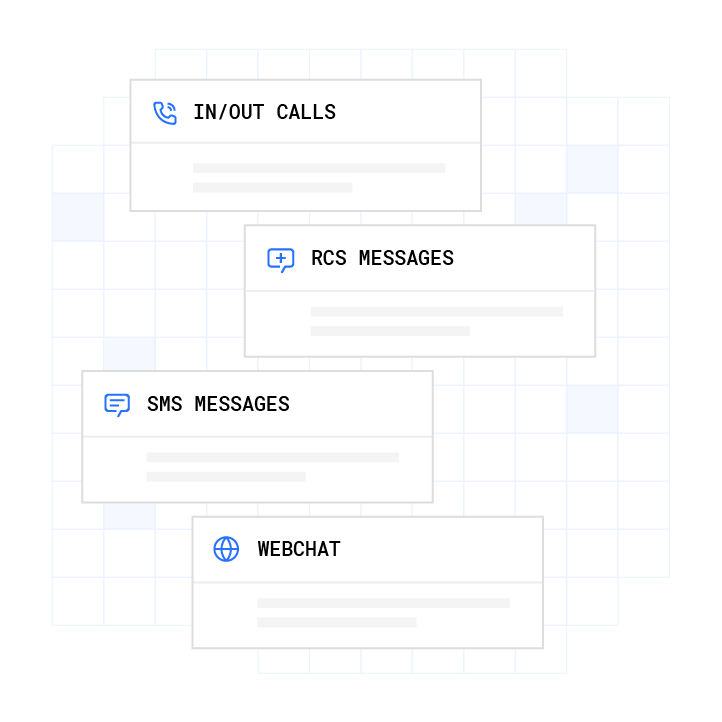
Plura’s AMD runs at the carrier level, not the CPaaS wrapper level. Voicemail outcomes automatically trigger compliant SMS and RCS follow‑up through the Stateful Conversation Database. Branded caller ID is issued at origination. DNC scrubbing runs before every dial. The full conversation history travels with the lead across every channel.
The math behind those improvements is calculable before any commitment. Run your numbers through Plura’s calculator to check your ROI in real time.
Frequently Asked Questions
How AMD Differs From Voice Activity Detection (VAD)
Voice activity detection (VAD) identifies whether audio contains active speech, distinguishing speech from silence or background noise. Answering machine detection (AMD) goes further and classifies the nature of the speech detected, determining whether the answer came from a live human or a recorded machine greeting. AMD uses VAD as one input among several, including greeting length, silence intervals, beep detection, and prosodic features, to reach a HUMAN or MACHINE classification. A VAD system alone cannot indicate whether the voice it detected belongs to a person or a voicemail recording.
Why Carrier Codec Choice Changes AMD Accuracy
AMD classifiers are trained on audio waveforms with specific spectral characteristics. The G.711u codec delivers a full 64 kbps uncompressed waveform that preserves the signal detail those classifiers rely on. The G.729 codec applies compression that discards portions of the audio signal, which alters the frequency and timing features the AMD model was trained to recognize.
When the codec in the call path does not match the codec the model was trained on, the classifier’s measurements of silence duration, greeting length, and tonal frequency become less reliable. That mismatch raises false‑positive and false‑negative rates. Platforms that own their carrier infrastructure can control codec selection end‑to‑end. Platforms that route through a third‑party CPaaS inherit whatever codec that provider negotiates with the destination carrier.
How iOS Call Screening Impacts Voicemail Detection
Apple’s call‑screening feature intercepts calls from unrecognized numbers before they ring through to the recipient. The screen presents a synthetic audio response that some AMD classifiers score as a live human, which produces a false negative. The underlying cause is that the call never reached a real person or a real voicemail system, so the audio signature does not match either training class cleanly.
Platforms that issue branded caller ID at the carrier level reduce the rate at which calls are intercepted in the first place because the recipient’s device can display a recognizable business name and call reason. Platforms that rely on a CPaaS reseller for caller ID cannot issue that identity at origination and are more exposed to screening‑related AMD errors.
Compliance Considerations for Pre‑Recorded Messages After AMD
When an AMD system classifies a call as a machine and drops a pre‑recorded message, that message falls within federal and state frameworks that govern prerecorded voice calls. FCC regulations describe identification information for prerecorded voice message calls.2 The FCC’s February 2024 Declaratory Ruling confirmed that AI‑generated voices qualify as artificial or prerecorded voice under the TCPA.2 Voicemails left as part of a selling campaign may also fall within FTC Telemarketing Sales Rule coverage.
Abandoned call rate thresholds, DNC list scrubbing expectations, and quiet‑hours restrictions apply to the campaign as a whole, not only to calls that reach live humans. Operators should consult qualified legal counsel to evaluate their specific campaign configurations against applicable federal and state rules.
How Plura’s Stateful Conversation Database Uses Voicemail Outcomes
Most outbound platforms treat a voicemail outcome as a terminal event. The call ends, a message may have been left, and the next contact attempt starts from scratch. Plura’s Stateful Conversation Database records the voicemail outcome as a structured event tied to the contact’s token, which is their phone number, email, or ID.
When the AMD classifier returns a MACHINE result, the platform can automatically trigger an SMS or RCS follow‑up sequence. That message is sent with full awareness of the prior call attempt, the message left, and the contact’s qualification status from earlier interactions. If the lead replies to the SMS, the AI agent responding to that thread already knows the call was attempted, what was said, and where the lead stands in the workflow. The conversation continues rather than restarting, which is the operational difference between a stateful platform and a collection of disconnected point tools.
1 Plura AI maintains SOC 2, HIPAA, ISO, and GDPR posture as part of its platform infrastructure. References to compliance frameworks in this article describe Plura’s platform capabilities and do not constitute a guarantee that any customer using Plura will themselves be compliant with applicable laws or standards. Customers remain solely responsible for their own regulatory obligations, certifications, consent management, recordkeeping, and the claims they make to their own end users. Consult qualified legal counsel for guidance specific to your use case.
2 This article describes regulatory frameworks at a general level and does not constitute legal advice. Laws and regulations vary by jurisdiction, change over time, and apply differently depending on facts and circumstances. Readers should consult qualified legal counsel before making compliance decisions.
3 Performance figures, customer outcomes, and industry statistics referenced in this article are drawn from cited third-party sources or Plura customer case studies. Individual results vary based on implementation, use case, industry, audience, and execution. Past or aggregate performance is not a guarantee of future results.
4 References to third-party products, services, companies, or research are made for informational and comparative purposes only. Plura AI is not affiliated with, endorsed by, or sponsored by any third party named in this article unless explicitly stated. Trademarks and product names referenced remain the property of their respective owners.
This article is provided for informational purposes only and reflects Plura AI’s understanding at the time of publication. Product capabilities, integrations, and specifications are subject to change. For the most current information, visit plura.ai.
This article was produced with the assistance of AI tools and reviewed by Plura AI prior to publication.