

Written by: Matt Beucler, CEO, Plura AI | Last updated: August 25, 2026
Key Takeaways for RCS Decision-Makers
- Affordable RCS at scale depends on carrier-direct pricing, verified sender branding, and integrated compliance controls that many resellers do not provide.
- Plura AI is the only FCC-licensed, 100% U.S.-infrastructure provider that combines transparent carrier-direct pricing, stateful cross-channel memory, and real-time TCPA and DNC screening in one platform.
- RCS Business Messaging delivers verified sender profiles, rich media, in-message actions, and mandatory SMS fallback, and full carrier approval typically takes 8 to 16 weeks.
- High-volume operators often achieve lower cost-per-response with RCS because higher engagement offsets slightly higher per-message costs.
- See carrier-direct RCS pricing and integrated compliance controls in practice by booking a live demo with Plura.
RCS Pricing Structure and Cost Drivers
RCS (Rich Communication Services) business messaging in the United States uses a per-message billing model. Every message is charged individually by type instead of through session-based pricing. U.S. carriers classify messages into two categories: Rich authentication and utility messages, which are text-only under 160 characters with optional suggested replies, and Rich Media marketing messages, which include images, video, carousels, and interactive actions.
U.S. carrier per-message rates for RCS business messaging vary by carrier and message type. Those carrier rates only represent one part of the cost picture. Many resellers add onboarding fees, support costs, and carrier surcharges that appear late in the sales process.
Cost-per-outcome provides a more accurate comparison between RCS and SMS than cost-per-message. RCS often delivers higher response rates for U.S. business messaging than SMS, which can reduce cost-per-response even when the per-message rate is slightly higher. While RCS typically ranges from $0.01 to $0.06 per message compared to $0.01 to $0.05 for SMS, the table below shows how engagement can outweigh the rate difference.
| Metric | SMS | RCS |
|---|---|---|
| Per-message cost (U.S. base) | $0.01–$0.05 + carrier fees | $0.01–$0.06 |
| Response rate | often lower | often higher |
| Read rate | commonly reported to have a 98% read rate | provides richer engagement features without specific read-rate percentages cited in the sources |
| Click-through rate | varies | often higher |
| Cost per response | varies based on engagement | can be lower due to higher engagement |
Run your numbers through Plura’s calculator to check your RCS ROI in real time.
Consumer RCS vs. RCS Business Messaging
Standard RCS is the peer-to-peer messaging protocol built into Android and, since iOS 18, Apple devices. It replaces SMS between consumers with read receipts, typing indicators, and media sharing.
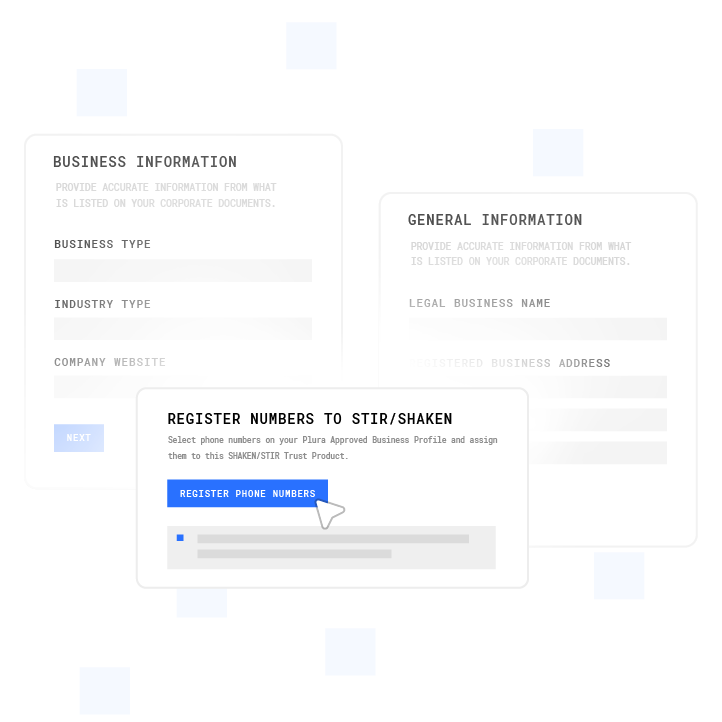
RCS Business Messaging (RBM) operates as a separate A2P (application-to-person) channel that requires verified sender registration. Before a business can send a single RCS message, it must submit brand assets, a verifiable domain, declared use cases, sample messages, and opt-in and opt-out flow documentation for review by Google and each major U.S. carrier. Carrier reviews can take several weeks, and regulated industries such as healthcare and finance often experience longer timelines.
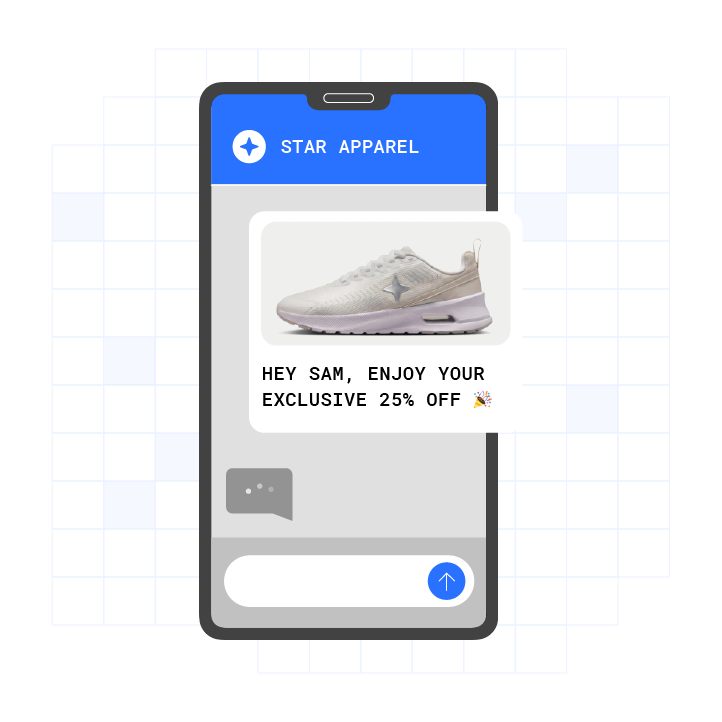
Once approved, RCS Business Messaging delivers:
- A verified sender profile that shows the company’s brand name, logo, brand colors, and a carrier-verified checkmark automatically in the recipient’s message thread
- Rich media including images, video, carousels, and interactive action buttons
- In-message actions such as document signing and payment processing without redirecting the customer to a browser
- Mandatory SMS fallback for recipients whose devices or carriers do not support RCS
The SMS fallback requirement means operators must maintain an active A2P 10DLC, short-code, or toll-free registration alongside their RCS agent. TCPA applies to RCS business messaging exactly as it does to SMS, and compliance obligations travel with the message content, not the delivery channel.2 Operators should consult qualified counsel on their specific consent and opt-out obligations.
U.S. Carrier Support for RCS in 2026
All three major U.S. carriers now support RCS business messaging.4 Their 2026 infrastructure status:
- AT&T: Full RCS business messaging support, routing traffic through Google’s Jibe backend
- T-Mobile: Full RCS business messaging support, routing traffic through Google’s Jibe backend
- Verizon: Full RCS business messaging support, raising RCS Rich MT per-message fees from $0.0045 to $0.0050 effective October 1, 2026
- US Cellular: RCS business messaging support with per-message rates established as of January 2026
RCS now reaches over 80% of smartphone users in the U.S., driven by near-universal Android support and iOS 18 adoption reaching approximately 68% of active iPhones as of early 2025. The remaining devices receive SMS fallback, so every list still includes a mix of RCS and SMS delivery.
Problem: Hidden Costs and Compliance Gaps in Generic RCS Solutions
Most operators evaluating affordable RCS business solutions encounter pricing structures that obscure the true cost of deployment. Twilio-based resellers publish a base per-message rate, then add various fees and surcharges that only appear at contract time.4 Those additional costs can materially increase the base rate at volume.
Twilio-based resellers also introduce compliance exposure that operators often discover only after a campaign runs. Because these providers do not own their carrier stack, they cannot enforce real-time DNC scrubbing or TCPA-litigator screening before a message leaves the network. Consent records, quiet-hours enforcement, and opt-out handling become separate tools that the operator must assemble and maintain.
A significant number of TCPA lawsuits were filed in 2025, and TCPA violations carry statutory damages of $500 to $1,500 per message with no cap.2 For high-volume operators sending to thousands of numbers, exposure from a single non-compliant campaign is material. Operators should consult qualified counsel to understand their specific obligations under TCPA and applicable state laws. The compliance and pricing gaps in generic RCS solutions often trace back to one architectural limitation: resellers do not own their carrier infrastructure, so they cannot control what happens at the network layer.
Solution: Plura AI’s FCC-Licensed Carrier Stack
Plura AI owns its carrier stack, which removes hidden markup layers and closes many of the compliance blind spots described above. Voice and messaging originate on Plura’s own FCC-licensed infrastructure, not a third-party CPaaS. That distinction matters because pricing is carrier-direct without reseller markup layers, verified sender branding is issued at the carrier level, and compliance controls run inside the platform before any message leaves the network.
Plura’s AI RCS delivers branded, interactive messages with rich media, in-message documents via DocuSign and PandaDoc, in-message payments via Stripe, and personalized AI-rendered video inside the message thread. The platform reports an 80% read rate and a 35% click-through rate on RCS messaging, with 3x higher engagement rates than traditional SMS.3

The following table contrasts Plura’s owned stack against generic Twilio-based RCS resellers on the dimensions that matter most to high-volume operators. The key advantage is that Plura’s carrier ownership removes reseller markup layers and allows compliance controls to run before messages leave the network, which reduces both cost and legal exposure.
| Capability | Plura AI | Generic Twilio-Based Resellers |
|---|---|---|
| Carrier ownership | FCC-licensed carrier; owns infrastructure | Depends on Twilio; no carrier license |
| Verified sender ID | Carrier-provisioned branded caller ID | Reseller-level; not carrier-provisioned |
| Stateful cross-channel memory | Voice, SMS, RCS, and webchat share one conversation database | Typically siloed per channel or per vendor |
| SMS fallback handling | Automatic per-message fallback with no double-charge | Requires manual Sender Pool configuration |
| Compliance engine | Real-time DNC scrubbing, TCPA-litigator screening, immutable consent logging, quiet-hours enforcement built in | Compliance bolted on post-dial; operator’s responsibility |
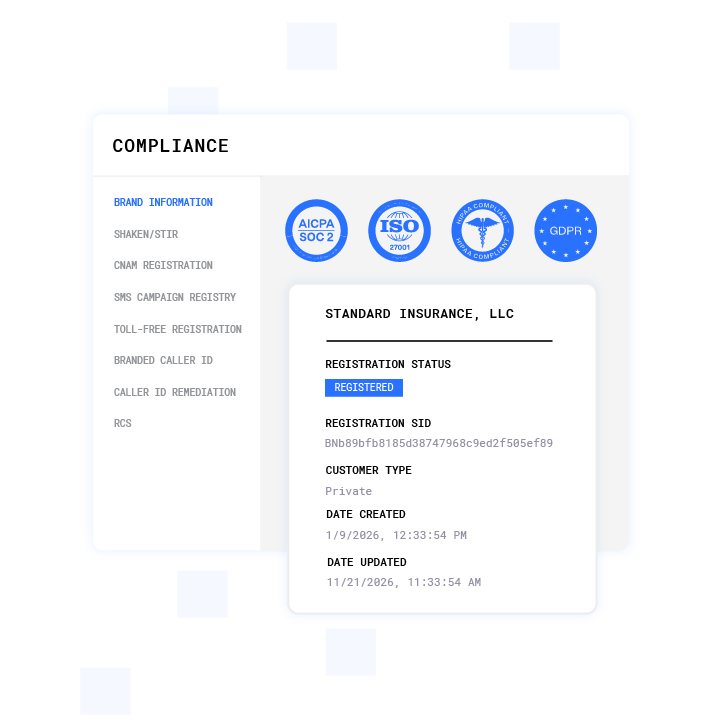
Plura’s compliance engine supports TCPA compliance, DNC compliance, HIPAA, SOC 2, ISO certification, GDPR, and STIR/SHAKEN caller ID verification.1 Every outbound contact is checked against federal and state DNC registries in real time before send. Consent records are timestamped and immutable. Quiet-hours rules enforce automatically through time-zone detection. Operators remain responsible for their own regulatory obligations, and Plura provides infrastructure that supports that posture.
Compare plans and rates side by side at Plura pricing.
Cost Math for High-Volume RCS Campaigns
The per-message rate represents only one variable in the total cost of ownership for RCS business messaging. High-volume operators also need to account for carrier pass-through fees, onboarding costs, fallback SMS rates, and engagement efficiency, which determines how many messages are required to hit a conversion target.
At 1 million outbound messages to Verizon subscribers, carrier fee increases can add notable pass-through costs. Operators using Twilio-based resellers absorb that increase plus the reseller’s existing markup. Operators on carrier-direct infrastructure absorb only the carrier rate.
In a real-world e-commerce example, an RCS-first strategy with SMS fallback produced more orders than SMS-only messaging from the same list and offer. The higher per-message cost of RCS produced more than twice the conversion volume from identical spend.
RCS achieves approximately 14 times lower cost-per-click than SMS on equivalent campaign objectives because higher engagement rates require fewer messages to reach the same conversion totals.3 For operators running thousands of messages monthly, that efficiency gap compounds into meaningful savings at the campaign level.
Plura’s AI SMS and AI RCS channels share the same stateful conversation database, so a lead contacted by RCS at 9 a.m. is the same lead when the AI voice agent calls at noon. No re-introduction occurs, and no repeated qualification is required. That cross-channel continuity reduces the total number of touches needed to move a lead through the funnel.
Frequently Asked Questions
What is the difference between RCS and SMS for business messaging?
SMS delivers plain text to any mobile device with no sender verification. RCS Business Messaging requires a verified sender agent approved by Google and each U.S. carrier before any message can be sent. Once approved, RCS supports rich media, interactive buttons, in-message payments, and a branded sender profile with a carrier-verified checkmark. SMS fallback is mandatory for recipients whose devices or carriers do not support RCS, so operators maintain both registrations simultaneously. Compliance obligations under TCPA and DNC apply to both channels, and operators should consult qualified counsel on their specific consent requirements.
How long does RCS business messaging approval take in the United States?
The approval process involves multiple sequential reviews. Brand approval typically takes 2 to 5 business days. RCS agent approval usually runs 3 to 7 business days. Use-case and campaign approval often adds 5 to 10 business days. Carrier validation for promotional or high-volume messaging can extend the timeline further, and regulated industries such as healthcare and finance commonly take longer. Operators should plan for 8 to 16 weeks from application to first send when building deployment timelines.
Does RCS messaging require SMS fallback, and how is it billed?
Every U.S. RCS business campaign requires an approved SMS sender as a fallback because messages automatically revert to SMS when the recipient device or carrier does not support RCS. A large percentage of U.S. smartphones are RCS-capable as of 2026, so a meaningful portion of any contact list still routes to SMS. Billing on fallback messages applies at the SMS rate. Operators on platforms that handle fallback automatically pay only for the channel that delivers, while operators on manually configured reseller setups carry more operational overhead to manage routing correctly.
What does verified sender branding cost for RCS business messaging?
Verified sender registration for RCS Business Messaging in the U.S. runs through brand and asset vetting that reviews brand name, logo, color, and contact details. The process itself does not carry a separate Google fee for most operators, but aggregators and CPaaS providers may charge onboarding and support fees on top of carrier rates. Carrier-direct providers remove the reseller markup layer, which reduces the total cost of verified branding to the carrier’s own registration requirements.
How does Plura handle RCS compliance for high-volume operators?
Plura’s compliance engine is built into the platform, not added after deployment. Every outbound RCS contact is checked against federal and state DNC registries in real time before send. Consent records are timestamped and immutable. Quiet-hours rules enforce automatically through time-zone detection on the contact. The platform supports TCPA compliance, DNC compliance, HIPAA, SOC 2, ISO certification, GDPR, and STIR/SHAKEN caller ID verification. Operators remain responsible for their own regulatory obligations and should consult qualified counsel on their specific consent, opt-out, and record-keeping requirements. Plura provides infrastructure that supports that compliance posture.
Conclusion: Evaluating RCS Economics with Carrier-Direct Infrastructure
Evaluating affordable RCS business solutions in 2026 requires looking beyond the per-message rate to the full cost structure. Carrier pass-through fees, onboarding costs, reseller markups, fallback SMS rates, and the compliance infrastructure required to operate at volume all affect the real number.
Plura AI’s owned infrastructure delivers the carrier-direct pricing and built-in compliance controls described above, which removes many of the hidden costs and legal exposure common in reseller-based RCS solutions. High-volume operators running thousands of messages monthly can model the full economics before committing.
Run your numbers through Plura’s calculator to check your RCS ROI in real time. Or compare plans and rates side by side at Plura pricing.
To see the platform in action, book a live demo with Plura and walk through carrier-direct RCS pricing, stateful cross-channel memory, and integrated compliance controls with the team that built them.
1 Plura AI maintains SOC 2, HIPAA, ISO, and GDPR posture as part of its platform infrastructure. References to compliance frameworks in this article describe Plura’s platform capabilities and do not constitute a guarantee that any customer using Plura will themselves be compliant with applicable laws or standards. Customers remain solely responsible for their own regulatory obligations, certifications, consent management, recordkeeping, and the claims they make to their own end users. Consult qualified legal counsel for guidance specific to your use case.
2 This article describes regulatory frameworks at a general level and does not constitute legal advice. Laws and regulations vary by jurisdiction, change over time, and apply differently depending on facts and circumstances. Readers should consult qualified legal counsel before making compliance decisions.
3 Performance figures, customer outcomes, and industry statistics referenced in this article are drawn from cited third-party sources or Plura customer case studies. Individual results vary based on implementation, use case, industry, audience, and execution. Past or aggregate performance is not a guarantee of future results.
4 References to third-party products, services, companies, or research are made for informational and comparative purposes only. Plura AI is not affiliated with, endorsed by, or sponsored by any third party named in this article unless explicitly stated. Trademarks and product names referenced remain the property of their respective owners.
This article is provided for informational purposes only and reflects Plura AI’s understanding at the time of publication. Product capabilities, integrations, and specifications are subject to change. For the most current information, visit plura.ai.
This article was produced with the assistance of AI tools and reviewed by Plura AI prior to publication.