
Written by: Matt Beucler, CEO, Plura AI
Key Takeaways for High-Volume RCS Programs
- RCS outbound campaigns lose reach and revenue when delivery, carrier fragmentation, and brand verification sit above the infrastructure layer.
- Plura AI’s FCC-licensed carrier stack and Stateful Conversation Database remove seven core pain points at the source instead of through bolt-on fixes.
- Real-time capability detection, direct carrier interconnects, and carrier-provisioned sender IDs reduce delivery uncertainty, fragmentation, and verification friction before campaigns launch.
- Automatic RCS-to-SMS fallback, per-contact analytics, and pre-send TCPA/DNC enforcement keep campaigns measurable and support compliance across every channel transition.
- Contact center and marketing leaders can book a live demo with Plura AI to see how this carrier infrastructure drives outbound ROI.
Seven RCS Outbound Pain Points and Where They Live
| Pain Point | What Operators Experience | Plura Remediation | Where It Happens |
|---|---|---|---|
| Delivery Uncertainty | RCS delivery rates vary based on device support and carrier enablement | FCC-licensed carrier with real-time capability detection and stateful routing | Infrastructure layer |
| Carrier Fragmentation | U.S. RCS agent approval timeframes vary by carrier and typically take several weeks to over 30 days. | Direct carrier relationships across AT&T, T-Mobile, Verizon, and US Cellular4 | Carrier layer |
| Brand-Verification Friction | RCS agent registration involving carrier approval typically takes 4–6 weeks or over 30 days, while Google-managed launches are often completed in 1–3 business days. | Carrier-provisioned verified sender ID; SOC 2, HIPAA, ISO certification, GDPR, SHAKEN/STIR caller ID verification, TCPA compliance, DNC compliance supported at the platform layer1 | Carrier and compliance layer |
| Fallback Complexity | Device support for RCS varies by market and device type, so SMS fallback becomes critical infrastructure | no-code workflow builder handles RCS-to-SMS fallback automatically | Workflow layer |
| Analytics Gaps | Most platforms treat RCS as a pass-through API, dropping interaction data before it reaches usable analytics | Stateful Conversation Database captures read receipts, button clicks, and carousel interactions per contact | Data layer |
| Compliance Exposure | 2,628 TCPA lawsuits were filed in 2025; Texas Senate Bill 140 expanded the state’s telemarketing statute to cover text, graphic, and image messages.2 | Real-time DNC scrubbing, immutable consent ledger, TCPA and DNC rules enforced before every send | Compliance layer |
| Cost Monitoring | RCS pricing in 2026 remains misaligned with SMS expectations, complicating cost planning for high-volume campaigns | Transparent per-channel cost reporting, ROI calculator and pricing page for real-time modeling | Billing layer |
1. Delivery Uncertainty on RCS Campaigns
Delivery uncertainty sits at the root of most RCS outbound problems. RCS campaign delivery rates depend on handset support and carrier enablement, and cascade routing to SMS can materially lift total reach.
Plura’s FCC-licensed carrier runs real-time capability checks on every outbound contact. The Stateful Conversation Database records each contact’s channel history, so routing decisions rely on actual delivery outcomes instead of assumptions. For AI SMS lead qualification programs that add RCS to existing SMS flows, the platform tracks which contacts have confirmed RCS capability before the next send. The trade-off is an initial learning period while the system builds enough per-contact history to route at full efficiency.
2. Carrier Fragmentation Slowing Scale
Carrier fragmentation is the structural reason RCS outbound programs stall at scale. These multi-week approval windows create deployment delays that compound when operators must register across several carriers. Each additional hop in aggregated routing adds handoff time and a second party’s rate limits, which affects latency and throughput for time-sensitive traffic.
Plura owns its telecom infrastructure and holds an FCC carrier license, while platforms that depend on third-party CPaaS providers sit as a software layer without a carrier license. This ownership model enables direct carrier interconnects, which in turn create a cleaner SLA chain and faster brand agent approval speed. The trade-off for operators migrating from an aggregated routing provider is a one-time re-registration of brand agents under Plura’s carrier identity because the carrier-level relationship changes.
Book a live demo with Plura to see how carrier-owned RCS infrastructure handles fragmentation at the routing layer.
3. Brand Verification Across Multiple Carriers
Brand verification for RCS functions as an ongoing operational requirement, not a single checkbox. Agent registration requires detailed brand information, including legal company name, full address, legal form, tax ID, and a designated brand contact who must respond to verification emails. As of 2026, brands still face a fragmented and lengthy onboarding process because they complete checks with multiple carriers.
Plura’s carrier-provisioned verified sender ID routes brand verification through Plura’s existing carrier relationships instead of separate submissions per carrier for each operator. The platform supports compliance with SOC 2, HIPAA, ISO certification, GDPR, SHAKEN/STIR caller ID verification, TCPA, and DNC rules as infrastructure-layer capabilities.1 Customers remain responsible for their own regulatory obligations, and Plura supplies infrastructure that supports those obligations. The trade-off is that operators with highly customized brand assets must still meet carrier asset specifications, including 224×224 pixel PNG logos under 50 KB and 1440×448 pixel banners under 200 KB with a minimum 4.5:1 contrast ratio under WCAG 2.1 Level AA.
4. RCS-to-SMS Fallback and Conversation Continuity
RCS device support varies across carriers and regions, so SMS fallback becomes a core part of the infrastructure stack. Using SMS fallback for RCS campaigns requires 10DLC registration in addition to RCS agent registration. Platforms that skip capability checks simply lose messages when recipients lack RCS support.
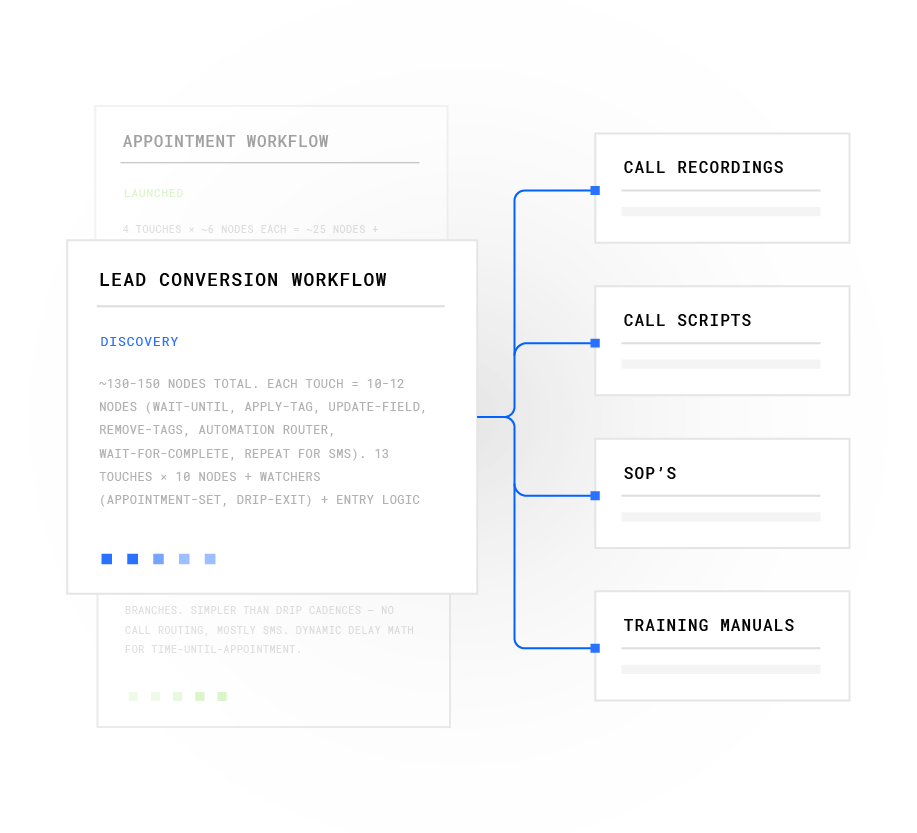
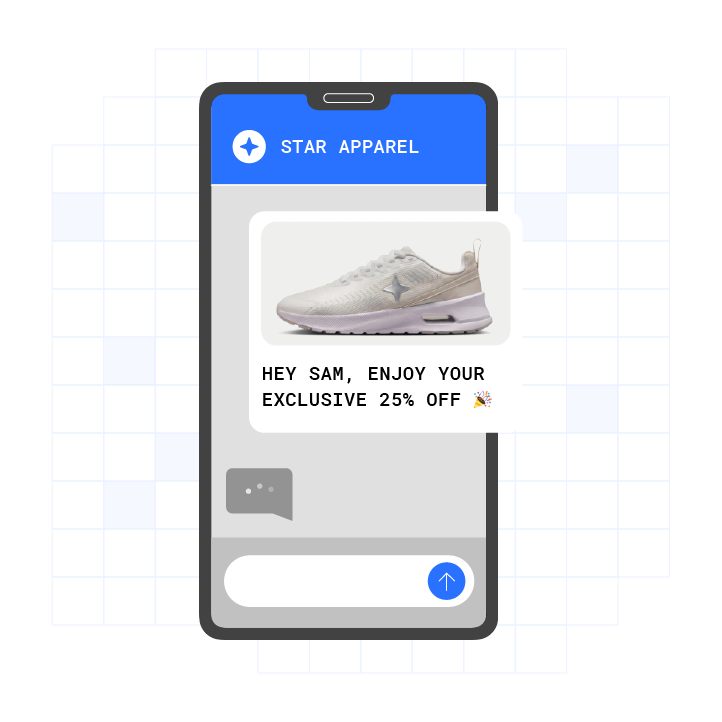
Plura’s no-code workflow builder manages RCS-to-SMS fallback automatically. Each workflow node reads from the Stateful Conversation Database, so the fallback message inherits the full context of the RCS attempt instead of starting a new thread. Plura’s AI RCS messaging reaches an 80% read rate on supported devices, and fallback routing maintains continuity for the remaining audience.3 The trade-off is that fallback SMS messages lose rich media such as carousels and interactive buttons, which lowers engagement on the fallback segment.
5. Analytics for RCS and SMS Fallback
Many platforms treat RCS as a pass-through API that forwards webhook events to engineering teams for custom parsing and dashboarding, which often drops interaction data before it reaches marketing analytics. Marketers frequently cite attribution challenges and struggle to view channel performance holistically because of data silos.
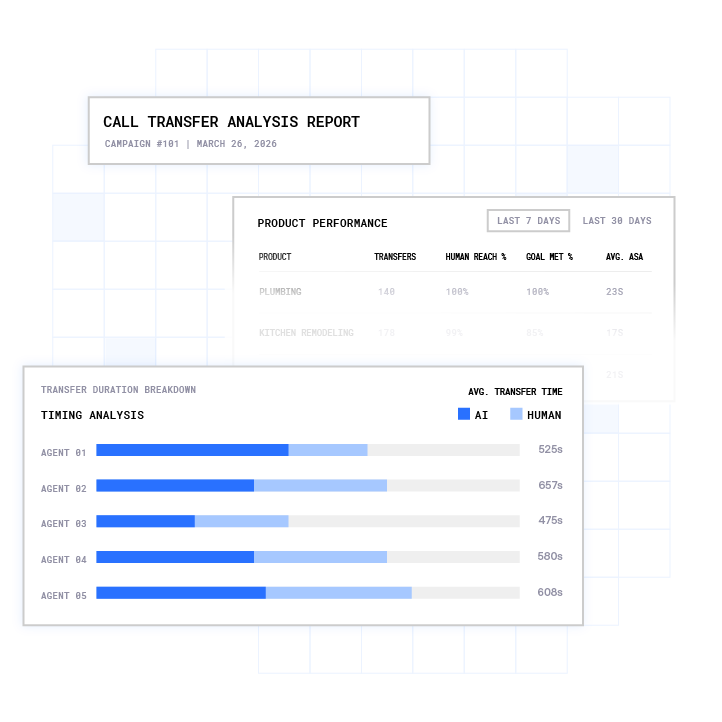
Plura’s Stateful Conversation Database captures read receipts, button clicks, carousel interactions, and reply selections per contact across every channel. Plura’s pre-conversation lead enrichment can raise conversion rates by 30% or more by tying RCS interaction data to downstream qualification outcomes instead of stopping at engagement metrics.3 Conversation intelligence surfaces patterns across RCS and SMS fallback segments separately, so operators can measure whether RCS engagement justifies its per-message cost over time.4 The trade-off is that full journey attribution requires connecting Plura’s data layer to the operator’s CRM, which Plura supports through integrations with HubSpot, Salesforce, and Zoho but still needs initial configuration.
6. Compliance Exposure Across Channels
Compliance exposure in RCS outbound programs already appears in litigation and legislation. 2,628 TCPA lawsuits were filed in 2025, and Texas Senate Bill 140, effective September 1, 2025, expanded the state’s telemarketing statute to cover text, graphic, and image messages. RCS security and compliance programs must consider GDPR controller and processor roles, NIS2 and DORA operational resilience rules, documented data flows, consent alignment, and incident-response playbooks for spoofing, brand impersonation, and consent violations.2
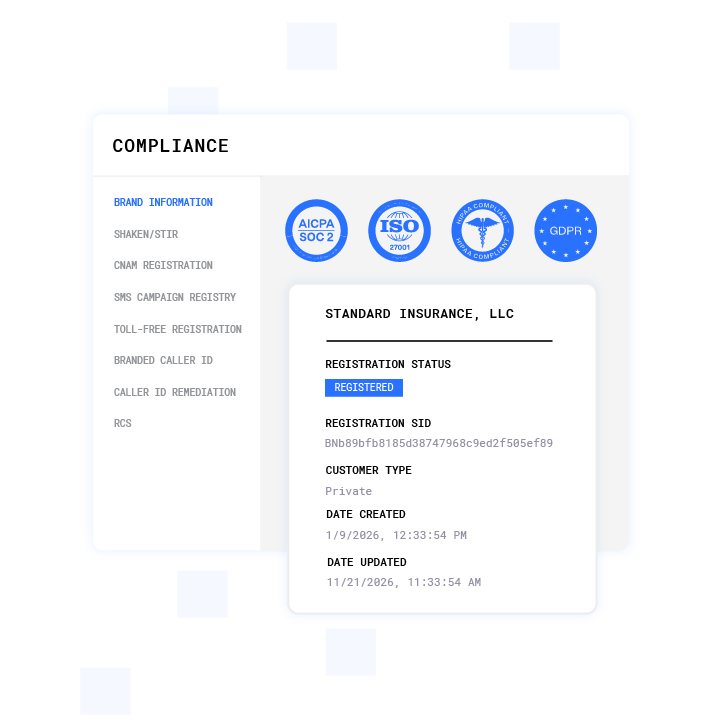
Plura’s compliance engine applies TCPA and DNC rules before every outbound contact. Real-time DNC scrubbing checks each number against federal and state registries before send. Consent records are timestamped, immutable, and audit-ready, and quiet-hours rules apply automatically through time-zone detection. The platform supports SOC 2, HIPAA, ISO certification, GDPR, and SHAKEN/STIR caller ID verification as infrastructure-layer capabilities.1 Customers remain responsible for their own compliance posture and should consult qualified counsel on specific obligations. The trade-off is that operators running campaigns across multiple states must configure state-specific rule sets at the campaign level, which Plura supports but does not pre-configure without operator input.
Book a live demo with Plura to review how the compliance engine handles DNC scrubbing and consent logging for RCS outbound programs.
7. Cost Monitoring for RCS vs SMS
Pricing for RCS for Business remains a challenge in 2026 because some markets diverge from Google’s billable-events model and SMS expectations. RCS messages usually cost more per message than standard SMS, so high-volume senders must factor the premium into campaign economics. AWS End User Messaging bills RCS only on successful delivery, which changes how operators monitor cost for outbound programs.
Plura’s per-channel cost reporting separates RCS and SMS fallback spend so operators can calculate cost per engaged contact on each segment independently. Because Plura’s AI RCS messaging delivers a 35% click-through rate, operators can combine this engagement data with per-message cost data to model whether RCS’s engagement premium justifies its price premium versus SMS.3 To run this analysis with live numbers, operators can use Plura’s ROI calculator for real-time cost-per-conversion modeling or compare plans to see per-channel rates side by side. The trade-off is that accurate modeling requires at least one campaign cycle of RCS and SMS fallback data to build brand-specific benchmarks, since industry averages vary widely by vertical and list quality.
Frequently Asked Questions
What causes RCS message delivery failures in high-volume outbound campaigns?
RCS delivery failures in high-volume outbound programs usually come from three sources: recipient devices that do not support RCS, mobile operators that have not enabled RCS business messaging, and recipients without an active data connection at send time. Device compatibility represents the largest single failure category. Older Android devices, iPhones running iOS versions earlier than 18, and budget handsets without updated messaging apps all sit outside RCS reach. Carrier registration gaps compound the issue because a carrier must explicitly enable the A2P RCS path before any business traffic is allowed, and that enablement occurs independently for each carrier. Automatic SMS fallback with pre-provisioned 10DLC numbers is the standard operational response to these failure modes.
How long does RCS brand verification take in the United States?
U.S. RCS brand verification timelines vary by carrier and submission quality. When Google manages the agent launch and all required assets are accurate, approval often completes in 1–3 business days. The carrier-approval path typically extends to 4–6 weeks because multiple parties review brand details, assets, and use cases. Submitting complete brand assets, a clear screen recording of the use case, and a compliant opt-out flow at initial submission reduces the likelihood of revision cycles that extend timelines.
Is RCS outbound messaging subject to TCPA and DNC rules?
The regulatory status of RCS under the TCPA continues to evolve as of 2026.2 The FCC’s 2019 RAY BAUM Act Order excluded RCS from the TCPA’s statutory definition of “text message” because Congress exempted messages sent over IP-enabled messaging services that are not SMS or MMS. However, recent state-level developments, including a February 2026 Louisiana district court ruling and the Texas statute expansion mentioned earlier, show that compliance exposure exists at the state level regardless of the federal statutory question. Operators running RCS outbound programs should consult qualified legal counsel on their specific obligations. Plura’s platform supports TCPA and DNC compliance as infrastructure-layer features, including real-time DNC scrubbing and immutable consent logging, but customers remain responsible for their own regulatory posture.
What analytics does RCS provide that SMS does not?
RCS natively provides read receipts, typing indicators, button click data, quick reply selections, carousel interaction depth, and session duration metrics. Standard SMS programs have historically relied on delivery receipts, which measure whether a message reached a carrier rather than whether a recipient read or acted on it. For high-volume outbound programs, this gap is significant because RCS interaction data allows operators to see which message variants drive downstream conversions, which carousel slides generate the most engagement, and where contacts drop off in multi-turn flows. Most RCS platforms still treat the channel as a pass-through API and forward raw webhook events to engineering teams instead of normalizing interaction data into a usable analytics layer. Plura’s Stateful Conversation Database captures and normalizes this data per contact across RCS and SMS fallback segments, connecting engagement signals to qualification outcomes instead of stopping at channel-level metrics.
Conclusion: Fixing RCS Pain Points at the Carrier Layer
The seven RCS outbound pain points share a common root in the carrier and infrastructure layer, and fixes applied above that layer rarely resolve them. Delivery uncertainty persists when capability detection is not stateful. Carrier fragmentation persists when a platform rents routing from an aggregator instead of owning direct interconnects. Brand-verification friction persists when each operator manages separate carrier submissions without a carrier-level identity anchor. Fallback complexity persists when workflow logic does not carry conversation context across channel transitions. Analytics gaps persist when interaction data drops at the API layer. Compliance exposure persists when DNC scrubbing and consent logging are not enforced before every send. Cost monitoring remains opaque when RCS and SMS fallback spend appear as a blended total.
Plura AI addresses all seven pain points through its FCC-licensed carrier stack and Stateful Conversation Database. The platform does not sit as a wrapper on a third-party CPaaS. Voice, AI SMS, AI RCS, and AI webchat all run on the same stateful data layer, so a contact’s RCS interaction history remains available to every later touchpoint across channels.
- Cost-focused operators can run numbers through Plura’s ROI calculator to model RCS cost per conversion against current SMS spend.
- Capability-focused operators can compare plans to see per-channel rates and feature availability across Multi, Agency, and Enterprise tiers.
- Teams ready to see the carrier stack in action can book a live demo with Plura and walk through a live RCS outbound workflow built on 100% U.S. infrastructure.
1 Plura AI maintains SOC 2, HIPAA, ISO, and GDPR posture as part of its platform infrastructure. References to compliance frameworks in this article describe Plura’s platform capabilities and do not constitute a guarantee that any customer using Plura will themselves be compliant with applicable laws or standards. Customers remain solely responsible for their own regulatory obligations, certifications, consent management, recordkeeping, and the claims they make to their own end users. Consult qualified legal counsel for guidance specific to your use case.
2 This article describes regulatory frameworks at a general level and does not constitute legal advice. Laws and regulations vary by jurisdiction, change over time, and apply differently depending on facts and circumstances. Readers should consult qualified legal counsel before making compliance decisions.
3 Performance figures, customer outcomes, and industry statistics referenced in this article are drawn from cited third-party sources or Plura customer case studies. Individual results vary based on implementation, use case, industry, audience, and execution. Past or aggregate performance is not a guarantee of future results.
4 References to third-party products, services, companies, or research are made for informational and comparative purposes only. Plura AI is not affiliated with, endorsed by, or sponsored by any third party named in this article unless explicitly stated. Trademarks and product names referenced remain the property of their respective owners.
This article is provided for informational purposes only and reflects Plura AI’s understanding at the time of publication. Product capabilities, integrations, and specifications are subject to change. For the most current information, visit plura.ai.
This article was produced with the assistance of AI tools and reviewed by Plura AI prior to publication.