
Written by: Matt Beucler, CEO, Plura AI
Key TCPA Lawsuit Takeaways for 2026
- TCPA class actions allow consumers to seek $500 to $1,500 per unauthorized robocall or text, but class settlement checks usually land between $6 and $75 per person after fund division.
- The 2025 McLaughlin Chiropractic decision requires district courts to interpret the TCPA independently, and the 2026 Steidinger ruling created a circuit split on whether text messages qualify under the DNC private right of action.2
- Eligibility for text-message DNC claims now depends on circuit. Consumers in the Seventh Circuit (IL, IN, WI) face narrowed federal options, while those in the Ninth Circuit retain that path.
- Consumers should preserve call logs, text screenshots, opt-out records, and DNC Registry status, then consult qualified counsel to evaluate potential claims.
- High-volume operators can reduce TCPA exposure with compliant infrastructure, and Plura AI helps contact centers support compliance at scale.
Typical TCPA Settlement Check Amounts
Under 47 U.S.C. § 227(b)(3), the TCPA provides statutory damages of $500 per violation for standard violations and up to $1,500 per violation where a court finds the conduct was willful or knowing.2 Under § 227(c)(5), damages are up to $500 per violation and require multiple calls within a 12-month period. Courts often treat each individual call or text as a separate violation, so a campaign that reaches thousands of consumers without consent can create substantial aggregate exposure.
Individual settlement checks in class actions are typically far lower than the per-violation statutory maximum.3 The settlement fund is divided among all class members after attorneys’ fees and costs. TCPA class action payouts typically range from $6 to $75 per person, though rare settlements have paid hundreds or more.3 The table below shows recent examples.
| Case | Settlement Fund | Approximate Individual Payout | Alleged Violation |
|---|---|---|---|
| Campbell v. Sirius XM Radio Inc. | $28 million | Varies pro rata based on claims filed | National DNC Registry and stop-calling violations |
| Bumpus v. Realogy Holdings Corp. | $20 million | Pro rata share | Unsolicited cold calls and prerecorded messages |
| Jackson v. Gen Digital Inc. | $9.95 million | Varies | Prerecorded voice calls |
| Walston v. National Retail Solutions (NRS Pay) | $6.51 million | Up to $135 per claimant | Ringless voicemail without consent |
| Johnson v. Comodo Group | $1.625 million | ~$596 per class member | Unauthorized automated calls |
This article is informational only and does not constitute legal advice. Consult qualified counsel to evaluate your specific situation.
Tax Treatment of TCPA Settlement Payments
The tax treatment of a TCPA settlement payment depends on how the award is characterized. Payments described as compensation for actual harm may be treated differently from statutory damages under the Internal Revenue Code. IRS Publication 4345 on lawsuit settlements provides general guidance, but individual tax consequences vary. Consult a qualified tax professional or review current IRS guidance before filing.
Robocall Lawsuits and Key TCPA Rulings in 2026
Private TCPA lawsuits remain available in 2026, and two major legal developments have reshaped the eligibility landscape.
McLaughlin Chiropractic Associates, Inc. v. McKesson Corp. (2025). In June 2025, the U.S. Supreme Court held in McLaughlin Chiropractic Associates, Inc. v. McKesson Corp., 606 U.S. 146 (2025) that the Hobbs Act does not bind district courts in private TCPA enforcement actions to the FCC’s interpretation of the statute. District courts must now determine the meaning of the TCPA under ordinary principles of statutory interpretation while giving appropriate respect to the FCC’s interpretation. This ruling opened the door for defendants to challenge FCC-backed TCPA theories directly on statutory grounds.
One such challenge reached the appellate level in 2026 and created the first circuit split on whether text messages fall within the TCPA’s DNC provisions.
Steidinger v. Blackstone Medical Services and the text-message circuit split (2026). On July 14, 2026, the Seventh Circuit became the first federal appellate court to hold that text messages do not fall within the private right of action created by TCPA § 227(c)(5), because the ordinary meaning of “telephone call” at the time of the TCPA’s 1991 enactment required reproduction of sound. The Seventh Circuit covers Illinois, Indiana, and Wisconsin. This ruling created a circuit split with the position taken by the Ninth Circuit in Howard v. Republican National Committee, 164 F.4th 1119 (9th Cir. 2026), which has not yet been resolved by the Supreme Court.
The practical effect is significant. Consumers in the Seventh Circuit who received unwanted marketing texts may no longer have a federal private right of action under § 227(c)(5), while consumers in the Ninth Circuit (California, Washington, Oregon, and others) retain that avenue. Claims under § 227(b) for autodialed or prerecorded voice calls are not affected by the Steidinger ruling. State-law analogues that expressly cover text messages may also provide separate avenues depending on jurisdiction.
TCPA class action filings reached record levels in 2025 and have continued rising in 2026. Through May 2026, 1,072 TCPA class actions were filed, a 26% year-over-year increase over the same period in 2025.3
Checklist: How to Tell if You Are in a TCPA Settlement
The following checklist describes general steps consumers use to assess TCPA eligibility. This is not legal advice. Consult qualified counsel to evaluate your specific facts.
- Confirm you received a covered communication. Identify whether you received a robocall, prerecorded voice message, or text message on a cell phone or residential landline. Note the phone number called, the dates, and the approximate frequency. Screenshots of call logs showing number, date, and time are foundational evidence.
- Identify the sender. Preserve any company name shown in caller ID or message content, callback numbers, links, reference numbers, and any brand names mentioned. Reverse number searches and screenshots of message threads with sender information are useful at this stage.
- Assess your consent status. Determine whether you provided prior express written consent to the specific sender. Relevant evidence includes how your number was collected, whether you sent a STOP reply or made a written opt-out request, and whether you received a confirmation of unsubscription. Documentation of opt-out requests and continued contact afterward can support claims of knowing or repeated violations.
- Check your DNC Registry status. If the calls were telemarketing in nature, confirm whether your number was registered on the National Do Not Call Registry at the time of the calls and note the approximate registration date. This information helps you and your counsel understand whether DNC provisions may apply.
- Search for active settlements. Check settlement administrator websites, PACER, and resources such as ClassAction.org for pending or recently approved TCPA settlements involving the sender. Settlement notices are typically mailed or emailed to identified class members. If you received one, it will include a unique claim ID and filing deadline.
Steps Consumers Take to File a TCPA Lawsuit
Consumers who believe they have a TCPA claim typically follow a consistent process. This section describes that process and does not constitute legal advice.
- Preserve all evidence. Keep text message threads intact and save voicemails to preserve the content of each communication. Export call logs from your device or carrier to document frequency and timing, then capture screenshots with timestamps to create records that are harder to dispute. Avoid deleting threads or engaging beyond opt-out language, because post-violation contact may be used in settlement negotiations.
- Document the timeline. Record when the calls or texts started, estimated frequency per day or week, and whether contact is ongoing.
- Consult a TCPA attorney. Many TCPA plaintiff attorneys offer free consultations and work on contingency. They can assess whether your facts support a claim under § 227(b) for autodialed or prerecorded calls or under § 227(c)(5) for DNC violations, and which circuit’s law applies to your situation.
- File individually or join a class. Individual TCPA claims can be filed in federal or state court. If a class action is already pending against the same defendant, your attorney can advise whether joining the class or filing separately is more appropriate given the facts.
This article does not constitute legal advice. Eligibility, damages, and procedural requirements vary by jurisdiction and individual facts. Consult qualified legal counsel before taking any action.
For high-volume operators concerned about TCPA exposure on outbound voice and SMS campaigns, infrastructure choices affect both risk and cost. Use Plura’s ROI calculator to model the cost of compliant infrastructure at your current volume.
Frequently Asked TCPA Questions
Difference Between TCPA § 227(b) and § 227(c)(5) DNC Claims
Section 227(b) of the TCPA covers calls and texts made using an automatic telephone dialing system (ATDS) or an artificial or prerecorded voice to a cell phone without prior express consent. An ATDS, as defined by the Supreme Court in Facebook, Inc. v. Duguid (2021), must use a random or sequential number generator to store or produce numbers. Section 227(c)(5) covers calls to numbers registered on the National Do Not Call Registry or on a company’s internal DNC list. The Steidinger ruling from July 2026 affects only § 227(c)(5) text-message claims in the Seventh Circuit. Section 227(b) claims for autodialed or prerecorded voice calls remain available in all circuits. Consult qualified counsel to determine which provision applies to your situation.
Impact of Steidinger on California Text-Message Claims
The Seventh Circuit’s ruling in Steidinger v. Blackstone Medical Services applies directly only in Illinois, Indiana, and Wisconsin. The Ninth Circuit, which covers California, Washington, Oregon, Nevada, Arizona, and several other western states, reached the opposite conclusion in Howard v. Republican National Committee (2026), holding that text messages are covered under the relevant TCPA provision. Consumers in Ninth Circuit states retain the federal private right of action for text-message DNC claims. The circuit split has not been resolved by the Supreme Court as of August 2026. State-law analogues may provide additional or alternative avenues regardless of circuit. Consult qualified counsel for jurisdiction-specific guidance.
Typical Timeline for TCPA Class Action Settlement Payments
TCPA class action settlements typically take one to three years from initial filing to final approval and distribution, though timelines vary significantly. After a settlement is reached, the court must grant preliminary approval, a notice period runs for about 60 to 90 days, a fairness hearing is held, and final approval is entered before funds are distributed. The NRS Pay settlement, for example, received preliminary approval in January 2026 with a claims deadline of April 2026 and a final approval hearing scheduled for June 2026. After distribution, checks typically must be cashed within 90 days. Unclaimed funds often go to a cy pres recipient designated in the settlement agreement.
Consent Revocation Rules for Robocalls and Texts in 2026
The FCC adopted rules in 2024 that require callers to honor consent revocations made through any reasonable means, including reply keywords such as STOP, QUIT, CANCEL, UNSUBSCRIBE, END, and REVOKE, as well as requests made by email, phone, or web form. Opt-out requests must be processed within 10 business days under federal rules, with shorter timeframes required under some state laws. The FCC’s “revoke-all” rule, which would require a single revocation to terminate consent across all messaging from the same business, had its effective date delayed from April 11, 2026 to January 31, 2027 by an FCC order entered January 6, 2026. Consult the FCC’s current rules or qualified counsel for the applicable requirements in your situation.
Infrastructure High-Volume Operators Use to Manage TCPA Exposure
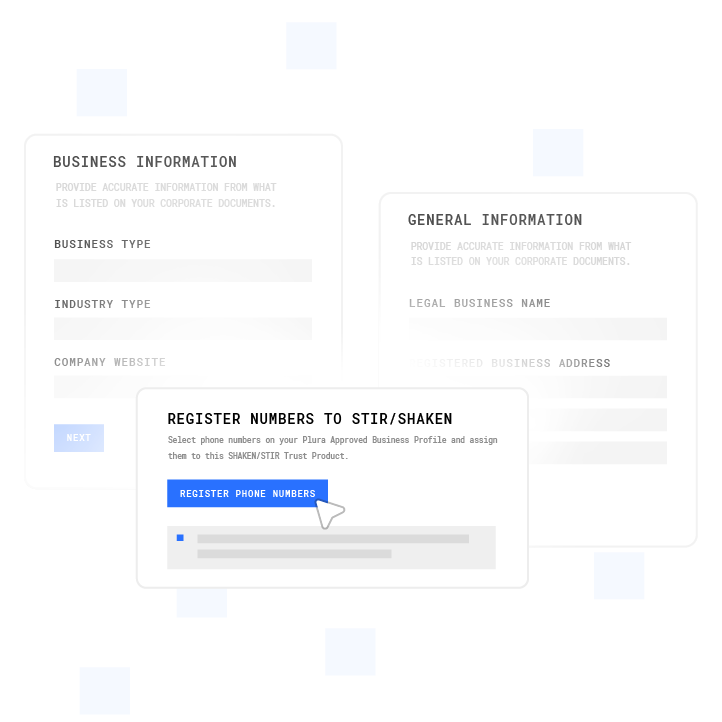
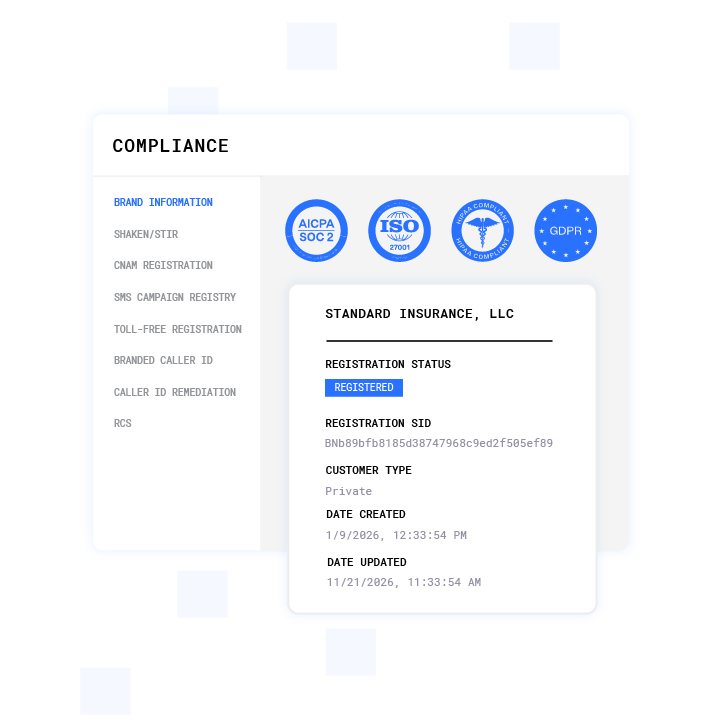
High-volume operators running outbound voice and SMS campaigns typically rely on carrier-grade infrastructure that includes real-time DNC scrubbing against federal and state registries before each dial, immutable consent record logging, automated quiet-hours enforcement by recipient time zone, and STIR/SHAKEN caller ID authentication.1 Plura AI is an FCC-licensed carrier that provides this infrastructure layer for contact centers, agencies, and franchise networks running at scale. Plura’s compliance engine checks every outbound contact against federal and state DNC registries in real time, maintains timestamped consent records, and enforces calling-window rules automatically. Operators remain responsible for their own compliance obligations, and Plura provides the infrastructure. Compare plans and rates side by side.
Conclusion: What 2026 TCPA Trends Mean for Operators
TCPA class action filings reached record levels in the first half of 2026, as noted earlier. The McLaughlin Chiropractic decision freed district courts to interpret the TCPA independently of FCC guidance, and the Steidinger ruling created the first circuit split on whether text messages qualify under the DNC private right of action. Consumers in the Seventh Circuit face a narrowed federal path for text-message DNC claims, while those in the Ninth Circuit retain that path. Statutory damages under the TCPA remain available, and individual payouts after fund division typically fall well below the statutory maximum. Consumers assessing eligibility should preserve call logs, text screenshots, opt-out records, and DNC Registry status, then consult qualified counsel.
For operators running high-volume outbound voice and SMS campaigns, the 2026 legal environment makes infrastructure choices consequential. TCPA violations can cost $500 to $1,500 per text or call, and class actions involving millions of contacts can create exposure that threatens the business. Plura AI is an FCC-licensed carrier providing infrastructure that supports TCPA and DNC compliance for high-volume operators, including real-time DNC scrubbing, immutable consent logging, STIR/SHAKEN authentication, and automated quiet-hours enforcement. Operators are responsible for their own compliance posture, and Plura provides the carrier-grade foundation. To evaluate whether Plura’s infrastructure fits your operation’s scale and risk profile, run your numbers through the ROI calculator or compare plans and rates side by side.
1 Plura AI maintains SOC 2, HIPAA, ISO, and GDPR posture as part of its platform infrastructure. References to compliance frameworks in this article describe Plura’s platform capabilities and do not constitute a guarantee that any customer using Plura will themselves be compliant with applicable laws or standards. Customers remain solely responsible for their own regulatory obligations, certifications, consent management, recordkeeping, and the claims they make to their own end users. Consult qualified legal counsel for guidance specific to your use case.
2 This article describes regulatory frameworks at a general level and does not constitute legal advice. Laws and regulations vary by jurisdiction, change over time, and apply differently depending on facts and circumstances. Readers should consult qualified legal counsel before making compliance decisions.
3 Performance figures, customer outcomes, and industry statistics referenced in this article are drawn from cited third-party sources or Plura customer case studies. Individual results vary based on implementation, use case, industry, audience, and execution. Past or aggregate performance is not a guarantee of future results.
This article is provided for informational purposes only and reflects Plura AI’s understanding at the time of publication. Product capabilities, integrations, and specifications are subject to change. For the most current information, visit plura.ai.
This article was produced with the assistance of AI tools and reviewed by Plura AI prior to publication.