

Written by: Matt Beucler, CEO, Plura AI | Last updated: August 25, 2026
Key Takeaways for Outbound Leaders
- Branded caller ID replaces anonymous displays with verified business names, logos, and call reasons, driving up to 105% higher answer rates for high-volume outbound teams.3
- 86% of unknown calls go unanswered, and iOS 26 Call Screening auto-answers unknowns on a majority of U.S. smartphones, so branded identity now protects dial capacity and answer rates.
- Branded caller ID and spam-label remediation are separate processes, and carrier-level remediation is required to correct negative labels before calls reach handsets.
- Plura AI issues branded caller ID directly through its own FCC-licensed carrier with A-level SHAKEN/STIR attestation, enabling proactive spam remediation and unified integration with its AI Predictive Dialer.
- Teams can experience up to 30% higher conversion rates and substantial cost savings by leveraging Plura AI’s carrier-owned infrastructure3; see how carrier-owned branded caller ID can transform your outbound program.
The Problem: Answer Rates Are Collapsing on Anonymous Calls
Hiya’s State of the Call 2026 survey of more than 12,000 consumers across six countries found that 86% of unknown calls go unanswered.4 For contact-center leaders running high-volume outbound programs, that baseline translates directly into wasted dial capacity, inflated cost-per-connection, and pipeline that never materializes.
The problem compounds in 2026. iOS 26 Call Screening, released September 15, 2025, auto-answers unknown calls on the recipient’s behalf, prompts the caller to state their name and reason, and displays a live transcript before the phone rings for the user. Apple held 60% of the US smartphone market in Q1 2026 per Omdia, and Apple is actively marketing this feature, which points to higher adoption than Android’s similar but marginally adopted screening. This creates a specific vulnerability for predictive dialers, because a silent caller produces no response to the screening prompt, so the call never rings for the recipient.
Spam labels add a third layer of attrition. Branded display and spam labeling are separate carrier systems; registering a branded caller ID puts a business name on the screen but does not remove a spam label or override a damaged number reputation. Teams that treat branded caller ID as a one-time registration without carrier-level remediation still lose calls to “Spam Likely” flags even after setup.
The operator economics are straightforward. When 88% of outbound effort goes unanswered, the cost of every connected conversation is multiplied by the volume of failed attempts. Reducing that failure rate by even 20 percentage points changes the unit economics of an entire outbound program.
How Branded Caller ID Lifts Answer Rates
TransUnion states that customers are up to 105% more likely to answer a branded call.3 The lift comes from recognition and trust working together at the moment the phone rings.
Consumer research reveals the recognition gap driving low answer rates. Ninety percent of consumers report discomfort answering unidentified calls, and 92% assume unknown numbers are fraudulent. The same research shows a costly paradox for legitimate businesses, because 78% of consumers have missed an important call in the last month specifically because they did not recognize the number, and 56% sometimes answer unknown calls out of fear they will miss something critical.
A survey found that 76% of users would answer calls if they could see who is calling or why. Displaying a verified name and call reason closes both the recognition gap and the intent gap in a single screen interaction.
In 2026, authenticated and branded calls achieve answer rates near 62% while unbranded calls average roughly 20%, according to industry data. For a team placing 10,000 dials per day, that differential represents thousands of additional live conversations without adding a single dial.
Run your numbers through Plura’s calculator to check your ROI in real time.
Branded Caller ID Cost for High-Volume Programs
Pricing for branded caller ID varies by delivery model, volume, and provider. A 2026 benchmark of public rate cards shows branded calling costs $12 to $45 per line per month across major providers. However, line fees do not tell the complete cost story, especially at scale.
Some providers charge per-display fees on top of line fees, which can significantly increase total costs at high volumes. Telnyx, for example, charges a one-time brand registration fee of $50 per brand, a monthly recurring charge of $50 per brand, plus $0.075 per branded call display.4
The break-even calculation is straightforward. The break-even point for branded calling varies, with ROI compounding at higher volumes because cost-per-connection falls as answer rates rise. At contact-center volumes, the incremental cost per additional connected conversation is often lower than the cost of a single additional redial attempt.
Carrier-network branded calling fees apply to every branded call attempt regardless of whether the call is answered, creating a significant ROI factor for high-volume outbound operations. Teams should model total monthly display volume, not just answered-call volume, when projecting costs.
Where Branded Caller ID Comes From
Branded caller ID is available through two structurally different delivery paths: carrier-owned issuance and third-party reseller arrangements.
Most platforms in the market today are API resellers built on top of third-party CPaaS (Communications Platform as a Service) providers like Twilio.4 Plura AI’s pre-conversation lead enrichment can increase conversion rates by 30% or more, and the structural reason that matters here is carrier ownership. Plura AI offers carrier-provisioned branded caller ID, which is not available on Synthflow.4 Platforms that rent their carrier layer from a third party cannot issue branded caller ID under their own identity and cannot enforce remediation at the carrier level.
Plura operates as its own FCC-licensed audio bridging carrier. Branded caller ID is issued directly through Plura’s carrier identity, not through a reseller arrangement. That distinction determines whether spam-label remediation can happen before a call reaches a handset or only after the damage is done.
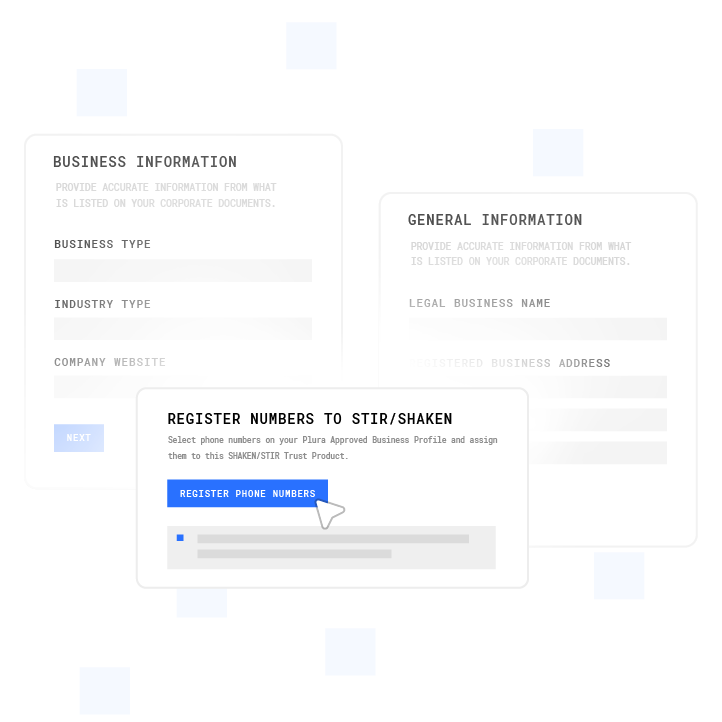
Branded Calling vs “Spam Likely” Labels
Branded calling and “Spam Likely” labels come from different systems, so fixing one does not automatically fix the other. Branded calling displays a verified identity. Spam labels are applied by carrier analytics models that evaluate call volume, answer rates, complaint data, and authentication signals independently of what name appears on screen.
Tier-1 carriers signed 85% of the traffic exchanged between them in 2025, with 93% of signed calls receiving A-level attestation, which makes STIR/SHAKEN plus rich call data (RCD) the primary mechanism for consistent branded display and spam-label prevention on AT&T, Verizon, and T-Mobile networks.
Full Attestation (A-Level) under STIR/SHAKEN confirms the originating provider has a direct relationship with the caller and verifies authorization to use the displayed number, providing the highest trust level that reduces the likelihood of spam labeling. Partial (B-Level) and Gateway (C-Level) attestations indicate lower trust and result in weaker protection against spam-risk labeling.
Common causes of spam labels on legitimate calls include high outbound volume from too few numbers, low answer rates, short call durations, consumer complaints, poor list quality, inconsistent business identity, unauthenticated traffic, aggressive redialing, and prior number misuse.
Spam-Label Remediation at the Carrier Level
Remediation and registration are not the same operation. Registration puts a name on the screen. Remediation corrects an existing negative label by working through carrier and analytics channels to restore a number’s reputation.
Spam remediation corrects inaccurate negative labels by submitting review requests through carrier, reputation, or analytics channels after documenting affected numbers and verifying business details, while branded caller ID only addresses recognition.
The effectiveness of remediation depends on where it happens in the call chain. Because Plura is its own FCC-licensed carrier, remediation happens at the infrastructure level before calls reach handsets. Platforms that route through a third-party CPaaS inherit that provider’s carrier relationships and reputation posture, which means they cannot initiate remediation at the origination layer.
Those platforms can submit requests through analytics partners, but the carrier-level action is not theirs to take. For high-volume outbound teams, the operational difference is measurable, because carrier-level remediation stops a flagged number from burning additional dials before the label is corrected, while third-party remediation requests work retroactively and take longer to propagate across networks.
Brand Equity Inside Call History and Screening
Every outbound call leaves a record in the recipient’s call history. An anonymous number leaves no identity signal. A verified branded call leaves the company name, logo, and call reason in the log, creating a recognition touchpoint that persists after the call ends.
This persistent visibility becomes especially valuable in multi-touch campaigns. For programs that contact the same prospect multiple times across a sales cycle, that call history record functions as a passive brand impression. Recipients who see a consistent, verified identity across repeated contacts are more likely to answer subsequent calls than recipients who see an unfamiliar number each time.
Branded caller ID does not bypass iOS 26 Call Screening but adds context to the transcript the recipient sees, and when combined with clean number reputation and no Spam Likely labels, it meaningfully improves the profile of the call for outbound operations. The name and reason visible in the screening transcript serve the same brand-equity function as the call history entry.
Security Against Spoofing and Identity Abuse
SHAKEN/STIR caller ID verification protects verified numbers from being impersonated by bad actors. When a carrier applies A-level attestation to an outbound call, it certifies that the originating provider has confirmed the calling party’s right to use that number. Recipients and terminating carriers can read that certificate and distinguish authenticated calls from spoofed ones.
Plura runs SHAKEN/STIR caller ID verification on every outbound call through its own FCC-licensed carrier. The authentication certificate travels with the call through the carrier network, protecting the verified identity from spoofing and providing terminating carriers with the signal they need to display the branded identity rather than a generic or suspicious label.
How Plura’s AI Predictive Dialer Works with Branded Caller ID
Branded caller ID delivers its full lift only when it operates in sync with the dialing system placing the calls. A verified name on a number that is being over-dialed, calling outside permitted windows, or connecting with dead air still accumulates the reputation damage that produces spam labels.
Plura’s AI Predictive Dialer is built on the same FCC-licensed carrier infrastructure that issues branded caller ID. Every call placed through the AI Predictive Dialer carries the verified branded identity in real time, with SHAKEN/STIR caller ID verification applied at origination. The dialer’s pacing controls, DNC compliance engine, and time-zone enforcement work alongside the branded identity layer to protect number reputation across the full dial cycle.
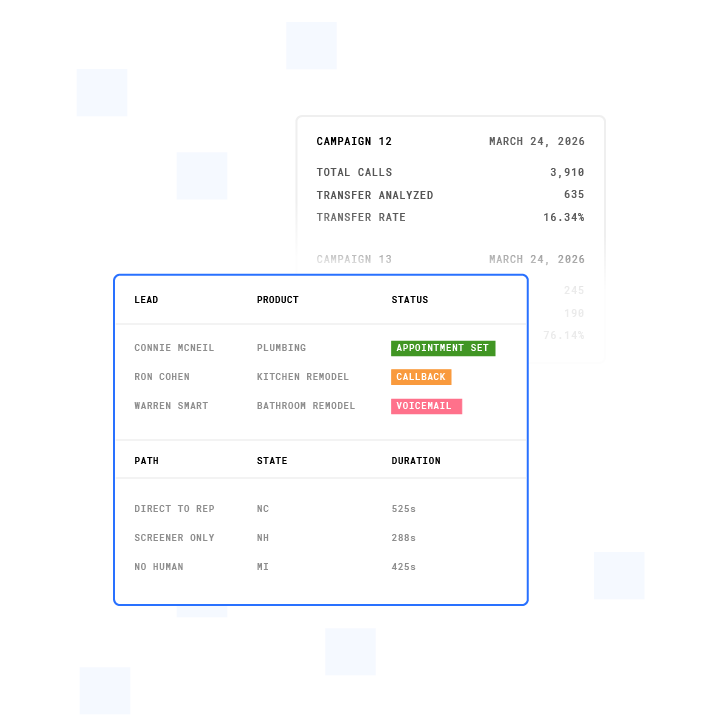
Human-driven or preview dialing, where an agent is connected before the call is initiated, eliminates the dead-air problem that makes predictive dialers vulnerable to iOS 26 Call Screening because the agent can respond immediately to the screening prompt. Plura’s AI Predictive Dialer connects an AI voice agent to the call before the recipient’s screen activates, providing an immediate spoken response to any screening prompt rather than silence.
Run your numbers through Plura’s calculator to see what improved answer rates mean for your program’s monthly ROI.
Comparison Table: Deployment Model, Compliance Controls, and Infrastructure Ownership
| Criteria | Carrier-Owned Platform (Plura AI) | Twilio-Based API Reseller | Standalone Branded Calling Provider |
|---|---|---|---|
| Branded caller ID issuance | Carrier-provisioned directly | Issued through third-party CPaaS carrier identity | Issued through provider’s carrier relationships |
| SHAKEN/STIR attestation level | A-level, enforced at origination on every call | Dependent on third-party carrier’s attestation capability | Varies by provider and carrier agreement |
| Spam-label remediation | Carrier-level, before calls reach handsets | Post-hoc, through analytics partner requests | Through analytics partner channels, not at origination |
| AI Predictive Dialer integration | Native, same carrier infrastructure | Requires separate integration layer | Requires separate dialer platform |
| DNC compliance enforcement | Real-time scrubbing before every dial, inside the platform | Bolted on via third-party tools or customer-managed | Outside scope of branded calling service |
| Infrastructure ownership | 100% U.S., FCC-licensed carrier owned by Plura | Third-party CPaaS infrastructure | Carrier partnerships, not owned infrastructure |
Frequently Asked Questions
What does branded caller ID actually cost at contact-center scale?
Pricing depends on the delivery model. Per-line monthly fees from standalone providers range from $12 to $45 per line. Some providers charge additional per-display fees on top of line fees, which can add to costs at high volumes. Some platforms bundle branded calling and SHAKEN/STIR authentication inside their per-minute AI voice agent pricing with no separate line item, which simplifies cost modeling for contact centers. The break-even point for branded calling varies, with ROI improving at higher volumes because cost-per-connection falls as answer rates rise. Above that threshold, the cost per additional connected conversation is generally lower than the cost of additional redial attempts on unbranded numbers.
Does branded caller ID remove a “Spam Likely” label from my numbers?
Not automatically. Branded caller ID and spam-label remediation are separate processes. Branded caller ID registers a verified identity so that supported carriers display your name, logo, and call reason on the recipient’s screen. Spam labels are applied by carrier analytics models based on call volume, answer rates, complaint data, and authentication signals. Removing an existing spam label typically involves submitting remediation requests through carrier and analytics channels, documenting affected numbers, and verifying business identity. Platforms that own their carrier infrastructure can initiate remediation at the origination layer. Platforms that route through a third-party CPaaS must work through analytics partners, which takes longer and operates retroactively rather than preventively.
How does iOS 26 Call Screening affect branded caller ID performance?
iOS 26 Call Screening auto-answers unknown calls, prompts the caller to state their name and reason, and displays a live transcript before the phone rings for the user. Branded caller ID does not bypass this screening, but it adds context to the transcript the recipient sees. When a call displays a verified business name and call reason alongside a clean number reputation and no spam labels, the screening transcript is more likely to prompt the recipient to accept the call. The highest-risk scenario for predictive dialers is connecting before an agent or AI voice agent is ready, which produces silence in response to the screening prompt. Connecting an AI voice agent before the call initiates removes that dead-air problem. Apple held 60% of the US smartphone market in Q1 2026 per Omdia, so iOS 26 screening behavior is a material factor in outbound answer-rate modeling for any high-volume program.
What compliance frameworks apply to branded caller ID deployments?
Several frameworks intersect with branded caller ID for high-volume outbound operations.2 SHAKEN/STIR caller ID verification is the authentication standard that carriers use to assign attestation levels to outbound calls, and A-level attestation involves the originating carrier confirming the calling party’s right to use the displayed number. TCPA compliance governs outbound calling practices broadly, including caller ID transmission requirements. DNC compliance applies to list management and pre-dial scrubbing. The FCC’s Ninth Further Notice of Proposed Rulemaking, adopted October 29, 2025, proposes requiring originating providers to verify caller identity information and transmit it securely using Rich Call Data standards. Operators should consult qualified counsel regarding their specific obligations under each framework. Plura supports compliance by enforcing real-time DNC scrubbing, SHAKEN/STIR caller ID verification at A-level attestation, TCPA compliance controls, and immutable consent logging inside the platform on every outbound contact. Customers remain responsible for their own regulatory obligations and certifications.
Can branded caller ID work with an AI predictive dialer, and what does the integration look like?
Branded caller ID can work effectively with an AI predictive dialer when the integration architecture is aligned. When the branded caller ID layer and the AI predictive dialer share the same carrier infrastructure, the verified identity travels with every call at origination without requiring a separate integration layer or per-call configuration. The dialer’s pacing controls, time-zone enforcement, and DNC compliance engine operate alongside the branded identity layer, protecting number reputation across the full dial cycle. When the two systems are separate, the branded identity must be passed through an integration layer, and remediation actions taken by the branded calling provider do not automatically coordinate with the dialer’s number rotation or pacing logic. Plura’s AI Predictive Dialer and branded caller ID issuance operate on the same FCC-licensed carrier infrastructure, so the verified identity, SHAKEN/STIR authentication, and dialer controls are unified by default rather than connected through a third-party integration.
Conclusion: Why Carrier-Owned Branded Caller ID Wins
Anonymous outbound calls produce 88% unanswered rates, accumulate spam labels through carrier analytics, and lose additional ground to iOS 26 Call Screening across the majority of U.S. smartphones. The cost of that failure rate compounds across every dial, every redial, and every campaign that never reaches its contact-rate target.
Branded caller ID addresses the recognition and trust gap at the moment of ring. A-level SHAKEN/STIR caller ID verification addresses the authentication gap at the carrier level. Carrier-level spam-label remediation addresses the reputation gap before calls reach handsets. An AI Predictive Dialer that shares the same carrier infrastructure as the branded identity layer removes the dead-air vulnerability described earlier by connecting an AI voice agent before screening prompts activate.
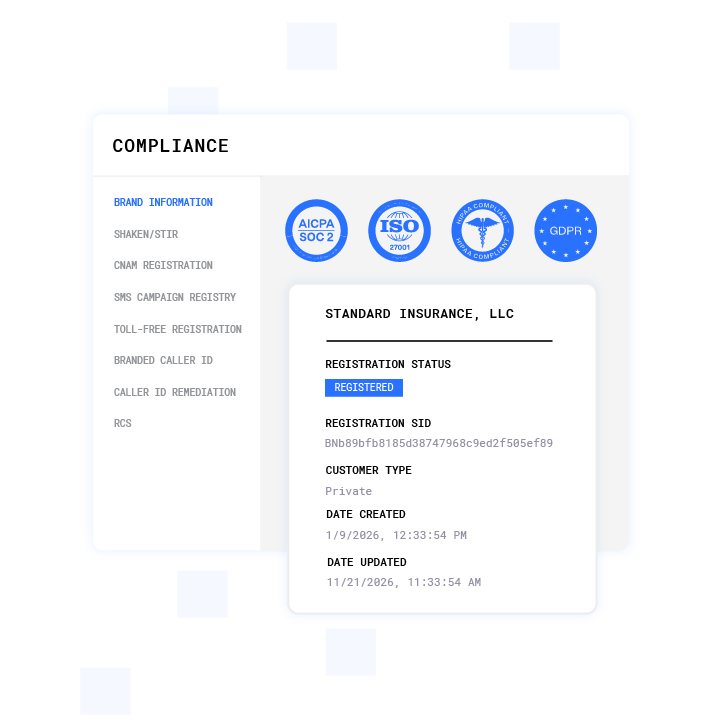
Plura delivers all four capabilities through a single FCC-licensed carrier platform. Branded caller ID is issued directly, not through a reseller. SHAKEN/STIR caller ID verification runs at A-level attestation on every outbound call. DNC compliance and TCPA compliance controls enforce before every dial. The AI Predictive Dialer connects an AI voice agent before the recipient’s screen activates, providing an immediate response to any iOS 26 screening prompt. SOC 2, HIPAA, ISO certification, and GDPR coverage are built into the platform infrastructure, and customers remain responsible for their own regulatory posture.1
The operator economics are clear. A 15-agent operation at $20 per hour costs $60,000 per month. The same volume through Plura costs $14,400 per month, with 30-day savings of $45,600 and 12-month savings of $547,200.
Run your numbers through Plura’s calculator to check your ROI in real time.
1 Plura AI maintains SOC 2, HIPAA, ISO, and GDPR posture as part of its platform infrastructure. References to compliance frameworks in this article describe Plura’s platform capabilities and do not constitute a guarantee that any customer using Plura will themselves be compliant with applicable laws or standards. Customers remain solely responsible for their own regulatory obligations, certifications, consent management, recordkeeping, and the claims they make to their own end users. Consult qualified legal counsel for guidance specific to your use case.
2 This article describes regulatory frameworks at a general level and does not constitute legal advice. Laws and regulations vary by jurisdiction, change over time, and apply differently depending on facts and circumstances. Readers should consult qualified legal counsel before making compliance decisions.
3 Performance figures, customer outcomes, and industry statistics referenced in this article are drawn from cited third-party sources or Plura customer case studies. Individual results vary based on implementation, use case, industry, audience, and execution. Past or aggregate performance is not a guarantee of future results.
4 References to third-party products, services, companies, or research are made for informational and comparative purposes only. Plura AI is not affiliated with, endorsed by, or sponsored by any third party named in this article unless explicitly stated. Trademarks and product names referenced remain the property of their respective owners.
This article is provided for informational purposes only and reflects Plura AI’s understanding at the time of publication. Product capabilities, integrations, and specifications are subject to change. For the most current information, visit plura.ai.
This article was produced with the assistance of AI tools and reviewed by Plura AI prior to publication.