
Written by: Matt Beucler, CEO, Plura AI
Key Takeaways for 2026 Multi-Line Dialing
- Multi-line dialer compliance in 2026 focuses on FCC abandonment-rate limits, ATDS classification, and stricter state mini-TCPA calling-hour and consent rules.2
- Operators need real-time DNC scrubbing, SHAKEN/STIR caller ID verification, and tamper-evident consent records to support safe-harbor defenses under a four-year statute of limitations.
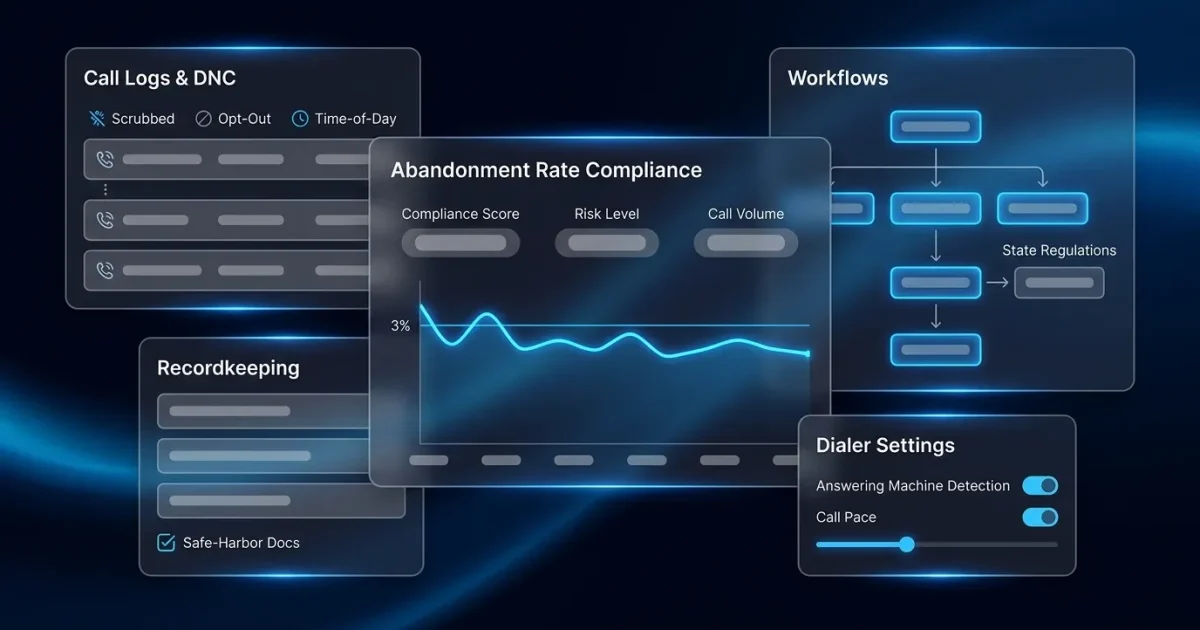
- Staying under the 3% abandonment threshold requires continuous pacing monitoring, accurate AMD, and dynamic agent-availability adjustments instead of static dial ratios.
- At least twelve states now enforce mini-TCPA restrictions that differ from federal rules, including frequency caps, extended calling-hour windows, and statutory damages up to $25,000 per violation.
- Plura AI’s FCC-licensed carrier stack supplies the infrastructure and compliance controls operators use to manage these risks. Talk to an expert to see how these safeguards work in practice.
Autodialer Legality and ATDS Classification
An autodialer is not categorically illegal. The legality of any specific dialing system depends on how it is classified, what calls it places, and whether the operator has obtained the required consent for each contact.
The Supreme Court’s 2021 decision in Facebook v. Duguid narrowed the federal definition of an automatic telephone dialing system (ATDS) under the Telephone Consumer Protection Act (TCPA), 47 U.S.C. § 227.2 After that ruling, an ATDS is equipment that has the capacity to store or produce telephone numbers using a random or sequential number generator and to dial those numbers. Equipment that stores and dials numbers from a pre-existing list generally does not meet that post-Duguid definition.
The narrower ATDS definition does not remove TCPA exposure for multi-line dialing operations. Predictive and power dialers can still create TCPA risk for prerecorded or artificial-voice calls because consent rules apply independently of ATDS status. Several state mini-TCPA statutes also retain broader autodialer definitions that capture most modern predictive dialers regardless of the federal standard.
FCC abandoned-call rules apply to telemarketing calls. The FCC also proposed in CG Docket No. 26-52 that terminating providers transmit verified caller name or other caller identity information whenever a call has received an A-level STIR/SHAKEN attestation, which tightens the caller-identity framework further.
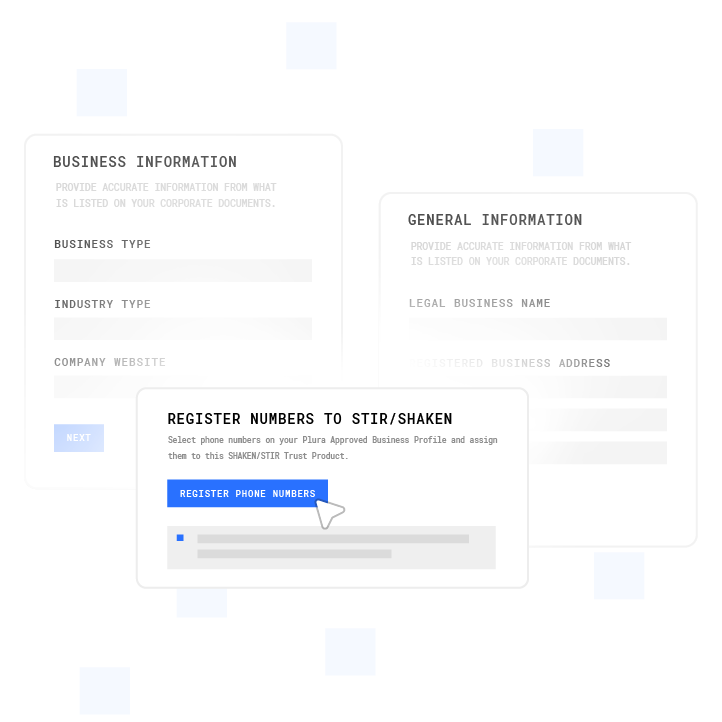
Safe-harbor steps operators can review with qualified counsel include obtaining prior express written consent specific to the caller and contact method, scrubbing lists against the National DNC Registry and state DNC registries before each dial, enforcing time-zone-based calling-hour restrictions, and maintaining tamper-evident records of every outbound attempt. Consult qualified legal counsel to evaluate your specific dialing configuration against current federal and state rules.
Book a live demo with Plura AI to see how the FCC-licensed carrier stack supports these operational controls in practice.
How to Stay Under 3% Abandoned Calls
Staying under the abandonment threshold is achievable with the right operational controls, and it requires continuous monitoring rather than a one-time configuration.
An abandoned call is an outbound telemarketing call that is answered by a live person but not connected to a sales agent within a short period after the answer. Voicemails, busy signals, disconnected numbers, and faxes are excluded from abandonment-rate calculations.
The abandonment rate is the percentage of live-answered calls that are abandoned. In a high-volume campaign, even a small number of abandoned calls can cause the rate to exceed the allowed threshold.
The table below illustrates how dial ratios interact with abandonment risk at varying agent-availability levels. All figures are illustrative operational benchmarks drawn from LeadCompliant’s predictive dialer abandonment-rate guide and SIPnex’s FCC abandoned-call-rate analysis.3
| Dial Ratio (Lines per Agent) | Estimated Live-Answer Rate | Abandonment Risk Level | Recommended Action |
|---|---|---|---|
| 1.5:1 | High (stable agent pool) | Low | Maintain, monitor hourly |
| 2.0:1 | Moderate | Moderate | Set alerts, reduce ratio if needed |
| 2.5:1 | Lower (agent wrap-up delays) | High | Pause dialing, reassess agent availability |
| 3.0:1+ | Unpredictable | Critical | Stop campaign, recalibrate before resuming |
SmartDialTech recommends checking the abandon rate every hour during a campaign. If the rate is trending higher with dialing hours remaining, operators have time to adjust pacing before breaching the limit. A single abandoned call to a number on the National Do Not Call Registry voids the safe harbor for that call even if the overall campaign abandonment rate remains low.
Plura’s AI Predictive Dialer includes dynamic pacing, timezone logic, and answer-rate controls designed to support operators in monitoring and managing abandonment rates in real time. Operators retain responsibility for configuring and reviewing those controls against their own campaign parameters.
Key State Mini-TCPA Restrictions in 2026
At least 12 states have enacted mini-TCPA laws since 2021 with calling-hour windows, frequency caps, and statutory damages that differ from or exceed federal TCPA requirements.2 The matrix below covers the states most frequently cited in 2026 compliance reviews. Consult qualified legal counsel for the current text of each statute before operating in any of these states.
| State / Statute | Effective Date | Key Restrictions | Statutory Damages |
|---|---|---|---|
| Florida FTSA (SB 1120) | July 2021 | Maximum of three contacts on the same subject matter per 24 hours, between 8 a.m. and 8 p.m. local time, broad autodialer definition, prior express written consent requirement | Private right of action, per-violation damages |
| Oklahoma OTSA | November 2022 | Broad autodialer definition and prior express written consent requirement | Per-violation damages, private right of action |
| Texas SB 140 | September 1, 2025 | Expanded to cover texts and images, telemarketer registration with quarterly reports | $500 to $5,000 per violation |
| Oregon HB 3865 | January 1, 2026 | 8 a.m. to 8 p.m. local time, maximum 3 calls per consumer per day, expressly extends restrictions to text messages | Private right of action |
Additional states with active restrictions in 2026 include Maryland (SB 90, $10,000 per violation, $25,000 for repeat violations), Connecticut (SB 1058, up to $20,000 per violation, 9 a.m. to 8 p.m. calling window), and Virginia, which requires businesses to honor STOP requests for years under its mini-TCPA law effective January 1, 2026. Michigan’s State Senate passed new telemarketing legislation in December 2025, and West Virginia introduced HB 4909 in January 2026 proposing a comprehensive mini-TCPA.
Plura’s compliance engine includes pre-loaded state-level rule sets with time-zone-based calling-hour enforcement applied automatically on every outbound contact. Operators configure state-specific overrides at the campaign level and are responsible for verifying that their configurations reflect current statutory requirements.
Recordkeeping Standards That Support Safe-Harbor Defenses
Safe-harbor defenses under TCPA and the FTC’s Telemarketing Sales Rule (TSR) depend on the ability to produce specific records on demand. 28 U.S.C. § 1658 sets a four-year statute of limitations for filing suit, so operators must be prepared to produce records for any call made within that window. Telemarketers must retain call-level and campaign-level records for 5 years under 16 CFR § 310.5 to demonstrate compliance with TSR safe-harbor provisions. Many operators retain records for five years to provide an additional buffer.
The following record categories are relevant to safe-harbor documentation:
- Consent records: Consent evidence must include the timestamp, IP address, exact consent language presented, the channel through which consent was captured, and the specific seller authorized. A consent record that cannot be produced on demand is treated as no consent at all in discovery.
- DNC scrub logs: Every campaign list must be timestamped with the scrub date and source file logged so the audit trail shows exactly which list version was dialed. The National DNC scrub must be updated at least once every 31 days.
- Reassigned Numbers Database (RND) queries: The FCC adopted the RND as the official federal safe-harbor tool; callers who query the RND in good faith before dialing and receive no indication of reassignment are protected from TCPA liability even if a number was subsequently reassigned. Callers should scrub lists against the RND at least every 31 days to mitigate TCPA liability for potentially reassigned numbers.
- Call detail records: Contact centers must preserve call detail records for each outbound attempt showing date, time, number dialed, duration, and disposition.
- Abandonment-rate records: To defend abandoned-call-rate claims, operators must retain raw call detail records, AMD disposition codes, agent status logs, and periodic rate calculations for 5 years, stored outside the dialer’s database.
- Opt-out logs: Internal Do Not Call opt-out requests must be honored within 10 business days effective April 2025.
Plura’s compliance engine generates audit-ready exports in one click, with timestamped, immutable consent records and call-detail logs stored on 100% U.S. infrastructure. Operators are responsible for retaining those exports in accordance with applicable retention schedules and for verifying that their recordkeeping practices satisfy current federal and state requirements.
7-Step Compliance Checklist for Multi-Line Dialer Operations
This checklist highlights operational controls relevant to multi-line dialer compliance under 2026 U.S. rules. It is not legal advice. Operators should review each step with qualified legal counsel before deploying or modifying any outbound dialing campaign.
- Real-time DNC scrubbing: Scrub every number against the National DNC Registry, applicable state DNC registries, and your internal suppression list before each dial. FTC rules require DNC data to be no more than 31 days old at the time of the call, with real-time scrubbing at the moment of dial as the preferred standard. Plura’s DNC compliance layer, which includes integration with The Blacklist Alliance’s TCPA Litigation Firewall for real-time scrubbing, runs this check on every outbound contact before the call is placed.4
- Time-zone enforcement: Calling-hour enforcement must block calls before 8 a.m. or after 9 p.m. in the called party’s local time zone under 47 C.F.R. § 64.1200(c)(1), with state-level time-zone mapping required for stricter rules such as Oklahoma’s 8 p.m. cutoff. Plura enforces time-zone restrictions automatically through time-zone detection on the contact’s number.
- Consent logging: Capture prior express written consent specific to the caller and contact method. Log the timestamp, IP address, exact consent language, and channel of capture. Maintaining consent records linked directly to the call record is stronger than storing broad forms separately because it ties authorization to a specific dialing event and campaign. Plura’s TCPA compliance infrastructure stores timestamped, immutable consent records in an audit-ready format.
- Pacing monitoring and abandonment-rate management: Monitor the abandonment rate continuously. Set real-time alerts if the rate is trending upward to maintain a buffer before reaching the legal limit. Plura’s AI Predictive Dialer includes dynamic pacing controls and list management designed to support operators in staying within the FCC’s abandonment threshold.
- AMD accuracy: Accurate answering machine detection (AMD) is critical because misclassified live answers inflate the abandonment numerator without a corresponding agent connection. Operational controls that help multi-line predictive dialers stay under 3% include accurate AMD to avoid inflating the numerator. Review AMD disposition codes regularly and retain them as part of your audit log.
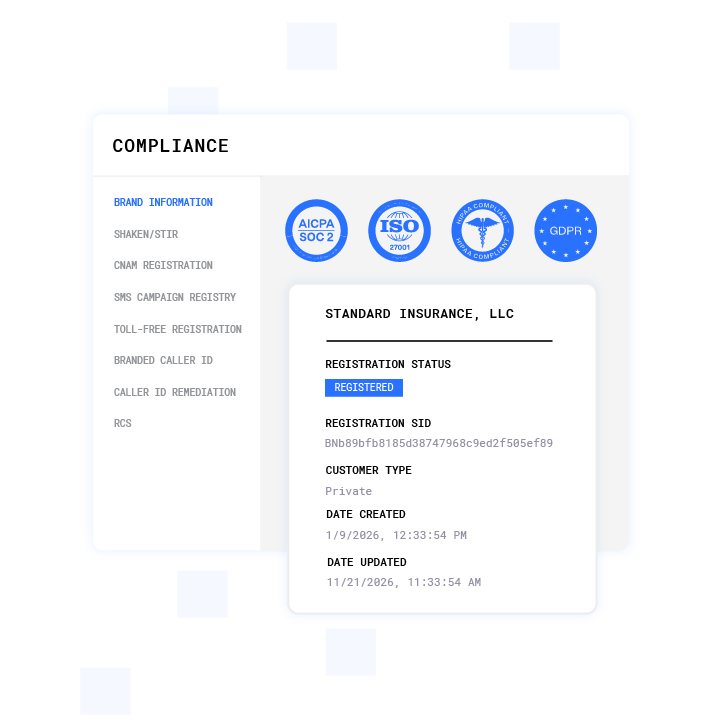
- Audit-ready export and recordkeeping: Maintain call detail records, consent logs, DNC scrub timestamps, AMD disposition codes, and abandonment-rate calculations outside the dialer’s primary database. Records must be retained for the 5-year period described earlier to satisfy TSR safe-harbor requirements. 28 U.S.C. § 1658 addresses the statute of limitations for filing suit. Plura’s compliance dashboard exports audit-ready reports in one click, with SOC 2, HIPAA, and ISO certification controls applied to the underlying infrastructure.1
- Reassigned Numbers Database queries: Apply the 31-day RND scrubbing cadence described earlier to identify potentially reassigned numbers before dial. Plura integrates with the Reassigned Numbers Database (RND) via TrestleIQ, supporting operators in identifying potentially reassigned numbers before dial.4 SHAKEN/STIR caller ID verification runs on every outbound call through Plura’s FCC-licensed carrier, supporting authenticated origination at the infrastructure level.
Book a live demo with Plura to walk through how these controls are configured and monitored inside the platform.
Conclusion: Operational Priorities for 2026 Dialer Compliance
Multi-line dialer compliance risks in 2026 center on four operational areas. Operators must stay under FCC abandonment limits for telemarketing calls, maintain ATDS classification awareness after Facebook v. Duguid, satisfy state mini-TCPA restrictions that vary by calling hours, frequency caps, and consent standards, and produce audit-ready records that support safe-harbor defenses under a four-year statute of limitations.
Plura AI’s compliance framework includes SOC 2, HIPAA, ISO certification, GDPR, SHAKEN/STIR caller ID verification, TCPA compliance, and DNC compliance controls, all running on 100% U.S. infrastructure through an FCC-licensed carrier.1 The AI Predictive Dialer includes dynamic pacing, timezone logic, real-time DNC scrubbing, and one-click audit exports designed to support operators in managing the controls described in this guide. Operators remain responsible for their own consent records, campaign configurations, and compliance obligations under applicable federal and state law.
Run your numbers through Plura’s calculator to check your ROI in real time: check your ROI now.3
Compare plans and rates side by side: view Plura pricing.
Frequently Asked Questions
How do federal and state abandonment-rate rules differ?
The federal rule caps the rate of abandoned telemarketing calls and applies to calls made using an ATDS. State mini-TCPA statutes in states like Florida, Oklahoma, and Oregon impose additional or different restrictions that can apply alongside the federal rule. Some state laws extend to business-to-business calls without a residential carve-out, cover text messages explicitly, or impose per-day frequency caps that the federal rule does not address. Operators running multi-state campaigns need to map each state’s requirements separately and configure their dialing systems accordingly. Consult qualified legal counsel to evaluate your specific obligations in each state where you operate.
How does real-time DNC scrubbing differ from periodic list scrubbing?
Periodic list scrubbing involves downloading the National DNC Registry and state DNC lists on a scheduled basis, typically every 31 days as the FTC’s Telemarketing Sales Rule requires, and suppressing registered numbers from the campaign list before dialing begins. Real-time DNC scrubbing checks each number against the most current available registry data at the moment the dialer attempts to place the call, rather than relying on a batch download that may be days or weeks old.
The practical difference matters because numbers are added to the DNC Registry continuously, and a number that was not registered at the time of the last batch scrub may be registered by the time the call is placed. Plura’s DNC compliance layer runs this check on every outbound contact before the call is placed, supporting operators in reducing the gap between registry updates and dial attempts.
What records support a TCPA abandoned-call defense?
Defending an abandoned-call claim typically requires producing records that demonstrate the campaign’s abandonment rate remained within the allowed limit, that every abandoned call triggered an immediate prerecorded identification message, that no abandoned calls were placed to numbers on the National DNC Registry, and that the operator maintained the required records throughout.
Specifically, that means raw call detail records showing date, time, number dialed, duration, and disposition, AMD disposition codes confirming which calls were classified as live-answer versus voicemail, agent status logs showing availability at the time of each connection attempt, and periodic abandonment-rate calculations tied to the campaign. These records should be stored outside the dialer’s primary database and retained for 5 years under 16 CFR § 310.5. Consent records, DNC scrub timestamps, and opt-out logs are separate but equally important components of a complete compliance documentation set.
Does SHAKEN/STIR authentication affect abandonment-rate compliance?
SHAKEN/STIR (Secure Telephone Identity Revisited / Signature-based Handling of Asserted information using toKENs) is a caller-ID authentication framework that verifies the legitimacy of a call’s origination before it reaches the recipient’s carrier. It does not directly affect how abandonment rates are calculated or enforced under federal rules.
SHAKEN/STIR authentication is operationally relevant to multi-line dialer compliance because unauthenticated calls are more likely to be labeled as spam or blocked by terminating carriers before they reach a live person. That effect can distort live-answer rates and make abandonment-rate monitoring less reliable. The FCC’s CG Docket No. 26-52 proposed requiring terminating providers to transmit verified caller identity information whenever a call has received an A-level attestation, which raises the stakes for operators whose calls do not authenticate cleanly. Plura runs SHAKEN/STIR caller ID verification on every outbound call through its FCC-licensed carrier, supporting authenticated origination at the infrastructure level.
How should operators handle opt-out requests across multi-line campaigns?
When a consumer requests to be placed on an internal do-not-call list during a call, that request must be honored promptly. The FCC treats 10 business days as the outer limit for processing opt-outs. For multi-line campaigns running simultaneously across multiple lists or campaigns, the suppression must propagate across all active campaigns, not just the one that received the opt-out request.
Operators should also ensure that opt-out requests captured via text message or other channels are processed with the same urgency as voice opt-outs, particularly in states like Virginia where the mini-TCPA requires honoring STOP requests for an extended period. Plura’s compliance engine captures opt-out requests and applies suppression in real time, but operators are responsible for verifying that suppression logic is configured correctly across all active campaigns and channels.
1 Plura AI maintains SOC 2, HIPAA, ISO, and GDPR posture as part of its platform infrastructure. References to compliance frameworks in this article describe Plura’s platform capabilities and do not constitute a guarantee that any customer using Plura will themselves be compliant with applicable laws or standards. Customers remain solely responsible for their own regulatory obligations, certifications, consent management, recordkeeping, and the claims they make to their own end users. Consult qualified legal counsel for guidance specific to your use case.
2 This article describes regulatory frameworks at a general level and does not constitute legal advice. Laws and regulations vary by jurisdiction, change over time, and apply differently depending on facts and circumstances. Readers should consult qualified legal counsel before making compliance decisions.
3 Performance figures, customer outcomes, and industry statistics referenced in this article are drawn from cited third-party sources or Plura customer case studies. Individual results vary based on implementation, use case, industry, audience, and execution. Past or aggregate performance is not a guarantee of future results.
4 References to third-party products, services, companies, or research are made for informational and comparative purposes only. Plura AI is not affiliated with, endorsed by, or sponsored by any third party named in this article unless explicitly stated. Trademarks and product names referenced remain the property of their respective owners.
5 This article contains forward-looking statements regarding industry trends, technology adoption, and future capabilities. These statements reflect current expectations and are subject to change. Plura AI undertakes no obligation to update forward-looking statements except as required.
This article is provided for informational purposes only and reflects Plura AI’s understanding at the time of publication. Product capabilities, integrations, and specifications are subject to change. For the most current information, visit plura.ai.
This article was produced with the assistance of AI tools and reviewed by Plura AI prior to publication.