
Written by: Matt Beucler, CEO, Plura AI
Key Takeaways for After-Hours AI Reception
- An AI receptionist for after-hours calls answers every inbound call on the first ring, qualifies leads, books appointments, and routes emergencies without overnight staff.
- Plura AI delivers this capability on its own FCC-licensed carrier with stateful cross-channel memory, real-time compliance controls, and transparent ROI math that replaces $4M–$7M traditional contact-center economics with $300K–$700K TCO.
- Deployment follows a five-step sequence: discovery audit, workflow build, compliance configuration, pilot on live calls, and full go-live, typically completed in days to weeks.
- Market data shows 62% of inbound calls are missed overall, with 80-85% of after-hours callers hanging up without leaving a message, which creates substantial revenue leakage across home services, healthcare, insurance, and legal verticals.
- Eliminate after-hours revenue leakage and experience 3x average ROI in 90 days with Plura AI, and book a live demo today.
Step-by-Step Setup for an AI After-Hours Receptionist
Enterprise-grade AI receptionist deployment for after-hours calls follows a clear sequence, with most operators reaching full go-live in days to weeks depending on workflow complexity.
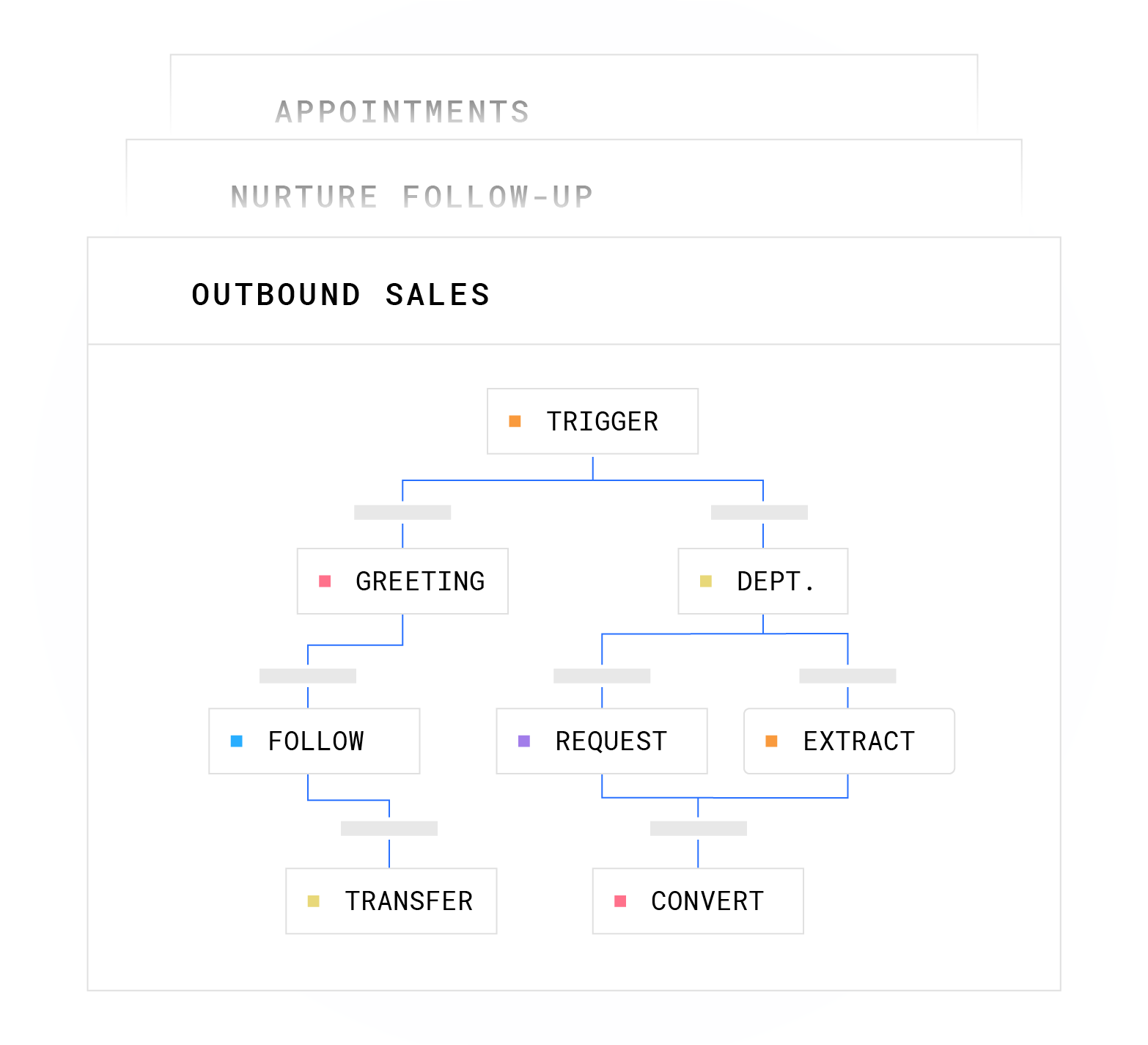
- Discovery audit. Map your current call economics: volume by hour, missed-call rate, average ticket value, and existing CRM or scheduling tools. Use this baseline to drive every downstream configuration decision.
- Workflow build. Configure greeting nodes, qualification gates, emergency-routing logic, and post-call actions such as SMS confirmations and CRM writes with Plura’s no-code workflow builder.
- Compliance configuration. Set DNC scrubbing rules, quiet-hours enforcement by time zone, consent-record parameters, and HIPAA-aligned data-handling paths for any protected health information captured during intake.
- Pilot on live calls. Route a defined subset of real after-hours traffic through the AI agent. Monitor transfer rates, low-confidence responses, and booking completion against your baseline metrics.
- Full go-live. Expand to 100% of after-hours volume. The platform’s conversation intelligence layer surfaces objection patterns and conversion gaps for continuous tuning after launch.
After-Hours Revenue Leakage Across Key Verticals
The scale of after-hours revenue leakage is measurable. Home service contractors miss 62% of inbound calls overall, with roughly 80-85% of after-hours callers hanging up without leaving a message.3 Missed after-hours emergency service calls can represent substantial immediate revenue and often lead to follow-up replacement jobs.
This problem extends across multiple verticals. Emergency trades including HVAC, plumbing, locksmith, and towing often receive a large share of calls outside business hours. Healthcare clinics receive approximately 16.5% of calls after hours according to analysis of 27 million patient calls, and professional services such as legal and accounting see meaningful after-hours volume as well.
The response-time gap compounds the missed-call problem. Harvard Business Review research found that companies responding within five minutes are 100 times more likely to connect with a prospect than those waiting 30 minutes.4 A large share of callers never call back after a missed call, and about 78% of customers buy from the first business that responds. For high-volume operators, these numbers translate directly into quantifiable annual revenue loss.
Run your numbers through Plura’s ROI calculator to check your after-hours revenue exposure in real time.
Plura’s Carrier-Level Architecture for AI Reception
Most AI voice tools on the market operate as API resellers built on top of third-party CPaaS providers. These tools do not own the carrier, cannot issue branded caller ID at the carrier level, and cannot enforce compliance at origination. Plura AI owns its telecom infrastructure and holds an FCC carrier license,4 while platforms built on Twilio or similar providers function as software layers without a carrier license.
The architectural components that distinguish enterprise-grade 24/7 call answering from small-business tools include the following layers working together.
- FCC-licensed carrier. Voice originates on Plura’s domestic infrastructure. Branded caller ID is issued at the carrier level, not bolted on through a reseller, and SHAKEN/STIR caller ID verification runs on every outbound call.
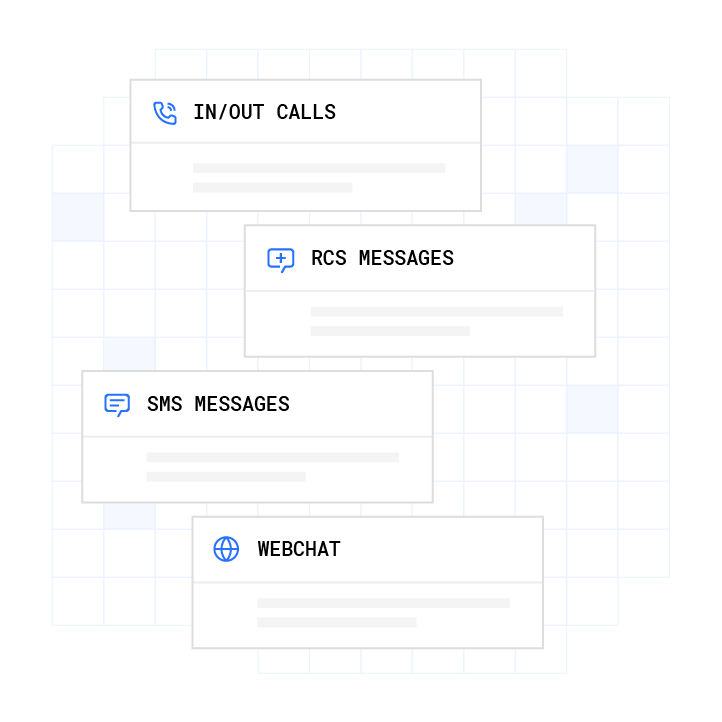
- Stateful Conversation Database. Every interaction across voice, SMS, RCS, and AI webchat is keyed to a customer token and stored in one place. A customer who texted at 9 AM is recognized when the call comes at noon, so no re-introduction is required.
- Omnichannel support. Plura supports voice, SMS, webchat, and RCS within a unified stateful inbox that maintains full conversation history for each customer.
- Real-time DNC and TCPA compliance. Every outbound contact is checked against federal and state DNC registries before dial. Quiet-hours rules enforce automatically through time-zone detection, and consent records are timestamped and immutable.
Deployment Model, Uptime, and Contract Structure
Plura provides a 99.9% uptime SLA with automatic failover and no single point of failure. Deployment timelines run from days to weeks. A simple inbound qualification flow is typically live in days. A complex multi-step intake, such as a 25-question health-history survey, often runs closer to one to two months because workflow logic requires design and validation time.
Every annual contract includes a 90-day opt-out window, so if the deployment is not delivering, operators are not held to the annual term. Compare plans and rates side by side at Plura’s pricing page.
High-Volume Use Cases Across Industries
The platform serves high-volume operators across regulated and conversion-driven verticals, with a practical floor of 500 or more daily customer interactions or $5,000 or more per month in paid-media spend.
- Home services. After-hours call answering and after-hours booking for HVAC, plumbing, electrical, and pest control operators. Plura voice agents answer 100% of inbound calls across all franchise locations within two rings. One multi-unit franchise owner in home services reported, “We went from missing 40% of our calls across 12 locations to answering 100% of them. Our booking rate doubled and we did it without adding a single receptionist.”3
- Healthcare. Appointment confirmations, patient intake, and prescription reminders. Healthcare deployments inherit HIPAA-aligned encryption, sensitive-data redaction, and audit-ready logging. Plura supports up to a 40% improvement in no-shows through automated reminders and follow-up.
- Insurance. Instant quote follow-ups and policy renewal reminders. Sub-5-second response on inbound quotes functions as a competitive requirement in a market where the first responder closes a significant share of deals.
- Legal. Mass-tort and personal-injury intake, consultation scheduling, and retainer follow-ups. The AI conducts intake interviews with field-level PII redaction and routes valid cases to U.S. counsel.
- Franchise networks. Plura enables franchises to handle 3x to 5x call volume during peak seasons without temporary staff. Centralized dashboards track per-location metrics across the entire network.
Buyer Fit for Plura’s AI Reception Platform
Plura is built for operators where missed calls equal missed revenue at scale. The five buyer personas who drive purchasing decisions are Contact Center Leaders, Marketing Directors, Agency Owners, Franchise Owners, and C-Suite Executives. Each owns a different slice of the same problem: too many conversations, not enough capacity, rising regulatory exposure, and customer expectations that no human-only model can meet at volume.
Operators below 500 daily interactions or $5,000 monthly ad spend typically do not generate enough ROI to justify the platform depth. Above those thresholds, the economics shift decisively in favor of AI-native infrastructure.
How Plura Compares in the After-Hours Market
The market for after-hours call coverage divides into three categories, each with distinct trade-offs. The table below highlights four architectural dimensions that separate enterprise-grade platforms from small-business tools: carrier ownership, compliance posture, stateful memory, and pricing transparency.4
| Attribute | Small-Business Tools | Enterprise-Grade Options (Plura) |
|---|---|---|
| Carrier Ownership | Dependent on third-party CPaaS such as Twilio, with no FCC carrier license | FCC-licensed carrier, with voice originating on owned domestic infrastructure |
| Compliance Posture | Bolted-on DNC and TCPA tools, with no real-time scrubbing at origination | HIPAA, SOC 2, TCPA compliance, and DNC compliance with real-time scrubbing and immutable consent ledger |
| Stateful Memory | Single-channel or session-only memory, with no cross-channel context | Stateful AI architecture that remembers previous interactions, preferences, and outcomes across voice, SMS, RCS, and webchat |
| Pricing Transparency | Usage-based with variable overages and no published TCO math | Published plans and rates, with TCO of $300K–$700K versus $4M–$7M traditional contact-center economics and a 90-day opt-out on annual contracts |
Live answering services provide human judgment for complex calls but carry per-call pricing of $1–$3 or more, higher after-hours surcharges, and staffing constraints that limit concurrent call handling. Basic IVR systems start at $23–$50 per month but cannot book appointments, send SMS during calls, or maintain conversation context. These categories do not own the carrier stack or enforce compliance at origination.
ROI Evidence and Evaluation Signals
The ROI math is transparent and verifiable. Plura’s ROI calculator starts with a baseline scenario of 15 agents at $20 per hour, plus 25% for taxes, benefits, and commissions, operating at 40% talk utilization, which produces a monthly human cost of $60,000. The calculator then models the AI replacement, where 6 AI agents at $15 per hour and 100% talk utilization handle the same volume and drop the monthly cost to $14,400. That $45,600 monthly savings compounds to a 12-month ROI of $547,200 and a 60-month ROI of $2,736,000.
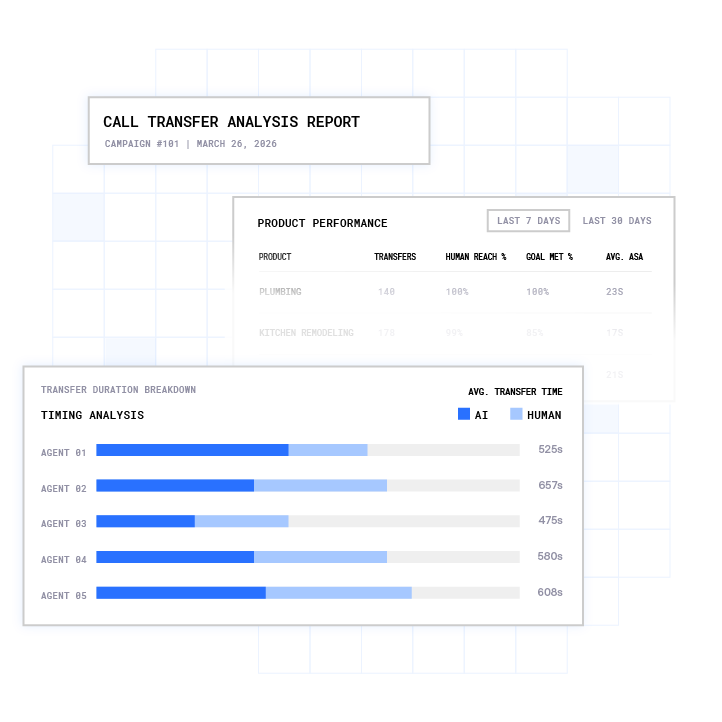
Plura delivers 3x average ROI in 90 days, 47% average pipeline growth, and 90% faster lead-response time than baseline.3 AI contact centers provide 24/7/365 availability compared to business-hours-plus-shifts for traditional operations.
Run your numbers through Plura’s ROI calculator to model your specific after-hours revenue recovery.
Compliance and Risk Checks for AI Reception
Operators in regulated industries should verify that any AI receptionist platform supports a consistent compliance pattern across major frameworks. Plura supports compliance with each framework below, while customers remain responsible for their own regulatory obligations and certifications.1
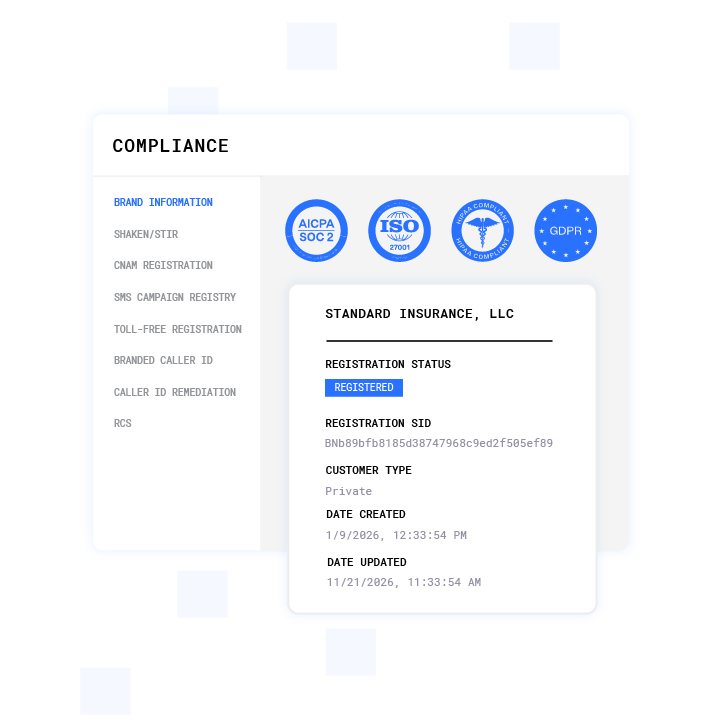
- SOC 2 certification with continuous monitoring and third-party audits1
- HIPAA-aligned encryption, access controls, and audit logging for protected health information1
- ISO certification1
- GDPR coverage for any European operations1
- SHAKEN/STIR caller ID verification on every outbound voice call1
- TCPA compliance with real-time consent management and immutable consent records1
- DNC compliance with pre-dial scrubbing against federal and state registries1
Operators should also confirm whether the platform owns its carrier infrastructure or routes through a third-party CPaaS, whether stateful memory persists across channels, and whether pricing remains transparent at enterprise volume. Consult qualified legal counsel regarding your organization’s specific regulatory obligations under TCPA, HIPAA, or applicable state laws.
Book a live demo with Plura to walk through compliance configuration for your specific vertical and call volume.
Frequently Asked Questions
How many after-hours calls do service businesses typically miss?
The miss rate varies by industry and time window, but the numbers remain consistently high. As noted earlier, home service contractors miss a majority of inbound calls, and most after-hours callers hang up without leaving a message. Emergency trades including HVAC, plumbing, and locksmith services often receive a large share of their total call volume outside standard business hours. For a typical residential HVAC or plumbing contractor, that pattern can translate to several emergency service calls per week going unanswered after hours, each representing significant ticket value and a potential follow-up replacement job. Across a full year, the cumulative revenue exposure for a mid-size contractor can be substantial.
What regulatory frameworks touch automated after-hours call handling in the United States?
Several federal frameworks govern automated call handling, and operators should consult qualified legal counsel to understand how each applies to their specific situation.2 The Telephone Consumer Protection Act (TCPA, 47 U.S.C. § 227) addresses consent requirements for autodialed and prerecorded calls to mobile and residential numbers.2 FCC rules establish time-window restrictions on telemarketing calls to residential numbers. The National Do Not Call Registry, managed by the FTC with FCC enforcement, requires telemarketers to honor registered numbers within defined timeframes. The Telemarketing Sales Rule (16 CFR 310) sets disclosure and payment restrictions for certain categories of calls.
For healthcare-adjacent intake workflows, HIPAA (45 CFR Parts 160, 162, 164) governs the handling of protected health information. State-level rules in jurisdictions including New York, New Jersey, Connecticut, Missouri, and Florida add additional restrictions on offshore data handling and sensitive-data processing. Plura’s compliance engine is designed to support operators navigating these frameworks, but each operator is responsible for their own regulatory posture.
How have AI receptionist capabilities changed between 2023 and 2026?
Capabilities have advanced across latency, context, and channel coverage. Early AI voice tools operated with noticeable processing delays and handled only single-channel, single-session interactions with no memory between calls. By 2026, leading deployments achieve sub-300ms response latency by co-locating speech recognition, LLM inference, and text-to-speech within carrier infrastructure. The share of organizations deploying AI agents in customer service rose from roughly 39% in 2025 to 66% in 2026.5
Stateful cross-channel memory, where a customer’s prior SMS thread informs the live voice call, has shifted from an enterprise differentiator to a baseline expectation among high-volume operators. Compliance enforcement has also matured, with real-time DNC scrubbing, SHAKEN/STIR authentication, and immutable consent logging now treated as first-class platform features rather than third-party add-ons. Platforms that own their carrier infrastructure have pulled ahead on pickup rates, compliance posture, and per-minute economics compared to API-reseller tools built on third-party CPaaS providers.
What are the core architectural components of an enterprise-grade AI receptionist?
An enterprise-grade AI receptionist for after-hours calls relies on several distinct layers working in coordination. The telephony layer handles SIP trunking, carrier integration, SHAKEN/STIR attestation, inbound number provisioning, outbound caller-ID verification, and state-specific call-recording compliance. The AI layer combines automatic speech recognition, large language model inference, and text-to-speech synthesis, with the performance frontier targeting sub-200ms latency across the full pipeline through streaming architectures.
The stateful data layer persists conversation context across channels so that every touchpoint, whether voice, SMS, RCS, or webchat, reads from and writes to the same customer record. The compliance layer enforces DNC scrubbing, consent logging, quiet-hours rules, and HIPAA-aligned data handling before and during each contact. The integration layer connects to CRM systems, scheduling platforms, and payment processors so the AI can book appointments, update records, and trigger post-call actions without human intervention. Platforms that own the carrier infrastructure can enforce compliance and issue branded caller ID at origination, while platforms that rent from a third-party CPaaS have less control at that layer.
Conclusion: Closing the After-Hours Revenue Gap
AI receptionist coverage for after-hours calls represents a major addressable revenue gap for high-volume service operators. Many after-hours calls go unanswered at businesses without dedicated coverage, and most callers never call back after a missed call, so the cost of inaction compounds over time. Plura AI closes that gap with an enterprise-grade AI receptionist built on its own FCC-licensed carrier, stateful cross-channel memory across voice, SMS, RCS, and AI webchat, and real-time controls that support TCPA compliance, DNC compliance, HIPAA, SOC 2, ISO certification, GDPR, and SHAKEN/STIR caller ID verification.
The economics replace traditional contact-center costs with a significantly lower TCO, supported by 3x average ROI in 90 days and a 90-day opt-out window on every annual contract. For operators running 500 or more daily interactions who are ready to eliminate after-hours revenue leakage, two next steps are available.
- Run your numbers through Plura’s ROI calculator to model your specific after-hours revenue recovery against your current call economics.
- Compare plans and rates side by side to identify the right tier for your call volume and compliance requirements.
1 Plura AI maintains SOC 2, HIPAA, ISO, and GDPR posture as part of its platform infrastructure. References to compliance frameworks in this article describe Plura’s platform capabilities and do not constitute a guarantee that any customer using Plura will themselves be compliant with applicable laws or standards. Customers remain solely responsible for their own regulatory obligations, certifications, consent management, recordkeeping, and the claims they make to their own end users. Consult qualified legal counsel for guidance specific to your use case.
2 This article describes regulatory frameworks at a general level and does not constitute legal advice. Laws and regulations vary by jurisdiction, change over time, and apply differently depending on facts and circumstances. Readers should consult qualified legal counsel before making compliance decisions.
3 Performance figures, customer outcomes, and industry statistics referenced in this article are drawn from cited third-party sources or Plura customer case studies. Individual results vary based on implementation, use case, industry, audience, and execution. Past or aggregate performance is not a guarantee of future results.
4 References to third-party products, services, companies, or research are made for informational and comparative purposes only. Plura AI is not affiliated with, endorsed by, or sponsored by any third party named in this article unless explicitly stated. Trademarks and product names referenced remain the property of their respective owners.
5 This article contains forward-looking statements regarding industry trends, technology adoption, and future capabilities. These statements reflect current expectations and are subject to change. Plura AI undertakes no obligation to update forward-looking statements except as required.
This article is provided for informational purposes only and reflects Plura AI’s understanding at the time of publication. Product capabilities, integrations, and specifications are subject to change. For the most current information, visit plura.ai.
This article was produced with the assistance of AI tools and reviewed by Plura AI prior to publication.