
Written by: Matt Beucler, CEO, Plura AI
Key Takeaways
- Sub-60-second speed to lead depends on webhook-triggered dialing, real-time pacing, and AMD that connect and qualify leads while supporting TCPA, DNC, and FCC compliance.1
- Industry benchmarks show that responding within 60 seconds can lift conversion rates by nearly 400%, yet only 7% of B2B teams hit five-minute response times.
- Owning an FCC-licensed carrier enables sub-5-second first contact, A-level STIR/SHAKEN attestation, and branded caller ID without added third-party latency or extra spam-label risk.
- Stateful cross-channel follow-up across voice, SMS, RCS, and webchat preserves conversation context, which increases conversion likelihood on the 6th touch and beyond.
- Plura AI’s AI Predictive Dialer delivers these capabilities on 100% U.S. infrastructure. Start a conversation with Plura AI to see how fast, compliant dialing can reshape your lead response.
1. Speed Benchmarks That Directly Impact Conversion
The average B2B company takes approximately 47 hours to respond to a new lead. That delay burns pipeline. A Velocify study of nearly 3.5 million leads found that making the first call within 60 seconds lifts conversion by almost 400%, consistent with the 391% figure cited in Plura’s speed-to-lead research.3
The contact-likelihood curve drops sharply after that first minute. MIT research popularized by Harvard Business Review found that responding within 5 minutes makes a business roughly 100 times more likely to reach a prospect than waiting 30 minutes.4 According to InsideSales/LeadResponseManagement studies, 78% of customers purchase from the first company that responds to their inquiry.
Only about 7% of B2B teams respond to leads within five minutes. That execution gap between what the data shows and what most operations deliver is where revenue quietly disappears.
Run your numbers through Plura’s ROI calculator to see what slow lead response is costing your operation today.
2. How Instant Triggering and AMD Actually Work
Sub-60-second contact relies on three technical layers working in sequence: webhook triggering, real-time pacing, and answering machine detection (AMD).
A webhook is an automated HTTP callback that fires the moment a lead submits a form or enters a CRM. Plura’s AI Predictive Dialer receives that signal and initiates a dial within seconds, with no manual queue or agent decision. AMD is dialer-side software that listens to the first seconds of audio after a call connects and classifies the result as a live human or machine based on greeting length, silence patterns, and voicemail beep tones. AMD can take several seconds to analyze the call before routing it, which connects agents only to live answers.
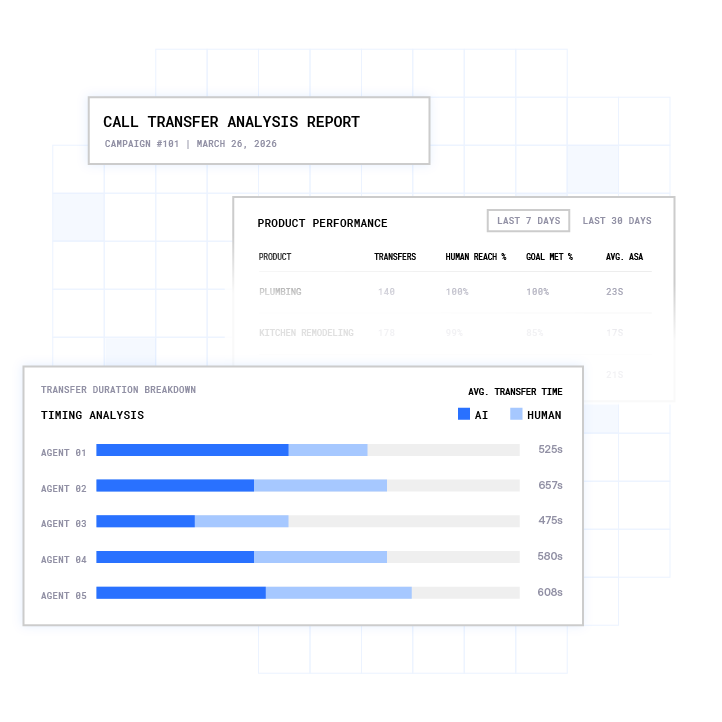
Real-time pacing algorithms track answer rates, average handle times, and agent availability. These controls keep the dial queue moving while avoiding abandoned calls. An FCC document notes that predictive dialers increase agent talk time from roughly 15 minutes per hour to 40-50 minutes per hour.
Plura’s infrastructure runs on its own FCC-licensed carrier, so the audio path from dial initiation to AMD classification carries no third-party latency. The carrier must deliver unmodified G.711 audio with clean answer supervision and consistent sub-3-second post-dial delay so AMD timers align with actual greeting audio. Owning that carrier layer is what makes sub-5-second first contact operationally reliable. However, speed alone is not enough. Without the right compliance infrastructure, fast dialing can create legal exposure that outweighs efficiency gains.
3. Compliance Risks That Scale With Fast Dialing
Speed without compliance infrastructure creates compounding liability. The TCPA (47 U.S.C. § 227) describes rules for automated outbound calls and texts. TCPA violations carry statutory damages of $500 per violation (or actual damages if greater) under 47 U.S.C. § 227(b)(3), rising to $1,500 per willful or knowing violation, with each call or text counted separately and no statutory cap on total liability.2 TCPA violations can cost $500 to $1,500 per text or call.
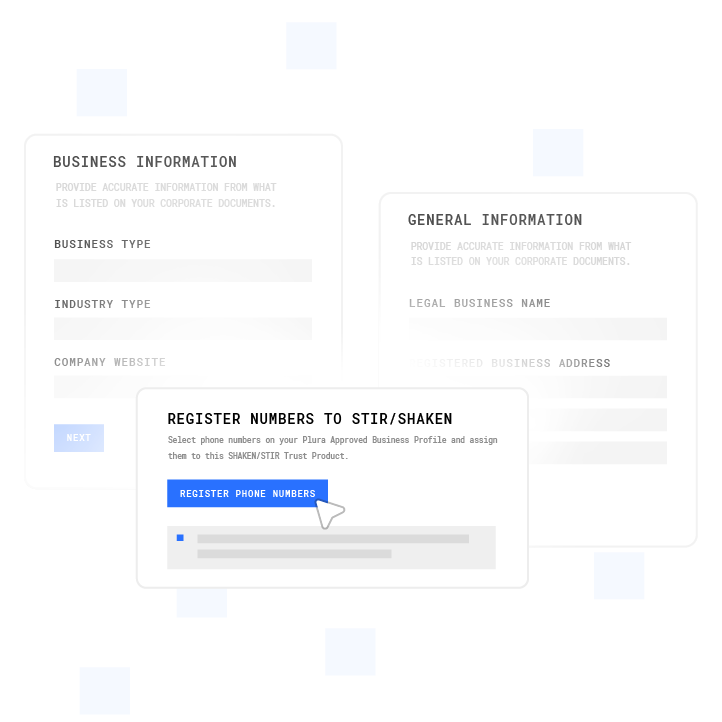
DNC scrubbing is a separate obligation category. Telemarketers must scrub against the National DNC Registry at least every 31 days.2 Beyond the federal registry, businesses must maintain their own internal DNC lists for customers who request removal. These internal lists have specific requirements. Affiliate-marketing opt-out notices must give consumers 30 days to elect to opt out, after which the election must remain effective for at least five years.
Abandoned-call caps add another constraint for predictive dialing. The FTC’s Telemarketing Sales Rule permits a maximum abandoned call rate of 3% for predictive dialers under its safe harbor, measured over the duration of the campaign. Exceeding that threshold can create direct enforcement exposure.
The FCC NPRM (Notice of Proposed Rulemaking, CG Docket No. 26-52) introduces an offshore dimension. The FCC onshoring NPRM proposes percentage limits on offshore customer-service calls and floats an example cap of 30% foreign-staffed volume. Operators that rely on third-party carriers with foreign infrastructure dependencies may face exposure that domestically owned infrastructure avoids by design. Organizations should review the NPRM directly and consult qualified counsel regarding their specific obligations.
4. Carrier Ownership and Infrastructure Advantages
Owning carrier infrastructure changes what is possible for both speed and compliance controls. STIR/SHAKEN authentication and branded caller ID are issued at the carrier level, not the application level. Platforms that route voice through a third-party CPaaS inherit that provider’s attestation posture and have limited control over branded caller ID.
Plura operates its own FCC-licensed audio-bridging carrier. This structure enables A-level STIR/SHAKEN attestation, branded caller ID issuance, and spam-label remediation inside Plura’s network. It also removes extra carrier hops that add latency between dial initiation and connection. That reduction in latency is a key factor in achieving sub-5-second first contact while maintaining clean audio for AMD.
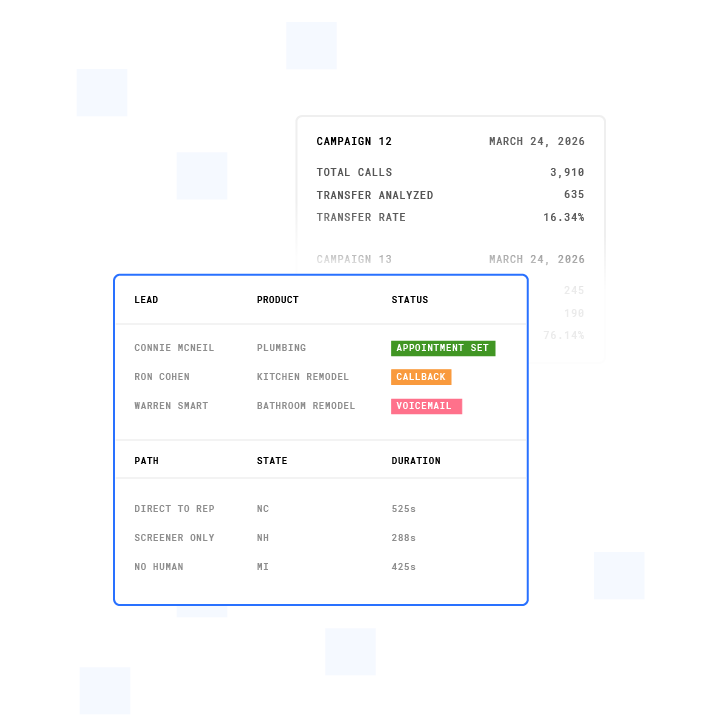
Carrier ownership also supports compliance controls closer to origination. Real-time DNC scrubbing, quiet-hours enforcement, and number-health monitoring can run at the carrier edge instead of only in the application layer. This alignment between infrastructure and policy gives contact center leaders more predictable performance at high volume.
5. Stateful Cross-Channel Follow-Up That Actually Converts
Speed to lead is not a single-channel problem. A lead who does not answer a voice call may respond to an SMS. A lead who replies to a text may convert on a follow-up call. Generic dialers treat each channel as a separate system with no shared memory.
Plura’s Stateful Conversation Database preserves full context across voice, SMS, RCS (Rich Communication Services), and AI webchat. Every interaction is keyed to a customer token, so an agent that texted a lead at 9 a.m. can pick up the call at noon already knowing what was said, what was offered, and what objections were raised. Plura offers omnichannel support for voice, SMS, webchat, and RCS within a unified stateful inbox that maintains full conversation history.
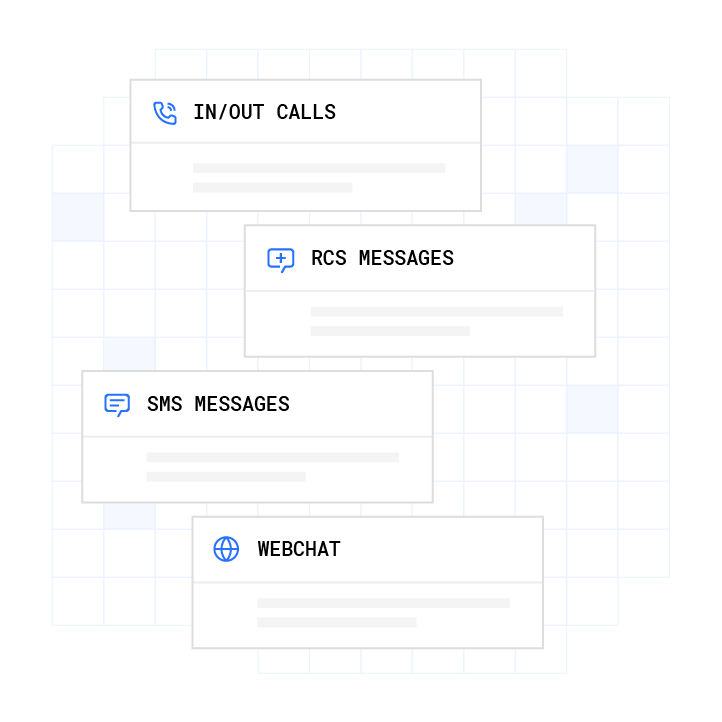
This architecture matters for speed to lead because multi-touch follow-up is where most conversions occur. 93% of all leads that ever convert are reached by the 6th call attempt. Without stateful memory, each of those touches starts from zero. With stateful memory, each touch builds on the last.
6. ROI Calculator Example for a 15-Agent Team
The default scenario on Plura’s ROI calculator uses a 15-agent operation paying $20 per hour with standard taxes, benefits, and commissions, and a 40% talk-utilization rate typical of human contact-center work. That configuration costs $60,000 per month to operate.
Replacing that team with Plura at $15 per hour, 100% talk utilization, and 6 Plura agents doing the work of 15 humans drops the monthly cost to $14,400. The 30-day savings stack to $45,600. Over 12 months, that is $547,200. Over 60 months, $2,736,000.3
For higher-volume operations, the same model produces a total cost of ownership of $300,000 to $700,000 per year against a traditional contact-center benchmark of $4M to $7M. The math is visible in the model. Use the calculator to model your specific operation’s savings potential.
How to Achieve Sub-60-Second Speed to Lead
- Connect your lead sources via webhook. Every form, ad platform, and CRM should fire a real-time webhook the moment a lead submits. Manual queue entry adds minutes before the first dial attempt begins.
- Deploy an AI Predictive Dialer with AMD. AMD (answering machine detection) filters voicemails and disconnected numbers automatically, routing only live answers to agents or AI voice flows. Plura’s AI Predictive Dialer includes AMD with dynamic pacing and timezone logic built in.
- Own or verify your carrier layer. A-level STIR/SHAKEN attestation requires a carrier that can verify your identity and authorize your caller ID. Third-party CPaaS providers cannot issue this at the network level on your behalf.
- Activate branded caller ID. Calls displaying a verified business name and call reason answer at significantly higher rates than unbranded numbers. A TNS survey conducted by Kantar found that 76% of Americans prefer to engage with businesses that use branded calling.4
- Enforce DNC scrubbing before every dial. Real-time scrubbing against federal and state DNC registries, plus TCPA-litigator list filtering, should run before the first call attempt, not as a batch job after the campaign launches.
- Build stateful cross-channel follow-up. Voice, AI SMS, RCS, and webchat should share a single conversation database. Each follow-up touch should inherit the full context of every prior interaction.
- Monitor number health continuously. Spam labels can cut answer rates by 40% to 60% within hours of flagging. Active number-health monitoring and rotation, combined with carrier-level remediation, keep deliverability stable across high-volume campaigns.
Response Time vs. Compliance Posture: A Comparison
| Dialer Type | Typical First-Contact Time | Abandoned-Call Risk | Spam-Label Risk |
|---|---|---|---|
| Manual outbound | ~47 hours industry average | None | Low |
| Power dialer (1:1 ratio) | Seconds after rep availability, event-driven by rep status | None, never dials ahead of an available rep | Lower than parallel or predictive |
| Predictive dialer (third-party carrier) | Sub-minute when paced correctly | FCC cap of 2% per 30-day campaign window | High without DID rotation and A-level STIR/SHAKEN |
| Plura AI Predictive Dialer (owned carrier) | Under 5 seconds to first contact | Real-time pacing with compliance controls enforced at carrier level | A-level STIR/SHAKEN, branded caller ID, and Number Verifier integration per Plura’s platform documentation |
Frequently Asked Questions
What is the difference between a power dialer and an AI predictive dialer?
A power dialer places one call at a time per agent and advances automatically when the prior call ends, maintaining a strict 1:1 ratio with no abandoned-call risk. An AI predictive dialer uses algorithms and historical data on answer rates, handle times, and agent availability to dial multiple numbers ahead of agent availability, which maximizes talk time per hour. Plura’s AI Predictive Dialer combines predictive pacing with AI-driven prioritization based on stateful conversion signals, so the system calls contacts most likely to convert first, not just the next number in a flat list.
How does Plura AI support TCPA and DNC compliance for high-volume outbound dialing?
Plura’s compliance engine runs real-time DNC scrubbing against federal and state registries before every dial attempt. TCPA consent records are timestamped and stored in an immutable ledger. Quiet-hours rules enforce automatically through time-zone detection on each contact. The platform integrates with the Blacklist Alliance’s TCPA Litigation Firewall for real-time litigator screening. Plura supports customer compliance. Customers remain responsible for their own regulatory obligations and consent practices. Organizations with specific TCPA or DNC questions should consult qualified legal counsel.
Why does carrier ownership matter for speed-to-lead and spam labels?
STIR/SHAKEN authentication and branded caller ID are issued at the carrier level, not the application level. Platforms that route voice through a third-party CPaaS inherit that provider’s attestation posture and cannot issue branded caller ID directly. Plura owns its FCC-licensed audio bridging carrier, which means A-level STIR/SHAKEN attestation, branded caller ID issuance, and spam-label remediation all happen within Plura’s own network. That architecture also removes latency introduced by third-party carrier hops, which is part of what enables sub-5-second first contact.
What is the FCC NPRM on offshore call centers, and how does it affect AI dialer operators?
The FCC’s Notice of Proposed Rulemaking (CG Docket No. 26-52), adopted March 26, 2026, proposes percentage limits on offshore customer-service calls for U.S. telecom carriers and floats an example cap of 30% foreign-staffed volume. It also proposes describing restrictions on offshore handling of sensitive consumer data including passwords, multi-factor authentication codes, Social Security numbers, and banking information. AI dialer platforms with foreign infrastructure dependencies may face exposure under this framework. Plura runs on 100% U.S. infrastructure by architecture, covering voice origination, model hosting, data storage, and call recording. Operators should consult legal counsel regarding their specific obligations under the NPRM as it progresses through the rulemaking process.
What ROI can a 15-agent contact center expect from Plura’s AI Predictive Dialer?
Using the default inputs on Plura’s ROI calculator, a 15-agent operation at $20 per hour with standard overhead and 40% talk utilization costs $60,000 per month. Replacing that team with 6 Plura agents at 100% talk utilization costs $14,400 per month, producing $45,600 in monthly savings. Over 12 months that is $547,200. Over 60 months, $2,736,000.3 Higher-volume operations can model a total cost of ownership of $300,000 to $700,000 per year against a traditional contact-center benchmark of $4M to $7M. Every variable in that model is adjustable on the calculator at plura.ai/calculator.
Conclusion
Sub-60-second speed to lead is not a dialer setting. It is an infrastructure decision. Generic dialers that rent their carrier layer from a third-party CPaaS cannot issue branded caller ID at the network level, cannot enforce real-time DNC scrubbing at origination, and cannot maintain stateful conversation context across voice, SMS, RCS, and webchat. The result is faster dialing with higher spam-label risk, higher compliance exposure, and no memory of what was said on the last touch.
Plura’s AI Predictive Dialer is built on owned FCC-licensed carrier infrastructure. Every outbound call carries A-level STIR/SHAKEN attestation and branded caller ID. Every conversation feeds a Stateful Conversation Database shared across all four channels. Real-time DNC scrubbing and TCPA-litigator filtering run before every dial. A 100% U.S. infrastructure by architecture removes offshore exposure under the FCC NPRM and state onshoring laws.
The math is straightforward. The infrastructure question is the only one that matters. Your specific savings are waiting in the calculator, so check them now.
1 Plura AI maintains SOC 2, HIPAA, ISO, and GDPR posture as part of its platform infrastructure. References to compliance frameworks in this article describe Plura’s platform capabilities and do not constitute a guarantee that any customer using Plura will themselves be compliant with applicable laws or standards. Customers remain solely responsible for their own regulatory obligations, certifications, consent management, recordkeeping, and the claims they make to their own end users. Consult qualified legal counsel for guidance specific to your use case.
2 This article describes regulatory frameworks at a general level and does not constitute legal advice. Laws and regulations vary by jurisdiction, change over time, and apply differently depending on facts and circumstances. Readers should consult qualified legal counsel before making compliance decisions.
3 Performance figures, customer outcomes, and industry statistics referenced in this article are drawn from cited third-party sources or Plura customer case studies. Individual results vary based on implementation, use case, industry, audience, and execution. Past or aggregate performance is not a guarantee of future results.
4 References to third-party products, services, companies, or research are made for informational and comparative purposes only. Plura AI is not affiliated with, endorsed by, or sponsored by any third party named in this article unless explicitly stated. Trademarks and product names referenced remain the property of their respective owners.
This article is provided for informational purposes only and reflects Plura AI’s understanding at the time of publication. Product capabilities, integrations, and specifications are subject to change. For the most current information, visit plura.ai.
This article was produced with the assistance of AI tools and reviewed by Plura AI prior to publication.