
Written by: Matt Beucler, CEO, Plura AI
Key Takeaways
- Define qualification rules from 12-24 months of closed-won data before automating to keep lead scoring consistent and accurate.
- Deploy real-time enrichment across 30+ data sources to reach 80-90% fill rates and remove costly manual SDR research.3
- Wire AI voice and SMS agents to qualify leads in under 60 seconds, which delivers 391% higher conversion than 24-hour response times.3
- Set score-based routing thresholds that trigger live transfers, nurture sequences, or disqualifications without human intervention.
- Monitor metrics dashboards and iterate while using Plura AI’s AI-powered qualification platform to scale without adding headcount.
Step 1: Turn Closed-Won Data Into Clear Qualification Rules
Automation enforces whatever rules you give it, so vague criteria create vague results. Start with 12 to 24 months of closed-won data and identify the firmographic, demographic, and behavioral signals that consistently appeared before a deal closed.
Effective B2B lead scoring separates fit and intent into two dimensions instead of collapsing them into a single composite score. Fit appears as a grade from A through D based on ICP match such as company size, industry, job title, and tech stack. Intent appears as a 0 to 100 score based on behavioral signals such as pricing page visits, demo requests, email engagement, and form submissions.
Set MQL and SQL thresholds from your own sales-acceptance data, not industry templates. To identify the right thresholds, bucket scored leads into bands and chart sales acceptance rate plus opportunity conversion per band before finalizing any threshold. Once you have those positive thresholds, address the negative signals that contaminate your queue. Personal email domains, company-size mismatches, competitor employees, and out-of-territory geography should subtract enough points to pull leads out of the MQL queue entirely. Half-measures leave 30 to 40 percent noise for reps to filter manually.
After you codify the criteria, load them into Plura’s no-code workflow builder. Each qualification gate in the workflow references the scoring model directly, so the AI agent applies the same threshold on every contact without interpretation drift. Recalibrate the model at least quarterly, or immediately when MQL-to-SQL conversion drops for two consecutive weeks.
Step 2: Use Real-Time Enrichment Across 30+ Data Sources
Manual lead enrichment costs between $15 and $50 per profile and takes 10 to 30 minutes per lead, driven primarily by SDR labor time. At volume, that math breaks. Automated enrichment starts at $0.01 per record depending on the source and cuts per-lead enrichment costs significantly.
Plura’s AI Lead Intelligence layer pings 30-plus data sources during the first touch across every channel. IP data, firmographics, contact validation, property data, and intent signals arrive during the live conversation, not in a downstream batch job. The benchmark fill rate for primary fields in automated enrichment typically lands between 80 and 90 percent, or 85 percent and higher, when using a multi-vendor waterfall. Below 70 percent, the scoring model runs on incomplete data, and qualification accuracy drops.
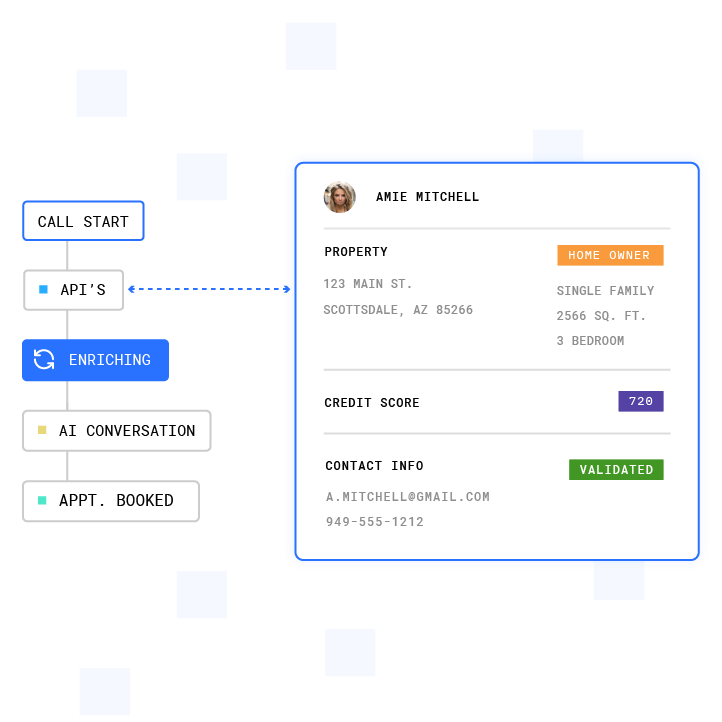
Once enrichment reaches that 80 to 90 percent benchmark, the next step is getting that data into your existing systems. Enrichment connects directly to your CRM through Plura’s integrations with HubSpot, Salesforce, Zoho, and 50-plus other tools. Every enriched field writes back to the lead record in real time, so the rep who receives the live transfer already has a complete profile without touching a data source manually. A solar company using this enrichment approach increased conversion rates from 6 percent to 18 percent with the same leads and offer.3
Run your numbers through Plura’s calculator to check your ROI in real time.
Step 3: Connect AI Voice And SMS Agents For First-Pass Qualification
Speed to lead acts as the single highest-leverage variable in qualification. Leads contacted within one minute are 391 percent more likely to convert than those contacted after 24 hours.3 The industry median first response time for manual qualification is 47 hours. AI qualification systems target sub-60-second response times, and this metric shows the highest correlation with overall qualification success.
Plura deploys two agent types for first-pass qualification.
- AI voice agent: Handles inbound and outbound calls on Plura’s FCC-licensed carrier with 24/7 call answering and no hold queues. The agent greets the caller, runs the qualification script, applies the scoring model in real time, and either books a meeting or routes to a live transfer, all within the first 60 seconds of the call.
- AI SMS agent: Deploys speed to lead via text within seconds of form submission. The agent holds a real qualification conversation over SMS, validates the lead against enrichment data, and when the lead meets the SQL threshold, initiates a live transfer to a human rep. Plura enables lead contact within 60 seconds for every lead, compared to one to four hours in manual operations.
Both agents share the same Stateful Conversation Database, so a lead who texted at 9 a.m. and calls at noon is recognized immediately. The agent picks up with full context, with no re-introduction required. Organizations deploying AI for lead qualification see response times drop from hours to seconds and connection rates increase by three to five times.3
Step 4: Route Qualified Leads Automatically To The Right Reps
Not every qualified lead should go to the same rep or move at the same speed. Routing logic determines whether a live transfer happens, to whom, and with what context attached.
Plura’s managed workflows support score-based routing with configurable thresholds. A lead scoring above the SQL threshold with a verified phone number and a high-intent signal triggers an immediate warm transfer. A lead scoring in the MQL band routes to a nurture sequence. A lead with a negative signal hard-disqualifies and exits the workflow without consuming rep time.
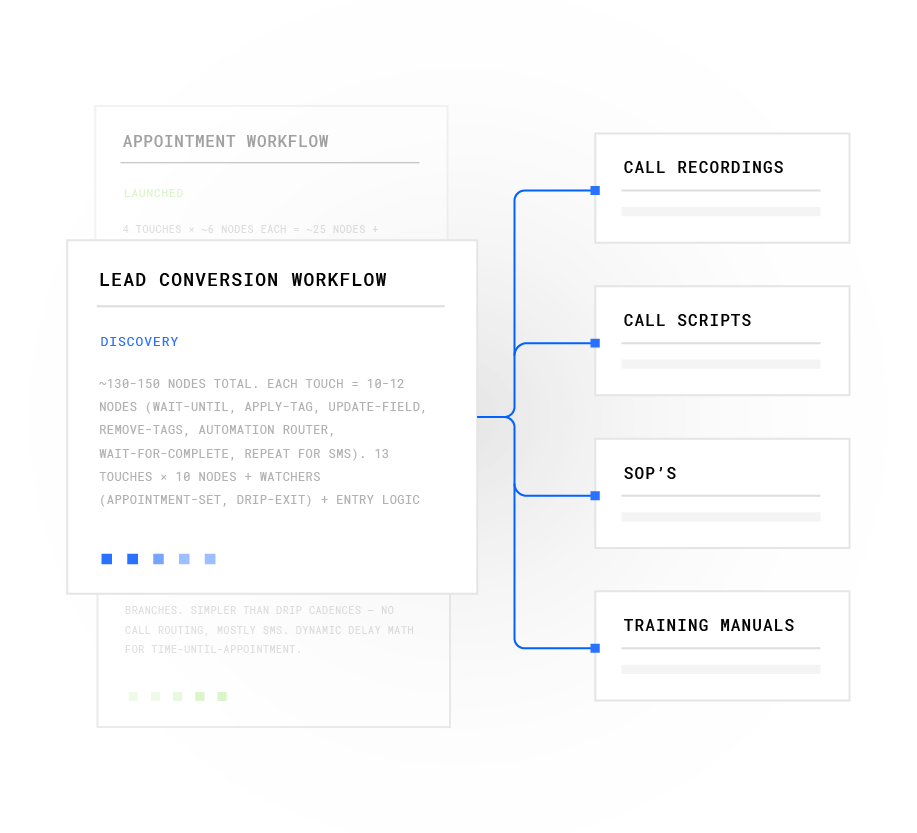
Warm-transfer rules define what the receiving rep hears before the call connects, including the lead’s name, company, score band, enrichment summary, and the qualification questions already answered. AI-qualified leads can move through sales stages faster than manually qualified leads because the rep’s first conversation continues qualification instead of restarting it.
Rep acceptance rate acts as the validation metric for routing logic. The target is 80 percent or higher, and rates below that signal misalignment in the scoring threshold. Those signals require a recalibration of the MQL-to-SQL boundary in the workflow.
Step 5: Track Performance In The Metrics Dashboard And Iterate
A qualification system that is not measured is not managed. Plura’s conversation intelligence layer surfaces the metrics that matter across every channel, updated in real time.
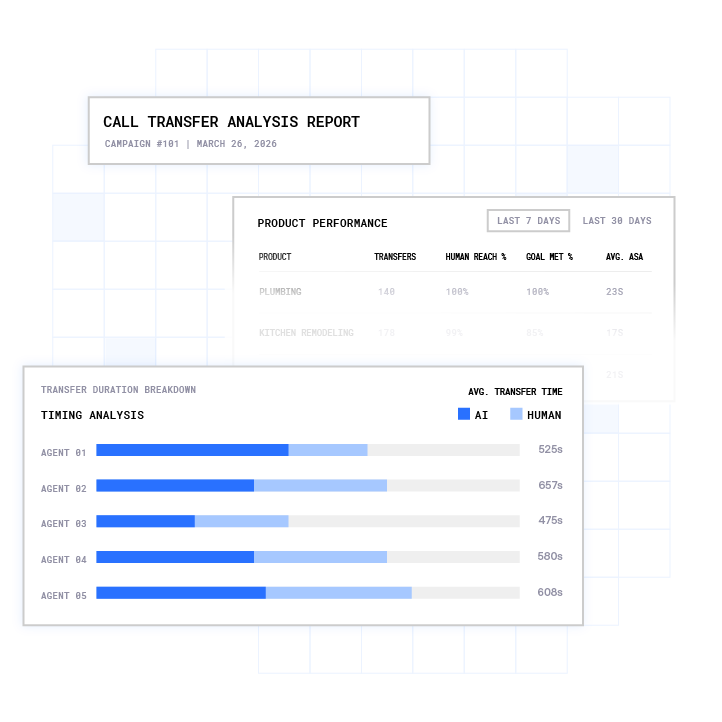
The four metrics that govern qualification performance appear in the table below. Beyond those, business intelligence from Plura identifies which scripts close, which objections recur, and which routing paths produce the highest rep acceptance rates. Those findings feed directly back into the workflow tuning loop.
Marketing directors who switch to AI automation typically reallocate 20 to 30 percent of their team capacity from manual outreach to strategy and creative work3 because the dashboard replaces the manual reporting cycle entirely.
Step 6: Keep Compliance Guardrails In Place At High Speed
High-volume qualification at speed creates more compliance surface area, so guardrails need to sit inside the system. Plura’s compliance engine functions as a first-class layer of the platform, not a bolt-on. Every outbound contact is checked against federal and state DNC registries before dial.2 Consent records are timestamped, immutable, and audit-ready. Quiet-hours rules apply automatically through time-zone detection on the contact record.
Plura supports compliance with SOC 2, HIPAA, ISO certification, GDPR, SHAKEN/STIR caller ID verification, TCPA compliance, and DNC compliance.1 Every outbound voice call authenticates through STIR/SHAKEN at the carrier level. SMS campaigns run on 10DLC-registered numbers with opt-out enforcement on every reply.
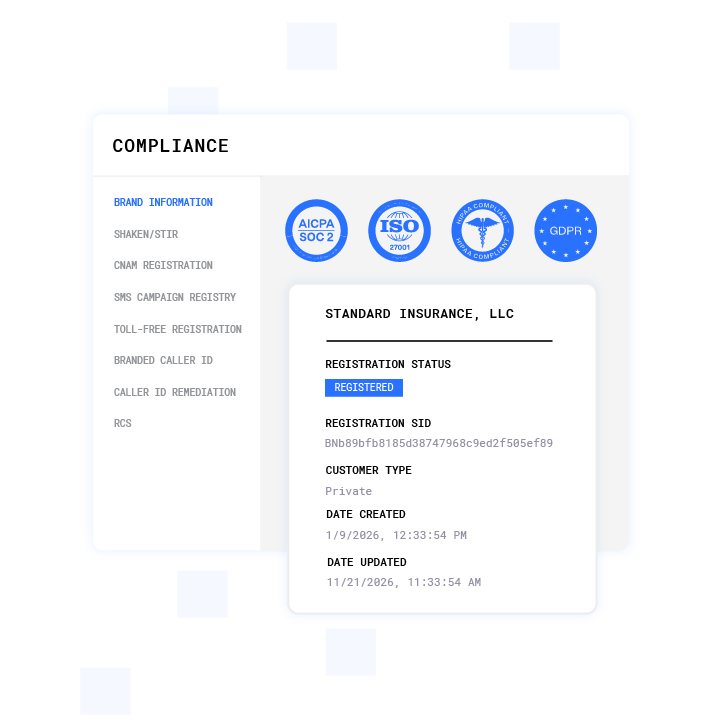
Operators should consult qualified counsel regarding their specific obligations under TCPA, HIPAA, GDPR, DNC, and applicable state regulations. Plura provides the infrastructure, and customers own their downstream compliance posture.
The compliance dashboard exports audit-ready reports in one click for legal review, carrier requirements, or regulatory inquiries. Speed-to-lead and compliance can coexist on this platform. The compliance check runs in milliseconds before the agent dials, so the sub-60-second response window stays intact on every contact.
Comparison Table: How Plura’s Automation Layers Work Together
| Layer | Function | Plura Advantage | Quantified Impact |
|---|---|---|---|
| Enrichment | Appends firmographic, contact, intent, and IP data to every lead at first touch | 30-plus data sources queried in real time during the live conversation, not in a batch job after the fact | typically 80-90% (or 85%+) fill rate for primary fields when using a multi-vendor waterfall, with a significant reduction in per-lead enrichment cost versus manual SDR research |
| Conversational Qualification | AI voice and SMS agents run the qualification script, apply the scoring model, and confirm SQL status in under 60 seconds | Stateful cross-channel memory means the agent inherits full context from every prior touchpoint, and the FCC-licensed carrier removes third-party CPaaS latency | 391 percent higher conversion for sub-60-second response versus 24-hour response, and AI-qualified leads can move through sales stages faster |
| Automated Routing | Score-based rules trigger warm transfer, nurture sequence, or disqualification without human intervention | No-code workflow builder configures routing thresholds, transfer scripts, and post-call CRM actions without engineering | Teams with automated lead routing are more likely to meet their speed-to-lead SLA than teams using manual assignment, and automated routing reduces lead response time by up to 95 percent |
Metrics-To-Watch Table
| Metric | Target | Why It Matters | Source |
|---|---|---|---|
| Time-to-first-contact | Under 60 seconds | The single metric most correlated with qualification success, and every minute of delay reduces connect probability | Creative Complete AI Lead Qualification Guide |
| Lead-to-qualification rate | 15 to 35 percent | Rates below 15 percent indicate criteria are too strict, and rates above 35 percent suggest the MQL threshold is too loose and reps are receiving unqualified transfers | Creative Complete AI Lead Qualification Guide |
| Rep acceptance rate | 80 percent or higher | The primary validation signal for routing logic, and rates below 80 percent indicate the SQL threshold needs recalibration | Creative Complete AI Lead Qualification Guide |
| Cost per qualified lead | $25 to $60 | Measures true qualification efficiency, and a fully loaded human SDR produces qualified leads at $262 each versus $39 with AI qualification3 | Plura AI Marketing Automation Guide |
Frequently Asked Questions
What determines a qualified lead?
A qualified lead meets a predefined combination of fit and intent criteria derived from your own closed-won data. Fit criteria are firmographic and demographic, such as company size, industry, job title, geographic territory, and technology stack. Intent criteria are behavioral, such as pricing page visits, demo requests, form submissions, email engagement, and inbound call activity.
The MQL threshold is the score at which a lead is handed to sales for further qualification. The SQL threshold is the score at which a lead is accepted by sales as ready for a buying conversation. Both thresholds are operational decisions, not industry averages. Teams should set them by analyzing historical conversion rates across score bands and validate them against closed-won and closed-lost data before deployment. Negative signals, such as competitor email domains, student or researcher titles, and repeated careers-page visits, subtract points and prevent poor-fit leads from reaching the sales queue. A functioning model should deliver a three to ten times lift in conversion rate for leads in the top score band compared to an unscored baseline.
How many leads turn into sales?
Without a structured qualification process, conversion rates stay low. Industry data shows that 79 percent of marketing leads never convert to sales, and only 13 percent of B2B leads convert to opportunities at all. The median MQL-to-SQL conversion rate in B2B sits around 13 percent, with observed rates varying by industry, definition, and channel.
AI-driven qualification shifts those numbers materially. AI-qualified leads that reach a sales meeting or proposal stage convert at higher rates than the industry average for unqualified leads reaching a rep. The primary driver is context, because the rep’s first conversation continues qualification instead of restarting it. Speed compounds the effect, and the 391 percent conversion lift mentioned earlier amplifies that advantage. Organizations with formal qualification processes convert at 63% higher rates than those without.
Conclusion
The six-step playbook above replaces the manual SDR queue with a system that enriches, qualifies, and live-transfers leads in under 60 seconds at any volume without adding headcount. Step one codifies the qualification rules. Step two deploys real-time enrichment. Step three connects AI voice and SMS agents for first-pass qualification. Step four routes qualified leads automatically. Step five tracks performance in the metrics dashboard and iterates. Step six keeps compliance guardrails in place at high speed.
Plura owns the FCC-licensed carrier stack, the stateful cross-channel memory, and the real-time compliance engine that make this possible at scale. The total cost of ownership runs $300,000 to $700,000 per year, replacing the $4 million to $7 million traditional contact-center cost structure on equivalent volume.3 The math sits in plain view.
Run your numbers through Plura’s calculator to check your ROI in real time. When you are ready to see the platform in action, compare plans and rates side by side at plura.ai/pricing.
1 Plura AI maintains SOC 2, HIPAA, ISO, and GDPR posture as part of its platform infrastructure. References to compliance frameworks in this article describe Plura’s platform capabilities and do not constitute a guarantee that any customer using Plura will themselves be compliant with applicable laws or standards. Customers remain solely responsible for their own regulatory obligations, certifications, consent management, recordkeeping, and the claims they make to their own end users. Consult qualified legal counsel for guidance specific to your use case.
2 This article describes regulatory frameworks at a general level and does not constitute legal advice. Laws and regulations vary by jurisdiction, change over time, and apply differently depending on facts and circumstances. Readers should consult qualified legal counsel before making compliance decisions.
3 Performance figures, customer outcomes, and industry statistics referenced in this article are drawn from cited third-party sources or Plura customer case studies. Individual results vary based on implementation, use case, industry, audience, and execution. Past or aggregate performance is not a guarantee of future results.
This article is provided for informational purposes only and reflects Plura AI’s understanding at the time of publication. Product capabilities, integrations, and specifications are subject to change. For the most current information, visit plura.ai.
This article was produced with the assistance of AI tools and reviewed by Plura AI prior to publication.