Text-to-Call Trends 2026: AI, Compliance, and Live Transfers
ON THIS PAGE
Written by: Matt Beucler, CEO, Plura AI
Updated August 2026
Key Takeaways for High-Volume Text-to-Call Teams
Text-to-call has shifted from a novelty to the primary conversion engine for high-volume teams, enabling warm live transfers in under five seconds.
Static SMS blasts create cold leads and compliance risk. Modern AI agents run two-way conversations that qualify prospects before handing them to human reps.
Carrier ownership now shapes compliance. Platforms with FCC-licensed infrastructure can enforce real-time DNC/TCPA controls, issue branded caller ID, and authenticate calls through STIR/SHAKEN at origination.
Regulatory pressure is rising with the FCC NPRM, state onshoring laws, and mandatory 10DLC registration, turning U.S.-based infrastructure into a competitive requirement.
The industry average for first contact on an inbound lead now sits at more than 47 hours.3 That delay explains why most SMS campaigns generate cold leads instead of closed deals. Operators send a blast, wait for replies, then route interested contacts into a dialer queue staffed by agents who are already on other calls. By the time a human connects, the prospect’s intent has cooled or shifted to a competitor.
The economics compound the timing problem. TCPA violations can cost $500 to $1,500 per text or call, and that exposure multiplies across every message in a non-compliant campaign.2 Twilio-wrapper tools and offshore BPOs add a second layer of risk.4 They do not own the carrier, cannot issue branded caller ID at the carrier level, and cannot enforce real-time DNC scrubbing before a message or call originates. The compliance posture sits outside the platform, so the operator absorbs the liability.
Regulatory pressure tightens that exposure further. The FCC’s Notice of Proposed Rulemaking (CG Docket No. 26-52) proposes capping offshore customer-service calls at 30% and limiting offshore handling of sensitive consumer data.2 Companion legislation including the Keep Call Centers in America Act (S.2495) and the Foreign Robocall Elimination Act (S.2666) extends the federal regulatory perimeter. State laws in New York, New Jersey, Connecticut, Missouri, and Florida already restrict offshore handling of medical, financial, and consumer data. Every offshore vendor contract a covered entity holds now represents a compliance liability on the balance sheet.
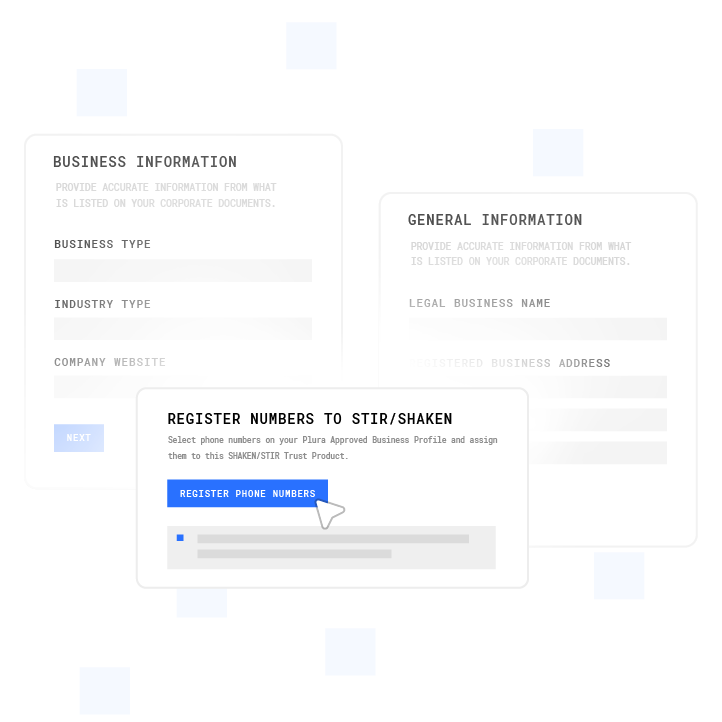
Plura’s FCC-licensed AI communications platform simplifies compliant business registration and phone number provisioning for AI Voice, SMS, RCS, and Webchat workflows.
iOS call screening and spam labels add the final pressure. Calls that originate from unregistered numbers or third-party CPaaS infrastructure often arrive labeled “Spam Likely” or get intercepted before they ring. The result is that 88% of outbound effort goes unanswered without a platform that can address the problem at the carrier level.
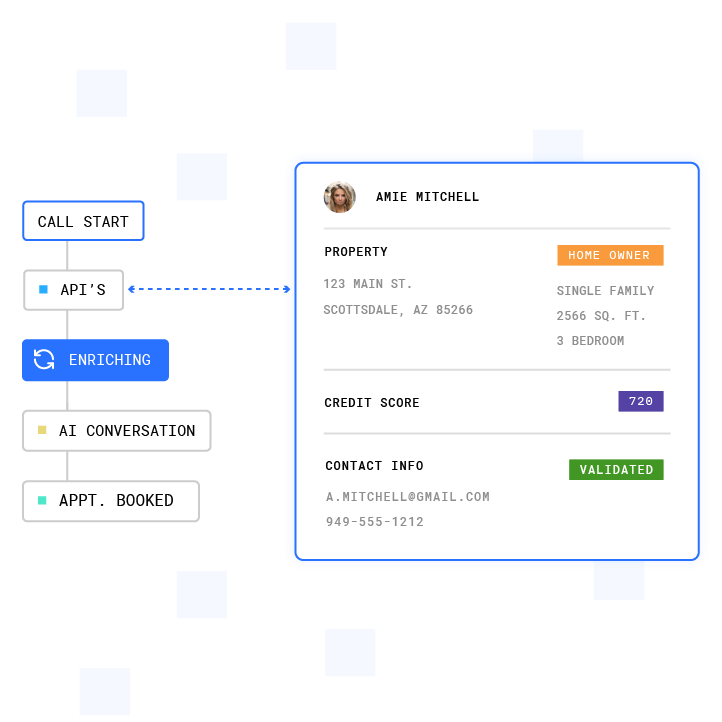
Plura Lead Intelligence enriches customer data with AI-powered insights, validation, and lead qualification to improve conversion performance.
No-show reduction follows the same pattern. Plura’s AI-orchestrated reminder and confirmation flows deliver up to 40% improvement in no-show rates3 for operators running appointment-based workflows.
Branded caller ID after text now drives answer rates. When an AI agent texts a lead and then places a follow-up call, that call needs a recognizable name and reason for calling. iOS 26 call screening intercepts unfamiliar numbers before they ring through. Platforms that cannot issue branded caller ID at the carrier level cannot solve this problem. Plura issues branded caller ID directly through its FCC-licensed carrier, so the call that follows the text presents with the operator’s name instead of an unknown number.
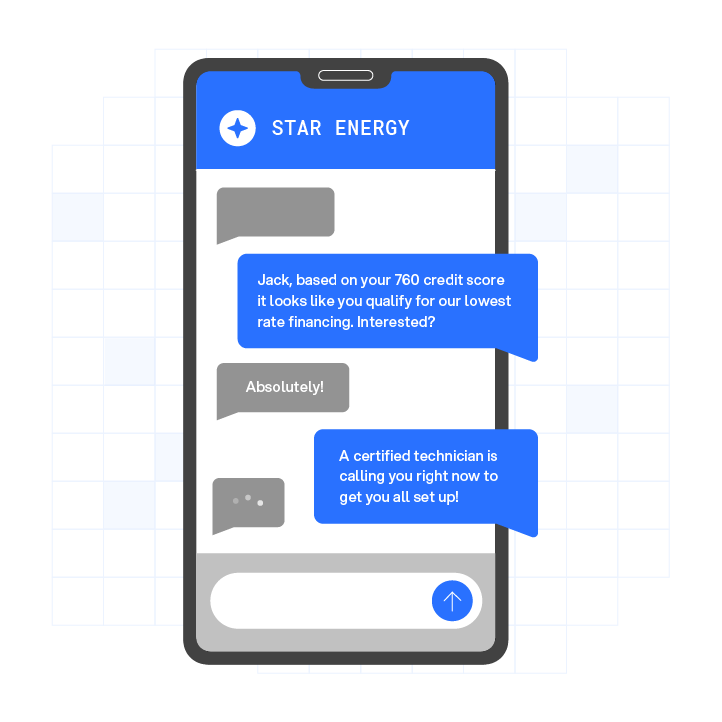
Plura’s AI SMS platform contacts leads in under five seconds, runs the qualification conversation, and places the live transfer call before a human SDR finishes reading the lead notification email.
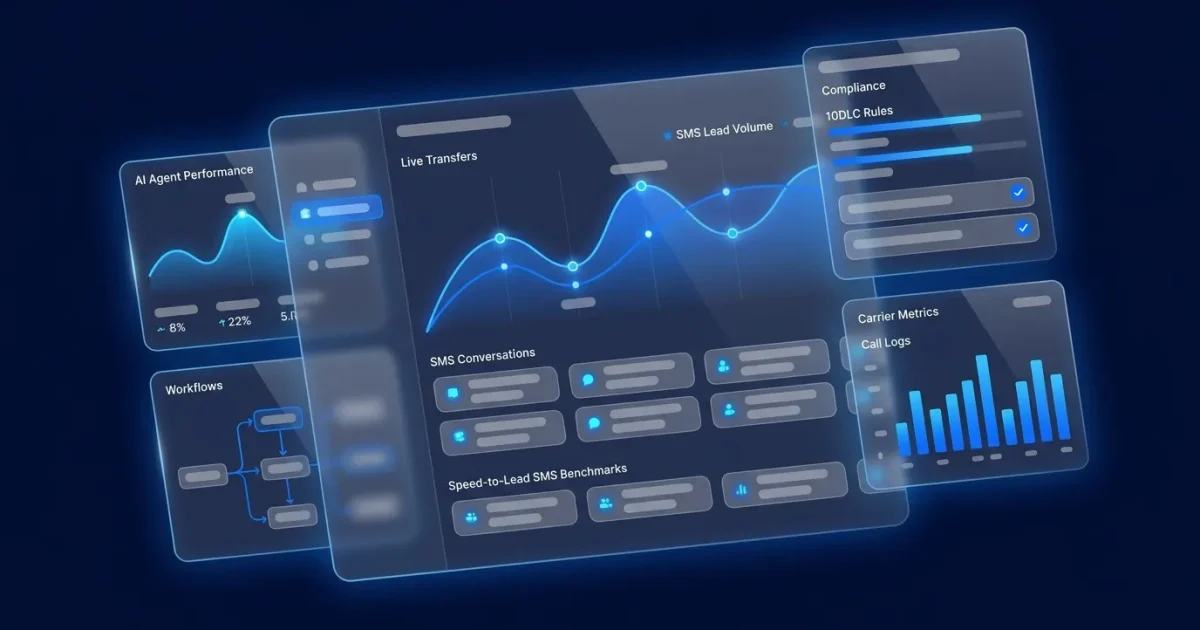
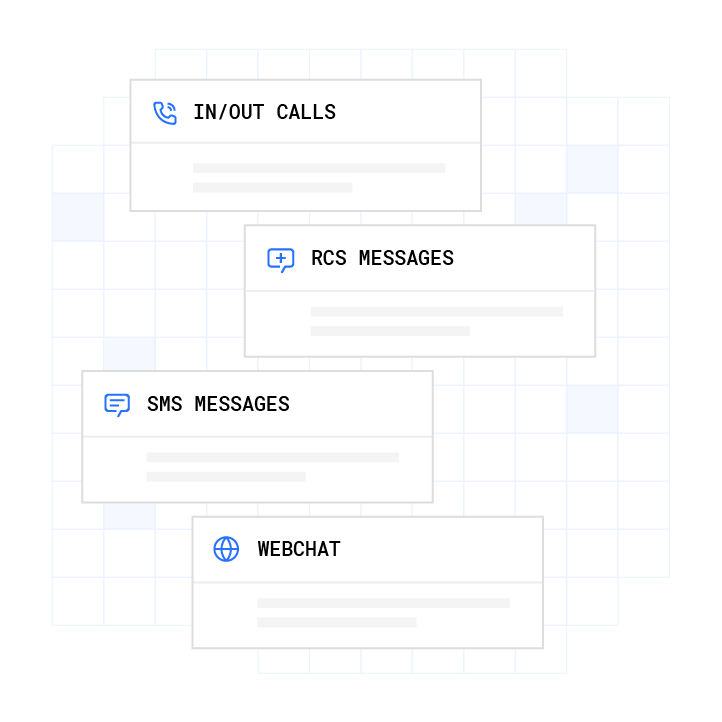
Plura Unified Inbox centralizes AI Voice, SMS, RCS, and Webchat conversations into one streamlined omnichannel communication workspace.
10DLC, CTIA Rules, and Branded Caller ID After Text
Carrier registration requirements for A2P (application-to-person) SMS tightened materially in late 2024. Since December 1, 2024, AT&T, T-Mobile, and Verizon block unregistered A2P traffic from 10-digit local numbers, which makes 10DLC brand and campaign registration mandatory for business SMS delivery through The Campaign Registry.2
For text-to-call workflows, 10DLC registration governs whether the carrier network delivers the initial SMS. Branded caller ID governs whether the follow-up voice call is answered. Platforms that rent carrier access from a third-party CPaaS cannot control either layer independently. Plura operates its own FCC-licensed carrier, so 10DLC registration, branded caller ID issuance, and STIR/SHAKEN authentication all run on infrastructure Plura owns rather than infrastructure it rents.
How the FCC NPRM Shapes Text-to-Call Infrastructure
The FCC’s NPRM in CG Docket No. 26-52 proposes a 30% cap on offshore customer-service calls and a prohibition on offshore handling of sensitive consumer data, including passwords, multi-factor authentication codes, Social Security numbers, banking data, and card data. The Keep Call Centers in America Act (S.2495) and the Foreign Robocall Elimination Act (S.2666) extend the federal regulatory perimeter further.
State-level restrictions are already in effect. New York’s Call Center Jobs Act carries penalties up to $10,000 per day. New Jersey, Connecticut, Missouri, and Florida have enacted parallel restrictions on offshore handling of medical, financial, and consumer data. Operators using AI tools built on foreign infrastructure, or routing calls through offshore BPOs, face compliance exposure under each of these frameworks.
The FCC’s July 2026 Further Notice on the Robocall Mitigation Database, combined with its KYC and KYUP rulemakings, pushes originating and upstream voice providers toward continuous verification of robocall mitigation plans, STIR/SHAKEN tokens, and provider legitimacy.
Plura runs on 100% U.S. infrastructure by architecture. Voice origination, model hosting, data storage, and call recording all sit on domestic infrastructure. That design choice removes the need for clients to trace data paths across foreign data centers when they prepare broadband consumer label disclosures.
Carrier ownership determines where compliance is enforced. Platforms built as wrappers on top of third-party CPaaS providers like Twilio cannot enforce real-time DNC scrubbing, issue branded caller ID, or authenticate calls through STIR/SHAKEN at the origination point because they do not control the origination layer. That architectural limitation forces compliance to be either bolted on after the fact or delegated entirely to the operator.
Plura eliminates that gap by owning its FCC-licensed audio bridging carrier. This structure moves DNC scrubbing, TCPA consent enforcement, STIR/SHAKEN authentication, and branded caller ID issuance to the carrier level before a call or text originates. Plura’s framework includes SOC 2 infrastructure, TCPA and STIR/SHAKEN enforcement, integration with Blacklist Alliance for DNC screening, and Number Verifier for caller ID reputation.1 Customers remain responsible for their own regulatory obligations. Plura provides the infrastructure that supports compliance operations.
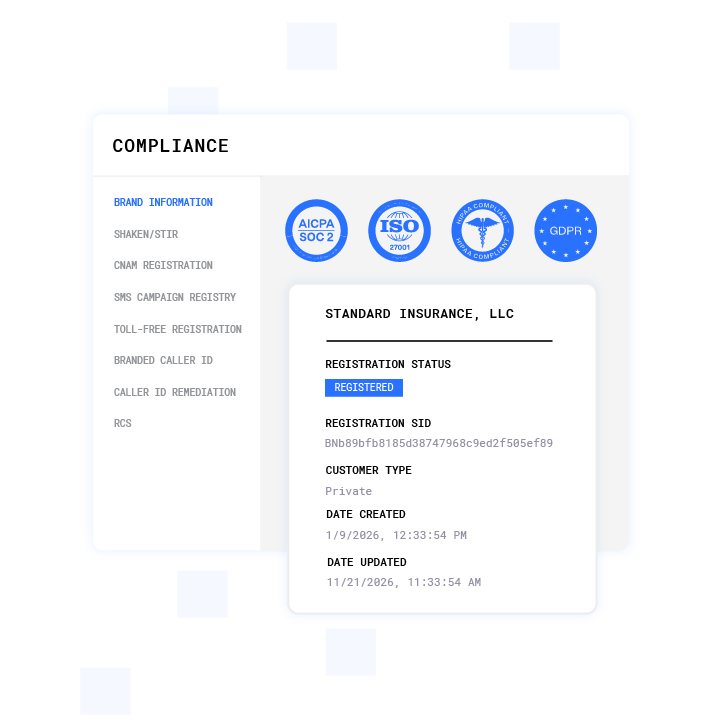
Plura Security & Compliance supports SOC 2, ISO, and GDPR standards with trust registration, verification management, and secure AI communications.
1
Frequently Asked Questions
What is text-to-call and how does it work in 2026?
Text-to-call describes a workflow in which an AI agent initiates contact with a lead via SMS, conducts a qualification conversation, and then places an outbound voice call to transfer a warm, qualified buyer to a human representative. In 2026, the most effective implementations run this entire sequence in under five seconds from the moment a lead submits a form or triggers a campaign. The AI reads the lead’s data, opens a two-way text conversation, qualifies the contact against defined criteria, and places the transfer call without human intervention. Plura’s AI SMS platform executes this flow on its own FCC-licensed carrier infrastructure, with stateful memory shared across the text and voice legs of the conversation so the receiving agent has full context before the call connects.
What does 10DLC compliance require for text-to-call campaigns in 2026?
10DLC (10-digit long code) registration requires businesses sending A2P SMS through U.S. carriers to register their brand and each messaging campaign with The Campaign Registry before sending. Since December 1, 2024, AT&T, T-Mobile, and Verizon block unregistered A2P traffic from 10-digit local numbers. For text-to-call workflows, this means the SMS leg of the campaign must be registered and vetted at the carrier layer, not only consented to under TCPA.
CTIA Messaging Principles, now mandatory for carrier network access, require documented consent disclosures, privacy policies, and opt-out instructions that extend beyond TCPA’s baseline requirements. Operators should consult qualified counsel to evaluate their specific campaign structure against both TCPA and CTIA standards. Plura’s AI SMS platform operates on 10DLC-registered numbers with TCPA consent management and real-time DNC scrubbing built into the platform to support compliance operations.
How does the FCC NPRM in CG Docket No. 26-52 affect text-to-call operators?
The FCC’s NPRM in CG Docket No. 26-52 proposes a 30% cap on offshore customer-service calls and a prohibition on offshore handling of sensitive consumer data. For operators running text-to-call workflows through offshore BPOs or AI tools with foreign infrastructure dependencies, this proposed rule creates compliance exposure that does not apply in the same way to platforms built on 100% U.S. infrastructure. Companion legislation at the federal level and active state laws in New York, New Jersey, Connecticut, Missouri, and Florida extend the regulatory perimeter further.
Operators should consult qualified counsel to assess their current vendor contracts against these frameworks. Plura runs on 100% U.S. infrastructure by architecture, which means voice origination, model hosting, data storage, and call recording all sit on domestic infrastructure.
What is the conversion difference between a 60-second AI response and a 30-minute human response?
As noted in the benchmarks section above, the 2007 InsideSales.com/MIT study found that calling within five minutes raised contact odds 100× versus 30 minutes. Recent vendor reports cite 55–80% first-attempt answer rates for AI callers within 60 seconds versus about 28% at five minutes. Leads contacted within one minute are 391% more likely to convert than those contacted after 24 hours. These benchmarks explain why the industry average of more than 47 hours for first contact produces the conversion rates most operators currently accept as normal. Plura’s AI SMS and AI voice agent platform contacts leads in under five seconds, which is the infrastructure requirement for reaching these conversion benchmarks consistently at scale.
Why does carrier ownership matter for text-to-call compliance?
Carrier ownership determines where compliance is enforced. Platforms built as wrappers on top of third-party CPaaS providers like Twilio cannot enforce real-time DNC scrubbing, issue branded caller ID, or authenticate calls through STIR/SHAKEN at the origination point because they do not control the origination layer. That limitation forces compliance to be bolted on after the fact or delegated to the operator.
Plura owns its FCC-licensed audio bridging carrier, which means DNC scrubbing, TCPA consent enforcement, STIR/SHAKEN authentication, and branded caller ID issuance all happen at the carrier level before a call or text originates. Plura’s framework includes SOC 2 infrastructure, TCPA and STIR/SHAKEN enforcement, integration with Blacklist Alliance for DNC screening, and Number Verifier for caller ID reputation. Customers are responsible for their own regulatory obligations. Plura provides the infrastructure that supports compliance operations.
Conclusion: Moving From Static Blasts to Live Transfers
Static SMS blasts now produce cold leads, regulatory exposure, and collapsing pickup rates. Operators who are closing deals in 2026 run AI-orchestrated text-to-call flows that contact leads in under five seconds, qualify them through a two-way conversation, and deliver warm live transfers to human reps before a competitor’s dialer has finished loading the contact record.
The infrastructure requirement for executing this at scale is not a faster SMS tool. It is a platform that owns the carrier stack, enforces controls at origination, maintains stateful memory across every channel, and runs on 100% U.S. infrastructure. Plura AI is built to that specification. The FCC NPRM, state onshoring laws, 10DLC carrier enforcement, and iOS call screening now define the operating environment.
For operators ready to see the platform in action, book a live demo with Plura and walk through a live text-to-call workflow on Plura’s own carrier infrastructure.
1 Plura AI maintains SOC 2, HIPAA, ISO, and GDPR posture as part of its platform infrastructure. References to compliance frameworks in this article describe Plura’s platform capabilities and do not constitute a guarantee that any customer using Plura will themselves be compliant with applicable laws or standards. Customers remain solely responsible for their own regulatory obligations, certifications, consent management, recordkeeping, and the claims they make to their own end users. Consult qualified legal counsel for guidance specific to your use case.
2 This article describes regulatory frameworks at a general level and does not constitute legal advice. Laws and regulations vary by jurisdiction, change over time, and apply differently depending on facts and circumstances. Readers should consult qualified legal counsel before making compliance decisions.
3 Performance figures, customer outcomes, and industry statistics referenced in this article are drawn from cited third-party sources or Plura customer case studies. Individual results vary based on implementation, use case, industry, audience, and execution. Past or aggregate performance is not a guarantee of future results.
4 References to third-party products, services, companies, or research are made for informational and comparative purposes only. Plura AI is not affiliated with, endorsed by, or sponsored by any third party named in this article unless explicitly stated. Trademarks and product names referenced remain the property of their respective owners.
5 This article contains forward-looking statements regarding industry trends, technology adoption, and future capabilities. These statements reflect current expectations and are subject to change. Plura AI undertakes no obligation to update forward-looking statements except as required.
This article is provided for informational purposes only and reflects Plura AI’s understanding at the time of publication. Product capabilities, integrations, and specifications are subject to change. For the most current information, visit plura.ai.
This article was produced with the assistance of AI tools and reviewed by Plura AI prior to publication.