

Written by: Matt Beucler, CEO, Plura AI | Last updated: August 25, 2026
Key Takeaways
- Traditional contact centers allocate 60–70% of operating costs to agent labor, with 100-seat operations costing $4M–$7M annually versus $300K–$700K for AI-powered platforms.3
- Plura AI’s ROI formula is (Human TCO – Plura TCO) ÷ Plura TCO, delivering $700K annual TCO versus the $7M traditional benchmark for equivalent volume.
- Enterprise CX programs in 2026 report median tier-1 deflection rates of 41.2%, with top-quartile programs reaching 58.7% and payback periods of 2.8–3.2 months.
- AI voice agents cost $0.20–$0.55 per call versus $5.80–$11.40 for U.S. human agents, with 100% talk utilization versus 40% for human agents.
- Start calculating your own ROI with Plura AI’s free webchat tool to see real-time savings for your operation.
Executive Summary and ROI Framework
Traditional contact-center economics rely on a linear cost structure where more volume requires proportional headcount. Contact centers allocate 60–70% of operating costs to agent labor, and that ratio does not improve as volume grows. For a 100-seat operation, traditional operations cost $4 million to $7 million annually, while AI-powered communications platforms cost $300,000 to $700,000.
The ROI calculation has three inputs: human TCO, AI platform TCO, and the deflection rate that determines how much volume the AI handles without human escalation. The sections below build each input from 2026 benchmarks and apply them across three scenarios.
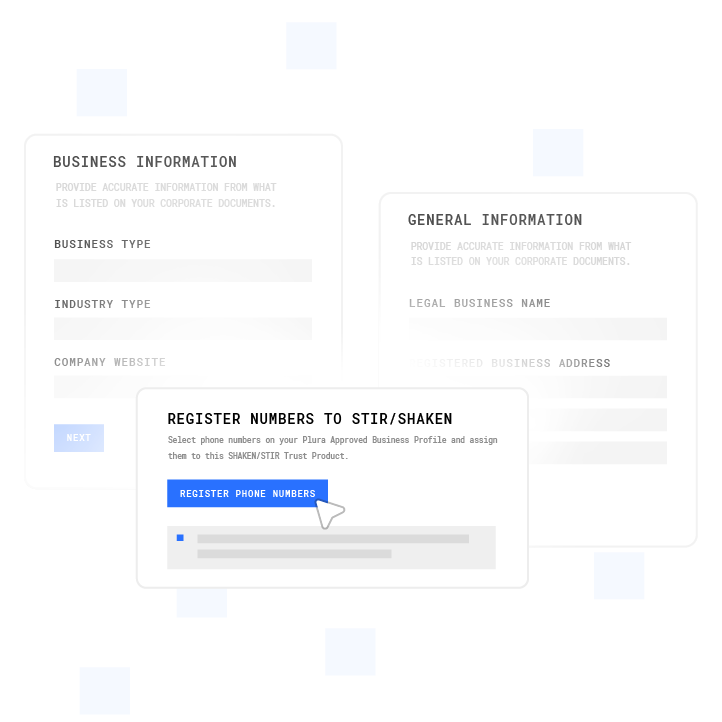
Readers need a clear view of Plura AI’s architecture because that structure drives both cost and risk in the ROI model. Plura AI is an FCC-licensed platform running AI voice agents, AI SMS, AI RCS, and AI webchat on 100% U.S. infrastructure. Unlike Twilio-based API resellers, Plura owns its carrier stack, issues branded caller ID at the carrier level, and enforces TCPA compliance, DNC compliance, and SHAKEN/STIR caller ID verification inside the platform before each outbound contact.2
How to Calculate ROI for AI Agents
The core formula is simple: ROI = (Human TCO – AI TCO) ÷ AI TCO. Payback period equals AI TCO divided by monthly savings.
Five inputs matter most in that calculation:
- Human agent fully loaded cost per hour. Domestic contact center agents cost $15–$25 per hour before benefits and overhead. U.S.-based agents cost $5.80–$11.40 per call.
- Talk utilization rate. Human agents average 40% talk utilization. AI agents run at 100%. At default calculator inputs, 15 human agents at $20/hour with 25% taxes/benefits and 40% talk utilization cost $60,000/month, while 6 Plura agents at 100% utilization cost $14,400/month for equivalent volume.
- Deflection rate. Enterprise CX programs in 2026 report a median tier-1 deflection rate of 41.2%, with the top quartile reaching 58.7%, per Zendesk CX Trends 2026 and Salesforce State of Service 2026 data.4
- Per-call cost differential. In 2026, production Voice AI costs $0.20–$0.55 per inbound call while US in-house human agents cost $5.80–$11.40 per call.
- Compliance cost exposure. TCPA violations carry $500–$1,500 penalties per call, with no statutory cap on class action exposure. These potential penalties belong in the TCO discussion.
Run your numbers through Plura’s calculator to check your ROI in real time.
Industry Landscape: 2026 Deflection Benchmarks and Per-Call Costs
AI voice agents cost less per minute all-in than outsourced human agents for inbound calls, with costs varying by provider and region. On a standard 4-minute call, this difference translates into a materially lower cost per contact for AI versus outsourced human agents.
Per-call cost is only half of the ROI equation, and deflection rate determines how many calls qualify for that lower AI cost. Simple, high-volume intents achieve 70%+ deflection rates, while nuanced complaints and billing disputes rarely exceed 25%. Operators planning a deployment should segment their call mix before projecting deflection. In regulated industries such as finance and healthcare, realistic early-stage deflection rates run 25–45%.
Voice AI ROI benchmarks highlight the value of a low cost per AI-handled call for strong returns. Gartner’s customer service benchmarks report the median cost per contact at $1.84 for self-service channels and $13.50 for assisted channels.
AI Agent Payback Periods in Contact Centers
Enterprise inbound voice AI deployments achieve a median payback period of 2.8 months (enterprises) to 3.2 months (mid-market), per IDC’s 2025 research. High-cost-per-lead sectors like legal and insurance often reach payback in 30 to 45 days due to revenue recovery from automated calls.
Forrester Total Economic Impact studies show strong Year-1 ROI and varying payback periods for AI customer service deployments. Industry benchmarks consistently indicate substantial Year 1 ROI for average and best-in-class AI deployments.
Strategic Cost and Capacity Trade-offs
AI agents deliver logarithmic cost scaling instead of linear scaling. The cost of handling call 10,000 matches the cost of handling call 1. Human operations require new headcount and management layers as volume grows. Call center agent turnover runs 30–45% annually industry-wide, with replacement costs of $10,000–$20,000 per agent when including recruitment, training, lost productivity, and ramp-up time.
Call complexity defines where AI fits. AI voice agents resolve Tier 1 repetitive calls at a cost measured in cents per minute, enabling a hybrid model where automation handles routine volume and a smaller human team manages complex or sensitive interactions. Roughly 60–70% of inbound contact center calls are routine and follow predictable patterns suitable for AI automation.
Current Best Practices for AI Agent ROI
Operators achieving top-quartile deflection rates follow three consistent practices.
- Segment call intent before deployment. Map your inbound call mix by intent type, because this mapping determines which deflection rate to use in your ROI model. High-structure intents such as appointment confirmations, order status, and account balances typically deflect at 65–80%, while sentiment-heavy intents such as complaints and billing disputes deflect at 19–34%. Refund and password-reset intents deflect at 70%+ and simple intents like password resets and order tracking deflect at 69–78%, per 2026 Zendesk CX Trends and Salesforce State of Service benchmarks.
- Integrate CRM from day one. Direct CRM integration removes time human agents usually spend on post-call manual data entry and improves lead routing accuracy. Plura’s integrations include HubSpot, Salesforce, and Zoho out of the box.
- Iterate the conversation workflow continuously. Incremental improvements in resolution rate shorten payback periods. Plura’s managed workflows and conversation intelligence layer surface objection patterns and conversion gaps that drive those gains.
Implementation Readiness Assessment
Operators should confirm four readiness factors before projecting ROI.
- Volume floor. AI voice agent deployments typically reach ROI-positive status at sufficient monthly volumes. Enterprise teams achieve payback in under 3 months per IDC-Forrester TEI data. Below 500 daily interactions, ROI potential is thinner.
- Call mix documentation. A sample of 200–500 call recordings or transcripts is usually sufficient to map intent distribution and project realistic deflection rates.
- CRM and telephony integration readiness. Plura connects to 50+ tools across CRM, calendar, and data enrichment categories. Operators with clean CRM data see faster time-to-value.
- Compliance posture. Operators in regulated verticals such as healthcare, financial services, insurance, and legal should review their TCPA compliance, DNC compliance, and HIPAA obligations with qualified counsel before deployment. Plura provides infrastructure that supports compliance, including automated DNC scrubbing, consent management, and SHAKEN/STIR verification, but these tools do not change the operator’s own regulatory obligations. Downstream compliance posture, including how you obtain consent and what claims you make to end users, remains your responsibility.
Common Pitfalls in AI Agent ROI Models
Most AI agent ROI models fail for a small set of predictable reasons.
- Using vendor demo deflection rates. Real-world deflection rates average a median of 41.2%, well below the 60–80% figures commonly shown in vendor demos. Model the conservative scenario first.
- Ignoring turnover costs in the human baseline. Contact center attrition rates range from 30% to 45% annually (with some sectors exceeding 60%), with replacement costs of $10,000 to $20,000 per agent. These costs belong in the human TCO, not as a footnote.
- Omitting compliance cost exposure. TCPA penalties for violations involving AI-generated voice reach $500 per violation for standard claims and $1,500 for willful violations, with no statutory cap on class action exposure. A single campaign error can erase months of savings.
- Choosing a platform that does not own its carrier stack. Twilio-based API resellers cannot issue branded caller ID at the carrier level, cannot enforce real-time DNC scrubbing before dial, and often rely on foreign infrastructure that creates FCC NPRM exposure. Those risks belong in the TCO model.
Compliance Cost Exposure Under the FCC NPRM
The FCC’s Notice of Proposed Rulemaking (CG Docket No. 26-52), released in March 2026, describes potential limits on the use of offshore customer-service calls and potential restrictions on offshore handling of sensitive consumer data. Companion legislation includes the Keep Call Centers in America Act (S.2495) and the Foreign Robocall Elimination Act (S.2666).
State-level exposure already affects contact center strategy. New York’s Call Center Jobs Act carries penalties up to $10,000 per day. New Jersey, Connecticut, Missouri, and Florida have enacted or advanced companion restrictions on offshore handling of medical, financial, and consumer data. Operators with offshore BPO contracts or AI tools running on foreign infrastructure should consult qualified counsel on their exposure under these frameworks.
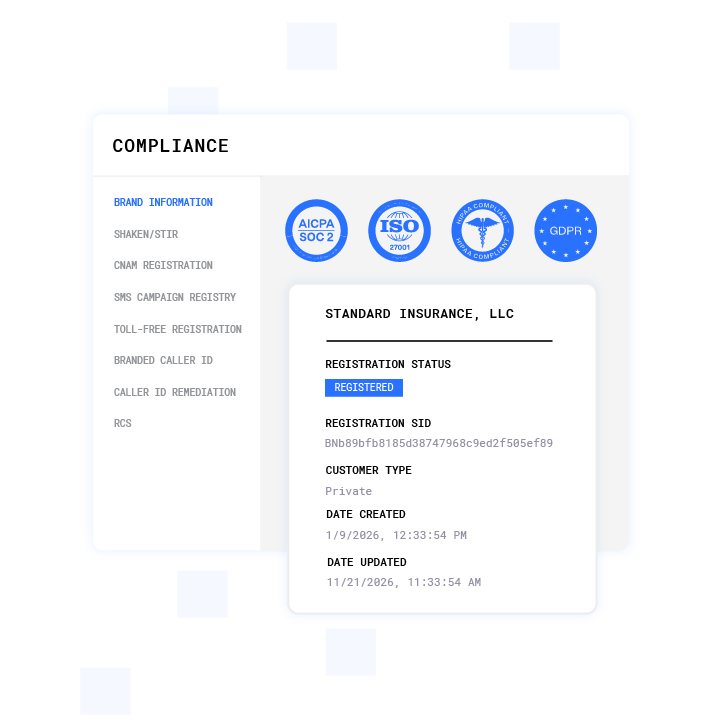
Plura runs on 100% U.S. infrastructure by architecture. Voice origination, model hosting, data storage, and call recording all sit on domestic infrastructure. The platform supports TCPA compliance, DNC compliance, HIPAA, SOC 2, ISO certification, GDPR, and SHAKEN/STIR caller ID verification on every outbound contact.1 Plura automatically enforces TCPA rules, DNC list checks, calling window restrictions, and consent requirements on every interaction. Operators are responsible for their own compliance obligations, and Plura provides the supporting infrastructure.
Cost and Risk Comparison: Plura vs. Alternatives
The table below compares Plura’s total cost of ownership, infrastructure control, and regulatory exposure with generic AI resellers, offshore BPO, and onshore human operations. This side-by-side view shows how carrier-level ownership and U.S. infrastructure reduce both per-call costs and compliance risk in the ROI model.
| Metric | Plura AI | Generic AI (Twilio-based resellers) | Offshore BPO | Onshore Human |
|---|---|---|---|---|
| Annual TCO (100-seat equivalent) | $300K–$700K | Variable, carrier markup adds cost | $35K–$50K/month ($420K–$600K/year for 50-seat) | $4M–$7M |
| Per-call cost (contained) | $0.35–$0.85 | $0.20–$0.55 (no carrier ownership) | $3.50–$7.20 | $5.80–$11.40 |
| Talk utilization | 100% | 100% (AI) | ~40% (human) | ~40% |
| Carrier ownership | FCC-licensed carrier, branded caller ID at carrier level | Rents from Twilio or equivalent CPaaS | Third-party telecom | Third-party telecom |
| U.S. infrastructure | 100% by architecture | Varies, often foreign dependencies | Offshore by definition | Onshore |
| Stateful cross-channel memory | Voice, SMS, RCS, webchat share one database | Typically single-channel or session-only | CRM-dependent, inconsistent | CRM-dependent, inconsistent |
| FCC NPRM exposure | None (100% U.S. infrastructure) | Potential (foreign infrastructure dependencies) | High (offshore operations) | None |
| Annual turnover cost | $0 | $0 | $10K–$20K per agent replaced | $10K–$20K per agent replaced |
Compare Plura’s plans and rates side by side.
Conservative Scenario: 20–30% Deflection
This scenario fits regulated verticals such as healthcare, financial services, and insurance in early deployment, or operations with a high proportion of sentiment-heavy call types. In regulated industries, realistic early-stage deflection rates run 25–45%. The table below models a 10,000-call-per-month operation at 25% deflection and shows a monthly cost reduction of $19,125, which equates to a 24% reduction from the human baseline and payback in roughly 5–6 months.
| Metric | Human Baseline | Plura AI (25% deflection) | Delta |
|---|---|---|---|
| Monthly call volume | 10,000 | 10,000 | – |
| AI-handled calls | 0 | 2,500 | +2,500 |
| Human-handled calls | 10,000 | 7,500 | -2,500 |
| Cost per AI call | – | $0.35 | – |
| Cost per human call | $8 | $8 | – |
| Monthly cost | $80,000 | $60,875 | -$19,125 |
| Annual savings | – | – | $229,500 |
| Estimated payback period | – | ~5–6 months | – |
Base Scenario: 40–50% Deflection
This scenario reflects the median enterprise deployment, which achieves the 41.2% deflection rate cited earlier. Operations with a balanced call mix of routine and complex intents typically reach this range within 60–90 days of deployment. The table below models a 10,000-call-per-month operation at 45% deflection and shows how this median case supports a 2.8–3.2 month payback period.
| Metric | Human Baseline | Plura AI (45% deflection) | Delta |
|---|---|---|---|
| Monthly call volume | 10,000 | 10,000 | – |
| AI-handled calls | 0 | 4,500 | +4,500 |
| Human-handled calls | 10,000 | 5,500 | -4,500 |
| Cost per AI call | – | $0.35 | – |
| Cost per human call | $8 | $8 | – |
| Monthly cost | $80,000 | $45,575 | -$34,425 |
| Annual savings | – | – | $413,100 |
| Estimated payback period | – | 2.8–3.2 months (median enterprise benchmark) | – |
Aggressive Scenario: 60–70% Deflection
This scenario fits operations with highly structured call mixes such as appointment confirmations, order status, account balance inquiries, and FAQ-type inbound. The top quartile of enterprise CX programs reaches 58.7% deflection. Best-in-class deployments achieve AI containment rates above 55%. The table below models a 10,000-call-per-month operation at 65% deflection and shows how high-structure environments can reach payback in under two months.
| Metric | Human Baseline | Plura AI (65% deflection) | Delta |
|---|---|---|---|
| Monthly call volume | 10,000 | 10,000 | – |
| AI-handled calls | 0 | 6,500 | +6,500 |
| Human-handled calls | 10,000 | 3,500 | -6,500 |
| Cost per AI call | – | $0.35 | – |
| Cost per human call | $8 | $8 | – |
| Monthly cost | $80,000 | $30,275 | -$49,725 |
| Annual savings | – | – | $596,700 |
| Estimated payback period | – | Under 2 months (best-in-class benchmark) | – |
FAQ
What is a realistic deflection rate
1 Plura AI maintains SOC 2, HIPAA, ISO, and GDPR posture as part of its platform infrastructure. References to compliance frameworks in this article describe Plura’s platform capabilities and do not constitute a guarantee that any customer using Plura will themselves be compliant with applicable laws or standards. Customers remain solely responsible for their own regulatory obligations, certifications, consent management, recordkeeping, and the claims they make to their own end users. Consult qualified legal counsel for guidance specific to your use case.
2 This article describes regulatory frameworks at a general level and does not constitute legal advice. Laws and regulations vary by jurisdiction, change over time, and apply differently depending on facts and circumstances. Readers should consult qualified legal counsel before making compliance decisions.
3 Performance figures, customer outcomes, and industry statistics referenced in this article are drawn from cited third-party sources or Plura customer case studies. Individual results vary based on implementation, use case, industry, audience, and execution. Past or aggregate performance is not a guarantee of future results.
4 References to third-party products, services, companies, or research are made for informational and comparative purposes only. Plura AI is not affiliated with, endorsed by, or sponsored by any third party named in this article unless explicitly stated. Trademarks and product names referenced remain the property of their respective owners.
This article is provided for informational purposes only and reflects Plura AI’s understanding at the time of publication. Product capabilities, integrations, and specifications are subject to change. For the most current information, visit plura.ai.
This article was produced with the assistance of AI tools and reviewed by Plura AI prior to publication.