
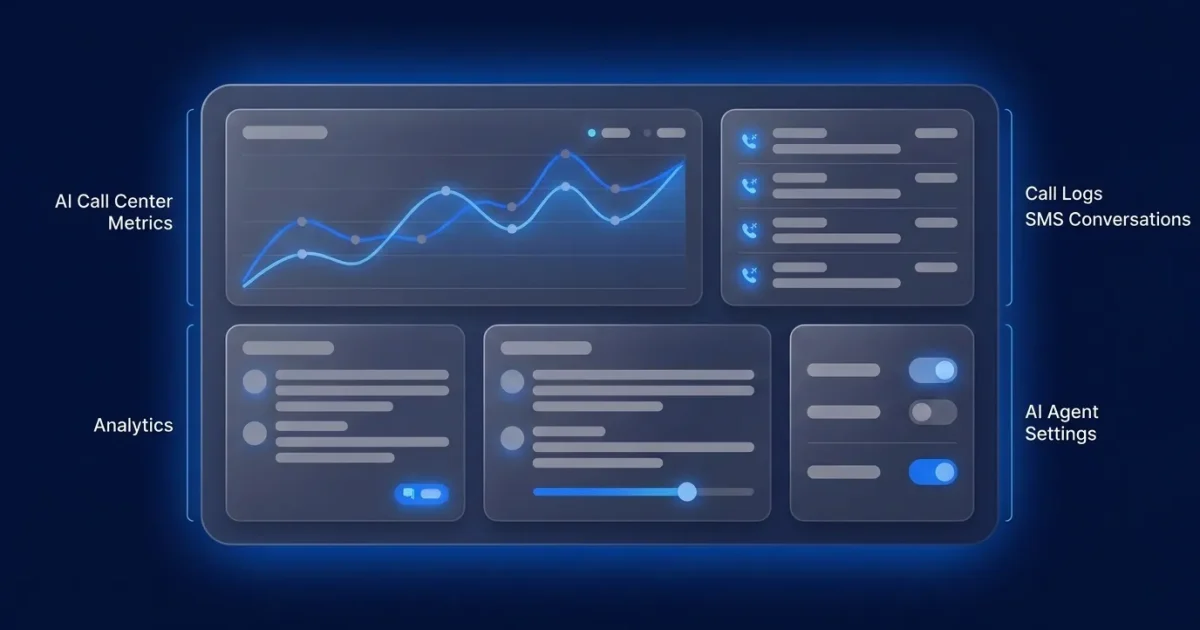
Written by: Matt Beucler, CEO, Plura AI
Key Takeaways for High-Volume Teams
- Enterprise AI virtual receptionists run on carrier-owned infrastructure that supports 500+ daily interactions with full compliance support and cross-channel context.
- Carrier-grade platforms deliver A-level STIR/SHAKEN attestation, real-time DNC scrubbing, and support for SOC 2, HIPAA, ISO, GDPR, TCPA, and DNC compliance at the network level.1
- High-volume operations can reach up to 391% ROI and replace $7 million in traditional contact-center costs with $700,000 in AI-delivered capacity.3
- AI receptionists scale horizontally to handle 500+ concurrent calls without degradation, while SMB API-wrapper tools typically max out at 30 to 50 simultaneous interactions.
- Plura AI is the only FCC-licensed, 100% U.S.-infrastructure platform built for this tier. Book a live demo to see carrier-grade AI reception in action.
How Enterprise AI Virtual Receptionists Actually Work
An AI virtual receptionist is a software-driven agent that handles inbound and outbound customer conversations across voice, SMS, RCS, and webchat without human staffing. At the SMB tier, these tools are typically API wrappers built on top of third-party CPaaS (Communications Platform as a Service) providers. They answer calls, route inquiries, and log basic data, but they rent the carrier layer from a third party, so they cannot issue branded caller ID under their own identity, cannot enforce DNC compliance before a call leaves the network, and cannot hold conversation context across channels.
At the enterprise tier, the architecture changes completely. An enterprise AI voice agent runs on carrier-owned infrastructure, which enables three critical capabilities that API wrappers cannot deliver. First, it authenticates every call through STIR/SHAKEN at origination before the call leaves the network. Second, it scrubs every outbound contact against federal and state DNC registries in real time before dial. Third, it maintains a stateful conversation database that carries full context across voice, SMS, RCS, and webchat so a customer who texted yesterday does not need to repeat themselves on a call today.
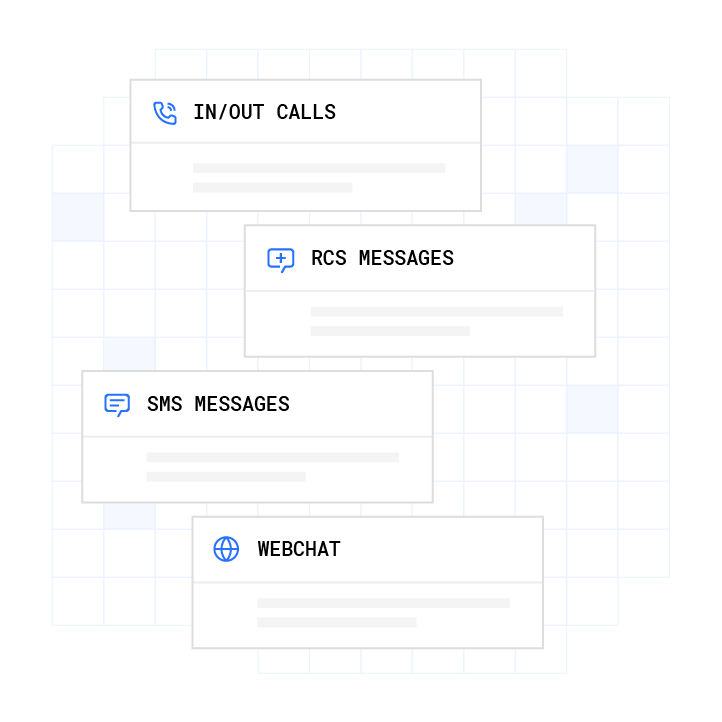
This architectural distinction determines whether the platform can scale past 30 to 50 concurrent calls, withstand FCC regulatory scrutiny, and deliver the TCO (total cost of ownership) economics that justify deployment at 500+ daily interactions.
See carrier-grade AI reception in a live Plura demo.
Enterprise vs SMB AI Receptionist Capabilities in Practice
The table below contrasts carrier-owned infrastructure with API-wrapper models across the dimensions that matter most to high-volume operators.
| Capability | Carrier-Owned Infrastructure (Enterprise) | API-Wrapper Model (SMB) |
|---|---|---|
| Carrier status | FCC-licensed audio bridging carrier, originates voice on owned infrastructure | Rents capacity from a third-party CPaaS, no carrier license |
| Branded caller ID | Issued directly at the carrier level under the platform’s own operating company number | Inherits the CPaaS provider’s shared number pool and caller ID reputation |
| STIR/SHAKEN attestation | A-level attestation on every outbound call, verified at origination | Typically B-level attestation from shared CPaaS number pools |
| DNC compliance | Real-time scrubbing against federal and state registries before every dial | Bolted-on batch processing, not enforced at the carrier level |
| Concurrent call capacity | Scales instantly to handle 500+ simultaneous interactions with no queue degradation | Practical ceiling of 30 to 50 concurrent calls before performance degrades |
| Cross-channel memory | Stateful conversation database shared across voice, SMS, RCS, and webchat | Channel-siloed, a caller who texted must re-explain context on a voice call |
| Compliance certifications | Compliance certifications: SOC 2, HIPAA, ISO certification, GDPR, TCPA compliance, and DNC compliance supported at the platform level1 | Compliance is the customer’s responsibility, no native enforcement layer |
| U.S. infrastructure | 100% domestic voice origination, model hosting, data storage, and call recording | Offshore infrastructure dependencies common, FCC NPRM exposure unresolved |
The enterprise TCO gap reflects these architectural differences directly. Traditional contact-center operations carry substantially higher annual costs than AI-powered communications on a carrier-grade platform. That difference compounds over a five-year planning horizon.
Enterprise AI Receptionist Pricing and TCO
Pricing for AI virtual receptionists spans a wide range depending on infrastructure ownership, compliance depth, and channel coverage. SMB-tier tools typically run $95 to $300 per month on flat-rate plans, which fits single-channel, low-concurrency deployments.
At enterprise scale, leaders focus on cost per interaction and total annual TCO. Plura AI voice agents offer competitive per-interaction economics versus offshore call centers. Across the industry, voice AI often costs less per interaction than a human agent.
Plura’s ROI calculator models a default scenario at 15 human agents earning $20 per hour with standard taxes, benefits, and commissions at 40% talk utilization, which totals $60,000 per month. Replacing that team with Plura at $15 per hour, 100% talk utilization, and six AI agents doing the work of 15 humans drops the monthly cost to $14,400. Savings reach $45,600 in the first 30 days, $547,200 over 12 months, and $2,736,000 over 60 months.3
Compare plans and rates side by side.
AI Receptionist ROI at 500+ Daily Calls
At 500+ daily interactions, AI reception delivers clear ROI, and scalability becomes the deciding factor. SMB tools are not built for this load. They rely on shared CPaaS infrastructure with practical concurrency ceilings of 30 to 50 simultaneous calls.
When volume spikes during Medicare Annual Enrollment Period, tax season, or a promotional campaign, those tools queue callers, drop context, and expose operators to missed-call revenue loss. Enterprise platforms built on owned carrier infrastructure scale horizontally, meaning they add capacity by allocating more parallel resources instead of queuing requests.
This architectural choice explains why an AI receptionist platform with dedicated per-call resources can answer spikes of 5 calls or 500 calls simultaneously in under 0.4 seconds with stable response times and no degradation.
Speed matters as much as concurrency. Industry research published on plura.ai/calculator states that contacting a lead within 5 minutes makes them up to 100× more likely to connect, and a 60-second response lifts conversions by 391%. Plura’s 24/7 call answering delivers first contact in under five seconds, compared with an industry standard of more than 47 hours for manual follow-up.
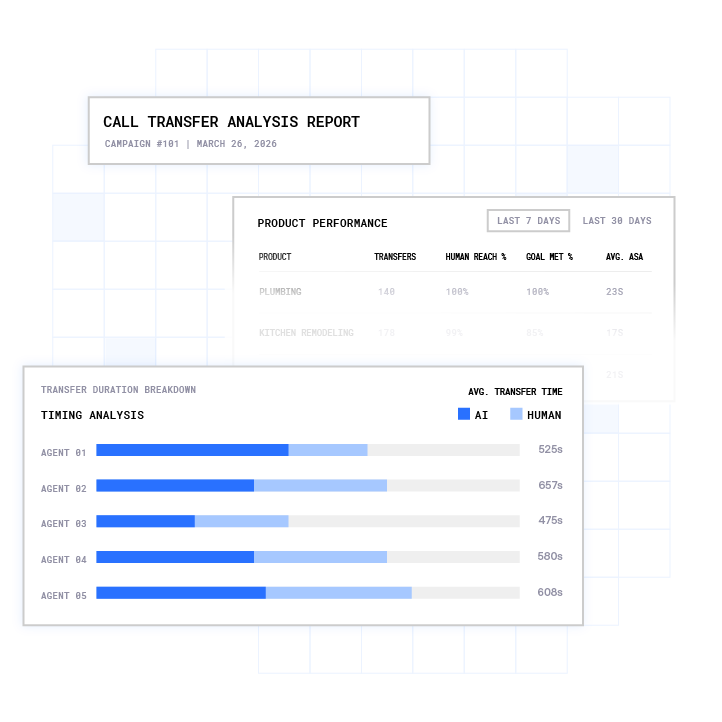
A Forrester TEI study commissioned by PolyAI found that its enterprise customers achieved a 391% three-year ROI with payback in less than six months.3,4 For operators running 500+ daily interactions, that level of impact is material to the P&L.
Comparing AI Receptionist and Human Receptionist TCO
The fully loaded annual cost of a human receptionist includes base salary, employer payroll taxes, health insurance, PTO and sick leave, recruiting and onboarding, equipment, management time, and turnover-related productivity loss. Multiple 2026 analyses (for example, Prestyj, Michael Heredia) report human receptionist year-one TCO in the $48,000 to $77,000 range and AI receptionist costs from roughly $6,000 to $24,000 annually or $8,000 one-time, with no source attributed to Pfeiffer Digital.4
At contact-center scale, the gap widens further. For a 50-seat equivalent contact center, traditional offshore operations cost $35,000 to $50,000 monthly, while AI contact centers cost $8,000 to $15,000 monthly. Human operations also carry a 30 to 45% annual turnover rate industry-wide, with high-stress sectors like healthcare and financial services reaching 55 to 60% and average agent tenure of just 13 to 15 months. That churn creates a perpetual retraining cost that AI removes from the model.
As noted earlier, that $700,000 TCO eliminates the taxes, benefits, commissions, and rehiring cycle that drive the $7 million traditional cost structure. Run your numbers through Plura’s ROI calculator to check your savings in real time.
Compliance Considerations for AI Receptionists
Enterprise operators face a layered compliance environment that SMB AI tools are not built to navigate. The FCC’s February 2024 Declaratory Ruling classified AI-generated voices as “artificial” under the TCPA, describing how they fall under the same federal robocall consent rules that apply to artificial or prerecorded voice calls.2 Operators handling inbound calls should consult qualified counsel on how these frameworks apply to their specific workflows, including recording consent obligations in all-party consent states.
STIR/SHAKEN authentication operates at the carrier level. A-level STIR/SHAKEN attestation, where the carrier has verified that the number is assigned to the caller, produces higher call completion rates than the B-level attestation typically delivered by default from CPaaS platforms using shared number pools. API-wrapper tools cannot achieve A-level attestation because they do not own the carrier.
Plura supports compliance across SOC 2, HIPAA, ISO certification, GDPR, SHAKEN/STIR caller ID verification, TCPA compliance, and DNC compliance.1 Every outbound contact is checked against federal and state DNC registries in real time before dial. Consent records are timestamped and immutable. Quiet-hours rules enforce automatically through time-zone detection. The compliance dashboard exports audit-ready reports in one click. Customers remain responsible for their own regulatory obligations and certifications, and Plura provides the infrastructure layer that supports that posture.
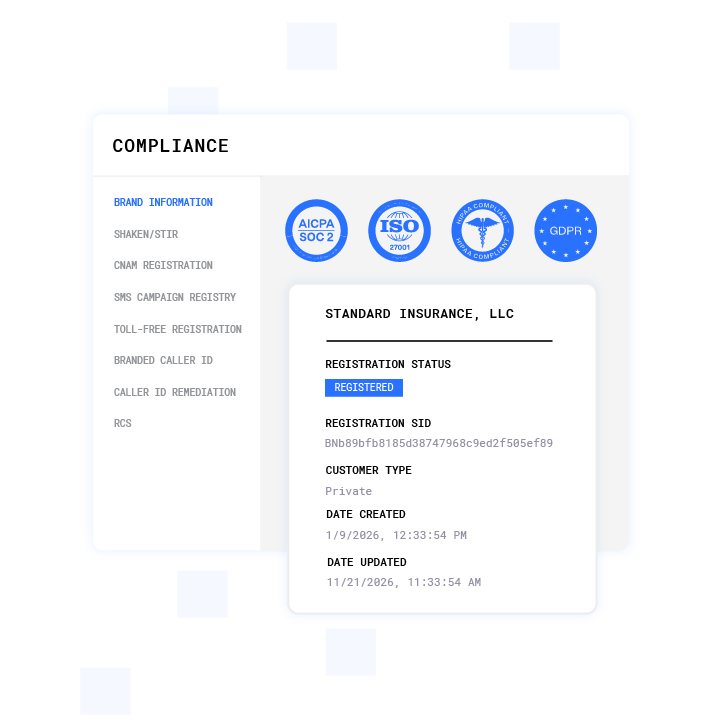
The FCC NPRM (Notice of Proposed Rulemaking, CG Docket No. 26-52) proposes capping offshore customer-service calls at 30% and prohibiting offshore handling of sensitive consumer data. Plura runs on 100% U.S. infrastructure by architecture. Voice origination, model hosting, data storage, and call recording all sit on domestic infrastructure, which removes the offshore exposure that API-wrapper tools with foreign infrastructure dependencies carry.
Choosing Between Hybrid and Pure AI Reception
Pure AI handles the majority of high-volume, structured interactions such as intake, qualification, appointment confirmation, order status, FAQ resolution, and outbound follow-up. In a hybrid model, AI resolves 65 to 77% of calls end-to-end, and humans handle the remaining 23 to 35% of high-emotion, multi-topic, authority-decision, or edge-case calls. This approach often delivers higher CSAT than all-AI while still cutting total costs versus all-human staffing.
Hybrid deployment is the standard for regulated verticals. Healthcare operators use AI for intake, eligibility screening, and appointment confirmation, then warm-transfer to a licensed clinician or agent for clinical decisions. Legal intake operations use AI for qualification and PII (Personally Identifiable Information) capture, then escalate to U.S. counsel for case assessment. Financial services operators use AI for account alerts and appointment scheduling, then hand off to humans for advice-driven interactions.
Top-performing organizations are more likely to deploy conversational AI and workflow automation at scale, and AI can help unlock a substantial share of addressable care or service volume.
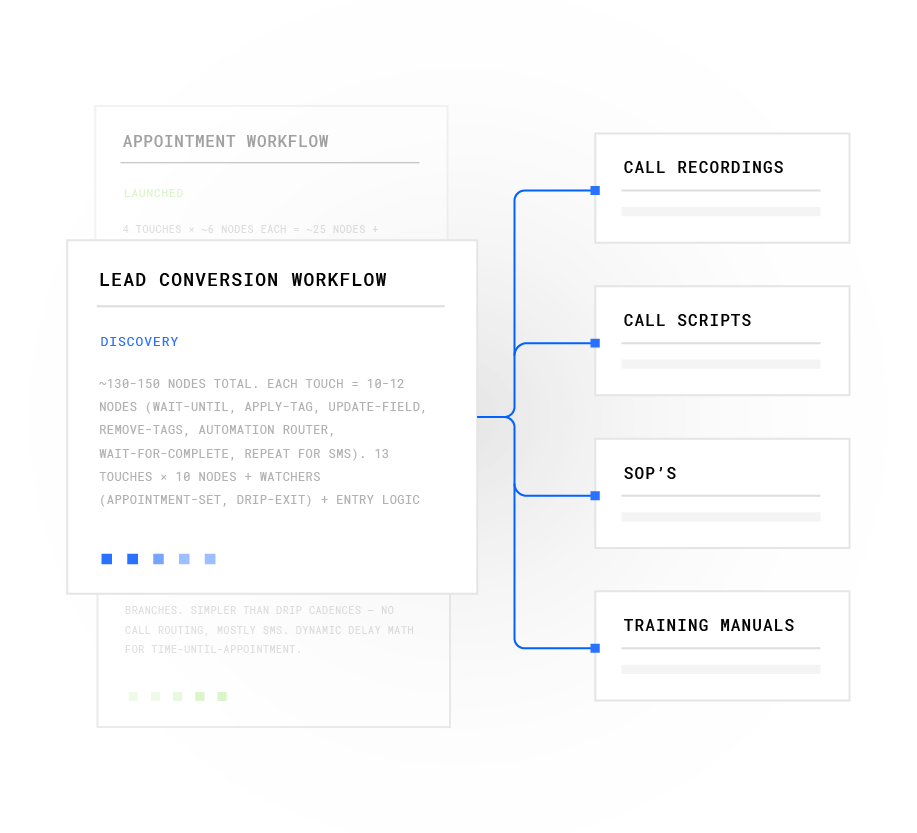
Plura’s no-code workflow builder supports both pure AI and hybrid configurations. Each workflow node carries explicit escalation rules. When a caller’s response falls outside defined paths, the AI warm-transfers to a U.S. agent with full conversation context already loaded. The stateful conversation database means the human agent does not start from zero.
Schedule a consultation to design your hybrid or pure AI workflow with Plura.
Frequently Asked Questions
How much does an AI receptionist cost?
Cost depends on infrastructure tier, channel coverage, and volume. SMB-tier AI receptionists typically run $95 to $300 per month on flat-rate plans. Enterprise-grade platforms priced at the interaction level can deliver competitive costs for carrier-owned AI compared to offshore human agents. At contact-center scale, Plura’s TCO model shows $700,000 per year replacing a traditional $7 million contact-center cost structure on equivalent volume. The most accurate way to model your specific scenario is to run your agent count, hourly rate, and talk utilization through Plura’s ROI calculator.
Is an AI receptionist worth it for high-volume operations?
For operations running 500+ daily interactions, the ROI case is strong and the scalability case is decisive. Human and BPO (Business Process Outsourcing) models scale linearly, so more volume requires proportional headcount. AI scales logarithmically, so the same platform handles 500 or 5,000 daily interactions without additional hiring, training, or ramp time. The speed-to-lead data cited earlier shows why. At 500+ daily interactions, every hour of delayed response represents measurable revenue loss that AI removes from the process.
What compliance standards apply to enterprise AI receptionists?
Enterprise AI receptionists operating in the U.S. interact with several overlapping frameworks. The TCPA describes consent rules for outbound AI voice calls, and the FCC’s February 2024 Declaratory Ruling explains that AI-generated voices fall under the same consent rules as artificial or prerecorded voices.2 DNC compliance involves real-time scrubbing against federal and state registries. STIR/SHAKEN authentication applies to outbound voice calls. HIPAA applies to any platform handling protected health information. SOC 2 addresses infrastructure security controls. State-level recording consent laws apply in all-party consent states regardless of who initiated the call. Operators should consult qualified counsel to assess how these frameworks apply to their specific workflows. Plura supports compliance across SOC 2, HIPAA, ISO certification, GDPR, SHAKEN/STIR caller ID verification, TCPA compliance, and DNC compliance at the infrastructure level, and customers remain responsible for their own regulatory obligations.
How does carrier-owned infrastructure differ from API-wrapper tools?
API-wrapper tools are software layers built on top of third-party CPaaS providers. They do not own the carrier, so they cannot issue branded caller ID under their own identity, cannot achieve A-level STIR/SHAKEN attestation, cannot enforce DNC compliance before a call leaves the network, and inherit the shared number pool reputation of their CPaaS provider. Carrier-owned infrastructure originates voice on the platform’s own FCC-licensed network. Branded caller ID is issued directly. STIR/SHAKEN authentication runs at origination. DNC scrubbing happens before dial, not after. Compliance is supported at the network level rather than bolted on as a software layer. For high-volume operators, this distinction shapes pickup rates, compliance posture, and the likelihood that the platform withstands FCC regulatory scrutiny under the current NPRM environment.
Conclusion: When Enterprise AI Receptionists Make Sense
The AI virtual receptionist market is splitting into two tiers. SMB tools built on third-party CPaaS infrastructure fit low-volume, single-channel deployments. They do not fit operators running 500+ daily interactions who need carrier-grade compliance support, stateful cross-channel memory, and the 10:1 TCO advantage detailed throughout this analysis.
Plura AI is the only FCC-licensed, 100% U.S.-infrastructure platform built for this tier. Voice originates on Plura’s own carrier. Branded caller ID is issued at the network level. SOC 2, HIPAA, ISO certification, GDPR, SHAKEN/STIR caller ID verification, TCPA compliance, and DNC compliance are supported before every contact. The stateful conversation database carries full context across voice, SMS, RCS, and webchat. Every annual contract includes a 90-day opt-out window if the deployment is not delivering.
View pricing and plan details.
1 Plura AI maintains SOC 2, HIPAA, ISO, and GDPR posture as part of its platform infrastructure. References to compliance frameworks in this article describe Plura’s platform capabilities and do not constitute a guarantee that any customer using Plura will themselves be compliant with applicable laws or standards. Customers remain solely responsible for their own regulatory obligations, certifications, consent management, recordkeeping, and the claims they make to their own end users. Consult qualified legal counsel for guidance specific to your use case.
2 This article describes regulatory frameworks at a general level and does not constitute legal advice. Laws and regulations vary by jurisdiction, change over time, and apply differently depending on facts and circumstances. Readers should consult qualified legal counsel before making compliance decisions.
3 Performance figures, customer outcomes, and industry statistics referenced in this article are drawn from cited third-party sources or Plura customer case studies. Individual results vary based on implementation, use case, industry, audience, and execution. Past or aggregate performance is not a guarantee of future results.
4 References to third-party products, services, companies, or research are made for informational and comparative purposes only. Plura AI is not affiliated with, endorsed by, or sponsored by any third party named in this article unless explicitly stated. Trademarks and product names referenced remain the property of their respective owners.
This article is provided for informational purposes only and reflects Plura AI’s understanding at the time of publication. Product capabilities, integrations, and specifications are subject to change. For the most current information, visit plura.ai.
This article was produced with the assistance of AI tools and reviewed by Plura AI prior to publication.