

Written by: Matt Beucler, CEO, Plura AI
Key takeaways for insurance leaders
- AI voice agents for insurance handle FNOL intake, policy servicing, lead qualification, and renewals while integrating with AMS and CRM platforms.
- Insurance contact centers can reduce labor spend, with Plura AI cutting monthly costs from $60,000 to $14,400 for equivalent volume.3
- AI voice agents improve claims processing by capturing complete FNOL data in real time and reducing cycle times by 60–88% at leading carriers.3
- Plura AI supports compliance with TCPA, DNC, HIPAA, SOC 2 Type II, and 50+ state regulations through real-time scrubbing and audit trails.1,2
- Leaders can see the hybrid AI-human model in action by booking a live demo with Plura AI.
Insurance AI voice agent pricing and cost benchmarks
AI voice agent pricing for insurance uses per-minute and per-seat subscriptions, flat monthly platform fees, and enterprise custom contracts. Conversational AI can reduce contact center agent labor costs for high-volume insurance operations.
The most direct way to evaluate total cost of ownership (TCO) is to run the numbers against your current staffing model. This comparison shows the labor efficiency gap between traditional and AI-powered operations. Using Plura’s ROI calculator default inputs as a baseline:
- 15 human agents at $20/hour, with 25% taxes, benefits, and commissions, at 40% talk utilization: $60,000/month
- 6 Plura agents handling equivalent volume at $15/hour, at 100% talk utilization: $14,400/month
- 30-day savings: $45,600
- 12-month savings: $547,200
- 60-month savings: $2,736,000
At carrier scale, a 100-seat contact center running traditional operations costs $4 million to $7 million annually. An AI-powered platform like Plura typically falls between $300,000 and $700,000 for equivalent volume. For a 50-seat equivalent operation, traditional offshore operations cost $35,000–$50,000 monthly versus $8,000–$15,000 monthly for AI contact centers.
Hidden costs to include in any vendor evaluation include one-time setup fees, AMS and CRM integration for platforms such as Applied Epic, EZLynx, HawkSoft, and AMS360, compliance script review, and per-minute overages during catastrophe (CAT) events.
Run your numbers through Plura’s ROI calculator to check your savings in real time.
AI voice agents for FNOL and claims operations
FNOL intake is the highest-friction, highest-stakes inbound workflow in insurance. A caller reporting a loss is under stress, the data capture window is narrow, and incomplete intake creates downstream cycle-time problems that compound across the claims lifecycle.
An AI voice agent handling FNOL performs real-time policy lookup against the AMS or CRM, captures structured loss data, and routes the completed record to the claims system before the call ends. AI voice agents can improve FNOL data completeness, reduce capture time, and help ensure after-hours claims are logged promptly.
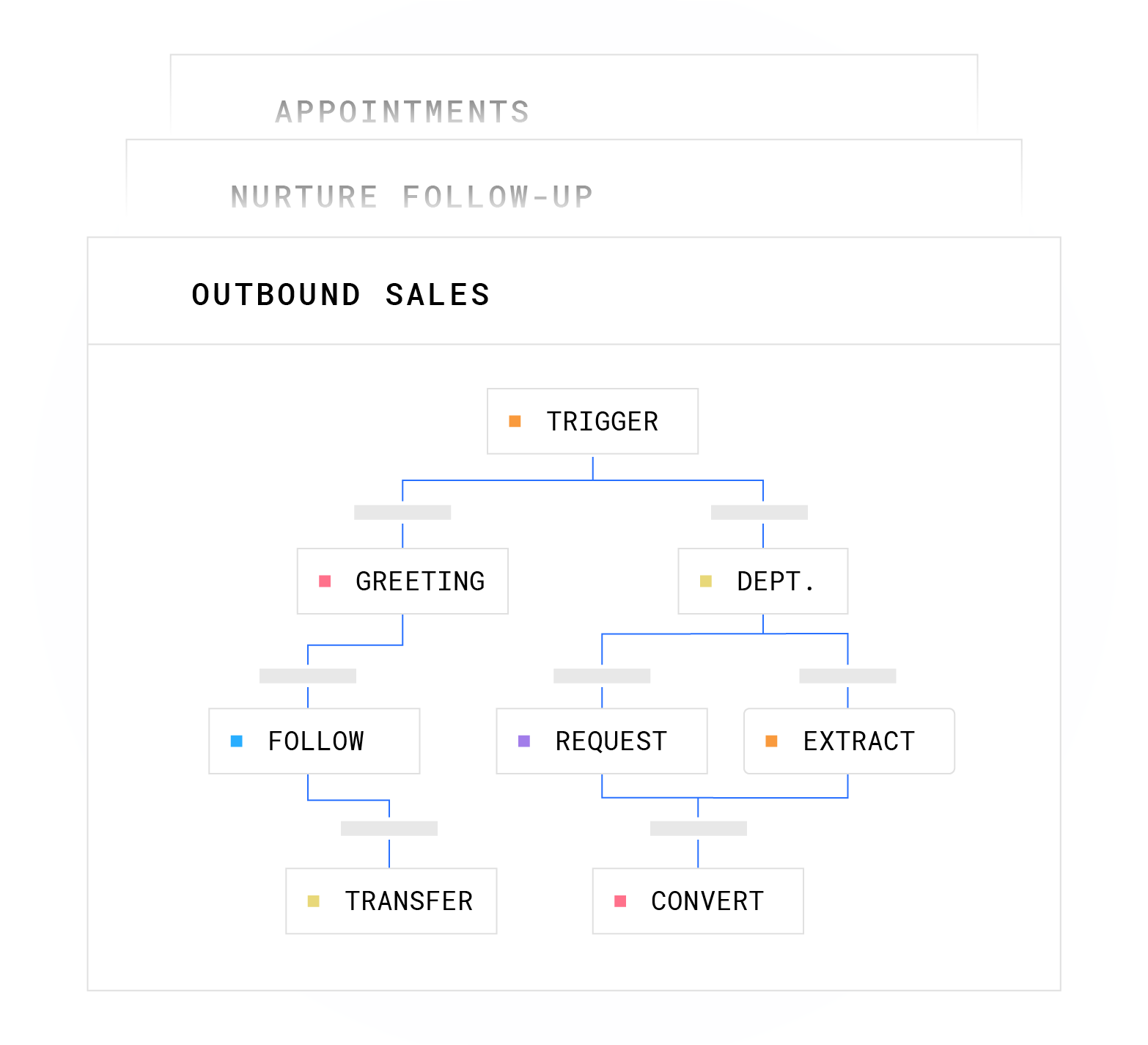
The cycle-time and cost impact at scale is documented across multiple carrier deployments. AI in claims handling can enable cycle time and handling cost reductions. AI deployment reduces claims cycle times by 60–88% at leading carriers, with examples showing drops from 19–29 days to 3.5–4.2 days for many claim types.
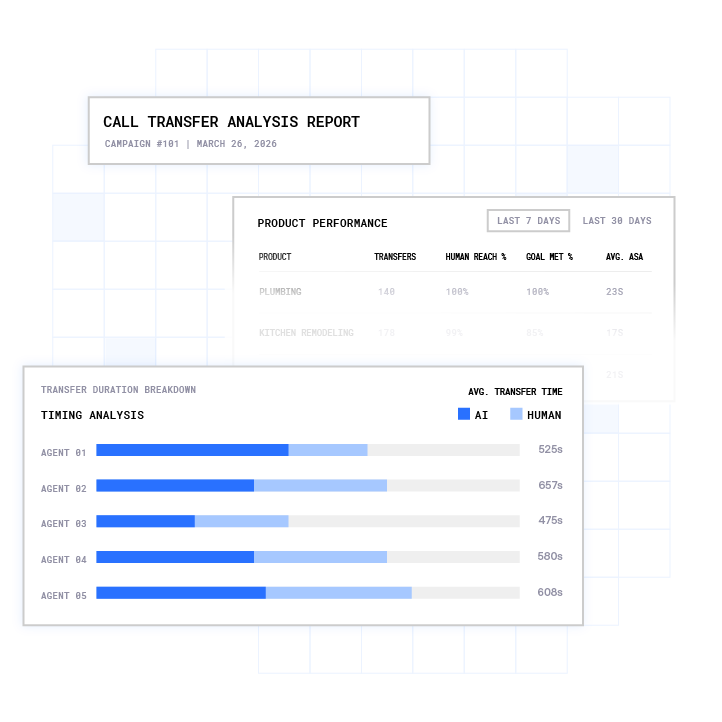
Beyond FNOL, the same AI voice agent handles policy servicing calls such as billing inquiries, coverage questions, and endorsement requests, along with outbound renewal outreach. AI voice agents can achieve strong containment rates on billing and renewal calls handled end to end. For renewal outreach specifically, AI agents can reach more policyholders, complete more conversations, and reduce non-renewal rates compared with manual processes.
Plura’s stateful cross-channel memory keeps context consistent across every interaction. The AI voice agent that handled a policyholder’s billing call last month already knows the account context when the renewal outreach goes out. No re-introduction and no repeated data capture. The same context the licensed agent sees in the Unified Inbox is what the AI reads on every call.
When a call requires licensed-agent judgment, coverage discussion, or a complex claims decision, Plura routes a warm transfer to a U.S. agent with full call context. The AI does not attempt to bind coverage or adjudicate claims. It captures, qualifies, and hands off cleanly. These operational capabilities must operate within a strict regulatory framework.
Insurance AI voice agent compliance stack
Compliance in insurance voice AI spans overlapping federal statutes, state regulations, and security certifications that apply at the same time. The following checklist describes primary layers relevant to insurance contact center deployments. Operators should consult qualified legal counsel regarding their specific obligations under each framework.
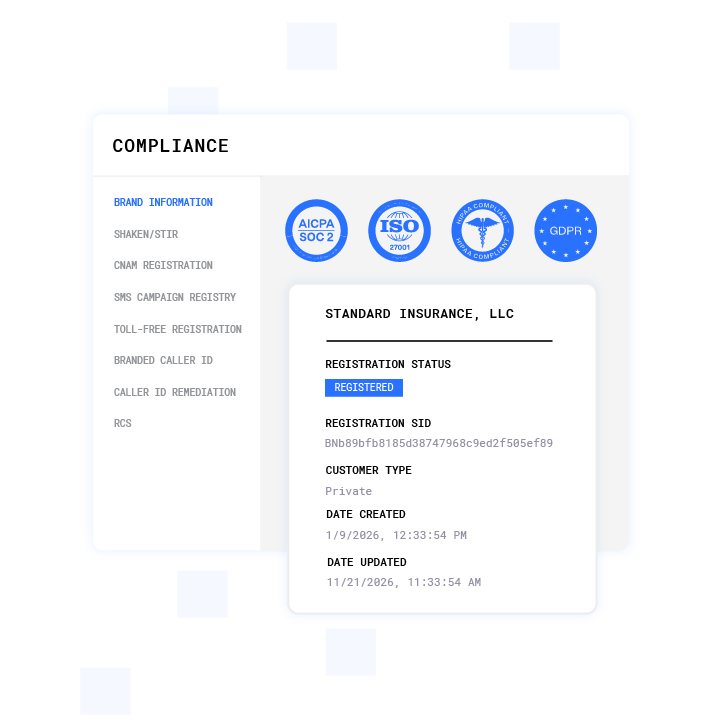
- TCPA (Telephone Consumer Protection Act, 47 U.S.C. § 227): The FCC’s February 2024 declaratory ruling classifies AI-generated voices as artificial or prerecorded voices under the TCPA, placing synthetic-voice outbound calls in the same consent category as traditional robocalls. TCPA penalties remain $500 per negligent violation and $1,500 per willful violation. Plura’s compliance engine performs real-time TCPA scrubbing on every outbound contact before dial.
- DNC (Do Not Call) Registry: Insurance agencies often scrub outbound call lists against the federal DNC registry at least every 31 days. Plura checks every number against federal and state DNC registries in real time before each dial attempt.
- HIPAA (Health Insurance Portability and Accountability Act, 45 CFR Parts 160, 162, 164): AI voice agent vendors handling Protected Health Information (PHI) for insurance carriers or agencies typically sign a Business Associate Agreement (BAA) under HIPAA. Plura supports HIPAA-aligned deployments with end-to-end encryption, role-based access controls, and audit logging. Plura supports customer compliance; it does not absolve customers of their own obligations.
- SOC 2 Type II: Plura maintains SOC 2 Type II certification with continuous monitoring, penetration testing, and third-party audits covering the underlying infrastructure.
- ISO certification: Plura holds ISO certification as part of its security and operational standards posture.
- GDPR (General Data Protection Regulation, Regulation (EU) 2016/679): Plura supports GDPR coverage for operations involving European policyholder data.
- SHAKEN/STIR (Secure Telephone Identity Revisited / Signature-based Handling of Asserted information using toKENs): The FCC mandated STIR/SHAKEN implementation in IP networks by June 30, 2021, requiring carriers to cryptographically sign outbound calls. Plura runs SHAKEN/STIR caller ID verification on every outbound voice call through its own FCC-licensed carrier, not a third-party Communications Platform as a Service (CPaaS).
- State-level rules: Several states including Florida, Oklahoma, Washington, and Maryland have enacted mini-TCPA laws that describe stricter requirements than federal TCPA standards for autodialed and AI voice calls. Plura enforces 50+ state rule sets with quiet-hours enforcement through time-zone detection and state-routing logic for jurisdiction-specific consent language.
- NAIC Insurance Data Security Model Law (#668): This model law describes expectations for insurers and agencies to maintain a formal cybersecurity program and breach-reporting processes when handling nonpublic personal information in voice technology workflows.
- Consent audit trails: Plura timestamps and stores consent records in an immutable ledger. An audit trail for AI outbound calls can capture the consent timestamp, its source, the exact consent wording, the number dialed, the campaign name, the disclosure transcript, and every opt-out event. Plura’s compliance dashboard exports audit-ready reports in one click.
Plura supports customer compliance; it does not absolve customers of their own obligations. Every insurance operator deploying AI voice agents remains responsible for its own certifications, regulatory obligations, and the claims it makes to policyholders and regulators.
Hybrid AI and human roles in insurance contact centers
Deployments in 2025 and 2026 consistently point toward a hybrid model, not full replacement of agents.5 Global insurance CEOs describe AI as a catalyst for rebalancing work in the insurance value chain, with human judgment, empathy, and strategic decision-making becoming more important alongside automation.
Consumer data supports the same conclusion. Seventy-three percent of respondents in Deloitte’s Swiss insurance survey want human review in critical decisions, and 85% want to be informed when AI is being used.4
The practical division of labor is straightforward. AI handles the volume work such as routine qualification, status checks, FNOL intake, renewal outreach, and billing inquiries. Licensed agents receive warm transfers for coverage discussions, complex claims, and any interaction requiring professional judgment or regulatory accountability. Insurance company ratings dropped by as much as 1.6 stars when callers lacked a clear path to human agents, according to Trustpilot’s Insurance Insights Report 2026 analyzing more than 145,000 U.S. consumer reviews.4
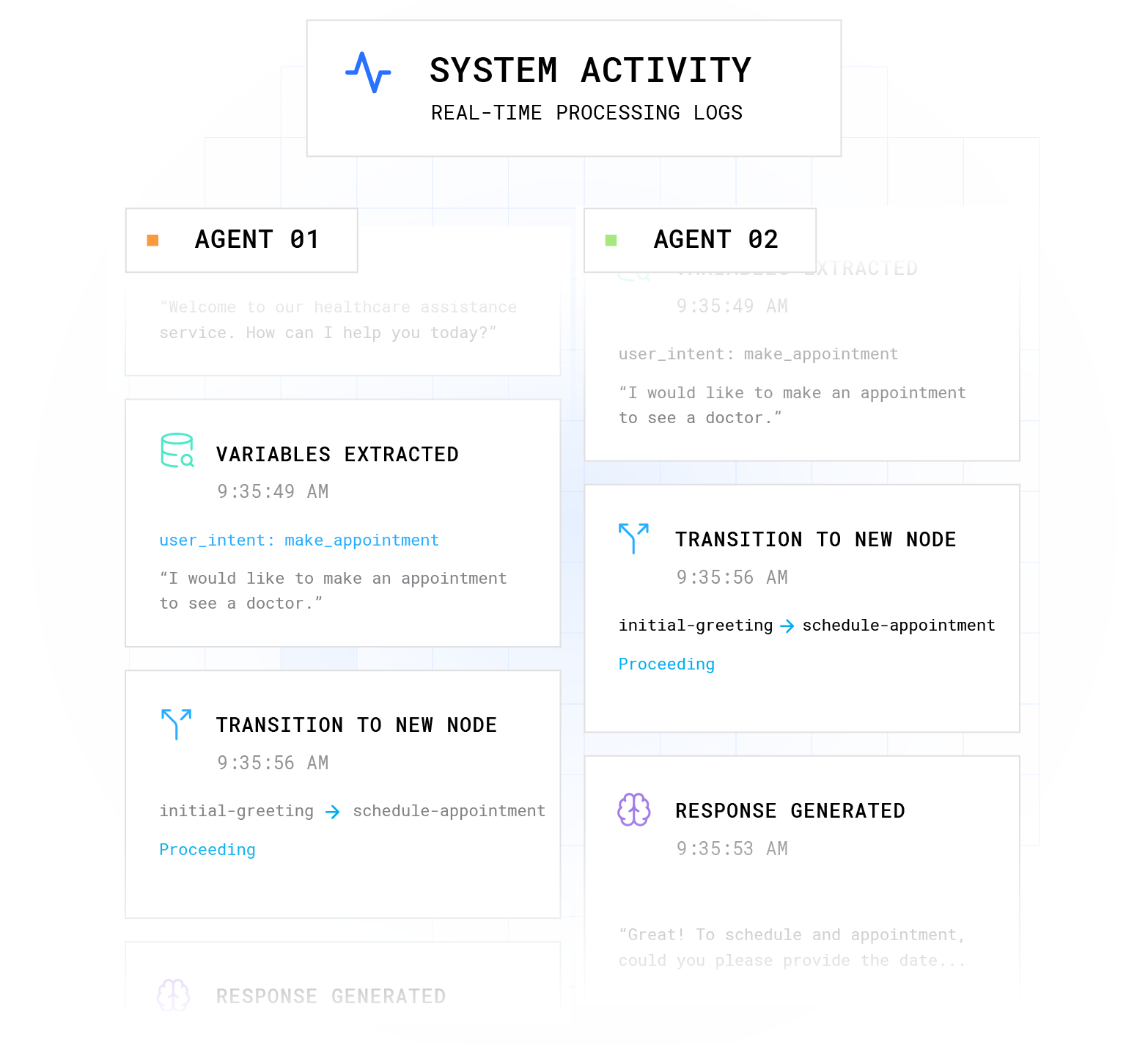
The conversion case for speed sits alongside the replacement question. Seventy-eight percent of buyers purchase from the company that responds first on insurance inbound quotes, and a 60-second response lifts conversions by 391%. In insurance, the first responder closes 78% of deals on inbound quote requests. An AI voice agent that responds in under 5 seconds, qualifies the lead, and warm-transfers a ready buyer to a licensed agent does not replace the agent. It ensures the agent is working a qualified opportunity instead of a cold dial.
Plura’s workflow design reflects this directly. Every conversation node carries defined escalation rules. When a caller’s response falls outside the AI’s defined workflow paths, the platform warm-transfers to a U.S. agent with full call context. The licensed agent does not receive a cold handoff. They receive a structured summary of what was said, what data was captured, and what the caller needs.
Book a live demo with Plura to see the insurance workflow in action.
Operational comparison: Plura AI, API-wrapper tools, and traditional centers
Integration architecture differs fundamentally across deployment models. Plura provides 50+ native integrations with bi-directional real-time sync to platforms including HubSpot, Salesforce, and Zoho. API-wrapper tools often rely on Zapier or support a single CRM, while many agencies prefer native AMS integrations to Applied Epic, EZLynx, and HawkSoft for data reliability. Traditional contact centers depend on manual CRM entry by agents, who typically require 6–8 weeks of training before handling live calls.
Compliance tooling also varies. Plura runs carrier-level DNC and TCPA scrubbing on every outbound contact before dial, with an immutable consent ledger and automatic enforcement of calling windows and consent rules. API-wrapper tools often bolt on third-party scrubbing, which can create audit gaps when timestamps or systems drift. Traditional centers frequently manage DNC lists manually, and TCPA litigation surged 60.1% in 2025, reaching 2,628 cases.
Caller ID and reputation management follow the same pattern. Plura issues branded caller ID directly through its own FCC-licensed carrier with SHAKEN/STIR authentication at origination so calls present with the company name. API-wrapper tools inherit caller ID from third-party CPaaS providers, which can lead to “Spam Likely” labels that the platform cannot directly remediate. Traditional contact centers may secure branded caller ID through carrier contracts but often lack carrier-level spam remediation.
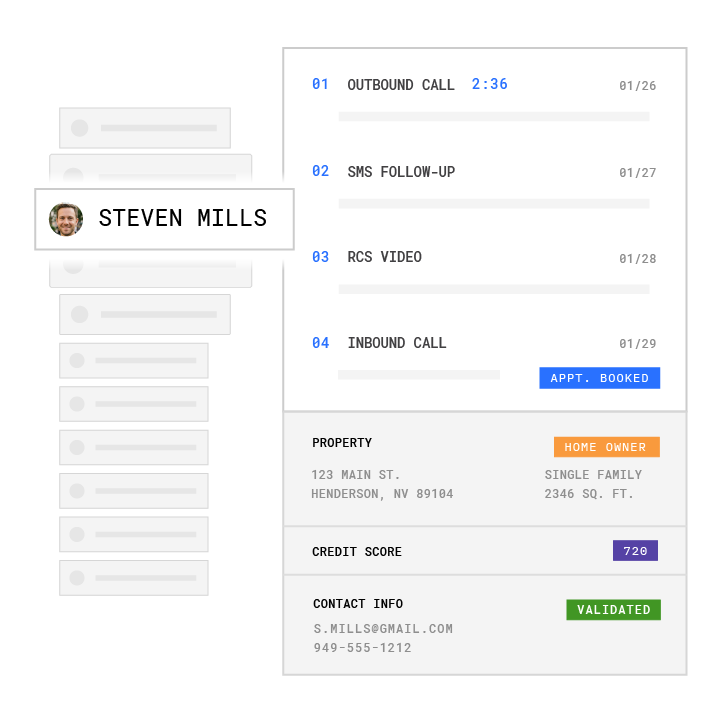
Customer context handling is another differentiator. Plura uses a single Stateful Conversation Database across voice, SMS, RCS, and webchat so every channel reads the same customer record and interaction history. API-wrapper tools usually maintain channel-siloed memory, which loses context between channels. Traditional centers rely on CRM notes and the quality of manual handoffs between agents.
Infrastructure choices affect both risk and cost. Plura keeps voice origination, model hosting, data storage, and call recording on 100% U.S. infrastructure, which avoids offshore exposure described in FCC NPRM CG Docket No. 26-52. API-wrapper tools depend on third-party CPaaS infrastructure, with foreign exposure varying by vendor. Onshore human contact centers lock 60–70% of operating costs into agent labor and often see 35–45% annual agent turnover.
Conclusion and next steps for insurance teams
Insurance contact center leaders, agency owners, and compliance officers face a converging set of pressures in 2026. Sixty-four percent of U.S. insurance agencies now use AI in at least one workflow, consumer comfort with AI in routine insurance tasks is rising, and the regulatory perimeter around offshore infrastructure is tightening under the FCC NPRM (CG Docket No. 26-52) and companion state laws.
The TCO math is not close. The calculator comparison shown earlier, with $45,600 in 30-day savings and $547,200 over 12 months, demonstrates the gap between traditional and AI-powered contact center economics. At carrier scale, the difference between $4M–$7M traditional contact-center spend and $300K–$700K AI-powered TCO can shift a contact center from cost center to competitive advantage.
The compliance posture is equally direct. Plura runs on 100% U.S. infrastructure by architecture. Real-time DNC and TCPA scrubbing, SHAKEN/STIR caller ID verification, HIPAA-aligned encryption, SOC 2 Type II certification, ISO certification, GDPR coverage, and 50+ state rule sets operate as core layers of the platform, not bolt-ons. As noted in the compliance section, customers remain responsible for their own regulatory obligations.
The hybrid model the industry is converging on, where AI handles volume and licensed agents handle judgment, aligns with Plura’s warm-transfer architecture. The AI qualifies, captures, and hands off. The agent closes.
Run your numbers through Plura’s ROI calculator to see your 30-day, 12-month, and 60-month savings against your current staffing model.
Compare plans and rates side by side.
Frequently asked questions
What insurance workflows can an AI voice agent handle without a licensed agent?
An AI voice agent can handle the full intake and data-capture layer of FNOL calls, including real-time policy lookup, structured loss data collection, and routing the completed record to the claims system. It can manage policy servicing inquiries such as billing questions, payment status, and coverage summaries. It can conduct outbound renewal outreach, confirm appointments, and qualify inbound leads before handoff.
The AI does not bind coverage, adjudicate claims, or provide advice that requires a licensed producer. Any call that reaches a coverage discussion, a complex claims decision, or a regulatory threshold triggers a warm transfer to a licensed agent with full call context already delivered. The AI handles volume, and the licensed agent handles judgment.
How does Plura AI integrate with insurance agency management systems?
Plura connects to 50+ platforms across CRM, AMS, calendar, and data enrichment categories, including HubSpot, Salesforce, and Zoho. For insurance-specific AMS platforms, the integration layer supports bi-directional real-time sync so that lead data, call outcomes, FNOL records, and qualification notes write directly into the system of record without manual entry.
Real-time sync matters because a 15- to 30-second polling delay leaves the AI operating with stale policy data during a live call. Plura’s integration architecture uses event-driven sync to keep the AI’s view of the customer record current throughout the conversation. The full integration directory is at plura.ai/integrations.
What compliance frameworks does Plura AI support for insurance deployments?
Plura supports compliance with TCPA, DNC, HIPAA, SOC 2 Type II, ISO certification, GDPR, and SHAKEN/STIR caller ID verification. Real-time DNC scrubbing runs on every outbound contact before dial. Consent records are timestamped and stored in an immutable ledger. Quiet-hours rules enforce automatically through time-zone detection.
HIPAA-aligned encryption, access controls, and audit logging cover protected health information across voice, SMS, RCS, and webchat. The compliance dashboard exports audit-ready reports in one click. Plura supports customer compliance; it does not absolve customers of their own obligations. Insurance operators remain responsible for their own certifications, regulatory obligations, and the claims they make to policyholders and regulators. Consult qualified legal counsel regarding your specific obligations under TCPA, HIPAA, and applicable state insurance regulations.
How quickly can an insurance contact center go live with Plura AI?
Deployment timelines depend on conversation complexity. A standard inbound qualification or after-hours FNOL intake flow typically goes live within days to two weeks. A multi-step workflow involving AMS integration, state-specific compliance scripting, and complex claims routing runs closer to four to six weeks.
Plura’s onboarding sequence includes a discovery audit of current call economics, intake of sample calls and existing scripts, an overnight build of a conversation mockup, a review session, engineering build of the production workflow, a pilot test on a subset of real calls, and full go-live. Every annual contract includes a 90-day opt-out window. If the deployment is not delivering, the customer is not held to the annual term.
Will AI voice agents hurt customer satisfaction in insurance?
Customer satisfaction outcomes depend on how AI is deployed and how escalation works. Consumer comfort with AI in routine insurance tasks is rising. According to Insurity’s 2026 AI in Insurance Report, 39% of consumers say it is a good idea for insurers to use AI to improve services, nearly double the 2025 figure, while only 22% are comfortable with AI filing a claim on their behalf.
The Trustpilot data cited earlier shows a significant star-rating gap between AI-mentioned and non-AI reviews. The gap is not AI versus no AI. It is AI with clear escalation paths versus AI that blocks access to a human.
Plura’s architecture addresses this directly. Every workflow includes a defined warm-transfer path to a U.S. licensed agent, the AI discloses its nature when required by applicable state law, and the agent receives full call context on transfer so the policyholder does not repeat themselves. The AI handles the intake efficiently, and the human handles the moment that requires empathy and judgment.
1 Plura AI maintains SOC 2, HIPAA, ISO, and GDPR posture as part of its platform infrastructure. References to compliance frameworks in this article describe Plura’s platform capabilities and do not constitute a guarantee that any customer using Plura will themselves be compliant with applicable laws or standards. Customers remain solely responsible for their own regulatory obligations, certifications, consent management, recordkeeping, and the claims they make to their own end users. Consult qualified legal counsel for guidance specific to your use case.
2 This article describes regulatory frameworks at a general level and does not constitute legal advice. Laws and regulations vary by jurisdiction, change over time, and apply differently depending on facts and circumstances. Readers should consult qualified legal counsel before making compliance decisions.
3 Performance figures, customer outcomes, and industry statistics referenced in this article are drawn from cited third-party sources or Plura customer case studies. Individual results vary based on implementation, use case, industry, audience, and execution. Past or aggregate performance is not a guarantee of future results.
4 References to third-party products, services, companies, or research are made for informational and comparative purposes only. Plura AI is not affiliated with, endorsed by, or sponsored by any third party named in this article unless explicitly stated. Trademarks and product names referenced remain the property of their respective owners.
5 This article contains forward-looking statements regarding industry trends, technology adoption, and future capabilities. These statements reflect current expectations and are subject to change. Plura AI undertakes no obligation to update forward-looking statements except as required.
This article is provided for informational purposes only and reflects Plura AI’s understanding at the time of publication. Product capabilities, integrations, and specifications are subject to change. For the most current information, visit plura.ai.
This article was produced with the assistance of AI tools and reviewed by Plura AI prior to publication.