

Written by: Matt Beucler, CEO, Plura AI
Key Takeaways for After-Hours Answering Contracts
- Traditional after-hours call answering contracts often bundle long-term lock-ins, per-minute billing with rounding, setup fees, and early termination penalties that drive up real costs.
- Plura AI replaces these with annual contracts billed monthly, no setup fees, per-second billing without rounding, and a 90-day opt-out window that shifts performance risk to the provider.
- Hidden costs such as after-hours surcharges, holiday premiums, and overage rates can push traditional service bills to several times the advertised base rate.
- Plura AI operates on 100% U.S. infrastructure under an FCC-licensed carrier and supports SOC 2, HIPAA, GDPR, and SHAKEN/STIR compliance without third-party routing.1
- Operators evaluating after-hours coverage can book a live demo with Plura AI to see how the AI-native contract model reduces cost and lock-in risk.
Reddit Feedback on After-Hours Answering Service Contracts
Operator discussions across forums consistently surface the same friction points with traditional after-hours call answering service contracts. The most common complaints center on long-term lock-ins that make it difficult to exit underperforming vendors, after-hours surcharges that inflate bills beyond the advertised rate, and cancellation processes that drag on for months.
The answering service industry often uses annual contracts with introductory rates that obscure monthly minimums buried in the fine print and early termination fees equal to several months of remaining service. Operators who sign without reading the cancellation clause often discover that exiting mid-contract costs more than completing the term.
After-hours live answering service coverage typically costs $50 to $500 per month, though some high-volume or premium options reach $1,200 or more, with after-hours rates typically 25% to 50% above standard business-hours pricing. Holiday coverage adds another layer: holiday surcharges of 1.5–2× normal rates are standard, and weekend coverage may add 10–25% premiums depending on the provider. For franchise operators and contact center leaders running high call volumes on evenings and weekends, these surcharges compound quickly. When these hidden costs stack up, operators naturally look for contract structures that reduce lock-in risk and cost surprises.
Month-to-Month Answering Contracts vs Long-Term Commitments
True month-to-month answering service contracts exist in the market, but they usually carry a cost premium over annual commitments. Annual contracts commonly offer discounted rates compared to month-to-month arrangements, which creates pressure to sign longer terms even when operators are uncertain about service quality.
The risk of annual commitments is significant. Long-term answering service agreements frequently include early termination fees equivalent to 3–6 months of service charges, along with minimum commitment periods and auto-renewal clauses. Early termination fees of $500–$2,000 are common in traditional human-staffed contracts. Some providers, such as ReceptionHQ, offer month-to-month subscriptions with no lock-in and no cancellation fees, requiring only three days’ notice before the renewal date.4
Plura’s pricing includes a 90-day opt-out window inside an annual agreement. If the deployment is not delivering measurable results within that window, operators are not held to the full annual term. That structure puts the performance obligation on Plura, not on the operator.
Run your numbers through Plura’s ROI calculator to see what the 90-day opt-out is worth at your call volume.
Per-Minute Billing and Real Cost per Call
Per-minute billing is the dominant pricing model for live human answering services, and the advertised rate rarely reflects the actual cost per call. Live human answering services typically charge $0.75–$1.50 per minute under per-minute pricing models, but billing increments determine what operators actually pay on each call.3
Billing increments of 15 seconds versus 1 minute create 20–30% cost variations between providers charging identical per-minute rates. A 90-second call billed in 60-second increments costs the same as a 120-second call. Hidden fees including rounding increments routinely add 30–50% to advertised answering service rates, with 60-second rounding inflating bills by up to 2.33× compared to 6-second increments.
Overage charges compound the problem further. Overage charges for answering services typically result in actual monthly costs that are 2–3 times the advertised base plan price, with an in-plan rate of $1.50 per minute rising to $2.25 per minute for overages. This overage penalty pattern also appears on some AI voice agent platforms, where exceeding included minutes can result in overage rates 2–3 times the base per-minute price.
For a business handling 500 minutes of calls per month, traditional answering services at up to $1.50 per minute plus base fees typically cost well above $750 monthly for 500 minutes of calls. AI-native platforms operating at lower per-minute economics change that math substantially at scale.
Setup Fees and Recurring Add-On Charges
Setup fees are a one-time cost that traditional providers use to cover account creation, script development, call routing configuration, and agent training. Setup fees for traditional answering services typically apply, with AnswerConnect charging a specific $49.99 setup fee on plans starting around $350 per month for 200 minutes.4
Beyond the initial setup fee, operators encounter recurring charges that are not always disclosed upfront. Modifying call handling instructions or scripts may incur change fees for complex changes, and some providers apply quarterly or annual account maintenance fees of $10–$25. Add-on costs for call recording run $10–$30 per month, appointment scheduling adds $20–$50 per month, and detailed reporting adds another $15–$30 per month.
Holiday surcharges represent a separate cost category. Holiday coverage often incurs surcharges of 1.5–2× normal rates, applied on top of the base per-minute rate and any after-hours premium already in effect. For operators running high call volumes on major holidays, the effective per-minute cost can reach several multiples of the advertised base rate when all surcharges stack.
Why Traditional After-Hours Contracts Scale Linearly
The core structural problem with traditional after-hours call answering service contracts is that every cost scales linearly with volume. More calls mean more agent-minutes, more agent-minutes mean higher per-minute charges, and higher per-minute charges trigger the overage penalties described earlier. Doubling call volume with a human answering service roughly doubles costs due to linear per-minute scaling.
The compliance exposure compounds the cost problem. When a provider routes calls through third-party carriers and does not own its infrastructure, the operator has limited visibility into where call data is processed, stored, or transmitted. For operators in healthcare, financial services, or legal, that infrastructure opacity creates risk under frameworks including HIPAA (45 CFR Parts 160, 162, 164), SOC 2, and GDPR (Regulation (EU) 2016/679). Operators should consult qualified counsel to assess their specific obligations under each applicable framework.
Common hidden costs in live answering service contracts include 1.5–2× holiday surcharges, 28-day billing cycles that create 13 invoices per year (an 8.3% effective price increase), and $99–$500 setup and training fees. The 28-day billing cycle is a structural inflation mechanism. Operators paying a nominal monthly rate receive 13 invoices per year instead of 12, which increases their true annual cost by 8.3% without any change to the advertised rate.
Plura AI’s AI-Native Contract and Infrastructure Model
Plura AI is an FCC-licensed platform that runs AI voice agents on 100% U.S. infrastructure. Voice originates on Plura’s own FCC-licensed audio bridging carrier, not a third-party CPaaS (Communications Platform as a Service: the API-only telecom layer that providers like Twilio sell to AI vendors who do not own their own carrier). That carrier ownership yields lower per-minute economics, direct issuance of SHAKEN/STIR caller ID verification, and compliance infrastructure enforced at the carrier level rather than bolted on after the fact.
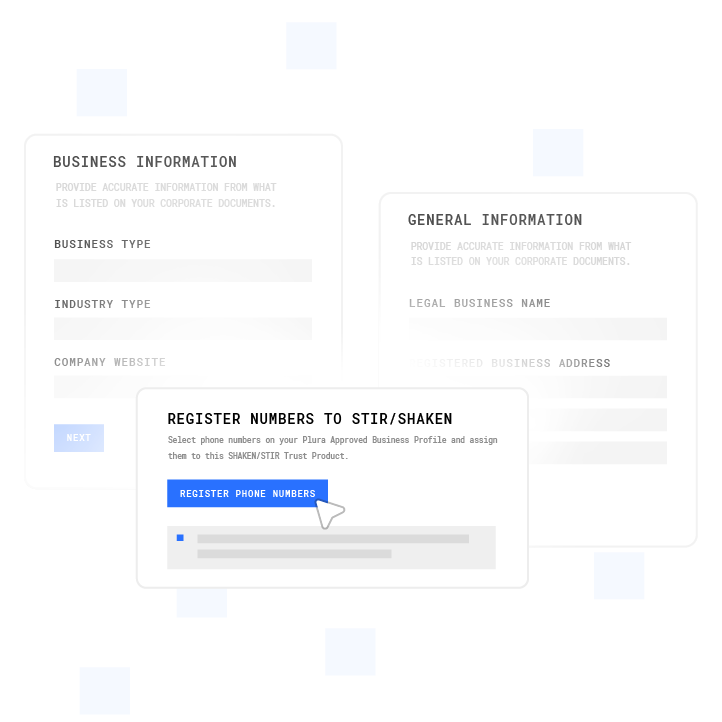
The contract model reflects the infrastructure model. Plura’s pricing is structured as annual contracts billed monthly, with the 90-day opt-out described earlier built into every agreement. If the deployment is not delivering within that period, operators are not held to the annual term. That opt-out clause is the central differentiator from traditional 12-month lock-ins with the termination penalties discussed earlier.
For home services operators, the after-hours call answering use case is direct. Plura’s AI agents answer every call on the first ring, book jobs into the operator’s calendar, and log the interaction to the CRM while the technician is still on the job. Missed-call recovery runs automatically, so calls that come in during peak hours or overnight do not go to voicemail and then to a competitor. The Stateful Conversation Database holds context across every channel, so a customer who texted at 9 a.m. is recognized when the call comes at noon.
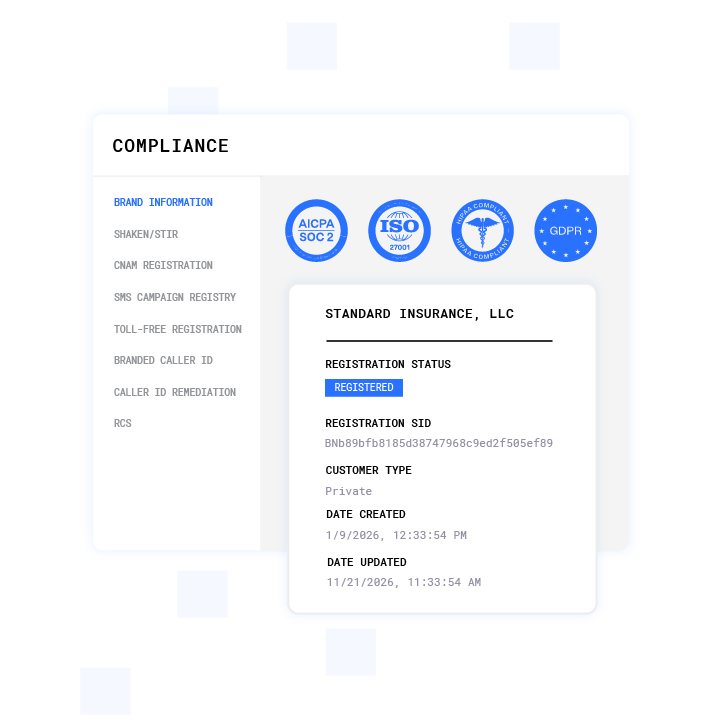
Plura’s platform supports compliance with SOC 2, HIPAA, ISO certification, GDPR, SHAKEN/STIR caller ID verification, TCPA compliance, and DNC compliance.1 Operators are responsible for their own regulatory obligations and should consult qualified counsel regarding their specific compliance posture.
Book a live demo with Plura to see the AI-native contract model in operation.
Billing Math and Hidden Fees Q&A
How per-minute billing affects a 90-second after-hours call
Under 60-second rounding, a 90-second call is billed as 120 seconds, or two full minutes. At a base rate of $1.25 per minute with a 1.5× after-hours surcharge, that 90-second call costs $3.75. A typical 2-minute order call at a $1.25 per-minute base rate, rounded to 2.5 minutes under 30-second billing increments and assessed a 1.5× after-hours surcharge, costs $4.69. At 200 calls per month, that billing structure produces $938 in operator fees before monthly minimums or other charges. Per-second billing removes the rounding inflation entirely.
Hidden fees common in traditional contracts
The most common hidden fees in traditional after-hours answering service contracts include:
- Setup and onboarding fees that typically apply one time
- Script modification fees that may apply for complex changes
- After-hours surcharges of 25–50% above the base rate
- Holiday surcharges that stack on top of after-hours premiums
- Overage charges that typically result in actual monthly costs that are 2–3 times the advertised base plan price
- 28-day billing cycles that generate 13 invoices per year instead of 12
- Call transfer fees of $0.25–$0.75 per transfer
- Add-on charges for call recording, appointment scheduling, and reporting
CRM integrations in after-hours agreements
Human answering services incur additional operational costs from manual data entry into CRMs and calendars by agents, whereas AI receptionists eliminate this through real-time API integration. Traditional answering services commonly provide CRM integrations via API or Zapier, frequently as cost-effective or included options with real-time syncing. Plura’s platform connects to 50+ integrations across CRMs, calendars, payment processors, and data enrichment providers, included in the workflow rather than billed as add-ons. Every interaction is logged to the Stateful Conversation Database and pushed to the connected CRM in real time during the call.
Compliance Considerations for After-Hours Answering
After-hours call answering service contracts for regulated industries carry compliance requirements that vary by vertical and jurisdiction. Healthcare operators evaluating answering service agreements should review how providers handle protected health information (PHI) under HIPAA (45 CFR Parts 160, 162, 164).2 HIPAA penalties can reach $71,162 per violation even for unintentional mistakes. Operators should consult qualified counsel to determine their specific obligations.
Infrastructure location is a material contract term. Providers that route calls through offshore infrastructure or third-party carriers may create exposure under the FCC’s Notice of Proposed Rulemaking (CG Docket No. 26-52), which proposes restrictions on offshore handling of sensitive consumer data.2 Operators in states with active onshoring laws, including New York, New Jersey, Connecticut, Missouri, and Florida, should review their vendor agreements against applicable state statutes with qualified counsel.
Plura supports the compliance frameworks outlined earlier, with all infrastructure operating on 100% U.S. systems. Real-time DNC scrubbing checks every outbound contact before dial. Consent records are timestamped and immutable. Quiet-hours rules enforce automatically through time-zone detection. Operators are responsible for their own compliance posture and should consult qualified counsel regarding their specific regulatory obligations.
Conclusion: Why the 90-Day Opt-Out Matters
Traditional after-hours call answering service contracts often impose commitment periods, per-minute billing with rounding that inflates costs, setup fees, after-hours surcharges, and early termination fees. The billing structure is designed around linear human-agent costs, and every increase in call volume increases cost proportionally.
Plura’s AI-native contract model removes many of those friction points with annual contracts billed monthly, a 90-day opt-out clause that replaces traditional long-term lock-ins, and 100% U.S. infrastructure under an FCC-licensed carrier. The Stateful Conversation Database holds context across every channel, which supports consistent experiences for callers.
The 90-day opt-out discussed throughout this article is the structural commitment that separates Plura from traditional contracts in this market. It keeps the performance obligation with Plura, not with the operator.
Run your numbers through Plura’s ROI calculator to check your cost savings against your current per-minute contract.
Compare Plura’s pricing side by side to evaluate capability against your current after-hours coverage model.
Frequently Asked Questions
What to review in an after-hours answering contract before signing
The most important contract terms to review before signing an after-hours answering service agreement are the minimum commitment period, billing increment (30-second, 60-second, or per-second), overage rate relative to the base rate, after-hours and holiday surcharge structure, setup and modification fees, cancellation notice requirements, and early termination penalties. Many providers advertise a base per-minute rate that does not reflect the effective cost per call once rounding, surcharges, and overages are applied. Requesting a sample invoice based on your actual call volume and average handle time gives a more accurate cost projection than the advertised rate alone. Operators in regulated industries should also confirm infrastructure location, data handling practices, and which compliance frameworks the provider supports before executing any agreement.
Difference between month-to-month contracts and a 90-day opt-out
A month-to-month answering service contract allows the operator to cancel at the end of any billing cycle with written notice, without incurring an early termination fee. The trade-off is that month-to-month plans often carry higher per-minute rates than annual commitments, and some providers use them as an entry point before pushing operators toward longer terms. A 90-day opt-out clause operates differently. It sits inside an annual contract and gives the operator a defined window, typically the first 90 days of the agreement, to exit without penalty if the deployment is not delivering measurable results. The 90-day opt-out functions as a performance guarantee built into the contract structure. Plura’s annual contracts include this 90-day window on every plan, which means operators are not locked into a full year if the AI deployment does not meet their performance expectations within the first quarter.
How Plura’s billing model differs from traditional per-minute billing
Traditional human-staffed answering services often bill in 60-second increments, which means a 91-second call is billed as 120 seconds under 60-second rounding. That rounding alone can inflate costs 20–30% above the actual call duration. The overage penalties described earlier then push total monthly costs even higher, and after-hours and holiday surcharges stack on top of both. Plura’s AI-native model uses consistent billing without after-hours surcharges, without holiday premiums, and without a differentiated overage rate. The same rate applies at 2 p.m. on a Tuesday and at 11 p.m. on Christmas Eve. For high-volume operators running significant after-hours call traffic, removing surcharges and rounding inflation produces material cost differences at scale.
Compliance frameworks Plura supports for after-hours call handling
Plura’s platform supports compliance with SOC 2, HIPAA, ISO certification, GDPR, SHAKEN/STIR caller ID verification, TCPA compliance, and DNC compliance. Real-time DNC scrubbing runs on every outbound contact before dial. Consent records are timestamped and immutable. Quiet-hours enforcement runs automatically through time-zone detection. All voice origination, model hosting, data storage, and call recording operate on 100% U.S. infrastructure under Plura’s FCC-licensed carrier. Operators are responsible for their own regulatory obligations and compliance posture. The specific requirements applicable to any operator’s after-hours call handling, including HIPAA considerations for healthcare operators and state-level restrictions in New York, New Jersey, Connecticut, Missouri, and Florida, should be assessed with qualified counsel before executing any vendor agreement.
Plura for franchise networks and multi-location operators
Plura’s platform is built for multi-location operators. AI agents answer 100% of calls within two rings with identical greeting, qualification, and escalation logic across every location in the network. The Stateful Conversation Database holds context across every channel, so a customer who contacted one location by SMS is recognized when they call a different location. Centralized dashboards track per-location performance metrics, and system-level enforcement of scripts, disclosures, DNC lists, and state-specific regulations applies across the entire network without requiring location-by-location configuration. Franchise operators running high after-hours call volumes can deploy Plura across their network in days rather than the 2–4 weeks typically required to train new front-desk staff at each location.
1 Plura AI maintains SOC 2, HIPAA, ISO, and GDPR posture as part of its platform infrastructure. References to compliance frameworks in this article describe Plura’s platform capabilities and do not constitute a guarantee that any customer using Plura will themselves be compliant with applicable laws or standards. Customers remain solely responsible for their own regulatory obligations, certifications, consent management, recordkeeping, and the claims they make to their own end users. Consult qualified legal counsel for guidance specific to your use case.
2 This article describes regulatory frameworks at a general level and does not constitute legal advice. Laws and regulations vary by jurisdiction, change over time, and apply differently depending on facts and circumstances. Readers should consult qualified legal counsel before making compliance decisions.
3 Performance figures, customer outcomes, and industry statistics referenced in this article are drawn from cited third-party sources or Plura customer case studies. Individual results vary based on implementation, use case, industry, audience, and execution. Past or aggregate performance is not a guarantee of future results.
4 References to third-party products, services, companies, or research are made for informational and comparative purposes only. Plura AI is not affiliated with, endorsed by, or sponsored by any third party named in this article unless explicitly stated. Trademarks and product names referenced remain the property of their respective owners.
This article is provided for informational purposes only and reflects Plura AI’s understanding at the time of publication. Product capabilities, integrations, and specifications are subject to change. For the most current information, visit plura.ai.
This article was produced with the assistance of AI tools and reviewed by Plura AI prior to publication.