
Written by: Matt Beucler, CEO, Plura AI
Key Takeaways
- WISMO inquiries consume 30-50% of support capacity and cost the industry $1.7 billion annually, so order status automation delivers strong ROI.1
- Automation syncs storefronts, fulfillment systems, and customer channels in real time, which removes manual status chasing and data entry.
- AI-powered assistants resolve most tracking questions instantly via SMS and voice, which cuts ticket volume significantly within the first 60 days.
- Tool selection depends on business type: Shopify merchants need native integrations, B2B teams need ERP validation, and high-volume support teams gain the most from AI agents.
- Plura AI delivers AI SMS and voice order-status automation that reads live data, answers in seconds, and escalates exceptions with full context.
See Plura’s AI order status assistant in action and review how it fits your current stack.
How Order Status Automation Works
Order status automation software connects your e-commerce platform, fulfillment systems, and customer communication channels so that order status updates flow automatically. Order status updates move without manual data entry, spreadsheet reconciliation, or warehouse check-ins.
Core benefits of order status automation include:
- Fewer support tickets: Customers get instant visibility into shipping and fulfillment stages, which reduces inbound inquiry volume.
- Real-time syncing: Data moves automatically between online storefronts, inventory systems, and notification channels so every team sees the same status.
- Error reduction: Automated workflows eliminate manual status changes and human data entry mistakes. That matters because manual order entry carries a baseline error rate of approximately 3% for experienced teams, with a fully loaded cost per error of $18,000.1
- Improved customer satisfaction: Proactive updates reduce anxiety and build trust. 76% of shoppers say a positive delivery experience influenced their decision to repurchase from a brand.1
- Operational efficiency: Support teams focus on complex issues instead of copy-pasting tracking numbers. When WISMO volume is high, agents spend 40-60% of a shift on this work alone.
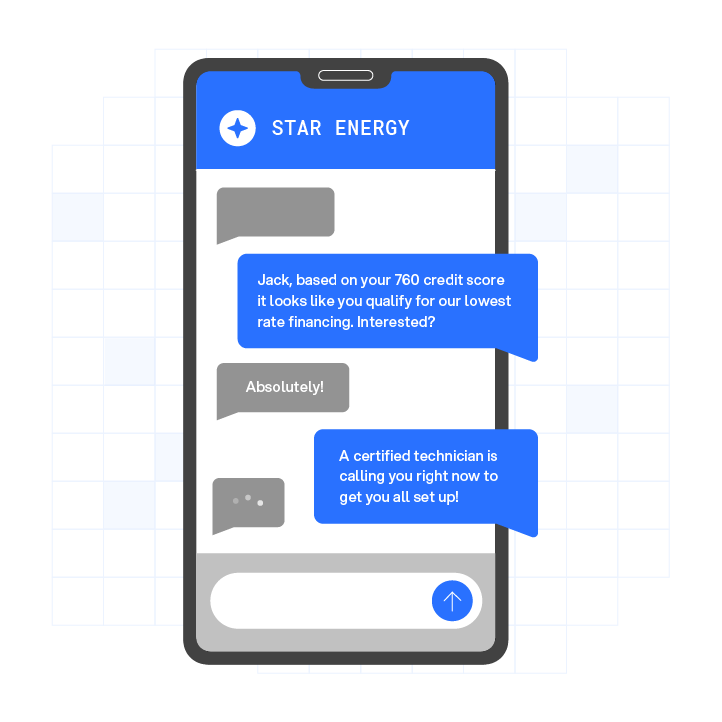
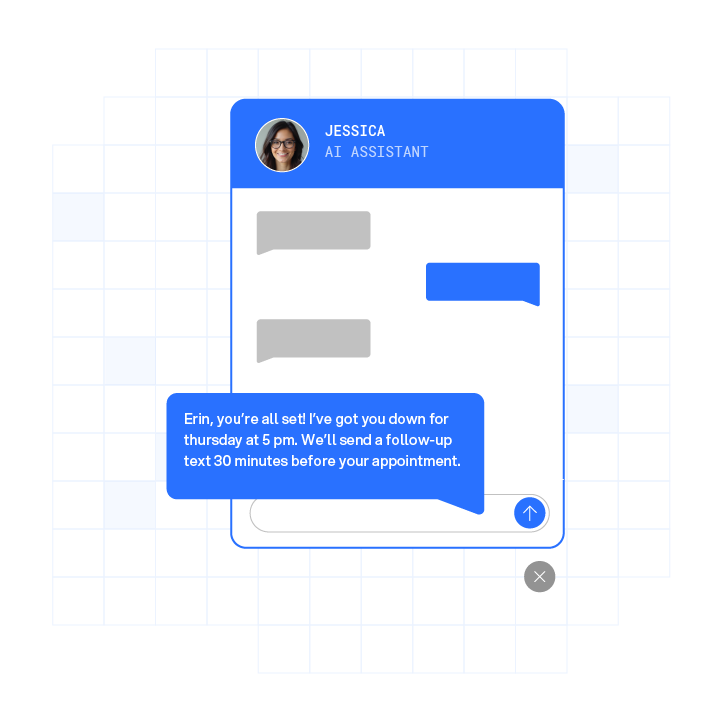
AI-powered solutions extend these benefits further. An AI order status assistant does more than send notifications. It holds a conversation. When a customer texts “Where is my order?”, the AI reads live order and carrier data, answers in seconds, and escalates only the exceptions that need human judgment. In logistics, AI resolves 70-85% of shipment tracking and delivery status inquiries, the single highest-volume query type in logistics support.1
Order Status Automation Tools by Business Type
Now that the core workflow is clear, you can map tools to the specific slice of the problem your team needs to solve.
| Tool | Best For | Key Features |
|---|---|---|
| Zapier | Workflow automation across disconnected apps | Triggers, multi-step workflows, trusted by 3.4 million companies |
| ShipBob | Fulfillment plus branded tracking for e-commerce | TrackBob branded tracking page, MCP connector, Bobby AI agent (beta) |
| Esker | Enterprise B2B order management | AI capture, ERP validation, 92% less manual entry, 5x faster processing |
| ShipStation | Shipping and tracking for high-volume shippers | 200+ carriers, rate shopping, tracking API |
| Plura AI | AI-powered order status automation via AI SMS and voice | AI SMS customer service, stateful memory across channels, 24/7 coverage, live order data integration |
Pricing varies by vendor. Zapier offers a free tier with paid plans, ShipBob uses fulfillment-based pricing, Esker prices by quote, ShipStation uses subscriptions, and Plura prices per conversation.
Choosing Software That Fits Your Operation
For e-commerce (Shopify, WooCommerce): Focus on tools that integrate natively with your platform, support branded tracking pages, and automate notifications at each status change. Merchants using proactive shipping notifications see 50% fewer WISMO tickets than merchants relying on carrier-default tracking. If you handle more than 1,000 orders monthly, manual processes already create measurable cost and delay.
For B2B: Order complexity is higher, so you need validation against contract pricing, credit terms, and stock levels. Manual B2B order processing costs between $25 and $100 per order, including labor, error corrections, and administrative overhead. Enterprise tools like Esker perform well here. Mid-market operators should weigh implementation effort and change management carefully.
For enterprise: Large organizations need ERP integration, multi-channel order capture, and governance controls. Salesforce Order Management fits teams standardized on the Salesforce ecosystem, with Agentforce handling customer service workflows at scale.
For AI order status assistants: These AI agents automatically respond to order status inquiries via AI SMS, voice, or webchat. They fit best when you see a high volume of repetitive “Where is my order?” queries. Plura reads live order data, answers in seconds, and escalates exceptions to humans with full context. The platform’s stateful conversation database keeps a single identity across channels, so a customer who texts at 9 a.m. is recognized when they call at noon. Integrations cover Shopify, HubSpot, Salesforce, and 50+ other tools.
Schedule a personalized walkthrough of Plura to see how the AI order status assistant handles live order data across AI SMS and voice.
Step-by-Step Automation Workflow Across the Order Lifecycle
A reliable order status automation workflow covers four stages across the order lifecycle.
- Order received: Send confirmation with tracking link and expected delivery date. This first touchpoint sets expectations, so include the order number, product descriptor, and a direct support path. A 2026 consumer texting behavior report found that 89% of consumers expect every message to earn its place.
- Order shipped: Send a shipping notification with carrier tracking number. This update reassures the customer that the order is moving. Brands that send “out for delivery” notifications see a 67% reduction in delivery-day WISMO tickets, the single highest-impact touchpoint in the post-purchase sequence.
- Order delivered: Send delivery confirmation and request a review. This moment captures peak attention, so it supports both service and marketing goals. Post-purchase communications generate a 4.1x higher click-through rate than promotional emails.
- Exception handling: Automatically notify customers of delays or issues before they ask. Proactive outreach prevents confusion and repeat contacts. Every delivery exception that is not communicated proactively generates roughly 2 to 3 downstream WISMO tickets.
AI can manage these steps across SMS, email, and voice while answering follow-up questions in real time. When a customer replies “When will it arrive?”, the AI checks live carrier data and responds instantly. When a package stalls, the AI identifies the exception type and either resolves it or escalates with full context.
SMS open rates exceed 95%, compared to email open rates of 60-70% for transactional messages. For the three highest-impact touchpoints mentioned above, SMS usually performs best as the primary channel.
Common Pitfalls and How to Avoid Them
Even with a solid workflow in place, several common mistakes can undermine your automation. These pitfalls appear frequently in high-volume operations.
Pitfall 1: Poor system integration. When OMS, WMS, CRM, and helpdesk do not sync, customers and agents work from different truths. A frequent pitfall in order status automation is poor system integration, which creates inconsistent status information and forces customers and agents to work from different data. Connect all core systems so everyone sees the same live status.
Pitfall 2: Automating too broadly too quickly. Businesses often fail when they automate too broadly too quickly instead of starting with one narrow workflow like WISMO or order confirmation. Start with one high-impact flow, test it end to end, then expand.
Pitfall 3: Ignoring mobile-first customers. As noted earlier, SMS performs strongly for transactional updates. Teams that underuse SMS at shipped, out-for-delivery, and exception touchpoints miss the customers most likely to engage on mobile.
Pitfall 4: No-reply sender addresses. Using a no-reply or unmonitored sender address signals to customers the business does not want to hear from them. Send from a monitored support address with a clear path to human assistance.
Pitfall 5: Not testing edge cases. A common operational pitfall is not testing edge cases such as partial fulfillment, canceled orders, delays, duplicates, or multiple triggers firing for the same customer. Add suppression rules, failure alerts, and end-to-end testing before scaling.
FAQ
What is the best order tracking software?
The best order tracking software depends on your business type and the problem you are solving. For e-commerce brands on Shopify or WooCommerce, ShipBob and ShipStation handle fulfillment and branded tracking well.2 For enterprise B2B, Esker leads with AI-powered order capture that delivers 92% less manual entry and 5x faster processing. For workflow automation across disconnected apps, Zapier connects existing tools without replacing them.2 For AI-powered order status automation via AI SMS and voice, where the goal is to reduce WISMO tickets dramatically, Plura AI fits teams that want live data, natural conversations, and context-rich escalations.
Can AI do order entry?
AI-powered order management tools capture orders from email, EDI, portals, and e-commerce channels, extract data at header and line level, and validate against ERP information including products, pricing, quantities, and delivery details. Esker reports 92% less manual entry and 5x faster order processing for enterprise customers using this approach. For customer-facing order status inquiries, AI agents like Plura’s AI SMS customer service handle the conversation layer, reading live order data and answering questions in seconds without requiring a human agent to look up the information manually.
How do you automate purchase orders?
Workflow automation tools like Zapier can create purchase orders and invoices automatically when Shopify orders are updated, integrating with accounting platforms like QuickBooks Online. For B2B operations with higher complexity, AI-powered order management software like Esker captures incoming orders from email, EDI, and portals, validates them against ERP data, and posts them automatically. The key requirement is connecting all core systems so order data flows without manual re-entry at each handoff. For the customer communication layer, automating status notifications at each stage of the order lifecycle reduces inbound inquiry volume significantly.
What is an AI order status assistant?
An AI order status assistant is an AI agent that automatically responds to order status inquiries via AI SMS, voice, or webchat. It connects to live order management and carrier data, reads the current status of a specific order, and answers “Where is my order?” questions in seconds. When a customer’s situation falls outside standard parameters, such as a lost package or a delivered-not-received claim, the AI identifies the exception type and escalates to a human agent with the full conversation history and order context attached. Plura’s AI SMS customer service operates this way, with stateful memory that persists across every channel so customers do not have to repeat themselves.
How does order status automation reduce support tickets?
Order status automation reduces WISMO tickets through proactive notifications and self-service resolution. Proactive notifications, sent at each meaningful status change, answer the customer’s question before they ask it. Merchants using proactive shipping notifications see 50% fewer WISMO tickets than those relying on carrier-default tracking, according to Shopify’s 2025 Commerce Report. Self-service resolution, powered by AI agents connected to live order data, handles the inquiries that do come in without routing them to a human agent. Industry data shows AI resolves 70-85% of shipment tracking and delivery status inquiries in logistics deployments.1 The combination of proactive outreach and AI-powered response handling can reduce WISMO ticket volume by 60-70% within 60 days of implementation.
The Case for AI-Powered Order Status Automation
Manual order status updates create a structural drain on support. They consume the 30-50% capacity mentioned earlier, cost $5-$12 per ticket, and scale linearly with order volume. Order status automation software removes this category of work. AI-powered solutions go further, answering customer inquiries in seconds across AI SMS and voice, 24/7, without adding headcount.
The cost differential between AI and human handling is substantial. The average cost per AI-resolved ticket is $0.42, compared to $12.50 for human-resolved tickets, a 29.7x cost differential.1 Gartner’s customer service benchmarks put the median cost per contact at $1.84 for self-service channels and $13.50 for assisted channels.2 For a business handling 1,000 WISMO tickets per month, shifting the majority to AI resolution recovers thousands of dollars monthly while improving response time from minutes to seconds.
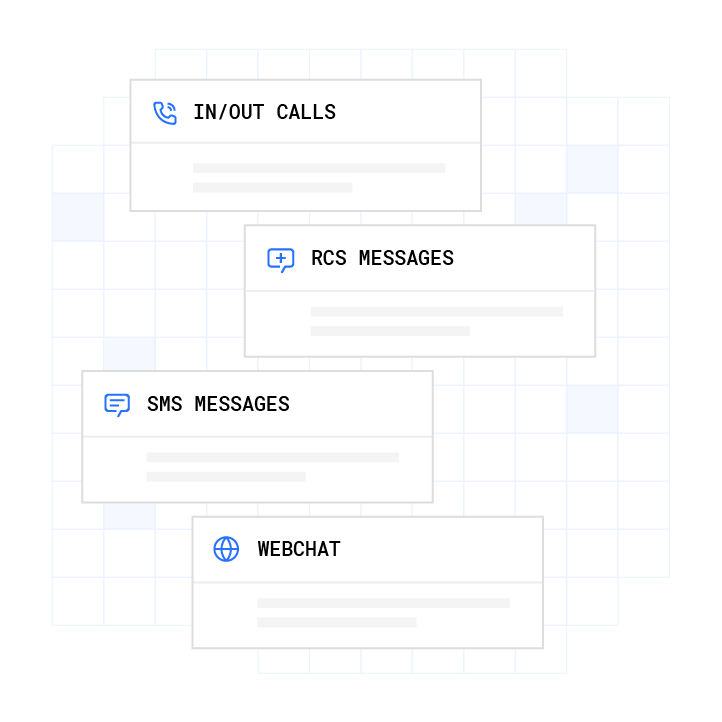
Plura’s AI SMS customer service reads live order data, holds natural conversations, and escalates exceptions with full context. The platform’s stateful conversation database preserves context across every channel, including voice, AI SMS, RCS (Rich Communication Services), and webchat. As a result, each channel inherits the full history of prior touchpoints. AI contact centers provide 24/7/365 availability and a 0% turnover rate, compared to 30-45% annually for traditional operations.
Compare plans and rates side by side, or run your numbers through Plura’s ROI calculator to check your cost savings in real time.
Ready to cut WISMO volume and reclaim support capacity? Schedule a live demo with Plura.
1 Performance figures, customer outcomes, and industry statistics referenced in this article are drawn from cited third-party sources or Plura customer case studies. Individual results vary based on implementation, use case, industry, audience, and execution. Past or aggregate performance is not a guarantee of future results.
2 References to third-party products, services, companies, or research are made for informational and comparative purposes only. Plura AI is not affiliated with, endorsed by, or sponsored by any third party named in this article unless explicitly stated. Trademarks and product names referenced remain the property of their respective owners.
This article is provided for informational purposes only and reflects Plura AI’s understanding at the time of publication. Product capabilities, integrations, and specifications are subject to change. For the most current information, visit plura.ai.
This article was produced with the assistance of AI tools and reviewed by Plura AI prior to publication.