

Written by: Matt Beucler, CEO, Plura AI | Last updated: August 26, 2026
Key Takeaways
- AI lead response under 5 minutes is now a lagging benchmark. Plura AI contacts every inbound lead in under 5 seconds using AI voice agents, AI SMS, and stateful conversation memory.
- Leads contacted within 1 minute are 391% more likely to convert than those contacted after 24 hours, and companies responding within five minutes are 100x more likely to connect with a prospect than those waiting 30 minutes.3
- Plura’s 7-step workflow compresses first contact to under 5 seconds across AI SMS and AI voice, with stateful memory connecting every channel and a carrier-grade compliance engine that supports TCPA, DNC, SOC 2, HIPAA, ISO, GDPR, and SHAKEN/STIR frameworks.1
- Operators running this sequence on Plura report 3x average ROI in 90 days, 47% average pipeline growth, and 90% faster lead-response time than their pre-deployment baseline.3
- Teams ready to modernize lead response can start a free Plura trial today.
Why 5 Minutes (or 5 Seconds) Matters for Revenue
The 5-minute benchmark originates from Dr. James Oldroyd’s Lead Response Management Study, which found that contacting a web lead within 5 minutes makes a company 21 times more likely to qualify that lead than waiting 30 minutes. That research was published in 2007, and buyer expectations have accelerated since then.
Recent 2026 B2B inbound studies report a median first response time of approximately 42 hours, with 7%–23% of B2B teams responding within 5 minutes. The gap between what buyers expect and what operators deliver has widened, not narrowed.
The conversion math is direct. As noted above, the 391% lift for sub-60-second contact and the 100x connection advantage for 5-minute response establish sub-60-second contact as the threshold separating top-decile performers from the rest of the market.3
The table below contrasts outcomes at 5 seconds versus 5 minutes, using benchmarks from the 2026 research base and Plura’s own platform data.
| Metric | 5-Second Response (Plura AI) | 5-Minute Response (Industry Median) |
|---|---|---|
| Lead-to-opportunity conversion rate | 391% lift vs. delayed contact | ~21% vs. 2.3% for next-day reply |
| Likelihood of qualifying the lead | 3x to 5x connection rate increase | 21x vs. 30-minute callback |
| After-hours coverage | 24/7 coverage across every channel with no staffing gap | 24–63% of companies never respond to leads at all |
| Average industry response time | Under 5 seconds from form submission | 42 hours (HBR 2011 audit of firms that responded, often misquoted as 47 hours), while Drift studies report different metrics such as the share responding within 5 minutes |
| ROI at 90 days | 3x average ROI (Plura platform data) | Baseline: manual SDR queue economics |
7-Step Implementation Guide for Sub-5-Second Response
The data makes the case for sub-5-second response clear. The following seven steps show how to deploy that capability in your operation using Plura’s AI SMS and voice infrastructure. Each step builds on the previous one, moving from data integration through compliance controls to ongoing performance improvement.
Step 1: Connect Your CRM and Lead Sources
Objective: Create a single data pipeline so every inbound lead triggers the AI workflow immediately, regardless of source.
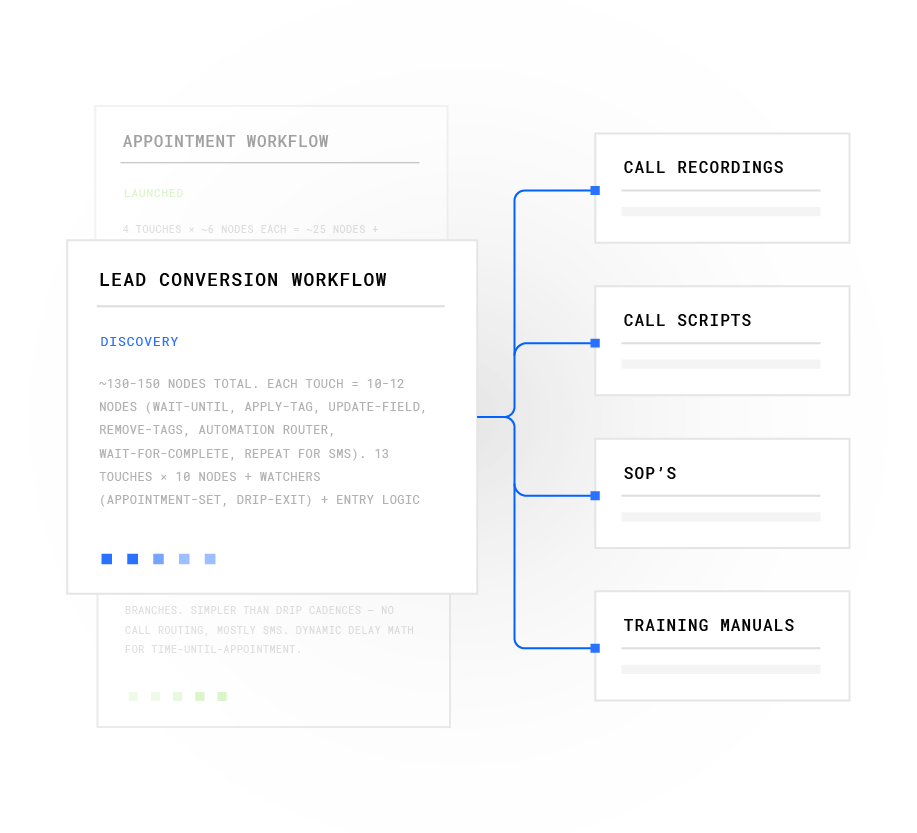
Plura’s integrations layer connects directly to HubSpot, Salesforce, Zoho, and 50+ additional tools.4 The connection maps lead fields to Plura’s Stateful Conversation Database so the AI agent reads the correct record before the first word is spoken or sent.
These decisions determine whether every lead enters the workflow reliably:
- Which lead sources feed your CRM today, including paid forms, organic webchat, and referral APIs.
- Whether your CRM fires a webhook or API event on new lead creation so Plura can react in real time.
- How duplicate leads are handled and whether records are deduplicated before they reach the workflow.
Step 2: Enable Real-Time Enrichment
Objective: Give the AI agent a complete lead picture before first contact so qualification starts on the opening exchange rather than after several back-and-forth turns.
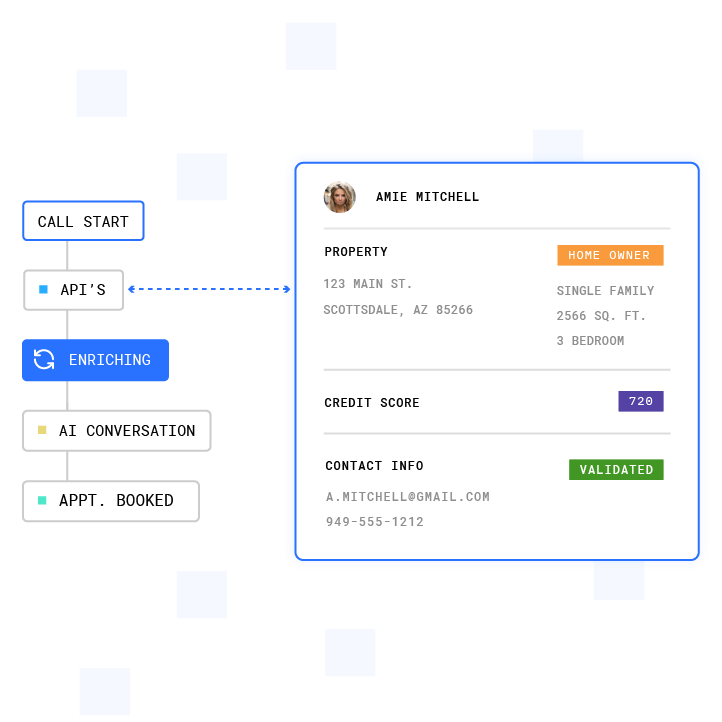
Plura’s AI Lead Intelligence layer pings 30+ data sources during the live conversation, including IP data, property records, email validation, contact data, intent signals, and business firmographics.
Most enrichment tools force a choice between comprehensive data with delay or instant response with incomplete information. Plura’s architecture eliminates that trade-off by running enrichment calls in parallel during the conversation opening, so the data arrives within the first exchange rather than in a downstream batch job.
Step 3: Configure AI SMS First Response
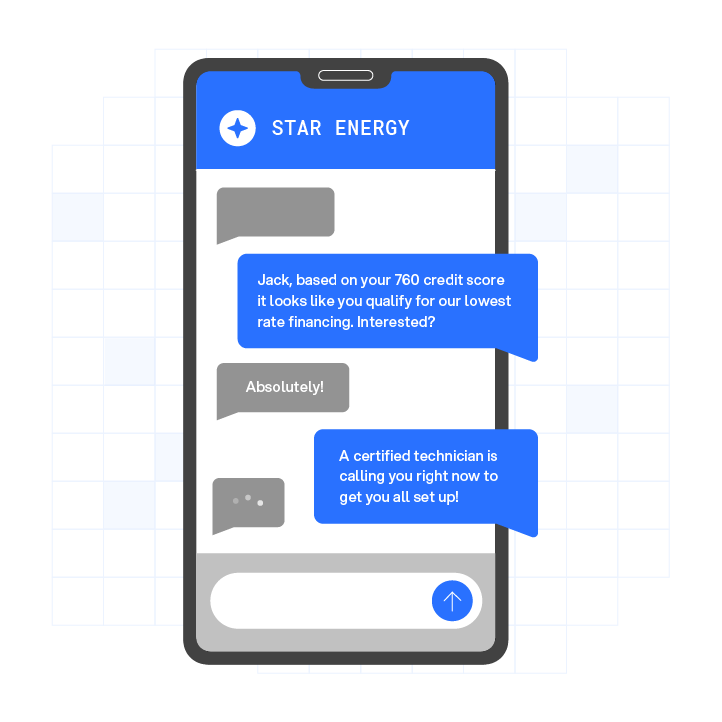
Objective: Deliver the first meaningful contact in under 5 seconds via AI SMS, reaching the lead on the channel with the highest immediate open rate.
Use this checklist to configure SMS correctly:
- Register your sending numbers through A2P 10DLC (Application-to-Person, 10-digit long code) with The Campaign Registry, since unregistered traffic faces carrier filtering regardless of consent status.1
- Set the opening message to reference the specific lead source or offer the prospect engaged with, using enrichment data from Step 2.
- Configure opt-out handling so STOP replies trigger immediate suppression inside Plura’s compliance engine.
- Apply quiet-hours rules by time zone, which Plura enforces automatically through time-zone detection on the contact record.
Step 4: Set Compliant SMS-to-Call Hand-Off
Objective: Turn a qualified SMS conversation into a live voice call with a U.S. agent, passing full conversation context so the lead never repeats themselves.
Plura’s Stateful Conversation Database holds every SMS exchange and makes it available to the AI voice agent or the human agent receiving the warm transfer. The hand-off triggers on configurable criteria:
- Lead confirms interest or requests a call.
- Qualification score crosses a defined threshold.
- Conversation reaches a negotiation node that requires human judgment.
- Sentiment detection flags a high-value or sensitive interaction.
Compliance note: TCPA (47 U.S.C. § 227) and the FCC’s 2024 ruling on AI-generated voices apply to both the SMS and voice legs of this hand-off.2 Plura’s compliance engine supports consent scope checks, DNC scrubbing, and quiet-hours rules on every outbound contact before dial. Consult qualified counsel regarding your specific obligations under applicable federal and state rules.
Calculate your SMS-to-call conversion ROI based on your current lead volume and response time.
Step 5: Activate Stateful Conversation Memory
Objective: Ensure every channel the lead touches inherits the full history of every prior touchpoint so the conversation feels continuous rather than episodic.
Plura’s Stateful Conversation Database keys every interaction to a customer token such as phone number, email, or ID. When a lead who texted at 9 a.m. receives a call at noon, the AI voice agent already knows what was said, what was offered, and what objections were raised. The agent avoids re-qualification and repeated questions.
This architecture closes an operational gap that most Twilio-based API resellers cannot address.4 Their voice and SMS products often run on separate memory layers or no persistent memory at all. Plura’s four channels, including voice, SMS, RCS, and AI webchat, share one database by design.
Step 6: Apply Carrier-Grade Compliance Controls
Objective: Support TCPA, DNC, SOC 2, HIPAA, ISO, GDPR, and SHAKEN/STIR caller ID verification frameworks on every outbound contact before it leaves the platform.1
Plura is its own FCC-licensed audio bridging carrier. Compliance controls operate at the carrier level, not as an add-on. The platform’s compliance engine works as a unified system that handles:
- Real-time DNC scrubbing against federal and state registries before every dial.
- Immutable, timestamped consent records with audit-ready exports available in one click.
- Automatic quiet-hours enforcement through time-zone detection on the contact record.
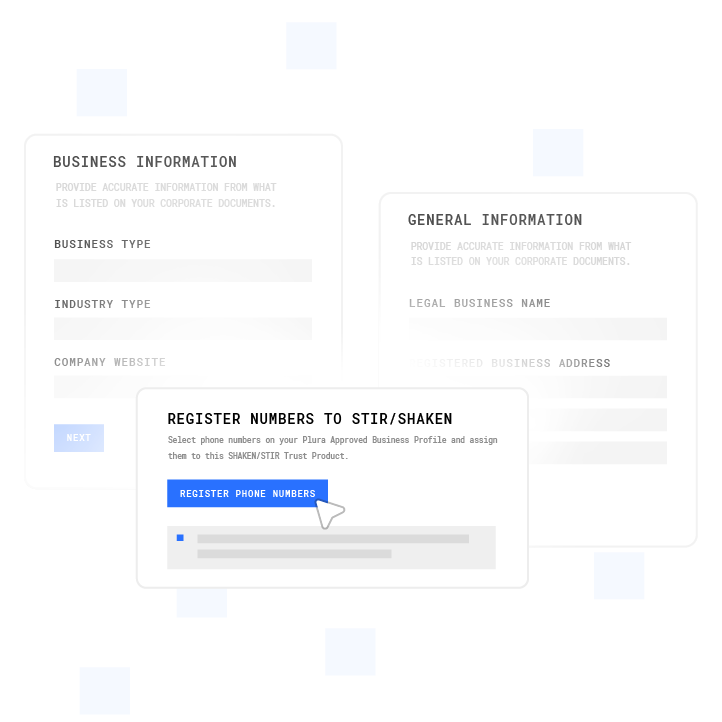
- SHAKEN/STIR caller ID verification on every outbound voice call.
- Branded caller ID issued at the carrier level rather than through a third-party reseller.
- HIPAA-aligned encryption and access controls for protected health information across all four channels.
U.S. carriers require brands sending A2P SMS to register campaigns through 10DLC with The Campaign Registry, and unregistered traffic faces carrier filtering even when consent exists. Plura’s 10DLC registration support is built into the platform onboarding sequence.
Step 7: Measure and Iterate with Conversation Intelligence
Objective: Use outcome data from every interaction to improve conversion rates, refine qualification logic, and generate audit-ready reporting for leadership and clients.
Plura’s conversation intelligence layer analyzes every voice, SMS, RCS, and webchat interaction to surface patterns such as which scripts close, which objections recur, and which hand-off triggers produce the highest close rates. The managed workflows canvas lets operators adjust conversation logic without engineering involvement.
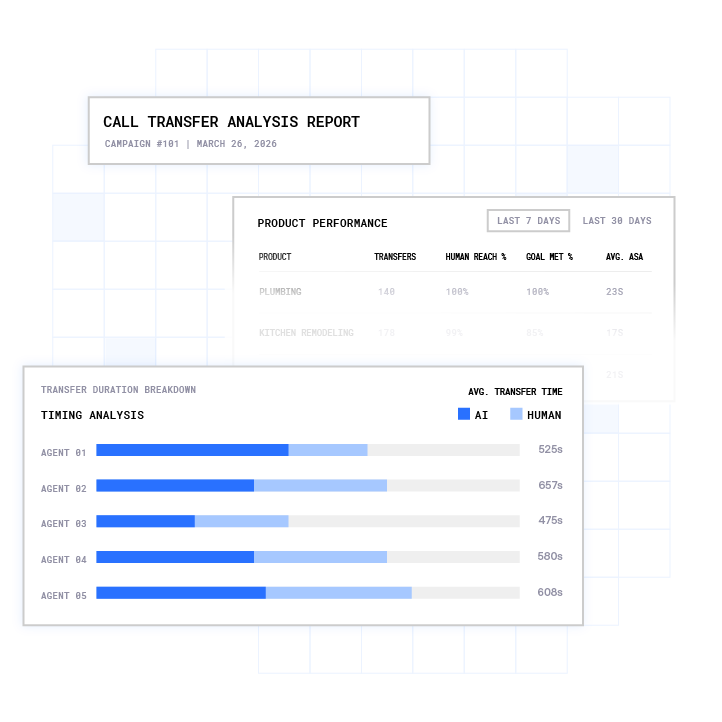
Teams track a focused set of metrics at this stage:
- Speed-to-first-contact, with a target under 5 seconds from form submission.
- Contact rate by channel and time of day.
- SMS-to-call conversion rate at the hand-off trigger.
- Lead-to-opportunity conversion rate versus the pre-deployment baseline.
Frequently Asked Questions
What is AI lead response under 5 minutes, and why is the standard shifting?
AI lead response under 5 minutes refers to contacting an inbound lead within a 5-minute window of form submission or inquiry. The standard originates from the 2007 research discussed earlier in this guide, which showed that 5-minute contact dramatically outperformed 30-minute callbacks on qualification rates. In 2026, top-performing teams now target sub-60-second response on high-intent inquiries, and AI-powered platforms like Plura contact leads in under 5 seconds. The shift reflects buyer behavior, as prospects who submit a form stay in an active decision state for a narrow window measured in seconds, not minutes.
How does Plura AI achieve sub-5-second lead response?
Plura’s platform triggers an AI SMS agent the moment a lead record is created in the connected CRM or lead source. Because Plura is its own FCC-licensed audio bridging carrier, the outbound message does not route through a third-party CPaaS provider. The AI agent reads enrichment data from 30+ sources in parallel during the opening exchange, so the first message is personalized to the lead’s profile rather than generic. The entire sequence from form submission to first contact runs in under 5 seconds. For voice, the AI voice agent initiates an outbound call on the same timeline, with SHAKEN/STIR caller ID verification and branded caller ID issued at the carrier level.
What compliance frameworks does Plura support for AI SMS and voice outreach?
Plura supports compliance with TCPA, DNC, HIPAA, SOC 2, ISO certification, GDPR, and SHAKEN/STIR caller ID verification. The platform’s compliance engine enforces real-time DNC scrubbing before every outbound contact, maintains immutable timestamped consent records, applies quiet-hours rules automatically through time-zone detection, and supports A2P 10DLC registration for SMS campaigns. HIPAA-aligned encryption and access controls cover protected health information across all four channels. Plura provides the infrastructure, and operators remain responsible for their own compliance obligations under applicable federal and state law. Consult qualified counsel for guidance specific to your use case.
What is stateful conversation memory, and why does it matter for lead response?
Stateful conversation memory means every interaction a lead has with your AI agents across voice, SMS, RCS, and webchat is stored in a single database keyed to that lead’s contact record. When the lead who texted at 9 a.m. receives a call at noon, the AI voice agent already knows what was discussed, what was offered, and what objections were raised. The agent avoids re-qualification and repeated questions. Many AI voice and SMS tools run on separate memory layers or no persistent memory at all, which forces the lead to re-explain themselves every time the channel changes. Plura’s Stateful Conversation Database is shared across all four channels by design, and it forms the operational foundation of the SMS-to-call hand-off in Step 4 of this guide.
How does Plura calculate the 3x ROI claim?
The 3x average ROI figure is based on the cost comparison between human agent operations and Plura AI agents at equivalent volume. Using the default scenario on Plura’s ROI calculator, a 15-agent operation at $20 per hour with standard taxes, benefits, and commissions at 40% talk utilization costs $60,000 per month. Replacing that team with Plura at $15 per hour, 100% talk utilization, and 6 Plura agents doing the work of 15 humans drops the monthly cost to $14,400. That produces $45,600 in savings in the first 30 days and $547,200 over 12 months. For higher-volume operations, Plura’s total cost of ownership of $700,000 per year replaces a traditional contact-center cost structure of $7 million. Teams can run their specific inputs through the calculator at Plura’s ROI calculator to see the math for their operation.
Conclusion
The 5-minute lead response standard is a 2007 benchmark running in a 2026 market. The average B2B company still takes 42 to 47 hours to respond to a new lead, while top-performing teams have compressed first contact to under 60 seconds. Plura’s 7-step workflow compresses it further, to under 5 seconds, across AI SMS and AI voice, with stateful memory connecting every channel and a carrier-grade compliance engine that supports TCPA, DNC, SOC 2, HIPAA, ISO, GDPR, and SHAKEN/STIR frameworks on every outbound contact before it leaves the platform.
The workflow is repeatable: connect your CRM and lead sources, enable real-time enrichment, configure AI SMS first response, set a compliant SMS-to-call hand-off, activate stateful conversation memory, apply carrier-grade compliance controls, and measure with conversation intelligence. Operators running this sequence on Plura report the performance improvements outlined at the top of this guide, including 3x ROI, 47% pipeline growth, and 90% faster response versus their pre-deployment baseline.
See your potential savings by comparing your current contact center costs against Plura’s AI-powered model.
Compare plans and rates to find the right fit for your operation.
1 Plura AI maintains SOC 2, HIPAA, ISO, and GDPR posture as part of its platform infrastructure. References to compliance frameworks in this article describe Plura’s platform capabilities and do not constitute a guarantee that any customer using Plura will themselves be compliant with applicable laws or standards. Customers remain solely responsible for their own regulatory obligations, certifications, consent management, recordkeeping, and the claims they make to their own end users. Consult qualified legal counsel for guidance specific to your use case.
2 This article describes regulatory frameworks at a general level and does not constitute legal advice. Laws and regulations vary by jurisdiction, change over time, and apply differently depending on facts and circumstances. Readers should consult qualified legal counsel before making compliance decisions.
3 Performance figures, customer outcomes, and industry statistics referenced in this article are drawn from cited third-party sources or Plura customer case studies. Individual results vary based on implementation, use case, industry, audience, and execution. Past or aggregate performance is not a guarantee of future results.
4 References to third-party products, services, companies, or research are made for informational and comparative purposes only. Plura AI is not affiliated with, endorsed by, or sponsored by any third party named in this article unless explicitly stated. Trademarks and product names referenced remain the property of their respective owners.
This article is provided for informational purposes only and reflects Plura AI’s understanding at the time of publication. Product capabilities, integrations, and specifications are subject to change. For the most current information, visit plura.ai.
This article was produced with the assistance of AI tools and reviewed by Plura AI prior to publication.