
Written by: Matt Beucler, CEO, Plura AI
Updated September 2026
Key Takeaways for 2026 Budget Planning
- Contact center AI projects span from low-cost pilots to six-figure enterprise programs. The real budget driver is integration, workflow design, and change management, not software licensing alone.
- Mid-market and enterprise teams see the biggest impact when they plan for Year 1 total cost of ownership, including setup, integrations, and ongoing tuning.
- Per-seat, usage-based, and per-agent pricing models shift who carries volume risk and how predictable your monthly bill becomes.
- Hidden and ongoing costs such as maintenance, model tuning, human escalation, and compliance can add 35–50% to advertised platform pricing in Year 1.3
- Plura AI uses transparent per-agent pricing and provides a free ROI calculator so leaders can forecast costs against real call volumes and handle times.
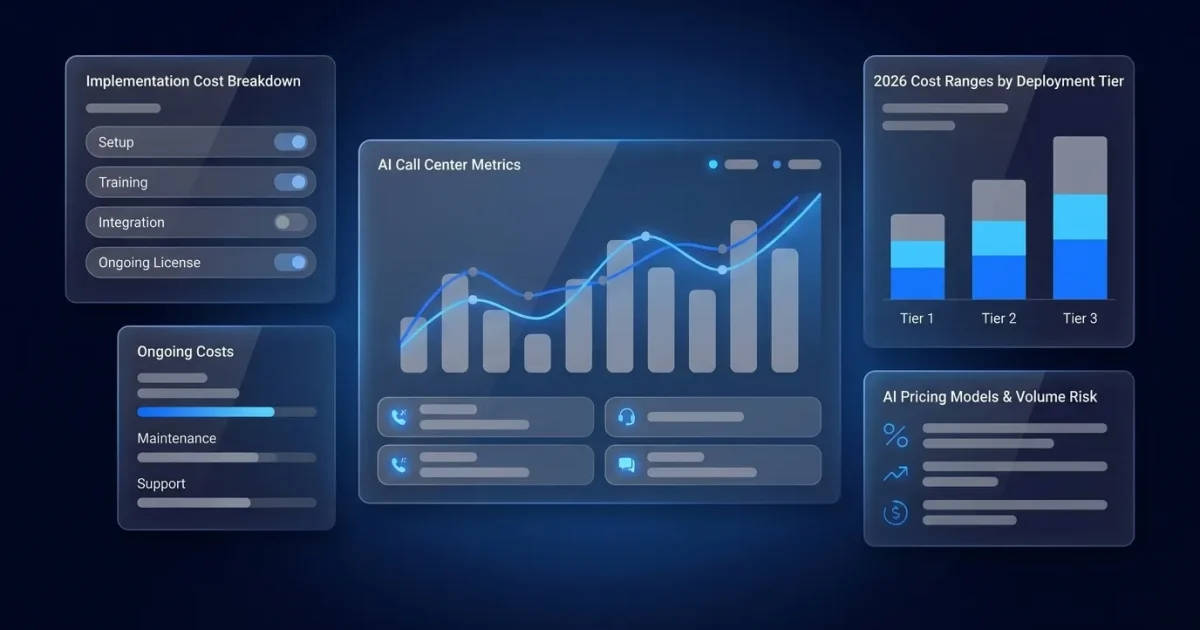
2026 Cost Ranges by Contact Center AI Deployment Tier
The table below synthesizes ranges from Gartner’s customer service benchmarks, CX Today’s AI pricing guide, The AI Agent Index, and Plura’s published pricing.4
| Deployment Tier | Typical Setup Fees | Monthly Costs | Best-Fit Scenario |
|---|---|---|---|
| DIY / Open-Source | Under $3,500 (one-time GPU hardware) | $7,000–$9,000 (infrastructure + LLM API) | Technical teams with engineering resources; basic chatbot deployments |
| SMB Entry | $2,000–$8,000 | $300–$900 per location | Small teams (under 20 agents); single-channel voice or chat |
| Mid-Market | $20,000–$75,000 | $8,000–$30,000 | 20–100 agents; multi-channel (voice + SMS + chat); CRM integration |
| Enterprise | $75,000–$150,000+ | $30,000–$100,000+ | 100+ agents; custom workflows; compliance requirements (HIPAA, SOC 2)1 |
Contact Center AI Pricing Models and Volume Risk
CCaaS (Contact Center as a Service) vendors rely on three dominant pricing structures, and each one shifts how you carry volume and forecasting risk.
| Pricing Model | Typical Cost Range | Best Fit | Watch-Outs |
|---|---|---|---|
| Per-Seat (CCaaS add-on) | $75–$240/user/month (Genesys Cloud CX tiers CX 1–CX 4) | Stable headcount; traditional CCaaS platforms | AI features may be billed separately, and add-on creep is common |
| Usage-Based (per-minute/per-conversation) | $0.05–$0.25/voice minute; per-resolution pricing $0.50–$2.00 | Variable volume; seasonal peaks | Bills can spike with traffic and become hard to forecast at scale |
| Per-Agent (AI-first platform) | $15/hour per AI agent; $2,750 build fee per agent (Plura Agency Plan) | High-volume operators; AI-first deployments | Leaders should verify what is included in the hourly rate |
Plura AI uses a transparent per-agent model with annual contracts billed monthly and a 90-day opt-out window. Full plan details are available on the pricing page.
Run your numbers through Plura’s calculator to check your ROI in real time.
Implementation Cost Breakdown: Where Budgets Actually Land
Most contact center AI budgets concentrate on software, yet implementation spending usually clusters around design, integration, and data work. The ranges below reflect where budgets commonly land, based on Lorikeet’s CFO framework and AMC Technology’s Agentforce cost model.
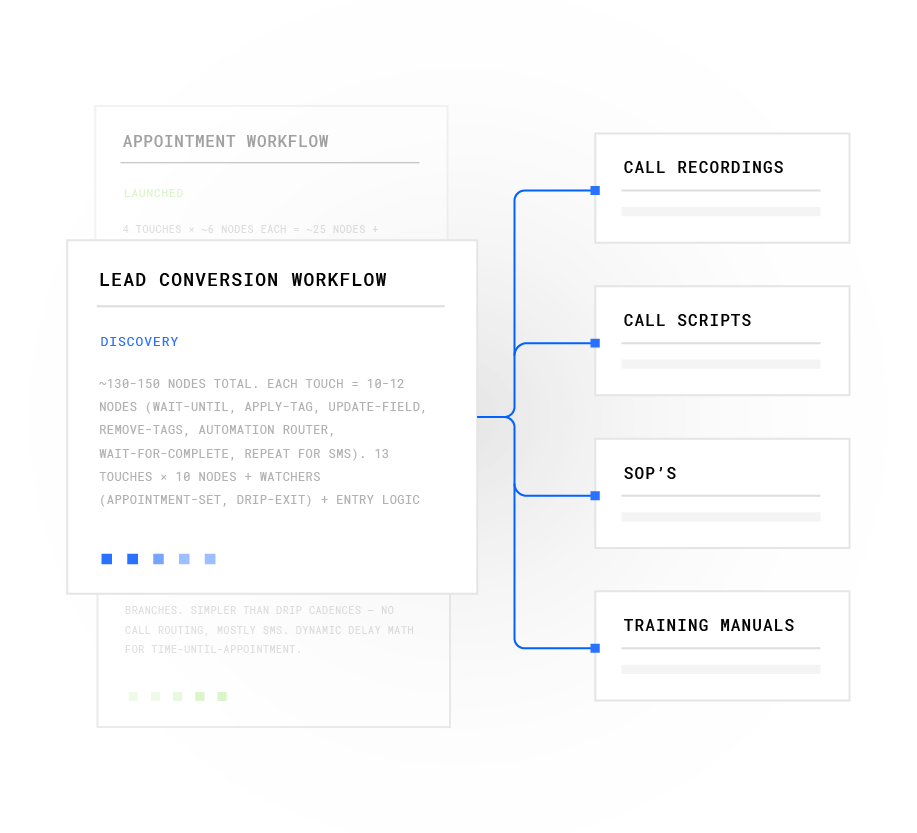
- Setup and onboarding: $2,000–$25,000. This covers workflow design, conversation scripting, and platform configuration. Simple inbound qualification flows take days. Complex multi-step intakes often take one to two months.
- CRM integration: varies widely by complexity. Salesforce, HubSpot, Zoho, and custom APIs each add cost. Integration complexity compounds with every legacy system touched, and costs can range from about $3,000 for simple integrations to $50,000 or more for complex ones, with some sources citing up to $80,000 for ERP integrations.
- Data migration and cleanup: $3,000–$25,000. Data audit and cleanup for CRM migrations typically costs $3,000 to $25,000, and migration execution plus other phases can add significantly more.
- Custom workflow design: $8,000–$15,000. Complex multi-step intakes, such as 25-question health-history surveys, sit at the upper range. Plura’s no-code workflow builder reduces engineering overhead for standard flows.
- Change management and training: $1,000–$10,000. Prosci 2024 research suggests budgeting 15–20% of total program cost for change management. McKinsey’s 2025 State of AI report found that organizations investing in change management are more likely to hit deployment targets.
These setup items combine with ongoing costs to form your Year 1 total cost of ownership, so finance teams should model both together.
Ongoing Costs That Shape Year 1 TCO
First-year budgets that cover only setup fees often miss the true run-rate. License fees represent only 50–65% of actual Year 1 AI support costs3, with hidden expenses adding 35–50% to the advertised price.
- Monthly platform fees: $1,000–$30,000+ depending on seats or usage volume.
- Maintenance and updates: Budget 15–25% of initial build cost annually for retraining and tuning. This figure covers a narrow maintenance floor and excludes broader monitoring and scaling work.
- Model degradation: AI models can degrade 10–15% in performance within months without active optimization. Teams often see declining containment rates and more escalations. Gartner research cited by Condado reports an average 20–30% decline in virtual agent effectiveness within the first year post-deployment when continuous optimization is not properly resourced.
- Human escalation costs: $8–$15 per contact when conversations transfer to human agents. Gartner’s February 2024 benchmarks put the median cost per assisted-channel contact at $13.50, versus $1.84 for self-service.
- Compliance monitoring: Costs vary widely by industry and scope. For financial services and healthcare, compliance testing can range from tens of thousands to over $100,000 depending on the program.
One way to control ongoing costs is to choose a platform that maximizes talk utilization. Plura’s AI voice agents run at 100% talk utilization, which reduces the per-conversation cost compared to human agents operating at a typical 40% talk utilization rate. The Plura ROI calculator models this difference directly: 15 human agents at $20/hour with 40% talk utilization cost $60,000/month, while 6 Plura AI agents handling equivalent volume cost $14,400/month.3
Key Cost Drivers: Volume, Channels, CRM Depth, and Compliance
- Call volume: Call volume is the most visible cost driver. Per-minute pricing scales with minutes, and per-seat pricing scales with headcount. A 50-seat equivalent contact center costs $35,000–$50,000 monthly with traditional offshore operations, compared to $8,000–$15,000 with AI.
- Channel count: Each channel, including voice, SMS, RCS (Rich Communication Services), and webchat, adds integration and usage costs. Voice carries telephony carriage, transcription, and storage costs that text channels never incur. Voice AI deployments carry cost layers including telephony carriage, speech-to-text transcription, audio storage for compliance, and concurrent call capacity at peak.
- CRM complexity: Integration depth strongly influences performance and cost. KB-only integration plateaus around 28% deflection; KB plus CRM lands around 38%; KB plus CRM plus order or billing systems delivers 50%+ deflection. Plura supports CRM integration with HubSpot, Salesforce, Zoho, and 50+ other tools.
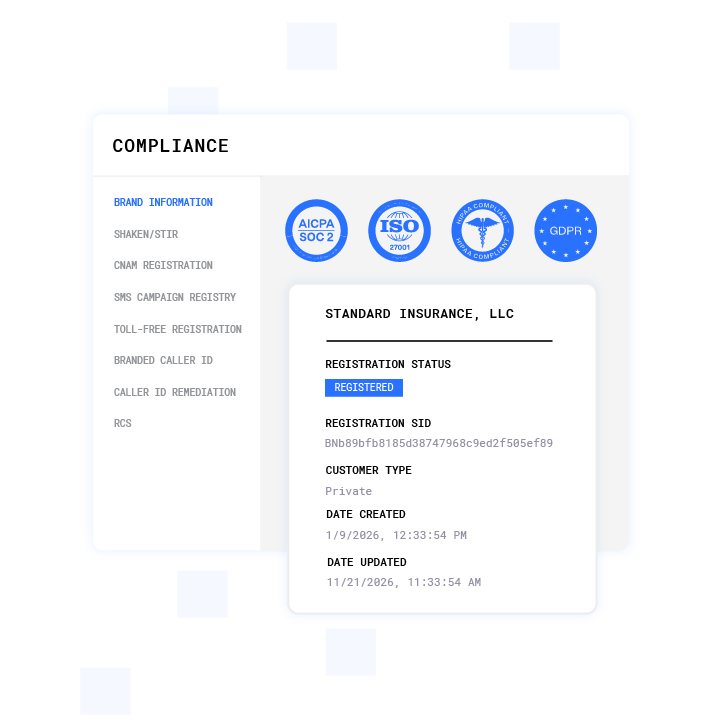
- Compliance requirements: HIPAA, SOC 2, TCPA (Telephone Consumer Protection Act), and PCI-DSS introduce audit trails, access controls, and certification-related costs.1,2 Plura is an FCC-licensed carrier with built-in TCPA and DNC (Do Not Call) compliance support, which can reduce reliance on separate third-party compliance tooling.2 Full details are at plura.ai/products/compliance.
Step-by-Step Framework to Estimate Your Own Costs
This framework helps leaders produce a defensible Year 1 total cost of ownership (TCO) number for CFO review.
- Define your volume and channels. Document monthly call minutes, chat sessions, SMS volume, and the number of channels you plan to deploy. Voice adds telephony and transcription costs that text channels do not carry.
- Choose a pricing model. Per-seat works for stable headcount on traditional CCaaS platforms. Per-minute works for variable or seasonal volume. Per-agent works for AI-first deployments where talk utilization is the primary cost lever.
- List required integrations. Each CRM, calendar, payment processor, or document-signing tool adds integration cost that varies by complexity. Count every system the AI agent needs to read from or write to.
- Estimate implementation hours. Simple inbound flows take days. Complex multi-step intakes take one to two months. Plura deployment typically takes days to weeks, with simple flows in days and complex intakes in one to two months, compared to 3–6 months for traditional enterprise CCaaS setups.
- Add ongoing costs. Budget 15–25% of build cost annually for maintenance and tuning, plus 0.25–0.5 FTE for ongoing AI management.
Formula: (Monthly platform fee x 12) + Implementation fees + Integration costs + (Annual maintenance % x build cost) = Year 1 TCO.
Run your numbers through Plura’s calculator to check your ROI in real time.
Vendor Examples: How Leading Platforms Price AI
The figures below come from published pricing pages and named industry sources. Rates are list prices and can vary by contract volume or negotiated terms.
- Genesys Cloud CX: Per-seat, tiered model. Published rates are $75/user/month (CX 1) to $240/user/month (CX 4), billed annually.4 Setup time varies widely. Simple configurations can take a few weeks. Complex deployments may take several months. A 100-agent deployment on the CX 3 tier costs $15,500/month ($186,000/year) before premium integrations or implementation services.
- Amazon Connect: Usage-based, no seat licenses. Published rates are $0.038/voice minute, $0.010/chat message, $0.080/email, and $0.014/SMS. Deployment can take days to weeks for self-serve configurations.
- Salesforce Agentforce: Seat plus consumption model. Service Cloud Enterprise starts at $175/agent/month; the Contact Center add-on adds $125/agent/month; implementation and configuration for mid-market to enterprise multi-agent deployments typically runs $150,000–$500,0004, with smaller single-use-case pilots costing significantly less.
- Plura AI: Per-agent, transparent model. $15/hour per AI agent; $2,750 build fee per agent. Deployment typically takes days to weeks, with simple flows in days and complex intakes in one to two months. Plura is an FCC-licensed carrier, so branded caller ID and compliance enforcement operate at the carrier level instead of as separate third-party add-ons. Plura supports compliance for frameworks such as TCPA and DNC, and customers remain responsible for their own regulatory obligations.
SMB vs. Enterprise: Budgeting by Contact Center Size
- SMB (under 20 agents): Expect $2,000–$8,000 upfront and $300–$900 per location monthly, according to iQDigital’s 2026 analysis. DIY options exist but require dedicated engineering resources. Plura’s AI voice agents scale from a few lines to hundreds, which keeps the platform viable for SMBs without a large upfront build commitment.
- Mid-market (20–100 agents): Expect $20,000–$75,000 upfront and $8,000–$30,000 monthly. Integration complexity and custom workflow design drive the upper range. For a mid-market operation handling 300,000–700,000 annual interactions, fully loaded Year 1 TCO ranges from $180,000 to $320,000 when platform licensing, integration, change management, and ongoing AI management are included.
- Enterprise (100+ agents): Expect $75,000–$150,000+ upfront. Compliance requirements (HIPAA, SOC 2) and multi-system orchestration dominate costs. For a 100-seat contact center, traditional operations cost $4 million to $7 million annually, while AI-powered platforms like Plura cost $300,000 to $700,000.
Book a live demo with Plura to see the cost model applied to your operation.
FAQ
How much does AI implementation cost for a mid-market contact center?
As detailed earlier, mid-market contact center AI implementations typically run $20,000–$75,000 in upfront fees, covering setup, workflow design, and CRM integration. Monthly platform costs usually add $8,000–$30,000 depending on volume and channel mix. Leaders often budget 15–25% of the initial build cost annually for maintenance and model tuning. Fully loaded Year 1 TCO for a mid-market operation handling 300,000–700,000 annual interactions commonly falls between $180,000 and $320,000 when all cost layers are included.
How much does an AI call center cost compared to a traditional contact center?
A 50-seat equivalent AI contact center typically runs $8,000–$15,000 monthly, compared to $35,000–$50,000 monthly for traditional offshore operations at equivalent volume. For a 100-seat operation, traditional contact center costs often land between $4 million and $7 million annually, while AI-powered platforms can reduce that to roughly $300,000–$700,000. As discussed earlier, the utilization gap between human agents and AI agents drives most of this difference.
What is CCaaS AI pricing and how does it differ from per-agent pricing?
CCaaS (Contact Center as a Service) AI pricing typically follows a per-seat model, where each named user pays a monthly fee regardless of usage. Genesys Cloud CX, for example, publishes rates from $75/user/month (CX 1) to $240/user/month (CX 4), billed annually. Per-agent pricing, used by AI-first platforms like Plura, charges based on active AI agent hours, so costs scale with conversation volume. At $15/hour per AI agent with 100% talk utilization, per-agent pricing aligns spend with actual handled interactions. The right model depends on whether your primary cost driver is headcount or interaction volume.
How much does an AI voice agent cost per minute or per conversation?
Usage-based AI voice agents typically range from about $0.05 to $0.25 per minute, with all-in costs often higher depending on platform and components. Per-resolution pricing for AI-resolved tickets typically ranges from about $0.50 to $2.00, while per-conversation pricing, which bills for every AI interaction, resolved or not, is often higher, such as Salesforce Agentforce at $2.00 per conversation. Plura’s per-agent model at $15/hour with 100% talk utilization translates to approximately $0.25/minute, with no separate transcription or AI add-on fees layered on top. The total cost per conversation depends on average handle time, channel mix, and whether the platform charges separately for CRM lookups, workflow actions, or escalations.
What hidden costs should I include in a contact center AI budget?
The five most commonly missed cost categories are integration complexity, data migration and cleanup, ongoing AI management, agent reskilling and workflow redesign, and compliance testing. Integration costs vary widely, from about $3,000 for simple integrations to $50,000 or more for complex ones. Data migration and cleanup typically cost $3,000–$25,000 for CRM migrations. Ongoing AI management often requires 0.25–0.5 FTE to own response quality and knowledge base updates. Agent reskilling and workflow redesign can consume 60–120 hours of operational leadership time per major deployment phase. Compliance testing costs vary by industry and scope. Direct platform costs usually represent only a portion of true Year 1 TCO, so leaders often budget above the vendor quote for Year 1 to cover these layers.
1 Plura AI maintains SOC 2, HIPAA, ISO, and GDPR posture as part of its platform infrastructure. References to compliance frameworks in this article describe Plura’s platform capabilities and do not constitute a guarantee that any customer using Plura will themselves be compliant with applicable laws or standards. Customers remain solely responsible for their own regulatory obligations, certifications, consent management, recordkeeping, and the claims they make to their own end users. Consult qualified legal counsel for guidance specific to your use case.
2 This article describes regulatory frameworks at a general level and does not constitute legal advice. Laws and regulations vary by jurisdiction, change over time, and apply differently depending on facts and circumstances. Readers should consult qualified legal counsel before making compliance decisions.
3 Performance figures, customer outcomes, and industry statistics referenced in this article are drawn from cited third-party sources or Plura customer case studies. Individual results vary based on implementation, use case, industry, audience, and execution. Past or aggregate performance is not a guarantee of future results.
4 References to third-party products, services, companies, or research are made for informational and comparative purposes only. Plura AI is not affiliated with, endorsed by, or sponsored by any third party named in this article unless explicitly stated. Trademarks and product names referenced remain the property of their respective owners.
This article is provided for informational purposes only and reflects Plura AI’s understanding at the time of publication. Product capabilities, integrations, and specifications are subject to change. For the most current information, visit plura.ai.
This article was produced with the assistance of AI tools and reviewed by Plura AI prior to publication.