
Written by: Matt Beucler, CEO, Plura AI
Key Takeaways
- AI SMS uses NLP and LLMs to understand free-form customer messages and generate accurate, two-way SMS replies in real time without human involvement.
- The technology stack includes four coordinated layers: NLP for intent parsing, LLMs for response generation, APIs and webhooks for real-time data movement, and RAG for grounding replies in live business data.
- AI SMS outperforms basic automation by handling nuanced conversations at scale while delivering 24/7 availability and consistent response quality that human texting cannot match at high volumes.
- Successful deployment requires carrier-grade compliance infrastructure, CRM integration, documented consent management, and clear escalation workflows to handle edge cases.
- Businesses that want to implement AI SMS at scale can get started with Plura AI and see the full message lifecycle running on their own data.
How AI SMS Differs From Traditional Text Automation
Traditional automated SMS operates as a one-way broadcast or a rigid keyword-response system. A business sends a mass blast, or a customer texts “STOP” and the system removes them from a list. It cannot hold a real conversation, understand intent, or handle anything outside a predefined script.
AI SMS belongs in a different category. It uses LLMs to read and interpret free-form text, so a customer can write “Hey, my AC stopped working last night and I need someone out today if possible” and the system understands the service type, the urgency, and the scheduling request. The customer does not need to select from a menu or use a specific keyword.
AI SMS is a coordinated system of components, each handling a distinct part of the conversation. These components work together in milliseconds to produce a reply that reads as if a knowledgeable human wrote it.
The Core Technology Behind AI SMS
Natural Language Processing (NLP) as the Ears
NLP is the layer that reads and interprets incoming text. When a customer sends a message, NLP parses the sentence structure and identifies the intent, which is what the customer wants to accomplish. It also extracts entities, which are specific pieces of information embedded in the message, such as a date, a product name, a location, or a problem description.
In the HVAC example above, NLP identifies the intent as a service request, the entity “AC” as the product, and “stopped working” as the problem state. That structured output is what the rest of the system acts on.
Large Language Models (LLMs) as the Brain
LLMs generate the response. Given the structured intent and entities from NLP, plus any relevant business data retrieved from connected systems, the LLM produces a reply that is grammatically natural, contextually appropriate, and aligned with the business’s tone and workflow rules.
LLMs are trained on vast amounts of text, which allows them to produce responses that do not sound like form letters. Response quality depends on the quality of the model, the specificity of the instructions given to it, and the accuracy of the data it uses.
APIs and Webhooks as the Nervous System
APIs (application programming interfaces) and webhooks move data between the customer’s phone, the SMS gateway, the AI platform, and the business’s back-end systems. Twilio’s Programmable Messaging API documentation describes how SMS messages are sent and received programmatically, with webhook callbacks delivering inbound messages to the AI platform in real time.4
When a customer sends a text, the SMS gateway receives it and fires a webhook to the AI platform. The platform processes the message, generates a reply, and sends it back through the gateway to the customer’s phone. The entire round trip typically takes 2-5 seconds.
Retrieval-Augmented Generation (RAG) as the Memory
RAG allows the AI to pull specific, current information from a business’s own data sources before generating a response. Without RAG, an LLM can only respond based on its training data, which does not include a customer’s service history, current appointment availability, or a live product catalog.
With RAG, when the HVAC customer texts in, the system queries the CRM, retrieves that customer’s prior service records, checks the scheduling system for open slots, and hands that context to the LLM before it writes the reply. The response then references the customer’s actual situation rather than a generic answer.
Plura AI provides built-in data enrichment from over 30 sources, which enables real-time context retrieval across every channel without custom integrations for each data source. With these four layers in place, a complete AI SMS conversation can run end to end in a few seconds.
Step-by-Step: How an AI SMS Conversation Works
This lifecycle shows a complete AI SMS exchange from the moment a customer sends a message to the moment they receive a reply.
- A customer sends an inbound SMS to a business number: “My AC is broken, can you help?”
- The SMS gateway receives the message and delivers it to the AI platform via webhook.
- NLP processes the text and identifies intent (service request) and entities (AC, broken).
- The RAG layer queries connected systems and pulls the customer’s service history and available appointment slots from the CRM and scheduling tool.
- The LLM generates a contextually accurate response using the NLP output and the retrieved data.
- The response is sent back through the SMS gateway to the customer’s phone.
- The AI continues the conversation and can ask clarifying questions, confirm appointment details, or escalate to a human agent when the workflow calls for it.
A sample exchange might look like this:
- Customer: My AC is broken, can you help?
- AI: Hi, this is Apex HVAC. I can get someone out to you. Are you at 4821 Maple Drive? We have availability today at 2pm or 4pm. Which works better?
- Customer: 2pm works.
- AI: Confirmed. A technician will arrive between 2pm and 3pm. You’ll get a text reminder an hour before. Anything else I can help with?
See this lifecycle in a live Plura demo and watch it run on your own business data.
AI SMS vs. Basic Automation vs. Human Texting
Basic automation works for one-way notifications where no reply is expected. Human texting delivers the highest capability for nuanced situations but does not scale and introduces quality variance across agents. AI SMS occupies the middle ground. It handles the volume and availability of automation while producing the contextual, two-way conversation quality that basic automation cannot achieve.
How AI-Generated Text Usually Looks to Customers
Several patterns often indicate that a text message was generated by AI rather than written by a human agent. Understanding these patterns helps teams configure AI SMS so conversations feel more natural.
- Response speed: AI replies arrive in seconds, regardless of time of day. Human agents, even fast ones, take at least several seconds and typically longer.
- Consistent tone and grammar: AI-generated messages maintain uniform sentence structure and tone across every exchange. Human agents vary.
- Handling of off-script input: When a customer asks something outside the AI’s configured workflow, the response may be generic, deflecting, or a handoff prompt rather than a direct answer.
- Phrase repetition: AI systems can repeat similar phrasing across messages, particularly in confirmation or closing statements.
- Polished but thin content: Sophie Alpert, an engineer at Clay, notes that AI-generated text often includes sentences that do not say much at all4, which can make messages feel complete but light on substance.
- Personal knowledge tied to CRM data: An AI without RAG will not know the customer’s history. An AI with RAG integration may appear to know more than a new human agent would.
Well-configured AI SMS platforms with deep CRM integration and stateful conversation memory narrow many of these gaps and make AI conversations feel closer to human exchanges.
How AI Actually Sends and Receives SMS
AI can both send and receive SMS messages. The technical mechanism relies on an SMS gateway, which is a service that connects software applications to the carrier networks that deliver text messages to phones. Twilio’s Programmable Messaging API supports sending and receiving SMS programmatically, with messages not requiring an app or internet connection on the recipient’s end.
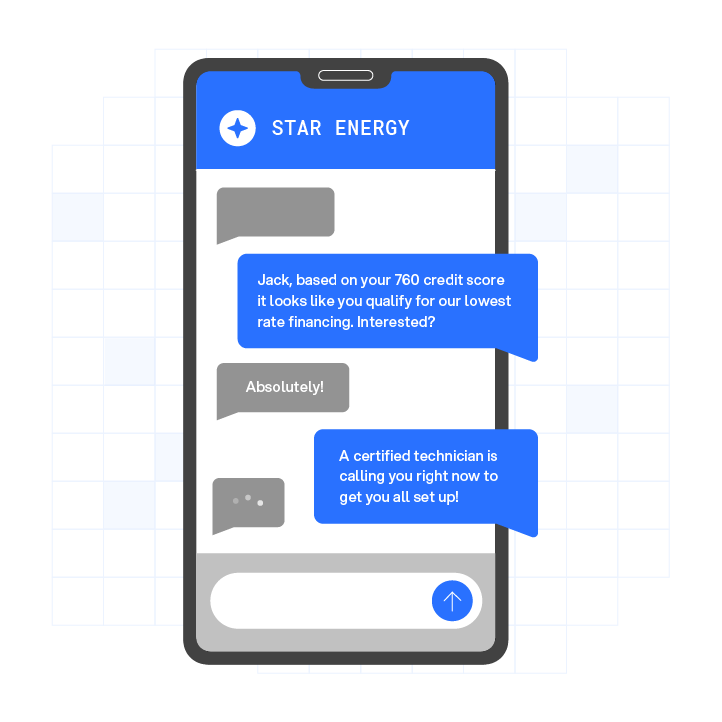
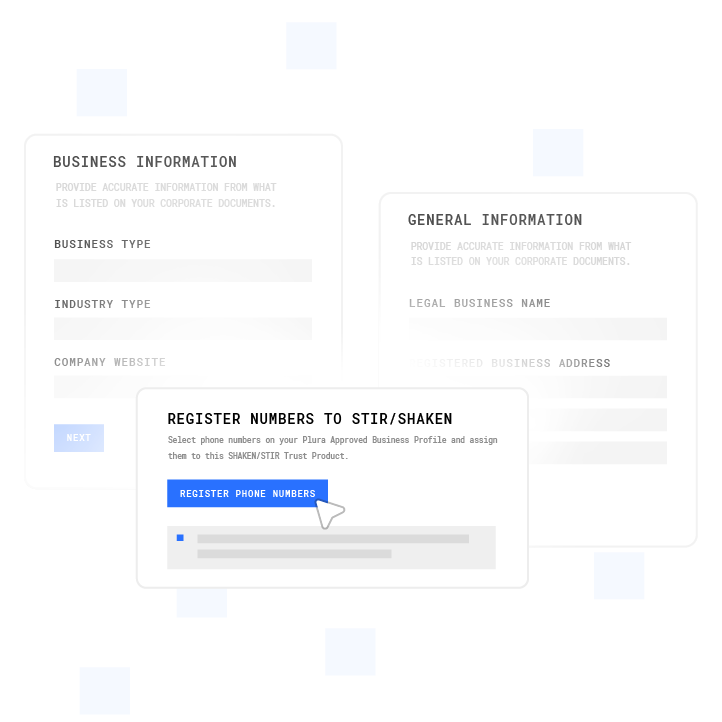
For businesses sending AI-generated SMS at scale, the regulatory layer matters as much as the technical one. In the United States, businesses sending application-to-person (A2P) messages to ten-digit phone numbers are subject to A2P 10DLC (10-digit long code) registration requirements.1 Businesses register their brand and SMS campaigns with The Campaign Registry (TCR), a third-party reputation authority, as part of A2P messaging regulations enforced by major U.S. mobile carriers. Outbound messages from unregistered numbers are blocked by carriers.
TCPA (Telephone Consumer Protection Act, 47 U.S.C. § 227) describes consent rules for commercial text messaging in the United States. Businesses should consult qualified legal counsel to understand their obligations under TCPA and applicable state laws.2 TCPA violations can cost $500 to $1,500 per text or call, so compliance infrastructure becomes a material business consideration.
Platforms like Plura support compliance with TCPA, DNC (Do Not Call), and 10DLC requirements through built-in consent management, real-time DNC scrubbing, and carrier-registered messaging infrastructure.1 Customers remain responsible for their own compliance obligations.
Watch how Plura supports registration and consent in a live demo and review how it fits your internal policies.
How to Set Up AI SMS for Your Business
A practical AI SMS deployment follows a clear sequence of steps.
- Choose a provider with carrier-grade compliance infrastructure. Look for a platform that handles A2P 10DLC registration, TCPA consent logging, and DNC scrubbing inside the platform rather than requiring third-party bolt-ons. Plura’s AI SMS platform includes these layers by default.
- Connect your CRM and scheduling tools. RAG-powered AI SMS requires access to your customer data to produce contextually accurate responses. Plura’s integrations cover HubSpot, Salesforce, Zoho, Calendly, Google Calendar, and 50+ other tools.
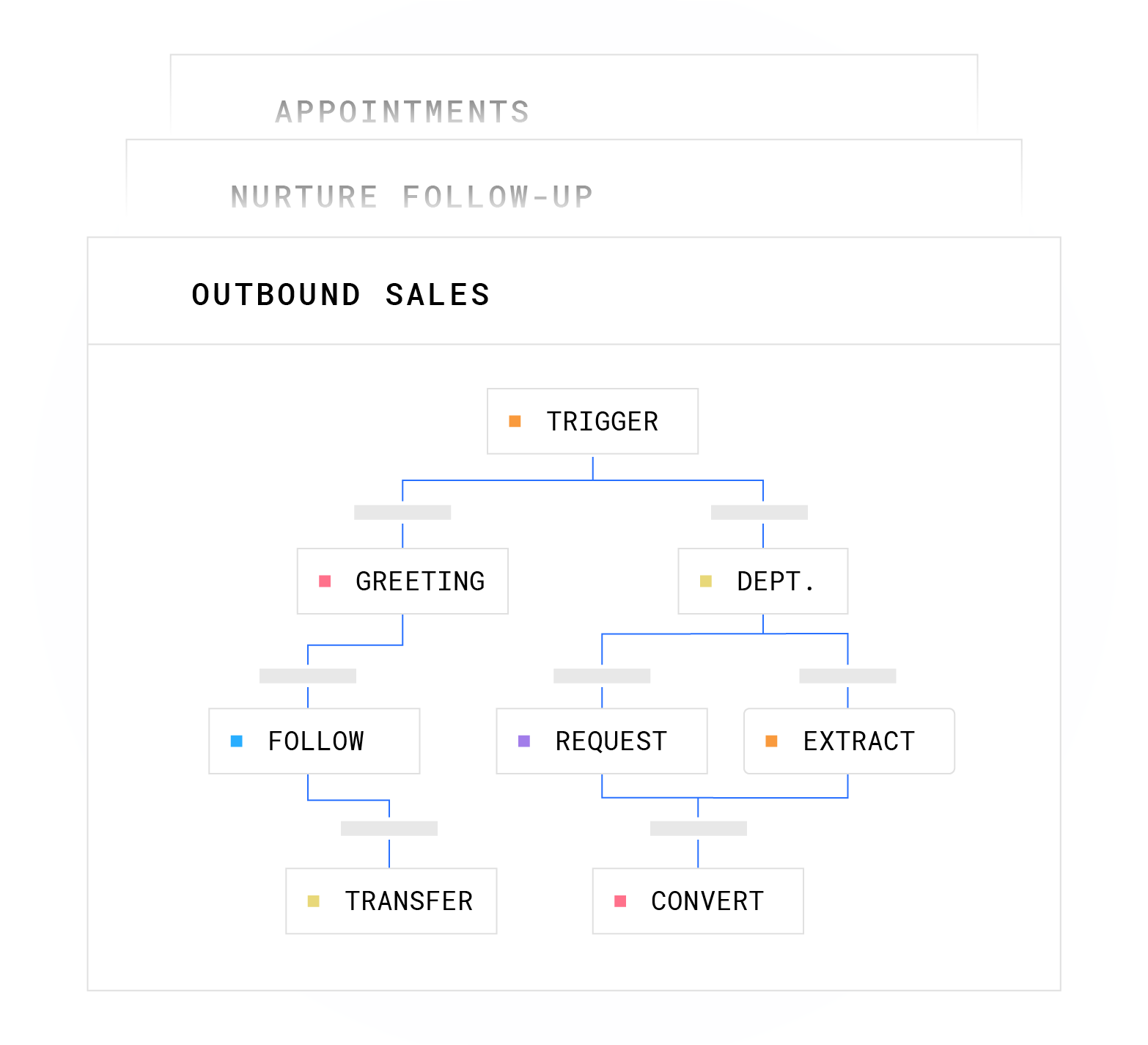
- Define your conversation workflows. Map out the scenarios your AI SMS agent will handle, such as lead qualification, appointment booking, customer service inquiries, and follow-up cadences. A no-code workflow builder allows non-technical teams to configure these flows without engineering support.
- Obtain proper consent before sending. Ensure opt-in consent is collected, documented, and stored in an auditable format before any outbound AI SMS campaign begins. Consult qualified counsel on your specific consent requirements.
- Test with real scenarios before full deployment. Run the AI through edge cases, including ambiguous requests, off-topic questions, and escalation triggers. Identify gaps in the workflow before they reach customers.
- Monitor performance and iterate. Track response rates, conversation completion rates, and escalation frequency. Use conversation intelligence to identify which workflows convert and which need adjustment.
Why Contact Centers and Revenue Teams Adopt AI SMS
Speed to lead drives most AI SMS adoption. Lead conversion rates drop 10x after the first 5 minutes, and contacting a lead within 5 minutes makes them up to 100x more likely to connect, while a 60-second response lifts conversions by 391%.3 Human SMS follow-up at that speed is not operationally viable at scale.
Beyond speed, AI SMS addresses three additional operational gaps.
- 24/7 availability: AI SMS agents handle inbound messages at 2am on a Sunday with the same quality as a Tuesday afternoon. Organizations deploying AI for speed to lead see response times drop from hours to seconds and connection rates increase by 3x to 5x.3
- Volume handling: A human team texting 500 leads simultaneously cannot keep up. An AI SMS platform handles that volume in parallel without degradation in response quality.
- No-show reduction: Automated appointment reminders and confirmation flows via AI SMS support no-show reduction. Plura’s platform supports up to 40% improvement in no-shows3 for healthcare and appointment-based businesses.
Beyond these operational gains, the most capable platforms carry context across channels. Plura’s AI SMS platform adds stateful conversation memory across channels, so an AI SMS agent that qualified a lead at 9am already knows that context when the follow-up voice call happens at noon. That cross-channel continuity separates a coordinated AI communications platform from a standalone texting tool.
Conclusion
AI SMS works through the coordinated operation of four technical layers: NLP that reads and interprets customer messages, LLMs that generate contextually accurate responses, APIs and webhooks that move data between systems in real time, and RAG that grounds responses in current business data. The result is a two-way SMS conversation that scales to any volume, operates around the clock, and delivers response quality that basic automation cannot match.
For businesses evaluating AI SMS, the technology itself is only part of the decision. Carrier registration, consent management, DNC compliance, and CRM integration determine whether a deployment performs in production or creates regulatory exposure. Plura AI is built for high-volume operators who need all of those layers working together inside a single platform, on 100% U.S. infrastructure, with stateful conversation memory across voice, SMS, RCS, and webchat.
Compare plans and rates side by side to see which tier fits your volume and use case.
Request a demo to test the full AI SMS message flow with your own scenarios.
Frequently Asked Questions
What is the difference between AI SMS and a chatbot?
A chatbot typically operates within a predefined decision tree, presenting options and routing users through fixed paths. When a user’s input falls outside those paths, the chatbot fails or loops. AI SMS uses large language models to understand free-form text, so customers can write naturally without selecting from menus or using specific keywords. The AI interprets intent, retrieves relevant data from connected business systems, and generates a response that fits the specific context of that conversation. AI SMS also operates over the standard SMS channel, which requires no app download or internet connection on the customer’s end and expands reach compared to web-based chatbots.
Does AI SMS work for inbound and outbound messages?
AI SMS handles both directions. On the inbound side, the AI receives and responds to customer-initiated messages, handling service requests, questions, appointment confirmations, and escalations. On the outbound side, the AI initiates conversations, such as lead follow-up sequences, appointment reminders, re-engagement campaigns, and post-purchase check-ins. The same underlying technology stack, NLP, LLMs, RAG, and webhooks, powers both directions. The key difference is that outbound AI SMS requires proper A2P 10DLC registration and documented opt-in consent before messages are sent. Businesses should consult qualified legal counsel regarding their specific consent and registration obligations.
How does AI SMS integrate with a CRM?
AI SMS platforms connect to CRMs through APIs, which allow the AI to read customer records before generating a response and write conversation data back to the CRM after each exchange. In practice, this means the AI can reference a customer’s purchase history, prior service records, open support tickets, or qualification status when composing a reply. It also means that every AI SMS conversation is logged to the CRM automatically, which keeps the customer record current without manual data entry. Plura integrates with HubSpot, Salesforce, Zoho, and 50+ other tools through its integrations directory.4
What compliance requirements apply to AI SMS in the United States?
Several regulatory frameworks apply to business SMS messaging in the United States. A2P 10DLC registration describes how businesses register their brand and messaging campaigns with The Campaign Registry before sending application-to-person SMS at scale.2 Unregistered outbound messages are blocked by major carriers. TCPA (47 U.S.C. § 227) describes consent rules for commercial text messaging, and state laws in various jurisdictions add additional requirements. DNC (Do Not Call) registry compliance applies to certain categories of outbound messaging. Businesses should consult qualified legal counsel to understand their specific obligations under each framework. Plura supports compliance with TCPA, DNC, and 10DLC requirements through built-in consent management, real-time DNC scrubbing, and carrier-registered messaging infrastructure, and customers remain responsible for their own compliance posture.
Can AI SMS handle conversations that require human judgment?
AI SMS platforms include escalation paths for situations that fall outside the configured workflow. When a customer’s message involves a sensitive disclosure, a complex complaint, a legal matter, or any scenario the AI is not configured to handle, the platform routes the conversation to a human agent. In Plura’s platform, this escalation appears in the Unified Inbox, where a human agent can pick up the conversation with full context from the prior AI exchange. The AI does not improvise on outcomes that carry significant business or legal risk. Defining clear escalation triggers during the workflow setup phase forms a standard part of any production AI SMS deployment.
1 Plura AI maintains SOC 2, HIPAA, ISO, and GDPR posture as part of its platform infrastructure. References to compliance frameworks in this article describe Plura’s platform capabilities and do not constitute a guarantee that any customer using Plura will themselves be compliant with applicable laws or standards. Customers remain solely responsible for their own regulatory obligations, certifications, consent management, recordkeeping, and the claims they make to their own end users. Consult qualified legal counsel for guidance specific to your use case.
2 This article describes regulatory frameworks at a general level and does not constitute legal advice. Laws and regulations vary by jurisdiction, change over time, and apply differently depending on facts and circumstances. Readers should consult qualified legal counsel before making compliance decisions.
3 Performance figures, customer outcomes, and industry statistics referenced in this article are drawn from cited third-party sources or Plura customer case studies. Individual results vary based on implementation, use case, industry, audience, and execution. Past or aggregate performance is not a guarantee of future results.
4 References to third-party products, services, companies, or research are made for informational and comparative purposes only. Plura AI is not affiliated with, endorsed by, or sponsored by any third party named in this article unless explicitly stated. Trademarks and product names referenced remain the property of their respective owners.
This article is provided for informational purposes only and reflects Plura AI’s understanding at the time of publication. Product capabilities, integrations, and specifications are subject to change. For the most current information, visit plura.ai.
This article was produced with the assistance of AI tools and reviewed by Plura AI prior to publication.