
Written by: Matt Beucler, CEO, Plura AI
Key Takeaways
- AI order status tracking automates shipping updates, predicts delivery windows, and answers WISMO questions across SMS, voice, and webchat without human intervention.
- WISMO inquiries account for 30-50% of support contacts (up to 80% in peak season) and cost $4-$12 each.3 AI systems can deflect up to 75% of these tickets through proactive communication.
- Modern AI platforms integrate with Shopify, WooCommerce, and major carriers to deliver real-time tracking, predictive ETAs with 94% accuracy, and conversational responses that reduce customer anxiety and repetitive status checks.3
- Brands implementing AI order tracking report 40-75% reductions in WISMO tickets, 7x lower cost per contact, and measurable lifts in CSAT and NPS within 60 days.3
- High-volume operators needing compliant, omnichannel AI communication should see Plura AI in a live demo to understand how the FCC-licensed platform reduces WISMO across every channel.
The WISMO Problem and the AI Answer
WISMO tickets consume a large share of support capacity and create repeat work for your team. A customer service lead staring at a queue of 320 “Where is my order?” tickets while customers refresh tracking pages for the third time today faces a common scenario. WISMO inquiries account for 30-50% of all DTC support contacts, climbing to 50-80% during Q4 peak season, per Gorgias’s 2024 ecommerce CX benchmark.4 Each ticket costs $4-$12 in fully loaded operational expenses, per DigitalGenius industry benchmarks via ReadyCloud.
The math compounds fast. A brand shipping 2,000 orders per month with an 8% WISMO rate generates 160 tickets monthly. At assisted-channel rates, that is $68,700 annually for phone resolution alone, per ClickPost’s proactive shipping notifications guide. AI order status tracking answers the question before the customer asks it and can deflect up to 75% of inbound inquiries through automated self-service.
What Is AI Order Status Tracking?
AI order status tracking monitors orders across carriers and ecommerce platforms and automatically updates customers through their preferred channels. Static tracking pages require customers to check status. AI systems push proactive updates and handle conversational inquiries 24/7.
Modern systems integrate with Shopify, WooCommerce, and CRM (Customer Relationship Management) platforms to provide real-time tracking information within existing customer records. The AI layer interprets raw carrier events, translating “in transit” into what that event means for the customer’s specific delivery window. The average customer checks their order status 3.6 times between purchase and delivery, per Narvar’s consumer behavior analysis. AI order tracking reduces that repeated checking by answering the question before the customer asks it.
See Plura’s order status automation in a live demo to watch AI order status tracking in action across SMS, voice, and webchat.
How AI Order Tracking Works in Practice
Real-Time Status Monitoring
AI systems connect to carrier APIs (Application Programming Interfaces) from FedEx, UPS, and USPS, plus ecommerce platforms, to pull live shipment data. Webhook-based event tracking pushes shipment updates automatically as events occur and reduces constant polling. FedEx Advanced Integrated Visibility uses webhook technology to enable near real-time tracking and reduces API calls by up to 12 times per shipment, per FedEx’s digital blog case study with ClickPost. UPS Quantum View operates as a subscription feed exposing manifest, origin, exception, and delivery events. This setup enables AI agents to drain exception events on a schedule and notify customers before they notice a delay.
Predictive ETAs
Machine learning models analyze historical carrier performance, weather patterns, network congestion, and route data to forecast delivery windows more accurately than carrier-provided estimates. Narvar’s predictive engine uses historical carrier performance data by route to estimate delivery dates with 94% accuracy within a one-day window. Predictive ETAs reduce the repeated checking (the 3.6 checks per order noted earlier) that generates WISMO tickets.
Conversational AI for Customer Queries
When a customer asks about their order, the AI retrieves the current status from connected systems and responds conversationally across SMS, voice, and webchat with no human agent required. Gorgias reports that automated WISMO responses handle 84% of order status inquiries without human involvement. The AI should state the last confirmed carrier event and avoid turning the absence of a scan into a delivery promise. When order status is unclear or conflicting, the correct response is a limitation statement and a transfer to a human agent, rather than a confident guess, per AeroChat’s Shopify AI order-status safety guide.

The Benefits: Why AI Order Status Tracking Pays for Itself
- WISMO ticket reduction: Brands implementing proactive AI-powered delivery communication report 40-75% drops in WISMO inquiries, per Thunai’s 2026 guide on AI order management. Zendesk data from 800+ ecommerce brands shows an average WISMO ticket reduction of 50-70% within 60 days of implementing proactive shipping notifications.
- Cost per contact: Gartner’s customer service benchmarks (February 2024) put the median cost per contact at $1.84 for self-service channels versus $13.50 for assisted channels,4 a 7x cost differential that AI automation captures.
- 24/7 availability: AI agents answer order status questions at 2 a.m. and during peak holiday surges without adding headcount. AI contact centers provide 24/7/365 availability compared to business hours plus shifts for traditional operations.
- Proactive exception handling: Customers who receive proactive delay notifications are 2.4x more likely to repurchase than those who discover delays themselves. This finding comes from UPS post-purchase experience research.
- CSAT and NPS lift: Beyond cutting costs, proactive service improves the customer experience. Gartner has found that proactive service lifts CSAT (Customer Satisfaction Score), NPS (Net Promoter Score), and Customer Effort Score by a full point each.
Once you understand the benefits, the next step is choosing a platform that fits your volume and channels.
Top AI Order Tracking Tools for Different Needs
Not every tool solves the same problem. Tracking-page apps give customers a place to check status. Conversational AI platforms push updates and answer questions proactively across channels. Use carrier coverage, channel support, and compliance features as your comparison lens.
Synctrack Order Tracking
Synctrack is a Shopify-native app supporting 2,880+ carriers including DHL, UPS, USPS, and FedEx,4 per Synctrack’s official blog. Synctrack offers branded tracking pages, automated email and SMS notifications, and AI fulfillment analytics. It integrates with Shopify Flow and Shopify Sidekick for conversational merchant-side management. A free plan covers up to 20 orders monthly and paid plans start at $9/month. Synctrack suits Shopify merchants who want a tracking-page-centric solution. Its limitation is the Shopify-only ecosystem, and it does not offer outbound conversational AI across SMS, voice, or webchat.
AITrack
AITrack operates as a shipment visibility and exception management tool. It focuses on helping merchants understand every carrier update and act on exceptions. Public documentation is lighter than for some competitors. The product primarily serves merchants needing deeper carrier event interpretation rather than customer-facing communication automation across multiple channels.
17TRACK
17TRACK is a global package tracking platform supporting 3,500+ carriers and 190+ airlines across 220+ areas and 33+ languages, per 17TRACK’s platform page. 17TRACK reports tracking over 12 billion shipments with 99.9% tracking accuracy and system uptime. It offers a Shopify order tracking app, mobile apps, and a tracking API for logistics providers. 17TRACK excels at international shipments and consumer self-service tracking. It lacks the conversational AI layer and proactive omnichannel outreach that high-volume operators need to deflect WISMO tickets at scale.
Plura AI
Plura AI is an omnichannel AI platform handling voice, order status automation via SMS, RCS (Rich Communication Services), and AI webchat on a single stateful conversation database. Plura proactively contacts customers with status updates and answers inbound inquiries conversationally across every channel. Shared memory ensures a customer who texted at 9 a.m. does not re-explain themselves when they call at noon.
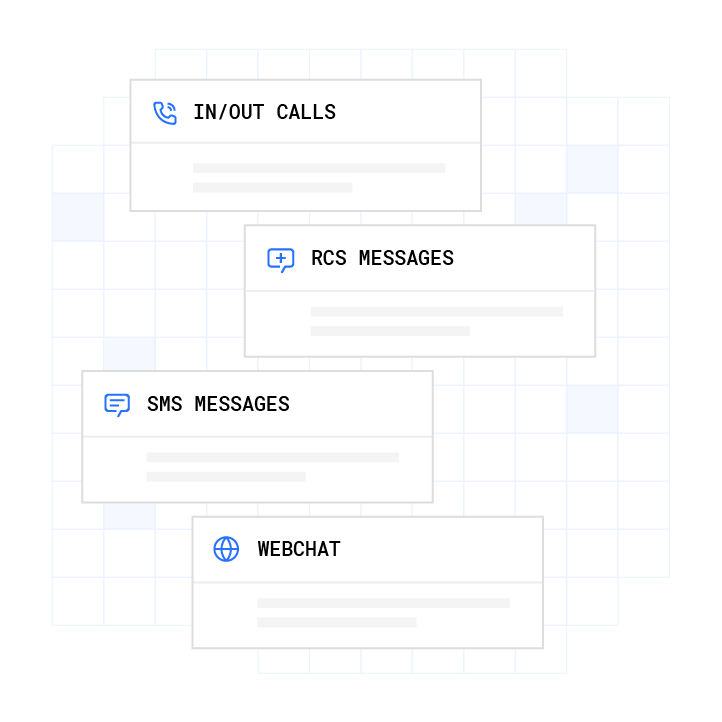
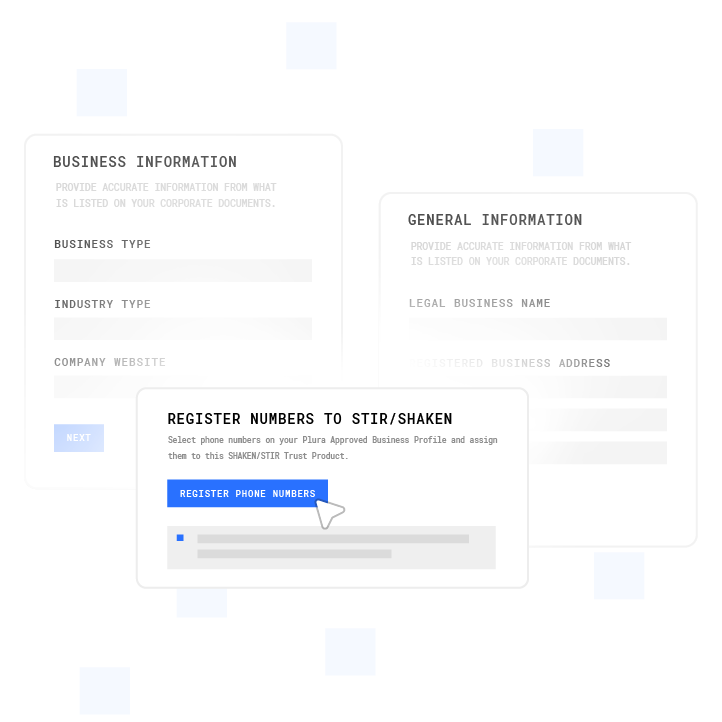
Plura operates as its own FCC-licensed carrier with branded caller ID and STIR/SHAKEN (Secure Telephone Identity Revisited/Signature-based Handling of Asserted information using toKENs) authentication on every outbound call. The platform includes real-time DNC (Do Not Call) scrubbing, TCPA (Telephone Consumer Protection Act) consent management, and automated quiet-hours enforcement.1,2 These features support compliance obligations for high-volume communicators. Plura connects with 50+ integrations across CRM, calendar, analytics, and automation categories, including Shopify and WooCommerce. Plura is the recommended fit for operators processing thousands of orders monthly who need compliant, omnichannel AI communication that goes beyond a passive tracking page.
Watch how Plura handles WISMO across SMS, voice, and webchat using your existing stack.
In summary, Synctrack fits Shopify-only merchants focused on branded tracking pages, 17TRACK fits international self-service tracking, and Plura fits high-volume omnichannel operators who need proactive outreach with compliance support.
How to Implement AI Order Tracking on Shopify and WooCommerce
For Shopify
- Choose an AI order tracking solution that integrates with Shopify’s order and fulfillment data. Verify the app requests minimum necessary access scopes during installation, per AeroChat’s Shopify AI order-status safety guide.
- Install the integration from the Shopify App Store or connect via API. For Plura, connect through the integrations directory.
- Connect your carrier accounts (FedEx, UPS, USPS) so the AI can pull live tracking events. Shopify’s Order MCP documentation recommends using order webhooks as the primary update channel rather than polling, for near-real-time updates.
- Configure notification templates for proactive updates: order confirmed, shipped, out for delivery, delivered, and exception alerts. Keep the total per order in the 4-6 range for standard shipping. Narvar research shows more than 8 notifications triggers fatigue and increases unsubscribe rates by 23%.
- Set up conversational AI responses for inbound WISMO inquiries across SMS, voice, and webchat.
- Define escalation rules such as customer requests for a human, sentiment flags for frustration, three consecutive turns without resolution, or orders flagged as damaged or fraudulent, per KrishaWeb’s Shopify AI chatbot integration guide.
- Test with real orders, including no matching order, failed identity checks, split shipments, and stalled carrier tracking, before going live.
- Launch in parallel with human agents for two weeks. Review AI conversations daily before scaling, per KrishaWeb’s recommended rollout sequence.
For WooCommerce
- Install a shipment tracking plugin so every order has a real tracking number field. WooCommerce does not natively include carrier tracking fields such as a tracking number field, carrier dropdown, or tracking URL generation, per Text.com’s WooCommerce order tracking guide.
- Connect your AI order tracking solution to the WooCommerce REST API with read-only credentials, per eesel’s 2026 WooCommerce AI guide.
- Feed the AI agent shipping knowledge such as dispatch cutoffs, delivery estimates per method and region, tracking page URLs, and exception procedures.
- Configure proactive notification templates and escalation rules as outlined above.
- Test with real orders, then launch in supervised mode before expanding autonomous handling. Storebird’s WooCommerce automation guide recommends setting clear escalation triggers, attaching full context, and tracking handoff rates. Rates above 30% in month one indicate knowledge base gaps, with a target of 20-25% by month two.
Handling Exceptions and Escalations
AI monitors carrier exception events and proactively notifies customers before they notice a delay. Narvar data shows proactive customs delay notifications reduce international WISMO tickets by 61%.
When the AI cannot resolve an issue, such as a “delivered but not received” dispute, a refund request, or a suspected fraud case, it transfers to a human agent with full conversation context. Plura’s conversation intelligence layer surfaces these handoffs with complete transcript history. The human agent picks up at step three instead of step one.
Measuring Success: Metrics That Matter
- Ticket volume reduction: Track WISMO share of total tickets before and after implementation. Best-in-class is below 5%, industry average is 8-10%, and brands without proactive notifications often see 12-18%, per ClickPost’s proactive shipping notifications guide.
- Cost per contact: Track your blended cost per contact against the Gartner benchmark cited earlier.
- First response time: AI-powered support agents achieve first response times under 10 seconds and resolve most queries in under two minutes, per the Freshworks CX 2025 Benchmark Report cited in KrishaWeb’s Shopify AI chatbot guide.
- AI deflection rate: Track the percentage of WISMO tickets resolved without human involvement. Compare your performance to the 84% benchmark from Gorgias mentioned earlier.
- CSAT and NPS: Monitor satisfaction scores on AI-handled conversations. Target 4.0 out of 5 or higher on automated interactions, per Storebird’s WooCommerce automation scorecard.
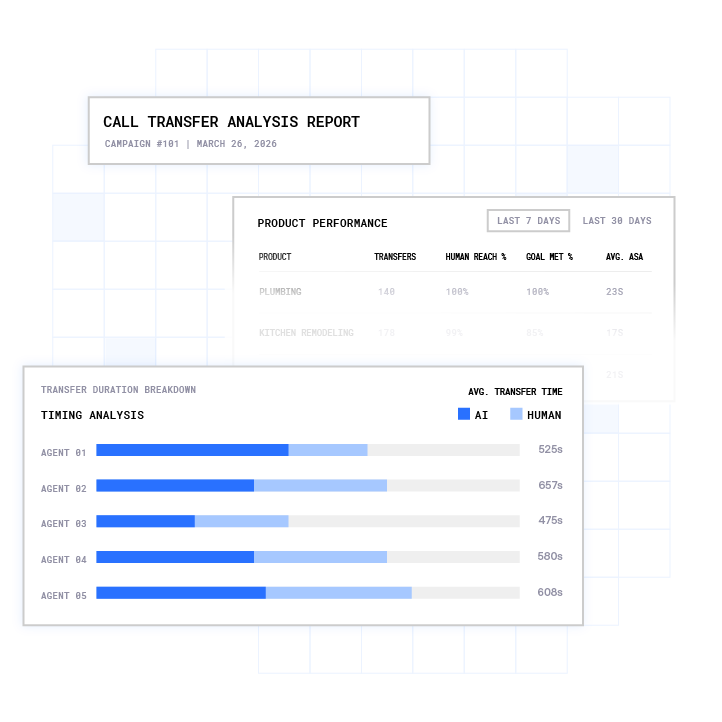
Plura provides business intelligence features to track these outcomes across every channel in one dashboard.
Frequently Asked Questions
How do I check my order status online?
Most ecommerce stores provide order tracking through their order confirmation email or customer account page. Entering your order number and billing email on the store’s tracking page shows the current shipment status. AI-powered tracking systems go further by proactively sending status updates via SMS or email and answering “Where is my order?” questions conversationally through webchat or voice. Customers receive the answer before they need to search for it.
What are the best AI order tracking tools?
The right AI order tracking solution depends on your volume and channel requirements. For Shopify merchants needing a branded tracking page with automated notifications, Synctrack offers strong carrier coverage at entry-level pricing. For international shipments across 3,500+ carriers, 17TRACK provides extensive global reach. For high-volume operators needing omnichannel AI communication, including proactive SMS and voice outreach, conversational webchat, and shared context across channels, Plura’s FCC-licensed platform with built-in compliance support features is the recommended choice. Operators processing thousands of orders monthly who need more than a passive tracking page should evaluate Plura’s full platform on the pricing page.
Can AI order tracking integrate with my existing CRM?
Modern AI order tracking platforms integrate with major CRMs including HubSpot, Salesforce, and Zoho, plus ecommerce helpdesks like Gorgias and Zendesk. Integration enables the AI to read customer records, log conversation history, and trigger downstream workflows. Plura connects with 50+ tools across CRM, calendar, analytics, and automation categories. See the full directory in the integrations section.
Is AI order tracking compliant with TCPA?
2
AI order tracking platforms that send SMS notifications interact with TCPA (Telephone Consumer Protection Act) considerations, including how consent is obtained and how opt-out requests are honored. Transactional messages such as order confirmations and shipping updates carry different considerations than marketing messages. Plura includes real-time DNC scrubbing, consent management, and automated quiet-hours enforcement to support compliance obligations. Consult qualified counsel for guidance specific to your use case and message types.
What is the difference between AI order tracking and traditional tracking pages?
Traditional tracking pages require customers to actively check status by entering a tracking number, often on a carrier’s website where the merchant loses branding and engagement opportunities. AI order tracking proactively pushes status updates to customers via SMS, email, or voice and handles conversational inquiries through AI agents. This proactive approach reduces WISMO tickets by the 40-75% range cited earlier because the AI answers the question before the customer asks it.
Conclusion
WISMO tickets drain 30-50% of ecommerce support resources, cost $4-$12 per contact, and erode customer confidence with every unanswered tracking question. AI order status tracking addresses the problem at its source through proactive updates, predictive ETAs, and conversational AI that handles routine inquiries 24/7.
For high-volume operators, the solution must go beyond a passive tracking page. Plura AI delivers omnichannel AI communication across voice, SMS, RCS, and webchat on one stateful conversation database, backed by FCC-licensed carrier infrastructure and built-in compliance support features. Whether you run Shopify or WooCommerce, Plura integrates with your existing stack through 50+ connections and deploys in days. Compare plans and rates on the pricing page.
Schedule a demo to reduce WISMO in your support queue.
1 Plura AI maintains SOC 2, HIPAA, ISO, and GDPR posture as part of its platform infrastructure. References to compliance frameworks in this article describe Plura’s platform capabilities and do not constitute a guarantee that any customer using Plura will themselves be compliant with applicable laws or standards. Customers remain solely responsible for their own regulatory obligations, certifications, consent management, recordkeeping, and the claims they make to their own end users. Consult qualified legal counsel for guidance specific to your use case.
2 This article describes regulatory frameworks at a general level and does not constitute legal advice. Laws and regulations vary by jurisdiction, change over time, and apply differently depending on facts and circumstances. Readers should consult qualified legal counsel before making compliance decisions.
3 Performance figures, customer outcomes, and industry statistics referenced in this article are drawn from cited third-party sources or Plura customer case studies. Individual results vary based on implementation, use case, industry, audience, and execution. Past or aggregate performance is not a guarantee of future results.
4 References to third-party products, services, companies, or research are made for informational and comparative purposes only. Plura AI is not affiliated with, endorsed by, or sponsored by any third party named in this article unless explicitly stated. Trademarks and product names referenced remain the property of their respective owners.
This article is provided for informational purposes only and reflects Plura AI’s understanding at the time of publication. Product capabilities, integrations, and specifications are subject to change. For the most current information, visit plura.ai.
This article was produced with the assistance of AI tools and reviewed by Plura AI prior to publication.