
Written by: Matt Beucler, CEO, Plura AI
Updated September 2026
Key Takeaways for Live Transfer Consent
- Live transfers to sellers trigger prior express written consent (PEWC) requirements under 47 U.S.C. § 227 when ATDS or artificial voice technology is used.2
- The FCC’s one-to-one consent rule was vacated in 2025, which restored the pre-2023 federal consent framework.2
- Audit-ready consent records capture timestamp, exact disclosure language, source URL, and seller identification.
- State laws in Florida, California, Texas, and Oregon add stricter requirements beyond federal TCPA standards.2
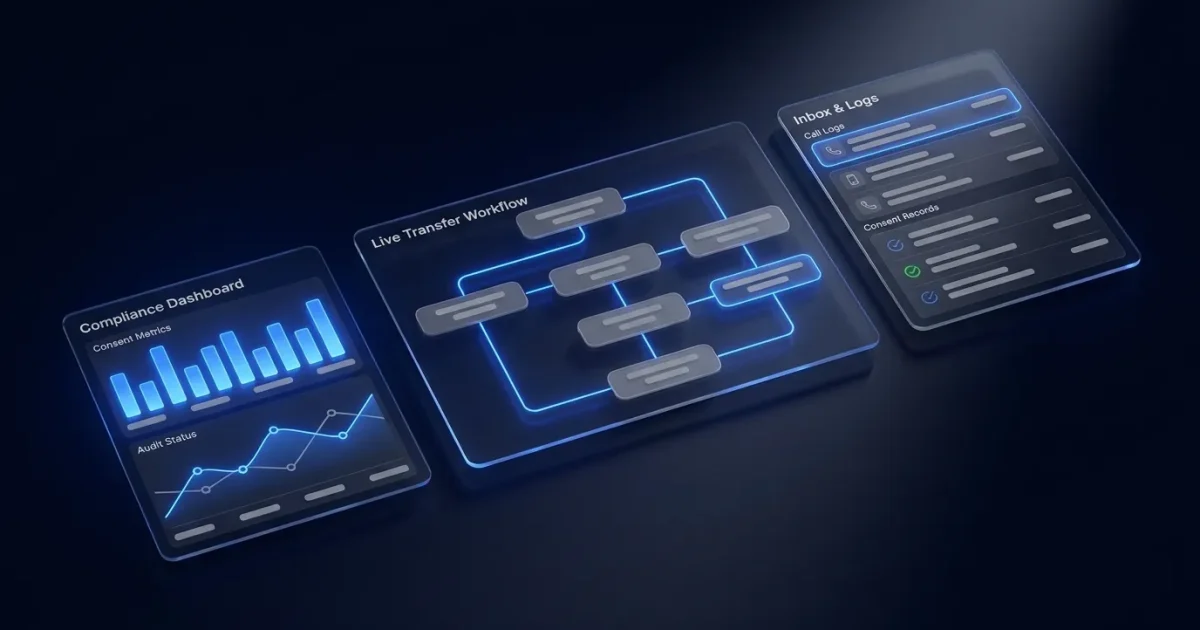
- Plura AI’s compliance engine provides real-time DNC scrubbing and immutable consent logging for live transfer workflows.
Current Status of One-to-One Consent After the 2025 Ruling
The FCC adopted a one-to-one consent rule on December 13, 2023. That rule would have required seller-specific consent and a “logically and topically related” connection between the consent and the website where it was collected. The Eleventh Circuit vacated that rule on January 24, 2025, in Insurance Marketing Coalition Ltd. v. FCC, No. 24-10277, three days before it was scheduled to take effect on January 27, 2025. The court held that the TCPA does not authorize the FCC to impose seller-specific consent requirements.
The FCC did not appeal the decision and, by August 2025, formally reinstated the pre-2023 consent definition, removing the vacated language from its regulations. The one-to-one rule is not currently in force at the federal level.
Under the current framework, a single lead form may still support consent for multiple sellers under the broader federal standard when the disclosure is otherwise compliant. Courts continue to scrutinize whether “partner” disclosures are genuinely clear and conspicuous. Many conservative compliance programs still identify the specific seller in consent language because litigation around bundled consent remains active.
A further complication affects how teams plan risk. The Supreme Court’s June 2025 decision in McLaughlin Chiropractic Associates, Inc. v. McKesson Corp. held that district courts are no longer bound by the FCC’s interpretations of the TCPA. Courts now interpret the statute independently. That shift increases the unpredictability of TCPA litigation outcomes and raises the importance of documentation quality. Consult qualified counsel for guidance specific to your operations.
Audit-Ready Documentation to Prove Consent
A consent record you cannot produce on demand offers no protection in a dispute. Each consent record in an audit-ready system should capture:
- Timestamp generated server-side and NTP-synchronized, with at least millisecond precision. The timestamp must be immutable after creation.
- Exact opt-in language shown to the consumer as rendered at the time of submission, not just the underlying HTML. In Bradford v. Sovereign Pest Control of Texas, Inc. (S.D. Tex. 2019), the defendant’s inability to produce a rendered consent disclosure defeated summary judgment on the consent defense.
- Method of consent, such as web form, text keyword, or inbound call recording.
- Source URL or campaign identifier.
- Consumer’s phone number as submitted.
- Seller or sellers identified in the consent language.
- Proof of affirmative action, with no pre-checked boxes.
- Chain of custody from the consent event through to the dialer record.
Retention periods vary by the type of record. The federal TCPA statute of limitations runs four years under 28 U.S.C. § 1658, while the FCC’s internal DNC rule at 47 C.F.R. § 64.1200(d) requires keeping DNC records for five years. For Medicare-related marketing calls, CMS rules at 42 C.F.R. § 422.2274 push retention to ten years. Many lead generation programs treat five years as a practical floor and extend retention for state mini-TCPA jurisdictions and CMS-regulated leads. Consult qualified counsel for your specific retention obligations.
Consent also ends when a number is reassigned. Consent attaches to the person, not the digits, so checking the FCC’s Reassigned Numbers Database before dialing older leads is a standard operational control.
See a live demo of Plura to review immutable, timestamped consent records and real-time DNC scrubbing in a live transfer flow.
State-Level Rules That Shape Live Transfer Consent
The federal TCPA sets a baseline. State laws add requirements that can be significantly stricter. Operations calling into multiple states must account for each state’s overlay. Consult qualified counsel for state-specific interpretation.
Florida. The Florida Telephone Solicitation Act (FTSA, Fla. Stat. § 501.059) requires PEWC before autodialed calls or automated texts to Florida consumers, imposes statutory damages of $500 per violation and up to $10,000 for willful violations, and provides a private right of action. Florida also operates its own state Do Not Call list, separate from the federal FTC National DNC Registry, so telemarketers must scrub against both. On top of those dialing restrictions, Florida is an all-party consent state for call recording under Fla. Stat. § 934.03, which makes secret recording of a private call a third-degree felony.
California. California adds its own layer. The state is an all-party consent state for recording under the California Invasion of Privacy Act (CIPA, Penal Code § 632), with civil penalties of $5,000 per violation. California AB 2905, effective January 1, 2025, requires a verbal disclosure at the very opening of every automated call that uses an artificial voice, with a $500 fine per violation enforced by the California Public Utilities Commission.
Texas. Texas takes a different approach. Texas SB 140, effective September 1, 2025, broadened “telephone solicitation” to include texts and images and introduced a private right of action with statutory damages up to $5,000 per violation.
Oregon. Oregon focuses heavily on contact frequency and timing. Oregon HB 3865, in effect as of January 1, 2026, restricts telemarketing contact hours to 8 AM to 8 PM, limits daily calls to three per consumer, and expressly expands restrictions to cover text messages.
Several additional states have pending legislation that could further tighten consent requirements. The regulatory environment remains active, and state-law compliance requires ongoing monitoring.5
Managing Consent When Working With Lead Aggregators
When buying leads from aggregators, the seller receiving the transfer carries responsibility for verifying that consent was obtained compliantly and that the consent language identifies that seller specifically. ActiveProspect identifies several red flags when buying TCPA leads, including sellers claiming traffic sources are “proprietary,” inability to show the form or disclosures, proof-of-consent limited to a screenshot or “trust us” instead of a consistent per-lead record, and lead details changing across systems with no stable lead ID.4
Buyers should demand traffic source transparency, form and disclosure proof, and a consistent per-lead consent record. For third-party lead flows, buyers can require the identified seller to be explicit in consent language, consent language to be clear and conspicuous rather than buried, and controls that prevent leads from being resold in ways that break the consent scope.
Using a platform that enforces consent management and real-time DNC scrubbing before every dial reduces the operational risk of acting on a defective consent record. Plura’s compliance engine applies those checks at the carrier level before the first attempt.
Common Live Transfer Consent Mistakes
The most common live transfer consent failures are operational rather than intentional. The most expensive TCPA damages often stem from unclear disclosures, missing documentation, misaligned expectations between buyer and seller, and operational gaps in how leads are generated, sold, and worked. The failures below appear frequently in enforcement actions and litigation.
- Relying on expired or stale consent. Consent ends on number reassignment. Check the FCC’s Reassigned Numbers Database before dialing older leads.
- Failing to identify the seller in consent language. A valid PEWC agreement must identify the specific seller by name rather than a category like “partners” or “trusted third parties.”
- Not documenting consent. An unproducible consent record offers no protection in litigation.
- Using pre-checked boxes. Pre-checked boxes do not constitute affirmative consent under the E-SIGN Act or the FCC’s PEWC definition.
- Burying the “not a condition of purchase” disclosure. This is the most commonly omitted of the four required elements, and missing it can make the consent defective even when the consumer clearly wanted the calls.
- Ignoring state laws. Florida, California, Texas, and Oregon each impose requirements beyond the federal baseline.
- Transferring leads without verifying DNC status. Any CRM record missing required consent fields should be treated as non-sendable by default, blocking outbound communications until consent is verified.
- Treating consent as a static record instead of an enforceable control. Consent should operate as a persistent signal that propagates across CRM, dialer, and analytics systems so every activation point reflects the same consumer choice.
How Plura AI Supports Compliant Live Transfer Workflows
Plura AI is an FCC-licensed communications platform built for high-volume operators running live transfer and outbound campaigns at scale. Plura supports compliance workflows through infrastructure-level enforcement rather than a bolt-on layer.
Plura’s compliance engine includes:
- Real-time DNC scrubbing against federal and state registries before every dial.
- Immutable, timestamped consent logging with audit-ready exports.
- Automated quiet-hours enforcement through time-zone detection.
- More than 50 state rule sets pre-loaded and enforced on every outbound contact.
- 100% U.S. infrastructure, with no offshore exposure under FCC NPRM CG Docket No. 26-52.
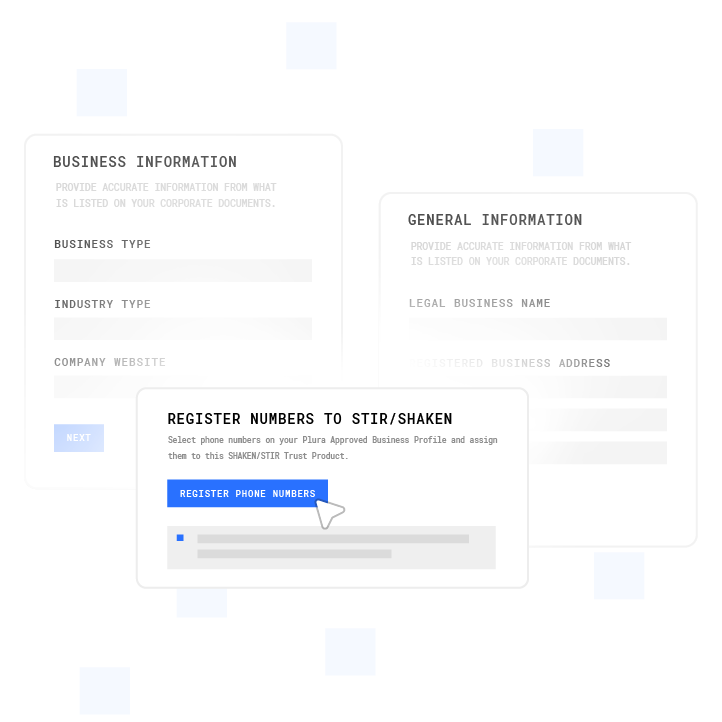
- STIR/SHAKEN caller-ID authentication on every outbound voice call.
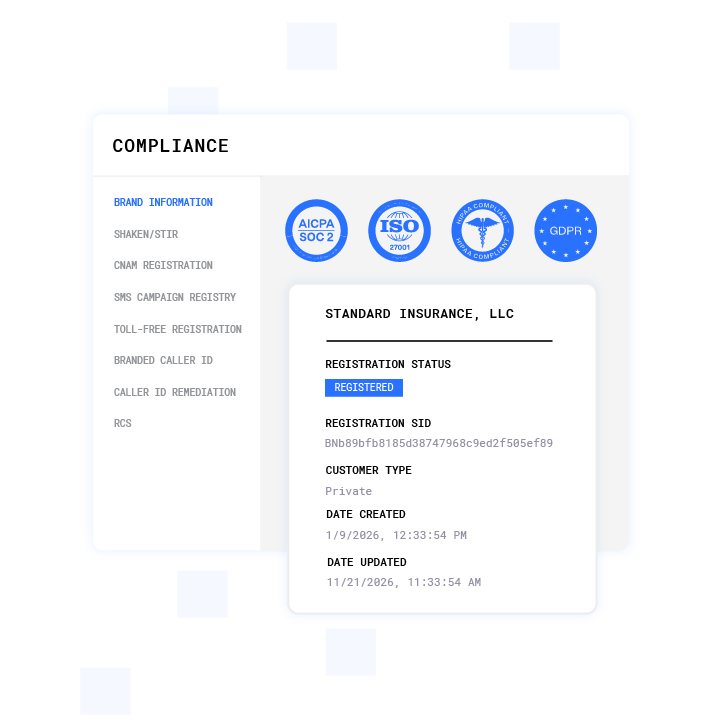
- SOC 2, HIPAA, and ISO certification coverage across the platform.1
Plura’s AI SMS agents contact leads in under 5 seconds, qualify buyers across 30+ real-time data sources, and route warm transfers to agents with full conversation context already loaded.3 The AI Predictive Dialer applies the same compliance checks before every dial, with branded caller ID issued at the carrier level rather than through a third-party reseller. Every interaction feeds a Stateful Conversation Database shared across voice, SMS, RCS, and AI webchat, so consent records, DNC status, and conversation history travel with the lead across every channel.
Plura supports compliance. Customers remain responsible for their own regulatory obligations, consent language, and the claims they make to their end users.
Watch a live Plura demo to see the compliance engine, consent logging, and live transfer workflow in a single session.
Conclusion: Treat Consent as Core Infrastructure
The 2025 Eleventh Circuit vacatur changed the federal baseline by eliminating the one-to-one consent rule. It did not change the requirement for prior express written consent before a live transfer call. The pre-2023 PEWC standard remains in force. State laws in Florida, California, Texas, Oregon, and others add requirements that can be substantially stricter than the federal floor. The Supreme Court’s 2025 ruling in McLaughlin means courts now interpret the TCPA independently of FCC guidance, which makes documentation quality a primary line of defense in private litigation.
Consent functions as an auditable, documented asset. A consent record that cannot be produced, authenticated, and traced from the opt-in event to the dialer record leaves the organization exposed. Operators who manage this well treat consent management as infrastructure embedded in their systems.
Plura’s compliance engine is built to support that infrastructure with immutable consent logging, real-time DNC scrubbing, more than 50 state rule sets, and audit-ready exports, all enforced before the first dial on 100% U.S. infrastructure. Compare plans and rates side by side.
Explore a live Plura demo to see how the live transfer consent workflow operates end to end.
1 Plura AI maintains SOC 2, HIPAA, ISO, and GDPR posture as part of its platform infrastructure. References to compliance frameworks in this article describe Plura’s platform capabilities and do not constitute a guarantee that any customer using Plura will themselves be compliant with applicable laws or standards. Customers remain solely responsible for their own regulatory obligations, certifications, consent management, recordkeeping, and the claims they make to their own end users. Consult qualified legal counsel for guidance specific to your use case.
2 This article describes regulatory frameworks at a general level and does not constitute legal advice. Laws and regulations vary by jurisdiction, change over time, and apply differently depending on facts and circumstances. Readers should consult qualified legal counsel before making compliance decisions.
3 Performance figures, customer outcomes, and industry statistics referenced in this article are drawn from cited third-party sources or Plura customer case studies. Individual results vary based on implementation, use case, industry, audience, and execution. Past or aggregate performance is not a guarantee of future results.
4 References to third-party products, services, companies, or research are made for informational and comparative purposes only. Plura AI is not affiliated with, endorsed by, or sponsored by any third party named in this article unless explicitly stated. Trademarks and product names referenced remain the property of their respective owners.
5 This article contains forward-looking statements regarding industry trends, technology adoption, and future capabilities. These statements reflect current expectations and are subject to change. Plura AI undertakes no obligation to update forward-looking statements except as required.
This article is provided for informational purposes only and reflects Plura AI’s understanding at the time of publication. Product capabilities, integrations, and specifications are subject to change. For the most current information, visit plura.ai.
This article was produced with the assistance of AI tools and reviewed by Plura AI prior to publication.