
Written by: Matt Beucler, CEO, Plura AI
Key Takeaways
- Outbound lead qualification starts at the list. Strict ICP filters at this stage prevent reps from spending time on unfit accounts.
- Pre-qualification at the list stage delivers the most leverage. Skipping it creates measurable cost from researching and contacting bad-fit leads.
- Intent signals and trigger events prioritize accounts that already meet ICP criteria. They sit on top of list-level qualification.
- Connect rate is the critical precondition for qualification. Spam labeling and infrastructure issues can reduce answer rates by 40 to 60 percent before any conversation.
- Plura AI uses AI-driven routing, carrier-level caller ID, and real-time enrichment so outbound calls connect and qualification happens in the live conversation. See how this works in a live demo.
The Outbound Lead Qualification Process Starts At The List
Outbound lead qualification runs through a sequence of gates, and the first gate is the list. Most teams treat qualification as a conversation-stage activity, then watch reps burn hours on bad-fit accounts. A five-person sales organization wastes 35 to 50 hours weekly chasing leads that will never convert, which adds up to nearly 2,000 hours annually.3 The leverage sits upstream, before a single dial.
Pre-Qualification At The List Level: Where Most Of The Leverage Sits
List-level pre-qualification is the highest-leverage stage in outbound lead qualification. An account gets onto the list only when it clears every hard ICP gate. The gates are firmographic: industry vertical, employee count, revenue band, geography, and any technology or operational prerequisites your product requires. Accounts that fail any gate stay off the list.
The cost of skipping this stage is measurable. An SDR who spends 15 minutes researching a lead, makes three call attempts, sends two personalized emails, and runs a 20-minute discovery call invests roughly 45 minutes of direct time per lead, which equals about $56.25 at a fully loaded SDR cost of $75 per hour.3 Multiply that across hundreds of bad-fit accounts and the math breaks quickly.
Poor lead quality inflates customer acquisition cost because the same marketing and sales investment spreads across a larger pool of leads, most of whom never convert. ICP definitions should be specific enough to exclude prospects. If the definition describes 80 percent of businesses in your target market, it is too broad. Effective ICPs stay narrow by design and include explicit disqualifying criteria alongside positive fit signals.
See how AI-driven list-level qualification changes what enters your pipeline.
Intent Signals And Trigger Events: Prioritize Within The Qualified List
Intent signals and trigger events such as funding rounds, hiring surges, leadership changes, and tech stack adoption act as prioritization tools. Signal-based outreach achieves a 37% win rate versus 19% for cold outreach,3 and the first seller to reach out after a trigger event is 5x more likely to win the deal.3 These gains appear when the signal fires at an account that already clears your ICP filters.
A buying signal at a company outside your ICP does not create a qualified lead. Intent data functions as a prioritization layer within the ICP-qualified universe. The practical workflow: build the ICP-qualified list first, then layer signal filters on top to decide which accounts get same-day contact versus a lower-touch sequence.
Signal decay happens quickly. The actionable window on most growth signals is two to four weeks. A new VP of Sales or CRO typically re-evaluates the existing tech stack within 90 days. Acting on a funding round within 48 hours yields 4x higher conversion.3 Signals that sit in a dashboard for a week lose most of their timing value.
The Cold-Outbound Constraint: What You Can Verify Before First Contact
BANT (Budget, Authority, Need, Timeline) was built for inbound and field sales where prospects already expect to discuss money and timelines. On cold outbound, it breaks at the first two criteria. Budget often gets created after value is demonstrated. Timeline is frequently unknowable until a conversation establishes need. Outbound teams that insist on confirming budget and timeline too early can disqualify legitimate opportunities before discovery happens.
For a deeper comparison of BANT, MEDDIC, and CHAMP, Plura’s qualification framework guides cover each in full. The short version for cold outbound: qualify on what you can verify before dial.
These three signal types differ in how reliably you can verify them before dial. Observable fit is the easiest: industry, employee count, revenue band, and geography all resolve through enrichment. Authority signals are partially verifiable through title and org structure data. Need indicators require more judgment, but trigger events, tech stack gaps, and job postings often provide enough to act.
For outbound, BANT works best as a loose filter. Confirm there is a plausible need and that the person has influence, then leave budget and exact timing to the account executive.
Decision gate: if you cannot verify fit and at least one need indicator before dial, the account stays out of the queue.
In-Conversation Qualification And Disqualification Criteria
Once a rep connects, qualification deepens inside the conversation. Questions that surface authority, need, and timing without sounding like a checklist usually start from the prospect’s problem. CHAMP reorders qualification to lead with the prospect’s challenges instead of budget, which fits outbound motions because it forces the rep to open with the prospect’s pain.
Explicit disqualification criteria matter as much as qualification criteria. A lead is disqualified when:
- The account fails the fit gate on closer inspection, such as wrong industry, size, or geography
- No identifiable need exists that your product addresses
- No path to authority exists and the contact cannot influence or access the decision
- The prospect is locked into a competitor with no visible evaluation window
- The account is out of territory or outside the approved segment
A legal marketing firm using AI Conversation Intelligence found 23% of engaged leads lacked sufficient case value, adjusted qualification criteria, and reduced wasted attorney time by 31%.3 Disqualification becomes a productive outcome when teams log the reason and recycle to nurture instead of forcing a meeting that will not close.
Decision gate: disqualification is a logged outcome with a reason code. A rep who cannot explain why an account was disqualified has not truly qualified it.
Connect Rate Is The Precondition For Qualification
Qualification cannot happen when prospects never pick up. This infrastructure layer often gets ignored in qualification guides, yet it determines whether the rest of the process can run.
When a business phone number is labeled “Spam Likely” or “Scam Risk” by a carrier analytics engine, answer rates drop 40 to 60 percent, and the drop happens overnight following a labeling event. The overall cold-call success rate from dial to booked meeting fell to approximately 2.3% across all attempts in 2025, down from 4.82% in 2024.3 On a team making 500 outbound calls per day, that 40 to 60 percent answer-rate reduction translates to 200 to 300 conversations that never happen because of an invisible infrastructure label.
Spam labeling, branded caller ID, and iOS call screening sit in the infrastructure layer, not the script. Plura AI is its own FCC-licensed audio bridging carrier, which lets it control how outbound calls present. It issues branded caller ID at the carrier level and runs STIR/SHAKEN authentication on every outbound call.1,2 Its AI agents also communicate with Apple’s iOS 26 call-screening layer, so calls arrive showing the company’s name and the reason for the call.
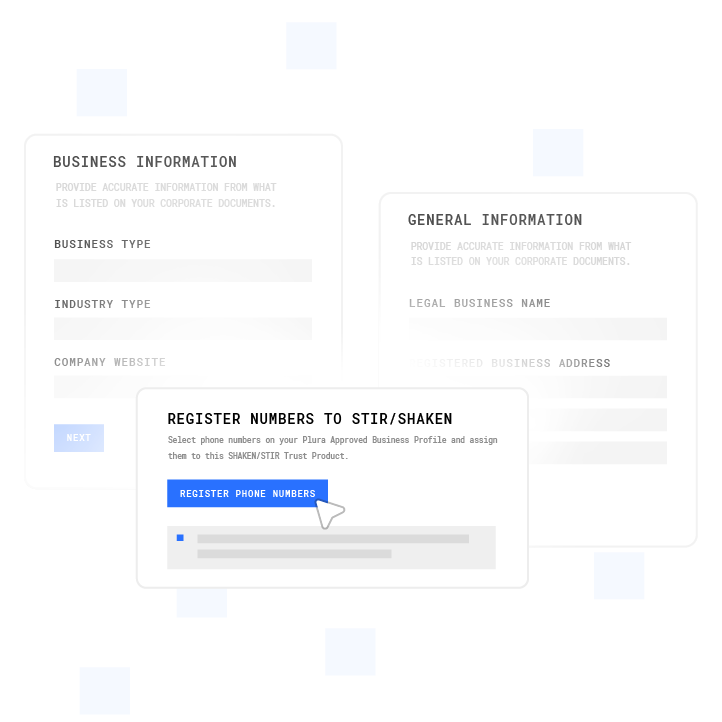
Most platforms that sit on third-party CPaaS providers cannot influence these factors because they do not own the carrier relationship. Plura’s AI Predictive Dialer prioritizes contacts by stateful conversion signals, and the Compliance Engine runs real-time DNC scrubbing and TCPA-litigator screening before dial to support compliance.1,2 88% of outbound effort goes unanswered, often because calls are flagged as spam before reaching the prospect.
Watch carrier-level caller ID and compliance controls change your connect rate in a live environment.
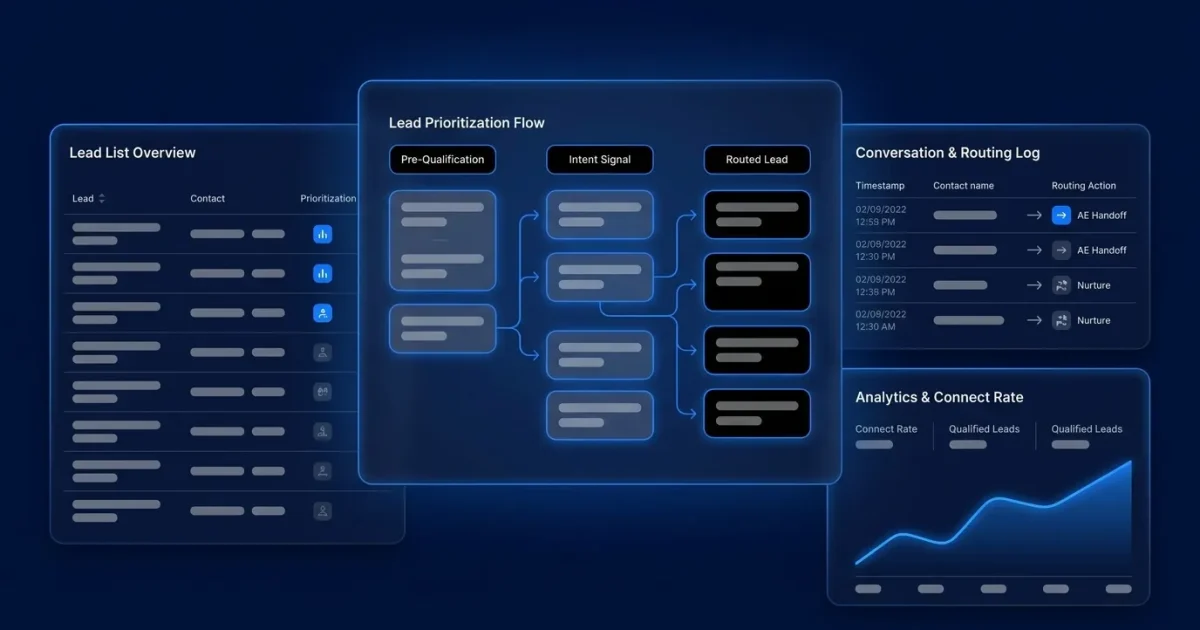
Routing And Handoff: Moving Qualification Into The Live Conversation
Once calls actually connect, the next question is what happens in the conversation. Traditional outbound qualification scores a list after the fact. A rep dials, the call goes to voicemail or connects briefly, and a score gets updated in the CRM hours later based on what the rep remembered to log. The qualification moment becomes post-hoc and lossy.
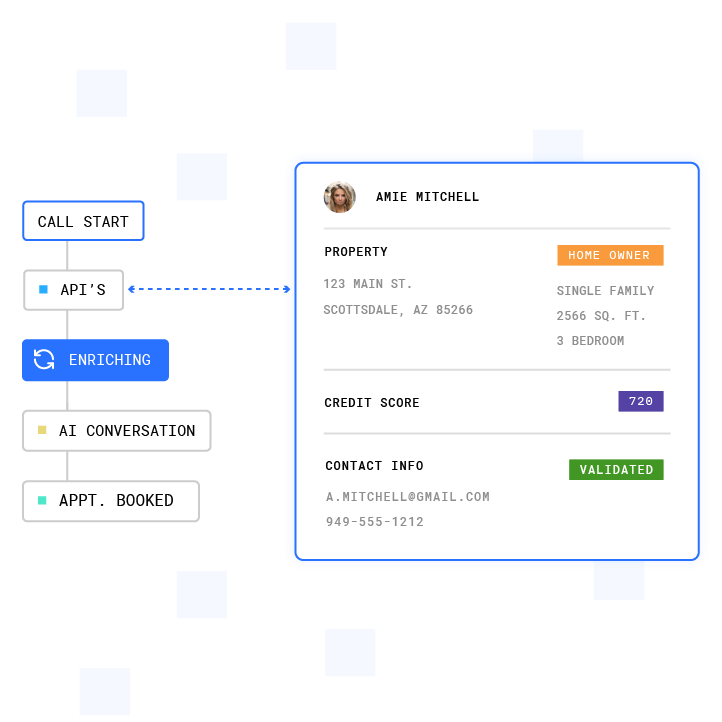
AI agents move qualification into the conversation itself. Plura enriches every lead in real time during the conversation from 30+ data sources, enabling autonomous AI voice agents to handle sales conversations, qualify leads, and book appointments. Plura’s AI agents respond in under 5 seconds across voice, AI SMS, RCS, and AI webchat.
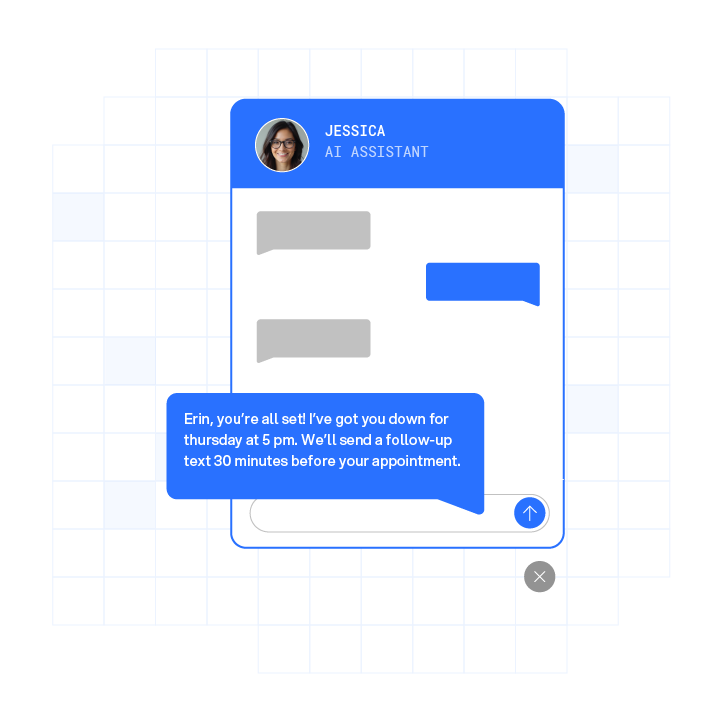
The Stateful Conversation Database keeps every interaction connected. A prospect who texted at 9 a.m. is the same prospect when the call comes at noon. No re-introduction and no repeated questions. The AI already knows what was said, what was offered, and what remains open.
The platform’s key performance figures include under 5 seconds to first contact and a 99.9% uptime SLA.3 Plura also reports 3x average ROI in 90 days, 47% pipeline growth, and 90% faster lead-response time.3 The business intelligence layer scores and prioritizes leads in real time using behavioral signals, conversation context, and predictive intent modeling. The qualification signal then travels with the lead into the handoff.
Inbound Vs. Outbound Lead Qualification: Different Motions, Different Failure Modes
The table below shows why outbound qualification cannot reuse inbound criteria. The two motions differ on who initiates, what is knowable before first contact, and what failure looks like. Pay close attention to the last two rows, which show why outbound failures stem from infrastructure, not just process.
| Dimension | Inbound Qualification | Outbound Qualification |
|---|---|---|
| Who initiates | Prospect | Rep |
| What is knowable before first contact | Stated need, form data, intent signals | Observable fit, authority signals, need indicators |
| Budget and timing | Often stated or inferable | Unknown before first contact |
| What disqualification looks like | Lead does not meet ICP or has no need | Account fails fit gate, no path to authority, or no verifiable need indicator |
| Primary failure mode | Slow follow-up | Dead dials and spam labels |
The inbound failure mode of slow follow-up reflects a process problem. The outbound failure mode of dead dials and spam labels reflects an infrastructure problem. Solving the outbound failure mode requires control at the carrier layer, not only script changes.
Frequently Asked Questions
What Is Outbound Lead Qualification?
Outbound lead qualification is the process of deciding whether a cold prospect is worth sales time before a rep invests it. It runs on observable fit, authority signals, and need indicators because budget and timing are unknown before first contact. The process begins at the list level with ICP filters, deepens through intent signal prioritization, and completes in the conversation with explicit qualification and disqualification criteria. Connect rate sits as the precondition for all of it.
How Do You Qualify Outbound Leads When Budget And Timing Are Unknown?
Qualify on what you can verify before dial. Focus on ICP fit such as industry, employee count, revenue band, and geography. Add authority signals like title, org structure, and decision-making role. Layer in need indicators such as trigger events, tech stack gaps, and job postings that signal a relevant initiative. Leave budget and exact timing to the account executive conversation. Frameworks like CHAMP, which lead with the prospect’s challenges, align better with cold outbound than BANT, which assumes budget and timeline are already knowable.
When Should You Disqualify An Outbound Lead?
Disqualify when the account fails the fit gate on closer inspection, when no identifiable need exists that your product addresses, when no path to authority exists, when the prospect is locked into a competitor with no visible evaluation window, or when the account is out of territory. Log the reason code and recycle to nurture instead of forcing a meeting. Disqualification is a legitimate, logged outcome. A legal marketing firm that adjusted qualification criteria based on conversation intelligence data reduced wasted attorney time by 31%.
What Tools Do You Need For Outbound Lead Qualification?
The core stack categories are enrichment, intent data, dialer, and CRM routing. Enrichment tools populate firmographic and contact data before dial. Intent data platforms surface trigger events and buying signals for prioritization. A dialer with branded caller ID and spam-label remediation at the carrier level influences whether the call connects. CRM routing ensures qualification data travels with the lead into the handoff. Plura covers all four categories with real-time enrichment from 30+ data sources, stateful conversion signals in the AI Predictive Dialer, and CRM-connected routing via 50+ integrations.
Conclusion And Next Steps
The outbound lead qualification process runs through six sequential gates. These gates are list-level pre-qualification against ICP filters, intent signal prioritization within the qualified list, the cold-outbound constraint that limits what can be known before first contact, in-conversation qualification and disqualification with logged reason codes, connect rate as the infrastructure precondition, and AI-driven routing and handoff that moves qualification into the live conversation.
Each gate has a decision point, and accounts that fail a gate do not advance. Disqualification is logged with a reason. The infrastructure layer, including carrier-level caller ID, STIR/SHAKEN authentication, and real-time DNC scrubbing, influences whether the conversation can happen.
Practical next steps include an internal workflow review against each gate, stakeholder alignment on ICP and disqualification criteria, a requirements review of your current dialer and enrichment stack, and an assessment of whether your current infrastructure can deliver the connect rates your qualification process assumes.
Run your numbers through Plura’s ROI calculator to check your ROI in real time. Compare plans and rates side by side. Or go straight to the platform and see Plura’s qualification infrastructure in a live demo.
1 Plura AI maintains SOC 2, HIPAA, ISO, and GDPR posture as part of its platform infrastructure. References to compliance frameworks in this article describe Plura’s platform capabilities and do not constitute a guarantee that any customer using Plura will themselves be compliant with applicable laws or standards. Customers remain solely responsible for their own regulatory obligations, certifications, consent management, recordkeeping, and the claims they make to their own end users. Consult qualified legal counsel for guidance specific to your use case.
2 This article describes regulatory frameworks at a general level and does not constitute legal advice. Laws and regulations vary by jurisdiction, change over time, and apply differently depending on facts and circumstances. Readers should consult qualified legal counsel before making compliance decisions.
3 Performance figures, customer outcomes, and industry statistics referenced in this article are drawn from cited third-party sources or Plura customer case studies. Individual results vary based on implementation, use case, industry, audience, and execution. Past or aggregate performance is not a guarantee of future results.
This article is provided for informational purposes only and reflects Plura AI’s understanding at the time of publication. Product capabilities, integrations, and specifications are subject to change. For the most current information, visit plura.ai.
This article was produced with the assistance of AI tools and reviewed by Plura AI prior to publication.