

Written by: Matt Beucler, CEO, Plura AI
Updated September 2026
Key Takeaways
- VICIdial’s $0 license shifts most cost into hosting, SIP trunking, compliance tooling, and Linux/Asterisk admin labor that can reach $190 per agent monthly.
- CallTools delivers managed cloud convenience with native CRM integrations and typically bills $110–$130 per seat monthly at scale.
- Both platforms keep the 2am support problem in play: VICIdial puts operational risk on your team, while CallTools shifts it to a vendor that still bills per seat.
- Plura AI’s AI Predictive Dialer eliminates per-seat licensing and admin overhead. It runs on carrier-grade compliance infrastructure, keeps cross-channel memory, and reaches first contact in under 5 seconds.
- Operators ready to move away from per-seat pricing and late-night admin firefights can talk to Plura AI today.
VICIdial vs CallTools Pricing: The Real Cost of “Free”
VICIdial’s software license is genuinely $0 under the AGPLv2 open-source license. That figure represents roughly 2% of total spend. The remaining 98% sits in four predictable line items that drive your real monthly bill.
The cost components of a self-hosted or managed VICIdial deployment include:
- Server hosting: Approximately $180–$400/month for 16–40 agents on bare metal, rising to $500–$1,200/month for 41–100 agents on a multi-server cluster. Cloud hosting (AWS, DigitalOcean) runs 2–3x more than equivalent bare metal.
- SIP trunking: The largest recurring cost, with realistic monthly ranges of $5,000–$8,000 at 50 agents and $20,000–$35,000 at 200 agents depending on call volume and carrier rates.
- DNC scrubbing and compliance tooling: $800–$2,500/month for a 50–100 agent operation, covering federal and state DNC list access, STIR/SHAKEN carrier charges, and monitoring software.1
- Administration labor: A dedicated VICIdial/Linux system administrator costs $60,000–$150,000+ annually in the U.S., or $1,500–$4,000/month for a part-time domestic contractor. At 50 agents, that labor overhead alone represents approximately $120 per agent per month.
ViciStack’s March 2026 cost model puts a 50-agent VICIhost operation at approximately $9,512/month all-in, or roughly $190 per agent per month.
CallTools uses quote-based, per-seat pricing. Publicly reported CallTools pricing falls in a range of roughly $30–$50 per user per month for the license, with usage-based costs for calling minutes and DID rentals on top. Some comparison sources report all-in realistic ranges of $110–$130 per seat per month at scale. A precise total still requires a live quote from CallTools’ sales team.
Operational Burden and Support: Who Owns the Platform at 2am
Operational ownership determines whether your dialer behaves like a stable utility or a recurring fire drill. The VICIdial and CallTools models sit on opposite ends of that spectrum.
VICIdial’s operational ownership lands entirely on the customer. Running VICIdial self-hosted requires one person to serve simultaneously as sysadmin, DBA, telephony engineer, security auditor, and carrier relationship manager. The specific skill set required includes:
- Linux system administration (OS patching, security hardening, SSH and SIP access controls)
- Asterisk PBX configuration and troubleshooting
- MySQL/MariaDB database management and query optimization
- SIP/VoIP networking (firewall rules, RTP port management, NAT configuration)
- VICIdial-specific configuration across 3,000+ settings
Emergency VICIdial troubleshooting rates run $200–$400/hour when an operation has no maintenance arrangement in place. A 2-hour outage with 50 agents costs $1,500–$2,500 in idle labor alone, before lost sales. VICIdial’s support model offers community forums with no SLA, plus 1 hour/month of included support per server under VICIhost’s managed hosting.
CallTools is vendor-managed and cloud-hosted. There is no hardware to install, no software to configure, and no IT involvement required. Most teams are making calls the same day they sign up. Support comes from CallTools’ in-house team, and the managed layer becomes a recurring per-seat cost.
VICIdial demands Linux, Asterisk, MySQL, and SIP/VoIP expertise, and your team owns every failure. CallTools removes on-premise administration and shifts responsibility to the vendor, with the subscription as the price of that shift.
Dialing Control and Scale: How Each Platform Handles Volume
Both platforms support predictive, power, and preview dialing modes. The real difference lies in how precisely you can tune the algorithm and how each platform behaves as you add agents.
VICIdial’s predictive dialing engine is highly configurable. Operators can configure per-campaign auto dial level with real-time adjustment, per-campaign dial timeouts, AMD thresholds, lead recycling rules, hopper prioritization, and callback logic without vendor approval. A well-tuned VICIdial campaign keeps agents on calls 45–55 minutes per hour.3 A poorly tuned one drops to 20–30 minutes per hour. VICIdial scales horizontally by adding telephony servers, with each server handling roughly 25 outbound agents at a 4:1 dial ratio. Above 450–500 agents, a second cluster is required.
CallTools uses a simpler tuning model. The Power Dialer uses a fixed number of lines per agent, so leaders control line count directly without VICIdial’s adaptive complexity. CallTools has no published seat ceiling and supports teams of 100 or more agents running simultaneous campaigns.
The tradeoff stays consistent: VICIdial gives you granular dialing control and lower per-minute carrier costs when tuned well, while CallTools trades some control for simpler configuration and managed infrastructure. That same pattern shows up again when you look at integrations and CRM behavior.
Integrations and CRM Reality: How Each Platform Connects to Your Stack
CallTools functions as a dialer with CRM-like features and native integrations. It stores contact history, call recordings, notes, dispositions, SMS conversations, and scheduled callbacks in a built-in contact record. It does not manage deal pipelines, account hierarchies, contract terms, or support tickets.
CallTools’ native integrations include Salesforce, HubSpot, GoHighLevel, Zoho, Microsoft Dynamics, Monday.com, Slack, Google Sheets, Zapier, and open API with webhooks, available across all tiers.4 The Zapier integration supports 15 trigger events and 13 actions, covering contact creation, call disposition, SMS, and more. The GoHighLevel integration is bidirectional, so records flow into CallTools for dialing and dispositions post back automatically.
VICIdial does not ship with native CRM connectors. Integrations rely on VICIdial’s Non-Agent API and Agent API, plus URL-based hooks such as Web Form IFRAME, Start Call URL, and Dispo Call URL. Every integration needs a custom middleware layer. Most CRM integrations take 4–12 hours of developer work per CRM for self-hosted teams. VICIdial supports Salesforce, HubSpot, Zoho, Pipedrive, SugarCRM, vTiger, and SuiteCRM via HTTP-based callbacks and API hooks, but none of these are point-and-click connectors.
CallTools gives you a dialer with native CRM integrations to Salesforce, HubSpot, Zoho, GoHighLevel, and Zapier. VICIdial connects to the same ecosystem through custom development. Teams that need integrations live on day one should treat VICIdial’s build time as part of the real setup cost.
VICIdial vs CallTools for Inbound and Blended Call Centers
Both platforms support blended campaigns where agents handle inbound and outbound calls in the same session. The configuration effort and routing control differ.
VICIdial’s blended campaign mode pauses outbound dialing for an agent when an inbound call arrives. Balancing inbound priority against outbound dial levels takes experimentation and careful tuning. VICIdial supports ACD, skill-based routing, queue management, and IVR natively, and each element requires the same Linux and Asterisk expertise as the rest of the platform.
CallTools supports both outbound campaigns and inbound call management from a single platform. Inbound features include ACD, skill-based routing, queue management, and IVR. Outbound features include predictive, power, and preview dialing. Neither channel carries additional per-minute charges. The vendor manages the infrastructure, so blended operations do not need an in-house telephony engineer for routing logic.
Inbound routing is where the ownership question becomes concrete. VICIdial gives you more granular control and expects technical expertise to keep it stable. CallTools provides a managed blended environment and keeps routing configuration inside the vendor’s platform.
Migration and Exit: What It Takes to Move Off Either Platform
Migration costs shape the long-term economics of any dialer decision. They affect how easily you can respond when strategy or regulation changes.
Moving off VICIdial is structurally simpler than leaving most cloud platforms. VICIdial data lives in a MySQL database the operator owns. Moving hosting providers means copying files and databases so campaigns, configurations, lead data, recordings, and custom development transfer intact. There is no proprietary data format to unwind. The primary cost is labor, and a competent VICIdial admin can migrate an environment in days. The main risks are downtime during cutover and the loss of any integrations tied directly to the old server IP, because VICIdial’s configuration is permanently tied to the server’s IP address.
Moving off CallTools means exporting contact data, call history, and recordings within the API constraints in place at exit. GoHighLevel data remains in GoHighLevel when the integration is configured correctly, since CallTools reads from and posts back to GoHighLevel rather than holding the pipeline. For other CRM integrations, data portability depends on what was synced and how often.
Moving to a new platform from either VICIdial or CallTools involves rebuilding campaign logic, retraining agents, and running parallel operations during cutover. ECdialers estimates 4–12 weeks for a migration depending on operation size and complexity. Cloud CCaaS platforms like Five9 carry early termination clauses that add financial switching cost on top of the operational work. Neither VICIdial nor CallTools is free to leave at scale, which raises the question of whether a third architecture avoids the per-seat and admin tradeoffs altogether.
The AI-Native Third Option: How an AI Predictive Dialer Changes the Equation
The VICIdial and CallTools decision compares two architectures built for human agents and per-seat economics. Plura AI’s AI Predictive Dialer starts from an AI-first, carrier-owned model.
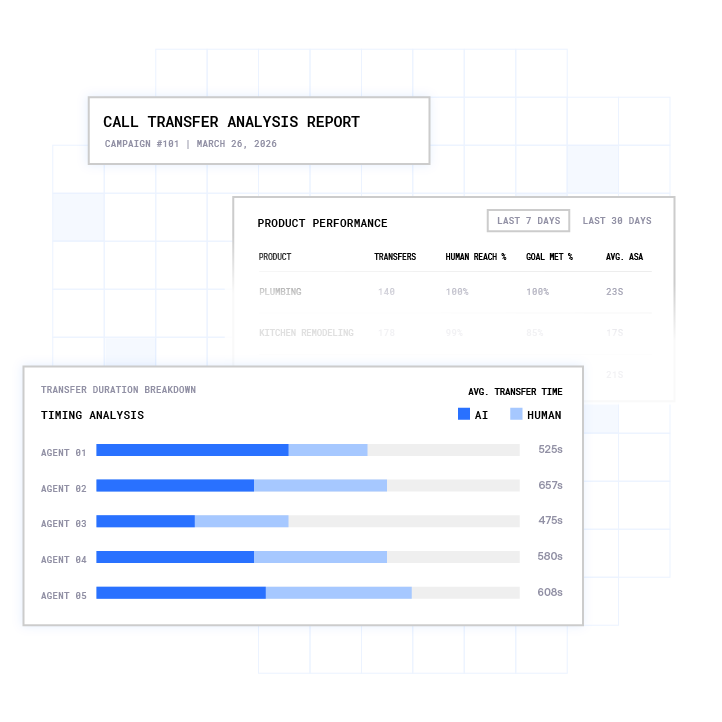
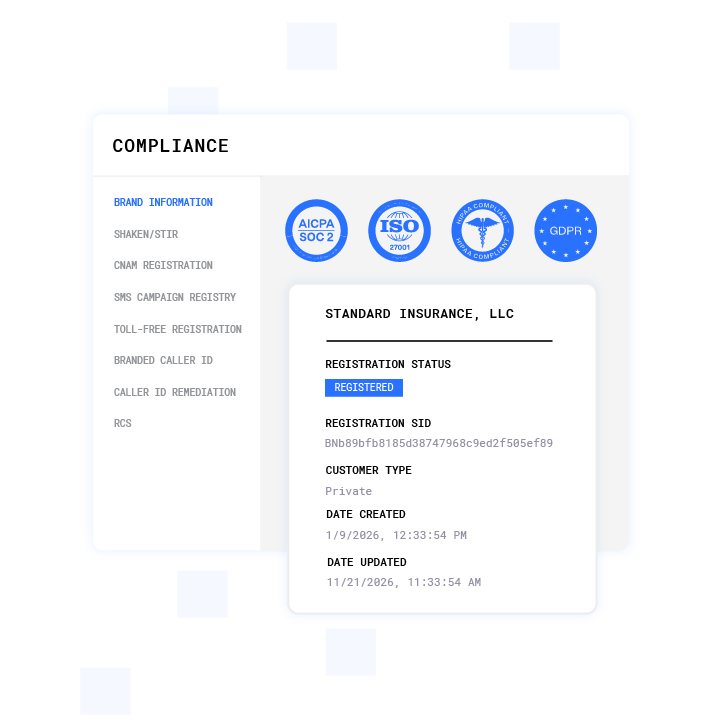
Plura is its own FCC-licensed audio bridging carrier. Voice traffic does not route through a third-party CPaaS. That carrier ownership means STIR/SHAKEN authentication runs on every outbound call at the carrier level. Branded caller ID is issued directly rather than through a reseller. Real-time DNC scrubbing and TCPA-litigator screening happen before dial, inside the platform.1
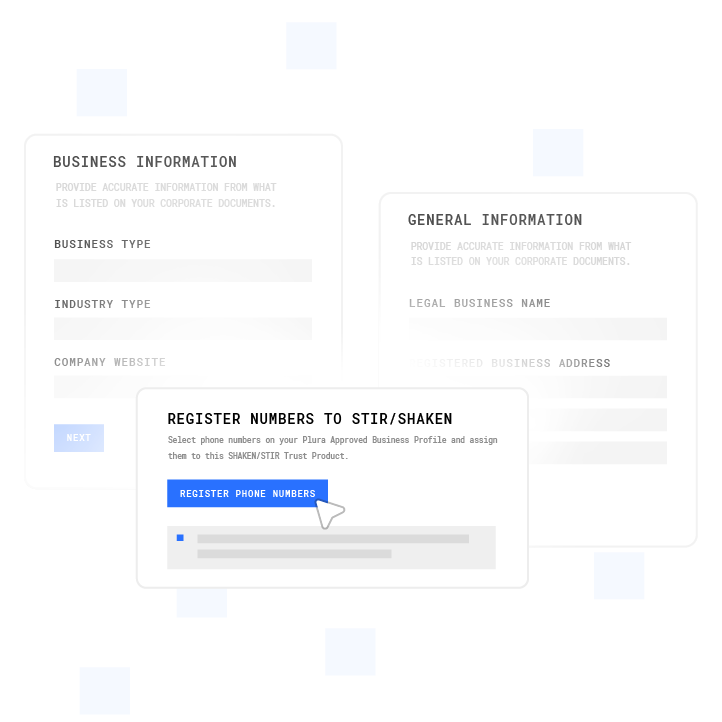
The operational differences from VICIdial and CallTools are structural:
- Plura’s economics are not tied to headcount the way CallTools’ subscription is.
- Plura manages the carrier stack, the compliance engine, and the conversation infrastructure, so operators do not need Linux, Asterisk, or MySQL expertise.
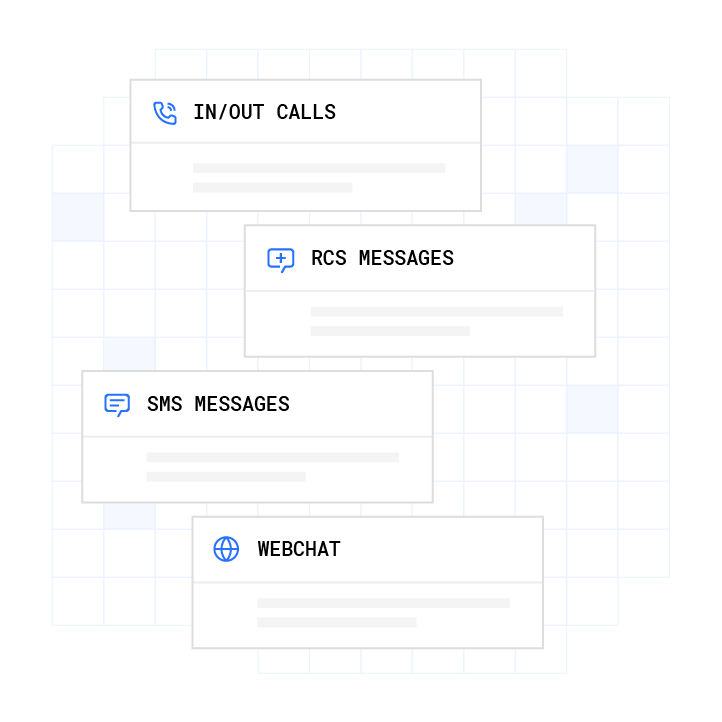
- Stateful conversation memory spans voice, SMS, RCS, and webchat, so a lead texted at 9am is the same record when the call lands at noon.
- Under 5 seconds to first contact, versus an industry standard of 47+ hours (per Plura’s ROI calculator).3
- 3x average ROI in 90 days (per the same ROI calculator).3
Every annual contract includes a 90-day opt-out window, so operators can exit early if the deployment does not meet expectations. Plans and rates are published for direct comparison, and leaders can model their own numbers in Plura’s ROI calculator. For teams already on VICIdial or CallTools, the compare page shows a detailed side-by-side. See the AI Predictive Dialer against your own call volume.
Comparison Table: VICIdial vs CallTools vs AI-Native Dialer
The table below consolidates the cost, control, and operational differences so you can review all three architectures on the same dimensions.
| Dimension | VICIdial | CallTools | Plura AI (AI-Native) |
|---|---|---|---|
| Software license cost | $0 (AGPLv2 open source) | Quote-based; ~$30-$50/seat/month reported | See Plura’s current plans and rates |
| All-in monthly cost (50 agents, est.) | ~$9,512/month (~$190/agent) | ~$110-$130/seat/month all-in (est.) | See Plura’s current plans and rates |
| Infrastructure ownership | Operator-owned; self-hosted or managed VPS/bare metal | Vendor-managed cloud; no hardware required | FCC-licensed carrier; 100% U.S. infrastructure |
| Admin expertise required | Linux, Asterisk, MySQL, SIP/VoIP, VICIdial config | None; vendor-managed | None; Plura manages the carrier and platform |
| Native CRM integrations | Custom API/webhook build required per CRM | Salesforce, HubSpot, GoHighLevel, Zoho, Zapier, and more | 50+ integrations including Salesforce, HubSpot, Zoho, GoHighLevel, Zapier |
| Caller ID authentication | STIR/SHAKEN via SIP carrier; not built into VICIdial natively | Vendor-managed; carrier-dependent | STIR/SHAKEN on every outbound call at the carrier level; branded caller ID issued directly |
| DNC scrubbing | Native internal/external DNC; federal list subscription separate | Built-in DNC rules and suppression list controls | Real-time DNC scrubbing and TCPA-litigator screening before dial, inside the platform |
| Cross-channel memory | Voice only; no native SMS/RCS/webchat context sharing | Voice and SMS native; no stateful cross-channel memory | Stateful conversation database across voice, SMS, RCS, and webchat |
| Support at 2am | Community forums (no SLA); operator or managed hosting provider | Vendor support team; extended hours | Plura-managed platform; 99.9% uptime SLA with automatic failover3 |
How Many Agents Do You Have? A Decision Framework for 20, 50, and 200 Seats
Seat count changes the economics of every architecture. Use the ranges below as a directional framework, then plug in your own numbers.
20 seats: At 20 seats, the infrastructure floor on VICIdial does not scale down, so per-agent overhead is highest. ViciStack’s March 2026 model puts a 10-agent self-hosted operation at approximately $250/agent/month, which erodes most savings versus a per-seat hosted dialer. If you already have a Linux/Asterisk administrator and server infrastructure, VICIdial can work. If you need to be live within days and have no technical resources, CallTools absorbs that burden for a per-seat fee. If you want to remove both the per-seat cost and admin burden and need cross-channel memory from day one, Plura’s AI Predictive Dialer fits that profile.
50 seats: VICIdial becomes cost-competitive at this scale when you have competent technical management. ViciStack estimates VICIdial saves roughly $3,000-$10,000/month versus proprietary dialers at 50 agents, and a few thousand dollars in emergency troubleshooting can flip that math. Choose VICIdial if you have a dedicated admin and want maximum dialing control. Choose CallTools if you want managed infrastructure and native CRM integrations without a technical hire. Choose Plura if you want an AI-native platform that scales without adding seats or admins.
200 seats: VICIdial is often the lowest direct-cost option at 100+ agents, with savings of $5,000-$15,000/month versus many cloud alternatives. At the same time, the architecture at 200 seats requires 8 telephony servers, a dedicated MySQL database server, dedicated web servers, and a full-time VICIdial admin. Choose VICIdial if you have the technical team and want full data ownership and dialing control. Choose CallTools if you want a managed cloud environment and can absorb per-seat cost at scale. Choose Plura if you want an AI-native platform with carrier-grade compliance support, stateful cross-channel memory, and economics that do not rise linearly with headcount. Model your current seat count against Plura’s AI Predictive Dialer.
Frequently Asked Questions
How Much Does CallTools Cost Per Month?
CallTools does not publish a self-serve price page. Reported per-seat license rates fall in the $30–$50/seat/month range, with usage-based calling minutes, DID charges, and optional add-ons pushing realistic all-in costs to approximately $110–$130/seat/month at scale. An accurate total requires a live quote from CallTools’ sales team, and buyers often request an all-in monthly quote at real call volume, including seats, minutes, and numbers.
Is CallTools a CRM?
CallTools is a dialer with CRM-like features and native integrations, not a full CRM. It stores contact history, call recordings, notes, dispositions, SMS conversations, and scheduled callbacks in a built-in contact record. It does not manage deal pipelines, account hierarchies, contract terms, or support tickets. For full CRM functionality, CallTools connects to Salesforce, HubSpot, Zoho, GoHighLevel, and others via direct integrations and Zapier, as covered in the integrations section above.
Who Uses VICIdial?
VICIdial is used primarily by high-volume outbound call centers, BPOs, and agencies that have in-house Linux and Asterisk expertise and want maximum control over dialing infrastructure at low license cost. With over 14,000 installations across 100+ countries, it is one of the most widely deployed open-source contact center platforms globally. It fits operations with 30+ agents, a dedicated technical admin, and specific compliance or data-ownership requirements that favor full infrastructure control.
What Are Some Good Alternatives to VICIdial?
Common VICIdial alternatives in 2026 include cloud CCaaS platforms like Five9, Convoso, Genesys Cloud CX, NICE CXone, Talkdesk, and RingCentral Contact Center.4 These platforms trade VICIdial’s low license cost and granular control for managed infrastructure and vendor support. For operators who want to move beyond per-seat licensing and late-night admin work, Plura AI’s AI Predictive Dialer provides an AI-native alternative built on an FCC-licensed carrier with STIR/SHAKEN authentication, real-time DNC scrubbing, and stateful cross-channel conversation memory across voice, SMS, RCS, and webchat. See the full side-by-side comparison.
Is CallTools Legit?
CallTools is a cloud-based commercial dialer with over 20 years in the outbound contact center market. It holds a Capterra rating of 4.8/5 from 156 reviews and a 93% user recommendation rate on Software Advice. Common user complaints mention onboarding complexity, intermittent call-quality issues tied to connectivity or number reputation, and unpredictable costs when usage-based components grow faster than expected.
The Final Pitch: Run Your Numbers
VICIdial looks inexpensive on the license line and more expensive once you factor in carrier, compliance, and admin labor. CallTools simplifies deployment and support, and you pay for that simplicity every month on a per-seat basis. Both architectures were built for human agents first and keep the same tradeoff between technical ownership and subscription cost.
Plura AI’s AI Predictive Dialer removes both the per-seat license model and the operational burden described above. It runs on Plura’s own FCC-licensed carrier with STIR/SHAKEN authentication on every outbound call, branded caller ID issued at the carrier level, real-time DNC scrubbing and TCPA-litigator screening before dial, and stateful conversation memory across voice, SMS, RCS, and webchat. Plans and rates are available for direct comparison, and operators can test scenarios in Plura’s ROI calculator before committing. Schedule a working session to see the AI Predictive Dialer against your own metrics.
1 Plura AI maintains SOC 2, HIPAA, ISO, and GDPR posture as part of its platform infrastructure. References to compliance frameworks in this article describe Plura’s platform capabilities and do not constitute a guarantee that any customer using Plura will themselves be compliant with applicable laws or standards. Customers remain solely responsible for their own regulatory obligations, certifications, consent management, recordkeeping, and the claims they make to their own end users. Consult qualified legal counsel for guidance specific to your use case.
2 This article describes regulatory frameworks at a general level and does not constitute legal advice. Laws and regulations vary by jurisdiction, change over time, and apply differently depending on facts and circumstances. Readers should consult qualified legal counsel before making compliance decisions.
3 Performance figures, customer outcomes, and industry statistics referenced in this article are drawn from cited third-party sources or Plura customer case studies. Individual results vary based on implementation, use case, industry, audience, and execution. Past or aggregate performance is not a guarantee of future results.
4 References to third-party products, services, companies, or research are made for informational and comparative purposes only. Plura AI is not affiliated with, endorsed by, or sponsored by any third party named in this article unless explicitly stated. Trademarks and product names referenced remain the property of their respective owners.
This article is provided for informational purposes only and reflects Plura AI’s understanding at the time of publication. Product capabilities, integrations, and specifications are subject to change. For the most current information, visit plura.ai.
This article was produced with the assistance of AI tools and reviewed by Plura AI prior to publication.