
Written by: Matt Beucler, CEO, Plura AI
Key Takeaways for VICIdial Replacement
- VICIdial was built for contact centers and creates structural gaps for sales teams in branded caller ID, cross-channel memory, CRM integration, and low-maintenance operation.
- Sales leaders should evaluate replacements by team profile: high-volume outbound, CRM-native workflows, or hybrid sales-plus-support operations.
- Managed VICIdial hosting and most cloud dialers do not issue carrier-level branded caller ID or maintain conversation continuity across channels.
- AI-native dialers like Plura AI provide carrier-level branded caller ID, real-time DNC scrubbing, and a Stateful Conversation Database across voice, SMS, RCS, and webchat.
- Teams comparing VICIdial alternatives can see Plura AI in a live demo and benchmark an FCC-licensed AI predictive dialer against their current environment.
Why VICIdial Creates Friction For Modern Sales Teams
VICIdial was built for contact centers, not sales teams. The replacement decision is about recognizing that VICIdial’s architecture creates friction that compounds at every stage of a modern sales motion.
VICIdial runs as a PHP web application on top of the Asterisk open-source PBX, with Perl backend daemons handling predictive dialing and lead hopper management, and MySQL storing lead data and call detail records. There is no sign-up page. Operators must run it on their own servers or pay a managed host, taking full responsibility for infrastructure, updates, and backups. That architecture creates four structural gaps that matter specifically to sales teams.
Carrier-Level Branded Caller ID. VICIdial does not itself issue branded caller ID at the carrier level. Its Campaign CID Name field only sets a SIP variable that a CNAM-capable gateway or OpenSIPS server and the carrier must honor, and the receiving carrier performs the LIDB name lookup. Outbound calls present as unfamiliar 10-digit numbers and are exposed to “Spam Likely” labeling and iOS call screening. A Twilio study in February 2024 across approximately 720,000 calls found that branded calls were answered 62% of the time versus 20% for unbranded calls.3 VICIdial operators absorb that connect-rate gap on every campaign.
Cross-Channel Conversation Memory. VICIdial is voice-first, and its email, SMS, and chat features exist only in limited forms. They do not compete with purpose-built omnichannel platforms. A lead who texted at 9 a.m. must re-explain themselves when the call comes at noon. No shared memory layer connects those touchpoints.
CRM-Native Workflow. VICIdial has no built-in CRM. It manages leads and call activity but offers no deal pipeline, email tracking, or marketing automation, so operators integrate a separate CRM such as Salesforce or HubSpot via the VICIdial API.4 The operator owns that integration work and its maintenance.
Zero-Maintenance Deployment. VICIdial runs on Linux and Asterisk, and even with managed hosting, its admin screens assume operators understand lead lists, hopper behavior, disposition codes, and dial-level pacing. The admin labor line item dominates the cost model, as the 2026 analysis cited below shows.
Many operators still value VICIdial’s flexibility and carrier choice. The issue is structural mismatch. VICIdial was designed to maximize call volume through a contact center floor and does not support the CRM-native, cross-channel, compliance-automated workflow that a modern sales team runs.
VICIdial Alternatives By Sales-Team Profile
The right VICIdial replacement depends on the team’s real constraint, not on a feature checklist. Three profiles cover most 10-to-50-agent sales operations currently running VICIdial.
SDR and BDR High-Volume Outbound Teams
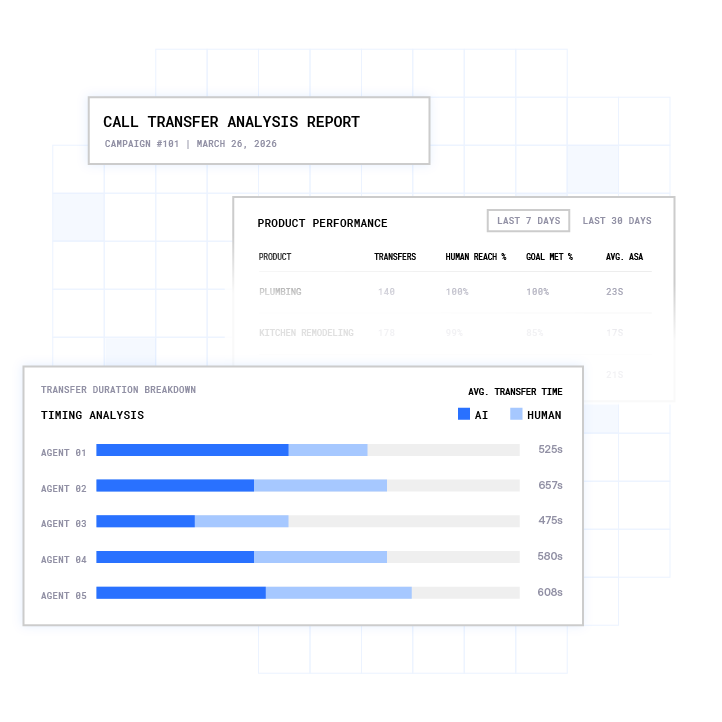
SDR and BDR teams care most about connect rate and pipeline generated, not raw call volume. Their constraint is reaching live prospects at scale before competitors do. Harvard Business Review research found that companies responding within five minutes are 100 times more likely to connect than those waiting 30 minutes, and leads contacted within one minute are 391% more likely to convert than those contacted after 24 hours.3
For this profile, managed VICIdial hosting keeps the dialing engine but does not change caller ID reputation or cross-channel follow-up. Cloud dialers that are API resellers on third-party carriers reduce maintenance but still cannot issue branded caller ID at the carrier level. An AI predictive dialer with carrier-level caller ID and real-time DNC scrubbing before dial addresses the connect-rate problem at its source.
CRM-Native Sales Teams
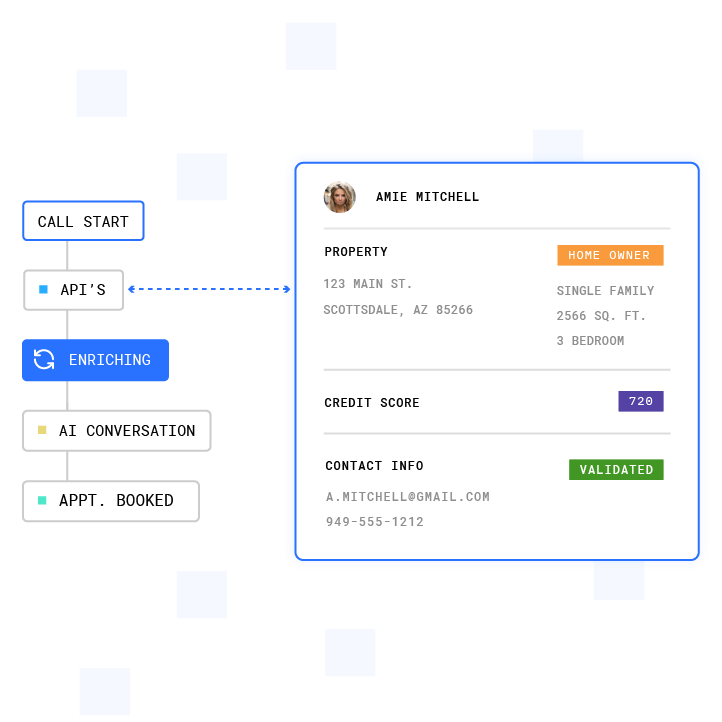
CRM-native teams optimize for CRM sync fidelity and workflow automation inside HubSpot or Salesforce. They run their entire sales motion inside the CRM and need calling to function as a native workflow, not a separate application that requires manual logging.
Sales reps spend 21% of their workday on data entry, and manual dialing plus logging costs 3 to 5 minutes of administrative work per call. VICIdial’s CRM-to-dial-to-disposition loop requires custom integration work rather than native sync, and managed hosting does not change that. Cloud dialers vary widely on CRM depth. Plura’s CRM integration with HubSpot, Salesforce, and Zoho runs bidirectionally, with call transcripts, dispositions, and AI summaries written back to the correct contact and deal record automatically.
Hybrid Sales and Support Teams
Hybrid teams measure success on cross-channel continuity and after-hours coverage. They handle both outbound sales and inbound support, and conversation context must persist across voice, SMS, and chat. A customer who called about pricing yesterday should not have to re-explain themselves when they text today.
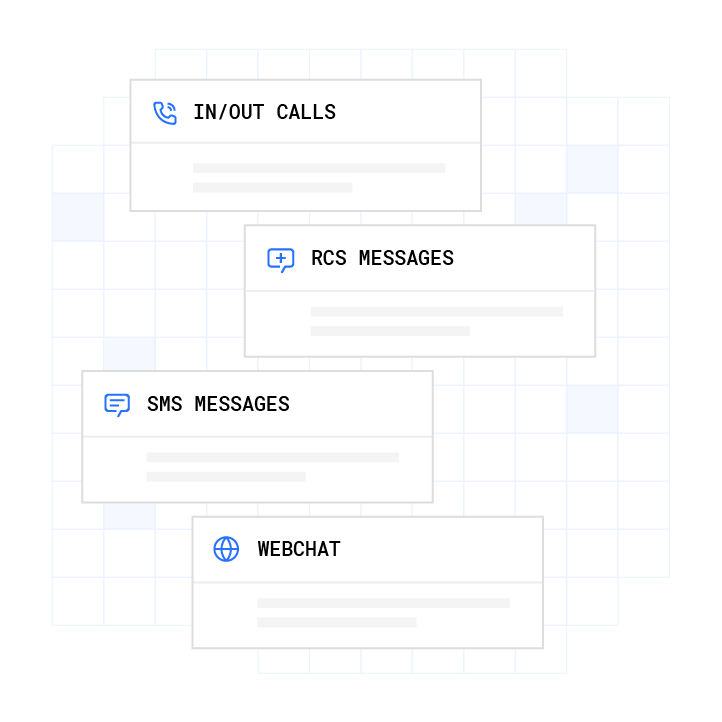
VICIdial’s voice-first architecture cannot provide that continuity. Managed hosting and most cloud dialers leave the same gap. Plura’s Stateful Conversation Database keys every interaction to a customer token across voice, SMS, RCS, and webchat, so every channel inherits the full memory of every prior touchpoint.
The Three Replacement Categories For VICIdial
The three profiles above map to three distinct replacement categories. Each category solves a different part of the VICIdial problem, and none covers every gap.
Managed VICIdial Hosting keeps the VICIdial architecture but outsources server maintenance to a hosting provider. Managed hosting offloads infrastructure management costs and operational effort from the sales-team operator. The underlying engine remains the same. It stays voice-first, lacks carrier-level branded caller ID and cross-channel memory, and still requires a separate VoIP provider relationship. This category fits teams with deep VICIdial expertise that want to eliminate Linux administration without changing workflow.
Cloud Dialers are browser-based platforms that reduce maintenance significantly. Most are API resellers on third-party telecom carriers. STIR/SHAKEN signing happens at the originating carrier and not in the dialer software.1 When a dialer vendor resells someone else’s telephony, traffic is typically signed upstream at partial (B) attestation, which analytics engines treat as a lower-trust signal. Most cloud dialers therefore cannot issue branded caller ID at the carrier level. This category suits small to mid-sized teams wanting browser-based simplicity and lower maintenance while accepting caller ID limitations.
AI-Native Dialers combine an AI predictive dialer with carrier-level caller ID, real-time DNC scrubbing before dial, and cross-channel memory. This category requires migration from VICIdial but delivers low-maintenance deployment and a Stateful Conversation Database across all channels.
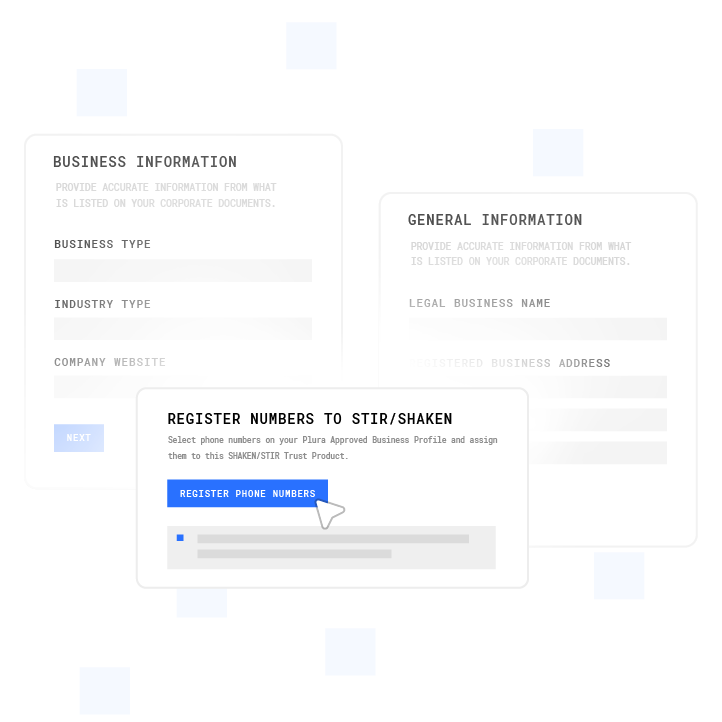
Plura AI is the recommended first option for sales teams in this category because it owns the layer that the other two categories rent. As its own FCC-licensed audio bridging carrier, Plura holds an operating company number and runs STIR/SHAKEN authentication on every outbound call.1 That carrier control enables branded caller ID at the carrier level. The same platform enforces real-time DNC scrubbing and TCPA (Telephone Consumer Protection Act, 47 U.S.C. § 227) litigator screening before every dial.1 Automated quiet hours and immutable consent logging run inside the platform on every outbound contact. A Stateful Conversation Database spans voice, SMS, RCS, and webchat. The full stack runs on 100% U.S. infrastructure.
Test an AI-native dialer against your current VICIdial campaigns in a controlled Plura pilot.
Migration Reality: What Breaks When You Leave VICIdial
Choosing a replacement category is only half the decision. The other half is the migration itself, which involves four distinct workstreams. Sequencing them incorrectly is the most common reason migrations stall.
Campaigns and Lead Lists. Active VICIdial campaigns carry dial statuses, hopper configurations, retry intervals, and list segmentation logic that do not map one-to-one to any replacement platform. The migration workstream involves documenting every active campaign’s configuration and translating dial logic into the replacement platform’s workflow model. Teams then run the new platform in parallel on a subset of leads before cutover. Retiring campaigns before the parallel run confirms parity is the most common sequencing mistake.
DNC Records and Consent Handling. DNC record continuity is a critical compliance workstream. VICIdial’s per-campaign DNC lists are not shared across tenants. A number marked DNC for one tenant’s campaign is not automatically DNC for another tenant’s campaign, and only the system-wide DNC applies globally. Teams should export the full system-wide DNC list, per-campaign DNC lists, and any consent records stored in the CRM before the first dial on the new platform. Consent records should be timestamped and auditable on the replacement platform from day one. Consult qualified counsel on consent record obligations specific to your operation.
Agent Workflow Retraining. VICIdial’s disposition codes, agent states, and hopper-based workflow are specific to its architecture. Agents trained on VICIdial’s interface will need retraining on disposition mapping, transfer protocols, and the new platform’s agent screen. Implementation of a new dialer platform typically takes 2 to 6 weeks for campaign setup, dispositions, IVR flows, CRM sync, and agent training. Running the new platform on a pilot cohort of agents before full rollout reduces retraining risk.
Sequencing the Transition. Move DNC records and consent data first. Stand up the new platform in parallel on a defined lead segment second. Retrain a pilot agent cohort third. Cut over campaigns in order of lowest risk to highest. Retire VICIdial infrastructure last, after a defined parallel-run period confirms parity on connect rate, disposition accuracy, and CRM sync fidelity.
The True Cost Of Staying On VICIdial
Migration is a one-time cost. Staying on VICIdial is a recurring one. The software license costs nothing, but the operation carries five recurring cost drivers that rarely appear on a single invoice.
Admin Labor. A 2026 cost analysis built a 50-seat self-hosted VICIdial total cost model totaling $4,103 per month. The Linux admin contractor line item at $1,500 per month was nearly nine times larger than the server hosting line item at $171 per month. At 100 agents, a full-time sysadmin hire at roughly $8,333 per month loaded replaces the part-time contractor.
Server Hosting and Dedicated Hardware. Self-managed cloud servers, colocation, or managed hosting all carry real monthly costs. For a 20-agent VICIdial operation, ongoing server-related costs run roughly $50 to $500 per month depending on deployment model, with a one-time server cost of roughly $1,350.
Separate VoIP Provider Fees. VICIdial expects operators to bring their own carrier and SIP trunk. That requirement means managing two vendor relationships instead of one bundled invoice. SIP trunking costs, DID rentals, and per-minute termination charges appear as separate line items.
Call-Blocking Remediation. The VICIdial project reported in its 2021 Astricon materials that as little as five minutes and 200 calls flagged a caller ID as spam, and that flags took 2 to 21 days to clear after a number was retired. Remediation effort, number rotation management, and the pipeline impact of low connect rates during flagged periods are real operational costs with no line item on the hosting invoice.
Pipeline Cost Of Low Connect Rates. Plura’s ROI calculator estimates monthly human agent costs at $60,000 for 15 agents working 2,400 total hours at $20 per hour, including 25% in taxes, benefits, and commissions, at 40% talk utilization.3 The same volume handled by Plura AI agents costs $14,400 per month at 100% talk utilization using 6 agents. The difference is not a discount. It is the cost of the idle time that low connect rates create, and it recurs every month a VICIdial operation stays on its current setup. Run your numbers through Plura’s cost savings calculator to check your ROI in real time.
GoAutoDial And Open-Source VICIdial Alternatives
GoAutoDial functions as a VICIdial fork rather than a separate dialer.4 GoAutoDial packages VICIdial and Asterisk into a pre-built installer or ISO image with a simplified web GUI layered on top. The underlying dialing engine, including predictive dialing, campaign management, lead list handling, and ingroup routing, remains standard VICIdial. Choosing GoAutoDial over VICIdial is primarily a UI preference.
The practical limitation of GoAutoDial Community Edition (CE) in 2026 is version currency. GoAutoDial CE shipped in 2019 with VICIdial revision approximately 2900 to 3200 underneath, while the current VICIdial SVN trunk is at revision 3939 and above. That gap leaves GoAutoDial CE six years behind on security patches, PHP 8 compatibility, Asterisk 18 support, WebRTC agent phone, STIR/SHAKEN awareness, and improved answering machine detection algorithms. The GoAutoDial team shifted focus to GoAutoDial Cloud and effectively abandoned the self-hosted CE edition.
GoAutoDial Cloud (sold as JustGoCloud) operates as managed VICIdial hosting with the GoAutoDial interface. GoAutoDial’s hosted JustGoCloud edition was listed at $29 per agent per month as of August 2026. It addresses the maintenance burden but retains VICIdial’s structural limitations for sales teams, including voice-only architecture, lack of carrier-level branded caller ID, lack of cross-channel memory, and a separate SIP trunk requirement.
VICIdial remains the most widely deployed open-source contact center platform, with over 14,000 installations in more than 100 countries. For sales teams evaluating open-source alternatives, neither VICIdial nor GoAutoDial resolves the structural limitations of self-hosted architecture: no carrier-level branded caller ID, no cross-channel memory, and no low-maintenance deployment.
How To Evaluate A VICIdial Replacement In A Pilot
A 30-day pilot structured around the right metrics produces a defensible internal recommendation. The wrong metrics produce a feature comparison that does not predict real-world performance.
Measure these four things during a pilot:
- Connect Rate. Track the percentage of dials that reach a live prospect. This metric shows whether branded caller ID and carrier-level attestation are working. Run the pilot on the same lead segment you currently dial on VICIdial to produce a direct comparison.
- Talk Time Per Agent Per Hour. A well-tuned VICIdial campaign keeps agents on calls 45 to 55 minutes per hour, while a poorly tuned one yields only 20 to 30 minutes. The replacement platform should match or exceed that range without heavy tuning.
- CRM Sync Fidelity. Confirm that call dispositions, transcripts, and follow-up tasks land on the correct contact and deal record in real time. Batch syncs that require reconciliation add hidden admin work.
- Compliance Posture. Verify that DNC scrubbing runs before dial, that consent records are timestamped and auditable, and that quiet-hours enforcement is automatic rather than manual.
Ignore during a pilot:
- Feature checklists that do not map to your sales-team workflow. Extra features that your team will never use do not improve outcomes.
- Pipeline results in the first 30 days. Pipeline data from a 30-day pilot typically appears in closed revenue 60 to 90 days later, so focus on conversations had rather than deals closed.
Present the pilot internally as a controlled A/B test. Use the same lead segment, the same agents, and the same time window on both platforms. The output is a connect-rate comparison and a talk-time comparison, which translate directly into pipeline impact without waiting for a full revenue cycle.
VICIdial Replacement Fit By Platform Category
The three platform categories align with different sales-team profiles and carry distinct trade-offs. Use this summary as a decision shortcut.
- Managed VICIdial Hosting. Best fit for teams with deep VICIdial expertise that want to outsource server maintenance. Trade-off: retains VICIdial’s voice-first architecture and lacks carrier-level branded caller ID and cross-channel memory.
- Cloud Dialers. Best fit for small to mid-sized teams that want browser-based simplicity. Trade-off: lower maintenance but limited control over caller ID reputation because most vendors resell third-party carrier capacity.
- AI-Native Dialers. Best fit for high-volume outbound, CRM-native, and hybrid teams that need carrier-level caller ID and cross-channel memory. Trade-off: requires a planned migration from VICIdial but delivers low-maintenance deployment and a unified conversation database.
Conclusion: The VICIdial Replacement Decision For Sales Teams
The VICIdial replacement decision is an architectural one. VICIdial’s self-hosted Linux and Asterisk design was built for contact center volume and does not align with the CRM-native, cross-channel, compliance-automated workflow that modern sales teams run.
Evaluate replacements by sales-team profile first. SDR and BDR teams need carrier-level caller ID and real-time DNC scrubbing. CRM-native teams need bidirectional sync fidelity and workflow automation inside HubSpot or Salesforce. Hybrid sales-plus-support teams need cross-channel continuity and stateful conversation memory across voice, SMS, and chat.
Plura AI is the recommended first option across these profiles. It owns its FCC-licensed carrier stack, runs a Stateful Conversation Database across voice, SMS, RCS, and webchat, and removes server maintenance from the operator’s workload.
Compare Plura’s plans and rates side by side. Run your numbers through the ROI calculator to see how your current VICIdial cost model performs on a different platform.
1 Plura AI maintains SOC 2, HIPAA, ISO, and GDPR posture as part of its platform infrastructure. References to compliance frameworks in this article describe Plura’s platform capabilities and do not constitute a guarantee that any customer using Plura will themselves be compliant with applicable laws or standards. Customers remain solely responsible for their own regulatory obligations, certifications, consent management, recordkeeping, and the claims they make to their own end users. Consult qualified legal counsel for guidance specific to your use case.
2 This article describes regulatory frameworks at a general level and does not constitute legal advice. Laws and regulations vary by jurisdiction, change over time, and apply differently depending on facts and circumstances. Readers should consult qualified legal counsel before making compliance decisions.
3 Performance figures, customer outcomes, and industry statistics referenced in this article are drawn from cited third-party sources or Plura customer case studies. Individual results vary based on implementation, use case, industry, audience, and execution. Past or aggregate performance is not a guarantee of future results.
4 References to third-party products, services, companies, or research are made for informational and comparative purposes only. Plura AI is not affiliated with, endorsed by, or sponsored by any third party named in this article unless explicitly stated. Trademarks and product names referenced remain the property of their respective owners.
This article is provided for informational purposes only and reflects Plura AI’s understanding at the time of publication. Product capabilities, integrations, and specifications are subject to change. For the most current information, visit plura.ai.
This article was produced with the assistance of AI tools and reviewed by Plura AI prior to publication.