
Written by: Matt Beucler, CEO, Plura AI
Key Takeaways
- Call center outsourcing typically delivers 30–55% gross savings versus fully loaded in-house operations.3 Net savings drop after ramp, vendor management, QA, and repeat-contact leakage.
- Offshore rates of $6–$16 per agent hour carry the highest regulatory exposure under the FCC NPRM (CG Docket No. 26-52) and state onshoring frameworks, which can significantly reduce savings for regulated industries.
- Four leakage lines – ramp and retraining, vendor management overhead, QA surcharges, and quality-driven repeat contacts – erode gross savings within months of implementation.
- A fully loaded U.S. in-house baseline runs 2–2.5x base wages once benefits, facilities, technology, recruiting, training, turnover, and QA are included, so headline outsourcing rates can mislead without a like-for-like comparison.
- Plura AI delivers U.S.-based AI voice agents that reduce leakage and regulatory exposure while achieving 3x average ROI in 90 days;3 see a live demo of the platform to evaluate savings in your operation.
The Fully Loaded In-House Baseline: What Salary Alone Leaves Out
As the key takeaways suggest, the credibility of any outsourcing savings claim depends on the baseline it is measured against. Most “baselines” only track wages, not the full cost of running a contact center.
A defensible fully loaded in-house baseline must include all of the following:
- Base wages for agents and supervisors
- Payroll taxes and employer-side benefits (the U.S. Bureau of Labor Statistics reported that benefits accounted for 30.1% of total private-industry employer compensation in March 2026, at $14.01 per hour worked on a $46.60 total compensation figure)
- Commissions and variable pay
- Facilities and seat costs (in-house facilities run $2,000–$5,000 per agent annually)
- Technology and seat licenses (cloud contact center software runs $30–$200+ per agent per month depending on feature tier)
- Recruiting costs (approximately $2,500 per hire for advertising, interviewing, and screening)
- Initial training (industry data puts the average cost of training a single contact center agent at $7,000–$14,000 when recruiter time, onboarding administration, training staff compensation, lost productivity during ramp, and pre-effectiveness new-hire attrition are included)
- Turnover replacement cost, driven by 30–45% annual agent turnover in contact centers
- QA tooling and analyst time
- Internal management and supervision overhead
Contact centers allocate 60–70% of operating costs to agent labor, which pulls attention to the wage line. At the same time, the fully loaded cost of a U.S. contact center operation typically runs 2x to 2.5x the base agent wage rate. An agent earning $18 per hour often costs $36–$45 per hour in fully loaded total cost once overhead is included.
Decision rule: a wage line alone does not qualify as a baseline.
Onshore vs Offshore Call Center Cost: A Like-for-Like Comparison
The fully loaded baseline above sets the reference point for comparing onshore, nearshore, and offshore options. The table below compares the three cost tiers on loaded cost per agent hour, ramp time, and regulatory exposure. Rate ranges come from named vendor and analyst sources published in 2026 and serve as directional market estimates, not audited benchmarks. Readers should verify current rates with qualified vendors and consult counsel on regulatory exposure.
| Cost Tier | Loaded Cost per Agent Hour | Ramp Time | Regulatory Exposure |
|---|---|---|---|
| Onshore (U.S.) | $25–$45 (vendor-published market estimate; BLS-derived loaded figure at $35–$48) | 6–8 months to full proficiency for complex or blended-channel queues; simple tier-1 roles can ramp in 4–6 weeks | Minimal under current federal and state frameworks, with no offshore disclosure obligations |
| Nearshore (Latin America / Caribbean) | $13–$23 (Outsource Consultants, 2026); $12–$18 all-in for Caribbean hubs (Call Force Global, 2026) | 4–12 weeks for agent recruitment, training, and technology integration | Moderate; subject to FCC NPRM disclosure proposals and state-level sensitive-data restrictions depending on jurisdiction and vertical |
| Offshore (Philippines / India) | $6–$12 (Outsource Consultants, 2026); true fully loaded cost including turnover, training, QA, and management at $14–$22 | 4–12 weeks plus cross-time-zone management friction | Highest; subject to FCC NPRM cap proposals, foreign-adversary-nation considerations, and state-level restrictions in NY, NJ, CT, MO, and FL |
On the headline rate card, the gap between onshore and offshore is roughly 3x to 4x, though the true total-cost-of-ownership gap is narrower once offshore overhead, rework, and attrition are counted. A $9 per hour Philippines offshore seat with 50% annual attrition and a 15% rework rate typically costs $13–$14 per productive hour once retraining, escalations, and cross-time-zone management time are included. The rate card gap differs from the total cost of ownership gap.
Where the Savings Actually Come From: Four Concrete Drivers
Outsourcing call center cost per hour purchases four distinct savings drivers. Each maps back to a line in the fully loaded in-house baseline.
- Labor cost differential. This is the largest driver. An offshore agent at $8–$12 per hour versus a U.S. in-house agent at $35–$48 fully loaded creates a $23–$40 per hour gap on the rate card. That gap is real at the gross level and narrows once the leakage lines below are accounted for.
- Overhead and facilities. Outsourcing transfers facilities, seat, and utilities cost to the vendor. In-house facilities run $2,000–$5,000 per agent annually. For a 50-agent operation, that equals $100,000–$250,000 per year removed from the in-house baseline.
- Technology and tooling consolidation. Outsourcing vendors bundle telephony, CRM seat licenses, and recording storage into their rate. In-house operators pay those line items separately. The savings are real but bounded because vendors pass technology cost through in their margin, and buyers who bring their own software stack may not capture this driver.
- Flexible scaling into peak season. Medicare Annual Enrollment Period, tax season, and Black Friday create volume spikes that in-house operations struggle to absorb without hiring months in advance. Outsourcing converts that fixed headcount cost into variable cost. This driver matters most for operators with 30% or greater seasonal volume swings and least for operators with flat, predictable volume.
Net savings from these four drivers, before leakage, typically run 30–55% versus a fully loaded in-house baseline when facilities, hardware, recruiting, and benefits are counted. That figure represents gross savings. The net number falls after leakage.
Where the Savings Leak: Ramp, Vendor Management, QA, And Repeat Contacts
Operators who have run outsourced programs often see a pattern: savings appear in month one and erode by month four. Four leakage lines explain the arithmetic.
- Ramp and training cost. Initial agent training costs $1,000–$2,000 per agent and recurs with product changes and turnover. With the turnover rate mentioned earlier, roughly a third of an outsourced team is retrained every year. During ramp, handle times are longer and error rates are higher, so this cost must be subtracted from gross savings to reach a realistic net figure.
- Vendor management overhead. Vendor governance costs fall entirely on the buyer and include internal program managers, business reviews, calibration sessions, SLA auditing, and contract administration. Deloitte’s 2024 Global Outsourcing Survey found that 70% of executives reported their vendor management function was not fully mature.4 Buyers who trim this overhead to maximize savings typically see performance drift within months, which reduces the net savings number.
- QA cost. Dedicated QA analyst surcharges run $500–$2,000 per month. Maintaining quality standards requires call monitoring, regular calibration sessions, and dedicated oversight. Operators who underinvest in QA often discover the impact in CSAT scores rather than on the invoice, and that impact effectively reduces the savings case.
- Quality-driven repeat contacts. Quality and rework costs can be monetized through repeat contacts, escalations, misrouted tickets, and goodwill credits after service failures. If 15% of offshore calls require a second interaction or internal escalation, the effective resolution cost approaches the onshore number. The median cost per assisted contact is $13.50 per Gartner’s customer service benchmarks.4 Each repeat contact at that rate quickly erodes per-minute gains and must be reflected in the net savings.
Net savings equal gross savings minus these four leakage lines. Budget discussions that ignore one or more of them present a gross number rather than a true net figure.
The 2026 Regulatory Adjustment: Pricing Offshore Risk Into The Savings Case
Any offshore savings case built in 2026 that excludes a regulatory line remains incomplete. Three federal proceedings and five state frameworks are active and shape the risk profile.
FCC NPRM, CG Docket No. 26-52. The FCC approved issuance of a Notice of Proposed Rulemaking titled “Improving Customer Service and Protecting Consumers through Onshoring” by unanimous vote at its March 26, 2026 Open Meeting.2 The proceeding is formally docketed as CG Docket No. 26-52 and published in the Federal Register (FR Doc. 2026-05750). The NPRM proposes a cap on the percentage of customer service calls that may be handled offshore, with 30% cited as an illustrative threshold. It proposes three consumer protections: mandatory disclosure when a call is handled outside the U.S., a right to transfer to a U.S.-based representative on request, and a requirement that sensitive transactions be handled exclusively at U.S.-based call centers. Sensitive data includes passwords, multi-factor authentication credentials, and bank account or credit card numbers. The NPRM also seeks comment on whether to prohibit use of call centers in foreign adversary nations entirely. The rules are proposed, not final. Readers should consult the docket and qualified counsel for current status.
Keep Call Centers in America Act (S.2495) and Foreign Robocall Elimination Act (S.2666). Congress is pursuing parallel legislation. The Keep Call Centers in America Act (S.2495) and the Foreign Robocall Elimination Act (S.2666) extend the federal regulatory perimeter. S.2666 was reported favorably by the Senate Committee on Commerce, Science, and Transportation on June 1, 2026, and engrossed in the Senate on August 3, 2026. The bill would direct the FCC to establish a task force on unlawful robocalls and require certain voice service providers to post a bond before certifying to the Robocall Mitigation Database. Readers should consult Congress.gov and qualified counsel for current legislative status.
State frameworks. Five states have active call center onshoring or sensitive-data restriction frameworks that operators in covered industries should review with counsel:2
- New York’s Call Center Jobs Act imposes penalties and reporting obligations on covered employers that relocate call center operations offshore. Review the New York Department of Labor’s Call Center Public List and the Call Center Jobs Act.
- New Jersey has enacted a mirror statute. Review NJ.gov Wage and Hour Compliance pages.
- Connecticut restricts offshore handling under state-contract frameworks. Review the Connecticut General Assembly for current statutory text.
- Missouri has issued an executive order on offshore disclosure. Review the Missouri Office of Administration for current executive order text.
- Florida restricts offshore handling of medical information. Review Florida Statutes for the applicable provisions.
Under Section 217 of the Communications Act, acts and omissions of any officer, agent, or other person acting within the scope of employment for a common carrier are deemed to be the acts of the carrier itself. Covered entities using third-party offshore call center operators therefore remain responsible for their own obligations. Qualified counsel can advise how these frameworks apply to specific operations.
Decision rule: any offshore savings case that omits a regulatory line remains incomplete.
The Plura AI Solution: U.S.-Based Savings That Hold Up
Plura AI is an FCC-licensed platform of AI voice agents that run voice, SMS, RCS, and webchat conversations on 100% U.S. infrastructure. Plura owns its FCC-licensed audio bridging carrier rather than reselling a third-party CPaaS, so branded caller ID is issued at the carrier level and controls are enforced at origination. Real-time DNC scrubbing, TCPA-litigator screening, automated quiet hours, and immutable consent logging run inside the platform on every outbound contact. The Stateful Conversation Database holds context across voice, SMS, RCS, and AI webchat so a lead who texted at 9 a.m. is the same lead when the call comes at noon.
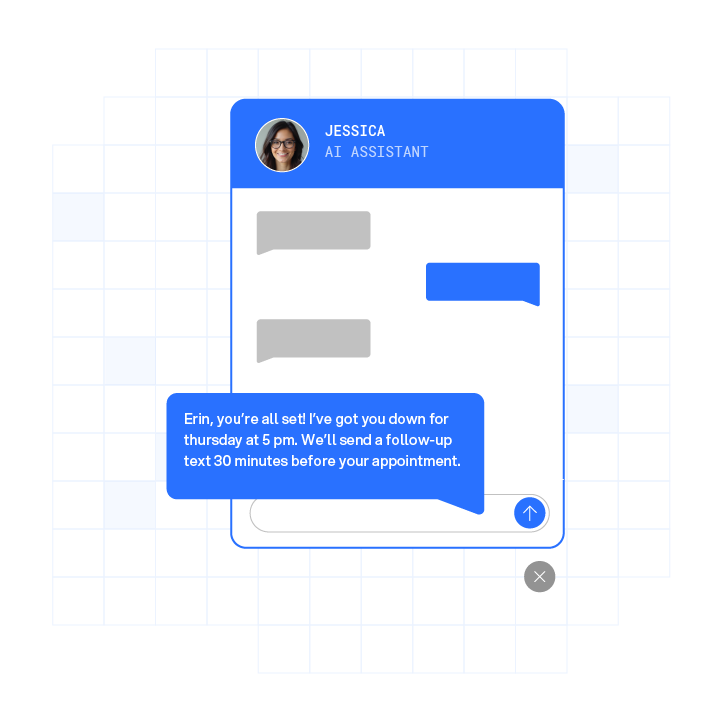
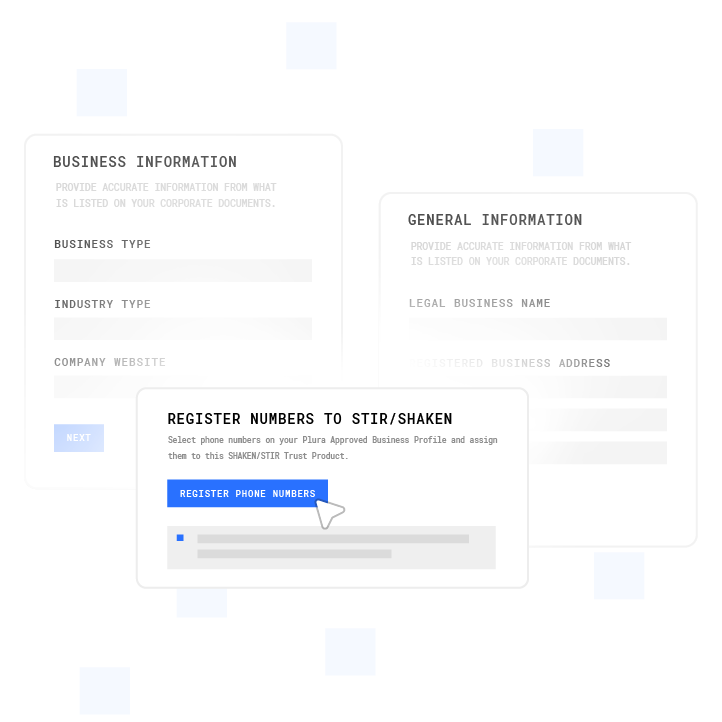
The platform supports compliance with TCPA, DNC, HIPAA, SOC 2, and 50+ state rule sets.1 Customers remain responsible for their own compliance obligations, and Plura provides the infrastructure and enforcement layer.
Beyond compliance, the economics of replacing human agents with Plura are direct. Using the illustrative scenario from Plura’s ROI calculator with stated inputs: a 15-agent operation at $20 per hour with standard taxes, benefits, and commissions and 40% talk utilization costs $60,000 per month. Plura at $15 per hour with 100% talk utilization and 6 Plura agents replacing 15 humans drops monthly cost to $14,400. That is $45,600 saved in the first 30 days and $547,200 over 12 months.3 This scenario uses the calculator’s default inputs; actual results depend on each specific operation.
At higher volume, the same model produces a TCO of $700,000 per year replacing a traditional $7 million contact-center cost structure on equivalent volume. Every annual contract includes a 90-day opt-out window. The AI Predictive Dialer and AI SMS channels share the same stateful database, so every channel inherits the full memory of every prior touchpoint. Review plans and rates for current pricing tiers.
Schedule a live walkthrough of Plura’s AI voice agents.
Conclusion: Run Your Own Numbers
The 30–55% headline range for call center outsourcing savings is a gross number. When you build a fully loaded in-house baseline, subtract ramp, vendor management, QA, and repeat-contact leakage, and price in 2026 regulatory risk under the FCC NPRM and state onshoring frameworks, the net number is materially lower. For operators in regulated industries with offshore exposure, the regulatory adjustment alone can significantly reduce the savings case.
Plura AI provides a durable, U.S.-based alternative. It reduces the leakage lines, runs on 100% U.S. infrastructure, and delivers 3x average ROI in 90 days for high-volume operators, agencies, and enterprises, with a 90-day opt-out window in every annual contract.
Get a tailored ROI projection with a live Plura demo.
Run your numbers through Plura’s ROI calculator to model your own savings.
Compare plans and rates side by side on our pricing page.
1 Plura AI maintains SOC 2, HIPAA, ISO, and GDPR posture as part of its platform infrastructure. References to compliance frameworks in this article describe Plura’s platform capabilities and do not constitute a guarantee that any customer using Plura will themselves be compliant with applicable laws or standards. Customers remain solely responsible for their own regulatory obligations, certifications, consent management, recordkeeping, and the claims they make to their own end users. Consult qualified legal counsel for guidance specific to your use case.
2 This article describes regulatory frameworks at a general level and does not constitute legal advice. Laws and regulations vary by jurisdiction, change over time, and apply differently depending on facts and circumstances. Readers should consult qualified legal counsel before making compliance decisions.
3 Performance figures, customer outcomes, and industry statistics referenced in this article are drawn from cited third-party sources or Plura customer case studies. Individual results vary based on implementation, use case, industry, audience, and execution. Past or aggregate performance is not a guarantee of future results.
4 References to third-party products, services, companies, or research are made for informational and comparative purposes only. Plura AI is not affiliated with, endorsed by, or sponsored by any third party named in this article unless explicitly stated. Trademarks and product names referenced remain the property of their respective owners.
This article is provided for informational purposes only and reflects Plura AI’s understanding at the time of publication. Product capabilities, integrations, and specifications are subject to change. For the most current information, visit plura.ai.
This article was produced with the assistance of AI tools and reviewed by Plura AI prior to publication.