
Written by: Matt Beucler, CEO, Plura AI
Key Takeaways
- Automated lead scoring delivers value when a score crossing a threshold triggers routing, follow-up, suppression, or ownership change. Without that trigger, the score remains a decorative CRM field.
- The score-to-action gap is the measurable distance between a score update and real pipeline movement. Most B2B teams inherit a 9x conversion penalty because their scoring models never close this gap.
- Effective automation maps every score band to a named action, a named owner, and a response SLA. Those actions then run across voice, SMS, RCS, and webchat on a single stateful conversation database.
- Signal architecture must include fit, engagement, intent, and negative signals. When negative signals are missing, scores inflate until the model loses discriminating power.
- Plura AI closes the score-to-action gap by executing score-triggered outreach across voice, SMS, RCS, and webchat on one stateful conversation database.
The Problem: Your Score Goes Up And Nothing Happens
Most B2B lead scoring programs sit in production while reps ignore the scores and pipeline stays flat. This common state has a name: the score-to-action gap.
A closed-loop scoring system means the score triggers four things: routing, follow-up, suppression, and a feedback loop. When any one of those four is missing, the score becomes decoration. It sits on a contact record, updates on schedule, and produces no pipeline movement.
The cost of that gap is measurable. The median B2B team takes 42 hours to respond to an inbound lead, and only about 7% of teams respond within five minutes. Leads contacted within five minutes convert at roughly 21% versus about 2.3% for a next-day reply, which creates a 9x gap on the exact same leads.3 A scoring model that fires no action inherits that gap by default.
The second failure is trust. Once sales has been burned by enough high-scoring leads that went nowhere, reps build a workaround and work their own sources instead. The scored queue turns into a marketing report that sales does not read.
The action is the deliverable, not the score.
See score-triggered outreach in a live Plura demo and watch how it runs across voice, SMS, RCS, and webchat on one stateful conversation database.
The Solution: How To Automate Lead Scoring Actions
Closing the gap starts with how you structure the score itself. Bands drive action, and raw numbers serve as an implementation detail. What routes a lead is the band it falls into and the action mapped to that band.
The mapping rule is simple: every band needs a named action, a named owner, and a response SLA. A band without all three becomes decoration instead of an operational control.
The table below shows what a complete mapping looks like across four bands.
| Score Band | Action That Fires | Owner | Response SLA |
|---|---|---|---|
| Hot | Instant routing to a rep, immediate multi-channel outreach, live transfer if the lead answers | Named AE or senior SDR | First contact attempt within 5 minutes |
| Warm | Enrolled in targeted nurture, SDR qualification task created | SDR | First contact attempt within 4 business hours |
| Nurture | Automated sequence only, no rep contact until an intent signal fires | Marketing ops | No rep SLA; re-score weekly |
| Suppress | Removed from active campaigns, suppressed from outbound | Marketing ops | None; reviewed at the next audit |
The mapping is the contract. Without a named owner, no one is accountable for acting on the score, so the score becomes a report rather than an automation.
Plura executes the hot-band action directly. Score-triggered outreach runs across AI SMS and speed-to-lead workflows and AI voice agent calls on one stateful conversation database. A lead that texted at 9 a.m. is the same lead when the call fires at noon. Plura enables lead response times under 60 seconds, multichannel engagement via voice, SMS, RCS, and webchat, and real-time AI lead scoring.3
Signal Architecture: Fit, Engagement, Intent, And Negative Signals
A scoring model draws from four signal classes that work together.
Fit signals are firmographic and demographic: company size, industry, geography, job title, and revenue range. They measure how closely a lead matches the ideal customer profile before any behavior occurs.
Engagement signals are behavioral: email opens, page visits, content downloads, webinar attendance. They measure activity level, which does not always indicate purchase intent.
Intent signals are high-value behavioral markers: pricing-page visits, demo requests, repeat visits to solution pages, and ROI calculator use. These signals are often the most predictive of near-term purchase.
Negative signals are the class most models omit entirely. The ones that matter include personal email domains on enterprise offers, student activity, out-of-market geography, competitor employees, job-seeker behavior such as careers-page visits, and prolonged inactivity. Without negative scoring, scores inflate until every lead in the database qualifies as hot and the model loses discriminating power.
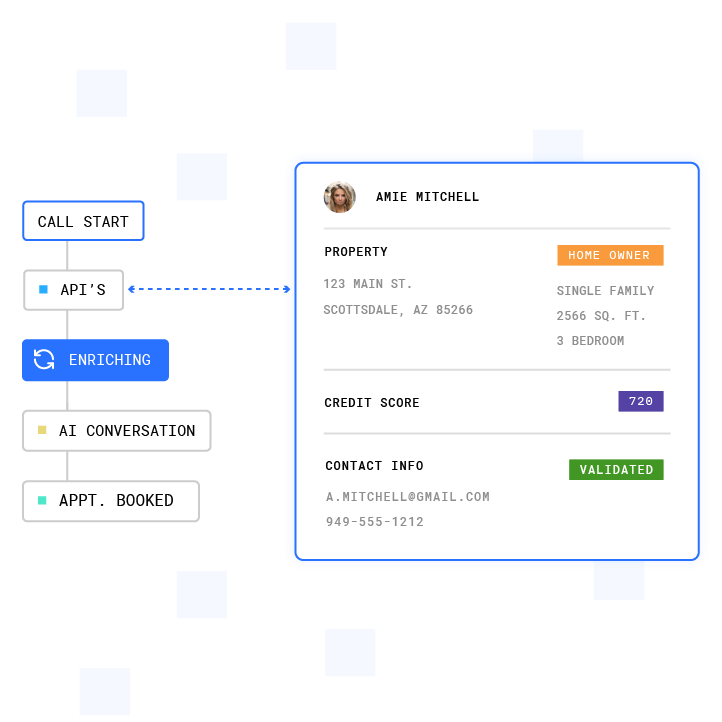
Plura’s AI Lead Intelligence scores and prioritizes leads in real time using behavioral signals, conversation context, and predictive intent modeling, and treats every interaction as a data point for both scoring before the call and learning after it. When you link that to conversation intelligence, the feedback loop runs inside the platform.
Score Decay And Re-Scoring Cadence: State It In Days
Clear decay rules stated in explicit day counts are quotable, auditable, and actionable. The following rules keep stale engagement from inflating scores.
- Decay begins after 30 days of inactivity.
- Halve a behavior’s point value at 30 days, and zero it out at 90 days.
- Re-score every 7 days, or immediately when a new high-intent signal arrives.
- Re-enrich records older than 90 days.
The re-score trigger is a new signal, a decay interval, or a band change. A re-score that does not change the band should not fire an action.
Plura’s stateful conversation database keeps the re-score current. Every interaction across voice, AI SMS, RCS, and AI webchat writes back to the same record. Decay and re-score then run against real conversation history rather than stale CRM fields.
AI And Predictive Scoring: When To Move Off Rules
Rules-based scoring is the right starting point for most teams. The transition to predictive scoring is a data-volume decision, not a technology preference.
Most vendors suggest a minimum of 500 to 1,000 closed deals before predictive model outputs become reliable; below that threshold, the model fits to noise. Use this decision framework:
- Under 500 closed deals: rules-based only.
- 500 to 2,000 closed deals with one core ICP: hybrid scoring with light predictive fit plus manual engagement rules.
- 2,000+ closed deals across multiple segments: full predictive scoring with rules-based overrides.
The feedback-loop risk is real. If sales only works leads above a cutoff, no conversion data is generated below it, so the model cannot learn whether deprioritizing them was correct. Rep overrides become training data when captured correctly. Each override carries a labeled outcome, so capturing the override, the reason behind it, and the eventual result gives the model a feedback signal to learn from at the next retrain interval.
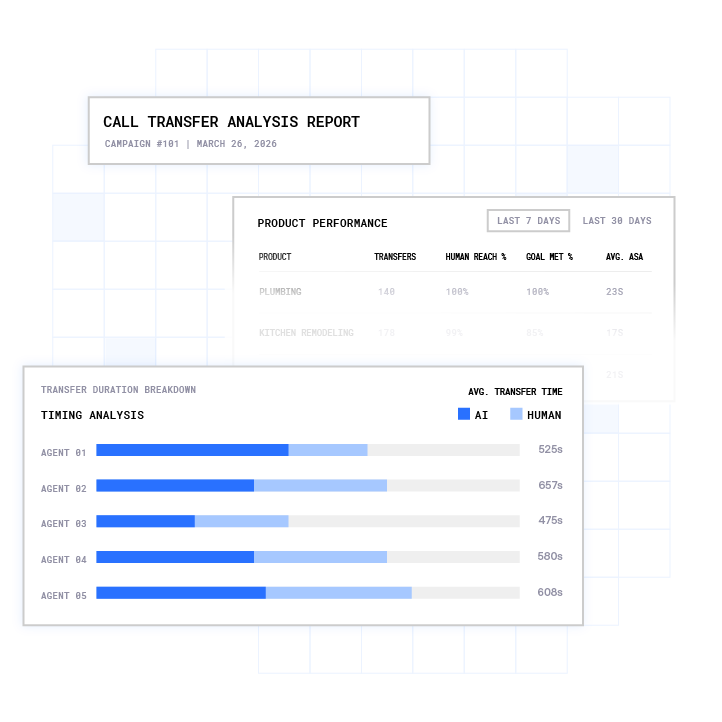
Explore how Plura connects scoring and action in one platform and see the scoring and action layers working together.
The Weekly Score-Band Audit
A weekly score-band audit turns a static scoring model into a governed scoring program.
The method is straightforward. Pull the last 6 to 12 months of leads with known outcomes, replay scores using only data available at the moment each lead entered the funnel, segment into bands, and calculate conversion rate by band.
The healthy result is a clear staircase. Hot converts higher than warm, and warm higher than cold. A model where the top band closes at 12% and the mid band at 10% is not predicting anything actionable.
Rep overrides are a tuning signal. Track the false-positive rate in the hot band and the false-negative rate in the cold band; both indicate weight problems.
The cadence is simple: weekly band review, quarterly full recalibration, and an ad-hoc review if hot-band conversion drops more than 15% in a single month.
Plura’s business intelligence surfaces outcome-based metrics such as conversion lift, contact rates, and cost per completed action. These metrics replace dashboard summaries that lack operational signal.
Worked Example: One Lead Through The Full Loop
This is a representative example, not a customer case study.
A VP of Operations at a 300-person SaaS company submits a demo request on a Tuesday morning.
Before the routing rule evaluates the record, firmographic and contact data populate via enrichment. Fit signals such as title, company size, and industry plus intent signals such as a pricing-page visit and demo request push the lead into the hot band. Negative signals are checked and none apply.
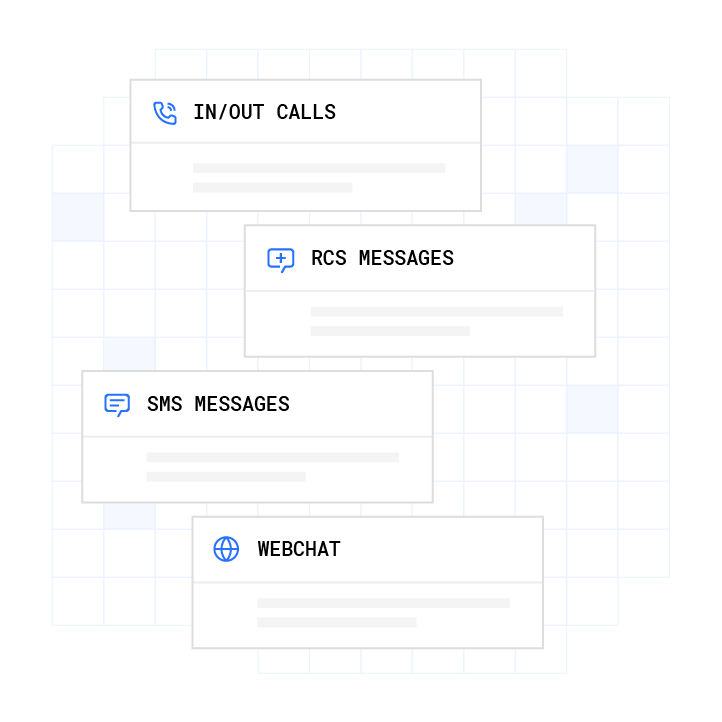
The hot-band action fires. The lead routes to a named AE. Outreach runs across channels. The lead does not answer the first call, so an AI SMS fires. The lead replies by text. The AI holds the conversation, qualifies, then calls and executes a live transfer of the warm buyer to the AE.
The conversation writes back to the stateful record. The lead’s score updates. No decay applies because a new signal arrived.
In a model without the action layer, the same lead would have scored hot and sat in a queue. The 42-hour median response time mentioned earlier is where conversion rates collapse. The score-to-action gap is where that drop happens.
Frequently Asked Questions About Closing The Score-To-Action Gap
How Does Automated Lead Scoring Differ From Manual Scoring?
Manual scoring depends on a person reviewing and assigning value to each lead, typically on a periodic basis. Automated scoring updates continuously as data changes, so new page visits, email clicks, firmographic enrichment, and inactivity all adjust the score in real time without human intervention. The more important difference is downstream: automated scoring can fire a mapped action the moment a band changes, while manual scoring produces a number that still requires a person to decide what to do with it.
How Do You Audit Whether Score Bands Predict Closed-Won?
Replay historical leads using only data available at the moment each lead entered the funnel, then segment into bands and compare conversion and closed-won rate by band. A healthy model shows a clear staircase, where the hot band closes at a meaningfully higher rate than the warm band, and warm higher than cold. If the top band’s lift over the overall average is minimal, the signals are not predictive and weights need recalibration. Run this audit on a 6 to 12 month sample, and schedule it quarterly as a standing calendar item.
What Is the Score-to-Action Gap?
The score-to-action gap is the distance between a score crossing a threshold and something actually happening, such as routing, follow-up, suppression, or ownership change. Many scoring deployments produce a number that updates on schedule but fires no downstream action. The gap often exists because scoring and execution are treated as separate systems owned by separate teams. Closing it requires mapping every score band to a named action, a named owner, and a response SLA, then connecting the scoring system to a platform that executes those actions automatically when a band changes.
Conclusion: Make The Score Drive Action
A lead score only matters when it changes routing, follow-up, suppression, or ownership. The score-to-action gap is the distance between a threshold crossing and something actually happening, and many B2B scoring deployments never close it.
When you evaluate scoring automation options, three questions determine whether a platform closes the gap or just reports on it. Does the platform fire the action when a score crosses a threshold? Does it reach the lead across channels with shared memory? Does it write outcomes back into the model so the feedback loop runs?
Plura closes the gap by executing score-triggered outreach across voice, AI SMS, RCS, and AI webchat on one stateful conversation database. Real-time DNC scrubbing, TCPA-litigator screening, automated quiet hours, and immutable consent logging run inside the platform before dial to support compliance workflows.1 The no-code workflow builder maps score bands to named actions without engineering. Integrations connect Plura to the CRM and marketing automation stack operators already run.
Watch the score-to-action loop run end to end in a Plura demo and see how it behaves with real conversations.
Compare plans and rates side by side to find the tier that fits your lead volume. Run your numbers through Plura’s ROI calculator to check your ROI in real time.
1 Plura AI maintains SOC 2, HIPAA, ISO, and GDPR posture as part of its platform infrastructure. References to compliance frameworks in this article describe Plura’s platform capabilities and do not constitute a guarantee that any customer using Plura will themselves be compliant with applicable laws or standards. Customers remain solely responsible for their own regulatory obligations, certifications, consent management, recordkeeping, and the claims they make to their own end users. Consult qualified legal counsel for guidance specific to your use case.
2 This article describes regulatory frameworks at a general level and does not constitute legal advice. Laws and regulations vary by jurisdiction, change over time, and apply differently depending on facts and circumstances. Readers should consult qualified legal counsel before making compliance decisions.
3 Performance figures, customer outcomes, and industry statistics referenced in this article are drawn from cited third-party sources or Plura customer case studies. Individual results vary based on implementation, use case, industry, audience, and execution. Past or aggregate performance is not a guarantee of future results.
This article is provided for informational purposes only and reflects Plura AI’s understanding at the time of publication. Product capabilities, integrations, and specifications are subject to change. For the most current information, visit plura.ai.
This article was produced with the assistance of AI tools and reviewed by Plura AI prior to publication.