
Written by: Matt Beucler, CEO, Plura AI
Updated September 2026
This guide explains the four response mechanisms, how to match them to your lead channels and CRM, and where they drive the most revenue in real estate and home services.
Key Takeaways
- Lead response speed depends on four mechanisms: instant routing, AI voice agents, AI SMS agents, and AI SDR conversation platforms. Each fits different channels and workflows.
- AI voice and SMS agents that initiate contact in under 5 seconds outperform routing tools because they actually talk with the lead instead of only assigning it to a rep.
- Harvard Business Review research shows responding within five minutes makes a business 100 times more likely to connect, and later work from the same research group found that 78% of prospects buy from the first responder.3
- Plura AI delivers sub-5-second responses across voice, SMS, RCS, and webchat on a single stateful database, so context carries across every channel.
- See how Plura AI matches response classes to your lead channels in a live walkthrough.
Why “Fastest” Is Not One Number
The takeaways above point to a definitional problem: vendor claims about lead response speed conflict because the word “fastest” describes four different things. A routing tool moves a lead record to a rep’s queue. A notification tool sends the rep a Slack alert. An AI agent actually picks up the phone or sends the text. A routing tool that assigns a lead in 30 seconds is slower than an AI agent that talks to the lead in under 5 seconds, because the rep still has to act on the assignment.
The research on why this gap costs revenue is direct. Harvard Business Review research found that companies responding within five minutes are 100 times more likely to connect with a prospect than those waiting 30 minutes. The same body of research, drawn from Dr. James Oldroyd’s 2007 Lead Response Management Study conducted with InsideSales.com, found that responding within 60 seconds lifts conversions by 391% compared to a 24-hour response.3 That study also found that 78% of prospects choose to buy from the first responder who contacts them. A related 2011 Harvard Business Review article, “The Short Life of Online Sales Leads” by Oldroyd, McElheran, and Elkington, reported separate hour-based findings.
The industry standard for first contact on an inbound lead is 47+ hours. Only 7% to 23% of companies reply within five minutes of form submission. A routing tool that assigns a lead in 30 seconds does not close that gap. An AI agent that initiates the conversation immediately does.
The Four Response Mechanisms, Ranked by Speed
The four mechanisms below are ranked from slowest to fastest in terms of actual lead contact. Each class handles a new lead differently, and the ranking reflects how quickly the lead hears from the business, not how quickly the record moves inside your systems.
Instant Routing and Scheduling Platforms
These platforms move a lead record to the right rep and, in some cases, open a calendar booking link. They do not converse with the lead.
LeanData runs as a managed package inside Salesforce, applying territory rules, round-robin logic, and lead-to-account matching before assigning the record to a rep.4 LeanData’s published materials describe a six-step routing sequence that executes in seconds: capture, validate, match to account, qualify, route, and engage via rep notification. The sequence ends with a Slack alert to the rep. The rep still has to make the call.
Chili Piper and RevenueHero add instant scheduling to the routing layer.4 RevenueHero’s published materials describe its Attio native integration as matching, qualifying, and routing leads to the right rep in under 3 seconds, with bookings and account owners syncing back to Attio automatically. The lead books a future meeting. No conversation happens at the moment of inquiry.
Calldrip focuses on speed-to-dial. It alerts a rep the moment a form is submitted and connects the rep to the lead by phone. The conversation depends on rep availability.
All four platforms stop at assignment or scheduling. They do not hold a conversation if no rep is available, after hours, or when lead volume exceeds rep capacity.
AI Voice Agents
Plura AI’s voice agent answers inbound calls and dials outbound leads in under 5 seconds, 24/7. It runs on Plura’s own FCC-licensed audio bridging carrier. The agent qualifies the lead, handles objections, and warm-transfers a ready buyer to a U.S. rep mid-call. Plura AI voice agents answer 100% of inbound calls across all locations within two rings. Every call is logged to the stateful conversation database so context carries across channels.
Other platforms in this class include AfterLead, Lead to Speed, and Conversica, each of which initiates voice contact on new leads.4 This is the only mechanism class that answers or dials in seconds and holds a real qualifying conversation autonomously.
AI SMS Agents
Plura’s AI SMS agent texts every new lead within seconds of form submission, runs a two-way qualifying conversation, and escalates to a live transfer when the lead is ready. Plura AI enables lead contact within 60 seconds for every lead, compared to 1 to 4 hours in manual operations. The SMS agent reads from the same stateful database as the AI voice agent, so a lead who texted at 9 a.m. is recognized when the call comes at noon.
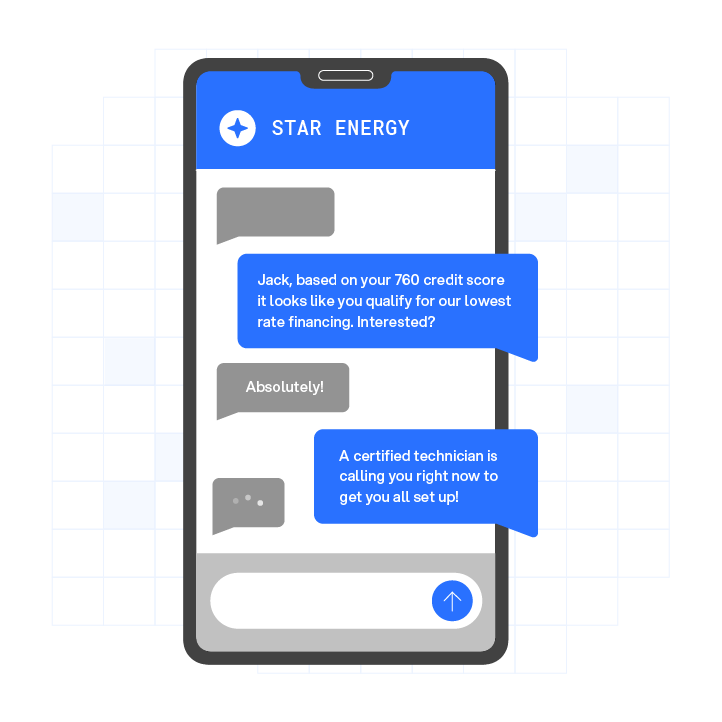
Other platforms in this class include AI SMS tools from Conversica and various point-solution SMS automation vendors.4 Plura’s differentiation is that its AI SMS agent shares memory with its AI voice, RCS, and AI webchat agents on one database, rather than operating as a separate product with a separate memory.
AI SDR Conversation Platforms
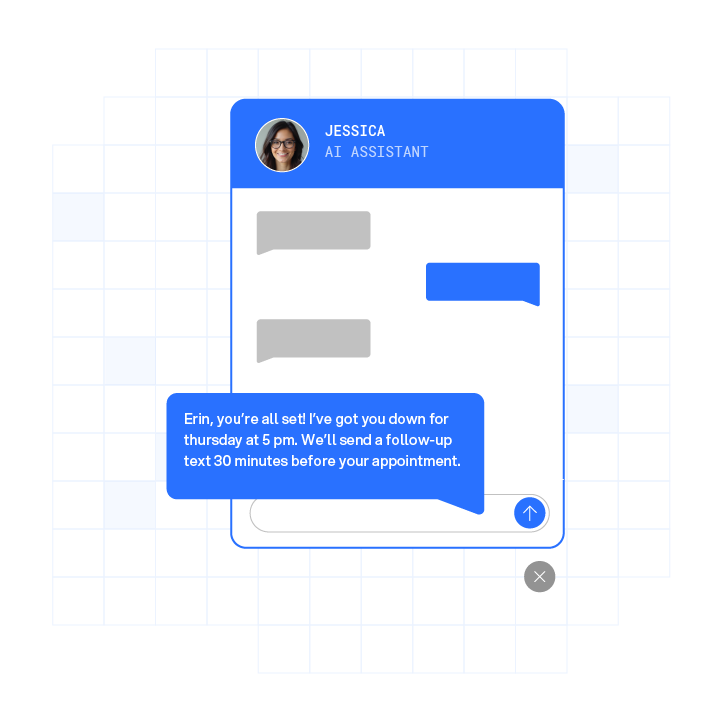
AI SDR platforms run multi-touch outreach sequences across email, SMS, and chat, not voice, persisting over days or weeks until resolution. Conversica is the established name in this class. These platforms overlap with AI voice and AI SMS agents when they initiate first contact, but their primary design is cadence management over time rather than sub-5-second first response. They are the right class when the lead channel is a cold list or a long nurture sequence, not an inbound form fill that requires immediate contact.
Mechanism Comparison Table
The table below summarizes how each mechanism class handles a new lead, so you can match the right class to your lead channels and CRM setup.
| Platform | Response Mechanism | What Happens on a New Lead | Best-Fit Workflow |
|---|---|---|---|
| LeanData | Instant routing | Lead is matched to account and assigned to a rep inside Salesforce; rep receives a notification | Salesforce-native B2B teams that need governed rep assignment before human outreach |
| Chili Piper / RevenueHero | Instant routing and scheduling | Lead is routed and offered a calendar booking link; meeting is booked for a future date | Inbound demo and pricing requests where the lead is willing to self-schedule |
| Calldrip | Instant rep-dial notification | Rep is connected to the lead by phone within seconds of form submission; conversation depends on rep availability | Teams with reps available during business hours who need faster dial alerts |
| Plura AI | AI voice agent (with AI SMS, RCS, and AI webchat on one database) | AI agent contacts lead in under 5 seconds across voice, SMS, RCS, or webchat; qualifies and warm-transfers | High-volume operators who need 24/7 first contact across every channel without rep dependency |
| Conversica | AI SDR conversation (multi-touch) | Automated outreach sequence initiates across email, SMS, and chat, not voice, over days | Cold lists and long nurture sequences where cadence management matters more than sub-minute first contact |
Decision Framework: Match Lead Channel and CRM to the Right Class
The comparison table above shows what each mechanism class does on a new lead. The next step is matching the right class to your specific lead channels and CRM setup. The mapping below covers the most common configurations.
- Web form lead, HubSpot or Salesforce CRM: The fastest class is an AI voice agent or AI SMS agent that contacts the lead in under 5 seconds. A routing tool leaves the lead waiting for a rep. Plura’s integrations connect directly to HubSpot, Salesforce, and Zoho, so the AI agent fires the moment the CRM receives the record.
- Inbound phone call: The fastest class is an AI voice agent that answers on the first ring. Plura’s AI voice agent handles inbound calls 24/7, qualifies the caller, and warm-transfers to a U.S. rep when the workflow calls for it.
- SMS or chat inquiry: The fastest class is an AI SMS agent or AI webchat agent. Plura’s AI SMS and AI webchat agents respond in seconds and share the same stateful database as the voice agent.
- After-hours or weekend lead: Any mechanism that depends on rep availability struggles here. An AI agent class covers 24/7 contact without additional staffing. Plura runs voice, SMS, RCS, and webchat on one stateful conversation database, so context carries across channels.
- Cold list or long nurture sequence: An AI SDR conversation platform is the right class. Plura’s AI SMS agent also handles re-engagement of cold leads in the CRM.
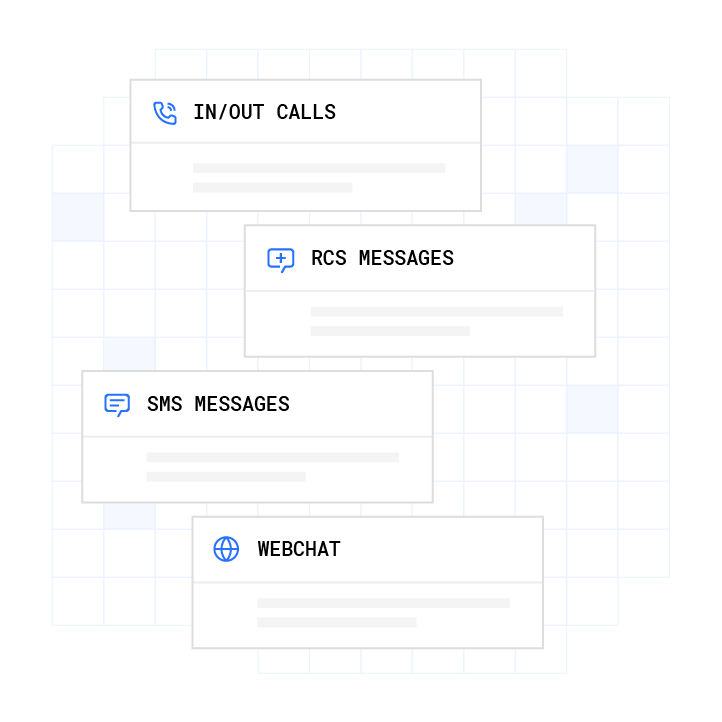
Operators running multiple lead channels benefit from a single platform that covers all four mechanisms. Plura covers voice, AI SMS, RCS, and AI webchat on one stateful conversation database, which reduces the context loss that occurs when voice and SMS sit on separate products from separate vendors.
Compare plans and rates side by side on the Plura pricing page. See the mechanism map applied to your specific lead channels.
Vertical Playbooks: Real Estate and Home Services
The decision framework above applies across industries, but two verticals show the dollar impact most clearly: real estate and home services. Both see heavy after-hours lead volume and a first-responder advantage that routing tools alone cannot close.
Real Estate
Real estate is the vertical where the 1-minute response window has the highest documented dollar impact. The median lead response time in real estate is 2 hours 30 minutes, while the top 10% of performers respond in 3 minutes. The National Association of Realtors’ 2025 Home Buyers and Sellers Generational Trends Report found that 78% of homebuyers work with the first agent who responds.
Property inquiries arrive at all hours. Industry data indicates 64% of real estate leads are submitted after hours, on nights, weekends, and holidays. A routing tool that assigns the lead to a rep at 11 p.m. produces no contact until the rep wakes up. An AI voice agent answers the inquiry immediately, qualifies the buyer or seller, confirms showing availability, and books the appointment before the lead calls the next agent on their list.
Showing confirmations and follow-up reminders create a second acute cost. A lead who books a showing but receives no confirmation is more likely to no-show or book with a competing agent. Plura’s AI voice and SMS agents handle confirmation sequences automatically, with context carried across every prior touchpoint.
Home Services
Home services operators face a structural missed-call problem. Invoca’s analysis of 60+ million calls found that home service businesses miss roughly 27% of all inbound calls, and fewer than 3% of callers who reach voicemail leave a message. The caller who reaches voicemail usually calls the next contractor on their list.
Across home services trades, median response times range from 2 hours 45 minutes for plumbing to 4 hours 30 minutes for roofing. After-hours and weekend volume is high. 50.3% of home-service leads arrive outside Monday through Friday, 9 a.m. to 6 p.m. local time.
Plura’s AI answering service for home services answers every call on the first ring, books the job into the calendar, and logs the record to the CRM while the technician is on the job site. Walk through the home-services workflow with a live demo.
Integration and Compliance Reality
The vertical playbooks above assume the response mechanism connects to your existing systems. Speed without integration produces orphaned lead records, which is why the operational reality of CRM connections and compliance obligations matters as much as raw response time.
Plura connects to HubSpot, Salesforce, and Zoho CRMs, plus Cal.com, Calendly, and Google Calendar for booking, and 50+ additional tools across attribution, enrichment, payments, and messaging. The full directory is at plura.ai/integrations. Every AI agent interaction writes back to the CRM in real time, so the rep who takes the warm transfer already has the full conversation transcript and qualification status.
Outbound voice and SMS at volume operates inside a regulatory framework that operators should review with qualified counsel. The Telephone Consumer Protection Act (TCPA), codified at 47 U.S.C. § 227, governs autodialed calls and marketing texts. The FTC’s Telemarketing Sales Rule at 16 CFR Part 310 covers outbound telemarketing conduct and DNC (Do Not Call) registry obligations. A2P 10DLC (Application-to-Person, 10-digit long code) registration is a carrier requirement for commercial SMS traffic.2
Plura’s platform includes built-in capabilities that support compliance operations. These include real-time DNC scrubbing before every dial, TCPA consent logging with immutable timestamps, quiet-hours enforcement via time-zone detection, STIR/SHAKEN caller ID verification on every outbound call, and TCPA-litigator screening. Plura supports compliance for SOC 2, HIPAA, ISO certification, GDPR, SHAKEN/STIR caller ID verification, TCPA, and DNC.1 Details are at plura.ai/products/compliance. Using Plura’s compliance features does not substitute for the operator’s own legal obligations; customers are responsible for their own certifications and regulatory posture.
Pricing for all tiers, including the 90-day opt-out window included in every annual contract, is at plura.ai/pricing.
Frequently Asked Questions
What Is the Fastest Way to Respond to a Lead?
The fastest way to respond to a lead is an AI voice agent or AI SMS agent that initiates contact in under 5 seconds of lead submission, 24/7, without waiting for a rep to become available. Routing tools and notification tools move the lead to a rep but do not initiate the conversation; the rep’s response time still determines when the lead hears from the business. An AI agent that talks to the lead immediately is the only mechanism that closes the gap between form submission and first contact.
What Is the Difference Between Lead Routing and Lead Response?
Lead routing is the process of assigning a lead record to the right rep based on territory, account ownership, or round-robin rules. Lead response is the act of initiating a conversation with the lead. Routing tools like LeanData and RevenueHero handle assignment and scheduling; they do not contact the lead directly. Lead response platforms, specifically AI voice and AI SMS agents, initiate the conversation the moment the lead arrives. A business can have fast routing and slow response if the rep assigned by the routing tool does not act immediately.
How Quickly Should You Respond to a Lead?
Research consistently shows that the first five minutes are the highest-value window. The Lead Response Management Study by Dr. James Oldroyd, conducted with InsideSales.com and later published in Harvard Business Review, found that contacting a lead within five minutes makes a business 100 times more likely to make contact and 21 times more likely to qualify the lead than waiting 30 minutes. For software-driven first touches, there is no operational reason to wait. The benchmark for AI-initiated contact is under 60 seconds from form submission.
Do Lead Response Platforms Integrate with HubSpot and Salesforce?
Most platforms in the routing and scheduling class are built specifically for Salesforce or HubSpot. LeanData runs as a native Salesforce managed package. Chili Piper and RevenueHero integrate with both. Plura integrates with HubSpot, Salesforce, and Zoho, and its integrations let the AI read the right customer record and fire post-conversation events back into the systems customers already use, so reps receive warm transfers with full conversation context already logged. The full integration directory is at plura.ai/integrations.
What Is the Best Lead Response Platform for Real Estate?
For real estate, the best lead response platform is one that answers or texts a property inquiry immediately, 24/7, including evenings and weekends when the majority of inquiries arrive. Routing tools that assign leads to agents do not solve the after-hours gap. An AI voice agent that answers the inquiry, qualifies the buyer or seller, and books the showing appointment without agent involvement is the mechanism class with the highest documented dollar impact in this vertical.
Conclusion: Pick the Mechanism, Then Pick the Platform
The definitional confusion in the fastest lead response platforms category comes from treating routing, notification, and conversation as the same thing. They serve different roles. A routing tool assigns a lead, a notification tool alerts a rep, and an AI agent talks to the lead. The fastest class for any operator is the one that initiates the conversation, not just the assignment.
Plura AI responds in under 5 seconds across voice, AI SMS, RCS, and AI webchat on one stateful conversation database. Every channel shares the same memory, the same compliance layer, and the same carrier-grade infrastructure. Operators running high-volume lead channels in real estate, home services, insurance, legal, or any conversion-driven vertical get 24/7 first contact without rep dependency, with context that compounds across every interaction.
Run your numbers through Plura’s ROI calculator to check your cost savings in real time. Compare plans and rates on the Plura pricing page. Or see the mechanism applied to your lead channels in a live demo.
1 Plura AI maintains SOC 2, HIPAA, ISO, and GDPR posture as part of its platform infrastructure. References to compliance frameworks in this article describe Plura’s platform capabilities and do not constitute a guarantee that any customer using Plura will themselves be compliant with applicable laws or standards. Customers remain solely responsible for their own regulatory obligations, certifications, consent management, recordkeeping, and the claims they make to their own end users. Consult qualified legal counsel for guidance specific to your use case.
2 This article describes regulatory frameworks at a general level and does not constitute legal advice. Laws and regulations vary by jurisdiction, change over time, and apply differently depending on facts and circumstances. Readers should consult qualified legal counsel before making compliance decisions.
3 Performance figures, customer outcomes, and industry statistics referenced in this article are drawn from cited third-party sources or Plura customer case studies. Individual results vary based on implementation, use case, industry, audience, and execution. Past or aggregate performance is not a guarantee of future results.
4 References to third-party products, services, companies, or research are made for informational and comparative purposes only. Plura AI is not affiliated with, endorsed by, or sponsored by any third party named in this article unless explicitly stated. Trademarks and product names referenced remain the property of their respective owners.
This article is provided for informational purposes only and reflects Plura AI’s understanding at the time of publication. Product capabilities, integrations, and specifications are subject to change. For the most current information, visit plura.ai.
This article was produced with the assistance of AI tools and reviewed by Plura AI prior to publication.