

Written by: Matt Beucler, CEO, Plura AI | Last updated: August 28, 2026
Key Predictive Dialer Risks to Watch in 2026
- The top three predictive dialer violation triggers in 2026 are abandoned call rates above the FTC 3% rule, failure to play a safe-harbor message within two seconds, and consent recordkeeping gaps.
- Each TCPA violation carries statutory damages of $500 to $1,500 per call, with 2026 civil penalties reaching $53,088 per TSR violation and class-action exposure continuing to rise.2
- AMD false positives, aggressive dial pacing, and short ring times are the leading configuration failures that push campaigns over the 3% abandonment threshold.
- State mini-TCPA laws in Florida, Texas, and Oregon add stricter calling-hour windows, frequency caps, and registration requirements on top of federal rules.
- Plura AI’s carrier-level enforcement and immutable consent ledger help teams reduce abandoned-call and recordkeeping risk, and you can see real-time DNC scrubbing and audit-ready reporting in a live walkthrough.
How Predictive Dialer TCPA Lawsuits Start
Predictive dialer enforcement in 2025 and 2026 has accelerated across federal and state channels.5 TCPA class action filings surged 95% year-over-year in 2025.3 The statutory exposure is direct. TCPA statutory damages are $500 per violation, trebled to $1,500 for willful violations under 47 U.S.C. § 227, with each call or text counted as a separate violation and no actual harm required.
Federal enforcement actions show how large these numbers can become. Dish Network settled a long-running telemarketing enforcement case in 2020 for $210 million, with the $126 million federal share described by the DOJ as the largest civil penalty ever paid to resolve telemarketing violations.4 Craftmatic paid a $4.4 million civil penalty after the FTC charged it with placing millions of abandoned calls that left consumers with dead air and no compliant identification message. In March 2024, a federal court in Montana entered a $9.9 million judgment ordering Idaho/Montana resident Scott Rhodes to pay the FCC forfeiture for thousands of unlawful spoofed robocalls.
These enforcement actions share a common thread: preventable configuration and control failures. Pacing settings are the most common configuration failure driving lawsuits. Pushing the dial ratio too aggressively can push abandonment above the 3% threshold, which exposes operators to TCPA penalties plus class action risk. Answer-rate spikes during high-traffic periods and multi-line dialing that engages two or more lines of a multi-line business simultaneously, prohibited under 47 CFR 64.1200(a)(7), are secondary triggers that compliance teams frequently overlook.
Regulators are also tightening upstream controls. On April 30, 2026, the FCC adopted a proposal to tighten Know Your Customer requirements for originating voice providers, setting a base forfeiture of $2,500 per offending call for violations, with penalties scaling upward based on intent, harm, and call volume. The FCC also proposed a $4.5 million fine against Voxbeam Telecommunications in April 2026 for routing calls from a provider not registered in the FCC’s Robocall Mitigation Database into U.S. networks.
Staying Within the Predictive Dialer 2-Second Rule
FCC rules require that a predictive dialer play a safe-harbor message within two seconds on abandoned calls. Under this rule, a predictive dialer creates an abandoned call when it reaches a live person but fails to play a safe-harbor message within two seconds of the consumer’s completed greeting. Every such event is a discrete violation.
Three configuration failures drive most 2-second violations.
- Answer machine detection (AMD) false positives. AMD false positives, where live persons are misclassified as machines and experience silent disconnects, are the single most common source of silent calls in dialer setups audited under persistent misuse policies. Each misclassified live answer counts as an abandoned call.
- Agent availability gaps. When dial pacing outpaces available agents, calls connect to no one. Running an adaptive dropped percentage exactly at 3.0% creates violation risk because any operational spike can push a campaign over the FCC’s 3% abandoned call threshold. Many teams aim for roughly half that rate to maintain a buffer.
- Ring time settings. Under the FTC’s Telemarketing Sales Rule, to qualify for the safe harbor from the prohibition on call abandonment, telemarketers must allow unanswered calls to ring for at least 15 seconds or four rings before disconnecting. Shorter ring times generate additional violations independent of the abandonment rate.
The FCC may impose administrative forfeitures under 47 U.S.C. § 503(b) reaching $24,496 per willful violation (inflation-adjusted as of 2024) against predictive dialer operators for abandoned call rate violations. Private class actions remain the more common enforcement path, but FCC forfeiture orders have been issued against operators for these violations.
When a call is abandoned, a prerecorded identification message stating the caller’s name, phone number, and that no agent is available must play within two seconds of the consumer’s greeting. Without safe harbor audio enabled, each abandoned call constitutes a separate TCPA violation.
Managing State Mini-TCPA Predictive Dialer Risk
At least 12 states have enacted mini-TCPA laws since 2021 that impose calling-hour windows, frequency caps, and statutory damages stricter than federal TCPA rules. Operators running multi-state campaigns face overlapping and sometimes inconsistent compliance regimes. Teams should consult qualified legal counsel before configuring campaigns into any of these jurisdictions.
Florida and Texas both require formal telemarketer registration, including fees and surety bonds, before placing any outbound calls into the state. Failure to register is itself a violation, independent of any calling conduct. Several additional states, including Michigan and West Virginia, advanced new mini-TCPA legislation in late 2025 and early 2026.
Closing Predictive Dialer Consent Recordkeeping Gaps
Consent recordkeeping failures are the second most common trigger for TCPA class actions after abandonment rate violations. A valid prior express written consent record for predictive dialer operations must include:
- The named seller specifically authorized to call
- The consumer’s phone number and an E-SIGN-compliant electronic signature
- A clear disclosure that consent is not a condition of purchase
- The exact disclosure language shown at the time of consent
- Timestamp, source URL, and IP address for web-form submissions
The TSR (16 CFR § 310.5) requires sellers and telemarketers to retain consent records for 5 years from the date produced; while TCPA has a 4-year statute of limitations, it does not itself mandate any record retention period.
DNC scrub logs carry their own retention obligations. National DNC Registry scrubs must occur at least every 31 days; DNC scrub logs, including every scrub run, list version used, and date, must be retained for five years. Scrubbing only the national list does not satisfy state obligations in Florida, Texas, Indiana, Minnesota, Pennsylvania, and Wisconsin, each of which maintains a supplemental state DNC registry.
The FCC’s Reassigned Numbers Database (RND) creates a safe harbor when queried before dialing. Callers must query the RND before calling a number, supplying the date consent was obtained or the last date the caller could verify the consumer was reachable at that number, to determine whether the number has been permanently disconnected since that date. RND query logs must be retained for the length of any active consent relationship plus four years.
Revocation processing carries a hard deadline. Recent FCC guidance requires businesses to process revoked consent within ten business days, after which the contact must not appear in any subsequent campaigns. Verbal opt-out or revocation requests must be logged in real time and honored within ten business days to avoid the trebled penalty rate. Internal suppression lists must sync to every outbound system in real time. A 24-hour sync cycle between CRM and dialer creates a compliance risk.
Predictive Dialer Compliance Audit Checklist
The following checklist groups the primary configuration and recordkeeping controls that enforcement actions have cited as deficient. This description is informational; consult qualified counsel before modifying campaign configurations.
Start with call-handling controls.
- Verify each campaign’s 30-day abandoned call rate is at or below 3% of answered calls, and set an operational target low enough to maintain a buffer against answer-rate spikes.
- Confirm that every abandoned call triggers safe-harbor audio within two seconds of the consumer’s greeting, identifying the caller’s name, phone number, and that no agent is available.
- Audit consent records for named seller, disclosure language, timestamp, IP address, and source URL for every cell number in the campaign list.
- Re-scrub the National DNC Registry, applicable state DNC lists, and internal suppression lists within 31 days before each campaign launch and at least monthly for ongoing campaigns.
- Query the FCC Reassigned Numbers Database before calling a number, using the consent or last-verified-contact date so you can document whether the number has been permanently disconnected since that point.
- Retain consent records for 5 years from the date produced as required by the TSR, along with call logs, DNC scrub logs, RND query logs, recordings, and revocation records for periods that support compliance programs and litigation defense.
Carrier-Level Controls in Plura’s AI Predictive Dialer
Most predictive dialer compliance tools sit on top of the calling stack and act after a call leaves the platform. Plura AI’s AI predictive dialer enforces compliance rules at the carrier level, before origination, because Plura is its own FCC-licensed audio bridging carrier rather than a wrapper on a third-party CPaaS (Communications Platform as a Service).
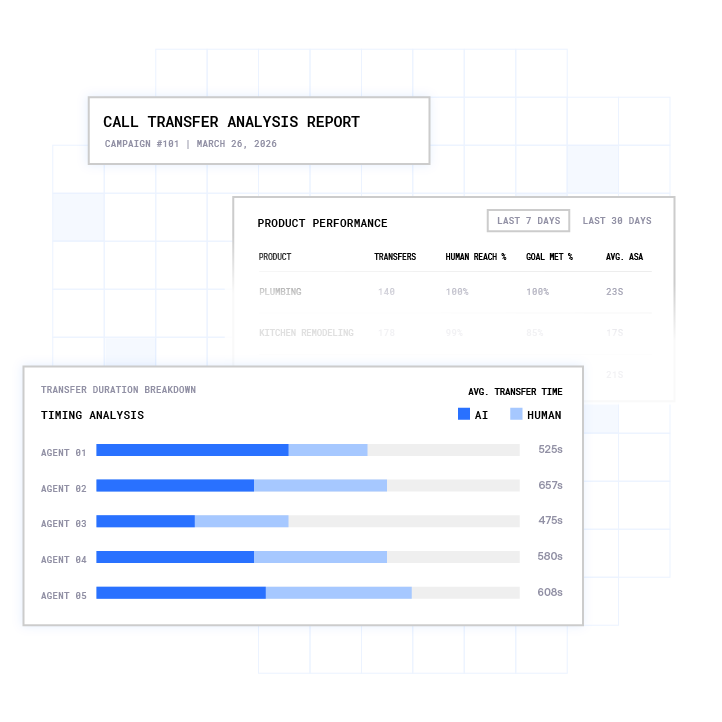
The enforcement architecture operates across four layers.
- Real-time DNC scrubbing. Every outbound contact is checked against federal and state DNC registries before dial. Numbers flagged as non-compliant are blocked before the first attempt. Internal suppression timestamps are logged and retained in a tamper-evident audit trail.
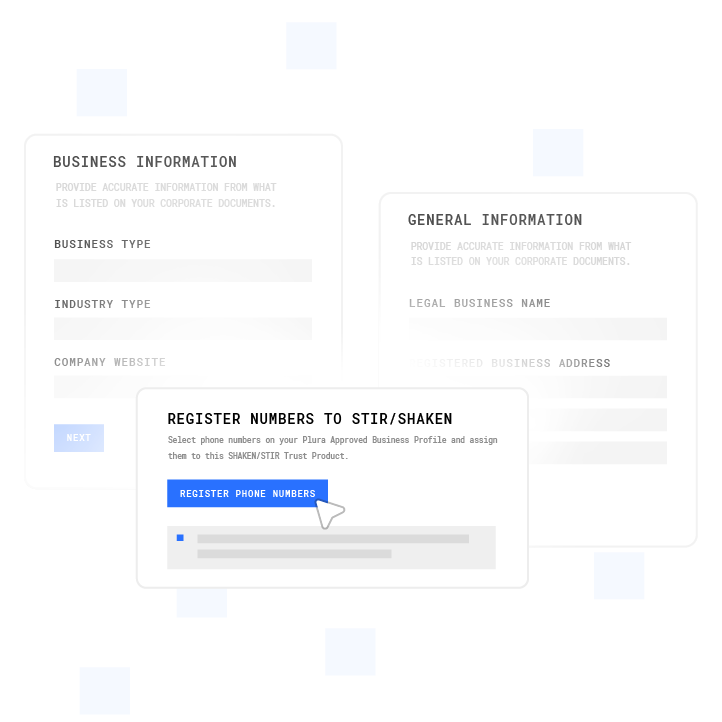
- SHAKEN/STIR caller ID authentication. Every outbound call authenticates through STIR/SHAKEN at the carrier level. Plura issues branded caller ID directly through its FCC-licensed carrier, which means calls present with the company’s name rather than “Spam Likely.” The FCC has proposed requiring terminating providers to transmit verified caller name or other caller identity information whenever a call has received an A-level attestation, a standard Plura’s carrier-level authentication is built to support.
- Time-zone calling windows. Calling-hour rules enforce automatically through time-zone detection on the contact, applying state and federal calling-window restrictions to every campaign without manual configuration per state.
- Immutable consent ledger. Consent records are timestamped and immutable. The compliance dashboard exports audit-ready reports in one click for legal review, carrier requirements, or regulatory inquiries.
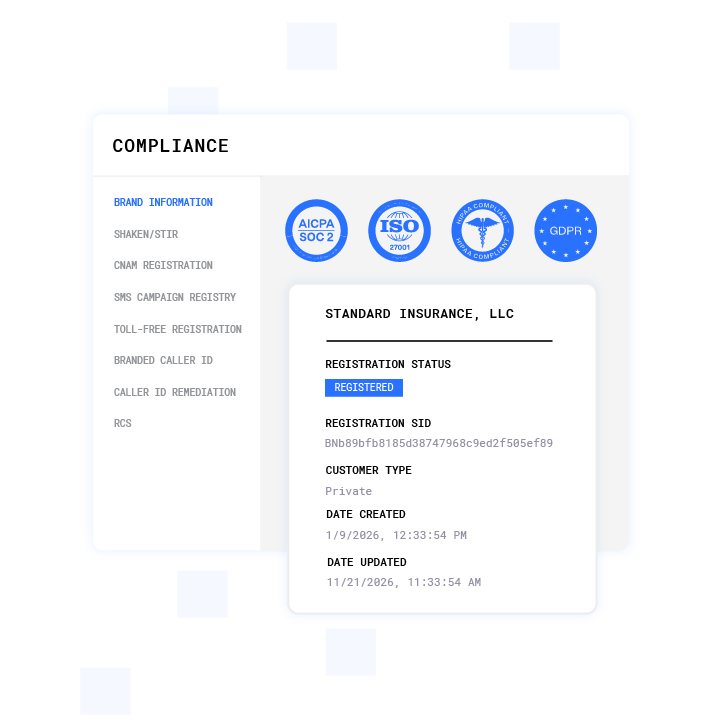
Plura supports compliance with SOC 2, HIPAA, ISO certification, GDPR, SHAKEN/STIR caller ID verification, TCPA compliance, and DNC compliance.1 These are infrastructure capabilities that operators use to support their own compliance programs. Customers remain responsible for their own regulatory obligations and the claims they make to their end users.
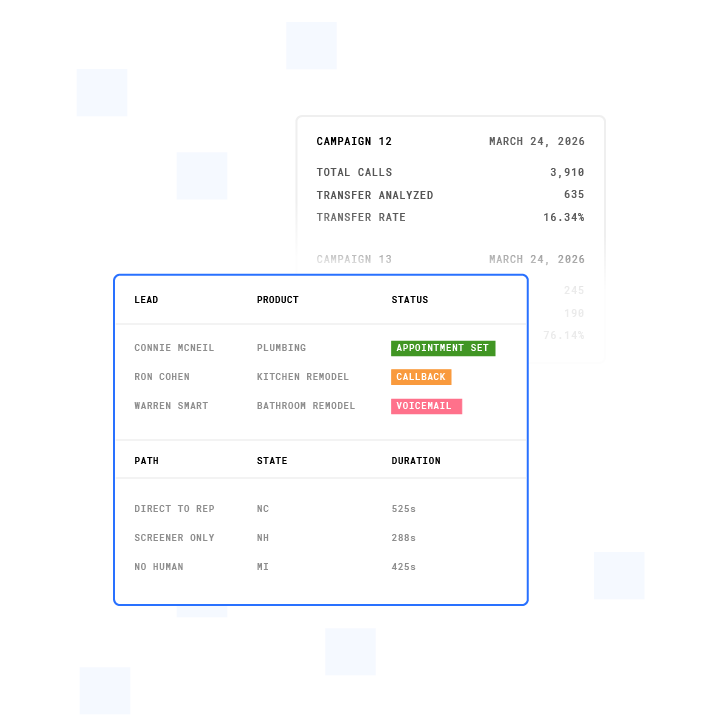
The AI predictive dialer shares a Stateful Conversation Database with Plura’s AI SMS and AI voice agent channels. Consent status, opt-out timestamps, and suppression records stay consistent across every outbound channel without manual synchronization between systems.
Bringing Predictive Dialer Risk Under Control
Predictive dialer compliance issues in 2026 concentrate around three enforcement triggers: abandoned call rates above the FTC’s 3% threshold, failure to play a safe-harbor message within two seconds on abandoned calls driven by AMD false positives and agent availability gaps, and consent recordkeeping failures. State mini-TCPA laws in Florida, Texas, Oregon, Oklahoma, and Washington layer additional consent, calling-hour, and registration requirements on top of federal obligations, with per-violation damages reaching $5,000 in Texas alone.
The configuration risks are specific and measurable. Dial pacing set too aggressively, safe-harbor audio not enabled, DNC scrubs older than 31 days, and failure to query the RND before calling a number with the appropriate consent or verification date are the four most common audit findings that precede enforcement actions. Carrier-level enforcement, applied before a call originates, addresses these risks at the source rather than after the fact.
Use Plura’s calculator to model your ROI and compliance risk in real time.
Review Plura plans and rates in a side-by-side pricing view.
Frequently Asked Questions
How does the FTC’s 3% abandoned call rule apply to predictive dialers?
The FTC’s Telemarketing Sales Rule caps the abandoned call rate for predictive dialers at 3% of all calls answered by a live person, measured per campaign over a rolling 30-day period. An abandoned call occurs when a live person answers and no agent connects within two seconds of the consumer’s completed greeting. The calculation excludes unanswered calls, voicemail connects, and calls answered by answering machines.
Because the measurement window is 30 days, a single aggressive dialing session can push a campaign’s rolling average above the threshold even if daily rates appear acceptable. Many compliance teams target a lower operational rate to preserve a buffer against answer-rate spikes. Civil penalties under the TSR can reach $53,088 per violation as of 2026. TCPA statutory damages for each abandoned call that violates the rule run $500 to $1,500 per call. Teams should consult qualified legal counsel to understand how these rules apply to their specific campaign configurations.
Which states create the highest predictive dialer risk in 2026?
Florida, Texas, and Oregon represent the highest enforcement risk for predictive dialer operators in 2026. Florida’s Telephone Solicitation Act uses a broader autodialer definition than the post-Duguid federal standard, requires prior express written consent for any automated call or text, mandates telemarketer registration and bonding with the Florida Department of Agriculture and Consumer Services, and provides a private right of action with $500 per call damages plus state fines up to $10,000 per violation.
Texas Senate Bill 140, effective September 1, 2025, extended telephone solicitation coverage to text and image messages, created a private right of action with damages up to $5,000 per violation, and requires registration with the Texas No-Call List. Oregon House Bill 3865, effective January 1, 2026, restricts contact hours to 8 a.m. to 8 p.m., caps calls at three per consumer per day, and expressly extends these restrictions to text messages. Oklahoma and Washington maintain state autodialer statutes with broader definitions than the federal standard, creating state-level class action exposure independent of federal TCPA outcomes. Operators calling into more than five states should conduct a state-by-state legal review before campaign launch.
What consent records should predictive dialer operators retain?
A defensible consent record for predictive dialer operations includes the named seller specifically authorized to call, the consumer’s phone number, an E-SIGN-compliant electronic signature or equivalent affirmative action, the exact disclosure language shown at the time of consent, a timestamp, the source URL, and the IP address for web-form submissions. A general statement in terms of service that the consumer “may be contacted by telephone” does not satisfy TCPA written consent requirements.
Records should be stored in a system that timestamps them, preserves the exact language the consumer saw, and links the record to the outbound contact data so individual records can be produced during litigation or regulatory investigation. The TSR (16 CFR § 310.5) requires sellers and telemarketers to retain consent records for 5 years from the date produced; while TCPA has a 4-year statute of limitations, it does not itself mandate any record retention period. DNC scrub logs, RND query logs, call detail records, pacing configuration records, and internal suppression timestamps with opt-out dates should also be retained for five years to support audit and defense needs. Operators using third-party lead vendors often obtain contractual representations that the vendor’s consent meets current FCC standards and independently verify that the consent form names their specific company. This overview describes general recordkeeping practices. Teams should consult qualified legal counsel for advice specific to their operations.
How do carrier spam blocks and “Spam Likely” labels affect predictive dialer performance?
Carrier spam detection algorithms evaluate high outbound volume from a single number, low answer rates, very short call durations, recipient complaints or blocks, recycled or previously abused numbers, inconsistent caller identity, and poor data quality as signals that trigger spam labels. Once a number is flagged, the label can persist across carriers and degrade answer rates for all subsequent campaigns from affected numbers.
STIR/SHAKEN authentication verifies number authorization but does not prevent spam labels when calling patterns generate negative signals such as low engagement or complaints. Silent or abandoned calls, excessive repeat attempts to the same recipients, and failure to honor opt-outs promptly generate negative feedback signals that damage caller ID reputation and increase carrier block risks. Operators who route voice through a third-party CPaaS inherit that provider’s caller ID reputation rather than their own, which limits the ability to remediate spam labels at the carrier level. Plura issues branded caller ID directly through its own FCC-licensed carrier and runs STIR/SHAKEN authentication on every outbound call, which supports legitimate call presentation without relying on a third-party reseller’s number reputation.
What is the FCC Reassigned Numbers Database and why does it matter?
The FCC’s Reassigned Numbers Database (RND) allows businesses to check whether a phone number has been reassigned to a new subscriber since consent was originally obtained. When a number changes hands, the new subscriber has not consented to receive calls from the original operator, and dialing that number with an automated system can constitute a TCPA violation even if the original consent record is valid.
Querying the RND before dialing creates a safe harbor. If the database shows no reassignment since consent was collected, any subsequent violation from an actual reassignment is treated as a single inadvertent error rather than a knowing violation. The checklist above describes how to structure RND queries and dates. Callers must query the RND before calling a number, supplying the date consent was obtained or the last date the caller could verify the consumer was reachable at that number, to determine whether the number has been permanently disconnected since that date. RND query logs, including the date and result for each number queried, are typically retained for the length of any active consent relationship plus four years to preserve safe harbor documentation. This description is informational. Teams should consult qualified legal counsel regarding how the RND safe harbor applies to their specific dialing operations.
1 Plura AI maintains SOC 2, HIPAA, ISO, and GDPR posture as part of its platform infrastructure. References to compliance frameworks in this article describe Plura’s platform capabilities and do not constitute a guarantee that any customer using Plura will themselves be compliant with applicable laws or standards. Customers remain solely responsible for their own regulatory obligations, certifications, consent management, recordkeeping, and the claims they make to their own end users. Consult qualified legal counsel for guidance specific to your use case.
2 This article describes regulatory frameworks at a general level and does not constitute legal advice. Laws and regulations vary by jurisdiction, change over time, and apply differently depending on facts and circumstances. Readers should consult qualified legal counsel before making compliance decisions.
3 Performance figures, customer outcomes, and industry statistics referenced in this article are drawn from cited third-party sources or Plura customer case studies. Individual results vary based on implementation, use case, industry, audience, and execution. Past or aggregate performance is not a guarantee of future results.
4 References to third-party products, services, companies, or research are made for informational and comparative purposes only. Plura AI is not affiliated with, endorsed by, or sponsored by any third party named in this article unless explicitly stated. Trademarks and product names referenced remain the property of their respective owners.
5 This article contains forward-looking statements regarding industry trends, technology adoption, and future capabilities. These statements reflect current expectations and are subject to change. Plura AI undertakes no obligation to update forward-looking statements except as required.
This article is provided for informational purposes only and reflects Plura AI’s understanding at the time of publication. Product capabilities, integrations, and specifications are subject to change. For the most current information, visit plura.ai.
This article was produced with the assistance of AI tools and reviewed by Plura AI prior to publication.