Written by: Matt Beucler, CEO, Plura AI | Last updated: August 29, 2026
Updated August 2026
Key Takeaways for High-Volume Lead Teams
- Instant AI outreach is critical, and Harvard Business Review data shows companies responding within five minutes are 100x more likely to connect with prospects than those waiting 30 minutes.3
- Plura AI leads the 2026 ranking by scoring leads in real time and routing hot scores directly to its own FCC-licensed AI voice or SMS agents in under 5 seconds without third-party CPaaS latency.
- Real-time DNC and TCPA compliance screening must occur at the moment of handoff, because batch scrubbing cannot keep pace with sub-5-second AI outreach and can expose teams to regulatory risk.
- Plura delivers a cost per qualified lead of $25–$60 after AI handoff versus the traditional SDR-driven cost of about $200, driven by 100% talk utilization and an owned carrier stack.3
- Teams ready to eliminate scoring-to-outreach latency can book a live demo with Plura AI to see sub-5-second AI handoff on their own lead volume.
Why Lead Scoring Fails Without Instant AI Outreach
Lead scoring produces a ranked list, and that list is worthless if the outreach that follows it is slow. Harvard Business Review research found that companies responding within five minutes are 100 times more likely to connect with a prospect than those waiting 30 minutes, and leads contacted within 1 minute are 391% more likely to convert than those contacted after 24 hours.
The data from high-volume environments is consistent. ClickToClose.ai’s 2026 analysis of 47 sales organizations found that teams with sub-5-minute response times generate 4 to 7 times more revenue per lead than teams averaging 2 or more hours. The Blazeo 2026 Speed-to-Lead Benchmark Report of 573 companies found that 81.2% of companies responding in over an hour report losing leads to faster competitors.
The gap between scoring and contact is where deals die. The average B2B lead response time across 2,241 companies is 47 hours, and 88% of users in HVAC campaigns take longer than 5 minutes to reply, with only 3% responding in under 1 minute. Scoring software that hands off to a human SDR queue does not solve this problem. Only a platform that achieves the sub-5-second handoff described earlier closes this gap consistently.
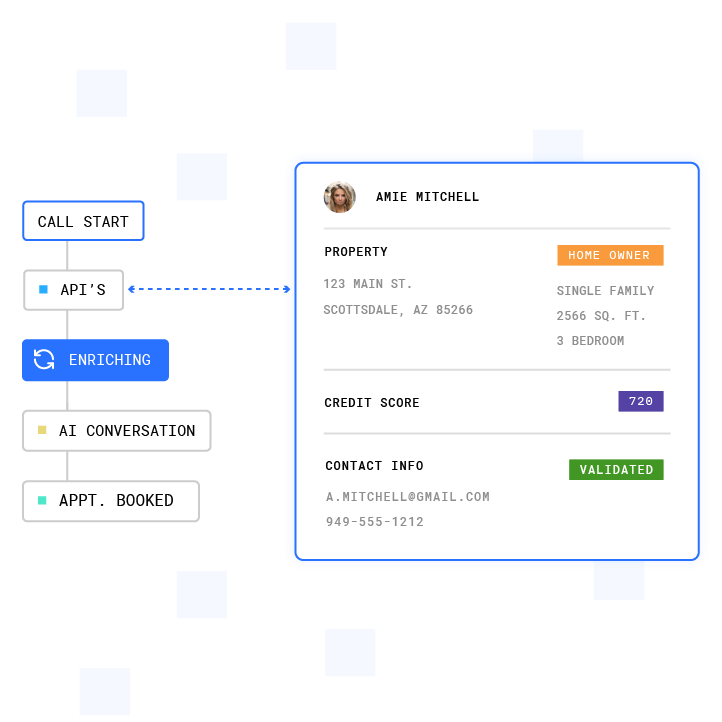
Book a live demo with Plura to see sub-5-second AI handoff from scored lead to live conversation.
Tool-by-Tool Integration Time to AI Dialer
This section compares each platform on one operational metric: how quickly a hot score triggers first AI-powered contact. Integration notes reflect each platform’s published architecture as of August 2026 so you can see where latency enters the process.
- Plura AI – Scoring via AI Lead Intelligence enriches every lead in real time across 30+ data sources during the conversation itself. Hot scores route directly to Plura’s own AI Predictive Dialer or AI SMS agent in under 5 seconds on Plura’s FCC-licensed carrier. No third-party CPaaS (Communications Platform as a Service) sits in the path. Plura enables lead response times under 60 seconds with cost per qualified lead of $60. Integration to first AI contact: under 5 seconds, native.
- HubSpot Lead Scoring – HubSpot’s predictive scoring updates dynamically as contacts interact with emails, pages, and forms. HubSpot Lead Scoring Software updates lead scores in real time as contacts interact with website content, but handoff to an AI dialer requires a third-party integration via Zapier or a CRM connector. Integration to first AI contact: 30 to 120 seconds depending on webhook latency and the connected dialer’s own queue.
- Salesforce Einstein Scoring – Einstein scores leads within Salesforce and can trigger flows via Process Builder or Flow. Connecting to an AI voice platform requires a CPaaS layer such as Twilio. Integration to first AI contact: 60 to 180 seconds with custom flow configuration.
- 6sense Revenue AI – 6sense focuses on account-level intent scoring and buyer-stage prediction. Outbound handoff requires a CRM sync and a separate dialer integration. Integration to first AI contact: 2 to 5 minutes via CRM-to-dialer pipeline.
- Marketo Engage (Adobe) – Marketo’s lead scoring uses behavioral and demographic signals with threshold-triggered smart campaigns. Companies with mature or AI-based lead scoring convert leads approximately 2 times more effectively than those using manual or rule-based scoring systems, but outbound AI handoff requires a third-party dialer integration. Integration to first AI contact: 60 to 300 seconds.
- Pecan AI – Pecan AI states that its automated predictive models reach production in roughly one week, up to 32 times faster than traditional data science cycles. Pecan outputs scores to a connected CRM, and outbound AI contact requires a separate dialer platform. Integration to first AI contact: depends entirely on the downstream dialer stack.
- Apollo.io – Apollo combines contact data with engagement scoring and sequencing. AI-assisted outreach is available within the platform, but voice handoff relies on a connected telephony provider. Integration to first AI contact: 1 to 3 minutes via native sequences.
- Zoho CRM with Zia Scoring – Zia scores leads using CRM activity signals and can trigger workflow rules. AI voice handoff requires a third-party telephony integration. Integration to first AI contact: 2 to 5 minutes with workflow automation.
- Monday.com CRM – Monday.com supports lead scoring via custom automations and integrations. Best-in-class automated lead routing time is under 1 minute, and anything over 10 minutes indicates a bottleneck. AI voice handoff requires a third-party connector. Integration to first AI contact: 1 to 5 minutes.
- Explorium – Explorium’s fit-plus-intent hybrid scoring can improve predictive performance for mid-market teams. Explorium outputs enriched scores to a CRM, and outbound AI contact requires a separate platform. Integration to first AI contact: pipeline-dependent.
Compliance Requirements for Outbound on Scored Leads
Automated lead scoring that triggers immediate outbound contact operates inside a specific regulatory environment. The FCC’s February 2024 Declaratory Ruling (FCC-24-17) confirms that AI-generated voices qualify as an “artificial or prerecorded voice” under the TCPA (Telephone Consumer Protection Act, 47 U.S.C. § 227), requiring the same consent level as traditional robocalls.2 The FCC’s one-to-one consent rule scheduled to take effect January 27, 2025, was vacated by the Eleventh Circuit on January 24, 2025, before it could become effective.
High-volume teams running sub-5-second AI handoff operate at a pace where compliance checks must match the speed of outreach.2 AI compliance systems must perform real-time DNC scrubbing, consent record validation, and wireless/landline number classification at the moment a scored lead enters the queue, because batch scrubbing cannot keep pace with immediate outbound dialing or SMS. Consulting qualified legal counsel on your organization’s specific obligations under TCPA, DNC, and applicable state rules is advisable before deploying any automated outbound program.
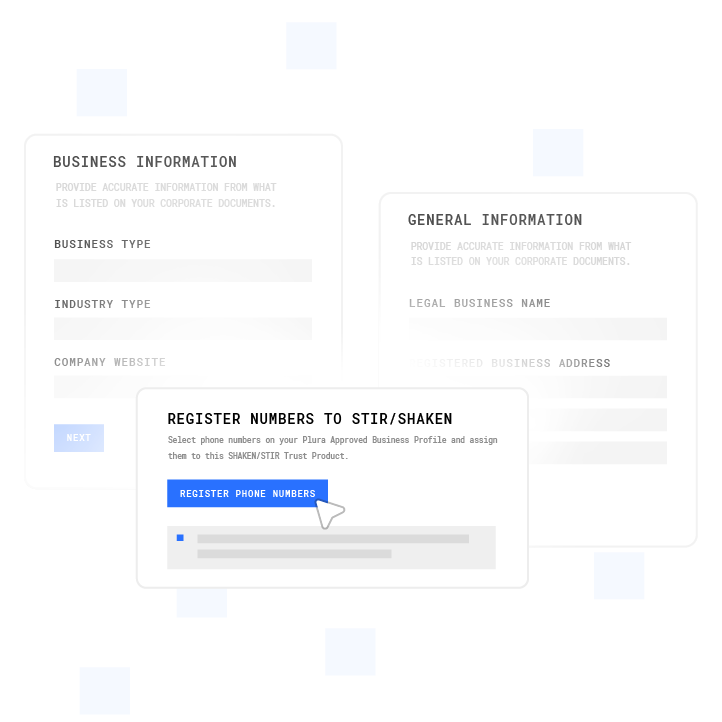
Plura’s compliance engine enforces real-time DNC and TCPA screening before every outbound contact. Every number is checked against federal and state DNC registries before dial. Consent records are timestamped and immutable. Quiet-hours rules enforce automatically through time-zone detection. Plura supports compliance with SOC 2, HIPAA, ISO certification, GDPR, SHAKEN/STIR caller ID verification, TCPA frameworks, and DNC frameworks.1 Plura provides the infrastructure, and customers remain responsible for their own compliance obligations and downstream certifications.
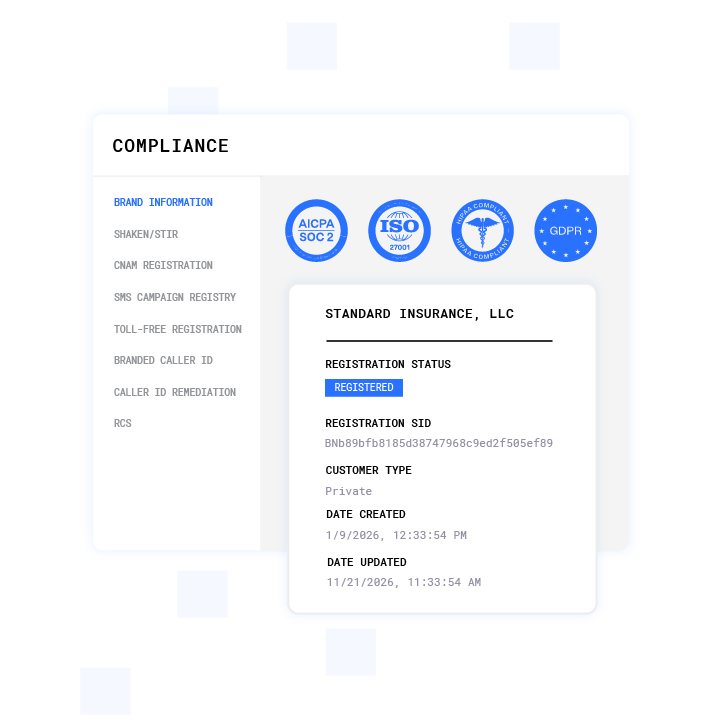
Most tools on this list bolt compliance onto the platform after the fact or rely on a third-party CPaaS for DNC scrubbing.4 Plura AI owns its telecom infrastructure and holds an FCC carrier license, whereas Synthflow depends on Twilio and operates as a software layer without a carrier license.4 Owning the carrier means compliance enforcement happens at origination, not downstream. This architectural advantage also drives the cost economics that separate Plura from competitor platforms.
Cost per Qualified Lead After AI Handoff
Plura delivers a cost per qualified lead of $60, compared to a traditional SDR-driven cost of approximately $200 per qualified lead. The economics shift because AI agents run at 100% talk utilization with no taxes, benefits, commissions, or ramp time.
Optif.ai’s benchmark of 523 AI-augmented companies found conversion rates rising from 22% to 31% (+41%) and revenue per rep from $1.2M to $1.72M (+43%).3 Companies using AI-powered lead scoring have seen 30-45% improvement in lead-to-opportunity conversion rates and a 33% reduction in cost per qualified lead.
The cost advantage compounds when scoring is connected to an owned carrier stack. Platforms that route scored leads through a third-party CPaaS pay a per-minute wrapper tax that accumulates at high volume. Plura’s owned carrier eliminates that layer, producing lower per-minute economics on every AI voice contact. This cost advantage, aligned with the $25–$60 per qualified lead cited earlier, becomes more pronounced as daily interaction volume grows.
Book a live demo with Plura to review the cost-per-qualified-lead math for your specific volume.
Routing Only Hot Scores to AI Agents
High-volume teams protect outbound capacity by routing only hot scores to AI agents instead of sending every lead to the same queue. The operational workflow for routing only hot scores to AI agents follows a consistent pattern across the platforms that support it.
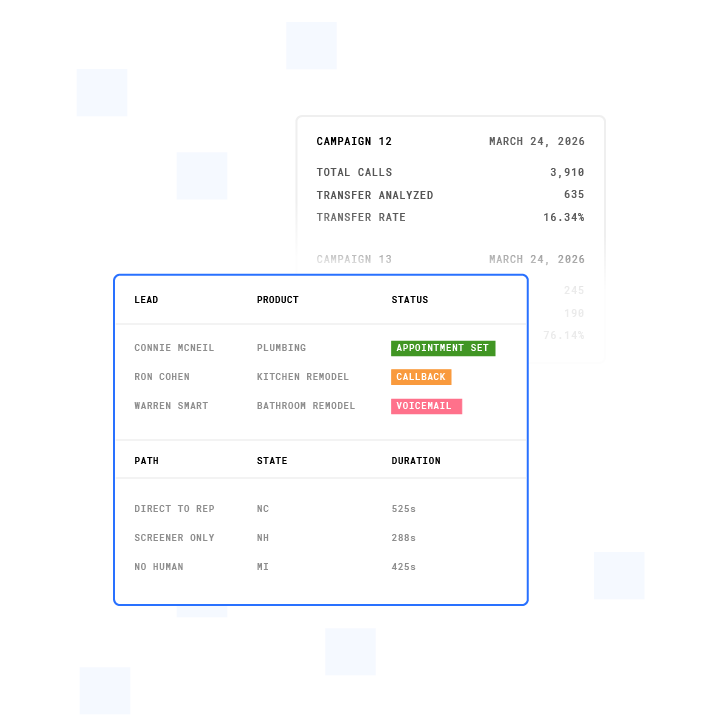
The workflow has four stages that together eliminate the delay between scoring and contact while maintaining compliance at every step:
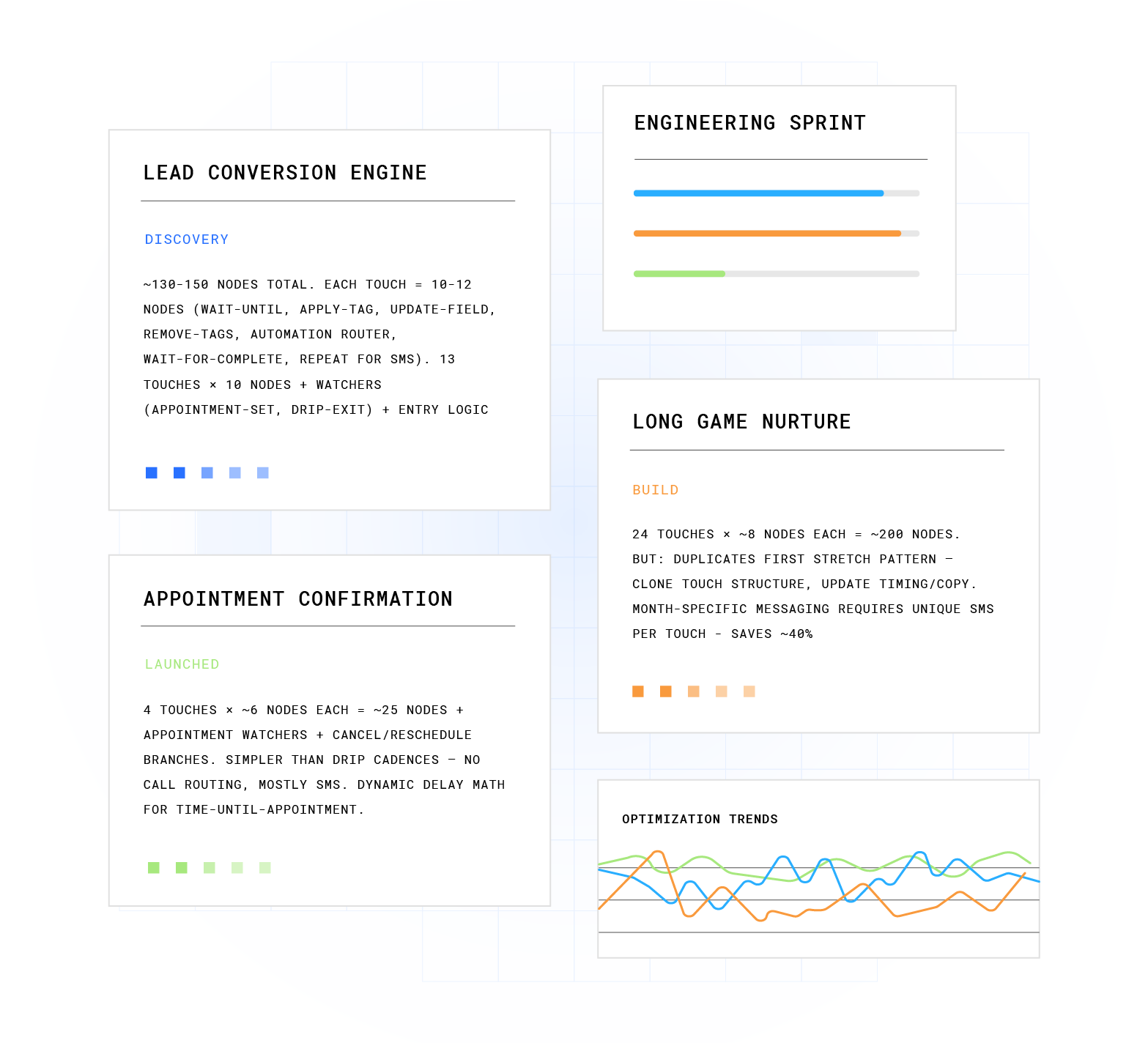
- Score in real time. Scoring must happen during or immediately after lead capture, not in a nightly batch. Plura’s AI Lead Intelligence scores and prioritizes leads in real time using behavioral signals, conversation context, and predictive intent modeling. Batch scoring introduces delays that eliminate the speed-to-lead advantage.
- Set a hard threshold for AI handoff. Time-to-first-touch after lead assignment is a core benchmark, with best-in-class targets under 5 minutes for high-priority leads. Define the score tier that triggers immediate AI contact and route everything below that threshold to a nurture sequence.
- Screen before dial. Every hot lead must pass real-time DNC scrubbing and consent validation before the AI agent initiates contact. Platforms that batch-scrub or skip this step at the moment of handoff create compliance exposure at the highest-volume point in the funnel.
- Hand off to AI voice or SMS with full context. The AI agent should receive the lead’s score, enrichment data, and prior interaction history before the first word of the conversation. Plura’s AI Predictive Dialer and AI SMS agents read from the same Stateful Conversation Database, so the agent that texts a lead at 9 a.m. already knows the full context when the call comes at noon.
Comparison Table: Speed, Compliance, and Cost
The following table illustrates the operational gap between Plura’s native carrier architecture and competitor platforms that depend on third-party CPaaS layers, a difference that directly affects both speed-to-contact and cost per qualified lead.
| Platform | Time to First AI Contact | Carrier-Grade Compliance | Real-Time DNC/TCPA Enforcement | Cost per Qualified Lead After AI Handoff |
|---|---|---|---|---|
| Plura AI | Under 5 seconds, native on owned FCC-licensed carrier | FCC-licensed carrier, SOC 2, HIPAA, ISO, GDPR, SHAKEN/STIR | Real-time, enforced at carrier level before every dial | $25 to $60 |
| HubSpot Lead Scoring | 30 to 120 seconds via third-party webhook and dialer | No owned carrier, relies on connected CPaaS | Requires third-party DNC integration | Not published, depends on connected dialer stack |
| Salesforce Einstein | 60 to 180 seconds via custom flow and CPaaS | No owned carrier, Twilio or similar required | Requires third-party compliance layer | Not published, depends on connected stack |
| 6sense Revenue AI | 2 to 5 minutes via CRM-to-dialer pipeline | No owned carrier | Requires third-party integration | Not published |
| Apollo.io | 1 to 3 minutes via native sequences | No owned carrier | Requires third-party DNC layer | Not published |
Every Plura figure is sourced from plura.ai/guides/ai-marketing-automation and plura.ai/glossary/speed-to-lead. Competitor integration times reflect published architecture documentation and third-party integration requirements as of August 2026. Competitor cost-per-qualified-lead figures are not published by those vendors and cannot be cited on a like-for-like basis.
Frequently Asked Questions
What makes automated lead scoring software effective for high-volume teams?
Effective automated lead scoring for high-volume teams requires three elements working together. The platform needs real-time scoring that updates as signals arrive rather than in nightly batches, a hard threshold that triggers immediate AI outreach when a lead qualifies, and compliance screening that runs before every contact attempt. Scoring accuracy matters, but it is secondary to handoff speed. A model that scores at 85% accuracy but routes to a human SDR queue loses the conversion window that a faster, slightly less accurate model captures by triggering an AI agent in under 5 seconds. High-volume teams should measure MQL-to-SQL conversion rate by score tier, time-to-first-touch for top-tier leads, and cost per qualified lead after AI handoff as their primary benchmarks.
How does Plura AI’s lead scoring differ from HubSpot or Salesforce Einstein?
HubSpot and Salesforce Einstein score leads inside their CRM environments and can trigger workflow notifications or task assignments when a threshold is crossed. Connecting that score to an AI voice or SMS agent requires a third-party CPaaS integration, which adds latency and a separate compliance layer. Plura’s AI Lead Intelligence scores and enriches leads in real time using behavioral signals and predictive intent modeling, then routes hot scores directly to Plura’s own AI Predictive Dialer or AI SMS agent on Plura’s FCC-licensed carrier in under 5 seconds. There is no third-party CPaaS in the path, no wrapper tax on per-minute costs, and no separate compliance bolt-on. DNC and TCPA screening happen at the carrier level before the first contact attempt.
What compliance infrastructure does a lead scoring platform need to support sub-5-second AI outreach?
Sub-5-second AI outreach requires compliance enforcement that runs at the same speed as the outreach itself. Batch DNC scrubbing that runs nightly or hourly cannot keep pace with immediate AI dialing. The platform needs real-time DNC registry checks at the moment a scored lead enters the outbound queue, consent record validation tied to the specific seller organization, time-zone detection for quiet-hours enforcement, and immutable consent logging for audit purposes. Platforms that rely on a third-party CPaaS for these functions introduce a dependency that can delay or skip screening under high-volume load. Consulting qualified legal counsel on your organization’s specific TCPA and DNC obligations before deploying any automated outbound program is advisable.
What is the cost difference between AI-driven lead scoring with instant handoff versus traditional SDR-based follow-up?
Traditional SDR-driven lead qualification costs approximately $200 per qualified lead when accounting for salary, benefits, commissions, and the talk-utilization rate typical of human contact-center work, which averages around 40%. Plura’s AI agents run at 100% talk utilization with no overhead costs, delivering a cost per qualified lead of $25 to $60. At scale, the difference compounds: a 15-agent operation paying $20 per hour costs approximately $60,000 per month, while replacing that team with Plura drops the monthly cost to approximately $14,400. The ROI calculator at plura.ai/calculator models this for specific volume inputs. The cost advantage is largest for teams running 500 or more daily interactions, where the per-minute savings from an owned carrier stack accumulate fastest.
Can lead scoring software integrate with AI voice agents without a developer?
Platform design determines whether operators can connect scoring to AI voice without engineering support. Most standalone lead scoring tools require a developer to configure webhook triggers, map score thresholds to dialer APIs, and maintain the integration as both platforms update. Plura’s scoring, AI voice, and AI SMS layers are native to the same platform, connected through a no-code workflow builder that operators configure on a visual canvas without engineering. Workflow nodes reference the same Stateful Conversation Database, so the AI agent that receives a hot score already has the lead’s enrichment data, prior interaction history, and qualification status before the first word of the conversation. For teams evaluating platforms, the practical test is whether the scoring-to-contact path requires a developer to maintain it in production.
Conclusion: Turning Lead Scores into Live Conversations
Automated lead scoring software creates value only when the outreach that follows it is fast enough to matter. The data is consistent: leads go cold in minutes, 88% of outbound effort goes unanswered without the right infrastructure, and teams with sub-5-minute response times generate 4 to 7 times more revenue per lead than slower competitors. Scoring alone does not close that gap. Only a platform that routes hot scores to an AI voice or SMS agent in under 5 seconds, on a carrier-grade compliant stack, with real-time DNC and TCPA screening before every contact, captures the conversion window that scoring identifies.
Plura is the only platform on this list that owns its FCC-licensed carrier, enforces compliance at origination, and delivers scored leads to AI agents in under 5 seconds natively. Every other tool on this list requires a third-party CPaaS to bridge scoring to outreach, adding latency, cost, and a compliance dependency that sits outside the platform.
Run your numbers through Plura’s ROI calculator to check your cost per qualified lead in real time. Compare plans and rates at plura.ai/pricing.
Book a live demo with Plura to see the full scoring-to-AI-contact workflow on your own lead volume.
1 Plura AI maintains SOC 2, HIPAA, ISO, and GDPR posture as part of its platform infrastructure. References to compliance frameworks in this article describe Plura’s platform capabilities and do not constitute a guarantee that any customer using Plura will themselves be compliant with applicable laws or standards. Customers remain solely responsible for their own regulatory obligations, certifications, consent management, recordkeeping, and the claims they make to their own end users. Consult qualified legal counsel for guidance specific to your use case.
2 This article describes regulatory frameworks at a general level and does not constitute legal advice. Laws and regulations vary by jurisdiction, change over time, and apply differently depending on facts and circumstances. Readers should consult qualified legal counsel before making compliance decisions.
3 Performance figures, customer outcomes, and industry statistics referenced in this article are drawn from cited third-party sources or Plura customer case studies. Individual results vary based on implementation, use case, industry, audience, and execution. Past or aggregate performance is not a guarantee of future results.
4 References to third-party products, services, companies, or research are made for informational and comparative purposes only. Plura AI is not affiliated with, endorsed by, or sponsored by any third party named in this article unless explicitly stated. Trademarks and product names referenced remain the property of their respective owners.
This article is provided for informational purposes only and reflects Plura AI’s understanding at the time of publication. Product capabilities, integrations, and specifications are subject to change. For the most current information, visit plura.ai.
This article was produced with the assistance of AI tools and reviewed by Plura AI prior to publication.