

Written by: Matt Beucler, CEO, Plura AI | Last updated: August 28, 2026
Updated August 2026
Key Takeaways for Contact Center and CX Leaders
- The Keep Call Centers in America Act (S.2495) requires U.S.-based human agents at the start of customer-service interactions, clear location and AI disclosures, and immediate transfer rights to U.S. agents on request.2
- Businesses that offshore call-center work above a specified threshold may be placed on a Department of Labor list, which can trigger loss of eligibility for federal grants and loans for up to five years.
- AI contact-center operators must disclose nonhuman AI usage and provide transfer options to U.S. human agents across voice, SMS, and chat channels.
- The bill operates alongside the FCC NPRM (CG Docket No. 26-52) and five state onshoring laws, creating overlapping disclosure, data-residency, and transfer obligations for covered entities.
- Plura AI’s 100% U.S. infrastructure satisfies the Act’s location and transfer requirements by design, and you can map your infrastructure against the proposed rules in a live demo today.
Current Status of S.2495 in Congress
S.2495 was introduced on July 29, 2025, by Sen. Ruben Gallego (D-AZ) and referred to the Senate Committee on Commerce, Science, and Transportation, where it carries a status of Introduced as of the latest congressional record.2 The bill falls under the Science, Technology, Communications policy area of the 119th Congress (2025-2026), and no floor vote has been scheduled.2 Covered entities and their counsel should monitor the bill’s progress directly on Congress.gov and consult qualified legal counsel regarding their specific obligations.
How the Act Applies to AI Voice, SMS, and Chat Agents
The Keep Call Centers in America Act applies directly to AI-driven customer service. S.2495 requires businesses using AI for customer service communications to disclose that a nonhuman AI or machine is being used and to inform the consumer that they may request an immediate transfer to a U.S.-based human agent. That disclosure obligation applies across voice, SMS, and chat channels. Operators running AI voice agents, AI SMS workflows, or any automated customer-service channel need to understand how this provision maps to their infrastructure before the bill advances.
Five Core S.2495 Provisions in Plain Operational Terms
The following five provisions from S.2495 each create direct infrastructure and routing implications for high-volume operators.
- U.S.-based human agent availability. Businesses must make U.S.-based human agents available at the start of any customer-service communication. For operators running fully offshore or hybrid BPO models, this requirement means a domestic human escalation path must exist at call initiation, not only after a consumer requests it.
- Location disclosure at call start. Agents must disclose their location at the beginning of a customer-service communication. If the agent is outside the United States, the consumer may request an immediate transfer to a U.S.-based human agent. Operators using offshore BPOs inherit this disclosure obligation for every covered interaction.
- AI disclosure and transfer right. Businesses using AI for customer service must disclose that a nonhuman AI or machine is being used and offer the consumer an immediate transfer to a U.S.-based human agent. This provision currently applies to voice, and the FCC’s parallel NPRM in CG Docket No. 26-52 seeks comment on extending equivalent requirements to text, chat, and email channels.
- Department of Labor list. The Department of Labor must maintain a list of businesses that operate call centers of a specified size and either relocate a call center overseas or contract call-center work overseas. Businesses generally remain on the list for up to five years unless they meet certain removal requirements defined in the bill.
- Federal grant and loan ineligibility. Businesses on the Department of Labor list are generally ineligible for federal grants or federally guaranteed loans for a specified period. Businesses with existing federal grants or loans that are added to the list must pay a monthly penalty, are ineligible for further disbursement while listed, and face cancellation of the grant or loan if they remain on the list after one year.
Federal FCC NPRM and State Onshoring Laws in Context
S.2495 is moving in parallel with the FCC’s Notice of Proposed Rulemaking (NPRM) in CG Docket No. 26-52, adopted March 26, 2026. The FCC NPRM proposes percentage caps on offshore customer-service calls, start-of-call disclosures when calls are routed overseas, mandatory transfer to a U.S.-based agent on consumer request, and a flat prohibition on offshore handling of sensitive consumer data including passwords, multi-factor authentication credentials, and bank or credit card numbers, as reported by JD Supra.2 The NPRM also seeks comment on extending those protections to text, chat, and email, directly affecting AI-driven messaging systems. While these federal proposals move through their respective processes, operators must also navigate existing state-level frameworks that impose similar obligations today.
Five states already impose restrictions that covered entities must evaluate alongside the federal proposals:2
- New York – The Call Center Jobs Act imposes penalties up to $10,000 per day for covered relocations without required notice.
- New Jersey – A mirror statute tracked on NJ.gov applies comparable onshoring restrictions.
- Connecticut – The Connecticut General Assembly has enacted state-contract bans on offshore call-center work.
- Missouri – An executive order tracked through the Missouri Office of Administration requires offshore disclosure for state-related communications.
- Florida – Florida Statutes restrict offshore handling of medical information.
Operators subject to any combination of S.2495, the FCC NPRM, and these state laws face overlapping disclosure, transfer, and data-residency obligations. Qualified legal counsel should be consulted to assess which frameworks apply to a specific operation.
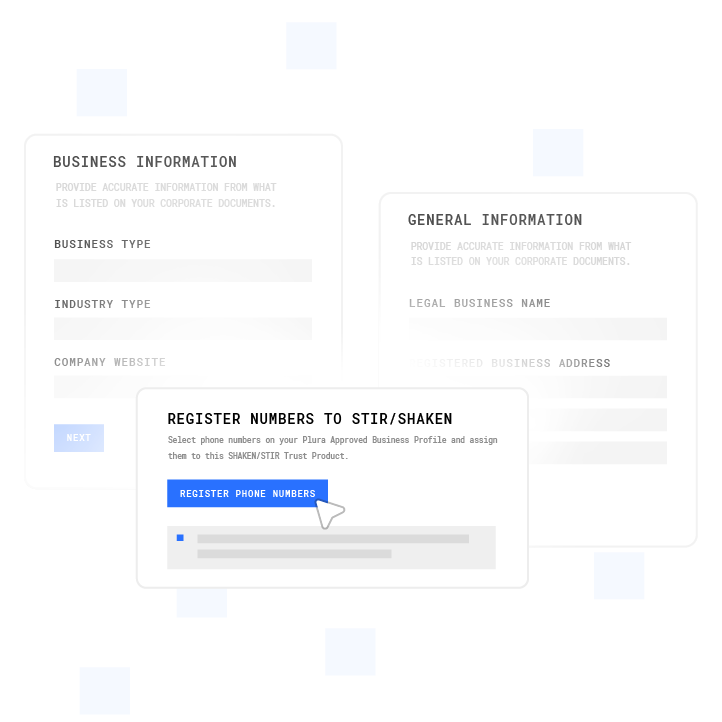
Federal Contract and Grant Exposure for Offshore Operations
The grant and loan ineligibility provision in S.2495 creates balance-sheet exposure that finance and legal teams need to price into any offshore BPO contract signed today. A business added to the Department of Labor list faces monthly penalties on existing federal grants or loans, loss of further disbursement, and potential cancellation after one year on the list. The five-year default listing period means this exposure can affect multiple budget cycles.
The FCC NPRM adds a parallel liability layer. Under Section 217 of the Communications Act, acts of agents are deemed those of the carrier itself, which means covered entities cannot contract around liability for an offshore BPO vendor’s noncompliance. Every offshore vendor contract a covered entity holds is a potential compliance liability under both the proposed federal rules and the five active state frameworks.
See how 100% U.S. infrastructure addresses your contract and grant exposure in a live demo.
Why 100% U.S. Infrastructure Simplifies Disclosure and Routing
S.2495’s location-disclosure and offshore-transfer obligations attach to offshore operations. A platform that originates voice, hosts AI model inference, stores call recordings, and processes SMS entirely on U.S. infrastructure does not trigger the location-disclosure or offshore-transfer provisions because no part of the communication routes through a foreign facility. The AI disclosure provision still applies, but the transfer-to-U.S.-agent obligation is satisfied by the platform’s domestic architecture rather than requiring a separate compliance step.
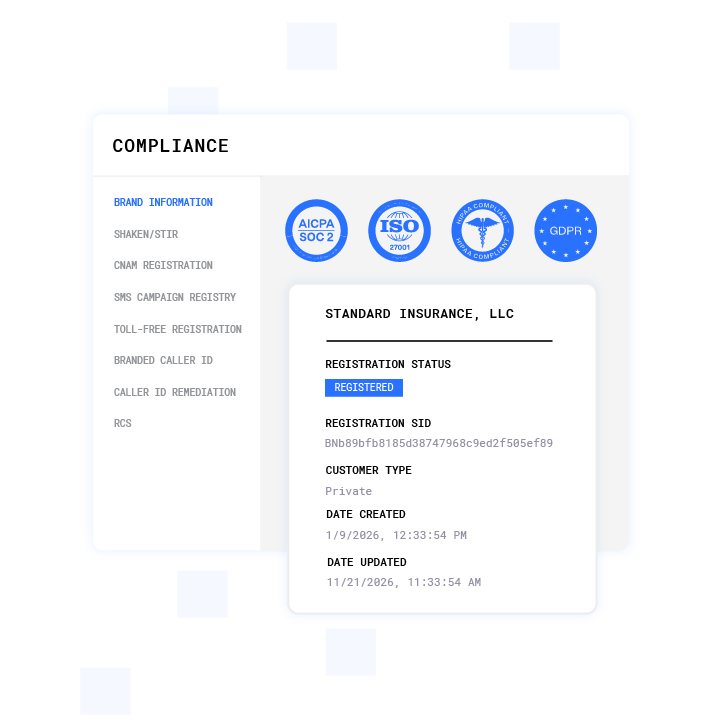
Plura AI is an FCC-licensed audio bridging carrier. Voice origination, model hosting, data storage, and call recording all run on domestic infrastructure. Plura’s AI voice agent, AI Predictive Dialer, AI SMS, and AI customer service texting channels share a Stateful Conversation Database that holds context across every channel, all on U.S. infrastructure. Plura supports compliance with TCPA, DNC, HIPAA, SOC 2, and 50+ state rule sets, and customers remain responsible for their own regulatory obligations and certifications.1
Comparing Offshore BPO, Foreign AI Tools, and Plura
| Obligation Under S.2495 and FCC NPRM | Offshore BPO Model | AI Tool on Foreign Infrastructure | Plura (100% U.S. Infrastructure) |
|---|---|---|---|
| Location disclosure at call start (S.2495) | Required for every covered interaction | Required if inference or routing occurs offshore | Not triggered, because all infrastructure is domestic |
| AI disclosure and transfer right (S.2495) | Required if AI is used | Required, and transfer must route to a U.S. agent | Disclosure applies, and the U.S. transfer path is native to the platform |
| Sensitive-data domestic-only handling (FCC NPRM CG Docket No. 26-52) | Requires routing changes or contract restructuring | Requires confirming data residency per call leg | Satisfied by architecture, so no routing changes are needed |
| DOL list and federal grant ineligibility (S.2495) | Exposure if offshore volume meets the specified threshold | Exposure if vendor infrastructure is foreign | Not triggered by domestic-only deployment |
Table reflects proposed obligations under S.2495 and FCC NPRM CG Docket No. 26-52 as of August 2026. Neither bill nor NPRM has been enacted or finalized. Consult qualified legal counsel for guidance specific to your operation.
90-Day Action Checklist for High-Volume CX Operations
Operators running offshore BPO contracts or AI tools with foreign infrastructure dependencies should work through the following steps with legal counsel before S.2495 advances or the FCC NPRM is finalized.
- Audit your infrastructure map. Identify every point in your voice, SMS, and chat stack where audio, transcripts, model inference, or data storage touches a non-U.S. facility. Many AI platforms advertise multi-region deployment but route inference through a single foreign region, as noted in voice AI security guidance. Obtain written confirmation of data residency per call leg from every vendor.
- Review existing BPO contracts for Section 217 exposure. Under the Communications Act, covered entities cannot contract around liability for an offshore vendor’s noncompliance, per JD Supra’s analysis of the FCC NPRM. Flag contracts that lack indemnification clauses covering offshore disclosure violations.
- Identify federal grant and loan exposure. Map any active federal grants or federally guaranteed loans against the DOL list criteria in S.2495. Quantify the monthly penalty and cancellation risk if the business were added to the list.
- Evaluate state-law applicability. Determine whether your operation falls under New York, New Jersey, Connecticut, Missouri, or Florida frameworks, each of which imposes restrictions independent of the federal bill’s status.
- Model the infrastructure transition cost. Run your current contact-center economics through Plura’s ROI calculator to compare offshore BPO total cost of ownership against a 100% U.S. AI platform deployment.
Walk through your infrastructure audit and model transition economics with Plura’s team.
Frequently Asked Questions
Primary Sources Defining Keep Call Centers in America Act Requirements
The authoritative source is the bill text on Congress.gov for S.2495, the Keep Call Centers in America Act of 2025, introduced July 29, 2025, in the 119th Congress. The bill was referred to the Senate Committee on Commerce, Science, and Transportation and carries a status of Introduced as of August 2026. For the parallel federal regulatory proceeding, the primary source is the Federal Register entry for FCC CG Docket No. 26-52, the NPRM adopted March 26, 2026. State-level requirements are defined in each state’s official legislative or executive records: New York’s Department of Labor Call Center Jobs Act page, NJ.gov for New Jersey, the Connecticut General Assembly site, the Missouri Office of Administration for the executive order, and Florida Statutes for the medical-information offshoring restriction. Operators should consult qualified legal counsel and these primary sources directly rather than relying on secondary summaries for compliance decisions.
States Currently Enforcing Onshoring or Sensitive-Data Restrictions
As of August 2026, five states have active frameworks that restrict offshore call-center operations or the offshore handling of sensitive consumer data. New York’s Call Center Jobs Act imposes penalties up to $10,000 per day for covered relocations without required notice to the Department of Labor. New Jersey has enacted a mirror statute with comparable onshoring restrictions. Connecticut bans offshore call-center work on state contracts. Missouri’s executive order requires offshore disclosure for state-related communications. Florida’s statutes restrict the offshore handling of medical information. Each framework has its own covered-entity definition, threshold, and enforcement mechanism. Operators with multi-state footprints should assess applicability under each state’s official statutory or regulatory text and consult legal counsel for a jurisdiction-specific analysis.
New Disclosure Obligations for AI Voice and SMS Platforms
S.2495 creates two categories of disclosure obligation relevant to AI platforms. First, the AI disclosure provision requires businesses using AI for customer service communications to disclose that a nonhuman AI or machine is being used and to inform the consumer that they may request an immediate transfer to a U.S.-based human agent. This applies across voice and text-based interactions. Second, the location disclosure provision requires agents to disclose their location at the start of a customer-service communication. If the agent or the infrastructure handling the communication is outside the United States, the consumer may request an immediate transfer to a U.S.-based agent. The FCC NPRM in CG Docket No. 26-52 proposes extending equivalent disclosure and transfer requirements to text, chat, and email channels, which would directly affect AI SMS and AI customer service texting deployments. Operators should monitor both proceedings and consult counsel to determine which disclosure obligations apply to their specific channel mix and infrastructure configuration.
Duration of Department of Labor Listing Under S.2495
Under S.2495, businesses generally remain on the Department of Labor list for up to five years. The Department of Labor must remove a business from the list if it meets certain requirements specified in the bill, and the exact removal criteria are defined in the bill text on Congress.gov. During the listing period, businesses are generally ineligible for federal grants or federally guaranteed loans. Businesses that hold existing federal grants or loans at the time they are added to the list face monthly penalties, loss of further disbursement, and potential cancellation of the grant or loan if they remain on the list after one year. The five-year default listing period means that offshore BPO contracts executed today can carry multi-year federal funding exposure if the bill is enacted in its current form. Operators with active federal grants or loans should assess this risk with legal and finance counsel before renewing or expanding offshore vendor relationships.
Conclusion: Infrastructure Decisions Under S.2495 and FCC CG Docket No. 26-52
The Keep Call Centers in America Act (S.2495) maps five specific obligations directly to infrastructure decisions: U.S. agent availability, location disclosure, AI disclosure with transfer rights, Department of Labor list placement, and federal grant and loan ineligibility. The FCC NPRM in CG Docket No. 26-52 and five active state frameworks add parallel layers of disclosure, data-residency, and transfer requirements that apply independently of S.2495’s legislative status. Every offshore BPO contract and every AI tool with foreign infrastructure dependencies now carries exposure across all three regulatory layers simultaneously.
Plura AI runs on 100% U.S. infrastructure by architecture. Voice origination, model hosting, data storage, and call recording sit on domestic infrastructure. Plura’s platform supports compliance with TCPA, DNC, HIPAA, SOC 2, and ISO certification, with 50+ state rule sets enforced on every outbound contact.1 Customers remain responsible for their own regulatory obligations and certifications.
To evaluate your transition path, start with Plura’s ROI calculator to model cost savings against your current offshore BPO spend, review pricing and plans for your volume tier, or schedule a demo to map your infrastructure against the proposed rules.
1 Plura AI maintains SOC 2, HIPAA, ISO, and GDPR posture as part of its platform infrastructure. References to compliance frameworks in this article describe Plura’s platform capabilities and do not constitute a guarantee that any customer using Plura will themselves be compliant with applicable laws or standards. Customers remain solely responsible for their own regulatory obligations, certifications, consent management, recordkeeping, and the claims they make to their own end users. Consult qualified legal counsel for guidance specific to your use case.
2 This article describes regulatory frameworks at a general level and does not constitute legal advice. Laws and regulations vary by jurisdiction, change over time, and apply differently depending on facts and circumstances. Readers should consult qualified legal counsel before making compliance decisions.
This article is provided for informational purposes only and reflects Plura AI’s understanding at the time of publication. Product capabilities, integrations, and specifications are subject to change. For the most current information, visit plura.ai.
This article was produced with the assistance of AI tools and reviewed by Plura AI prior to publication.