

Written by: Matt Beucler, CEO, Plura AI
Updated June 2026
Key Takeaways for Contact and Marketing Leaders
- Lead response time pricing shifts sharply below 60 seconds, and sub-5-second contact delivers consistent conversion lifts across leads and channels.
- Industry benchmarks show that responding within 60 seconds yields a 391% conversion lift, while sub-5-second responses on U.S. infrastructure maximize pipeline growth and ROI.1
- Traditional human contact centers cost $4M-$7M annually, while Plura AI delivers the same volume at $300K-$700K TCO with 24/7 sub-5-second response.1
- 2026 regulatory changes favor U.S.-based infrastructure, and Plura AI supports compliance on FCC, TCPA, DNC, HIPAA, and state requirements without offshore exposure.
- Operators weighing build versus buy can use Plura AI’s full-stack platform for immediate deployment and measurable ROI, and book a live demo with Plura AI to see the pricing model applied to their call volume.
Response-Time Benchmarks That Drive Conversion
The gap between industry-standard response times and what actually converts leads is large and measurable. Benchmarks published by Plura show that each speed tier produces a different conversion outcome. The table below maps response time to conversion lift using like-for-like figures from that source.
| Response Time | Conversion Lift | Operational Model |
|---|---|---|
| 47+ hours (industry standard) | Baseline (no lift) | Manual SDR queue, offshore BPO |
| 5 minutes | Up to 100x more likely to connect | Fast human team or basic automation |
| 60 seconds | 391% lift in conversion | AI-assisted outreach |
| Under 5 seconds | Sub-60-second response delivers a 391% higher conversion rate versus 30-minute delays | Plura on U.S. carrier infrastructure |
The 47-hour industry standard reflects manual SDR queues, time-zone gaps, and human agents who can only work one channel at a time. The conversion data above shows that lead response time pricing is not just an operations question. It is a revenue question, and the next section explains what lead response time actually measures.
Defining Lead Response Time and Conversion Impact
Lead response time is the elapsed time between a prospect’s expression of interest, such as a form fill, inbound call, or webchat message, and the first meaningful contact from the operator’s side. A Harvard Business Review study found that companies responding within five minutes are 100 times more likely to connect with a prospect than those waiting 30 minutes.4 At 60 seconds, leads are 391% more likely to convert, based on industry research published on plura.ai/calculator.
High-volume operators running 500 or more daily interactions typically hit a practical ceiling of several minutes on human-only response, and only during staffed hours. AI platforms that own their carrier stack can contact leads in under 5 seconds across voice, SMS, RCS (Rich Communication Services), and webchat simultaneously, with no staffing dependency. Plura enables lead responses in under 60 seconds, and the platform’s default configuration reaches under 5 seconds on inbound triggers.
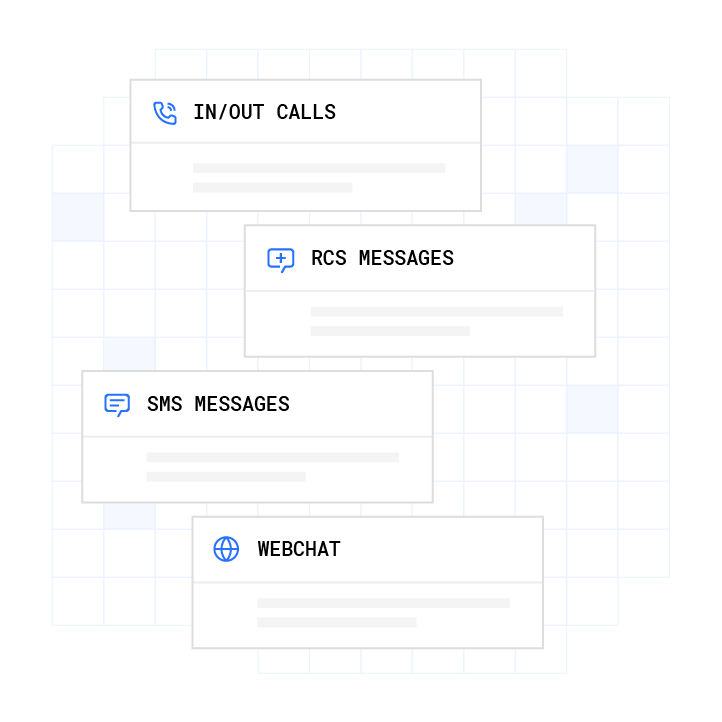
The best response time for leads, based on conversion data, is as close to zero as the operator’s infrastructure allows. Sub-60-second contact is the threshold where conversion lifts become material. Sub-5-second contact is where those lifts become consistent across every lead, every channel, and every hour of the day.
How To Calculate Average Lead Response Time
The standard formula for average lead response time across a campaign is simple.
Average Lead Response Time = Sum of (First Contact Timestamp – Lead Submission Timestamp) / Total Leads Contacted
Consider a worked example using Plura’s ROI calculator inputs. An operator receives 500 leads per day. Human agents contact 200 of them within 4 hours and the remaining 300 within 24 hours. Average response time = ((200 x 4 hours) + (300 x 24 hours)) / 500 = (800 + 7,200) / 500 = 16 hours. At that average, the operator beats the 47-hour industry standard yet still misses the 5-minute and 60-second conversion windows on every lead.
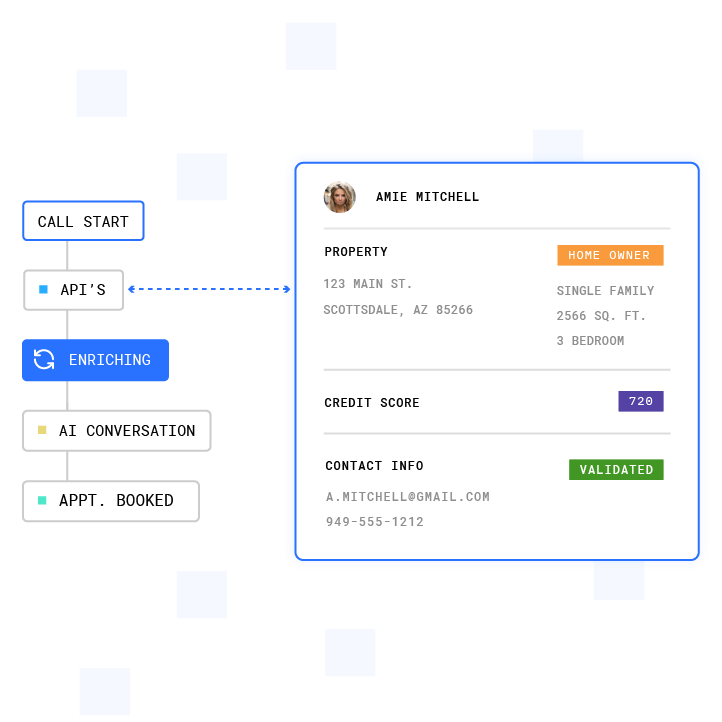
Replacing that model with Plura’s AI agents drops average response time to under 5 seconds on all 500 leads, 24 hours a day. The calculator also surfaces the cost side. Fifteen human agents at $20 per hour with standard taxes, benefits, and commissions at 40% talk utilization cost $60,000 per month. Six Plura agents at $15 per hour at 100% talk utilization cost $14,400 per month, which creates a 30-day saving of $45,600.
Run your numbers through Plura’s calculator to check your ROI in real time.
Cost per Lead for Fast Response Across Models
Cost per lead for fast response depends on the pricing model the operator runs. Three models dominate the market in 2026.
SaaS per-minute or per-seat platforms charge usage-based rates on top of a base subscription. Most in this category are API resellers built on top of third-party CPaaS (Communications Platform as a Service) providers, which means the operator pays a wrapper tax in higher per-minute rates and inherits the CPaaS provider’s caller ID reputation instead of their own.
Agency retainers bundle outreach labor with campaign management. Cost per qualified lead in traditional agency models runs $85-$200. AI-powered agency models using Plura reduce that range to $25-$60 per qualified lead.1
Full-stack carrier platforms like Plura own the FCC (Federal Communications Commission) license, the branded caller ID layer, the DNC (Do Not Call) scrubbing, and the conversation memory. Pricing typically runs $5,000 per month for the Multi tier and $7,500 per month for the Agency tier, on annual contracts billed monthly with a 90-day opt-out window.
The TCO comparison below uses figures from Plura’s executive communications guide and Plura’s complete AI contact center guide for a 100-seat equivalent operation.
| Model | Annual TCO | Response Time Capability |
|---|---|---|
| Traditional onshore human contact center | $4M-$7M | Minutes to hours, staffed hours only |
| Offshore BPO (50-seat equivalent) | $420K-$600K/yr (est. from $35K-$50K/mo) | Minutes to hours, offshore time-zone gaps |
| Plura AI (full-stack U.S. carrier platform) | $300K-$700K | Under 5 seconds, 24/7, all channels |
The offshore BPO cost advantage over onshore human centers is narrowing under 2026 regulatory pressure, covered in the next section. Plura’s $300K-$700K TCO delivers sub-5-second response at a cost structure that neither human model can match.
Book a live demo with Plura to see the pricing model applied to your call volume.
2026 Regulatory Exposure and U.S. Infrastructure
The regulatory environment for outbound lead contact changed materially in 2024-2026. Operators and their counsel should review the following frameworks directly.
The FCC’s NPRM (Notice of Proposed Rulemaking), CG Docket No. 26-52, proposes capping offshore customer-service calls at 30% and limiting offshore handling of sensitive consumer data including passwords, multi-factor authentication codes, Social Security numbers, and banking and card data.3 Companion federal legislation includes the Keep Call Centers in America Act (S.2495) and the Foreign Robocall Elimination Act (S.2666).
At the state level, five states have active call-center onshoring or sensitive-data restriction laws as of June 2026. New York’s Call Center Jobs Act carries penalties up to $10,000 per day. New Jersey has a mirror statute. Connecticut restricts offshore handling on state contracts. Missouri issued an executive order requiring offshore disclosure. Florida restricts offshore handling of medical information.
On the federal TCPA (Telephone Consumer Protection Act, 47 U.S.C. § 227) side, the FCC’s February 2024 Declaratory Ruling treats outbound calls using AI-generated voice as “artificial or prerecorded” calls under the TCPA, which carries consent requirements that operators and their counsel should review directly. TCPA violations can trigger statutory penalties of $500 to $1,500 per call.3 STIR/SHAKEN (Secure Telephone Identity Revisited / Signature-based Handling of Asserted information using toKENs) caller ID authentication and A2P (Application-to-Person) 10DLC SMS registration form part of outbound compliance posture in 2026.
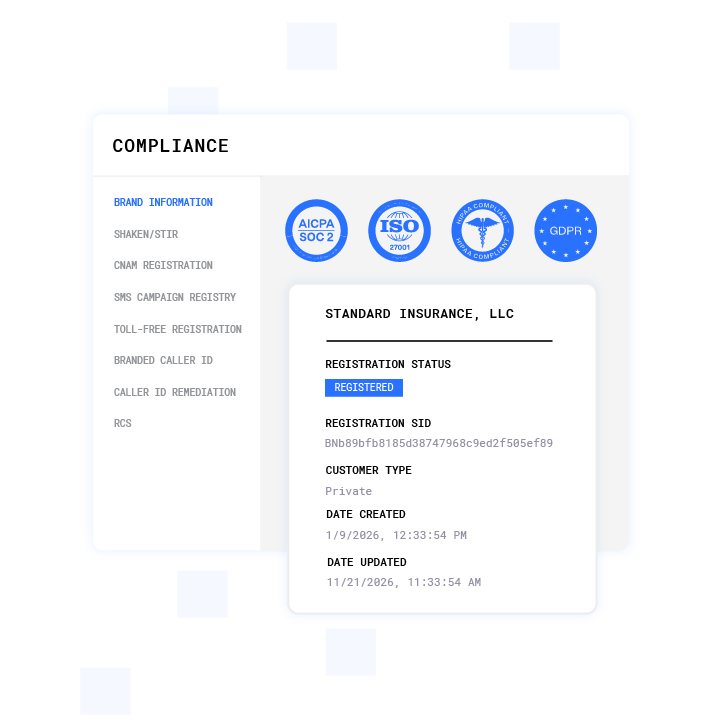
Plura runs on 100% U.S. infrastructure by architecture. Voice origination, model hosting, data storage, and call recording all sit on domestic infrastructure. Plura supports compliance with TCPA, DNC, HIPAA, SOC 2, SHAKEN/STIR caller ID verification, ISO certification, GDPR, and 50-plus state rule sets.2 Customers remain responsible for their own regulatory obligations and should consult qualified counsel on their specific posture.
Build-vs-Buy: Five Factors for Contact Leaders
Operators deciding whether to build an internal AI contact solution or buy a full-stack platform can weigh five practical factors.
Carrier licensing. An FCC-licensed audio bridging carrier took Plura approximately two years to obtain. This timeline creates immediate disadvantage for internal builds, because teams starting from zero cannot issue branded caller ID or enforce DNC scrubbing at the carrier level until the license is in place.
Compliance infrastructure. Real-time DNC scrubbing, immutable TCPA consent logging, HIPAA-aligned encryption, SOC 2 Type II controls, and 50-plus state rule-set enforcement operate as first-class layers of Plura’s platform. Building equivalent infrastructure requires dedicated compliance engineering and ongoing audit cycles.
Stateful cross-channel memory. Most build-it-yourself approaches create separate voice and SMS agents with separate memories. Plura’s AI Voice, AI SMS, AI RCS, and AI Webchat all share a Stateful Conversation Database, so a lead who texted at 9 a.m. is recognized when the call arrives at noon.
Conversation engineering. The AI model represents roughly 10% of the work. Conversation design, objection-handling logic, BATNA (Best Alternative to a Negotiated Agreement) guardrails, and continuous workflow tuning account for the rest. Plura iterates every customer deployment continuously, and every annual contract includes a 90-day opt-out window.
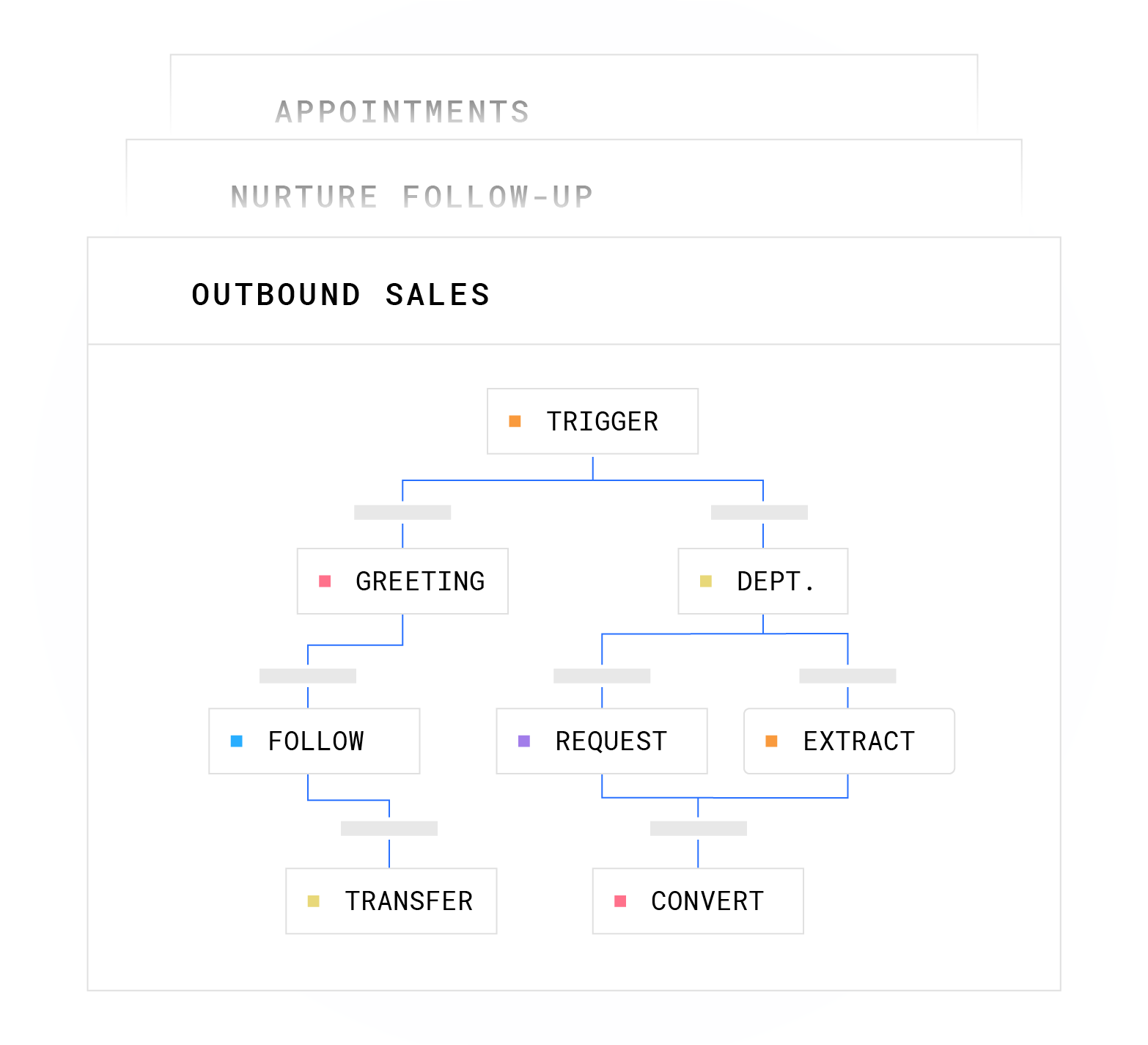
Multi-channel orchestration. Operators running voice-only or SMS-only miss the compounding effect of reaching the same lead across channels with shared memory. Plura enables 7 to 12 follow-up touches across voice, SMS, RCS, and webchat from a single workflow, and full conversation transcripts feed downstream analytics.
For operators at 500 or more daily interactions or $5,000 or more in monthly paid-media spend, the build path often carries 24 or more months of infrastructure investment before reaching feature parity with a platform that is already live. The buy path at $5,000-$7,500 per month delivers sub-5-second response on day one.
Book a live demo with Plura to walk through the build-vs-buy math for your operation.
Frequently Asked Questions
How long does it take to go live with Plura?
Deployment timelines depend on conversation complexity. A straightforward inbound qualification flow typically goes live in days. A multi-step intake, such as a 25-question health-history survey, runs closer to one to two months because the workflow logic requires design and validation time.
Plura’s onboarding sequence covers a discovery audit, intake of sample calls and existing scripts, an overnight build of a conversation mockup, a review session, engineering build of the production workflow, a pilot test on a subset of real calls, and full go-live. Every annual contract includes a 90-day opt-out window.
What integrations does Plura support?
Plura integrates with 50-plus tools across CRM (HubSpot, Salesforce, Zoho), calendars (Calendly, Google Calendar, Cal.com), payment processors (Stripe, Shopify), document signers (DocuSign, PandaDoc), attribution platforms (Ringba, Retreaver, Cometly), and automation tools (Zapier, Make, Go High Level). The full directory is at plura.ai/integrations. The platform is built to plug into existing systems, not replace them.
How does Plura handle TCPA and DNC compliance infrastructure?
Plura’s compliance engine checks every outbound contact against federal and state DNC registries in real time before dial. Consent records are timestamped and immutable. Quiet-hours rules enforce automatically through time-zone detection on the contact. The compliance dashboard exports audit-ready reports in one click.
Plura supports compliance with the frameworks detailed in the regulatory section above. Customers are responsible for their own regulatory obligations and should consult qualified counsel on their specific posture.
What happens when a lead’s call gets flagged as spam?
Spam labels occur at the carrier level. Plura issues branded caller ID directly through its FCC-licensed carrier, so calls present with the company’s name and the reason for the call instead of “Spam Likely.” STIR/SHAKEN authentication runs on every outbound call.
Plura’s AI also communicates with Apple’s iOS 26 call-screening layer, so calls that would otherwise be intercepted before ringing through can present a recognizable identity to the recipient. Platforms that rent from a third-party CPaaS inherit that provider’s caller ID reputation and cannot remediate spam labels at the carrier level.
How does Plura’s pricing compare to building an internal AI voice team?
Plura’s pricing tiers typically run $5,000 per month for the Multi plan and $7,500 per month for the Agency plan, on annual contracts billed monthly. Agent build fees are $2,500-$2,750 per agent. The internal build path requires FCC carrier licensing, compliance infrastructure engineering, stateful database architecture, conversation design, and ongoing tuning.
For operators at 500 or more daily interactions, the platform’s $300K-$700K annual TCO compares against $4M-$7M for a traditional 100-seat contact center. The calculator at plura.ai/calculator runs the comparison against your specific headcount and hourly cost inputs.
Conclusion: Pricing, Speed, and Infrastructure Location
Lead response time pricing rests on two primary variables, which are the speed tier the operator targets and the infrastructure model that delivers it. The conversion data is clear. As shown in the benchmarks above, sub-60-second response delivers a 391% lift over 30-minute delays. The TCO data is equally clear. Plura’s $300K-$700K annual cost structure replaces $4M-$7M traditional contact-center economics on equivalent volume, at a speed no human team can match.
The 2026 regulatory environment adds a third variable, which is infrastructure location. Platforms running on offshore or third-party CPaaS infrastructure carry FCC NPRM exposure that U.S.-native carrier platforms do not. Plura runs on 100% U.S. infrastructure by architecture, with the compliance posture described earlier built into the platform as a first-class layer, not a bolt-on.
Run your numbers through Plura’s calculator to check your ROI in real time.
1 Performance figures, customer outcomes, and industry statistics referenced in this article are drawn from cited third-party sources or Plura customer case studies. Individual results vary based on implementation, use case, industry, audience, and execution. Past or aggregate performance is not a guarantee of future results.
2 Plura AI maintains SOC 2, HIPAA, ISO, and GDPR posture as part of its platform infrastructure. References to compliance frameworks in this article describe Plura’s platform capabilities and do not constitute a guarantee that any customer using Plura will themselves be compliant with applicable laws or standards. Customers remain solely responsible for their own regulatory obligations, certifications, consent management, recordkeeping, and the claims they make to their own end users. Consult qualified legal counsel for guidance specific to your use case.
3 This article describes regulatory frameworks at a general level and does not constitute legal advice. Laws and regulations vary by jurisdiction, change over time, and apply differently depending on facts and circumstances. Readers should consult qualified legal counsel before making compliance decisions.
4 References to third-party products, services, companies, or research are made for informational and comparative purposes only. Plura AI is not affiliated with, endorsed by, or sponsored by any third party named in this article unless explicitly stated. Trademarks and product names referenced remain the property of their respective owners.
This article is provided for informational purposes only and reflects Plura AI’s understanding at the time of publication. Product capabilities, integrations, and specifications are subject to change. For the most current information, visit plura.ai.
This article was produced with the assistance of AI tools and reviewed by Plura AI prior to publication.