

Written by: Matt Beucler, CEO, Plura AI
Key Takeaways for Mid-Market AI Call Centers
- A mid-market AI call center supports organizations with 20 to 100 agents and automates voice, SMS, RCS, and webchat on U.S. infrastructure while supporting 2026 regulatory requirements.
- Three converging forces in 2026 are reshaping mid-market call center decisions: speed expectations, offshore compliance risks, and the limits of CPaaS-wrapper AI tools.
- Buyers should evaluate vendors across five pillars: speed, channel coverage, compliance posture, integration depth, and operational fit.
- Carrier-owned platforms like Plura AI deliver lower TCO, 24/7 availability, and stronger compliance support compared to human onshore centers, offshore BPOs, and CPaaS-wrapper solutions.
- Ready to modernize your mid-market call center? See how Plura performs in a live demo and review how a carrier-owned AI platform supports the 2026 regulatory environment.
Market Context: 2026 Pressures on Mid-Market Call Centers
Three forces are hitting mid-market operators at the same time, and each one is accelerating.
Customer expectations have reset around speed. Contacting a lead within 5 minutes makes them up to 100 times more likely to connect, and a 60-second response lifts conversions by 391%, as shown in industry research on Plura’s ROI calculator.3 The industry standard for first contact on an inbound lead remains more than 47 hours. That gap is where marketing budget disappears.
The offshore BPO (Business Process Outsourcing) model that absorbed U.S. call-center volume for two decades now creates compliance risk. The FCC’s (Federal Communications Commission) Notice of Proposed Rulemaking, CG Docket No. 26-52, proposes capping offshore customer-service calls at 30% and limiting offshore handling of sensitive consumer data such as passwords, Social Security numbers, and banking information.2 Companion legislation, including the Keep Call Centers in America Act (S.2495), extends that regulatory perimeter at the federal level.2 State laws in New York, New Jersey, Connecticut, Missouri, and Florida already restrict offshore handling of medical, financial, and consumer data. Every offshore contract a covered entity holds now sits on the balance sheet as a risk.
Many operators have turned to AI voice and SMS tools as an alternative to offshore labor. The wave of AI platforms that arrived over the past two years has not solved the underlying problem. Most are API resellers built on top of third-party CPaaS (Communications Platform as a Service) providers. They do not own the carrier, cannot issue branded caller ID, cannot enforce real-time DNC (Do Not Call) scrubbing at origination, and cannot hold conversation context across more than a single channel.
Executive Summary: Five Pillars for Evaluating AI Call Centers
Mid-market buyers evaluating an AI call center should assess every vendor against five clear pillars.
Speed. Sub-5-second response on inbound leads is the operational standard, not a differentiator. Any platform that cannot demonstrate under-60-second outreach across voice and SMS is not built for the conversion economics modern operators need.
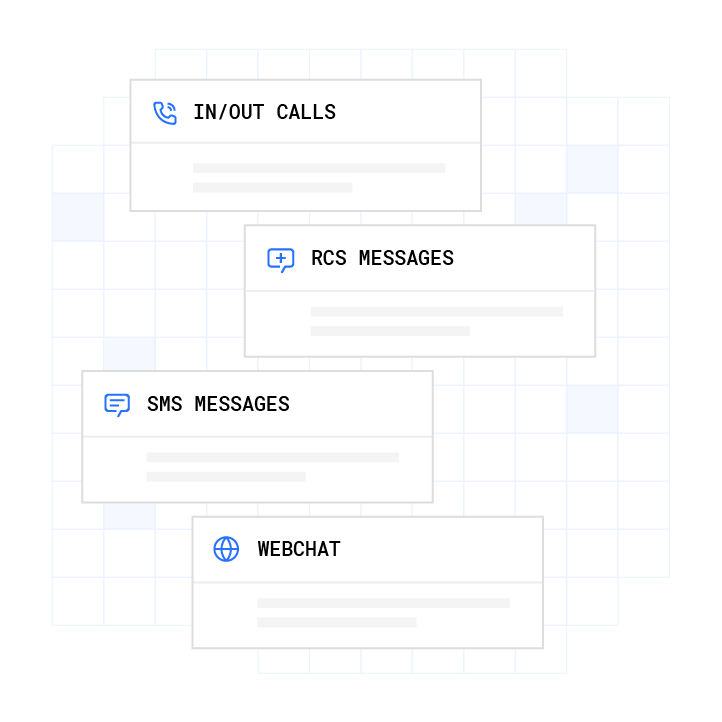
Channel coverage. Voice-only AI is a partial solution. Buyers need voice, SMS, RCS, and webchat running on a single stateful database. A customer who texted at 9 a.m. should be recognized when the call comes at noon without re-explaining their situation.
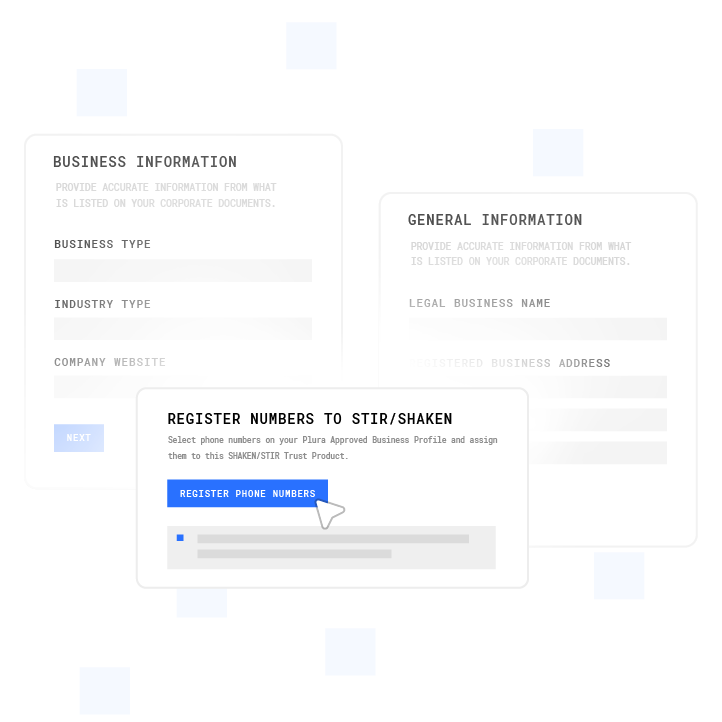
Compliance posture. TCPA (Telephone Consumer Protection Act), DNC, HIPAA (Health Insurance Portability and Accountability Act), SOC 2, SHAKEN/STIR (Secure Telephone Identity Revisited / Signature-based Handling of Asserted information using toKENs) caller ID verification, and 50-plus state rule sets need enforcement inside the platform before each contact, not as a third-party add-on.1 Customers remain responsible for their own compliance obligations. The platform’s role is to provide infrastructure that supports that posture.
Integration depth. The platform needs to read from and write to the CRMs, calendars, and attribution tools operators already run. A platform that requires replacing existing systems adds implementation risk and delays time-to-value.
Operational fit. Deployment timelines, no-code workflow design, escalation paths to human agents, and a 90-day opt-out window in the contract are practical signals. These details separate platforms built for operators from platforms built for developers.
Industry Landscape: Comparing Four Contact Center Models
Human onshore contact centers carry a cost structure that makes the math difficult at mid-market scale. Domestic contact center agents cost $15 to $25 per hour before benefits and overhead, with annual agent turnover running 35 to 45%. These centers cannot scale into peak season without burning through hiring budgets months in advance.
Offshore BPOs solved the cost problem through wage arbitrage for two decades. That model now faces pressure from the FCC NPRM, S.2495, and state onshoring laws. The true fully loaded cost per hour for offshore call centers, including turnover, training, QA, management, and technology and their annual turnover rates are detailed in the TCO comparison below. Each replacement requires two to six weeks of hiring and training, during which productivity is zero.
CPaaS-wrapper AI platforms appear to offer an escape hatch. Most do not. They rent the carrier layer from Twilio or a similar provider, inherit that provider’s caller ID reputation, and cannot enforce compliance at origination. Platforms like Synthflow depend on Twilio infrastructure and operate as a software layer without a carrier license.4 Vapi takes a developer-first, primarily voice-only, stateless approach with limited compliance infrastructure.4
End-to-end carrier-owned platforms own the full stack: FCC-licensed carrier, branded caller ID issuance, real-time DNC scrubbing, stateful cross-channel memory, and 100% U.S. infrastructure. Plura owns its telecom infrastructure and holds an FCC carrier license, which shapes compliance posture under the 2026 regulatory environment.
Strategic Trade-offs for Mid-Market Leaders
Automation vs. oversight. Full automation works well for qualification, scheduling, and follow-up flows. Complex negotiations, sensitive disclosures, and high-stakes objections need a warm-transfer path to a U.S. agent. Platforms that cannot route escalations cleanly create compliance exposure and customer-experience failures.
Omnichannel memory. Treating voice, SMS, RCS, and webchat as separate systems with separate memories forces customers to repeat themselves and forces operators to reconcile four data streams manually. Stateful AI architecture that remembers previous interactions, preferences, and outcomes across channels is now the operational standard for mid-market deployments.
Regulated-environment auditability. Healthcare, insurance, financial services, and legal operators need immutable consent records, field-level PII (Personally Identifiable Information) redaction, and one-click audit exports. These features form a baseline for operating in regulated verticals. Qualified counsel can advise on specific obligations under applicable law.
Current Best Practices in AI-Driven Contact Centers
Shared context across every channel. A unified stateful inbox that maintains full conversation history across voice, SMS, webchat, and RCS provides the operational foundation. Every agent, human or AI, reads from the same customer record.
Real-time consent management. Consent records should be timestamped, immutable, and audit-ready at the moment of capture, not reconstructed later. TCPA-litigator list filtering on every outbound contact is now standard for platforms operating at mid-market volume.
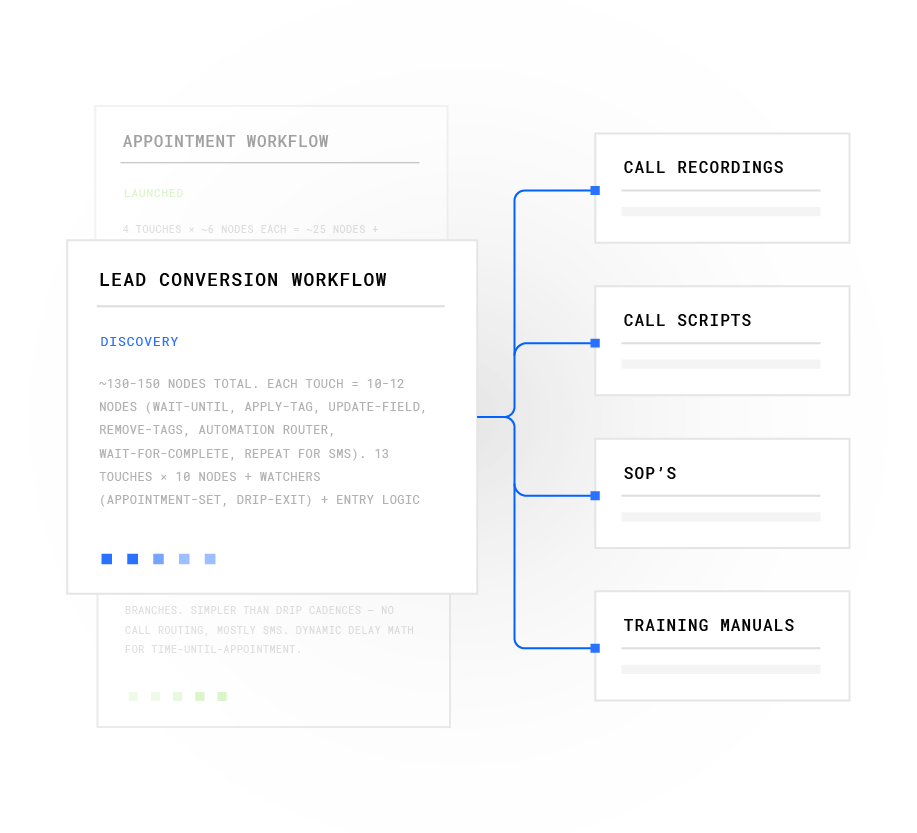
Defined escalation paths. Every workflow needs explicit guardrails. These include a BATNA (Best Alternative to a Negotiated Agreement) floor and ceiling for negotiation nodes, a warm-transfer trigger for out-of-scope requests, and a flagging mechanism in the unified inbox for human review. AI that improvises on outcomes that matter creates operational and compliance risk.
Healthcare scheduling. For operators running appointment-based workflows, AI-driven scheduling with automated reminders delivers up to 40% improvement in no-shows, which directly affects revenue per available slot.3
Implementation Readiness for AI Call Center Deployment
Volume thresholds. The economics of a carrier-owned AI platform require sufficient daily customer interactions or paid-media spend to generate ROI that justifies deployment. Below that threshold, a lighter-weight tool may fit better.
Data quality. The stateful conversation database is only as useful as the data fed into it. Operators need clean CRM records, accurate consent timestamps, and a defined lead-routing logic before deployment begins.
Internal ownership. Someone on the operator’s team needs to own the workflow document, review call transcripts weekly, and iterate on conversation logic. Platforms that run without internal ownership drift toward script decay and declining conversion rates.
Integration needs. Plura was built from the ground up for AI agents, with real-time data enrichment from 30-plus sources and setup time measured in days, not months.4 Teams should map existing CRM, calendar, and attribution tools against the platform’s integration directory before signing a contract.
Common Pitfalls in AI Call Center Projects
Automating broken workflows. AI amplifies whatever process it runs on. A broken qualification flow becomes a broken AI qualification flow at ten times the volume. Teams should map and fix the workflow before deploying AI on top of it.
Treating channels as silos. Deploying an AI voice tool and a separate AI SMS tool from different vendors with different memories recreates the fragmentation problem operators are trying to solve. Customers experience the gap as inconsistency. Operators experience it as duplicate data and reconciliation overhead.
Measuring activity instead of outcomes. Dials per day, messages sent, and talk time are activity metrics. Cost per qualified lead, conversion rate from first contact to close, and no-show rate are outcome metrics. Platforms that surface only activity metrics cannot support the ROI conversation with the C-suite.
TCO Comparison: AI Platform vs. Legacy Contact Center Models
| Model | Annual TCO (50-seat equivalent) | Turnover Rate | Availability |
|---|---|---|---|
| Human onshore contact center | $4M to $7M (high-volume operations) | 35 to 45% annually | Business hours plus shifts |
| Offshore BPO (fully loaded) | ~$1.2M for 50-seat team (insurance vertical) | 30 to 80% annually | Business hours plus shifts |
| Plura AI (carrier-owned platform) | $180K to $300K for 50-seat equivalent; $300K to $700K for larger mid-market operations | 0% | 24/7/365 |
For a 15-agent operation at $20 per hour with standard taxes, benefits, and commissions, Plura’s ROI calculator shows monthly human costs at $60,000 versus $14,400 for Plura AI, with 6 AI agents replacing 15 humans at 100% talk utilization, producing $547,200 in annual savings on that scenario.3
Compliance Infrastructure Checklist for AI Call Centers
| Standard / Framework | What It Covers | Plura’s Infrastructure Support |
|---|---|---|
| SOC 2 | Security, availability, and confidentiality controls | SOC 2 Type II certified, with continuous monitoring and third-party audits1 |
| HIPAA | Protected health information handling | End-to-end encryption, access controls, and audit logging across all channels1 |
| ISO certification | Information security management | ISO certified1 |
| GDPR | European data protection | Coverage for European operations1 |
| SHAKEN/STIR caller ID verification | Caller ID authentication on outbound voice | Caller ID authenticated at the carrier level on every outbound call |
| TCPA compliance | Consent, calling windows, autodialer rules | Real-time consent logging, quiet-hours enforcement, and TCPA-litigator list filtering |
| DNC compliance | Federal and state Do Not Call registries | Real-time scrubbing against federal and state registries before every dial |
Plura supports customer compliance posture through these infrastructure layers. Customers remain responsible for their own regulatory obligations, certifications, and the claims they make to their end users. Qualified legal counsel can advise on specific requirements under applicable law.
Frequently Asked Questions
What qualifies as a mid-market AI call center?
A mid-market AI call center serves organizations running 20 to 100 agents or generating equivalent volume through paid media spend. At that scale, the economics of a carrier-owned AI platform generate sufficient ROI to justify deployment. The regulatory exposure from offshore or legacy human models also becomes material enough to require a structured response.
How does a carrier-owned AI platform differ from a CPaaS-wrapper tool?
A CPaaS-wrapper tool rents the telecom layer from a third-party provider like Twilio. It cannot issue branded caller ID at the carrier level, cannot enforce DNC scrubbing at origination, and inherits the third-party provider’s caller ID reputation. A carrier-owned platform like Plura holds its own FCC carrier license, originates voice on its own domestic infrastructure, issues branded caller ID directly, and enforces compliance controls before the call leaves the platform. That architectural difference shapes pickup rates, compliance posture, and exposure under the FCC NPRM.
What does stateful cross-channel memory mean in practice?
Stateful cross-channel memory means every interaction across voice, SMS, RCS, and webchat is keyed to the same customer record and stored in one database. When an AI agent texts a lead at 9 a.m. and calls at noon, it already knows what was said, what was offered, and what objections were raised. The customer does not repeat themselves. The AI does not start from zero. That continuity separates a channel-siloed tool from a platform built for mid-market volume.
How does the FCC NPRM affect mid-market operators using offshore vendors?
The FCC’s Notice of Proposed Rulemaking, CG Docket No. 26-52, proposes capping offshore customer-service calls at 30% and limiting offshore handling of sensitive consumer data. The Keep Call Centers in America Act (S.2495) and state laws in New York, New Jersey, Connecticut, Missouri, and Florida extend those restrictions at the federal and state levels. Mid-market operators with offshore vendor contracts should consult qualified legal counsel to assess their exposure under these frameworks. Plura runs on 100% U.S. infrastructure by architecture, with voice origination, model hosting, data storage, and call recording all on domestic infrastructure.
What is the realistic timeline to go live with a mid-market AI call center deployment?
A straightforward inbound qualification flow typically deploys in days. A complex multi-step intake, such as a 25-question health-history survey for a healthcare operator, runs closer to one to two months. The workflow logic requires design, validation, and pilot testing on real calls before full go-live. Plura’s onboarding sequence includes a discovery audit, sample-call intake, overnight mockup build, workflow engineering, and a pilot phase before full deployment. Annual contracts include a 90-day opt-out window if the deployment is not delivering against agreed metrics.
Next Steps for Mid-Market Decision-Makers
Mid-market operators evaluating an AI call center in 2026 are making a decision with a $300K to $700K versus $4M to $7M TCO spread on one side and material regulatory exposure on the other. The evaluation framework is straightforward: own the carrier or rent it, use stateful memory or siloed channels, and rely on U.S. infrastructure by architecture or by promise.
Teams can run their numbers through Plura’s ROI calculator to check cost-per-contact math against the default 15-agent scenario and their own inputs.
For operators ready to see the platform in operation across voice, SMS, RCS, and webchat on a live workflow:
1 Plura AI maintains SOC 2, HIPAA, ISO, and GDPR posture as part of its platform infrastructure. References to compliance frameworks in this article describe Plura’s platform capabilities and do not constitute a guarantee that any customer using Plura will themselves be compliant with applicable laws or standards. Customers remain solely responsible for their own regulatory obligations, certifications, consent management, recordkeeping, and the claims they make to their own end users. Consult qualified legal counsel for guidance specific to your use case.
2 This article describes regulatory frameworks at a general level and does not constitute legal advice. Laws and regulations vary by jurisdiction, change over time, and apply differently depending on facts and circumstances. Readers should consult qualified legal counsel before making compliance decisions.
3 Performance figures, customer outcomes, and industry statistics referenced in this article are drawn from cited third-party sources or Plura customer case studies. Individual results vary based on implementation, use case, industry, audience, and execution. Past or aggregate performance is not a guarantee of future results.
4 References to third-party products, services, companies, or research are made for informational and comparative purposes only. Plura AI is not affiliated with, endorsed by, or sponsored by any third party named in this article unless explicitly stated. Trademarks and product names referenced remain the property of their respective owners.
This article is provided for informational purposes only and reflects Plura AI’s understanding at the time of publication. Product capabilities, integrations, and specifications are subject to change. For the most current information, visit plura.ai.
This article was produced with the assistance of AI tools and reviewed by Plura AI prior to publication.