

Written by: Matt Beucler, CEO, Plura AI
Key Takeaways for Branded Caller ID Deployment
- Branded caller ID requires direct registration with an FCC-licensed carrier that supports STIR/SHAKEN and Rich Call Data so calls display verified business information.1
- Carrier-owned setups deliver faster timelines, greater control, and built-in spam remediation compared to reseller or CPaaS paths that add delays and limit ownership.
- Business verification, STIR/SHAKEN A-level attestation, and branded content submission are the core steps before network deployment can begin.
- Successful deployment improves pickup rates, reduces spam labels, and pairs with stateful AI to maintain context across voice, SMS, RCS, and webchat channels.
- Plura AI issues branded caller ID at the carrier level and maintains conversation memory across channels, and you can see it in a live demo.
The Operational Cost of Spam-Labeled Calls
Spam labels erode revenue for contact center leaders, marketing directors, and agency owners running 500 or more daily interactions. Every mislabeled call wastes acquisition spend and slows lead response. TransUnion data cited in the FCC’s Advanced Methods to Target and Eliminate Robocalls rulemaking indicates that customers are up to 105% more likely to answer a branded call compared to an unidentified number.3 When calls present as “Spam Likely,” that lift disappears.
The carrier-ownership advantage is direct. An FCC-licensed carrier can issue branded caller ID and remediate spam labels at the network layer, where the label originates. Twilio-based API resellers (CPaaS, or Communications Platform as a Service) cannot do this because they do not own the carrier. They inherit the reputation of the underlying network, not their own.
This structural difference is why Plura built its platform on a direct carrier license instead of layering software on top of a reseller relationship. See carrier-level branded caller ID in action during a Plura demo.
Who Branded Caller ID Serves and What You Need Ready
This process serves three primary personas. Contact center leaders own the operational P&L and pickup-rate SLAs. Marketing directors own cost per acquisition and lead-response speed. Agency owners run call operations across multiple client accounts. The process applies to any operator running at least 500 daily outbound interactions or spending $5,000 or more per month on paid media.
Confirm the following preconditions before you start. Each requirement builds on the previous one, so missing an item slows every later step.
- Business verification documents: EIN (Employer Identification Number), legal business name, and registered address.
- A defined set of outbound phone numbers to register.
- STIR/SHAKEN readiness: your voice origination path must support A-level attestation, meaning the carrier can verify that the calling party is authorized to use the number being presented.
- Branded content assets: the display name, logo, and call reason text that will appear on the recipient’s screen.
Step-by-Step Setup for Branded Caller ID
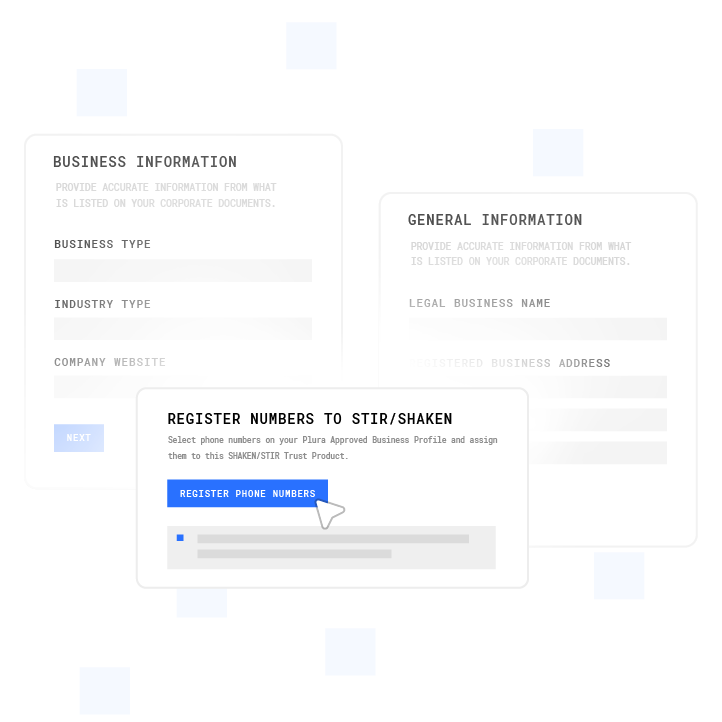
- Business verification. Submit your legal business name, EIN, and registered address to the carrier. This step anchors the branded identity to a verified legal entity. It also serves as a prerequisite for STIR/SHAKEN A-level attestation.
- Carrier registration. Register your outbound phone numbers directly with an FCC-licensed carrier. With a direct carrier like Plura, this registration happens inside the carrier’s own operating company number (OCN) record. With a reseller, the registration sits on the reseller’s OCN, which limits your control over the identity layer.
- STIR/SHAKEN attestation. The carrier assigns an attestation level to each call. A-level attestation confirms the carrier has verified both the caller’s identity and their right to use the number. The FCC’s 2025 rulemaking on Advanced Methods to Target and Eliminate Robocalls proposes requiring terminating providers to transmit verified caller identity information when A-level attestations are present, which increases the importance of A-level status for delivery.2 Consult the FCC’s published rules or qualified counsel for the obligations that apply to your specific situation.
- Branded content submission. Submit the display name, logo, and call reason text to the carrier for review. This content populates the Rich Call Data layer that appears on the recipient’s screen before they answer.
- Network deployment. The carrier propagates the branded identity across terminating networks. With a direct FCC-licensed carrier, this deployment is internal. With a reseller, propagation depends on the reseller’s agreements with downstream carriers, which can extend timelines and reduce consistency.
Walk through these steps on a live Plura account during a demo.
Carrier-Owned vs. Reseller Path for Branded Caller ID
The table below compares the two primary setup paths. Each factor reflects the structural difference between owning the carrier layer and renting it. Consult your carrier or legal counsel for the specific terms that apply to your deployment.
| Factor | Carrier-Owned (e.g., Plura) | Reseller Path (e.g., Twilio-based CPaaS) |
|---|---|---|
| Timeline to branded caller ID | Days, once business verification is complete | Weeks to months, dependent on reseller’s upstream carrier agreements |
| Cost structure | Included in carrier platform, with no third-party markup on the identity layer | Per-number or per-call fees layered on top of CPaaS rates, with markup passed to the customer |
| Control level | Direct control, with branded identity on the carrier’s own OCN and spam remediation handled at origination | Indirect control, with identity on the reseller’s OCN and spam remediation routed through the reseller to the upstream carrier |
Operational Challenges and Practical Fixes
Verification delays. Business verification often stalls when the legal name on the EIN filing does not match the name submitted to the carrier. Teams can avoid this by pulling the exact legal name from the IRS EIN confirmation letter before submission.
Spam-label persistence after registration. A spam label applied by a terminating carrier’s analytics engine does not automatically clear when branded caller ID is registered. Remediation requires a direct request to the analytics provider through the originating carrier. With a reseller, this escalation path runs through an intermediary. With a direct FCC-licensed carrier, remediation is handled at the origination layer without a third party in the path.
Integration friction with AI voice platforms. Many AI voice platforms run on Twilio or another CPaaS. When branded caller ID is registered through the platform’s reseller relationship, the identity is tied to the reseller’s OCN, not the operator’s. If the operator switches platforms, the branded identity does not transfer. Plura issues branded caller ID directly through its own FCC-licensed carrier, so the identity anchors to the operator’s registered numbers, not to a third-party reseller account.
Apple’s iOS 26 call-screening layer introduces another variable.5 Calls from unrecognized numbers can be intercepted before they ring through. Plura’s AI communicates with the iOS 26 call-screening layer so calls present with the company’s name and the reason for the call. This approach converts screened calls into pickups instead of voicemails.
Measuring Branded Caller ID Performance
The primary metrics to track after branded caller ID goes live are pickup rate, spam-label incidence, and downstream conversion rate per connected call. A 30-day baseline period before deployment gives a clean comparison point.
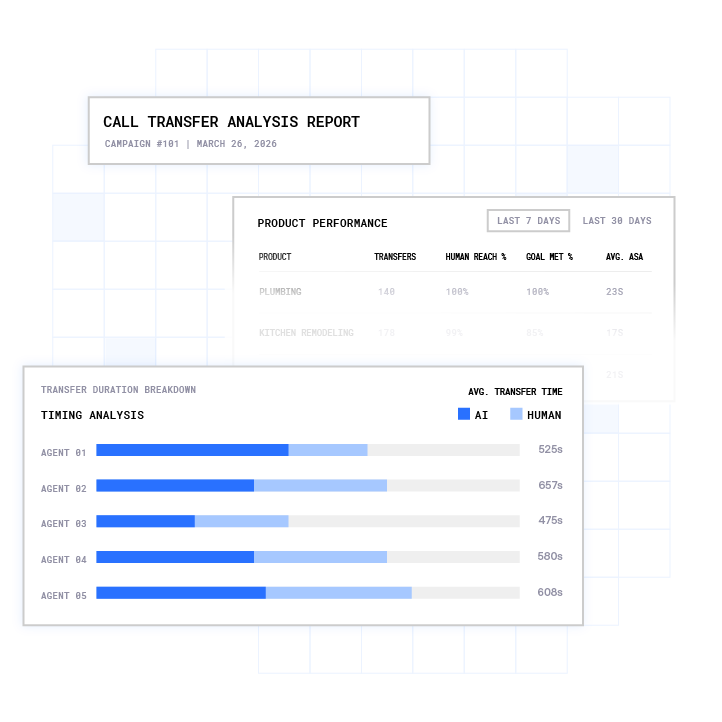
The 105% pickup-rate lift documented in the FCC rulemaking provides a useful upper-bound benchmark for post-deployment measurement. Teams can compare their own lift against that reference point.
In healthcare deployments specifically, stateful AI voice combined with branded caller ID supports measurable operational outcomes. Plura achieves up to 40% improvement in no-shows, driven by the combination of branded outbound calls that reach patients and AI agents that hold context across every prior touchpoint.3
Advanced Management and Cross-Channel Memory
Branded caller ID requires ongoing management, not a one-time setup. Carrier analytics engines continuously re-evaluate call patterns. A number that passes initial registration can be re-flagged if call behavior changes. Effective teams monitor pickup rates by number, rotate flagged numbers out of active campaigns, and submit remediation requests promptly when labels reappear.
The larger operational advantage of a carrier-owned setup is cross-channel memory integration. Plura’s AI Voice, AI SMS, AI RCS, and AI Webchat all share a Stateful Conversation Database. Every interaction is keyed to the customer’s phone number, email, or ID. An AI agent that texted a lead at 9 a.m. can handle the outbound call at noon already knowing what was said, what was offered, and what objections were raised. Branded caller ID raises the pickup rate, and stateful memory shapes what happens after the pickup.
For regulatory questions specific to STIR/SHAKEN obligations, Rich Call Data requirements, or state-level caller ID disclosure rules, consult the FCC’s published rules at FCC.gov or qualified telecommunications counsel.
Frequently Asked Questions
How long does branded calling setup take in 2026?5
With a direct FCC-licensed carrier, branded caller ID can be active within days of completing business verification. The bottleneck is almost always the verification step itself, not the technical deployment. Reseller paths typically take longer because the registration request must travel through the reseller to the upstream carrier before propagating to terminating networks. Operators who have their EIN documentation, legal business name, and branded content assets ready before submitting can compress the timeline significantly.
What is STIR/SHAKEN and why does it matter for branded caller ID?
STIR/SHAKEN is a framework of technical standards that allows carriers to verify the identity of a caller before the call reaches the recipient. STIR stands for Secure Telephone Identity Revisited. SHAKEN stands for Signature-based Handling of Asserted information using toKENs. When a call carries A-level attestation, the originating carrier has verified both the caller’s identity and their authorization to use the number being presented. Branded caller ID and STIR/SHAKEN work together. The attestation level signals to the terminating carrier that the branded identity is legitimate, which reduces the probability of a spam label being applied. Consult the FCC’s published STIR/SHAKEN rules or qualified counsel for the specific obligations that apply to your operation.
What is the difference between branded caller ID and standard caller ID?
Standard caller ID displays a phone number and, in some cases, a name pulled from a public database. Branded caller ID uses the Rich Call Data layer to display a verified business name, logo, and call reason on the recipient’s screen before they answer. The display is tied to a carrier-registered identity, not a public lookup. This distinction matters operationally. A number that shows “Acme Insurance – Policy Renewal” converts at a materially higher rate than a number that shows an unfamiliar 10-digit string or “Spam Likely.”
Can branded caller ID be set up through Twilio or another CPaaS?
Twilio and other CPaaS providers offer branded caller ID as a feature, but the identity is registered on the CPaaS provider’s operating company number, not the operator’s. This structure ties the operator’s branded identity to the reseller’s carrier relationship. If the operator switches platforms, the branded identity does not transfer automatically. Spam remediation requests must also travel through the reseller to the upstream carrier, which adds time and reduces control. A direct FCC-licensed carrier issues the branded identity on the operator’s own registered numbers, with remediation handled at origination.
How does branded caller ID work with AI voice agents?
Branded caller ID and AI voice agents operate on separate layers, but they interact directly on pickup rate and conversation quality. Branded caller ID influences whether the call is answered. The AI voice agent shapes what happens after the answer. When both layers are owned by the same platform, the integration is seamless. Every outbound call originates with branded caller ID and STIR/SHAKEN authentication, and the AI agent that handles the conversation already has full context from every prior touchpoint across voice, SMS, RCS, and webchat. Platforms that bolt branded caller ID onto a third-party CPaaS and run AI on top of that introduce two separate dependency chains, each with its own failure modes and remediation paths.
1 Plura AI maintains SOC 2, HIPAA, ISO, and GDPR posture as part of its platform infrastructure. References to compliance frameworks in this article describe Plura’s platform capabilities and do not constitute a guarantee that any customer using Plura will themselves be compliant with applicable laws or standards. Customers remain solely responsible for their own regulatory obligations, certifications, consent management, recordkeeping, and the claims they make to their own end users. Consult qualified legal counsel for guidance specific to your use case.
2 This article describes regulatory frameworks at a general level and does not constitute legal advice. Laws and regulations vary by jurisdiction, change over time, and apply differently depending on facts and circumstances. Readers should consult qualified legal counsel before making compliance decisions.
3 Performance figures, customer outcomes, and industry statistics referenced in this article are drawn from cited third-party sources or Plura customer case studies. Individual results vary based on implementation, use case, industry, audience, and execution. Past or aggregate performance is not a guarantee of future results.
4 References to third-party products, services, companies, or research are made for informational and comparative purposes only. Plura AI is not affiliated with, endorsed by, or sponsored by any third party named in this article unless explicitly stated. Trademarks and product names referenced remain the property of their respective owners.
5 This article contains forward-looking statements regarding industry trends, technology adoption, and future capabilities. These statements reflect current expectations and are subject to change. Plura AI undertakes no obligation to update forward-looking statements except as required.
This article is provided for informational purposes only and reflects Plura AI’s understanding at the time of publication. Product capabilities, integrations, and specifications are subject to change. For the most current information, visit plura.ai.
This article was produced with the assistance of AI tools and reviewed by Plura AI prior to publication.