

Written by: Matt Beucler, CEO, Plura AI
Updated July 2026
Key Takeaways for Insurance Leaders
- Insurance agencies can run AI call centers that handle quotes, renewals, claims, and support while using FCC-licensed infrastructure and real-time compliance controls to support 2026 U.S. regulatory requirements.
- Plura AI is the only platform that owns its FCC-licensed carrier and maintains stateful memory across voice, SMS, RCS, and webchat for seamless omnichannel insurance workflows. After this, we refer to it as Plura.
- Core insurance workflows automated by AI include FNOL intake, instant quote follow-up, policy renewal outreach, claims-status updates, and appointment or inspection scheduling.
- AI call centers can materially change contact-center economics, replacing traditional contact-center costs of $4M–$7M annually with Plura’s $300K–$700K TCO on equivalent volume and zero turnover.
- Insurance teams ready to modernize their contact operations can book a live demo with Plura to see insurance-grade AI calling agents in action.
AI Calling Agents in Active Use at Insurance Companies
AI calling agents are already in production across insurance carriers and agencies. They handle inbound qualification, outbound quote follow-up, renewal reminders, and claims-status delivery without a human agent on every call. The AI runs the conversation, captures structured data, follows disclosure scripts exactly as written, and warm-transfers to a licensed agent when a workflow gate triggers, such as a bind decision or a coverage dispute.
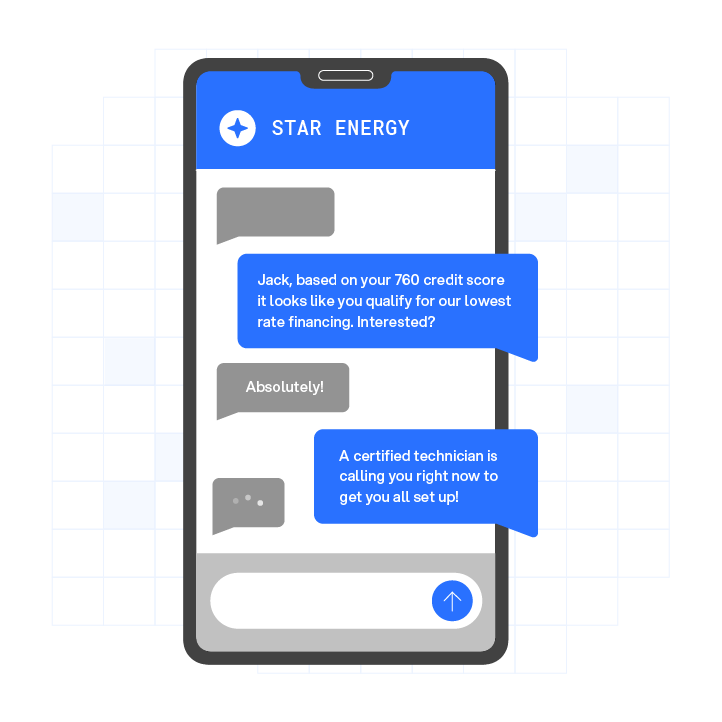
The practical constraint is infrastructure, not capability. Many AI voice tools on the market operate as API resellers on top of third-party Communications Platform as a Service providers. These tools cannot issue branded caller ID at the carrier level, cannot enforce real-time Do Not Call scrubbing before dial, and cannot hold conversation context across channels. An AI agent that texts a policyholder at 9 a.m. about a renewal and then calls at noon with no memory of that exchange creates the same friction as a human agent reading from a cold script.
See how insurance-grade AI calling agents handle real conversations in a live Plura demo.
AI Use Cases for Insurance Agents and Agencies
Insurance agents and agency owners deploy AI across the full conversation lifecycle, not just the first touch. Quote follow-up is usually the highest-volume use case. The first responder closes 78% of deals in insurance, and an AI agent that contacts an inbound lead in under 5 seconds captures that window without requiring a human to be available at the moment of submission.3
Renewal outreach runs on the same infrastructure, applying the same speed-to-contact advantage to scheduled touchpoints. The AI contacts policyholders on a defined cadence, confirms coverage details, surfaces upsell options within approved script boundaries, and routes to a licensed agent for any coverage change that requires human judgment. This proactive pattern also applies to claims-status updates, which reduce inbound call volume by delivering structured status information before the policyholder calls to ask.
Appointment and inspection scheduling closes the loop on these workflows. The AI books directly into the adjuster’s or agent’s calendar through integrations with tools like Google Calendar, Calendly, and Cal.com. It then sends confirmation via SMS or RCS inside the same conversation thread.
ROI Model for AI Call Centers in Insurance
The economics of replacing or augmenting a traditional insurance contact center with AI are straightforward to model. Traditional contact-center total cost of ownership runs $4M to $7M annually, driven by agent payroll, taxes, benefits, commissions, real estate, and the 30 to 50% annual turnover that forces perpetual rehiring and retraining cycles.3
A 50-seat offshore team costs approximately $1.2M annually fully loaded in the insurance industry, while AI handling equivalent volume costs $180K to $300K annually with higher quality scores and zero turnover.3 For onshore operations at scale, Plura’s TCO of $300K to $700K replaces $4M to $7M in traditional contact-center spend on equivalent volume.
At the unit level, the default scenario on Plura’s ROI calculator shows a 15-agent operation at $20 per hour costing $60,000 per month. Six Plura agents handling the same volume at 100% talk utilization cost $14,400 per month, producing $45,600 in 30-day savings and $547,200 over 12 months.
Model your agency’s specific volume and labor costs in Plura’s calculator.
U.S.-Based AI Call Center Architecture for Insurance
Those cost savings depend on infrastructure that can handle insurance-grade data requirements. The distinction between a U.S.-based AI call center and a platform that claims U.S. operations is architectural. Voice origination, model hosting, data storage, and call recording must all sit on domestic infrastructure for a platform to report “100% U.S.-handled” in broadband consumer label disclosures.
Plura runs on 100% U.S. infrastructure by architecture. Voice originates on Plura’s own FCC-licensed audio bridging carrier, not a third-party CPaaS. Plura owns its telecom infrastructure and holds an FCC carrier license, whereas platforms built on Twilio depend on third-party infrastructure and operate as a software layer without a carrier license.4 That distinction matters for insurance carriers handling protected health information, Social Security numbers, and financial data that may be subject to restrictions on offshore handling under the FCC’s Notice of Proposed Rulemaking and state-level frameworks described below.
FCC-Focused AI Voice Infrastructure for Insurance
FCC-focused AI voice for insurance involves more than a domestic mailing address. It involves STIR/SHAKEN caller-ID authentication on every outbound call, branded caller ID issued at the carrier level, real-time DNC scrubbing before each dial, Telephone Consumer Protection Act consent logging, and quiet-hours enforcement by time zone.
Plura supports HIPAA, SOC 2 compliance, and integration with The Blacklist Alliance’s TCPA Litigation Firewall for real-time DNC scrubbing and litigation protection.1 Carrier-provisioned branded caller ID is available on Plura and is not available on platforms that depend on third-party telecom infrastructure. Readers should consult qualified counsel to determine how these infrastructure features relate to their specific regulatory obligations.

2026 Regulatory Context for Insurance AI Call Centers
Three regulatory developments are reshaping how insurance carriers and agencies structure their contact-center operations in 2026. Each is described here neutrally. Readers should consult qualified legal counsel to assess how these frameworks apply to their organization.
The FCC’s NPRM CG Docket No. 26-52 proposes capping offshore customer-service calls at 30% and addressing offshore handling of sensitive consumer data, including passwords, multi-factor authentication codes, Social Security numbers, banking data, and card data.2 Insurance carriers handling health or financial data can review this filing with counsel.
Companion federal legislation includes the Keep Call Centers in America Act (S.2495) and the Foreign Robocall Elimination Act (S.2666).2 These bills extend the federal regulatory perimeter around offshore call-center operations and foreign-originated robocalls. Counsel can advise on how these proposals intersect with vendor contracts.
At the state level, five jurisdictions have enacted or proposed restrictions relevant to insurance contact-center operations. These include New York’s Call Center Jobs Act with penalties up to $10,000 per day, New Jersey’s mirror statute, Connecticut’s state-contract restrictions, Missouri’s offshore-disclosure executive order, and Florida’s medical-information offshoring restrictions.2 Readers should consult qualified counsel and the relevant state statutes for their jurisdiction before restructuring vendor relationships.
Technical Requirements for Insurance-Grade AI Platforms
Insurance workflows impose a specific set of technical requirements that many AI voice platforms do not meet at the infrastructure level.
| Capability | Carrier-Owned Platform (Plura) | Twilio-Based API Reseller |
|---|---|---|
| FCC carrier license | Yes, owned | No, rents from CPaaS |
| Branded caller ID | Carrier-provisioned | Third-party dependent |
| Stateful cross-channel memory | Voice, SMS, RCS, webchat unified | Typically single-channel |
| Real-time DNC scrubbing | Pre-dial, every contact | Bolted on post-platform |
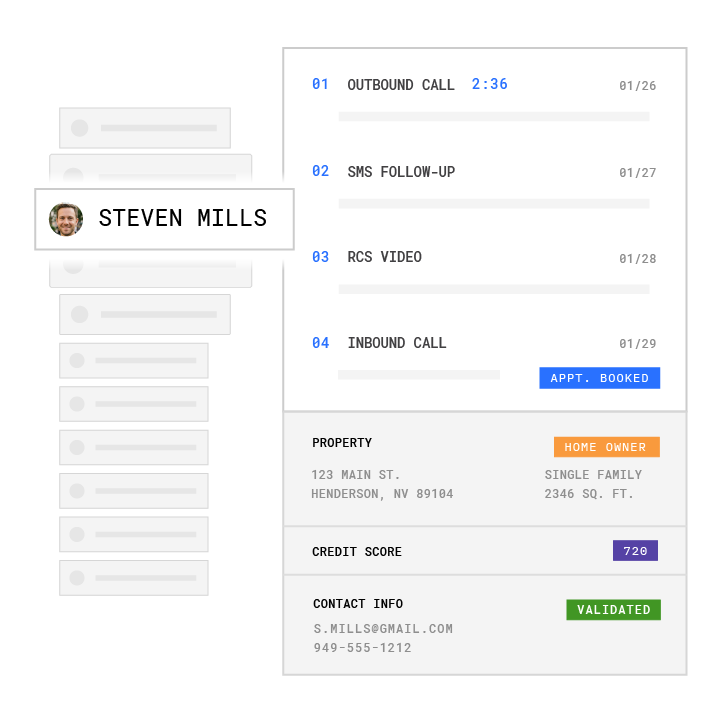
Plura’s Stateful Conversation Database keys every interaction to a customer token, such as a phone number, email, or ID, across all four channels. A policyholder who receives an SMS renewal reminder at 9 a.m. is recognized when the voice call comes at noon. The AI agent references the prior exchange, the offer made, and the response given, without requiring the customer to repeat themselves. HIPAA-aligned encryption, SOC 2 Type II certification, ISO certification, and SHAKEN/STIR authentication run on every interaction by default.1 Customers remain responsible for their own compliance obligations. Plura provides the infrastructure layer that supports those obligations.
Insurance Workflows, Channels, and Compliance Gates
| Workflow | Primary Channel Mix | Compliance Gates |
|---|---|---|
| FNOL intake | Voice, SMS | HIPAA-aligned encryption, PHI redaction, TCPA consent, DNC scrub |
| Instant quote follow-up | Voice, SMS, RCS | TCPA express written consent, DNC scrub, quiet-hours enforcement |
| Policy renewal outreach | Voice, SMS, RCS | TCPA consent, DNC scrub, state calling-window rules |
| Claims-status updates | SMS, RCS, webchat | HIPAA-aligned data handling, SOC 2 audit logging, DNC scrub |
| Appointment/inspection scheduling | Voice, SMS, webchat | TCPA consent, quiet-hours enforcement, calendar integration |
Readers should consult qualified counsel to confirm which compliance gates apply to their specific workflows and state jurisdictions.
Economics and Implementation for Insurance Teams
For a 50-seat equivalent contact center, traditional offshore operations cost $35,000 to $50,000 monthly, while AI contact centers cost $8,000 to $15,000 monthly. At the enterprise level, those savings compound because AI eliminates taxes, benefits, commissions, and the rehiring overhead that can consume 30 to 50% of traditional budgets annually.
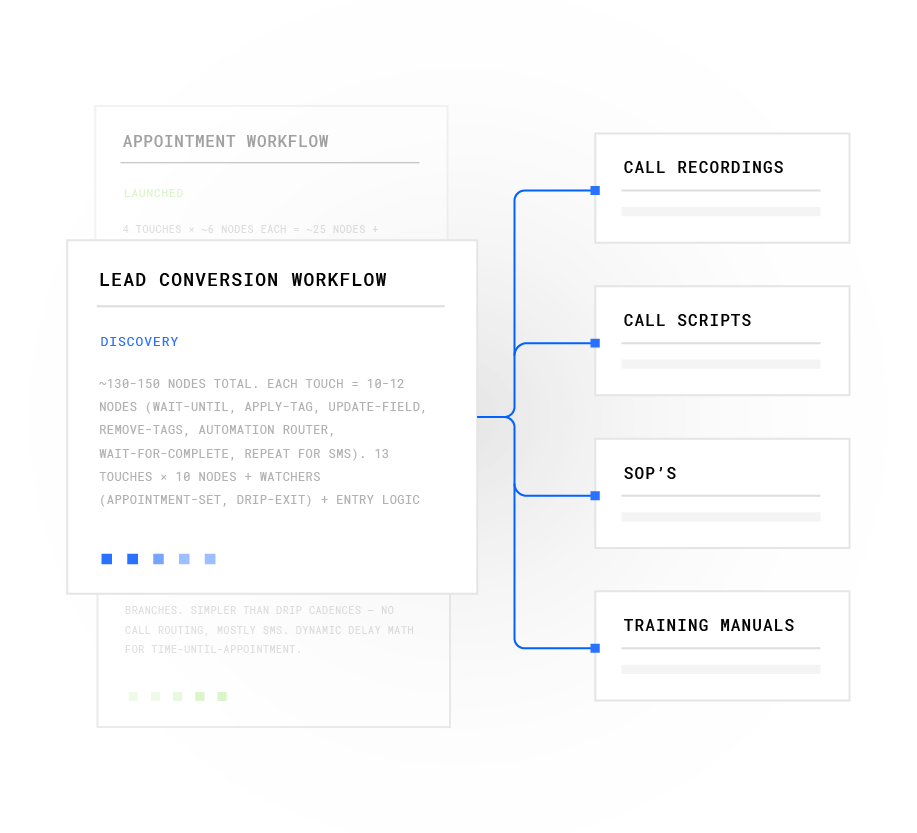
Implementation follows a defined sequence. Teams start with a discovery audit of call economics and existing scripts. Plura’s no-code workflow builder then produces a conversation mockup overnight, followed by a review session and engineering build of the production workflow. A pilot runs on a subset of real calls, and then the program moves to full go-live. Simple inbound qualification flows go live in days. Complex multi-step intakes, such as a 25-question health-history survey for a combined health and life insurance carrier, typically run closer to one to two months because the workflow logic requires design and validation time.
Every annual contract includes a 90-day opt-out window, so customers are not locked into a full year if the deployment is not delivering. AI contact centers provide 24/7/365 availability and a 0% turnover rate compared to 30 to 45% annually for traditional operations, which removes the rehiring and retraining cycle that consumes a disproportionate share of insurance contact-center budgets.
Plura connects to 50+ integrations across CRM (HubSpot, Salesforce, Zoho), calendars (Google Calendar, Calendly, Cal.com), documents (DocuSign, PandaDoc), and validation tools (IP Quality Score, Reassigned Numbers Database, TrestleIQ).4 The Unified Inbox consolidates voice transcripts, SMS threads, RCS exchanges, and webchat sessions per customer in a single screen, so CX teams operate from one surface instead of multiple point tools.
Pricing runs across three tiers: Multi at $5,000 per month, Agency at $7,500 per month, and Enterprise at custom pricing, all on annual contracts billed monthly with the 90-day opt-out window included.
Use the calculator to validate these economics against your current contact-center spend.
Review Plura’s plans and rates side by side on the pricing page.
Frequently Asked Questions
Which insurance workflows benefit most from AI call center automation?
The highest-volume, highest-repetition workflows usually produce the fastest ROI. These include FNOL intake, instant quote follow-up, policy renewal outreach, claims-status updates, and appointment or inspection scheduling. FNOL intake benefits from AI because the data capture is structured and consistent, the script is fixed, and the volume can spike unpredictably after weather events or accidents. Quote follow-up is time-critical. The first responder closes the majority of deals, and an AI agent that contacts a submitted lead in under 5 seconds captures that window without requiring a human to be available at the exact moment of submission.
Renewal outreach runs on a defined calendar and works well with multi-channel cadences across voice, SMS, and RCS. Claims-status updates reduce inbound call volume by delivering information proactively. Complex coverage disputes, underwriting decisions, and bind authorizations remain in the human agent’s domain. The AI handles qualification and warm-transfers to a licensed agent when those thresholds are reached.
How stateful conversation memory works across channels in insurance
Plura’s Stateful Conversation Database keys every interaction to a customer token, typically a phone number, email address, or policy ID. When a policyholder receives an SMS renewal reminder in the morning and then answers a voice call in the afternoon, the AI agent on the call already has the full record of the SMS exchange. The agent sees what was offered, what the policyholder said, whether they asked for a callback, and what their current coverage status is. The policyholder does not repeat themselves.
In a claims context, an adjuster’s office can send an RCS message with inspection scheduling options. The policyholder can respond in that thread, and the voice follow-up call the next day opens with full context of that exchange. The Unified Inbox gives human CX team members the same view the AI reads from, so warm transfers do not require the agent to ask the policyholder to start over.
Carrier ownership and its impact on insurance AI call centers
Most AI voice platforms operate as software layers on top of third-party CPaaS providers. These platforms do not hold an FCC carrier license. They rent telecom infrastructure from a provider like Twilio and pass that cost and that compliance posture to their customers. Owning the FCC carrier license means voice originates on Plura’s own domestic infrastructure, branded caller ID is issued at the carrier level rather than through a third-party reseller, STIR/SHAKEN authentication runs at origination, and real-time DNC scrubbing is enforced before the call leaves the platform.
For insurance carriers handling health, Social Security, and financial data, the carrier-ownership distinction is also a data-residency question. All voice traffic, recordings, and associated data remain on U.S. infrastructure by architecture, not only by contractual promise. This characteristic relates directly to the FCC NPRM’s proposed treatment of offshore handling of sensitive consumer data. Readers should consult qualified counsel to assess how these infrastructure characteristics apply to their organization’s specific obligations.
How Plura supports compliance with TCPA, DNC, and HIPAA
Plura’s compliance engine is built into the platform as a first-class layer, not added as a bolt-on after the fact. Every outbound contact is checked against federal and state DNC registries in real time before the call is placed, and non-compliant numbers are blocked before the first attempt. TCPA consent records are timestamped, immutable, and exportable for audit review. Quiet-hours rules enforce automatically through time-zone detection on the contact, applying state and federal calling-window rules to every campaign without manual configuration.
HIPAA-aligned encryption, access controls, and audit logging cover health-related data across all four channels. SOC 2 Type II certification covers the underlying infrastructure with continuous monitoring and third-party audits.1 The compliance dashboard exports audit-ready reports in one click. Customers remain responsible for their own compliance obligations, certifications, and the claims they make to their own end users. Plura provides the infrastructure layer that supports those obligations. Readers should consult qualified legal counsel regarding their organization’s specific regulatory requirements.
Typical implementation timeline for an insurance AI call center
A simple inbound qualification flow, such as an AI agent that answers quote requests, captures structured data, and warm-transfers to a licensed agent, typically goes live within days. A more complex workflow, such as a multi-step FNOL intake that captures incident details, validates policy status, routes by claim type, and schedules an adjuster appointment, usually runs closer to two to four weeks. The exact timing depends on the complexity of the branching logic and the number of integration points.
Plura’s onboarding sequence follows a consistent path. The team starts with a discovery audit of the agency’s call economics and existing scripts. An overnight build of a conversation mockup follows, then a review session with the customer, engineering build of the production workflow, a pilot on a subset of real calls, and full go-live. Every annual contract includes a 90-day opt-out window, so agencies are not locked into a year-long commitment before the deployment has demonstrated results.
1 Plura AI maintains SOC 2, HIPAA, ISO, and GDPR posture as part of its platform infrastructure. References to compliance frameworks in this article describe Plura’s platform capabilities and do not constitute a guarantee that any customer using Plura will themselves be compliant with applicable laws or standards. Customers remain solely responsible for their own regulatory obligations, certifications, consent management, recordkeeping, and the claims they make to their own end users. Consult qualified legal counsel for guidance specific to your use case.
2 This article describes regulatory frameworks at a general level and does not constitute legal advice. Laws and regulations vary by jurisdiction, change over time, and apply differently depending on facts and circumstances. Readers should consult qualified legal counsel before making compliance decisions.
3 Performance figures, customer outcomes, and industry statistics referenced in this article are drawn from cited third-party sources or Plura customer case studies. Individual results vary based on implementation, use case, industry, audience, and execution. Past or aggregate performance is not a guarantee of future results.
4 References to third-party products, services, companies, or research are made for informational and comparative purposes only. Plura AI is not affiliated with, endorsed by, or sponsored by any third party named in this article unless explicitly stated. Trademarks and product names referenced remain the property of their respective owners.
This article is provided for informational purposes only and reflects Plura AI’s understanding at the time of publication. Product capabilities, integrations, and specifications are subject to change. For the most current information, visit plura.ai.
This article was produced with the assistance of AI tools and reviewed by Plura AI prior to publication.