

Written by: Matt Beucler, CEO, Plura AI
Key Takeaways
- Traditional live after-hours answering services charge $0.75–$2.00 per minute with monthly minimums, contracts, and high turnover that raise total cost of ownership.3
- After-hours missed-call rates reach 67% for home services, and each unanswered call costs approximately $1,200 in lost revenue.3
- Plura AI voice agents deliver 24/7 call qualification, booking, and live transfer at $0.35–$0.85 per conversation with instant scalability and zero turnover.3
- AI deployments go live in days versus 3–5 business days for many live services, with 90-day opt-out flexibility and U.S.-hosted infrastructure that supports SOC 2, HIPAA, TCPA, and DNC compliance.1
- Leaders ready to replace expensive live receptionists with always-on AI can talk to Plura AI today.
The Cost and Turnover Problem With Live Receptionists
Live after-hours answering services charge per-minute rates of $0.75 to $2.00, often with monthly minimums. True 24/7 live coverage can run several hundred dollars or more per month. Setup fees may apply, and many providers require contracts with early cancellation penalties.
Staffing consistency compounds the cost problem. Contact center agent training takes 6 to 8 weeks before handling live calls, which means every departing agent represents a significant training investment that disappears. That investment loss happens frequently because industry average annual agent turnover runs 30 to 45 percent. Franchise front desk roles face similar churn, with 30 to 50 percent annual staff turnover that forces perpetual retraining cycles and erodes script quality and call consistency.
The revenue exposure from missed calls is substantial. Invoca’s analysis of over 60 million phone calls found that 27 percent of calls to home services businesses go unanswered4, and each missed call costs approximately $1,200 in lost revenue. After-hours miss rates climb sharply, and after-hours missed call rates for home service contractors reach approximately 67% according to 2026 industry reports. Many home service inquiries arrive outside standard business hours, so operators without after-hours coverage stay unreachable during a large share of their demand window.
What After-Hours Answering Services Actually Deliver
Given these cost and revenue exposure problems, operators need a solution that captures after-hours demand without constant staffing overhead. An after-hours answering service intercepts inbound calls when a business’s primary staff is unavailable. Core functions include call screening, lead qualification, appointment booking, and live transfer to an on-call team member when urgency warrants it. The service operates from a custom script that captures caller intent, collects job details, and routes the outcome to the appropriate next step.
Traditional live-receptionist services perform these functions with human agents reading from scripts. AI voice agents perform the same functions at per-conversation cost with 100 percent uptime. The AI receptionist category removes staffing overhead, shift premiums, and turnover costs that make live services expensive at scale, while delivering consistent script execution on every call regardless of time of day.
Book a live demo with Plura AI to see AI voice agents handle after-hours qualification and booking in real time: plura.ai/ai-voice-demo.
How Plura AI Voice Agents Handle After-Hours Calls
Plura’s AI voice agents handle three primary after-hours workflows: inbound qualification, missed-call recovery, and live transfer.
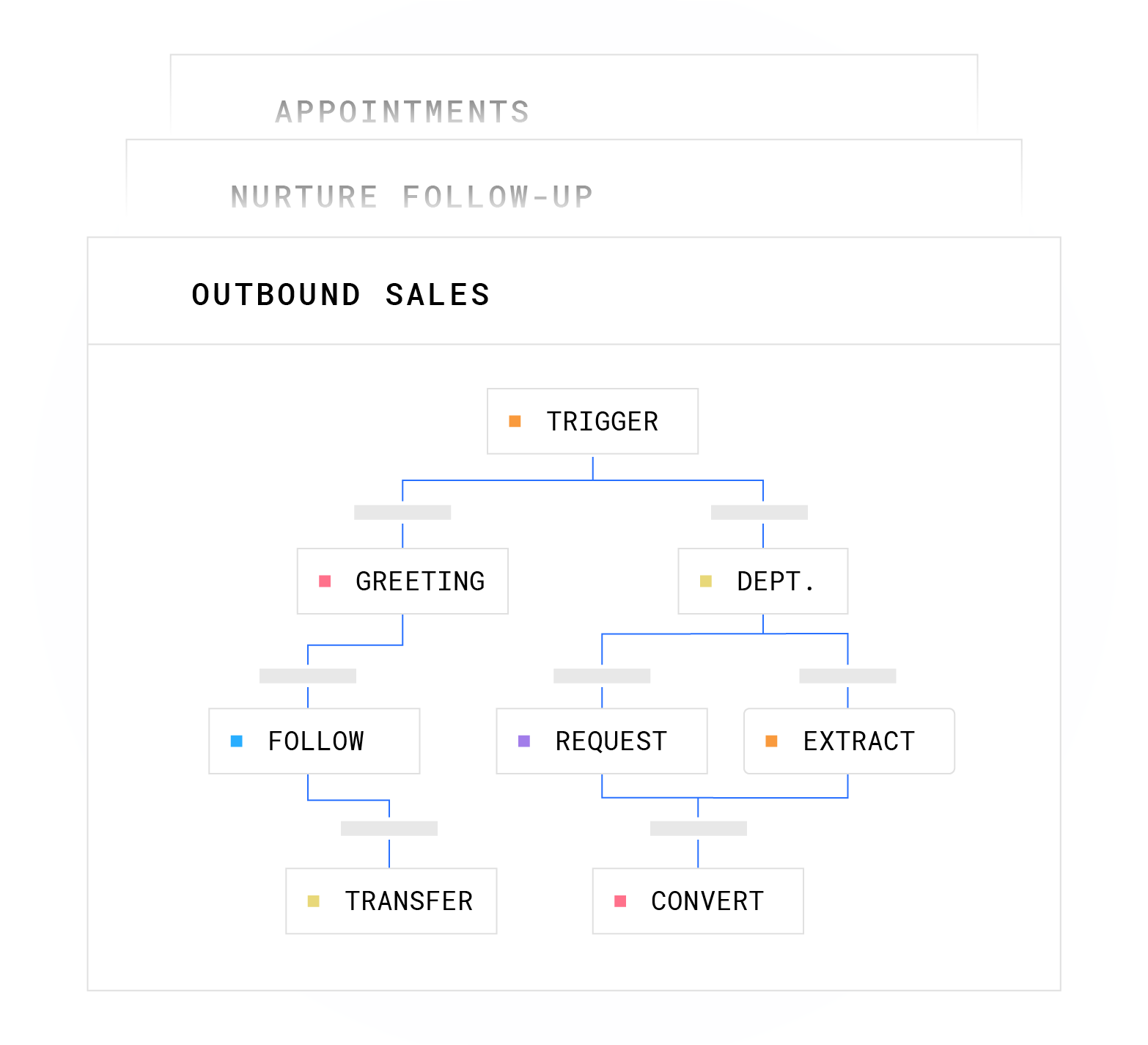
On inbound qualification, the agent answers on the first ring, identifies the caller’s need using a custom script, collects job details, and either books the appointment directly into the operator’s calendar or routes an emergency to an on-call technician. On after-hours booking, the agent integrates with scheduling platforms in real time so the caller receives a confirmed appointment before hanging up, not a callback promise. On live transfer, the agent warm-routes the call to a U.S. team member, with full conversation context already delivered.
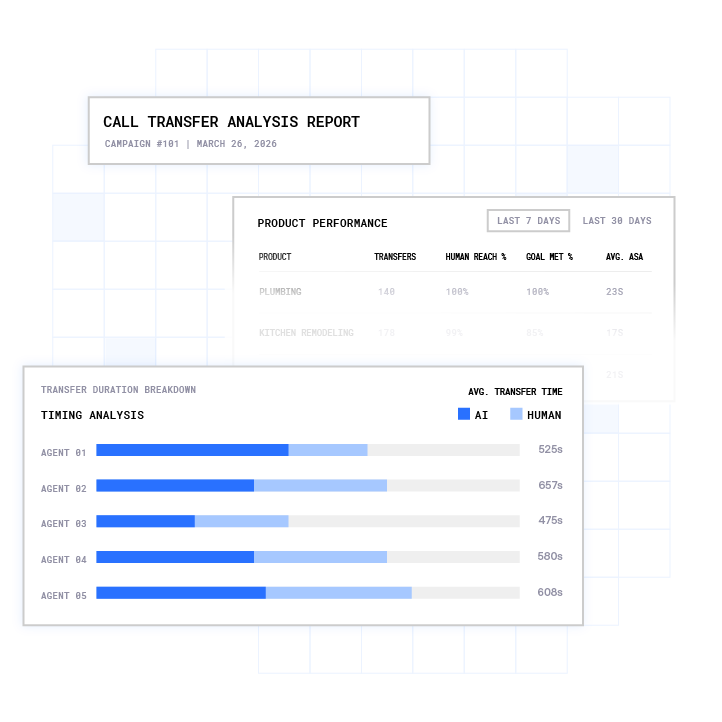
Speed drives conversion performance for after-hours calls. Harvard Business Review research found that companies responding within five minutes are 100 times more likely to connect with a prospect than those waiting 30 minutes4. Leads contacted within one minute are 391 percent more likely to convert than those contacted after 24 hours. The industry average first-contact time is 47 hours. Plura’s AI voice agents respond in under 60 seconds, 24/7.
For home services operators, one multi-unit franchise owner reported going from missing 40 percent of calls across 12 locations to answering 100 percent of them, with booking rate doubling and no additional receptionists added. Plura’s AI answering service for home services handles this volume without staffing overhead.
Cost and Total Cost of Ownership Comparison
The table below compares AI voice agents against traditional live receptionists on the dimensions that determine total cost of ownership for high-volume operators.
| Dimension | AI Voice Agents (Plura) | Traditional Live Receptionists |
|---|---|---|
| Deployment model | Cloud-native, no hardware | Human agent pools, shift-based |
| Per-unit cost | $0.35 to $0.85 per completed conversation | $0.75 to $2.00 per minute |
| Annual TCO (equivalent volume) | $300K to $700K | $4M to $7M |
| Scalability | Instant, 10x volume overnight, zero hiring | 3-5 business days to onboard |
| Turnover and retraining | 0% turnover | 30 to 45% annually |
| Compliance controls | SOC 2, HIPAA, TCPA support, DNC support, SHAKEN/STIR, GDPR infrastructure built in1 | Varies by provider, often bolted on or contractual only |
| Infrastructure ownership | 100% U.S. infrastructure by architecture | Varies, offshore exposure common |
For a 15-agent equivalent operation, the Plura ROI calculator shows human agent costs of $60,000 per month versus Plura at $14,400 per month, which produces $547,200 in 12-month savings.3 Run your numbers through Plura’s cost savings calculator to check your ROI in real time. Compare plans and rates side by side at Plura pricing.
Setup Speed and Contract Flexibility for Leaders
AI voice agents deploy in days. Many AI answering services require no script or CRM integration and can go live in 10–30 minutes (or up to 48 hours), while human answering services require time for agent training on scripts and forwarding rules. Traditional answering services typically require 3-5 business days for onboarding.
Contract flexibility follows the same pattern. Traditional live services often impose contracts with early cancellation penalties. Plura’s annual contracts include a 90-day opt-out window. If the deployment is not delivering, operators are not held to the annual term.
Book a live demo with Plura and see a configured AI voice agent live in under 30 minutes: plura.ai/ai-voice-demo.
Compliance and U.S. Infrastructure for Regulated Operations
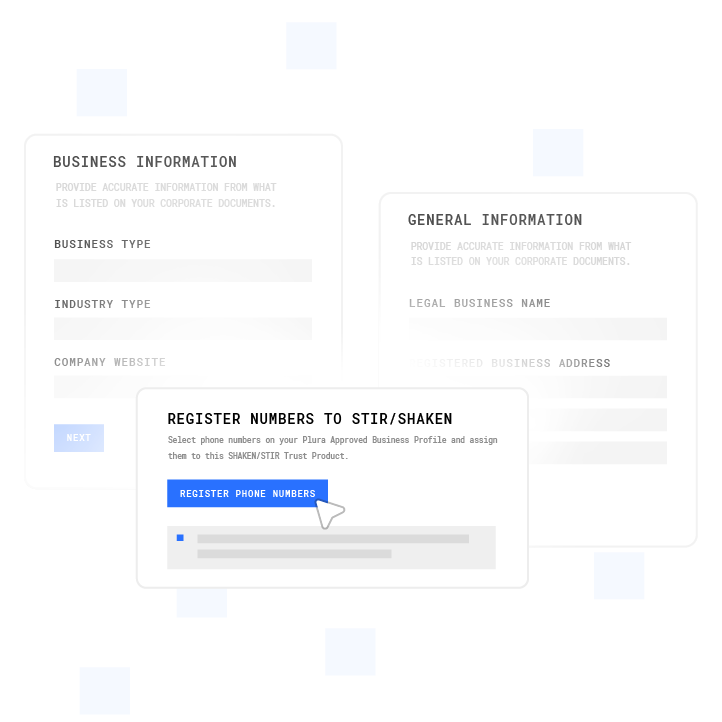
After-hours call handling in regulated industries involves compliance frameworks that operators should evaluate carefully with qualified counsel. Relevant frameworks include TCPA considerations, DNC list management, HIPAA for healthcare-adjacent operators, SOC 2, ISO certification, GDPR, and SHAKEN/STIR caller ID verification.2 Under 45 CFR 164.502(e) and 164.504(e), any service handling protected health information on behalf of a covered entity may require a Business Associate Agreement. Operators in regulated industries should consult qualified counsel to determine their specific obligations.
Plura’s platform supports compliance across SOC 2, HIPAA, ISO certification, GDPR, SHAKEN/STIR caller ID verification, TCPA considerations, and DNC list management.1 Every outbound contact is checked against federal and state DNC registries before dial. Consent records are timestamped and immutable. Quiet-hours rules enforce automatically through time-zone detection. Plura provides the infrastructure, and customers remain responsible for their own compliance posture.
Plura runs on 100% U.S. infrastructure by architecture. Voice origination, model hosting, data storage, and call recording all sit on domestic infrastructure. This matters under the FCC’s Notice of Proposed Rulemaking (CG Docket No. 26-52), which describes potential restrictions on offshore handling of sensitive consumer data, and under state onshoring laws in New York, New Jersey, Connecticut, Missouri, and Florida that already address offshore handling of medical, financial, and consumer data.
Decision Framework for AI Voice Agents and Live Backup
The decision between AI voice agents and traditional live services comes down to volume, complexity, and operational requirements. AI voice agents are the primary fit when operators need 24/7 coverage without human staffing overhead, consistent script execution across multiple locations, instant scalability into peak seasons, and per-conversation pricing that scales with volume rather than headcount.
- If after-hours call volume exceeds 50 calls per week, AI voice agents deliver lower per-call cost than many live services at equivalent quality.
- If the operator runs multiple locations, AI enforces identical script and service levels across every unit without per-location staffing.
- If the operator is in a regulated industry, Plura’s infrastructure supports TCPA considerations, DNC list management, HIPAA, and SOC 2 posture without third-party bolt-ons.
- If the operator needs to go live in days rather than weeks, AI is the only category that consistently delivers that timeline.
Live human backup remains relevant for a narrow set of escalation scenarios. These include complex negotiations that require judgment outside defined parameters, sensitive disclosures that require licensed professionals, and high-stakes situations where the caller explicitly requests a human. Plura’s workflow architecture supports both models. The AI handles the full call by default and warm-transfers to a U.S. agent when a defined escalation gate triggers, passing full conversation context so the caller does not repeat themselves.
Frequently Asked Questions
What is an after-hours answering service?
An after-hours answering service intercepts inbound calls when a business’s primary staff is unavailable, typically outside standard business hours, on weekends, and on holidays. The service answers calls, collects caller information, qualifies the inquiry, books appointments, or routes emergencies to an on-call team member. Traditional versions use human agents reading from scripts. AI voice agents perform the same functions using conversational AI that operates 24/7 at per-conversation cost with no shift premiums or staffing overhead.
Is an answering service worth it?
For home services, contractors, and franchise networks, the revenue math is clear. Many home service inquiries arrive outside standard business hours, and 85 percent of callers who reach voicemail never call the business back. At an average missed-call cost of $1,200 in lost revenue per unanswered call, a business missing 10 after-hours calls per week loses over $600,000 annually. An answering service that captures even a fraction of that volume can cover its own cost quickly. The key decision focuses on which type of coverage delivers the strongest return at the lowest total cost.
How much does an AI phone answering service cost?
AI phone answering services use per-conversation pricing rather than per-minute billing. Plura’s AI voice agents cost $0.35 to $0.85 per completed conversation including intelligence, compared to traditional live services that charge per-minute rates often ranging from $0.75 upward. For equivalent volume, Plura’s total cost of ownership runs $300,000 to $700,000 annually versus $4 million to $7 million for a traditional contact center operation. Plura’s three pricing tiers start at $5,000 per month. Review current plans at plura.ai/pricing.
How does after-hours call answering work for home services?
For home services operators, after-hours call answering captures the emergency and booking calls that arrive after 5 PM, on weekends, and on holidays. Plura’s AI answering service for home services answers on the first ring, identifies whether the call is an emergency or a standard booking request, collects job details, and either books the appointment directly into the operator’s field service management platform or dispatches an on-call technician with full call context. The system integrates with platforms including HouseCall Pro and ServiceBridge.4 Plura’s system has enabled multi-unit operators to achieve 100% call answer rates and double their booking rates without adding staff, as detailed in the franchise communications guide.
How quickly can an AI after-hours answering service go live?
A standard Plura deployment goes live in days. The onboarding sequence includes a discovery audit, intake of existing scripts and call flows, an overnight build of a conversation workflow, a review session, engineering build, pilot test on a subset of real calls, and full go-live. Simple inbound qualification flows are typically live within days. Complex multi-step intake workflows run closer to one to two months because the workflow logic requires design and validation. Traditional answering services typically require several business days for onboarding, while Plura deployments go live in days for simple flows and one to two months for complex multi-step intake workflows.
What compliance infrastructure should operators look for in an after-hours answering service?
Operators should evaluate whether the service supports TCPA considerations, DNC list management, SHAKEN/STIR caller ID verification, and SOC 2 certification at minimum. Healthcare-adjacent operators should evaluate HIPAA infrastructure and whether the provider can execute a Business Associate Agreement. Operators with European operations should evaluate GDPR posture. Infrastructure ownership also matters. Services running on 100% U.S. infrastructure by architecture reduce offshore exposure under the FCC NPRM (CG Docket No. 26-52) and applicable state onshoring laws. Operators should consult qualified counsel to determine their specific compliance obligations before selecting a provider.
Conclusion: Turning Missed Calls Into Booked Revenue
Traditional live after-hours answering services impose per-minute rates starting at $0.75, monthly minimums in some cases, contracts with cancellation penalties, and several days for onboarding. They miss the majority of after-hours calls that carry the highest purchase intent and the highest per-call revenue value. AI voice agents from Plura address each of these issues with per-conversation pricing, instant scalability, days-to-live deployment, 90-day opt-out contracts, and 100% U.S. infrastructure that supports SOC 2, HIPAA, TCPA considerations, DNC list management, SHAKEN/STIR caller ID verification, ISO certification, and GDPR.
For cost-focused operators, run your numbers through Plura’s ROI calculator to see your 30-day, 12-month, and 60-month savings against your current after-hours spend.
For capability-focused operators, compare plans and rates at Plura pricing to find the tier that matches your call volume and workflow requirements.
Book a live demo with Plura and see a configured AI voice agent handle after-hours calls for your business: plura.ai/ai-voice-demo.
1 Plura AI maintains SOC 2, HIPAA, ISO, and GDPR posture as part of its platform infrastructure. References to compliance frameworks in this article describe Plura’s platform capabilities and do not constitute a guarantee that any customer using Plura will themselves be compliant with applicable laws or standards. Customers remain solely responsible for their own regulatory obligations, certifications, consent management, recordkeeping, and the claims they make to their own end users. Consult qualified legal counsel for guidance specific to your use case.
2 This article describes regulatory frameworks at a general level and does not constitute legal advice. Laws and regulations vary by jurisdiction, change over time, and apply differently depending on facts and circumstances. Readers should consult qualified legal counsel before making compliance decisions.
3 Performance figures, customer outcomes, and industry statistics referenced in this article are drawn from cited third-party sources or Plura customer case studies. Individual results vary based on implementation, use case, industry, audience, and execution. Past or aggregate performance is not a guarantee of future results.
4 References to third-party products, services, companies, or research are made for informational and comparative purposes only. Plura AI is not affiliated with, endorsed by, or sponsored by any third party named in this article unless explicitly stated. Trademarks and product names referenced remain the property of their respective owners.
This article is provided for informational purposes only and reflects Plura AI’s understanding at the time of publication. Product capabilities, integrations, and specifications are subject to change. For the most current information, visit plura.ai.
This article was produced with the assistance of AI tools and reviewed by Plura AI prior to publication.