
Written by: Matt Beucler, CEO, Plura AI
Key Takeaways
- After-hours calls create a revenue leak that most businesses can close within a week by putting a clear system in place.
- Most callers who reach voicemail never leave a message and often call a competitor, so every after-hours call needs a live answer point.
- A structured triage flow routes emergencies to on-call staff, books routine work, and captures qualified sales opportunities.
- AI-powered answering delivers first-ring response, flat-rate pricing, and CRM integration that scales with call volume.
Ready to stop losing after-hours revenue? See Plura AI handle your after-hours calls in a live demo tailored to your business.
The 7 Best Practices for After-Hours Call Answering
These practices form the backbone of a reliable after-hours system that protects revenue and caller experience.
- Never let an after-hours call go to voicemail unanswered. 80 to 85% of callers who reach voicemail hang up without leaving a message, and most dial a competitor next.3
- Segment callers by urgency and intent. Route emergencies to on-call staff, book routine requests, and capture sales opportunities with qualification.
- Set clear escalation rules. Define exactly what triggers an immediate page versus what waits until morning, and document a redundancy plan.
- Use a script that captures key details. Collect caller name, confirm callback number twice, record issue description, and capture the desired next step.
- Integrate every call with your CRM. Log caller info, notes, and booking status automatically so the morning team starts with full context.
- Choose a coverage model that fits your volume and budget. AI agents, live answering services, and on-call staff each carry different cost and scalability profiles.
- Measure and improve response times. Track answer rate, speed to answer, booking conversion, and abandonment. Benchmark against the 80/20 service-level standard.
Why After-Hours Calls Matter For Revenue
A 411 Locals study tracking 85 small and mid-sized businesses across 58 industries for 30 days found that only 37.8% of calls were answered live, 37.8% went to voicemail, and 24.3% received no response at all.3,4 Ruby Receptionists’ 2024 SMB call audit across 8,000+ businesses found that 62% of after-hours calls to small businesses go unanswered, with evenings and weekends seeing miss rates two to three times higher than daytime.3,4
Industry research cited by Plura indicates that contacting a lead within 5 minutes makes them up to 100× more likely to connect than waiting 30 minutes, and industry research cited by Plura indicates that a 60-second response lifts conversions by 391%.3
These statistics point to a common failure: many businesses rely on the owner or a single employee to catch every after-hours call. After-hours coverage should not mean the owner’s phone rings at 11 p.m. indefinitely. A documented system, not individual heroics, is the operational answer.
Watch Plura handle real after-hours scenarios and see how AI-powered answering performs in practice.
Define Your After-Hours Coverage Goals
The first step in building a reliable system is defining what you want after-hours coverage to achieve. Before selecting a coverage model, map your actual call volume. Pull call logs by hour and count how many callers reach voicemail after closing. You do not need a national statistic to find your own gap. Then categorize your call types:
- Urgent or emergency: Situations requiring immediate action or on-call dispatch.
- Booking or sales: New leads and appointment requests that can be captured and scheduled.
- Informational or routine: Questions answerable from a knowledge base, with no escalation needed.
Industry-specific examples clarify how triage rules differ. For home services, ServiceTitan data shows that 47% of home service calls come outside standard business hours.4 An active water leak escalates immediately, while a routine estimate request books for the next available slot.
For healthcare, after-hours protocols often define escalation rules specifying who gets contacted when a situation exceeds on-call staff expertise. Under HIPAA, many organizations apply the minimum-necessary principle and collect only the patient’s name, callback number, and a brief description of the concern, as recommended by compliance guidance.2
For legal, urgent matters such as DUI arrests and emergency protective orders may require immediate attorney attention, while consultation requests capture contact details for morning follow-up without providing legal advice.
Design A Practical Call Flow And Triage System
A structured call flow removes guesswork at every step and keeps callers moving toward resolution. The following sequence covers the full after-hours routing path:
- Caller reaches your normal business number.
- During business hours, ring the team first and overflow to after-hours coverage if unanswered.
- After hours, route directly to the after-hours answer point (AI agent, live service, or on-call staff).
- The answer point identifies caller need and applies triage rules.
- For emergencies, collect address, callback number, issue, and safety details. Contact the primary on-call contact, wait five minutes, then contact the secondary. If no response, escalate to the owner or manager.
- For time-sensitive but not dangerous issues, offer the next available appointment or mark for priority morning follow-up.
- For routine matters, answer approved questions, book the appointment, or take a structured message.
- Log everything to the CRM with transcript and booking status.
Z360’s after-hours guide recommends this type of redundancy plan so emergencies always reach someone accountable. The goal is to handle 80 to 90% of after-hours calls at the routine or booking tier. At the same time, true emergencies must always reach the right person.
Write Effective Scripts And Greetings
Clear scripts turn your triage rules into a consistent caller experience. A copy-paste greeting template for after-hours coverage:
“Thank you for calling [Business Name]. You’ve reached us after hours. If this is a medical emergency, please hang up and dial 911. To book an appointment, press 1. For all other matters, please stay on the line and our team will assist you.”
Script best practices across industries:
- Confirm contact details twice by repeating phone numbers and names back to the caller.
- Disclose any after-hours fees upfront.
- Keep SMS follow-up messages under 40 words; most customers respond faster to shorter messages.
- Healthcare: collect only name, callback number, and brief concern, aligning with the minimum-necessary principle under 45 CFR 164.502(e).
- Legal: qualify for practice-area fit and urgency without providing legal advice or promising representation.
- Home services: capture job type, address, and preferred appointment time.
The 5 P’s of phone etiquette apply to every after-hours interaction, whether handled by a human or an AI agent: Promptness, Politeness, Professionalism, Personalization, and Problem-solving. Consistency in caller experience matters more than perfection. A caller reaching a firm at 10 p.m. should have an experience as professional as one at 10 a.m.
Choose The Right Coverage Model For Your Operation
| Factor | AI Agent (e.g., Plura AI) | Live Answering Service | On-Call Staff |
|---|---|---|---|
| Typical cost | Flat monthly subscription, without a per-minute meter or after-hours surcharge | $1 to $3.50 per minute or $150 to $500+ per month plus after-hours premiums | Overtime wages plus on-call allowance; true cost often higher than it first appears |
| Response time | Answers on first ring, 24/7/365; in franchise network deployments, Plura agents answer 100% of calls within two rings | Two to three rings during coverage hours, with possible queue | Depends on staff availability, ranging from minutes to no answer |
| Scalability | Plura’s AI agent scales from four agents to four hundred overnight with no hiring or ramp | Limited to available agents; cost rises with volume | Limited to one call at a time; strains staff capacity |
| Consistency | Identical greeting and script on every call | Varies by agent and shift | Varies by person and circumstances |
| Compliance support | Plura supports customer compliance with SOC 2, HIPAA, TCPA compliance, DNC compliance, SHAKEN/STIR caller ID verification, ISO certification, and GDPR | Varies by vendor; many organizations verify Business Associate Agreements for healthcare workflows | Training and oversight required; no built-in controls |
| CRM integration | Native CRM and calendar integration with 50+ tools | Manual or limited | Manual |
If fewer than 10 after-hours calls arrive per week and staff are willing to carry phones, on-call coverage may work, but leaders should track the real cost including allowances and overtime. If human empathy is required for complex calls and budget allows, a live service can handle nuanced conversations.
For many small-to-mid-size businesses, an AI agent delivers a strong mix of instant response, scalability, consistent quality, CRM integration, and compliance support at a flat cost that does not penalize volume growth.
Plura combines 24/7 availability, first-ring response, CRM integration, and compliance support infrastructure in a single platform. Plura contacts leads within 60 seconds via SMS or voice call across multiple channels. Explore after-hours call answering for home services or see the AI voice agent in action.
Watch the after-hours call flow in action and see the full experience running on your business type.
Integrate With CRM And Scheduling
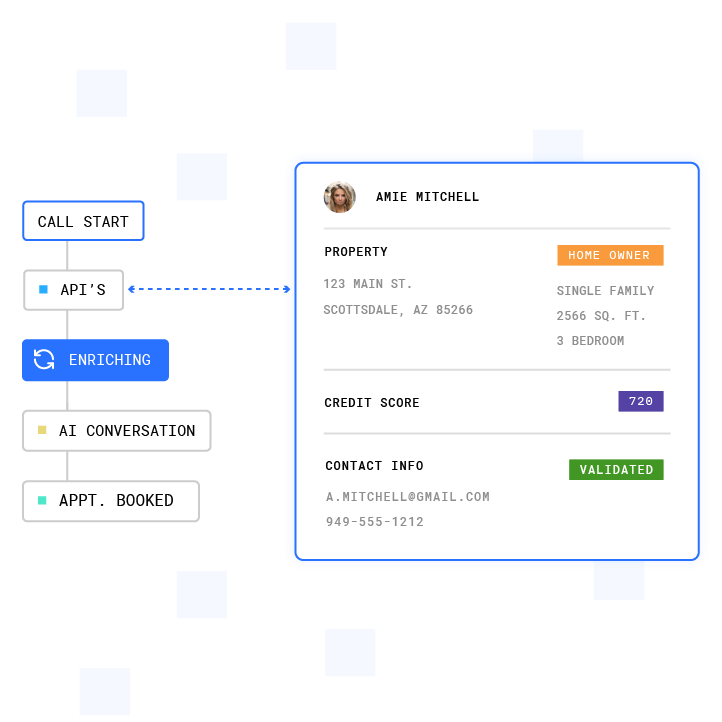
Every after-hours call should log the caller’s information, notes, and outcome into your CRM automatically. If the call is a booking, it should schedule directly on your calendar, eliminating manual entry, lost details, and the morning scramble. Without integration, teams spend the next morning cleaning up avoidable friction such as missed messages, incomplete notes, and slowed follow-up.
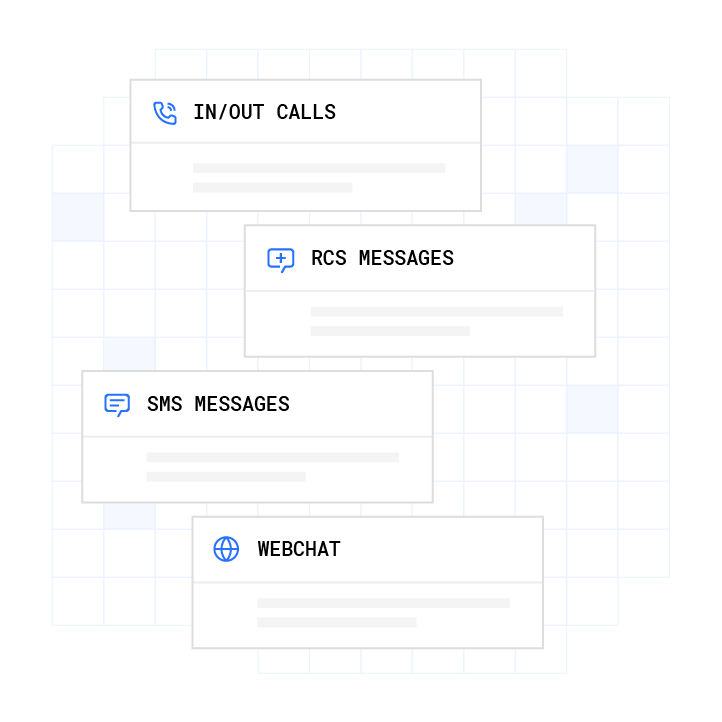
A morning review queue should confirm completed bookings, check calendar conflicts, review failed transfers, and assign messages with follow-up deadlines. Plura’s integrations cover 50+ tools including HubSpot, Salesforce, Calendly, and Google Calendar, so calls become CRM records and calendar events automatically.
Train And Test Your After-Hours Process
A documented training checklist keeps coverage consistent across teams and shifts:
- Document after-hours protocols and escalation rules in writing before going live.
- Train staff on handoff procedures from AI agent or live service to human team members.
- Define morning follow-up responsibilities and deadlines for each message category.
- Practice emergency scenarios monthly, including what happens when the on-call person does not answer.
- Call your own after-hours line weekly to verify the caller experience and message delivery.
When switching answering services, many providers recommend building call flows and escalation protocols before going live. Testing on the live number before canceling the current service helps avoid disruption.
Measure And Improve Performance
Clear metrics turn after-hours coverage into a manageable, repeatable operation. Key metrics to track for after-hours call handling include:
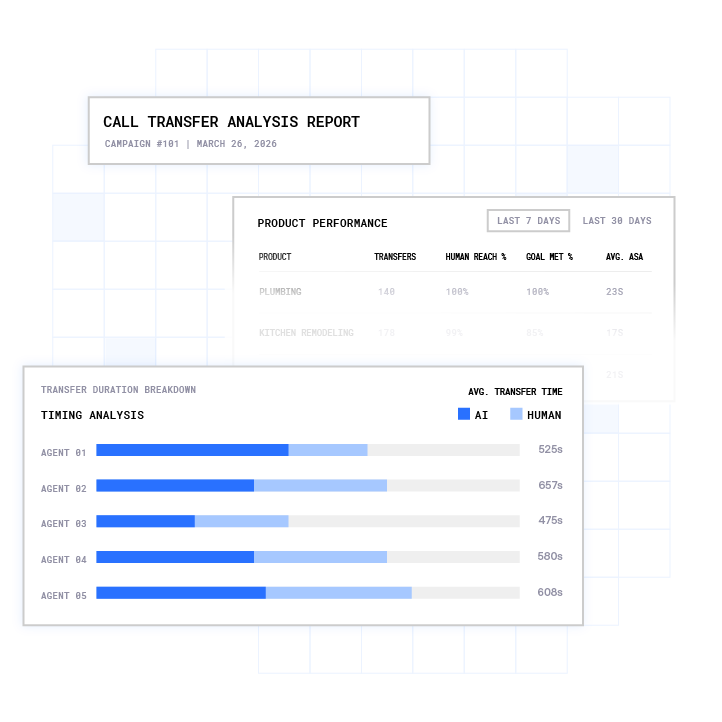
- Answer rate: A healthy benchmark is 80 to 95%, with below 75% indicating understaffing or routing problems.
- Speed to answer (service level): The 80/20 rule, the service-level benchmark that 80% of calls should be answered within 20 seconds, is the most widely cited service-level target in published standards. Many modern operations push for 90% answered within 15 seconds.
- Call abandonment rate: Abandonment above 8% typically signals a staffing or routing problem.
- First contact resolution (FCR): Industry averages run 70 to 75%, with 80%+ considered world-class.
- Booking conversion: The percentage of after-hours calls that result in a confirmed appointment or captured lead.
- Speed to answer for home services: Call Force Global’s 2026 planning anchor for home services sets average speed of answer at 12 seconds.
Track weekly totals for after-hours calls, percentage answered, percentage booked, percentage escalated, and percentage requiring morning follow-up. Review monthly for trends and adjust escalation rules or scripts based on what the data shows.
Run your numbers through Plura’s ROI calculator to check cost impact in real time. Compare plans and rates side by side.
Frequently Asked Questions
What Is The 80/20 Rule In A Call Center?
The 80/20 rule is the service-level benchmark that 80% of calls should be answered within 20 seconds. It has been a common reference point in call center standards since the early days of automatic call distribution technology. Many modern operations now push for more aggressive targets such as 90% answered within 15 seconds, particularly in high-intent verticals like home services and legal intake. The benchmark applies to both staffed and AI-powered answer points, and tracking it weekly helps leaders spot coverage gaps before they become revenue leaks.
What Are The 5 P’s Of Phone Etiquette?
The 5 P’s of phone etiquette are Promptness, Politeness, Professionalism, Personalization, and Problem-solving. As covered earlier, these principles form the foundation of professional phone handling. In practice, Promptness means answering within the first two to three rings and following up quickly. Politeness means greeting callers warmly and thanking them for reaching out regardless of the hour. Professionalism means using a consistent script, avoiding slang, and representing the business accurately. Personalization means addressing the caller by name and tailoring the response to their situation. Problem-solving means moving the conversation toward a clear next step such as booking, escalation, or a structured message for morning follow-up.
How Do You Handle After-Hours Calls From Clients?
Every after-hours call should route to a live answer point, whether that is an AI agent, a live answering service, or on-call staff. Voicemail often fails because most callers hang up without leaving a message and move on to a competitor. Once the call is answered, apply triage rules. Emergencies escalate immediately to on-call staff with full caller details. Time-sensitive requests such as new bookings or urgent service needs get scheduled or marked for priority morning follow-up. Routine inquiries get answered from a knowledge base or converted into a structured message.
Each call should log automatically to your CRM with the caller’s name, callback number, issue description, and outcome. The morning team should start with a complete picture, not a list of mystery missed calls.
AI vs. Live Answering Service: Which Is Right For You?
The right choice depends on call volume, budget, and the complexity of typical after-hours calls. AI agents offer flat-rate pricing without a per-minute meter or after-hours surcharge, answer on the first ring at any volume, and deliver a consistent script on every call. They work well for structured, repetitive calls such as booking, hours, quotes, and message capture, and they integrate natively with CRM and calendar tools.
Live answering services provide human judgment and empathy for emotionally complex or ambiguous calls, but cost per call rises with volume due to per-minute billing and shift premiums, and they cannot scale past a limited number of concurrent calls. On-call staff fit genuine emergencies in low-volume operations, yet they fatigue quickly, produce inconsistent call handling, and cannot manage simultaneous calls. Many small-to-mid-size businesses adopt a hybrid model where an AI agent handles the first line and human escalation covers complex or high-stakes calls.
What Compliance Considerations Apply To After-Hours Call Answering?
Compliance considerations for after-hours call handling vary by industry and call direction. For healthcare workflows, any service that handles patient information may relate to HIPAA’s Privacy and Security Rules under 45 CFR Parts 160 and 164, and organizations often consult qualified counsel and confirm that any third-party answering service has executed a Business Associate Agreement before handling patient calls.2
For outbound callbacks and follow-up calls, the Telephone Consumer Protection Act (TCPA) at 47 U.S.C. § 227 addresses automated and AI-generated voice calls to mobile phones, and the FCC’s February 2024 Declaratory Ruling treats AI-generated voices as artificial or prerecorded for consent purposes.2 Call recording consent rules also vary by state, with some states requiring all-party consent before recording. Financial services firms may face additional recordkeeping obligations under FINRA Rule 4511 and SEC Rule 17a-4.2
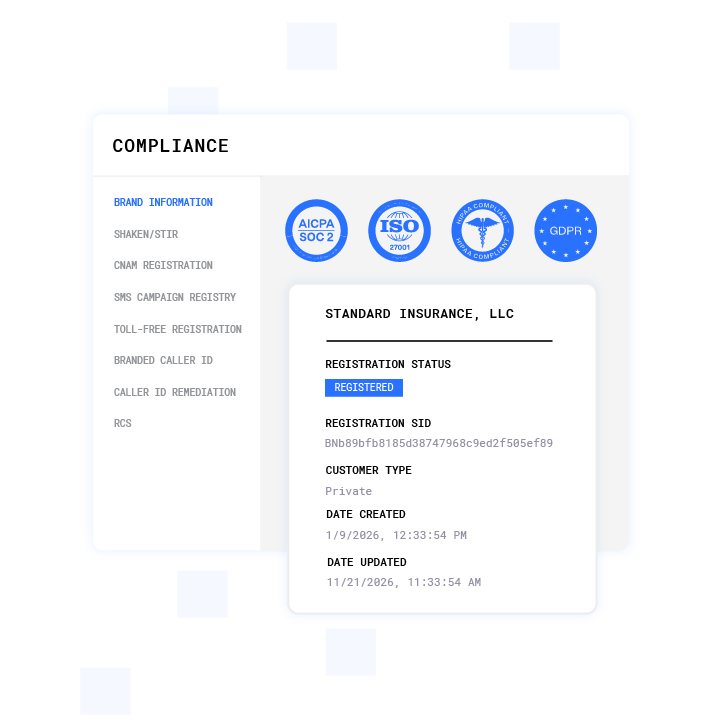
Businesses should review applicable regulations with qualified legal counsel and evaluate whether their chosen answering solution supports the compliance infrastructure their industry requires. Plura supports customer compliance with SOC 2, HIPAA, TCPA compliance, DNC compliance, SHAKEN/STIR caller ID verification, ISO certification, and GDPR, while customers remain responsible for their own regulatory obligations and downstream compliance posture.1,2
Conclusion: Turn After-Hours Calls Into A System
Missed after-hours calls act as invisible revenue leaks. A deliberate system closes that gap. Define coverage goals by pulling your actual call logs, design a triage flow that handles 80 to 90% of calls at the routine or booking tier, write scripts that capture key details and confirm them twice, choose a coverage model that matches your volume and budget, integrate every call with your CRM, train your team on escalation procedures, and measure answer rate, speed to answer, and booking conversion every week.
For many small-to-mid-size businesses, Plura AI delivers a strong combination of reliability, speed, scalability, and compliance support infrastructure, answering every call on the first ring, 24/7/365, and logging everything to your CRM automatically. AI contact centers provide 24/7/365 availability compared to business hours plus shifts for traditional operations, and organizations deploying Plura see response times drop from hours to seconds, improving connection rates.
Ready to stop losing after-hours revenue? See Plura in a live demo and watch the full system run on your business type. Compare plans and rates or run your numbers through the ROI calculator.
1 Plura AI maintains SOC 2, HIPAA, ISO, and GDPR posture as part of its platform infrastructure. References to compliance frameworks in this article describe Plura’s platform capabilities and do not constitute a guarantee that any customer using Plura will themselves be compliant with applicable laws or standards. Customers remain solely responsible for their own regulatory obligations, certifications, consent management, recordkeeping, and the claims they make to their own end users. Consult qualified legal counsel for guidance specific to your use case.
2 This article describes regulatory frameworks at a general level and does not constitute legal advice. Laws and regulations vary by jurisdiction, change over time, and apply differently depending on facts and circumstances. Readers should consult qualified legal counsel before making compliance decisions.
3 Performance figures, customer outcomes, and industry statistics referenced in this article are drawn from cited third-party sources or Plura customer case studies. Individual results vary based on implementation, use case, industry, audience, and execution. Past or aggregate performance is not a guarantee of future results.
4 References to third-party products, services, companies, or research are made for informational and comparative purposes only. Plura AI is not affiliated with, endorsed by, or sponsored by any third party named in this article unless explicitly stated. Trademarks and product names referenced remain the property of their respective owners.
This article is provided for informational purposes only and reflects Plura AI’s understanding at the time of publication. Product capabilities, integrations, and specifications are subject to change. For the most current information, visit plura.ai.
This article was produced with the assistance of AI tools and reviewed by Plura AI prior to publication.