

Written by: Matt Beucler, CEO, Plura AI
Key Takeaways
- After-hours emergency call handling uses AI voice agents to triage urgent calls, escalate intelligently, and dispatch on-call staff in under five seconds while supporting compliance.
- AI platforms outperform live answering services on speed, cost consistency, and cross-channel memory, while live services can still handle nuanced triage better on complex calls.
- Key decision factors include speed to answer, total cost of ownership, stateful context across channels, carrier ownership, compliance posture, and native CRM integration depth.
- Successful implementation requires clear emergency criteria, tested escalation sequences, bidirectional CRM and calendar sync, and verified uptime and compliance infrastructure before go-live.
- Plura AI delivers carrier-grade AI voice agents with SOC 2, HIPAA, TCPA, and SHAKEN/STIR support plus 50+ native integrations.1 Book a live demo to see how it handles your after-hours volume.
Before selecting a solution, map your calls against three decision branches.
- Is the call a defined emergency per your criteria? AI systems apply keyword detection and severity scoring instantly. Live services depend on agent judgment, which varies by shift and tenure.
- Does the primary on-call responder acknowledge within your SLA? AI escalation engines auto-page the backup tier after a configurable timeout, typically 60 to 90 seconds, with no human intermediary required. Live services re-dial manually, which adds latency.
- Route to backup or human escalation. AI platforms with stateful memory pass full call context to the next responder automatically. Live services rely on verbal handoffs or callback notes, which introduce transcription errors and repetition for the caller.
Why After-Hours Emergency Calls Now Require a New Framework
After-hours emergency call handling sits at the intersection of revenue protection, regulatory exposure, and staff wellbeing. Between 40% and 60% of business calls arrive outside standard 9-to-5 hours, depending on industry.3 For HVAC, plumbing, and property management, after-hours calls often represent a substantial share of total volume. The cost of missing those calls is concrete. The average small or mid-sized business loses $126,000 per year in revenue from missed calls, and 85% of callers who do not reach a business on the first attempt never call back.3
The 2026 market presents three options: live answering services, basic AI tools, and carrier-grade AI platforms.5 Each option solves part of the problem. Live services and basic AI tools do not cover the full set of requirements on their own.
Industry Landscape: Live Services, Basic AI, and Carrier-Grade AI
To understand why carrier-grade AI platforms have become the preferred path for many leaders, review the structural limits of the first two options. Live answering services such as AnswerConnect, Ruby, and PATLive have lowest published monthly plans that start at approximately $239–$3294 and retain advantages in complex emergency triage on nuanced calls. Their weaknesses are structural: per-minute billing with 25-50% surcharges for nights, weekends, and holidays, inconsistent agent quality, and limited native CRM integration on legacy platforms.
Basic AI tools offer low monthly costs and answer in zero seconds with consistent performance. Their weaknesses are architectural. They do not own the carrier stack, cannot issue branded caller ID at the carrier level, lack stateful memory across channels, and carry compliance postures that live outside the platform.
Despite these limitations in basic tools, AI voice technology as a category matured significantly by 2026. Leading AI receptionists, especially carrier-grade platforms that address these gaps, reached operational parity with mid-tier human answering services on many routine after-hours calls. Voice AI now represents a meaningful share of inbound contact-center volume.
Book a live demo with Plura to see how carrier-grade AI handles your after-hours call volume.
Comparing Strategic Trade-offs Across Solutions
| Criteria | Live Answering Services | Basic AI Tools | Plura AI Voice Agents |
|---|---|---|---|
| Speed to answer | Around 30 seconds average | Under 1 second | Under 5 seconds |
| Monthly cost | $200-$1,200 plus after-hours surcharges | $50-$200 flat | See pricing details |
| Stateful cross-channel memory | No, verbal handoffs only | Single-channel only | Yes, shared across voice, SMS, RCS, and webchat |
| Carrier ownership | Third-party telecom | Third-party CPaaS (e.g., Twilio)4 | FCC-licensed audio bridging carrier |
| Compliance features | Varies by vendor, BAA available from some | Bolted on, not carrier-level | SOC 2, HIPAA, TCPA support, DNC support, SHAKEN/STIR.1 Consult counsel for your obligations. |
| CRM integration | Limited on legacy platforms | API-dependent | 50+ native integrations including HubSpot, Salesforce, Zoho |
| Turnover risk | 30-45% annually | 0% | 0% |
Reducing On-Call Burnout With Automated Escalation
On-call rotation burnout stems from structure, not individual resilience. Sustainable 24/7 on-call coverage is achievable with weekly rotations for teams of 4-6 engineers, with split day and night suitable for 6-10 and follow-the-sun for 12+. Most home-services, property management, and healthcare practices cannot staff at that level.
The operational fix removes humans from the first-touch triage layer entirely. Automated emergency dispatch collapses the average manual on-call dispatch cycle from 12-22 minutes to under 2 minutes. The system checks the on-call schedule the moment a call lands, reaches the assigned technician through a defined escalation sequence, and falls back to a backup if needed. On-call staff receive a page only when a call clears the emergency threshold, not for every inquiry.
A practical escalation sequence for home services works as follows. The AI qualifies the call, rings the primary on-call technician for 90 seconds, escalates to the backup for 90 seconds, then SMS-alerts both plus the owner. The system then captures full details and logs them to the field-service management system. The daytime team inherits complete context without re-interviewing the customer.
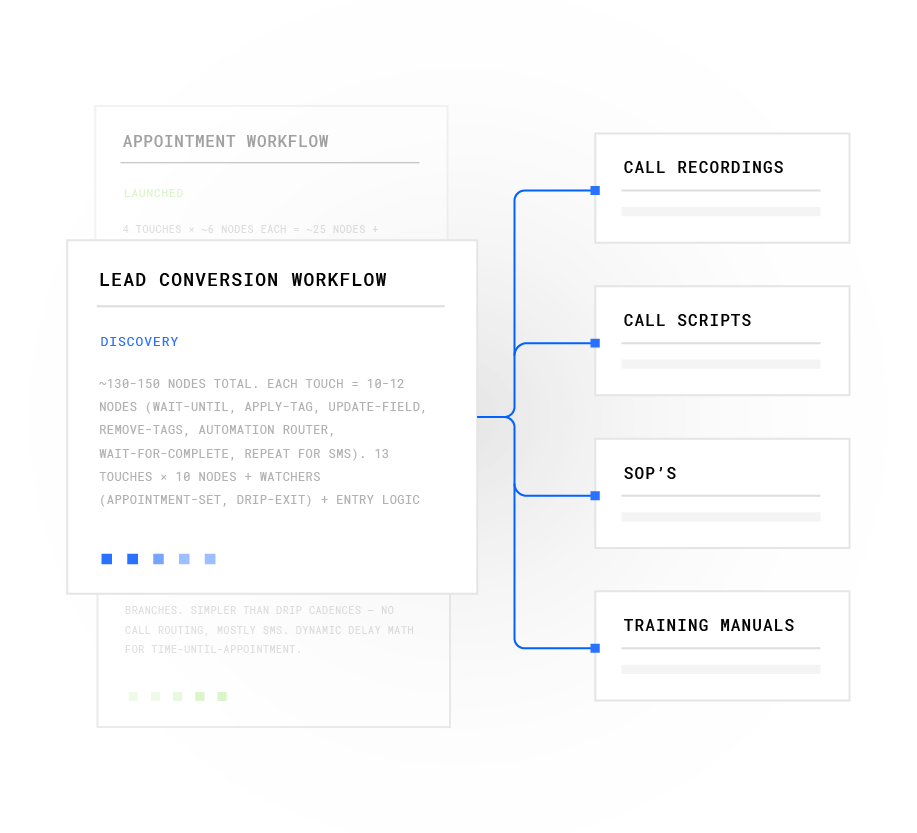
Plura’s managed workflows support this pattern with a no-code visual canvas, configurable escalation timeouts, and automatic CRM writes after every interaction.
After-Hours Emergency Call Handling Cost
Total cost of ownership matters more than base monthly rates. Total cost evaluation must include setup fees, integration costs, after-hours premiums, holiday surcharges, and overage charges rather than base monthly rates alone, calculated over a 12-24 month period.
For a typical residential trades business receiving 200 after-hours calls per month at an average 4-minute duration, a live service at $1.50 per minute generates an estimated $14,400 in annual call costs alone, before surcharges. AI after-hours call handling typically costs 60-80% less than live answering services3 because AI maintains the same rate at any hour while live services apply after-hours premiums.
At the contact-center scale, Plura’s illustrative 15-agent scenario (per the ROI calculator) shows human agent costs of $60,000 per month versus $14,400 per month for Plura agents at equivalent volume.3 That scenario models a 30-day saving of $45,600 and a 12-month saving of $547,200. TCO of $300,000-$700,000 replaces traditional $4M-$7M contact-center economics (per plura.ai/guides/ai-communications-strategy).
Run your numbers through Plura’s ROI calculator to check your after-hours cost savings in real time.
HIPAA-Aligned After-Hours Call Handling for Healthcare
Healthcare operators work within a specific regulatory landscape for after-hours call handling. 42 CFR § 482.13 establishes the Condition of participation: Patient’s rights for hospitals, requiring notice of rights and a grievance process, but contains no provisions about 24/7 contact methods or voicemail systems.2 Organizations should consult qualified counsel to determine how this applies to their operations.
Under HIPAA’s Privacy and Security Rules, any medical answering service handling protected health information (PHI) for home healthcare agencies is classified as a Business Associate and must execute a signed Business Associate Agreement (BAA) before answering a single call or receiving any PHI.2 HIPAA considerations for medical answering services include technical safeguards such as access controls, unique user IDs, role-based access controls, data encryption in transit and at rest, integrity controls, and audit trails.
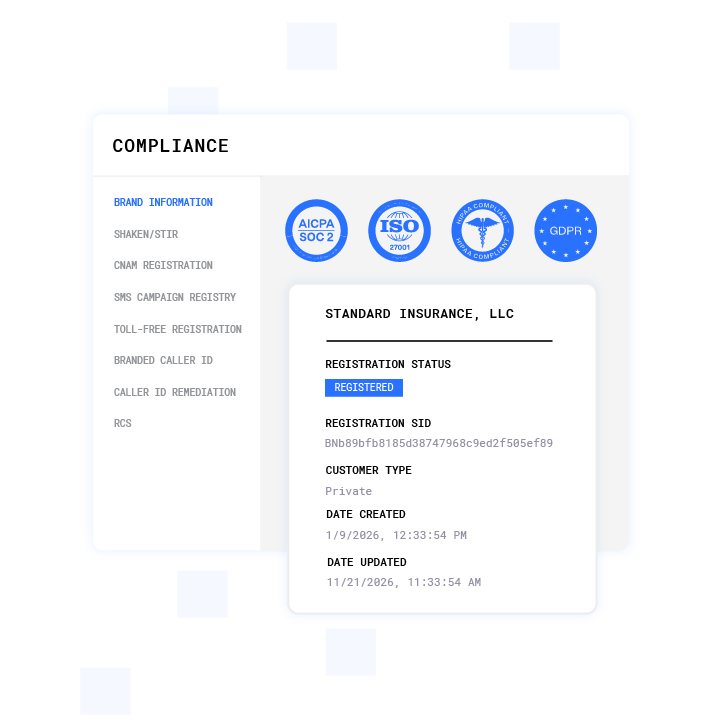
Plura supports HIPAA-aligned infrastructure features including end-to-end encryption, access controls, and audit logging for PHI across voice, SMS, RCS, and webchat. Plura provides the infrastructure, and customers remain responsible for their own compliance posture. Organizations should consult qualified counsel regarding their specific HIPAA obligations and BAA requirements before deployment.
For behavioral health specifically, crisis escalation architecture should be tested during trials using simulated calls, with detection based on sentiment analysis plus phrase detection rather than keywords alone, and configurable ordered escalation targets including on-call clinician, backup, and 988.
Current Best Practices in AI-Powered Customer Communications
The 2026 consensus model uses a three-layer stack. Autonomous AI handles 40-60% of volume, AI agent-assist supports human calls, and human agents handle complex cases, per 2026 contact-center adoption data. For after-hours emergency call handling specifically, a common pattern uses AI on first touch with keyword-triggered escalation to live agents for calls involving phrases such as “water damage,” “chest pain,” or “gas leak.”
Cross-channel context synchronization is the technical requirement most often underestimated. Enterprises should treat channel context synchronization as a real-time data contract so that every automation engine for voice, SMS, and email reads from and writes to the same conversation object. Consent status, intent signals, and prior interaction history should all be stored in the shared customer record.
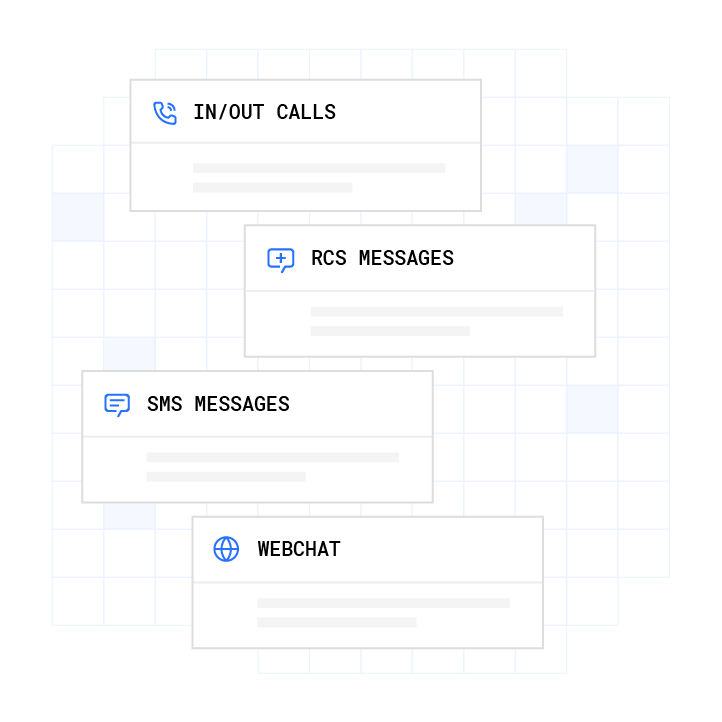
Plura’s Stateful Conversation Database, the cross-channel memory referenced in the comparison table, keys every interaction to a customer token across voice, SMS, RCS, and AI webchat. A customer who texted at 9 a.m. is recognized when the emergency call arrives at midnight. The on-call responder receives full context, not a cold handoff, which supports accurate escalation decisions and faster resolution.
Implementation Readiness: Checklist for Operations Leaders
Before selecting a vendor, operations leaders should complete a structured readiness assessment. Start by auditing 90 days of call logs to establish baseline missed-call volume, time-of-day patterns, and voicemail-to-hang-up ratios. This data informs your emergency criteria and helps you size the solution correctly.
Next, define emergency criteria in writing using objective thresholds such as pipe burst, gas leak, fall, or structural failure rather than caller self-selection. These criteria drive the AI’s triage logic. With criteria defined, map escalation tiers, including primary on-call, backup, and incident commander or management, with SLA timeouts for each tier that reflect your actual response capacity.
Then confirm the vendor can sign a BAA if PHI will be handled and verify encryption standards for data in transit and at rest. Verify CRM and calendar integration depth with bidirectional real-time sync, not batch exports, so appointments and records stay accurate. Test the escalation cascade using simulated emergency calls before go-live to validate behavior.
Finally, confirm U.S. infrastructure for data storage, voice origination, and call recording if your regulatory posture requires it. Calculate 12-24 month TCO including setup, integration, surcharges, and overage, not base monthly rate alone. When reviewing SLAs, note that Plura provides a 99.9% uptime SLA with automatic failover and no single point of failure, which can serve as a benchmark.
Common Pitfalls and How to Avoid Them
The most common failure mode is deploying an AI tool without defining emergency criteria in advance. Without objective thresholds, the AI either over-escalates and wakes on-call staff for routine inquiries or under-escalates and misses genuine emergencies. AI auto-classification should use sensor data, keywords, or asset criticality ratings rather than requestor self-selection to prevent classification inflation.
The second failure mode is broken handoffs between AI and human agents. Voice agents should be configured to read the existing shared conversation record and continue from that context instead of restarting intake when a customer moves from chat to phone. Vendors that cannot demonstrate a clean handoff in a live test should not advance past evaluation.
The third failure mode is selecting a vendor based on base monthly rate without accounting for after-hours surcharges, holiday premiums, and integration costs. Missed after-hours calls cost the average trades business between $40,000 and $120,000 a year in lost revenue, which often exceeds the price gap between a minimal and a capable solution.
The fourth failure mode is deploying without testing. Procedures should be tested with tabletop drills simulating a SEV1 incident before production use, and reviewed quarterly or immediately after major incidents that reveal gaps.
Frequently Asked Questions
What is the difference between after-hours emergency call handling and a standard answering service?
A standard answering service takes messages and routes calls during off-hours. After-hours emergency call handling adds a triage layer that classifies incoming calls against predefined emergency criteria, escalates to on-call staff through a structured sequence with SLA timeouts, and logs the full interaction to your CRM or field-service management system. The distinction matters operationally because a message-taking service does not dispatch anyone, while an emergency call handling system does. For regulated industries such as healthcare and property management, the triage and escalation logic should also align with applicable regulatory frameworks. Leaders should consult qualified counsel regarding their specific obligations.
How does AI after-hours call handling compare to live answering services on emergency triage accuracy?
As of 2026, human-staffed services maintain an edge on nuanced emergency triage for the most complex calls.5 AI receptionists can outperform human services on data accuracy, wait time, and cost per call in many scenarios. The practical 2026 model for high-volume operations is a hybrid. AI handles first-touch triage and routes flagged emergencies to human agents, capturing the cost advantage on routine volume while retaining human capacity for edge cases. Plura’s managed workflows support this hybrid architecture with configurable escalation triggers and warm transfer to U.S. agents.
What compliance features should an after-hours call handling platform support for healthcare operators?
Healthcare operators should evaluate vendors on several infrastructure features. These include HIPAA-aligned encryption for PHI in transit and at rest, the ability to execute a Business Associate Agreement, role-based access controls, audit logging with timestamped records, and the ability to disclose at the start of each interaction that the caller is communicating with an automated system. Vendors should also support configurable triage thresholds that distinguish patient emergencies from routine administrative calls, and crisis escalation paths that transfer immediately without buffering. Plura supports HIPAA-aligned infrastructure features and SOC 2 certification across its platform. Customers are responsible for their own compliance obligations and should consult qualified counsel before deployment.
How do I calculate the ROI of switching from a live answering service to an AI platform for after-hours calls?
Start with four inputs: current monthly cost of your live service including all surcharges and overages, estimated annual revenue lost to missed after-hours calls, current after-hours capture rate, and the average job or contract value per captured call. Multiply missed calls per month by average job value and your close rate to get monthly lost revenue. Compare that against the cost differential between your current service and an AI platform. Plura’s ROI calculator runs this model with your actual inputs and shows 30-day, 12-month, and 60-month savings. The 15-agent scenario discussed earlier illustrates the potential scale of savings.
What integration depth should I require from an after-hours call handling vendor?
Require bidirectional real-time integration, not batch exports. The system should read live calendars to book appointments during the call and write structured records back to your CRM automatically after every interaction, including caller ID, intent, transcript, and escalation flags. For property management, verify direct integration with platforms such as Yardi, AppFolio, or Buildium. For home services, verify integration with field-service management tools. For healthcare, verify EHR integration depth. Plura integrates with 50+ tools across CRM, calendar, and field-service categories, including HubSpot, Salesforce, Zoho, Google Calendar, Calendly, HouseCall Pro, and ServiceBridge. The full directory appears at plura.ai/integrations.
Conclusion and Next Steps
After-hours emergency call handling in 2026 is a three-variable problem: speed, compliance infrastructure, and cross-channel context. Live answering services solve the compliance familiarity problem but carry structural cost and consistency limitations. Basic AI tools solve the speed and cost problem but lack carrier-grade compliance features and stateful memory. Carrier-grade AI platforms address all three variables on a single stack.
Plura’s AI voice agents answer in under five seconds on 100% U.S. infrastructure, escalate through configurable triage tiers, and write full interaction context back to your CRM and calendar automatically. The platform supports SOC 2, HIPAA, TCPA support, DNC support, and SHAKEN/STIR caller ID verification features.1 Customers are responsible for their own compliance obligations and should consult qualified counsel for their specific requirements.
The next step is running your numbers and comparing plans against your current cost structure. The 99.9% uptime SLA referenced earlier provides one benchmark as you evaluate options.
Compare plans and rates side by side at plura.ai/pricing.
1 Plura AI maintains SOC 2, HIPAA, ISO, and GDPR posture as part of its platform infrastructure. References to compliance frameworks in this article describe Plura’s platform capabilities and do not constitute a guarantee that any customer using Plura will themselves be compliant with applicable laws or standards. Customers remain solely responsible for their own regulatory obligations, certifications, consent management, recordkeeping, and the claims they make to their own end users. Consult qualified legal counsel for guidance specific to your use case.
2 This article describes regulatory frameworks at a general level and does not constitute legal advice. Laws and regulations vary by jurisdiction, change over time, and apply differently depending on facts and circumstances. Readers should consult qualified legal counsel before making compliance decisions.
3 Performance figures, customer outcomes, and industry statistics referenced in this article are drawn from cited third-party sources or Plura customer case studies. Individual results vary based on implementation, use case, industry, audience, and execution. Past or aggregate performance is not a guarantee of future results.
4 References to third-party products, services, companies, or research are made for informational and comparative purposes only. Plura AI is not affiliated with, endorsed by, or sponsored by any third party named in this article unless explicitly stated. Trademarks and product names referenced remain the property of their respective owners.
5 This article contains forward-looking statements regarding industry trends, technology adoption, and future capabilities. These statements reflect current expectations and are subject to change. Plura AI undertakes no obligation to update forward-looking statements except as required.
This article is provided for informational purposes only and reflects Plura AI’s understanding at the time of publication. Product capabilities, integrations, and specifications are subject to change. For the most current information, visit plura.ai.
This article was produced with the assistance of AI tools and reviewed by Plura AI prior to publication.