

Written by: Matt Beucler, CEO, Plura AI
Updated May 2026
Key Takeaways for Contact Center and Revenue Leaders
-
AI call center agent coaching tools deliver short-term gains on handle time and QA scores but do not fix structural issues like turnover, training cost, and regulatory exposure in high-volume operations.
-
In 2026, operators handling 500 or more daily conversations are shifting from coaching layers to full AI agent replacement to remove ongoing labor costs and reduce compliance risk.
-
Stateful AI agents like those from Plura AI provide end-to-end conversation handling across voice, SMS, RCS, and webchat with 100% U.S. infrastructure, eliminating turnover and delivering consistent script adherence without coaching.
-
Plura reduces the total cost of ownership to $300K to $700K compared with traditional contact center economics of $4M to $7M, while supporting real-time compliance for TCPA, DNC, and state onshoring laws.
-
See how Plura’s full AI replacement approach delivers these cost and compliance outcomes in your operation.
The Problem: Coaching Tools Cannot Fix Contact Center Economics
Contact center leaders in 2026 face three converging pressures that no coaching dashboard resolves.
First, the regulatory environment has expanded. The FCC’s (Federal Communications Commission) Notice of Proposed Rulemaking, CG Docket No. 26-52, proposes capping offshore customer-service calls at 30% and limiting offshore handling of sensitive consumer data such as passwords, social security numbers, and banking information.2 Companion federal legislation, the Keep Call Centers in America Act (S.2495) and the Foreign Robocall Elimination Act (S.2666), extends that perimeter.2 State laws in New York, New Jersey, Connecticut, Missouri, and Florida already restrict offshore handling of medical, financial, and consumer data.2 Any AI coaching tool layered on an offshore or foreign-infrastructure operation inherits that exposure.
Second, the human-agent cost structure has not improved. Industry average annual agent turnover in contact centers runs 35-45%, with replacement costs of $10,000 to $20,000 per agent when you include recruiting, training, and ramp-up.3 Agent training often takes 6 to 8 weeks before handling live calls.
Third, AI call center agent coaching tools address symptoms rather than structure. Real-time coaching can reduce handle time on individual calls. Post-call coaching can improve QA scores over weeks. These tools do not remove the underlying cost of the human seat, the turnover cycle, or the compliance exposure that comes with it. The closed-loop ROI math on coaching tools is real but bounded, because savings accrue inside the existing labor model, not outside it.
This structural limitation is why operators running high-volume AI call center agent coaching programs in 2026 are asking a different question. They now evaluate whether the ceiling on coaching ROI justifies ongoing investment when full AI replacement is operationally viable.
Run your numbers through Plura’s calculator to check your ROI in real time.
Coaching Layers vs Stateful AI Agents: What Actually Changes
AI coaching tools and stateful AI agents solve different problems at different layers of the contact center stack. This structural difference should anchor every 2026 vendor evaluation.
Coaching tools sit on top of human agents. They listen to calls, surface real-time prompts, score interactions after the call, and feed data into manager dashboards. The human agent still handles the conversation. The coaching layer improves human performance over time, but does not remove the human from the cost structure. Every seat still carries payroll, taxes, benefits, commissions, and turnover risk.
Stateful AI agents handle the conversation end-to-end. Autonomous AI agents use AI-driven reasoning to plan actions, choose among tools, and adjust behavior as conditions change. They manage complete customer interactions instead of providing suggestions to human agents. They do not require coaching because they do not drift. Script adherence stays at 100% on every call, at every hour, regardless of tenure or shift fatigue.
|
Dimension |
AI Coaching Tools |
Stateful AI Agents (Plura) |
Source |
|---|---|---|---|
|
Infrastructure ownership |
Layered on third-party CPaaS (Communications Platform as a Service) or human-agent platform |
FCC-licensed audio bridging carrier, 100% U.S. infrastructure |
|
|
Cross-channel memory |
Session-level, no shared context across voice, SMS, and webchat |
Stateful Conversation Database shared across voice, SMS, RCS, and webchat |
|
|
Turnover and retraining cost |
High annual agent turnover and significant replacement cost per agent |
0% turnover, no retraining cycle |
Retell AI; plura.ai |
|
TCO at scale |
$4M to $7M traditional contact-center economics |
$300K to $700K with Plura |
The compliance enforcement gap is equally significant. Coaching tools flag violations after the fact. Plura’s compliance engine checks every outbound contact against federal and state DNC (Do Not Call) registries in real time before dial, enforces quiet-hours rules through time-zone detection, and maintains timestamped, immutable TCPA (Telephone Consumer Protection Act) consent records. This capability operates as a first-class platform layer, not a post-call report.
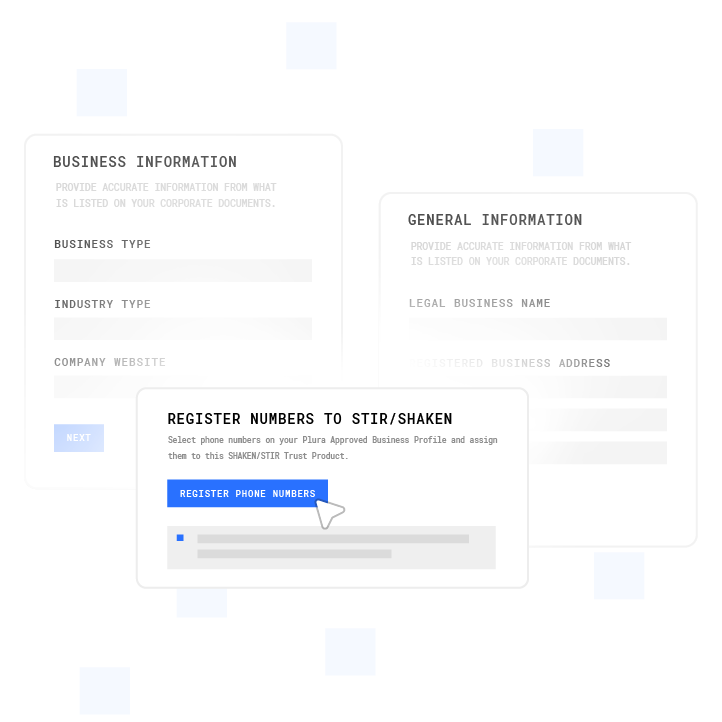
On FCC NPRM exposure specifically, coaching tools running on foreign infrastructure or wrapping offshore operations carry the same regulatory risk profile as the operations they support. Plura runs on 100% U.S. infrastructure by architecture. Voice origination, model hosting, data storage, and call recording all sit on domestic infrastructure.
The Solution: Full AI Agent Replacement with Plura AI
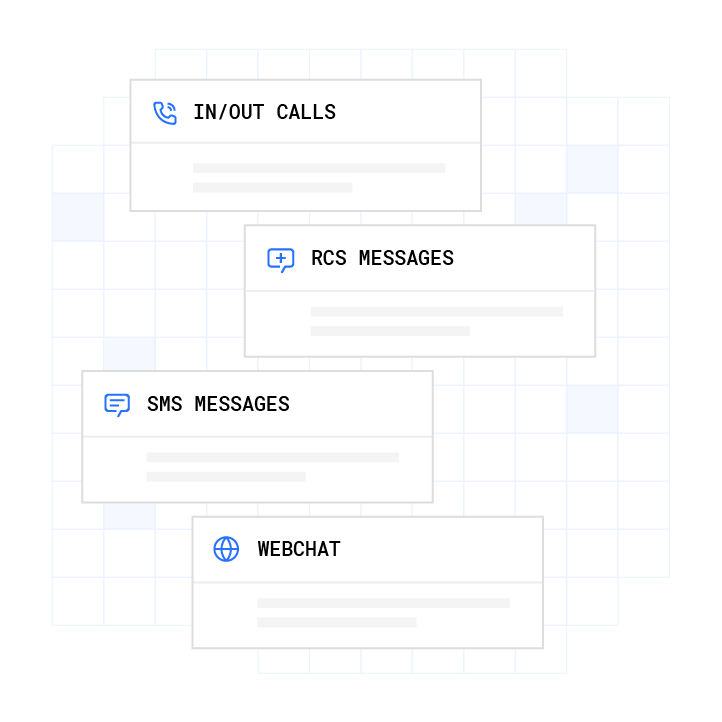
Plura AI is an FCC-licensed platform of AI agents that run voice, SMS, RCS, and webchat conversations on 100% U.S. infrastructure. The platform was built by people with 28 collective years inside call centers, telecom infrastructure, and software development. Plura owns the full stack and runs on its own FCC-licensed audio bridging carrier instead of wrapping a third-party CPaaS.
The core operational difference is the Stateful Conversation Database. Every interaction across all four channels is keyed to a customer token and stored in one place. An AI agent that texted a lead at 9 a.m. can pick up the call at noon already knowing what was said, what was offered, and what objections were raised. Coaching tools cannot produce that continuity because they do not own the conversation layer across channels.
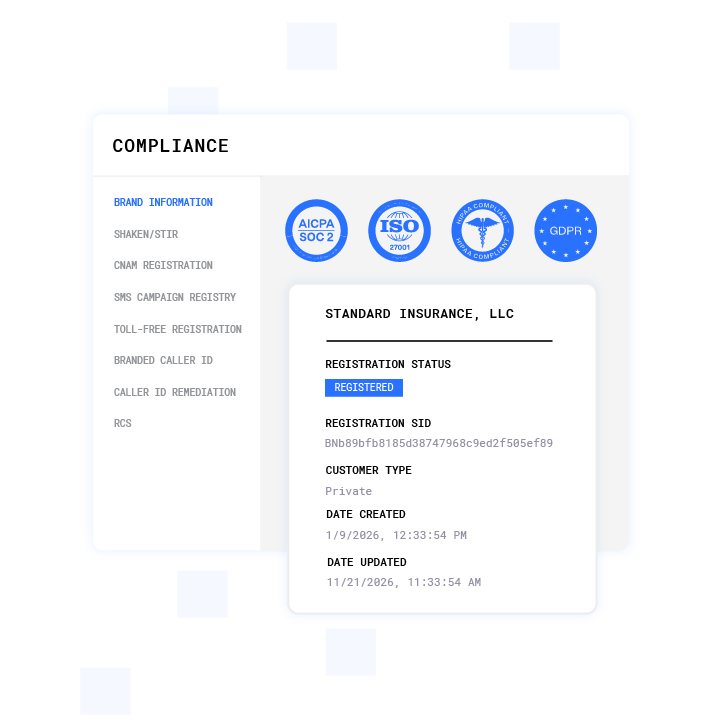
Plura’s compliance infrastructure supports TCPA compliance, DNC compliance, HIPAA, SOC 2, ISO certification, and SHAKEN/STIR (Secure Telephone Identity Revisited / Signature-based Handling of Asserted information using toKENs) caller ID verification. Real-time DNC scrubbing and TCPA-litigator list filtering run on every outbound contact. Customers are responsible for their own compliance obligations, and Plura provides the infrastructure that supports those obligations.
The economics are direct. A 15-agent operation at $20 per hour with standard overhead costs about $60,000 per month. Replacing that team with Plura drops the monthly cost to $14,400, which produces $45,600 in 30-day savings, $547,200 over 12 months, and $2,736,000 over 60 months. At higher volume, TCO often runs $300K to $700K against the $4M to $7M traditional contact-center benchmark.
In healthcare, Plura achieves up to 40% improvement in no-shows through automated appointment confirmation and patient intake flows that run on the same stateful infrastructure.3 Branded caller ID and SHAKEN/STIR authentication run on every outbound call, which helps convert screened calls into live conversations instead of voicemails.
Plura contacts leads in under 5 seconds. Leads contacted within 1 minute are 391% more likely to convert than those contacted after 24 hours. The platform delivers 3x average ROI in 90 days, 47% average pipeline growth, and 90% faster lead-response time.3 Every annual contract includes a 90-day opt-out window.
Run your numbers through Plura’s calculator to check your ROI in real time.
Vendor Evaluation Checklist for 2026 AI Contact Centers
-
Where does your infrastructure physically run? Ask whether voice origination, model hosting, data storage, and call recording sit on U.S. infrastructure or route through foreign data centers. The FCC NPRM (CG Docket No. 26-52) proposes limits on offshore handling of sensitive consumer data. Vendors that cannot answer this question with specificity carry exposure that you inherit.
-
Do you own your telecom carrier, or do you wrap a third-party CPaaS? Branded caller ID, real-time DNC scrubbing, and SHAKEN/STIR authentication operate at the carrier level. Vendors that rent from Twilio or another CPaaS cannot enforce these controls at origination.4
-
How does conversation context persist across channels? If a customer texts and then calls, the AI should know what was said in the text thread. Ask for a live demonstration of cross-channel memory, not a slide.
-
What happens to your compliance posture under state onshoring laws? New York’s Call Center Jobs Act carries penalties up to $10,000 per day. New Jersey, Connecticut, Missouri, and Florida have companion restrictions. Ask vendors to describe their exposure under each statute and consult qualified counsel on your own obligations.
-
How is TCPA consent managed and stored? Ask whether consent records are timestamped, immutable, and exportable for audit. Clarify whether TCPA-litigator list filtering runs before dial or after the fact.
-
What certifications does the platform hold, and can you produce the audit reports? SOC 2, HIPAA, and ISO certification are verifiable. Request documentation instead of relying on marketing language.
-
What is the opt-out window if the deployment does not perform? Vendors confident in their ROI math typically offer one. If they do not, ask why.
Frequently Asked Questions
What is AI call center agent coaching, and how does it differ from full AI agent replacement?
AI call center agent coaching refers to software tools that monitor live or recorded calls, surface real-time prompts to human agents, score interactions, and feed performance data to managers. The human agent still handles the conversation. Full AI agent replacement removes the human agent from routine interactions entirely and deploys AI agents that manage the conversation from greeting to resolution or handoff. Coaching tools improve human performance within the existing labor model, while replacement removes the labor cost, turnover cycle, and coaching overhead.
Can AI coaching tools address FCC NPRM compliance exposure?
AI coaching tools do not change the infrastructure or geographic location of the operation they sit on top of. If the underlying contact center uses offshore agents or foreign infrastructure, the coaching layer does not remove the regulatory exposure described in the FCC NPRM (CG Docket No. 26-52) or state onshoring laws. Operators should consult qualified legal counsel to assess their specific obligations under applicable federal and state frameworks.
What is the ROI difference between coaching tools and full AI replacement?
Coaching tools generate ROI within the existing labor model by improving metrics like average handle time and QA scores. That ROI is real but limited by the cost of the human seats the tools support. Full AI replacement removes those seats. In a 15-agent scenario, replacing human agents with Plura drops monthly operating cost from $60,000 to $14,400, which produces $547,200 in 12-month savings. At higher volume, TCO often runs $300K to $700K against a traditional contact-center benchmark of $4M to $7M. The ceiling on coaching ROI is the cost of the labor model it sits inside, while replacement removes that ceiling.
How does Plura handle compliance across TCPA, DNC, HIPAA, and state rules?
Plura’s compliance infrastructure operates as a core layer of the platform. Every outbound contact is checked against federal and state DNC registries in real time before dial. TCPA consent records are timestamped and immutable. Quiet-hours rules enforce automatically through time-zone detection. The platform supports HIPAA, SOC 2, ISO certification, and SHAKEN/STIR caller ID verification.1 Plura provides the infrastructure that supports compliance, and customers remain responsible for their own regulatory obligations and certifications.
Is full AI agent replacement viable for regulated industries like healthcare and financial services?
Plura operates in healthcare, insurance, financial services, legal, and other regulated verticals. Healthcare deployments run on HIPAA-aligned encryption with sensitive-data redaction and audit-ready logging. In healthcare, Plura achieves up to 40% improvement in no-shows through automated appointment confirmation and patient intake flows. Financial services deployments handle account alerts, loan follow-ups, and advisor scheduling on 100% U.S. infrastructure, which matters for operators evaluating exposure under the FCC NPRM’s proposed restrictions on offshore handling of sensitive consumer data. Operators in regulated industries should assess their specific compliance obligations with qualified counsel before deployment.
Conclusion: When Coaching Stops and Replacement Starts
AI call center agent coaching delivers measurable short-term gains. Handle time, QA scores, and manager efficiency can all improve. Coaching tools still operate inside the existing labor model. They do not remove the turnover and replacement costs discussed earlier, the 6 to 8 week training ramp, or the regulatory exposure that comes with offshore or foreign-infrastructure operations in 2026.
High-volume operators are making a different calculation. The structural shift from coaching to replacement is driven by three converging factors. The regulatory environment increasingly penalizes offshore and foreign-infrastructure operations. The labor cost model cannot reach the conversion economics modern operators need. AI agent infrastructure is now mature enough to handle complete customer interactions across voice, SMS, RCS, and webchat with stateful memory, carrier-level compliance support, and 100% U.S. infrastructure.
Plura removes the need for ongoing human coaching by replacing the human agent layer entirely. The math sits in plain view. The 90-day opt-out window appears in every contract.
Run your numbers through Plura’s calculator to check your ROI in real time.
1 Plura AI maintains SOC 2, HIPAA, ISO, and GDPR posture as part of its platform infrastructure. References to compliance frameworks in this article describe Plura’s platform capabilities and do not constitute a guarantee that any customer using Plura will themselves be compliant with applicable laws or standards. Customers remain solely responsible for their own regulatory obligations, certifications, consent management, recordkeeping, and the claims they make to their own end users. Consult qualified legal counsel for guidance specific to your use case.
2 This article describes regulatory frameworks at a general level and does not constitute legal advice. Laws and regulations vary by jurisdiction, change over time, and apply differently depending on facts and circumstances. Readers should consult qualified legal counsel before making compliance decisions.
3 Performance figures, customer outcomes, and industry statistics referenced in this article are drawn from cited third-party sources or Plura customer case studies. Individual results vary based on implementation, use case, industry, audience, and execution. Past or aggregate performance is not a guarantee of future results.
4 References to third-party products, services, companies, or research are made for informational and comparative purposes only. Plura AI is not affiliated with, endorsed by, or sponsored by any third party named in this article unless explicitly stated. Trademarks and product names referenced remain the property of their respective owners.
This article is provided for informational purposes only and reflects Plura AI’s understanding at the time of publication. Product capabilities, integrations, and specifications are subject to change. For the most current information, visit plura.ai.
This article was produced with the assistance of AI tools and reviewed by Plura AI prior to publication.