
Written by: Matt Beucler, CEO, Plura AI
Key Takeaways
- AI customer service texting (SMS/RCS) is the channel that reaches customers on their phones, while chatbots provide the conversational intelligence that powers any channel.
- 73.3% of online adults prefer messaging as their primary way to communicate with businesses, yet most support stacks still route customers to website widgets first, which creates costly context loss during channel transitions.3
- Plura AI combines SMS/RCS reach with stateful memory across voice, SMS, RCS, and webchat through a single Stateful Conversation Database that eliminates repetition and improves resolution rates.
- AI SMS achieves 98% open rates with 90% read within 3 minutes, while website chatbots typically engage only 5-15% of site visitors, so SMS is essential for proactive, time-sensitive outreach.3
- Operators can book a live demo with Plura AI to see how stateful cross-channel memory works in a live environment and remove context loss across all customer touchpoints.
The Problem: Messaging-First Customers, Web-First Tools
High-volume operators face a structural gap between where customers want to be reached and where most support tools actually operate. A Kantar survey commissioned by Meta of 11,056 online adults across 22 global markets found that 73.3% of online adults prefer messaging as their primary way to communicate with a business.4 Most enterprise support stacks still route customers to a website widget first.
The cost of that mismatch is measurable. Gartner reports that 62% of transitions between customer service channels are perceived as difficult by customers4, and the primary cause is context loss at the handoff point. A customer who texted a support question at 9 a.m. and then called at noon should not have to re-explain themselves. Many platforms still force that repetition because their SMS agent and their voice agent do not share memory.
Channel fragmentation also inflates cost. When a web chatbot cannot resolve an issue, the customer escalates to phone. When the phone agent lacks the chat transcript, handle time increases. Context retention is the strongest driver of perceived omnichannel experience quality because customers judge experiences by the effort required to complete a task, not by the speed of any single channel.
The Solution: Separate Channel From Brain, Then Connect Both
Solving the context-retention problem requires a clear distinction between delivery channels and intelligence layers. The distinction matters operationally. Texting is a delivery layer that determines where the message lands and whether the customer sees it. A chatbot is an intelligence layer that determines what the message says, how it responds, and what it remembers. Treating them as the same thing leads operators to pick the wrong tool for the wrong problem.
SMS achieves the open rates cited earlier, so messages land in front of customers within minutes, not hours. Web chatbots, by contrast, engage only a fraction of site visitors. A well-configured proactive web chatbot on a service-business site can realistically achieve 7–20% visitor-based lead conversion, because only a subset of visitors ever open the chat widget at all.
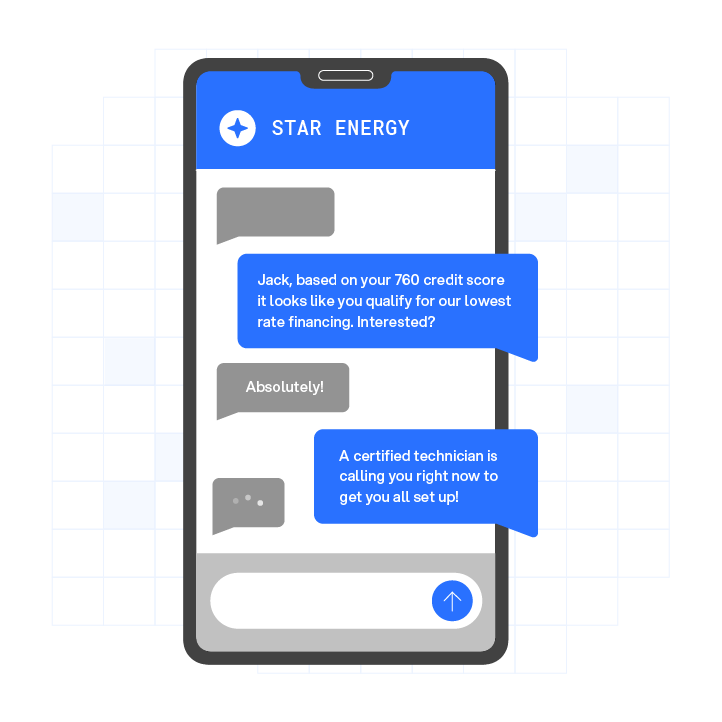
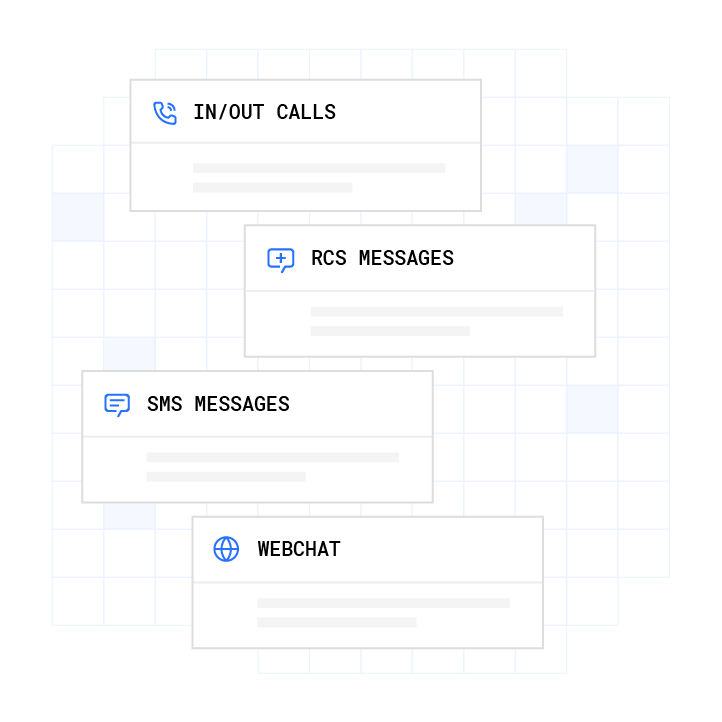
Plura’s AI customer service texting pairs the reach of SMS and RCS with the same conversational intelligence that powers its voice and webchat agents. All four channels read from and write to a single Stateful Conversation Database, so the intelligence layer is not siloed by channel.
Book a live demo with Plura to see how stateful cross-channel memory works in a live environment.
Channel Comparison: Reach, Proactivity, Compliance, Integration
| Attribute | AI Customer Service Texting (SMS/RCS) | Website Chatbot Only |
|---|---|---|
| Reach | 98% of text messages are opened according to SMS Comparison, and texting reaches customers on their phones regardless of whether they visit the website | 5-15% of all site visitors engage the chat widget, and the customer must be on the website at that moment |
| Proactivity | Outbound-capable channel that sends appointment reminders, order updates, and follow-ups without waiting for the customer to initiate; texting is better suited for scheduled nudges and follow-ups once the customer has left the site | Proactive triggers are session-based and fire only while the customer is actively on the site, so the chatbot cannot reach customers after they leave |
| Compliance surface | Governed by TCPA, 10DLC registration, DNC scrubbing, and state quiet-hours rules; consent standards vary by message type and jurisdiction; operators should consult qualified counsel on their specific obligations2 | Lower regulatory surface for on-site interactions, while GDPR and CCPA data-handling obligations still apply; consent requirements vary by jurisdiction |
| Integration depth | Plura provides built-in data enrichment from over 30 sources and CRM-connected workflows; stateful memory persists across voice, SMS, RCS, and webchat in a single database | Web chatbots typically operate within a single session, and cross-channel context usually requires custom integration work and a separate data layer |
Chatbot vs AI: What Actually Changes in Operations
In everyday usage the terms overlap, but the distinction is operationally significant for high-volume operators. A chatbot is a software program designed to simulate conversation, often using rule-based decision trees. Early chatbots followed rigid scripts: if the customer typed keyword X, the bot returned response Y. They had no memory between sessions and no ability to handle inputs outside their defined paths.
AI in customer service refers to large language models and natural language processing systems that understand intent, generate contextually appropriate responses, and improve over time. An AI-powered chatbot is not a decision tree. It interprets meaning, handles variation in phrasing, and can maintain context across a multi-turn conversation.
The practical difference for operators is straightforward. A rule-based chatbot breaks when a customer asks something slightly outside the script. An AI agent handles variation, escalates intelligently when it reaches a genuine limit, and passes full conversation context to the human agent at handoff. Consumers report frustration with poorly trained website chatbots that required repeating issue details multiple times during handoffs to human agents, which reflects rule-based systems without stateful memory, not AI-powered systems with proper context retention.
AI Chatbots vs Human Agents: Where Each One Wins
AI agents and human agents serve different parts of the same conversation volume. They work best as a coordinated system.
On speed, AI agents respond in seconds at any hour. Leads contacted within 1 minute are 391% more likely to convert than those contacted after 24 hours3. Human agents, even in well-staffed contact centers, cannot match that response time at scale across thousands of simultaneous interactions.
On consistency, AI agents run the same script on every contact. Human agents drift between their best day and their worst. Script adherence, objection handling, and disclosure language stay uniform with AI regardless of shift, tenure, or volume.
On cost, Plura’s illustrative 15-agent scenario at default ROI calculator inputs shows human agent cost at $60,000 per month versus $14,400 per month for Plura agents at equivalent output. That difference produces $45,600 in 30-day savings.3
On escalation, AI agents do not replace human judgment on complex or emotionally sensitive issues. That limitation shapes the correct architecture. Route routine volume through AI and escalate edge cases to human agents with full conversation context already attached. This design aligns with consumer behavior, because many consumers prefer interacting with bots when it delivers an immediate response, which shows a preference for speed on routine queries rather than a preference for AI on every interaction type.
Channel Choice: When AI SMS or Website Chatbot Works Best
The channel decision follows the customer’s location and the nature of the interaction.
Use AI SMS when:
- The customer is not on your website and you need to reach them proactively
- The interaction is time-sensitive, such as appointment reminders, order updates, payment alerts, or follow-ups on an open support ticket
- The conversation needs to persist across multiple sessions over hours or days
- You are running high-volume outreach where SMS chatbots can process thousands of simultaneous interactions with consistent accuracy
Use a website chatbot when:
- The customer is actively on your site and has a question about a specific page or product
- The interaction is a quick, self-contained lookup, such as pricing, availability, or policy terms
- Nielsen Norman Group 2026 research confirms that users approach site chatbots like search bars, typing short queries and expecting scannable answers, which makes them well-suited for on-site information retrieval4
The strongest operators use both. Customers engaging across 3 or more channels spend 250% more than single-channel customers (Harvard Business Review, 2024)4. The channel mix is not an either/or decision. It is a sequencing decision.
SMS Compliance Landscape for High-Volume Programs
High-volume SMS programs operate inside a defined regulatory framework. Operators should consult qualified legal counsel to understand their specific obligations. The following describes the framework neutrally.
The Telephone Consumer Protection Act (TCPA, 47 U.S.C. § 227) and FCC implementing regulations at 47 C.F.R. § 64.1200 distinguish between informational texts and marketing texts, with different consent standards for each. Statutory damages for SMS violations under the TCPA are $500 per text, rising to $1,500 per text if the violation is knowing or willful, with each message counting as a separate violation.
10DLC (10-digit long code) registration through The Campaign Registry has been mandatory for commercial SMS on standard 10-digit numbers since 2021. Unregistered or misregistered traffic is filtered, throttled, or silently dropped by carriers.
The Do Not Call (DNC) registry and state-level mini-TCPA statutes in states including Florida, Oklahoma, and Maryland introduce additional requirements. Consent obtained for a phone number does not transfer to a new owner; the FCC Reassigned Numbers Database must be scrubbed against before sending SMS to help avoid violations on reassigned numbers.
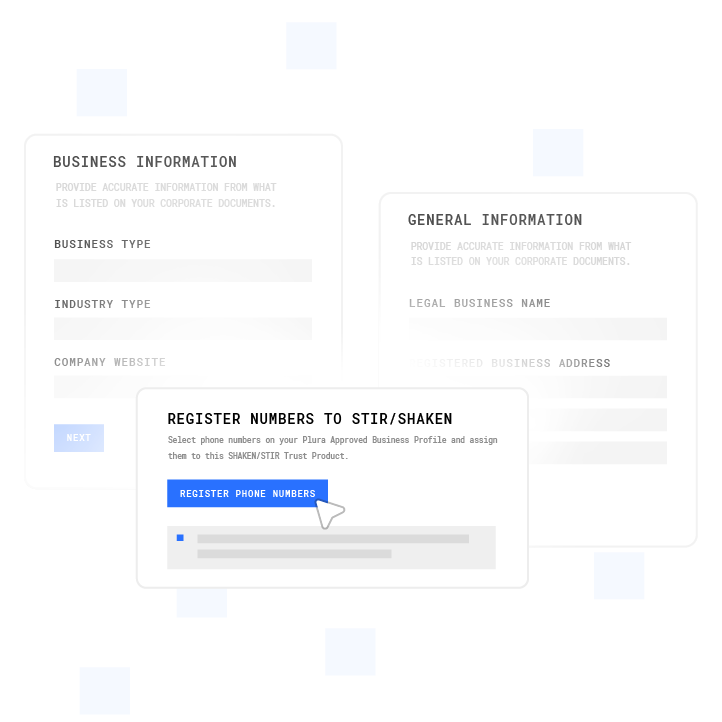
Plura’s platform supports compliance through real-time DNC scrubbing, 10DLC-registered numbers, TCPA consent management, and per-state quiet-hours enforcement. Customers are responsible for their own regulatory obligations and should review Plura’s SMS guidelines and consult qualified counsel.
Use Both: A Practical Stateful Integration Playbook
High-volume operators get the strongest results by combining SMS reach with website chatbot coverage, unified by a single intelligence and memory layer. AI SMS systems support cross-channel customer journeys where an interaction might start with an SMS alert, continue on a website, and follow up with a personalized message, which creates a more cohesive experience and reduces channel fragmentation.
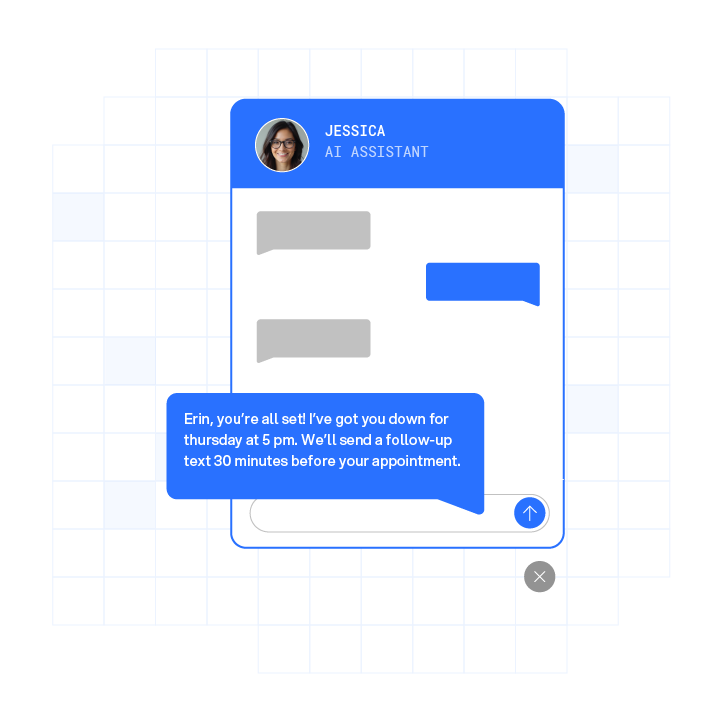
Plura’s Stateful Conversation Database makes this architecture operational. Every interaction across voice, SMS, RCS, and AI webchat is keyed to a customer token and persisted in one place. The AI reads and writes to the same database on every channel, so a customer who received an SMS appointment reminder and then opened the website chatbot to reschedule does not start from zero.
A representative playbook for a high-volume operator looks like this:
- Inbound lead submits a form. Plura’s AI customer service texting responds within seconds with a qualification sequence via SMS.
- The customer visits the website two days later. The AI webchat agent reads the prior SMS exchange from the Stateful Conversation Database and continues the conversation without asking the customer to re-identify.
- The customer requests a callback. The AI voice agent picks up the call already knowing the qualification status and prior offers from the SMS and webchat sessions.
- Post-resolution, an automated SMS sends a confirmation and a satisfaction prompt, and the response is logged back to the same customer record.
Proactive, omnichannel engagement can improve customer satisfaction and reduce service costs. The stateful database makes that improvement measurable rather than aspirational.
Plura also integrates with HubSpot, Salesforce, Zoho, and 50+ other tools via its integrations directory, so the conversation data feeds back into the CRM systems operators already run.
Book a live demo with Plura to walk through the stateful playbook with your actual channel mix.
Frequently Asked Questions
What is the difference between AI customer service texting and a chatbot?
AI customer service texting refers to the SMS or RCS channel used to reach customers on their mobile phones. A chatbot is the conversational intelligence layer that determines what the system says, how it responds, and what it remembers. The two are not competing options. They are complementary layers. Texting is the delivery mechanism, and the chatbot is the brain. High-volume operators who treat them as interchangeable often end up with either a smart system that no one sees, or a high-reach channel with no intelligence. The effective architecture combines both.
When should a business use SMS instead of a website chatbot for customer support?
The decision follows customer location and interaction timing. Use SMS for proactive, time-sensitive outreach when customers are not on your site. Use website chatbots for in-session queries from active browsers. See the full decision framework in the “Channel Choice: When AI SMS or Website Chatbot Works Best” section above.
How does Plura’s stateful memory work across SMS and other channels?
Plura’s Stateful Conversation Database stores every interaction across voice, SMS, RCS, and webchat, keyed to a customer token such as a phone number, email address, or ID. When a customer who received an SMS from Plura later calls in or opens a webchat session, the AI agent on that channel reads the full prior conversation history before responding. No re-identification is required. Pricing offers made, objections raised, qualification status, and sensitive-data redactions all persist across channels. This capability is an architectural feature of Plura’s platform, not a third-party integration layer bolted on after the fact.
What compliance frameworks apply to high-volume AI SMS programs?
High-volume SMS programs in the United States operate under the TCPA, FCC implementing regulations, 10DLC registration requirements enforced by wireless carriers through The Campaign Registry, federal and state DNC registry obligations, and state-level mini-TCPA statutes in states including Florida, Oklahoma, and Maryland. Healthcare operators also need to consider HIPAA obligations for protected health information transmitted via SMS.2 Plura’s platform includes real-time DNC scrubbing, 10DLC-registered numbers, TCPA consent management, and per-state quiet-hours enforcement as infrastructure-level features. Operators are responsible for their own legal obligations and should consult qualified counsel on their specific programs.
What results can operators expect from combining AI SMS with website chatbot coverage?
The primary gains from combining channels with stateful memory appear in context retention and resolution rates. When a customer does not have to re-explain their issue at every channel transition, handle time drops and satisfaction improves. On the SMS side specifically, Plura’s AI RCS messaging achieves an 80% read rate and a 35% click-through rate. On the lead-response side, leads contacted within 1 minute are 391% more likely to convert than those contacted after 24 hours. Practices using automated multi-channel reminders consistently report no-show reductions between 25% and 40%. Operators running both channels through a unified stateful platform see compounding gains as the system accumulates more context per customer over time.
Conclusion: Connect Reach With Intelligence
The decision is not whether to use AI customer service texting or a chatbot. The decision is whether your current stack connects them. Customers expect to be reached on mobile, expect the conversation to continue where it left off, and expect resolution without repetition. A web-only chatbot misses the messaging-first majority cited earlier, which includes nearly three-quarters of online adults who expect mobile reach as the default. An SMS broadcast without conversational intelligence misses the context that turns a text into a resolved support interaction.
Plura’s platform addresses both gaps. Carrier-grade SMS and RCS reach customers where they are. The same AI intelligence layer powers voice, SMS, RCS, and webchat. The Stateful Conversation Database holds context across every channel so the conversation never starts over. The compliance infrastructure supports TCPA, DNC, HIPAA, and SOC 2 obligations at the platform level, while operators retain responsibility for their own downstream obligations.1,2
Compare plans and rates side by side at plura.ai/pricing to see which tier fits your volume and channel mix.
1 Plura AI maintains SOC 2, HIPAA, ISO, and GDPR posture as part of its platform infrastructure. References to compliance frameworks in this article describe Plura’s platform capabilities and do not constitute a guarantee that any customer using Plura will themselves be compliant with applicable laws or standards. Customers remain solely responsible for their own regulatory obligations, certifications, consent management, recordkeeping, and the claims they make to their own end users. Consult qualified legal counsel for guidance specific to your use case.
2 This article describes regulatory frameworks at a general level and does not constitute legal advice. Laws and regulations vary by jurisdiction, change over time, and apply differently depending on facts and circumstances. Readers should consult qualified legal counsel before making compliance decisions.
3 Performance figures, customer outcomes, and industry statistics referenced in this article are drawn from cited third-party sources or Plura customer case studies. Individual results vary based on implementation, use case, industry, audience, and execution. Past or aggregate performance is not a guarantee of future results.
4 References to third-party products, services, companies, or research are made for informational and comparative purposes only. Plura AI is not affiliated with, endorsed by, or sponsored by any third party named in this article unless explicitly stated. Trademarks and product names referenced remain the property of their respective owners.
This article is provided for informational purposes only and reflects Plura AI’s understanding at the time of publication. Product capabilities, integrations, and specifications are subject to change. For the most current information, visit plura.ai.
This article was produced with the assistance of AI tools and reviewed by Plura AI prior to publication.