
Written by: Matt Beucler, CEO, Plura AI
Key Takeaways
- AI lead follow-up automates five core jobs: prioritizing leads, personalizing outreach, running multi-touch sequences, classifying replies, and routing hot leads to human reps.
- This guide walks through seven implementation steps that you can run from your existing CRM without engineering support.
- Implementation begins with exporting seven key CRM fields to score and rank leads by conversion likelihood within 14 days.
- Context injection from call notes and prior replies prevents robotic-sounding messages and improves reply rates across email, SMS, and voice channels.
- Connecting AI to your CRM enables automatic stop conditions, real-time handoff of interested leads, and measurable gains in speed-to-lead and cost-per-qualified-lead.
- Teams ready to deploy cross-channel AI lead follow-up with shared conversation memory can see how Plura AI runs the full system end to end.
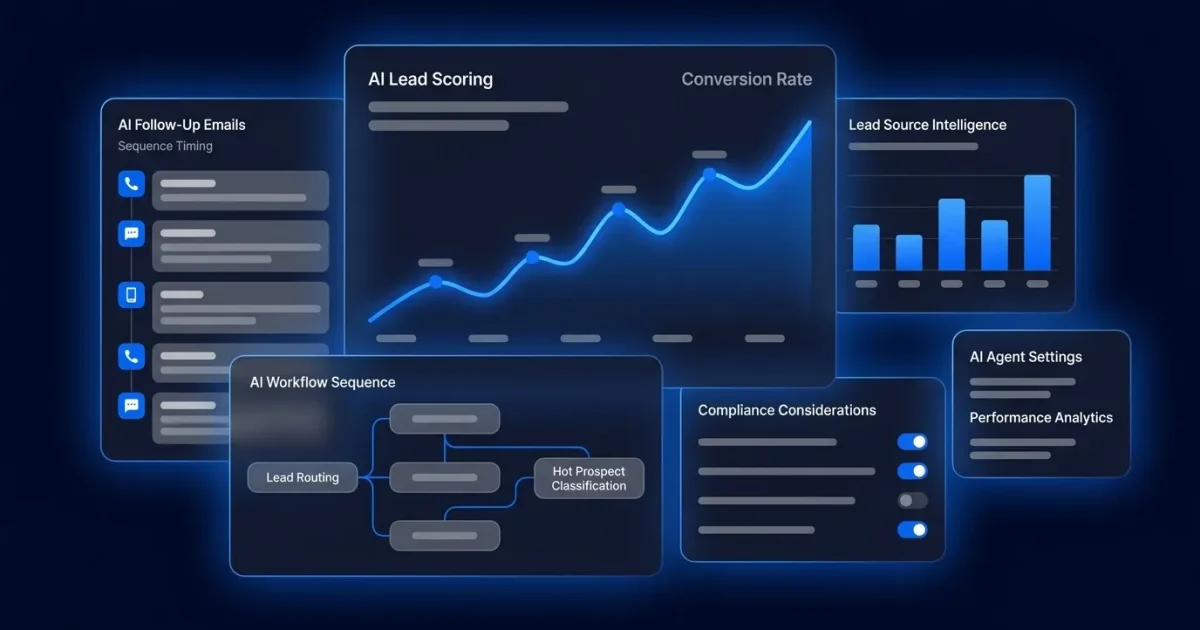
What AI Actually Does in Lead Follow-Up: The Five Jobs
Prioritize: AI scores and ranks leads based on behavioral signals, CRM data, and predictive intent modeling so reps contact the highest-value opportunities first.
Personalize: AI injects context from call notes, CRM fields, and prior replies into outreach so messages reference the specific conversation rather than generic templates.
Sequence: AI executes multi-touch cadences across email, SMS, and voice with timing rules and automatic stop conditions when a lead replies or opts out.
Classify: AI reads reply sentiment and intent, categorizes responses (interested, not now, not interested, wrong person), and determines next action.
Hand Off: AI routes hot leads to human reps with full conversation context, warm-transfers calls, and books meetings directly on calendars.
Watch a live walkthrough of all five jobs inside a single AI lead follow-up system from Plura.
Step 1: Prioritize Which Leads to Call First With AI Scoring
AI lead prioritization starts with the right data. Export these seven fields from your CRM before running any scoring prompt:
- Lead source
- Form fills (which forms, when)
- Page views (pricing page, demo page, case studies)
- Last activity date
- Deal stage
- Prior replies (email, SMS, call notes)
- Call notes (transcript summaries)
Input fields required: lead source, form fill history, page view history, last activity date, deal stage, prior reply count, call note summary
You are a sales prioritization assistant. Score each lead from 1-100 based on likelihood to convert in the next 14 days. Scoring criteria: - Page views on pricing or demo pages in last 7 days: +25 points - Form fill in last 3 days: +20 points - Prior reply (any channel) in last 7 days: +20 points - Deal stage is "demo scheduled" or "proposal sent": +15 points - Last activity date within 3 days: +10 points - Lead source is inbound (not purchased list): +10 points For each lead, output: 1. Lead name and company 2. Score (1-100) 3. Top 2 reasons for the score 4. Recommended first action (call, email, SMS) Sort by score descending. Flag any lead scoring above 80 as "contact within 1 hour."Plura’s AI Lead Intelligence scores and prioritizes leads in real time using behavioral signals, conversation context, and predictive intent modeling across every channel. To get started, export these seven fields from your CRM, run the prompt, and contact your top 10 scored leads before end of day.
Step 2: Write AI Follow-Up Emails That Sound Like a Real Rep
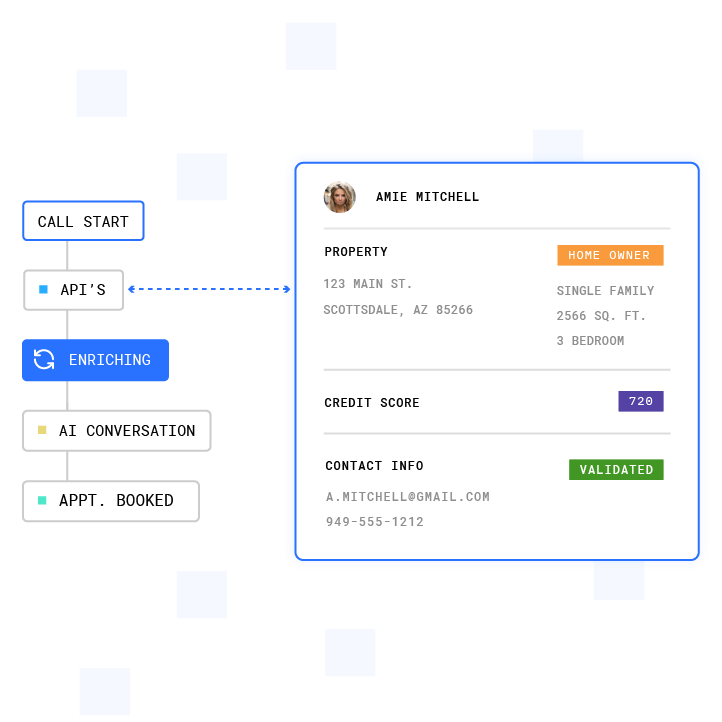
The main complaint about AI outreach is that it sounds robotic. The technical fix is context injection, which means feeding call notes, CRM fields, and prior replies into the prompt so the AI references the specific conversation. Generic prompts cause AI to fill blanks with the most statistically common phrases, which produces the clichés every buyer recognizes instantly.
Input fields required: lead first name, company name, last call note or email reply, specific pain point mentioned, your product’s relevant feature
Write a follow-up email to [First Name] at [Company Name]. Context from our last conversation: - They mentioned: [specific pain point or interest from call notes] - Their role: [job title] - Last interaction: [date and channel] Requirements: - Reference the specific pain point they mentioned - Keep it under 100 words - No phrases like "I hope this email finds you well" or "just following up" - End with one specific question or one clear next step - Tone: direct, peer-to-peer, not salesy Do not use: "circle back," "touch base," "reach out," "synergy," "leverage"Weak personalization is worse than no personalization when it is obviously AI. Ban the clichés at the prompt level before the draft is written. Next, pull the last call note or email reply from your top 10 prioritized leads and run this prompt for each.
Step 3: Build an AI Follow-Up Sequence With Clear Timing Rules
A 60-second response to a lead lifts conversions by 391%3. The cadence below is built around that data. Every touch has a defined AI action and a stop condition that fires the moment a lead responds on any channel.
| Timing | AI Action | Stop Condition |
|---|---|---|
| Immediate (under 5 minutes) | Send personalized SMS acknowledging form fill, trigger AI voice call if no SMS reply within 2 minutes | Lead replies on any channel |
| Day 2 | Send follow-up email with context injection referencing prior interaction | Lead replies, books meeting, or opts out |
| Day 5 | AI voice call attempt with voicemail drop, send SMS if no answer | Lead answers, replies, or opts out |
| Day 10 | Send email with relevant case study or proof point tied to stated pain | Lead replies, books meeting, or opts out |
| Day 15 | Final breakup email: “Should I close your file?” | Lead replies or sequence ends |
A “not right now” reply is a timing objection, not a rejection. Pull those leads into a longer-interval nurture sequence rather than continuing the active cadence. Build this cadence in your CRM or sales engagement platform and set stop conditions to trigger on any reply.
Step 4: Classify Lead Replies and Route Hot Prospects Fast
Reply classification is where most teams leave money on the table. A hot lead buried in an inbox for four hours is a lost deal. The prompt below classifies every reply into one of five categories and outputs a recommended next action.
Input fields required: lead reply text, lead name, deal stage, prior conversation summary
Classify this lead reply into one of five categories: 1. INTERESTED — wants to learn more, asks about pricing, requests demo, or proposes a time 2. NOT NOW — timing objection, asks to follow up later, mentions budget cycle 3. NOT INTERESTED — explicit rejection, asks to stop contact, says no need 4. WRONG PERSON — says they're not the decision-maker, refers to colleague 5. QUESTION — asks a specific question that needs an answer before deciding Reply text: [paste reply] Output: - Category - Confidence (high/medium/low) - Recommended next action - If INTERESTED: flag for immediate human handoff - If NOT NOW: suggest re-engagement date - If WRONG PERSON: extract referred contact name if mentionedHandoff Rule for Hot Leads: When AI classifies a reply as INTERESTED with high confidence, immediately:
- Send SMS to lead: “Great, connecting you with [Rep Name] now.”
- Trigger warm transfer call to rep with full conversation context
- Create CRM task for rep with reply text and suggested talking points
AI handles the first 5 to 7 touches and only passes prospects who are actually ready to talk, which shifts rep time from chasing leads to closing them. Run this prompt on your last 10 lead replies and verify the classifications match your judgment.
Step 5: Connect AI to Your CRM for Automatic Follow-Up
Path 1: Native AI Features in HubSpot or Salesforce
HubSpot’s Breeze suite includes a Prospecting Agent and Breeze Intelligence, and HubSpot sequences automatically pause or adjust when a contact replies.4 Predictive lead scoring is a HubSpot Smart CRM capability, with some AI features gated behind Professional or Enterprise tiers. Salesforce Agentforce autonomously engages and qualifies inbound leads in real time using trusted CRM data and books meetings when a lead is ready.4 Both platforms work well for teams already deeply invested in one CRM. Some meaningful native AI capabilities in HubSpot, including lead scoring, conversation intelligence, and AI agents, sit behind Professional or Enterprise tiers, and HubSpot’s native automation centers on email sequences and tasks.
Path 2: Standalone AI Agent Connected via Integration
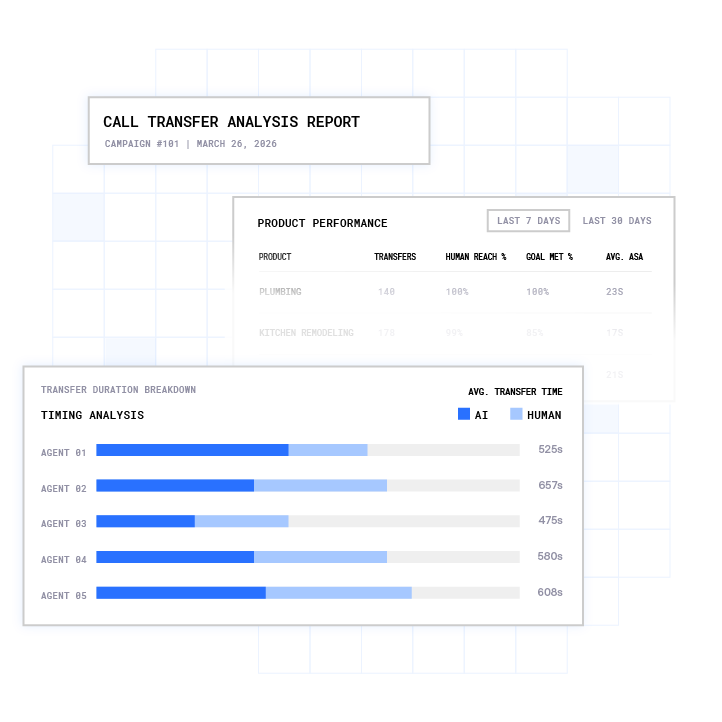
Platforms like Plura connect to HubSpot, Salesforce, Zapier, and Make to read CRM data, trigger follow-up, and write results back. Plura’s AI SMS, AI voice agent, and AI webchat share a Stateful Conversation Database. A lead who texted at 9 a.m. is recognized on the noon call without re-introduction.
Why Plura for CRM-Connected Follow-Up
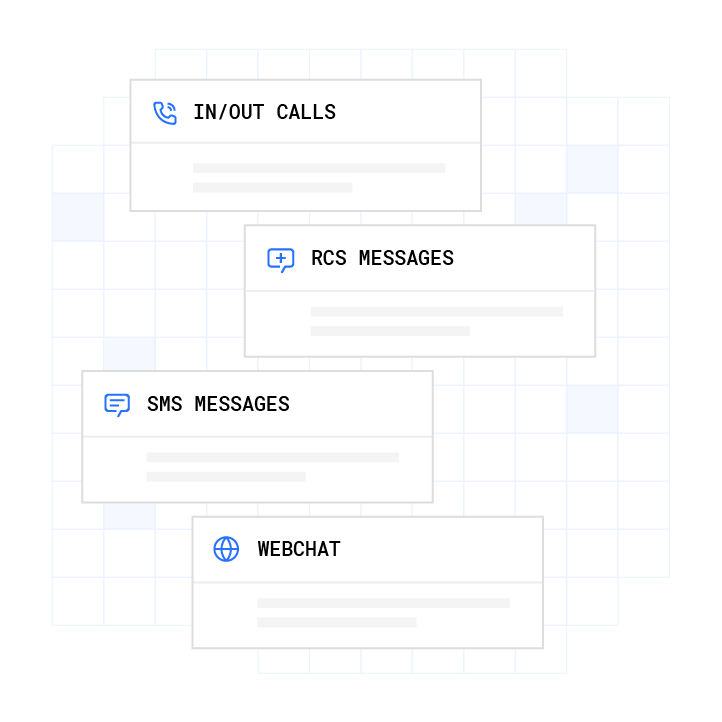
Plura is an FCC-licensed platform of AI agents that run voice, SMS, RCS (Rich Communication Services), and webchat conversations on 100% U.S. infrastructure. It contacts leads in under 5 seconds to first contact. Unlike Twilio-based API resellers, Plura owns its own FCC-licensed audio bridging carrier.4 As a result, branded caller ID is issued at the carrier level, and real-time DNC scrubbing and TCPA litigator screening run inside the platform before dial. Compliance is supported before the call leaves the network. Plura connects to HubSpot, Salesforce, Zapier, and Make via its integrations directory, and its agent build fee is $2,750 per agent with annual contracts that include a 90-day opt-out window.
Run your numbers through Plura’s calculator to check your ROI in real time.
Audit your CRM’s native AI capabilities next. If you need voice or SMS follow-up, explore Plura’s integrations.
Step 6: Focus on Three AI Jobs to Start Tomorrow Morning
If you are implementing AI follow-up for the first time, start with these three jobs:
- Prioritize: Export your seven CRM fields and run the prioritization prompt on your full lead list. Contact your top 10 scored leads today.
- Personalize: Take your top 10 prioritized leads and run the context injection prompt using their last call note or email reply. Send the drafts after a 15-second review.
- Classify: Run the reply classification prompt on your last 10 lead replies. Verify the categories match your judgment, then set up automatic routing for INTERESTED replies.
These three jobs deliver immediate value without requiring new tooling. Add sequencing and handoff once the first three are working. Block 90 minutes tomorrow morning and complete all three jobs.
Step 7: Measure AI Lead Follow-Up Performance
Track four metrics against your pre-AI baseline:
- Speed to first contact: Target under 5 minutes. Organizations deploying AI for speed to lead see response times drop from hours to seconds and connection rates increase by 3x to 5x.3
- Reply rate by touch position: If replies cluster on touches 1 and 2 then vanish, the sequence is losing value where it should be escalating it.
- Meeting booking rate: This metric shows whether follow-up is converting to pipeline rather than just generating opens.
- Cost per qualified lead: AI-powered follow-up can bring cost per qualified lead down to $60, compared to the $200 traditional benchmark.3
Conclusion: Treat AI Lead Follow-Up as a System You Build
AI lead follow-up is a build, not a category decision. The five jobs AI performs, prioritize, personalize, sequence, classify, and hand off, can be implemented in seven steps with your existing CRM and no engineering resources. Teams that start with prioritization, personalization, and classification see immediate value. Sequencing and handoff compound that value once the first three are working.
For teams that need cross-channel follow-up with shared conversation memory, Plura provides FCC-licensed infrastructure, stateful cross-channel context, and compliance support before dial. Plura contacts leads in under 5 seconds to first contact and connects to your existing CRM via its integrations directory.
Explore Plura’s cross-channel AI follow-up system in a live demo.
Compare plans and rates side by side at plura.ai/pricing.
Frequently Asked Questions
How Long Does It Take to Implement AI Lead Follow-Up?
Basic prioritization and personalization can be implemented in a single day using the prompts in this guide. Full multi-touch sequencing with reply classification typically takes 1 to 2 weeks to configure and test. Complex implementations with voice AI and CRM integration run 2 to 4 weeks. Plura’s onboarding sequence moves from discovery audit to pilot test on real calls before full go-live, with annual contracts including a 90-day opt-out window as described earlier.
What CRM Do I Need for AI Lead Follow-Up?
Any CRM that supports data export and API access works. HubSpot and Salesforce have native AI features including lead scoring, sequence automation, and AI-drafted outreach. Plura connects to HubSpot, Salesforce, Zoho, and 50+ other tools via native integrations and automation platforms like Zapier and Make. The prompts in this guide work with a manual CRM export as a starting point before any integration is configured.
What Are the Compliance Considerations for AI Lead Follow-Up?
AI follow-up that includes calls and SMS touches involves frameworks including TCPA, the CAN-SPAM Act for email, and DNC registry requirements.2 Consult qualified counsel for your specific obligations. Plura supports customer compliance by running real-time DNC scrubbing, TCPA litigator screening, automated quiet-hours enforcement based on time-zone detection, and immutable consent logging inside the platform on every outbound contact.1,2 Customers remain responsible for their own compliance obligations and the claims they make to their end users.
How Do I Prevent AI Follow-Up From Sounding Robotic?
Use context injection and feed call notes, CRM fields, and prior replies into every prompt. Ban phrases like “I hope this email finds you well” and “just following up” at the prompt level before the draft is written. Keep messages under 100 words. Vary sentence length deliberately, since AI defaults to uniform rhythm that readers recognize immediately. Review every AI draft before sending, and read it aloud to check whether it sounds like something you would actually say to a peer.
Can AI Follow Up on Voice Calls, or Just Email?
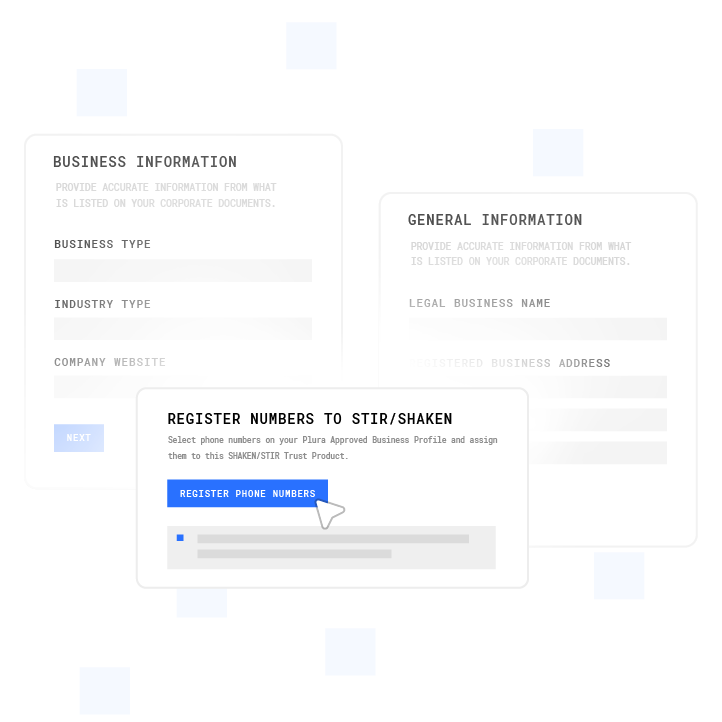
AI can handle voice, SMS, RCS, and webchat follow-up. Plura’s AI voice agents handle inbound and outbound calls with branded caller ID and STIR/SHAKEN (Secure Telephone Identity Revisited/Signature-based Handling of Asserted information using toKENs) authentication.1 AI SMS agents text leads in seconds and can trigger voice calls when a lead is ready to talk. All four channels share a Stateful Conversation Database, so a lead who texted in the morning is recognized on the afternoon call without re-introduction.
How Much Does AI Lead Follow-Up Cost?
Costs range from near zero for DIY or self-serve setups using general-purpose AI tools with manual CRM exports, to $500 or more per month for dedicated AI sales platforms, with most real-world deployments running from roughly $150–500 per month at the entry level up to $2,500–8,000 per month for subscriptions and done-for-you managed services. Plura’s agent build fee is $2,750 per agent, with annual contracts billed monthly and a 90-day opt-out window. Run your specific numbers through Plura’s ROI calculator at plura.ai/calculator to compare your current cost per contact against an AI-powered model.
1 Plura AI maintains SOC 2, HIPAA, ISO, and GDPR posture as part of its platform infrastructure. References to compliance frameworks in this article describe Plura’s platform capabilities and do not constitute a guarantee that any customer using Plura will themselves be compliant with applicable laws or standards. Customers remain solely responsible for their own regulatory obligations, certifications, consent management, recordkeeping, and the claims they make to their own end users. Consult qualified legal counsel for guidance specific to your use case.
2 This article describes regulatory frameworks at a general level and does not constitute legal advice. Laws and regulations vary by jurisdiction, change over time, and apply differently depending on facts and circumstances. Readers should consult qualified legal counsel before making compliance decisions.
3 Performance figures, customer outcomes, and industry statistics referenced in this article are drawn from cited third-party sources or Plura customer case studies. Individual results vary based on implementation, use case, industry, audience, and execution. Past or aggregate performance is not a guarantee of future results.
4 References to third-party products, services, companies, or research are made for informational and comparative purposes only. Plura AI is not affiliated with, endorsed by, or sponsored by any third party named in this article unless explicitly stated. Trademarks and product names referenced remain the property of their respective owners.
This article is provided for informational purposes only and reflects Plura AI’s understanding at the time of publication. Product capabilities, integrations, and specifications are subject to change. For the most current information, visit plura.ai.
This article was produced with the assistance of AI tools and reviewed by Plura AI prior to publication.