
Written by: Matt Beucler, CEO, Plura AI
Key Takeaways
- AI lead qualification for insurance agencies uses conversational AI voice agents and AI SMS to engage inbound leads in under 5 seconds, screen for policy expiration, coverage type, and ZIP, score intent, and route qualified prospects to licensed producers.
- The insurance industry loses an estimated $2.6 billion annually from slow lead follow-up, with the average agency taking 47 hours to respond while consumers expect a reply in under an hour.3
- Speed-to-lead drives conversion outcomes. The 100x connection advantage and 391% conversion lift from faster response explain why slow follow-up drains premium.3
- The 6-step workflow covers defining instant speed-to-lead, choosing voice vs. SMS qualification flows, listing exact insurance screening questions, setting scoring and routing rules with licensed-agent handoff, connecting the agency management system, and enforcing compliance limits and state rules.
- Plura AI is the only platform that owns its FCC-licensed carrier, maintains stateful cross-channel memory, and enforces real-time DNC/TCPA scrubbing while keeping licensed agents in the loop. Start your free trial today.
Step 1: Define Instant Speed-to-Lead Targets
Speed to lead is the elapsed time between a prospect submitting a quote request and your first meaningful contact. The insurance industry median first lead response time is over 47 minutes. That gap creates a severe performance penalty, given the 100x connection advantage and 391% conversion lift already outlined.
For insurance agencies, the math is direct. Exclusive web leads contacted promptly can achieve higher contact and close rates than those contacted after a delay. ClearChoice Research reports that 78% of insurance customers buy from the first company that contacts them.3
Set your internal SLA at under 5 seconds for AI-initiated first contact. This target keeps the AI on the clock while interest is highest, and it lets human producers focus on the substantive conversation instead of chasing dials. Once you have a clear speed-to-lead goal, the next decision is which channel should handle that first contact. Calculate how much revenue your agency loses to slow lead response using Plura’s ROI calculator.
Step 2: Match Qualification Channels to Lead Context
Both AI voice agents and AI SMS can open a qualification conversation in seconds. The right channel depends on lead source, time of day, and prospect preference. The table below maps the key operational differences.
| Channel | Response Speed | Compliance Controls | Handoff Method |
|---|---|---|---|
| AI Voice (inbound) | Answers on first ring, 24/7 | SHAKEN/STIR authentication, real-time DNC scrubbing, quiet-hours enforcement, AI disclosure at call start1 | Warm transfer to licensed producer with live context payload |
| AI Voice (outbound) | Dials within 5 seconds of lead submission | Prior express written consent verification, TCPA compliance controls, state calling-window enforcement | Warm transfer with structured summary, producer receives intent, transcript, and CRM data |
| AI SMS (outbound) | First text within 5 seconds of lead submission | 10DLC registration, TCPA consent management, real-time DNC scrubbing, per-state quiet-hours enforcement1 | Escalates to voice call or live transfer when qualification threshold is met |
| AI SMS (inbound reply) | Responds to prospect reply in seconds | Opt-out suppression written to CRM in real time, consent record timestamped per contact | Routes to licensed producer queue with full SMS thread and enrichment data |
| AI Voice + SMS (sequential) | Voice attempt first, SMS fallback if no answer | Stateful cross-channel memory prevents duplicate consent requests, single suppression record | Whichever channel connects first triggers the warm transfer, producer sees full cross-channel history |
| AI SMS + Voice (text-to-call) | SMS qualifies, AI calls when prospect confirms readiness | Consent re-confirmed in SMS thread before outbound call is placed | AI calls the qualified prospect and immediately warm-transfers to licensed producer |
Plura’s stateful conversation database keeps the context intact across channels. A prospect who texts at 9 a.m. and picks up a call at noon does not repeat themselves, because the producer receives the full cross-channel history at the moment of transfer.
Step 3: Use Focused Insurance Screening Questions
The AI qualification script should collect only the data needed to score intent and route correctly. Substantive coverage advice, quote issuance, and binding decisions remain with licensed producers. The following question sets draw from standard insurance lead qualification frameworks and health insurance qualification practice.
Coverage type and product fit:
- What type of coverage are you looking for today? (auto, home, health, life, commercial)
- Is this for personal or business use?
Timing and urgency:
- When does your current policy expire, or when are you hoping for new coverage to start?
- Is there a specific event driving your search, such as a new vehicle, home purchase, or change in employment?
Geographic eligibility:
- What state do you currently reside in?
- Is the insured property or vehicle located in the same state?
Basic risk and budget signals:
- How many drivers or dependents will be on the policy?
- Do you have a general monthly premium range in mind?
- Are you currently insured, and if so, with which carrier?
Decision authority:
- Are you the primary policyholder, or will someone else be making the final decision?
For Medicare Supplement leads, add confirmation of Part A and Part B effective dates. For ACA individual market leads, add a household income range question to assess subsidy eligibility. The AI collects and passes this data, and a licensed producer handles all interpretation and recommendation.
See what each qualified lead is worth when you eliminate the 47-hour response gap. Check Plura’s calculator.
Step 4: Build Scoring, Routing, and Handoff Rules
Score each lead on four dimensions after the screening questions are complete. Fit measures whether the coverage type matches your appointed markets. Intent reflects whether the prospect is actively shopping or browsing. Urgency captures renewal within 60 days or an immediate need. Contactability confirms a valid phone and consent on file.
Route leads into three queues:
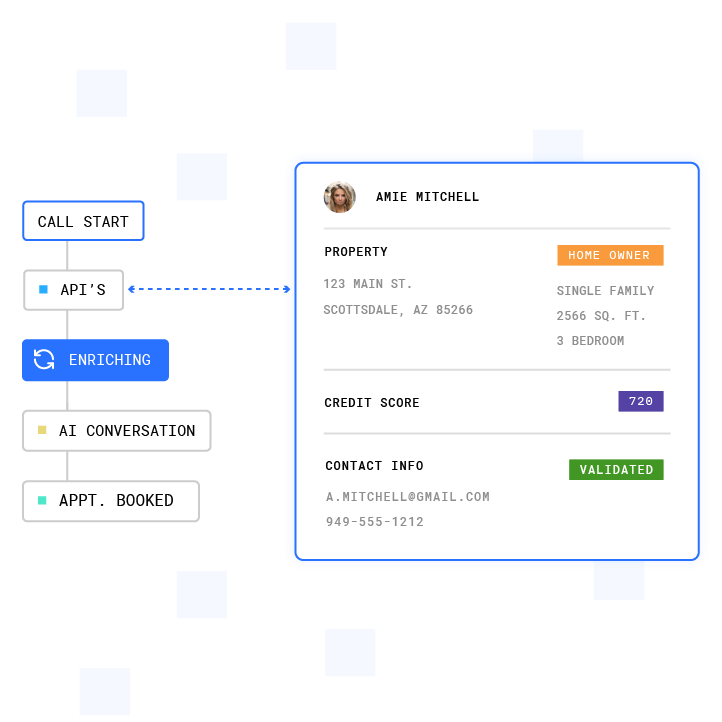
- Immediate warm transfer: Prospect is in-state, coverage type matches, renewal is within 60 days, and a budget signal is present. The AI connects the call to a licensed producer with a structured context payload including intent, verified contact details, screening answers, and a session transcript.
- Scheduled callback: Prospect is qualified but renewal is 60 to 120 days out. The AI books a calendar appointment and sends an SMS confirmation.
- Nurture sequence: Prospect is browsing, renewal is more than 120 days out, or fit is unclear. The AI routes to an automated follow-up cadence and flags for periodic re-qualification.
Four triggers require immediate escalation to a licensed producer regardless of queue assignment, per hybrid AI handoff frameworks:
- The prospect requests licensed advice or asks a coverage-specific question
- The prospect expresses intent to cancel an existing policy
- The prospect describes a disputed or complex claim situation
- The prospect explicitly asks to speak with a person
The warm transfer packet sent to the producer must include caller identity, verified contact details, reason for calling, detected intent, and the full session transcript. The producer interface surfaces this context in a single pre-populated view before the producer answers, so the prospect does not repeat themselves.
Step 5: Sync Qualification Data to Your AMS
The qualification workflow produces value only when the data lands in the system your producers already use. Plura’s integrations connect to CRMs including HubSpot, Salesforce, and Zoho, as well as calendar tools including Calendly and Google Calendar.
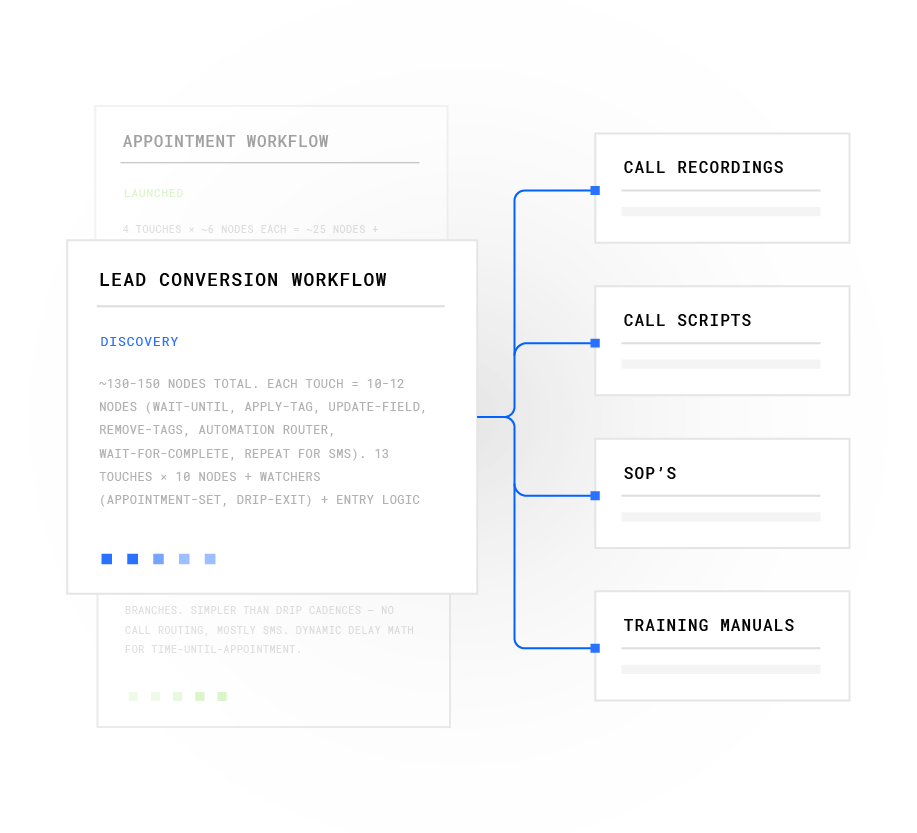
On every handoff, the following data fields should write to the AMS or CRM record automatically:
- Lead source and timestamp
- Coverage type requested
- State of residence and insured property or vehicle location
- Policy expiration or desired start date
- Number of drivers or dependents
- Budget range indicated
- Current carrier (if disclosed)
- Consent record with timestamp, lead source, and consent language version
- Full AI session transcript and channel history
- Queue assignment and routing reason
Post-handoff, require producers to tag each transfer with a defined taxonomy such as quote issued, callback scheduled, not qualified, or escalated to compliance. Agencies that review transfer tags weekly for the first 90 days identify and correct high-volume misroutes and improve routing accuracy over time. Plura’s conversation intelligence layer surfaces these patterns automatically.
Step 6: Operate Within Compliance Limits and State Rules
The FCC’s February 8, 2024 Declaratory Ruling classified AI-generated voices as “artificial” under the TCPA, confirming that existing robocall rules apply to AI voice callers.2 Consent documentation for insurance leads often includes the timestamp, IP address, consent language version, form URL, and lead source for every lead, with records retained for at least five years, as described by lead generation compliance practitioners. Consult qualified legal counsel regarding your specific obligations under TCPA, DNC, and applicable state rules.
Plura supports compliance with the following infrastructure controls on every outbound contact:
- Real-time DNC scrubbing against federal and state registries before each dial
- TCPA consent records that are timestamped and immutable
- Quiet-hours enforcement through automatic time-zone detection
- SHAKEN/STIR caller ID authentication on every outbound voice call
- SOC 2 and HIPAA-aligned infrastructure with audit-ready exports1
- Integration with The Blacklist Alliance’s TCPA Litigation Firewall for real-time litigation list screening
State-level rules add additional layers. Florida describes AI disclosure expectations and restricts AI calls during certain hours, and Utah SB 149 requires disclosure of generative AI use when asked.2 Many agencies choose to disclose AI use at the start of each call across all states. Coverage determinations, suitability judgments, quoting and binding decisions, claims handling, and Medicare marketing without its CMS review path must remain with a named licensed human.
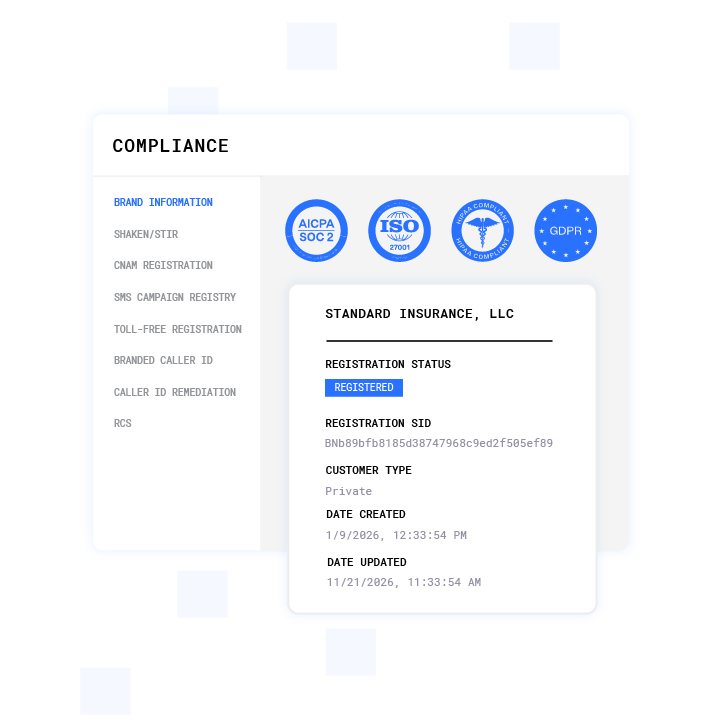
By March 2025, 24 states and the District of Columbia had adopted the NAIC Model Bulletin on the Use of Artificial Intelligence Systems by Insurers, which describes expectations for written AI governance programs and documentation for regulatory review.2 Agencies operating AI qualification workflows should maintain documentation of AI scope, escalation rules, and handoff logs as part of their governance program. Consult your compliance counsel for guidance specific to your state and lines of business.
Review Plura’s plans and rates to see which tier fits your agency’s volume and compliance requirements.
People Also Ask
Is an AI voice agent or AI SMS more effective for insurance lead qualification?
Both channels produce results when deployed correctly. SalesWings reports that up to 50% of sales go to the vendor that responds first but does not cite 80% connect rates for five-minute calls or 10-15% email conversions4. Voice typically works best for high-intent, time-sensitive leads. SMS works well for leads that did not answer an initial call, for scheduling confirmations, and for nurture sequences where the prospect is not yet ready for a live conversation. The most effective deployments use both channels in sequence, with a shared stateful memory so the prospect’s context carries across touchpoints.
How does Plura integrate with an agency management system or CRM?
Plura connects to HubSpot, Salesforce, Zoho, and 50+ other tools through its integrations directory. On every AI-to-producer handoff, the platform writes the full qualification record to the CRM automatically, including the session transcript, consent record, coverage type, state, renewal date, and routing reason. Producers see the pre-populated record before they answer the transferred call. No manual data entry is required at the point of handoff.
When must the AI hand off to a licensed producer?
State licensing rules restrict who can perform regulated producer activities, including recommending coverage, binding policies, and making suitability determinations. The AI handles information gathering, intent scoring, and routing. A licensed producer stays in the loop before any substantive advice, quote issuance, or policy binding. Four hard triggers require immediate warm transfer: the prospect requests licensed advice, expresses intent to cancel, describes a complex or disputed claim, or asks to speak with a person. Consult qualified legal counsel for guidance on your specific state licensing obligations.
What does AI lead qualification cost compared to manual SDR qualification?
The default scenario on Plura’s calculator shows a 15-agent operation at $20 per hour with standard taxes, benefits, and 40% talk utilization costs $60,000 per month. Replacing that team with Plura at $15 per hour, 100% talk utilization, and 6 AI agents doing the work of 15 humans drops the monthly cost to $14,400, a 30-day saving of $45,600.3 For insurance agencies, the additional revenue impact of faster lead response compounds those savings, and slow lead response costs a mid-size insurance agency an estimated $120,000 to $240,000 a year in lost premium.3
How does Plura handle TCPA and DNC compliance for insurance outbound calls?
Plura supports compliance through infrastructure controls built into every outbound contact. These controls include real-time DNC scrubbing against federal and state registries before each dial, immutable TCPA consent records with timestamps, automatic quiet-hours enforcement through time-zone detection, and SHAKEN/STIR authentication on every voice call. The platform also integrates with The Blacklist Alliance’s TCPA Litigation Firewall for real-time litigation list screening. Plura provides the infrastructure, and customers remain responsible for their own compliance obligations, consent governance, and regulatory posture. Consult qualified legal counsel for guidance on TCPA, DNC, and applicable state telemarketing rules.
The 6-step workflow above gives insurance agencies a concrete path from inbound lead to licensed-producer conversation in under 5 seconds, with scoring rules, handoff triggers, AMS integration steps, and compliance infrastructure built in. The infrastructure advantages described above, including carrier-level compliance controls, cross-channel memory, and licensed-producer handoff protocols, are unique to Plura’s platform architecture.
Run your numbers through Plura’s calculator to check your ROI in real time.
1 Plura AI maintains SOC 2, HIPAA, ISO, and GDPR posture as part of its platform infrastructure. References to compliance frameworks in this article describe Plura’s platform capabilities and do not constitute a guarantee that any customer using Plura will themselves be compliant with applicable laws or standards. Customers remain solely responsible for their own regulatory obligations, certifications, consent management, recordkeeping, and the claims they make to their own end users. Consult qualified legal counsel for guidance specific to your use case.
2 This article describes regulatory frameworks at a general level and does not constitute legal advice. Laws and regulations vary by jurisdiction, change over time, and apply differently depending on facts and circumstances. Readers should consult qualified legal counsel before making compliance decisions.
3 Performance figures, customer outcomes, and industry statistics referenced in this article are drawn from cited third-party sources or Plura customer case studies. Individual results vary based on implementation, use case, industry, audience, and execution. Past or aggregate performance is not a guarantee of future results.
4 References to third-party products, services, companies, or research are made for informational and comparative purposes only. Plura AI is not affiliated with, endorsed by, or sponsored by any third party named in this article unless explicitly stated. Trademarks and product names referenced remain the property of their respective owners.
This article is provided for informational purposes only and reflects Plura AI’s understanding at the time of publication. Product capabilities, integrations, and specifications are subject to change. For the most current information, visit plura.ai.
This article was produced with the assistance of AI tools and reviewed by Plura AI prior to publication.